_1745823981883.webp)

UF vs Sand Filters: When Should You Use Each?
Whether you use a UF filter or sand filtration depends on your goals for water quality and the limitations of your business. Ultrafiltration is the best way to get rid of germs, viruses, and colloids smaller than 0.1 microns. It is essential for making medicines, processing food, and RO pre-treatment. Sand filters, on the other hand, can handle bigger particles more cheaply and work well in high-volume situations where reducing turbidity is the main goal, like in city pre-treatment or farm irrigation systems.
Understanding UF and Sand Filters: Core Technologies and Differences
How Ultrafiltration Works
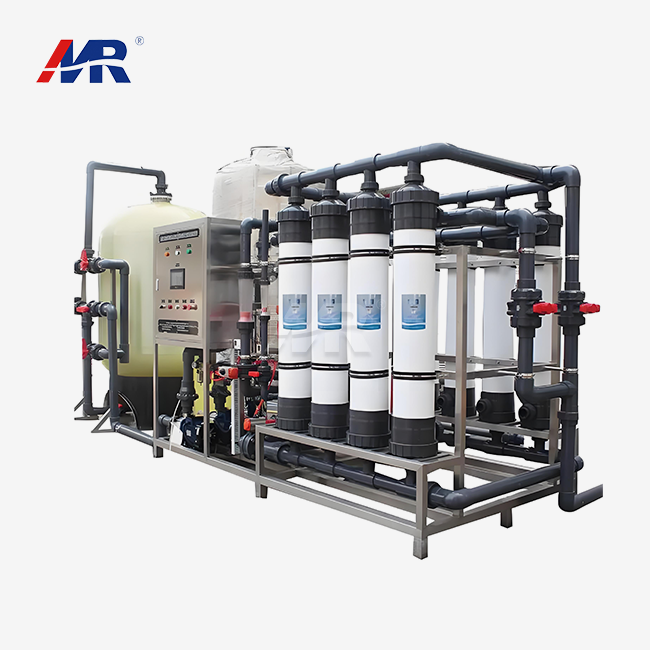
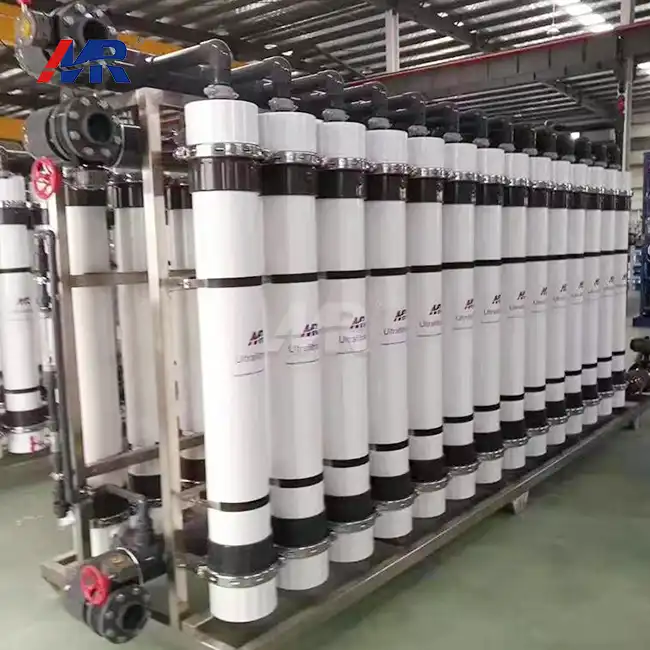
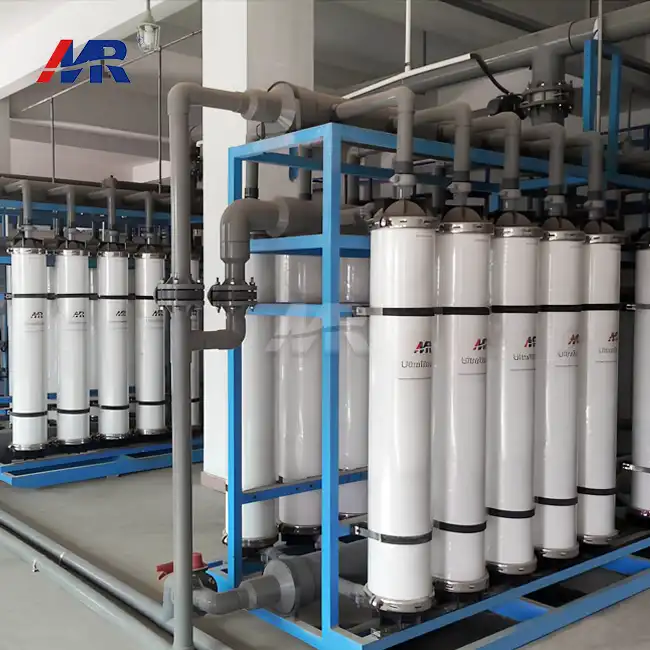
Ultrafiltration is a membrane separation technique that works by applying pressure. The UF filter uses hollow-fiber or spiral-wound membranes with pores that are 0.001 to 0.1 microns in size. Under hydraulic pressure, when feedwater goes through these semipermeable walls, bacteria, viruses, macromolecules, and suspended solids get stuck while clean water flows through. This physical sieving method gets rid of Log 4 to Log 6 pathogens without using chemicals to kill them.
Sand Filtration Mechanics
Mechanical squeezing and adsorption are what sand screens work on. As water moves downward through layers of sand and gravel that have been graded, it traps particles as small as 20 to 50 microns, based on the size of the sand grains. Larger pollutants stay on the top, while smaller ones move deeper into the bed. Backwashing is when workers stop the flow of water every so often to get rid of built-up debris and recover filtration capacity.
Key Technical Contrasts
When you look at filtration accuracy, you can see the difference in performance between these systems. A UF filter regularly gets rid of particles as small as 0.01 microns, which includes Cryptosporidium oocysts and E. coli that can easily get through sand media. While sand filters are great at getting rid of the cloudiness that grit, rust, and algae cause, they can't ensure that the water is microbiologically safe.
Different things need different amounts of maintenance. Backwashing sand filters is necessary often—sometimes every 24 to 48 hours when they're working hard—and uses 3 to 5 percent of the processed water. uf membranes need to be chemically cleaned every 30 to 90 days, but they work all the time with backflush intervals of 30 to 60 minutes, which cuts down on water waste and the need for physical work.
When there isn't much room, footprint matters. A sand filter that can handle 100 cubic meters per hour might take up 15 to 20 square meters, but a similar UF skid only takes up 8 to 10 square meters. This makes ultrafiltration a good choice for sites with limited space.
Critical Factors to Consider When Choosing Between UF and Sand Filters
Water Quality Requirements
Technology choice is based on the water quality you want to achieve. Pharmaceutical companies that need GMP-compliant purified water can't skimp—UF membrane filtering gives them the proven pathogen shield that regulators need. On the other hand, sand filtration can make groundwater sources with 50–100 NTU turbidity and little biological contamination clear enough for drinking at a much lower cost.
Contaminant Characteristics and Particle Size Distribution
The best answer can be found by looking at how the particle sizes are distributed in your feedwater. Sand screens stop working when tests in a lab reveal a lot of contamination below 10 microns. This happens a lot in open water during algal blooms or industrial discharge. The UF filter gets rid of these tiny particles that would clog up the reverse osmosis membranes further down the line. This protects your RO equipment investment.
System Capacity and Operational Scale
Sand screens can handle huge amounts of flow without costing a lot. Sand filtration is often used as the first step in treating 10,000 to 50,000 cubic meters of water every day by municipal water plants. This is because the cost of capital per cubic meter is lower than with membrane systems at this size. The total cost of ownership goes down, though, when you add in the cost of chemicals for chlorination, work for managing backwash, and getting rid of filter media every 3–5 years.
UF systems that are made up of separate modules can be expanded from 1 to 500 cubic meters per hour without losing any performance. This scalability is good for food processing plants or drug factories that want to grow and need to add more space—all they have to do is add more membrane units instead of digging up space for more sand filter tanks.
Lifecycle Cost Analysis
Instead of just looking at current prices, procurement teams should look at how much the business will cost over the next ten years. For a 100-cubic-meter-per-hour system, sand screens usually cost between $50,000 and $150,000 to buy. Installing similar Ultrafiltration Equipment costs between $120,000 and $250,000. But UF membranes can last for 5 to 7 years with proper care, while sand needs to have its media topped off every year and replaced completely every couple of years. UF systems use less energy than sand filters, which need high-pressure backwash pumps because they only need 1-2 bar of transmembrane pressure to work.
Practical Application Scenarios for UF and Sand Filters
When Ultrafiltration Becomes Essential
Without membrane technology, industrial uses that need clean or almost clean water can't work. We've sold UF systems to dialysis centers where bacterial endotoxins must stay below 0.25 EU/mL, which is something that sand filtering can't do. In the same way, Californian facilities that make semiconductors use ultrafiltration as the first barrier in ultrapure water trains. This keeps particles from damaging the chip surfaces during photolithography.
UF is being used more and more as an SWRO pre-treatment in seawater purification projects. When red tides or jellyfish blooms happen near coastal plants, sand flows in quickly, stopping production. Even though these biological problems happen, ultrafiltration keeps the quality of the permeate stable, providing constant SDI values below 3.0 to protect expensive high-pressure ro membranes.
Optimal Sand Filter Applications
Sand filtration is easy to use and doesn't need much upkeep, which makes it a good choice for large-scale farming watering systems in dry areas. When treating salty freshwater or canal water that mostly has sand, silt, and organic matter bigger than 50 microns, sand filters reliably lower the turbidity without having to buy new membranes or having special technical knowledge.
Sand filtration is the main barrier used by municipal drinking water plants that get their water from protected groundwater or lakes. These facilities use both sand filters and chlorination to meet EPA drinking water guidelines in a cost-effective way when the quality of the source water is steady and not contaminated by industry.
Hybrid Configurations for Maximum Efficiency
As technology moves forward, engineering teams mix the two in a smart way. In a normal hybrid design, sand filters are put upstream to act as coarse strainers. They get rid of 80–90% of the dissolved solids in the feedwater before it gets to the UF membranes. This setup makes the UF membrane last longer by lowering the frequency of fouling. This lowers the cost of chemical cleaning while keeping the microbial safety that only ultrafiltration offers. We just finished building a system like this for a beverage company in Texas. The sand pre-filter takes care of yearly turbidity spikes in the river water that comes in, and the UF membranes further downstream make sure that the process water for bottling operations is free of pathogens.
Evaluating Performance and Reliability in B2B Environments
Performance Metrics That Matter
Measuring filtration efficiency reflects the real-world performance of UF filter systems, rather than just the specifications on paper. UF systems consistently reduce turbidity to below 0.1 NTU and remove 99.99% of bacteria, which can be verified using ATP tests and heterotrophic plate counts. By comparison, most sand filters lower turbidity to 2–5 NTU—sufficient for many applications but inadequate when downstream processes require ultra-clear water.
Recovery rates have a direct effect on the cost of water. In city settings, ultrafiltration recovers 90–95% of the water, and only 5–10% is wasted during backflush cycles. Backwashing sand filters use 3 to 5 percent of their capacity, but they may need more drain-downs during maintenance, which lowers their recovery to 92 to 94%. In places with little to no water, this 2% to 3% difference adds up to thousands of dollars a year on an industrial scale.
Maintenance Planning and Downtime Mitigation
Scheduled repair times are very different for each technology. Checking for media channeling, underdrain damage, and valve operation is necessary every three months on sand filters. This requires specialized workers who are trained to work in confined spaces. A repair event causes our clients to lose 8 to 16 hours of service. Ultrafiltration systems have automated Clean-in-Place routines that run when demand is low. Chemical cleaning rounds can usually be finished in two to four hours without taking the equipment apart. In the pharmaceutical industry, where production plans can't be changed for unexpected shutdowns, this operational continuity is very important.
Supplier Quality Assurance
Managers in charge of buying things should carefully look over membrane approvals and filter media specs. Reliable UF membrane providers offer NSF/ANSI 61 certification for contact with drinking water, along with integrity test procedures that show how well the membrane removes contaminants. The hardness, consistency coefficient, and acid solubility of sand filter media should all meet AWWA B100 standards. Media that doesn't meet these standards breaks down quickly, adding fines to cleaned water.
Future Trends and Innovations in Water Filtration Technologies
Advanced Membrane Materials
New developments in the science of PVDF membranes have made hydrophilized surfaces that are better at blocking organic fouling than older generations. These changed membranes keep flow rates 20–30% higher between cleanings in high-COD wastewater situations, which greatly lowers the cost of operations. Manufacturers now make membranes that can handle up to 5,000 ppm-hours of chlorine. This means that they can be disinfected in place without having to be removed. This is a big step forward for biotech facilities that need to be sure they are properly sanitized.
Smart Monitoring and Predictive Maintenance
UF systems that are connected to the internet of things (IoT) send real-time information to cloud platforms about transmembrane pressure, flow rates, and water quality factors. Machine learning algorithms look at performance trends and can tell you that you need to clean the membranes 7–10 days before the drop in flow affects production. We put in a system like this at a power plant in Ohio. The predictive maintenance features cut down on emergency cleanings by 40% and added 18 months to the life of the membrane.
Regulatory Drivers
The updated Lead and Copper Rule from the EPA and the new PFAS rules are pushing water companies to use more modern treatment methods. Activated carbon and ultrafiltration work together better than regular sand filtration and chlorination to get rid of these contaminants. In the same way, European Union rules that require cooling towers to get rid of 99.9% of Legionella also support membrane technology over traditional media filters, which is speeding up acceptance across all industries.
Conclusion
To choose between a UF filter and sand filtration, it is important to ensure the system meets your operational requirements and water quality standards. Ultrafiltration offers superior microbiological safety and a smaller footprint, which explains its higher upfront cost in pharmaceutical production, food processing, and RO pre-treatment. Sand filters remain a cost-effective option for high-volume, low-precision applications where reducing turbidity is sufficient.
Increasingly, industrial setups are adopting hybrid designs that combine the strengths of both technologies, lowering costs while improving long-term reliability. Careful consideration of contaminant types, regulatory requirements, and lifecycle operating costs ensures that your investment in UF filter systems aligns with production goals and delivers optimal water treatment performance.
Frequently Asked Questions
1. Can UF Systems Completely Replace Sand Filters?
Ultrafiltration can be used instead of sand screens in places that need very clean water or to get rid of pathogens, like when making medicines or treating drinking water, where bacterial safety is a must. However, sand filters are still better for cleaning sources of high turbidity (more than 200 NTU) because they are more cost-effective and stop UF membranes from getting clogged up quickly. Combining sand pre-filtration with ultrafiltration further downstream often gives the best performance and cost savings.
2. How Do Maintenance Costs Compare Between Technologies?
Chemical costs for sand filters are cheaper each year, but the media needs to be replaced every 3–5 years, which costs $5,000–$15,000 per vessel and requires a lot of work to handle the backwash. UF membranes need chemical cleaning Products that cost between $2,000 and $5,000 a year. Depending on the size of the system, the membranes need to be replaced every 5 to 7 years, which costs between $20,000 and $40,000. Total upkeep costs tend to converge fairly closely over ten years, especially when labor and downtime costs are taken into account.
3. What Integration Challenges Exist for Existing Infrastructure?
When adding UF systems to buildings that were originally built for sand filters, you have to think about the room and pressure needs. Ultrafiltration works with lower pressures than sand filters, so booster pumps or valves that lower the pressure may be needed. Sites with limited space can benefit from UF's smaller footprint—a 50-cubic-meter-per-hour system takes up about half as much space as a similar sand filter system, making it easier to add to current treatment trains.
Partner with Morui for Optimized Filtration Solutions
Guangdong Morui Environmental Technology offers both manufacturing skills and full installation services for filter systems that meet your production needs. Our 20-person engineering team, spread across 14 branches, looks at the features of your feedwater, your capacity needs, and the rules and regulations that apply to you in order to suggest UF filter configurations or mixed sand-UF designs that will give you the best return on your investment. We control quality from component buying to filter commissioning as a top UF filter manufacturer with our own facilities for making membranes and partnerships with Shimge Water Pumps and Runxin Valves. Get in touch with our expert team at benson@guangdongmorui.com to get a personalized water treatment plan that solves the problems your facility is facing. Our 500-person company has an installation and after-sales support network all across North America to back this up.
References
1. American Water Works Association (2021). Microfiltration and Ultrafiltration Membranes for Drinking Water Treatment, Manual of Water Supply Practices M53.
2. Crittenden, J.C., Trussell, R.R., Hand, D.W., Howe, K.J., & Tchobanoglous, G. (2022). MWH's Water Treatment: Principles and Design, 4th Edition, John Wiley & Sons.
3. Environmental Protection Agency (2023). Membrane Filtration Guidance Manual, EPA 815-R-06-009.
4. Judd, S. & Judd, C. (2020). The MBR Book: Principles and Applications of Membrane Bioreactors for Water and Wastewater Treatment, 3rd Edition, Butterworth-Heinemann.
5. Tchobanoglous, G., Stensel, H.D., Tsuchihashi, R., & Burton, F. (2022). Wastewater Engineering: Treatment and Resource Recovery, 6th Edition, McGraw-Hill Education.
6. World Health Organization (2021). Ultrafiltration in Drinking-Water Treatment, Water Quality and Health Series, Geneva.