_1745823981883.webp)

What are Containerized RO Systems and How Do They Work?
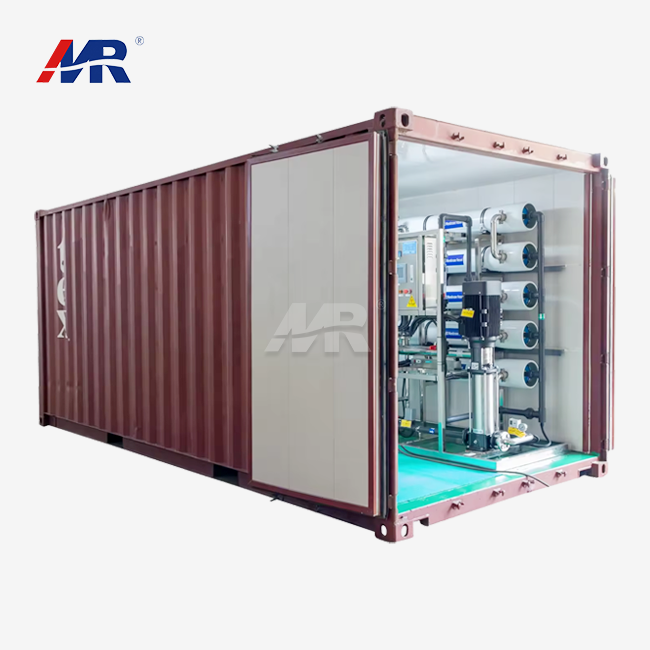
A containerized RO system is a fully self-contained reverse osmosis water treatment unit built inside a standard ISO shipping container. Unlike traditional fixed installations, every component — pumps, membranes, pretreatment filters, electrical panels, and control systems — arrives pre-assembled and factory-tested inside either a 20 ft or 40 ft container. Connect a power supply and a water source, and the unit begins producing clean water. This plug-and-play design makes mobile RO units the preferred choice for emergency response teams, remote mining camps, island communities, and project contractors who cannot wait weeks for civil construction.
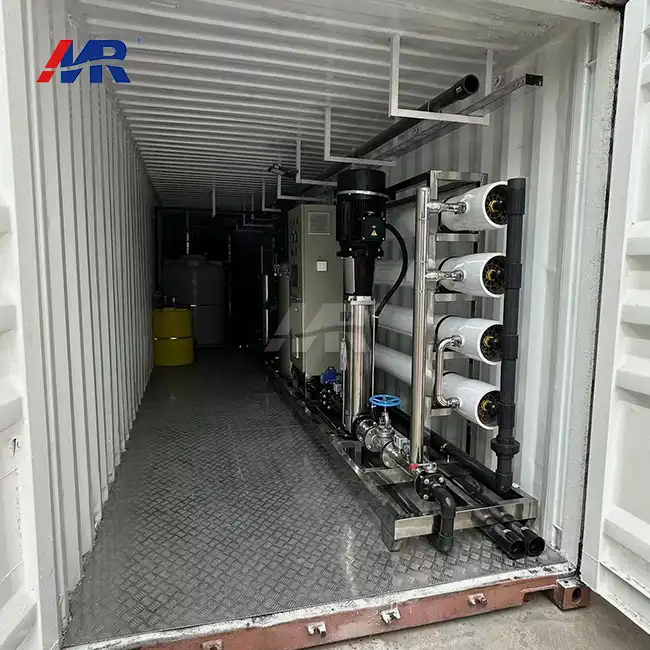
Understanding Containerized RO Systems
What Goes Inside the Container
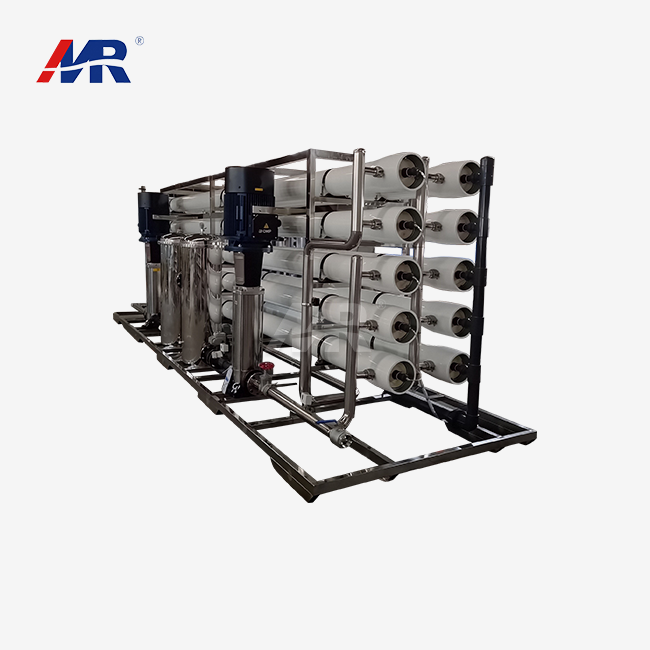
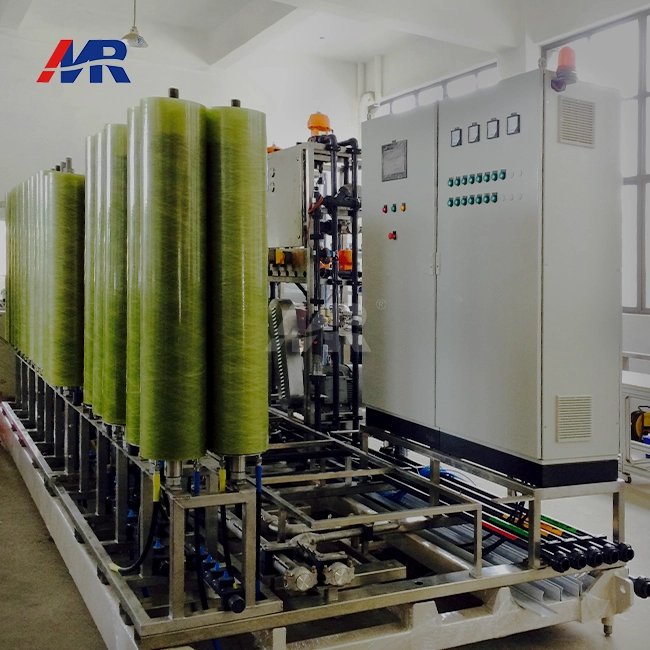
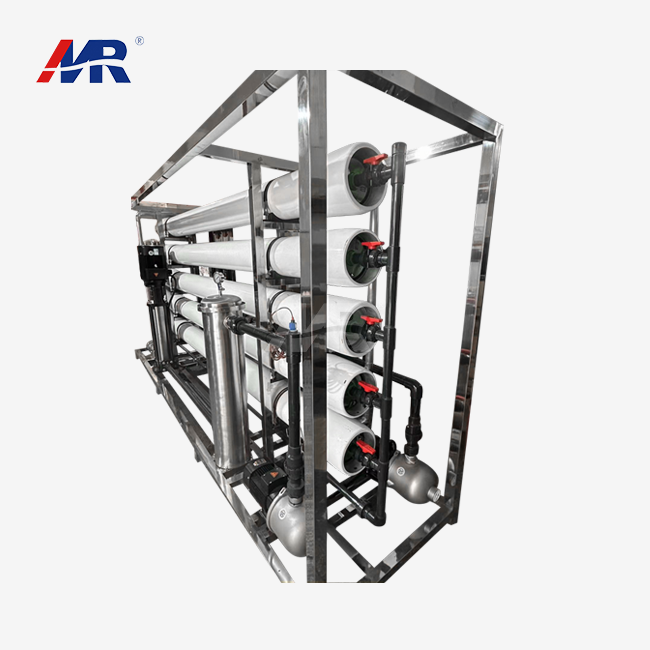
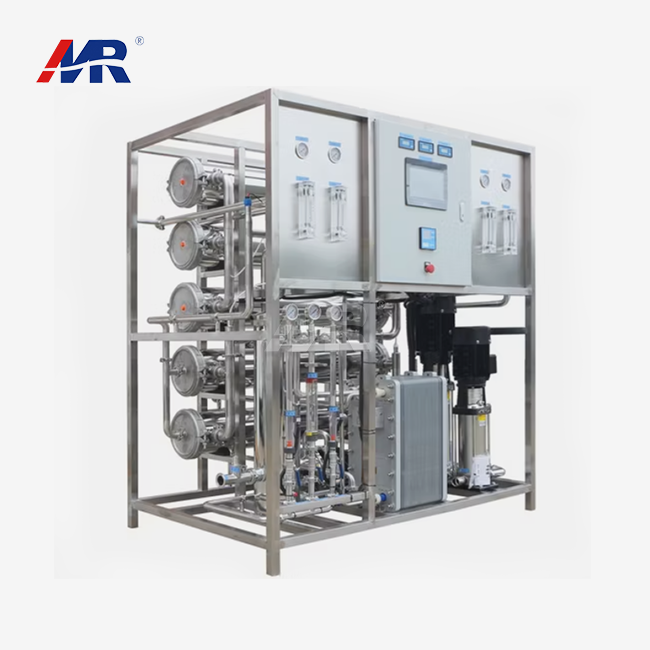
The whole process train is safe inside a Morui containerized water treatment machine. This has high-pressure pumps (that can be set to 380V/50Hz), ro membrane tanks, a chemical dosing system, and an automatic PLC control panel. It also has multimedia pre-filters. There isn't much work to be done on-site because the wiring and pipes are all set up and checked for pressure at the plant before they are sent out.
How Reverse Osmosis Works
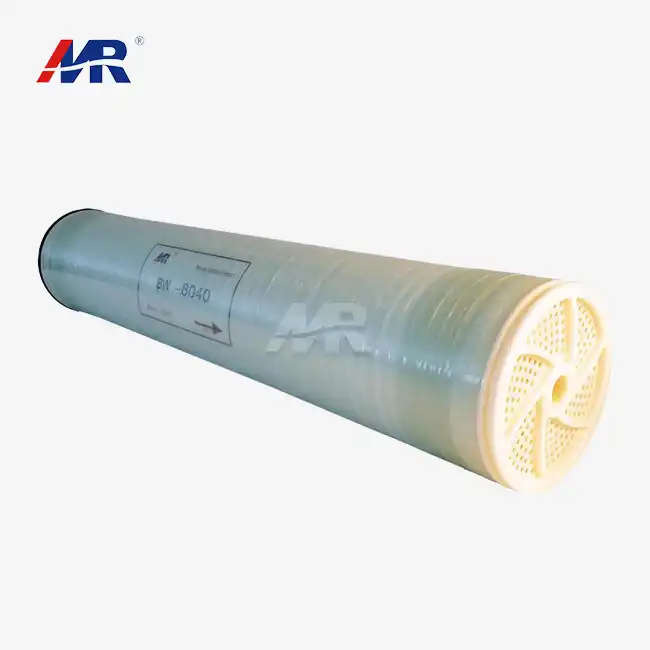
Pressurized feed water is forced through semi-permeable membranes in reverse osmosis. These membranes can filter out particles as small as 0.0001 microns. The walls keep out dissolved salts, heavy metals, germs, and organic substances. Up to 99% of TDS can be removed by Morui units, and up to 75% of the water they use can be used again. So, three-quarters of the feed water is turned into permeate that can be used instead of waste brine.
The Full Treatment Workflow
There are five steps that the water goes through. To begin, prep removes dissolved solids and safeguards membranes. To add more pressure to the feed, which is needed for RO separation, a high-pressure pump is used. The third step is membranes that separate the clean permeate from the concentrate. In the fourth step, post-treatment changes the pH and adds minerals back to the water if drinking water standards need to be met. Fifth, the clean water is put into a tank so it can be sent to different places. It checks the flow, pressure, and quality of the water at every step and lets workers know if anything is wrong.
Applications and Industry Use Cases
Emergency Relief and Military Deployment
When an earthquake or storm cuts off water to a city, first responders need clean water right away, not in a few weeks. A flatbed truck or cargo ship can move a Containerized ro system, and it can be used right away. Mobile units can be used in many types of disasters because they can be fed salty river water, surface water, or even seawater.
Remote Mining, Oil & Gas, and Construction Camps
A lot of the time, mines and oil fields are set up far from the infrastructure of cities. The people who work at these sites need 50 to 1,000 m³ of potable water every day to drink, clean, and use in projects. It is easier to use a mobile water purification container than a permanent plant because it can be moved when the project does. It also fits on a standard transport vehicle and doesn't need any foundation work.
Island Communities, Resorts, and Temporary Municipal Projects
People who live on islands or in coastal areas that have been hit by disaster often have to use seawater as their only source of water. A steady flow of drinking water is provided by Morui's saltwater desalination tanks, which are made of materials that don't rust and membranes that can handle high salt levels. Once the fixed infrastructure is in place, containerized units can be quickly set up and taken away. This is helpful for cities that need to fill temporary capacity gaps.
Comparing Containerized RO Systems to Other Water Treatment Options
Containerized vs. Skid-Mounted RO
An RO system on a skid is about the same size as a shipping container shell, but it doesn't protect against the weather or have as much structural support. When factories are outside, like in deserts, the Arctic, or near the coast, the container housing keeps the equipment safe from UV light, extreme temperatures, and airborne pollutants. As a standard custom option, Morui offers insulation for both cold and hot environments. This isn't something that most skid systems from the same company offer.
Containerized vs. Portable RO Units
Even though portable RO systems are small, they can only make a small amount of water every day—often less than 10 m³. Reverse osmosis plants that are housed in containers can handle up to 1,000 m³ per day. More units can be added by lining them up next to each other. Portable units aren't as reliable or as big as full containers when an industrial-level output is needed for a project.
Total Cost of Ownership
Containerized ro system units usually have lower overall costs than movable ones, even though they cost more at first. This is because they are used for longer periods of time. The costs of both installation and ongoing use are cheaper when parts are checked in the factory and building work is done by someone else. The Water Research Foundation says that in remote places, portable water treatment systems can save 30–40% on the cost of running the system compared to the old way of making.
Installation, Operation, and Maintenance Best Practices
Pre-Installation Site Assessment
Before the container is brought, make sure that the site is level and can handle its weight. You should also have information on the quality of the water that comes into the site. If the experts at Morui know the feed TDS, turbidity, and temperature, they can set up the right cleaning train before shipping. This step makes sure that the membrane will last from the first day it is used and saves money on changes that have to be made on-site.
Daily Operation Monitoring
The feed pressure, the permeate flow rate, and the TDS of the product water should all be checked every day by the operators. Morui units can be controlled automatically, and online tracking is available as an extra. This lets people see data in real time from anywhere in the world. The quality of the output and the life of the membrane are both directly affected by keeping the working pressure in the range suggested by the membrane maker. In ideal conditions, the membrane can last up to five years.
Membrane Cleaning and Scheduled Maintenance
It is called cleaning-in-place (CIP) and uses chemicals to remove scale and biofouling from membrane surfaces. It's not important what time these rounds run; what matters is how much difference in pressure is in the system. Because of the different types of feed water, cartridge pre-filters need to be changed every one to three months. Morui has O&M records in many languages and spare parts from all over the world, so field techs can fix units without having to wait for help from the plant.
Procurement Guide for Containerized RO Systems
Defining Your Capacity and Quality Requirements
To begin, figure out how much water you need each day and where it comes from: underground, salty seawater, or air. The working pressure, the membrane type, and the way the pre-treatment is set up are all affected by these two things. It is possible for Morui to set up UF+RO, RO+EDI, or seawater desalination trains inside 20- or 40-foot containers. These units can process 50 to 1,000 m³/day.
Evaluating Supplier Credibility
If you are a buyer in the US or another country, make sure the supplier is ISO 9001 certified and can give you test reports on the quality of the treated water, CE paperwork, and part specifications that meet NSF standards. There is an ISO 9001 certification for Morui's plants, and the company works with reputable partners such as Shimge Water Pumps, Runxin Valves, and Createc Instruments, who are all well-known names in process water treatment.
Requesting a Custom Quote
To get in touch with a containerized RO system provider, you should tell them about the feed water analysis, the daily output you need, the power supply you have access to, the location of the site, and any natural limits like seismic zones or high or low temperatures. You should tell the seller more about the goods right away so that they can send you a correct technical plan faster. Morui can provide OEM and private-label configurations to rental and distributor companies as long as they sign NDAs.
Conclusion
Containerized ro systems are a good way to get clean water in places where stable infrastructure doesn't exist or can't be built quickly enough. A full reverse osmosis system is built into a normal shipping container. This fills the gap between people who need water and people who have it. This tech has been used before; it's easy to set up, and the outcomes can be tracked. For immediate help, a mine in the middle of nowhere, or a short-term job in the city, it can be used. This guide's information on data and workflow should help a procurement manager make a good choice when they are looking at different options for mobile water treatment.
FAQ
1. What water quality can a containerized RO system produce?
Morui units can get rid of up to 99% of TDS, making water that meets the drinking water standards in most places. When brackish or seawater sources are cleaned, the water that comes out can meet WHO or US EPA standards for drinking water by changing the pH or adding minerals back in.
2. How long does deployment take?
All of the parts for standard units are put together and checked at the plant, so they only take one to two days to set up on-site.
3. Can the system run off-grid?
There are Morui homes with built-in generators and solar hybrids that can be used in places that don't have access to the power grid. The normal power source is 380V/50Hz, but the wiring can be changed to fit the needs of the area.
4. Is the system suitable for seawater?
In fact, Morui's seawater distillation tanks are made with high-pressure pumps, materials that won't rust, and seawater-grade membranes that can handle feed water with a lot of salt. These are not the same types as units for brackish water.
5. What after-sales support is available?
Morui needs 500 workers and 20 engineers to run its more than 14 offices. There is remote tracking, instructions in many languages, and a global network for extra parts to make sure the system works for a long time.
Request a Quote from Morui — Containerized RO System Manufacturer
For years, Morui has been trying to find real-world ways to treat water that work. Our containerized ro system units are made in a workshop and are ISO 9001 approved. They can be set up to work with any type of feed water, from desalinating seawater to heating water for cold weather. Our Team is ready to send you a full technical plan, whether you need to rent one unit or a whole fleet. First, please email us at benson@guangdongmorui.com.
References
1. Water Research Foundation. Modular and Scalable Water Treatment Technologies. Water Research Foundation, 2021.
2. World Health Organization. Guidelines for Drinking-water Quality, 4th ed. WHO Press, 2017.
3. Metcalf & Eddy. Water Reuse: Issues, Technologies, and Applications. McGraw-Hill, 2007.
4. Crittenden, J. C., et al. MWH's Water Treatment: Principles and Design, 3rd ed. Wiley, 2012.
5. Fritzmann, C., et al. "State-of-the-art of reverse osmosis desalination." Desalination, Elsevier, 2007.
6. United States Environmental Protection Agency. Drinking Water Treatment Technology Unit Cost Models. US EPA Office of Water, 2016.