Water Softener and RO System: Key Controls for Stable Operation
Operating a water treatment system without the right controls is like driving without a dashboard; you won’t know about issues until something breaks down. A well-maintained water softener and RO system protects your equipment, maintains water quality, and keeps your running expenses predictable. Whether you run a commercial purification line, boiler network, or post-RO remineralization system, steady operation is based on knowing what each step performs and how to maintain both technologies running in harmony.
Understanding Water Softener and RO System Basics
Before getting into maintenance protocols, it helps to understand what each technology actually does — and where one ends and the other begins.
How Ion Exchange Softening Works
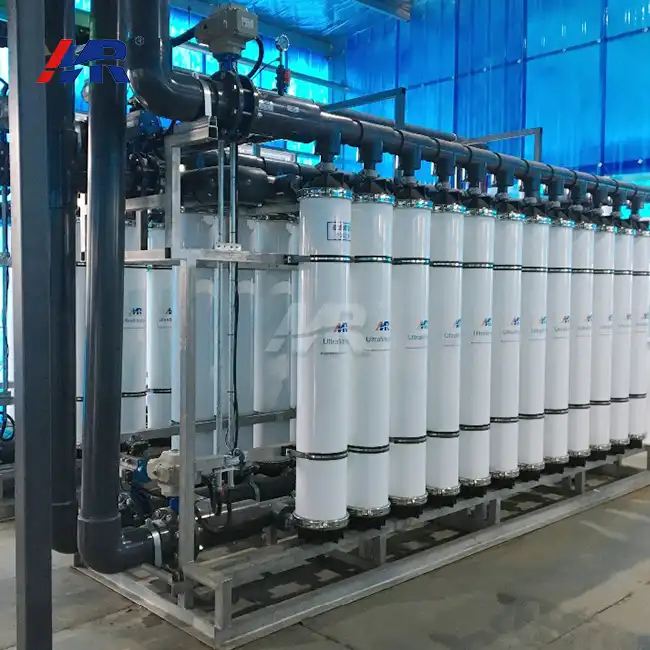
A water softener employs ion exchange resin, which replaces calcium and magnesium ions – the minerals that create scale – with sodium or potassium ions. Water exceeding 7 grains per gallon (gpg) is considered hard and can increase scale buildup in pipes, membranes, and heat exchangers, according to the Water Quality Association. You’ll know it’s time for a water softener replacement if you see white build-up on your fixtures, your water heater is less efficient than it used to be, and your water softener membrane doesn’t last as long as it should.
How RO Filtration Works
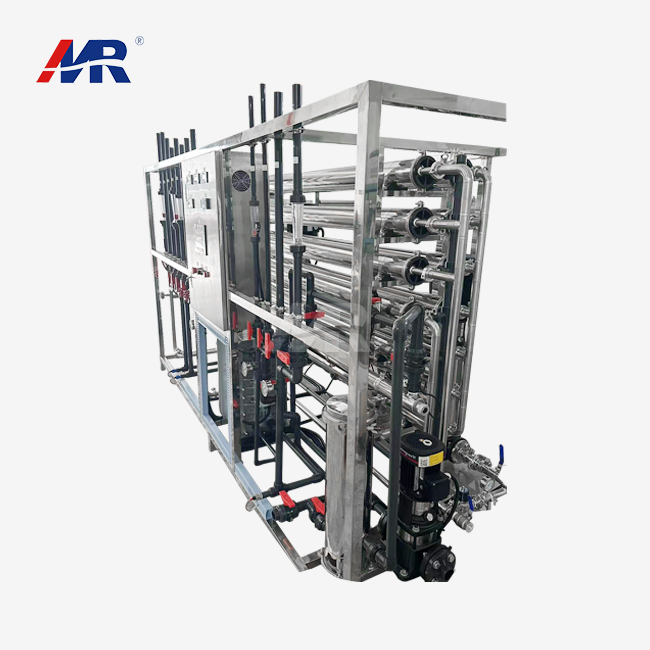
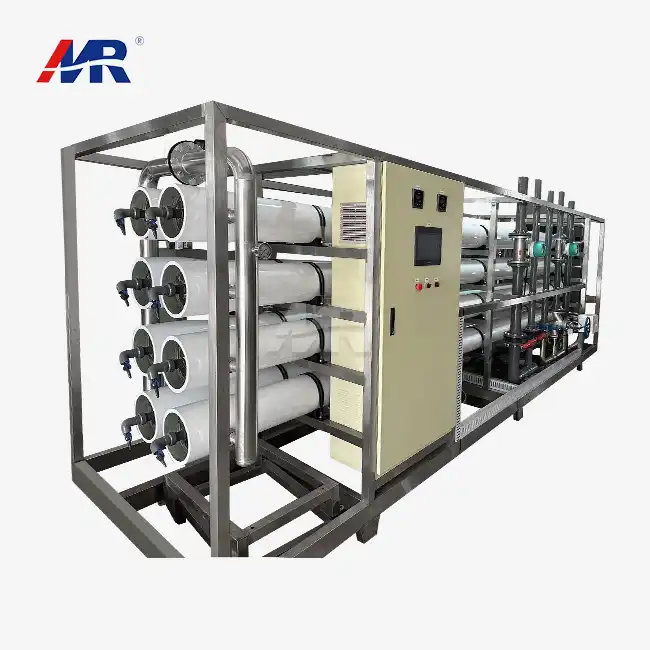
Reverse osmosis systems force water through a semi-permeable membrane under pressure, stripping up to 99% of dissolved solids, heavy metals, and microorganisms. The U.S. Environmental Protection Agency says RO is a proven treatment for lead, arsenic, and nitrates, among other impurities. But RO also removes essential minerals, and the water turns out somewhat acidic and flat-tasting – a recognized drawback for drinking water and specialized beverage applications.
Key Differences and Combined Value
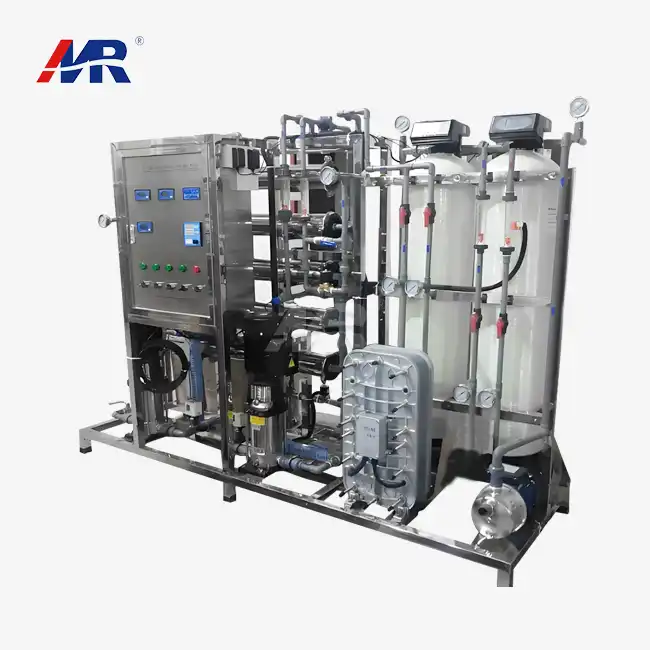
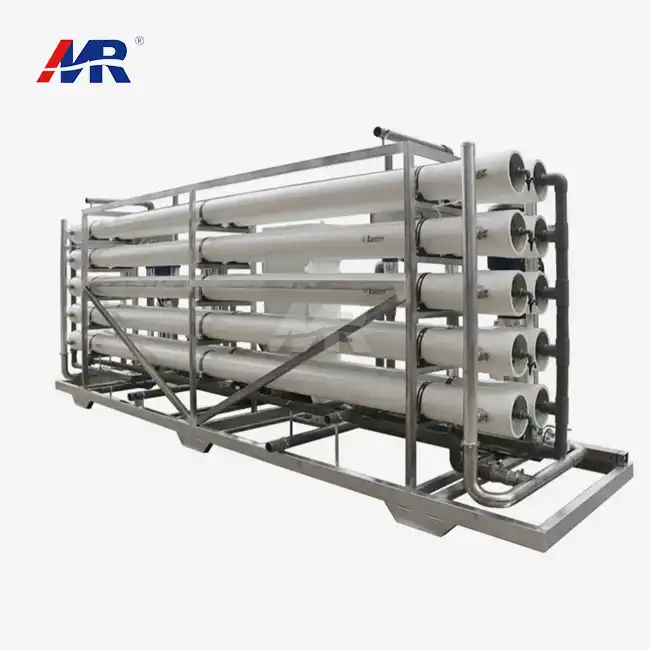
The two technologies address distinct concerns. Softening protects membranes from mineral fouling, while RO takes out what softening can’t. Upstream softener, downstream RO, used in series, deal with overall water quality. Post-RO applications use a remineralizing cartridge or back-end softening unit to restore mineral balance and regulate pH, which is especially important for coffee cafes, premium water stations, and bottled water makers that want to maintain flavor consistency.
Key Controls for Stable Operation of Water Softeners
A softener that isn't properly controlled will either under-treat the water softener and ro system, wasting salt, or over-treat it, introducing excess sodium. Either outcome creates problems downstream.
Salt Management and Resin Bed Cleaning
Choose the right quality of salt for your system. For home and light commercial usage, evaporated pellet salt is normally suggested. For industrial systems with larger flow rates, solar salt is a good option. Inspect the brine tank periodically for salt bridges that prevent regeneration cycles. In particular, cleaning the resin bed using a resin cleaner every three to six months may help avoid iron and organic fouling, particularly in well-water applications with high iron content.
Regeneration Timing and Cycle Calibration
Regeneration frequency should be based on real water use and not a predetermined plan. Demand-initiated regeneration (DIR) controllers, such as those with Runxin valves which Morui sells as an authorized agent, enable the system to regenerate depending on volume treated, not time passed. Published WQA efficiency statistics show this method can cut salt and water use by up to 30% over time-clock regeneration.
Installation Quality and Maintenance Scheduling
Proper installation of the bypass valve, the right size of pipes, and placing the pre-filter before the softener all impact long-term performance. A proactive maintenance regimen, in most business contexts, comprising yearly resin testing, cleaning the brine tank, and inspecting the valves, will prolong system life beyond ten years. The leading reason for early softener failure in the B2B environment is missed scheduled inspections.
Key Controls for Stable Operation of RO Systems
The ro membrane is the weakest and most expensive link in the filter chain. Before water even gets to the membrane covering, they are safe.
Membrane Replacement Intervals and Monitoring
The life of a commercial RO membrane may range from two to five years, depending on the quality of the feedwater, the operating pressure, and the recovery rate. Check the TDS rejection rate often; if it decreases below 90%, it signifies that the membrane is degrading. Clogging is indicated when the flux drops more than 15% from the beginning position. Morui also carries a brand called Createc. Their equipment is equipped with integrated TDS and conductivity meters that make it simple to assess how well the membranes are operating right now.
System Flushing and Low-Pressure Troubleshooting
Flush the membrane housings each time you switch the machine on and off. This prevents the build-up of minerals on the membrane surface and the growth of bacteria on it. Low output pressure is frequently caused by a clogged pre-filter, a faulty booster pump, or a feed valve only partially closed. First, have a look at the pre-filters. If the sediment cartridge is plugged up, with more than a 15 PSI pressure drop, the membrane will not obtain adequate flow. This will result in faster fouling.
Managing Well Water and High-TDS Feedwater
If the water softener and ro system from an industrial process contains high levels of silica, iron, or organic debris, you have to add an antiscalant dosage before the RO stage. Well water in rural commercial locations may include hydrogen sulfide, manganese, and carbon, and pre-filters will not remove all of them. If you have hard source water and want to avoid membranes clogging up over time, you should examine the chemistry of the feedwater before you install the system, not after.
Optimizing Combined Water Softener and RO System Solutions
You can see how much better the two systems perform when they work together. If the feedwater upstream is soft, the scaling potential index (LSI) is reduced. This implies that RO membranes do not require as much cleaning and last longer. The International Desalination Association has discovered that in medium-hard water locations, pre-softening may extend the time between membrane replacements by 40 to 60%.
Here are the primary advantages of an integrated approach for B2B buyers seeking a fully integrated answer:
The “lower total cost of ownership” refers to the fact that the cost of the softening stage is generally recovered in 12 to 24 months, as the membranes do not need to be changed and the chemicals required to clean them are not as frequent.
- Lower total cost of ownership: In most commercial systems, reduced membrane repairs and reduced chemical cleaning expenses recoup the initial investment in a softening stage within 12 to 24 months.
- Consistent permeate quality: If your feedwater chemistry is stable, you can expect predictable TDS output. This is very important for coffee chains and water stations that want a defined mineral profile to ensure flavor consistency.
- Compatibility with post-RO remineralization: A mineral cartridge for the rear end restores calcium, magnesium, and bicarbonate ions to RO permeate. This corrects the somewhat acidic pH that pure RO water usually has and improves palatability.
- Simplified Procurement: Morui’s ODM package integrates the softening, RO, and remineralization processes into a single machine design, removing the need for a second purchase and making installation easier for OEM clients.
It is easy to acquire the product, since Morui’s ODM package integrates the softening, RO, and remineralization processes in one machine. This means OEM clients don't have to purchase a second machine and can assemble it more quickly.
Procurement and After-Sales Support for Stable Operation
Selecting the proper water softener and RO system provider isn’t just about unit pricing. Parts availability, quality of technical assistance, and standards of documentation are more important during a five-year ownership cycle than the original purchase price; the long-term stability of your business relies on these issues.
Selecting Brands with Certification Backing
For U.S. purchasers, certification to NSF/ANSI 58 for RO systems and NSF/ANSI 44 for water softeners are baseline compliance criteria. Materials that will encounter water should be NSF/ANSI 61 approved. Morui delivers systems with these Certifications and treated-water quality test results as standard paperwork, a criterion many U.S. commercial customers include in tender requirements.
Consumables, Spare Parts, and Reorder Channels
Regular replacement is required for salt, resin, pre-filter cartridges, and mineral remineralization media. Ensure your supplier has these consumables in stock and can send them in a predictable lead time. Morui’s purification consumables channel offers bulk-order discounts to wholesale purchasers on typical mineral cartridges and resin replacements, and spec-compatible housings are available for most popular RO machine designs.
Warranty Coverage and Technical Response
Warranty term is probably less significant than a supplier’s after-sales response time. Look for vendors who give a dedicated technical contact, support remote diagnostics, and are able to do on-site commissioning if necessary. Morui has a 20-engineer team for installation and commissioning at numerous equipment processing facilities, so large-scale commercial deployments are not held up in technical handover.
Conclusion
Running a water softener and RO system is uncomplicated, but you do have to deal with the salt, watch the membranes, cleanse the feedwater before putting it into the system, and conduct regular maintenance. With the proper controls, you can reduce the major operational hazards such as scale fouling, membrane deterioration, and uneven product quality. You’ll obtain better results, and you’ll save money in the long run, by treating the two pieces as a unified system rather than two distinct units. That’s true whether you’re installing a new system or maintaining an existing one.
FAQ
1. How often should I replace the RO membrane in a commercial system?
In most commercial settings, RO membranes need replacement every two to five years. The actual interval depends on feedwater TDS, operating pressure, and how consistently pre-filters are serviced. Monitor TDS rejection monthly — a drop below 90% is a reliable replacement indicator.
2. Can I use a water softener and RO system together without compatibility issues?
Yes. Softening upstream of an RO membrane is a well-established practice and actually extends membrane life by reducing hardness scaling. Confirm that the softener output hardness is below 1 gpg before the RO stage to get the full protection benefit.
3. What are the signs that my water softener needs servicing?
Common signs include hard water symptoms returning (scale on fixtures, reduced lather from soap), salt bridging in the brine tank, or irregular regeneration cycles. A resin test can confirm whether ion exchange capacity has declined enough to warrant resin replacement.
4. Does post-RO remineralization affect system pressure?
Remineralizing cartridges add minimal flow resistance and typically do not require pressure adjustments. They are designed as low-restriction inline stages. Confirm the flow rate rating of the cartridge matches your system's peak demand to avoid any pressure drop at point of use.
Connect with Morui for Water Softener and RO System Solutions
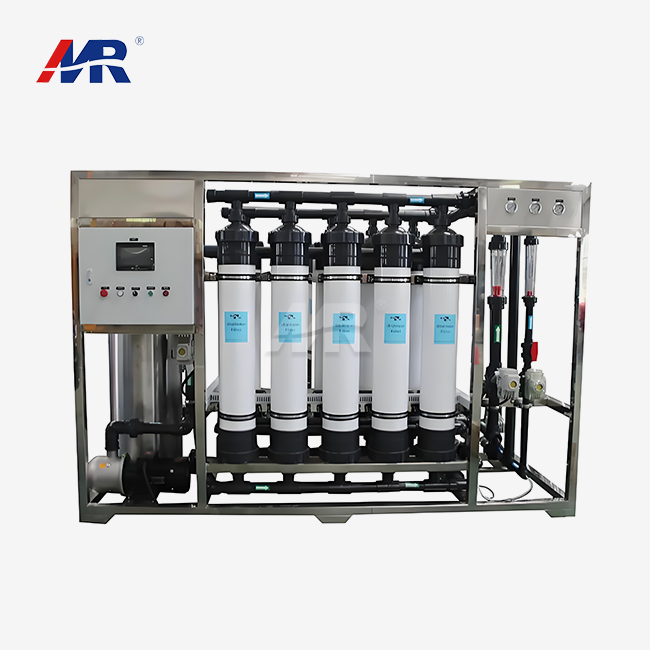
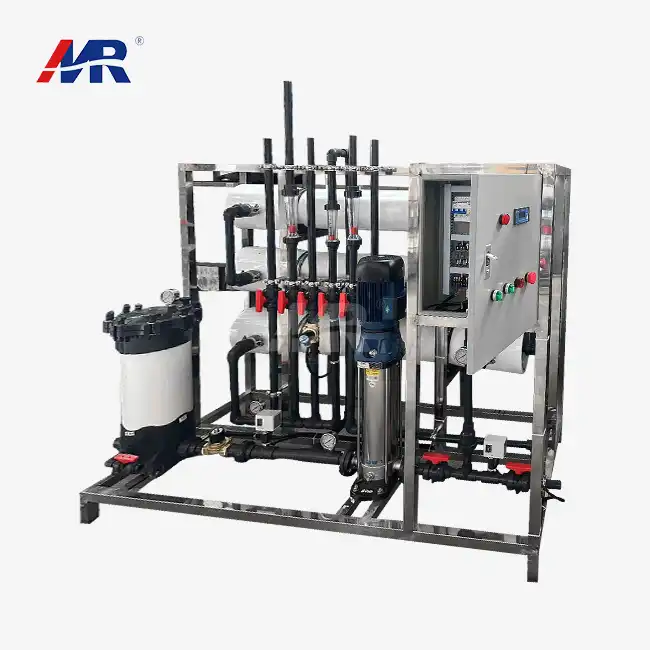
Morui has options for water softener and ro systems that are made by the manufacturer. These range from post-RO mineral cartridges to full ODM machine sets with combined softening stages. If you need to find private-label cartridges, source for a business project, or get systems that are NSF-approved for the U.S. market, our tech team is ready to help. You can email us at benson@guangdongmorui.com to get help or try some of our goods.
References
1. Water Quality Association. Soft Water and Ion Exchange Technology Reference Manual. WQA, 2021.
2. U.S. Environmental Protection Agency. Drinking Water Treatability Database: Reverse Osmosis. EPA, 2022.
3. International Desalination Association. IDA Water Security Handbook. IDA, 2020.
4. AWWA (American Water Works Association). Water Treatment: Principles and Practices of Water Supply Operations. AWWA Press, 2018.
5. NSF International. NSF/ANSI 58: Reverse Osmosis Drinking Water Treatment Systems. NSF, 2023.
6. Crittenden, J.C., et al. MWH's Water Treatment: Principles and Design, 3rd ed. John Wiley & Sons, 2012.