



Desalination Portable Systems for Remote Industrial Water Supply
When fresh water is miles away and infrastructure is nonexistent, a desalination portable system becomes the most practical answer on the table. These compact modular units for portable desalination applications convert seawater or high-salinity brackish water into clean, potable water that meets WHO drinking water standards—without requiring a permanent treatment plant. From offshore oil rigs to mining camps in arid regions, portable desalination technology fills a gap that traditional water logistics simply cannot cover. At Morui, we design and manufacture SWRO-based systems built for exactly these portable desalination conditions.
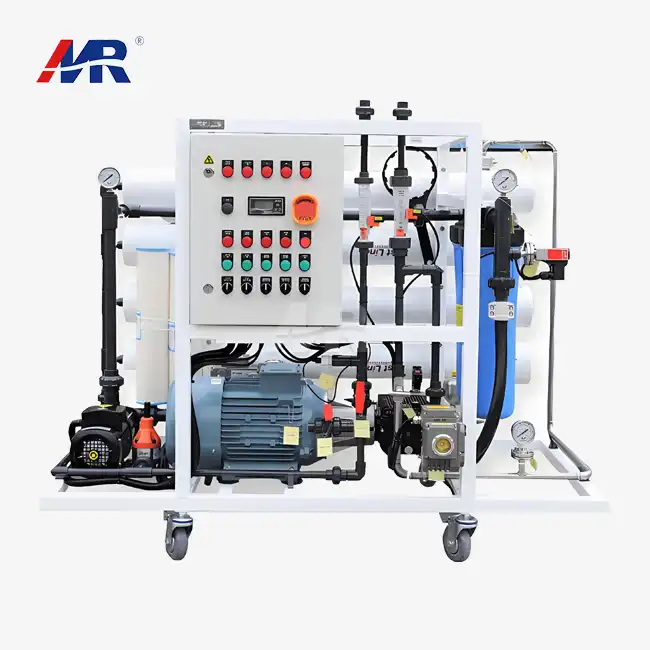
Understanding Portable Desalination Systems for Industrial Use
What These Systems Actually Are
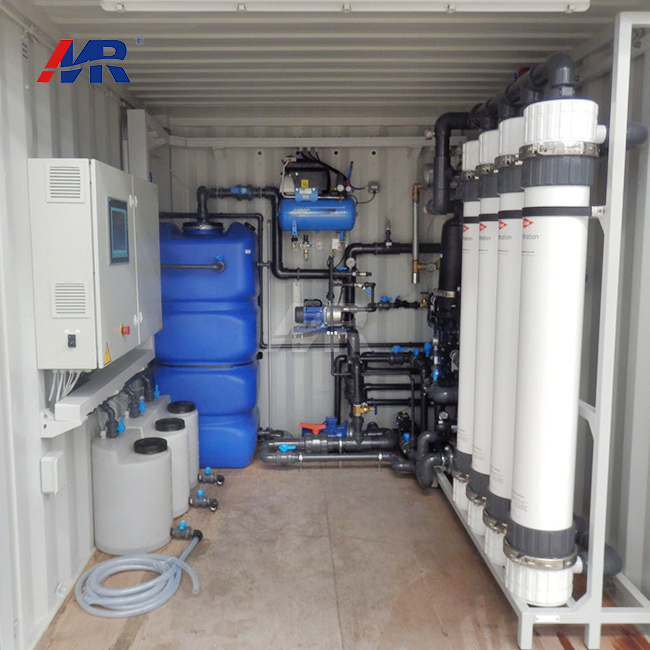
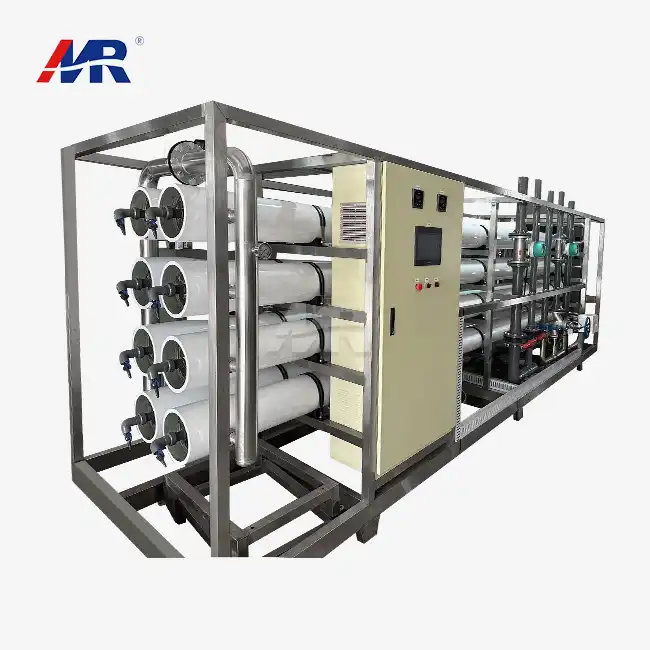
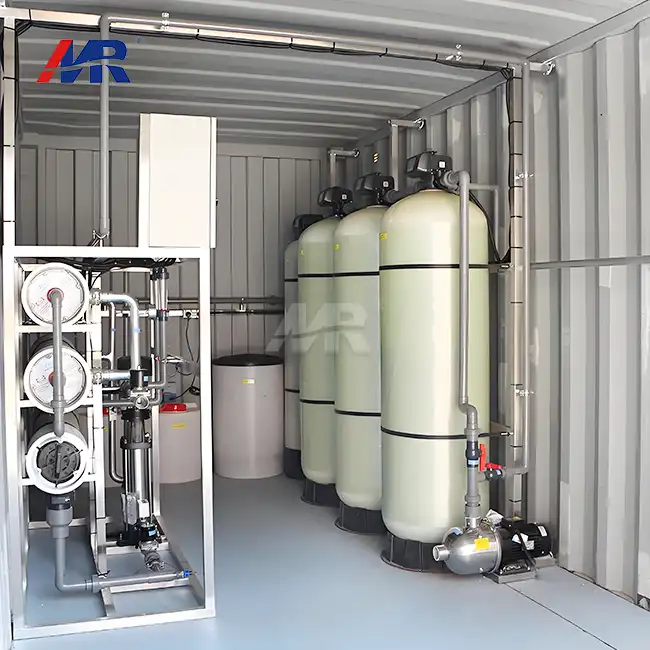
A portable desalination machine is made up of high-pressure pumps, semi-permeable reverse osmosis (RO) membranes, and several stages of pre-filtration. It can be moved around and can be placed on a skid or in a container. A set desalination plant that is connected to the public sewer system is not like these systems because they are already ready to use. The water source can be cloudy, and the salt levels can change up to 45,000 mg/L TDS. They are designed to work without having to be set up again by hand.
Core Technology Inside Each Unit
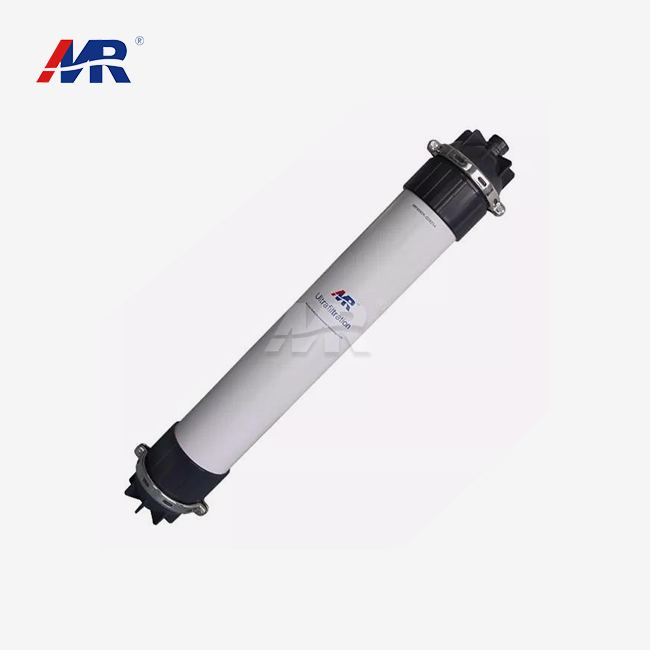
The first step is pre-filtration, which can be done with either multimedia filters or ultrafiltration (UF) membranes. This gets rid of the dissolved solids. That's when the salty water goes through high-pressure SWro membranes that use Thin Film Composite (TFC) membrane technology to get rid of more than 99.4% of it. It is the job of energy recovery devices (ERDs) to take back the pressure from the reject stream. This can cut the energy needed down to as little as 3.0–4.0 kWh per cubic meter, depending on the salt and how the system is set up.
Why Portable Beats Fixed in Remote Settings
Fixed desalination plants need a lot of work on the land, a steady supply of power, and months to build. When a RO machine is brought to a place, it can be used right away, within days. That speed directly means that work can keep going in mines, on ships in the ocean, or when there are problems. If a business moves to an area with less water, the International Desalination Association (IDA) says the need for off-grid and mobile desalination portable units has steadily grown.
Key Decision Factors When Selecting Portable Desalination Solutions
Performance Metrics That Matter
The daily output capacity (m³/day), the specific energy consumption (kWh/m³), and the membrane recovery rate (%) should all be carefully looked at by procurement engineers before they buy something. Most of the time, a well-made portable SWRO machine can get 35–45% of the water back from the ocean. Things that have ERDs built in last longer and work better, especially in outlying areas where fuel or grid power is pricey.
People who want to buy something should look at these key technology specs:
- Salt rejection rate: Look for >99.4% using TFC membranes—this directly determines output water quality and TDS compliance.
- Energy consumption: ERD-equipped units can reduce power draw significantly compared to standard pump configurations, which matters when running on diesel generators or solar arrays.
- Material construction: Duplex stainless steel components and corrosion-resistant fittings extend service life in marine and coastal environments where chloride exposure accelerates metal degradation.
- Control system: Automated TDS monitoring, pressure alarms, and membrane flush cycles reduce operator dependency and prevent biofouling between operating cycles.
These specs tell you if a system can do solid work for months at a time without needing to be fixed often, which is what real-world business buyers want.
Procurement Models and Supplier Criteria
For US sellers, the paperwork they need to fill out is just as important as the results they get. Some basic standards are CE and NSF/ANSI Certifications, approvals for Products that come into contact with water, and water quality test results from a third party. Buyers should also ask for data from field tests or site surveys before they place a large order. In order to assist with this process, Morui provides official technical documents, membrane performance data sheets, and, for unique setups, on-site pilot testing.
It is important to know what a desalination portable provider sells before you look at them. Morui owns both the plant that makes membranes and the factory that gets tools ready for use. This speeds up lead times, improves quality control, and lets membrane specs be changed to match the source water's chemistry.
Rental vs. Purchase Considerations
A rental or lease deal can help you save money on cash for short-term projects like setting up camps or sending people to help in an emergency. It's usually cheaper to own something when you buy it directly and sign a service deal for it. In particular, this is important for long-term jobs like oil field camps, island utilities, or permanent resort supply. Morui has both basic containerized units that can be bought in bulk from wholesalers and OEM/ODM systems that can be fully customized to fit the needs of their users.
Implementing Portable Desalination for Remote Industrial Water Supply
Planning for Site-Specific Conditions
For deployment to go well, pre-installation testing is important. What kind of membrane to use and how the pre-treatment is set up depend on the temperature, turbidity, bacterial load, and salt content of the source water. Where I live, in the Middle East, it gets above 45°C a lot of the time. This is hard on normal parts that aren't designed to work in hot places. Before delivering, Morui's engineering team looks at the source water and recommends system configurations that work best for that site.
Installation, Commissioning, and Daily Operation
The factory puts together and tests containerized units before they leave. Setting up the system on-site usually takes one to three days. During that time, the pump is turned on, the pressure is adjusted, the membrane is conditioned, and the water quality is checked for the first time. Morui has online tracking and usage manuals in multiple languages for places that don't have a lot of technical workers. For experts, this makes it possible to watch the system work from one place.
Every day, these are the best ways to run a business:
- Scheduled membrane flushing: Automated low-pressure freshwater rinse cycles after each shutdown prevent scaling and biological growth on membrane surfaces.
- Pre-filter cartridge replacement: Tracking differential pressure across pre-filters indicates when media is saturated—replacing on schedule protects downstream membranes and extends their service life.
- Periodic chemical cleaning (CIP): Clean-in-place protocols every 500–1,000 operating hours remove accumulated scale and organic deposits from SWRO membranes without system disassembly.
– Planned membrane flushing: Low-pressure freshwater rinse cycles are run automatically after each stop to keep membrane surfaces from scaling and mold growth.
Water Quality Standards and Environmental Compliance
If you set up and run an SWRO portable system properly, the water it makes will always meet WHO standards for drinking water and US EPA standards for running a business. There should be less than 500 mg/L of TDS in the seawater. In Morui's system package, there are post-treatment units for projects that need to remineralize. This means adding calcium and magnesium back to the water to make the food taste better or protect the pipes.
Future Trends and Innovations in Portable Desalination Technology
Solar-Powered and Off-Grid Integration
Using the sun to remove salt from water is no longer an experiment. If you pair DC-compatible SWRO systems with solar panels and battery storage, they can now work well in remote places that get a lot of sun. The cost of energy per cubic meter goes down a lot when fuel use is cut down. In places with little water or on islands where people don't have easy access to the grid, this setup works best for growing irrigation projects.
IoT Monitoring and Predictive Maintenance
Smart tracking systems let managers see real-time information like flow rates, TDS output, membrane pressure differentials, and energy use from any device that can connect to the internet. Predictive maintenance algorithms look for changes in how well something works before they break down. This keeps things from going down without warning in places where it's hard to get service workers. Morui's remote monitoring feature works with common SCADA platforms, so it can be added to industrial control systems that are already in place.
Market Growth and Strategic Procurement Timing
Grand View Research (2023) says that the global desalination market was worth about USD 17.7 billion in 2022 and will be worth USD 32.1 billion by 2030. This is because of climate change and industries not having enough water. Teams that need to buy things that will last a long time should make deals with sellers right now, before problems with supply and rising costs of raw materials make things even more expensive. Morui's factory can handle both small batch orders and large-volume contracts because the lead times are always the same.
Conclusion
Some industrial sites don't have access to water from the mains, like an offshore platform, a mining camp, or an island town. Desalination portable systems are a useful and tried-and-true way to get water to these places. Today's SWRO units don't need much power, get rid of a lot of salt, and can keep running for a long time in places where normal facilities can't. Morui has worked on membrane development, system engineering, and projects in other countries all in the same supply chain. This means that procurement teams can trust us when they need both technical depth and delivery certainty.
FAQ
1. What daily output capacity should I specify for an industrial site?
Output requirements depend on the number of users and industrial process demand. A mining camp of 200 workers typically needs 20–40 m³/day for drinking and sanitation. Larger oilfield or island supply projects may require 500–5,000 m³/day. Morui offers systems across this full range in both skid and containerized formats.
2. How does energy consumption compare to trucked water supply?
Trucked water in remote regions often costs USD 5–20 per cubic meter depending on distance. A well-designed SWRO portable unit produces water at USD 1–3 per cubic meter, including energy and consumables, making on-site desalination more cost-effective within 6–18 months of operation.
3. What certifications should I require from a supplier?
For US projects, look for NSF/ANSI 58 or equivalent water treatment certification, CE marking on electrical components, and third-party water quality test reports. Ask suppliers for material safety data on all water-contact components.
4. Can these systems handle brackish groundwater as well as seawater?
Yes. Brackish water RO systems operate at lower pressures than seawater units, which reduces energy consumption further. Morui configures pre-treatment and membrane selection based on your specific source water analysis.
5. How do I get a quotation from Morui?
Contact Our Team at benson@guangdongmorui.com or visit moruiwater.com with your source water data, required output capacity, and site location for a project-specific proposal.
Partner with Morui for Your Next Desalination Portable Project
We are a business that makes desalination portable tools for purification. We have our own plant that makes membranes and employs more than 500 people. We have full SWRO systems that come in container, skid, and mobile forms. It has been certified and tested in the field that these systems can work in the most difficult remote places. We can help you with every step of the buying process, from the technical review to the installation. It doesn't matter if you need a simple unit or an OEM system that is fully tailored to your needs. You can go to email us at benson@guangdongmorui.com.
References
1. International Desalination Association (IDA). IDA World Congress on Desalination and Water Reuse Proceedings. 2023.
2. Grand View Research. Desalination Market Size, Share & Trends Analysis Report. 2023.
3. World Health Organization (WHO). Guidelines for Drinking-Water Quality, 4th Edition. 2022.
4. US Environmental Protection Agency (EPA). Drinking Water Standards and Health Advisories Tables. 2022.
5. Fritzmann, C., Löwenberg, J., Wintgens, T., & Melin, T. "State-of-the-art of reverse osmosis desalination." Desalination, Elsevier. 2007.
6. Elimelech, M., & Phillip, W. A. "The Future of Seawater Desalination: Energy, Technology, and the Environment." Science, Vol. 333. 2011.
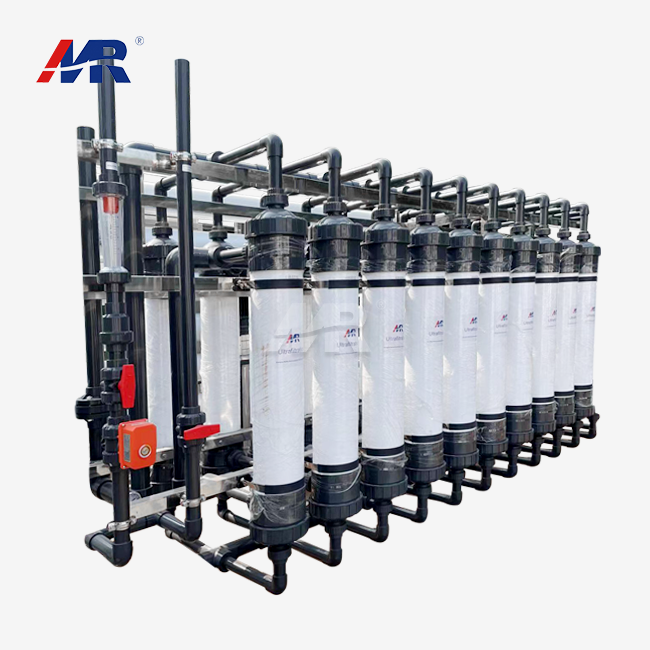 VIEW MOREultrafiltration drinking water system
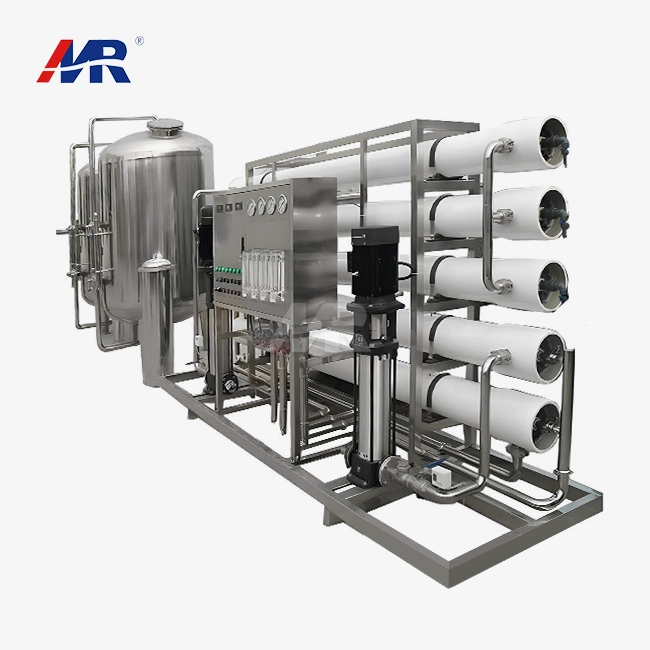 VIEW MOREbrackish water reverse osmosis
 VIEW MORELandfill Leachate Treatment Plant
 VIEW MOREcontainerized ultrafiltration equipment
 VIEW MORE8m3/hour two pass reverse osmosis system
 VIEW MOREultra filter membrane
 VIEW MOREbioreactor wastewater treatment
 VIEW MOREcontainer type 3m3/hour RO equipment