

_1745823981883.webp)

How Much Is the Cost of a reverse osmosis system in 2026?
Beyond the original buy price, there are several financial layers that must be considered in order to determine the RO system cost in 2026. Prices for industrial reverse osmosis equipment range from $5,000 for small units to over $500,000 for big systems. The final cost will rely on the size of the system, how well the technologies work together, the quality of the membrane, and the needs of the application. Operating costs, such as replacing membranes, using energy, and upkeep, add 15 to 25 percent per year to the total cost of ownership. Pharmaceutical-grade systems with validation methods cost a lot, but mid-range configurations may work for agricultural uses that need to balance performance with cost.
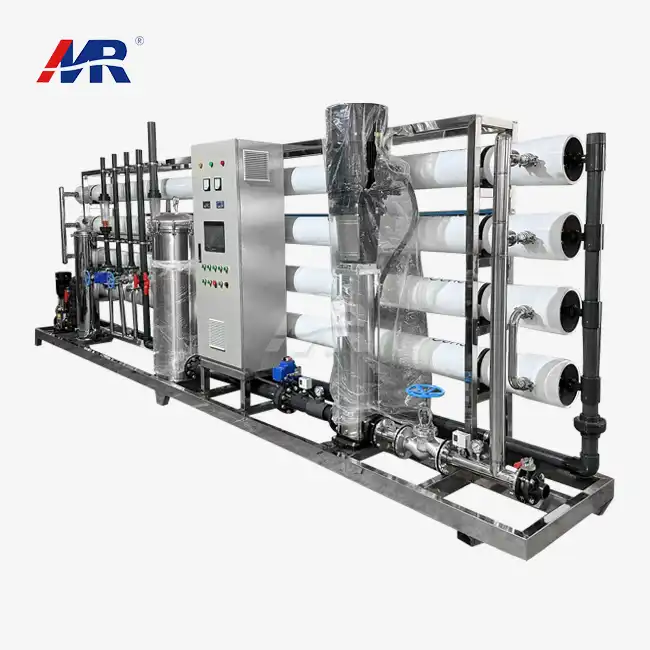
Understanding the Total Cost of a Reverse Osmosis System in 2026
Find out how much a reverse osmosis system will cost altogether in 2026. To figure out how much reverse osmosis technology costs, you need to know about all the costs that affect your buying budget. We've seen how wrongly estimating these costs can cause problems with operations and cost overruns in factories and city water treatment plants.
Initial Purchase Price Variables
The initial cost may vary. Equipment prices vary based on its production rate, measured in gallons per day or cubic meters per hour. Small pharmaceutical lab systems that create 500 litres of liquid daily cost $12,000. Systems for 50,000-gallon-a-day food processing factories cost above $200,000. Systems that combine RO with electrodeionization to generate ultrapure water cost 40–60% more. Thin-film composite or cellulose acetate membranes vary in cost and replacement frequency. Remote tracking, automated chemical dosages, and predictive maintenance sensors cost $8,000 to $25,000 but save money over time.
Installation Expenses and Site-Specific Factors
Buyers who don't know how to prepare the site are typically surprised by installation prices. Labour expenses vary from $3,000 for basic installations to $50,000 for industrial systems that involve a concrete pad, electrical upgrades, and specific pipelines. Facilities using water treatment technology save 30–40% over new installations. Labour rates vary by location. In coastal industrial zones with higher incomes, installation costs are 25% higher than the national average. Multimedia filters, softeners, and carbon beds might cost $5,000 to $40,000, depending on feed water quality. Pharmaceutical manufacturing requires $1,500 to $8,000 in permit costs and environmental compliance.
Ongoing Operating and Maintenance Costs
Operating expenses make up the majority of a system's overall RO system cost; they must be carefully considered before buying. Powering high-pressure pumps costs 40–55 percent of operational expenses, depending on local electricity prices. Depending on system size and water quality, changing the membrane every three to five years might cost $2,000–$30,000. Replacement of pretreatment filter tubes every three months costs $200–$1,500 each cycle. Cleaning, antiscalant, and pH adjustment chemicals cost $150–$800 per month for commercial use. Annual preventive maintenance contracts with experienced specialists cost $2,500 to $12,000, but avoid emergency repairs. In regions with severe discharge limitations, concentrated discharge water waste might cost $0.50 to $2.00 per 1,000 gallons to remove.
Comparing Reverse Osmosis System Costs: Quality vs Price in 2026
The link between price and quality in reverse osmosis equipment has a direct effect on how well it works in the long term and how efficiently it uses costs overall. Our experience in a wide range of industry settings shows that the initial savings that come with cheap tools often turn into too much upkeep work and system failures that happen before they should.
Premium vs Economy System Performance
Quality systems from well-known companies cost 35–50% more than inexpensive ones but are more dependable. Higher-end equipment has 95–98% uptime, whereas lesser solutions have 80–85%. This reduces production pauses for pharmaceutical and food companies. Advanced membrane technology makes premium systems' replacements last 3–5 years, justifying their higher beginning prices. Energy-efficient pump designs save 20–30% of electricity, saving $3,000 to $15,000 a year, depending on system size. Economy systems are only utilised during particular seasons, making them ideal for farmed irrigation projects with lower water quality standards and fewer runtime hours.
Cost Positioning Against Alternative Technologies
RO system cost comparisons demonstrate that it outperforms alternative purification technologies in capability and working flexibility. Distillation machines cost 60–80% more and consume 3–4 times more energy per gallon. Ion exchange systems offer cheaper initial costs but need chemical regeneration, which increases expenses and waste. Ultrafiltration alone can't remove enough pollutants for pharmaceutical or electronics applications, thus many stages are required, raising the price to RO. Advances like forward osmosis are still being tested, and the equipment costs two to three times more than regular RO. Market conditions reveal that raw material prices have levelled off since supply chain normalisation. Stainless steel tanks and pressure-rated pipes cost the same. Since Asian vendors can create more membranes, costs have dropped 8–12% since 2024. Automation parts are 15–20% more expensive due to semiconductor shortages. This affects programmable logic controllers and sensors.
How to Procure Reverse Osmosis Systems Cost-Effectively
When buying a reverse osmosis system, strategic procurement methods are what separate successful setups from costly mistakes. We help buying teams find the best mix between lowering costs, making sure suppliers deliver on time, and ensuring performance.
Requesting Comprehensive Quotations
Effective quote requests spell out in great detail the technical needs that must be met. This keeps bids from being vague and lets you make accurate comparisons. Documentation should include the analysis results for the feed water, the needed production capacity with peak demand details, the quality parameters for the product water, the available utilities with voltage and phase details, and any space limitations that affect how the equipment is set up. Asking for detailed pricing that breaks down the RO system cost into tools, installation, commissioning, training, and guarantee terms helps you find hidden costs and negotiate a better deal. Lifecycle cost calculations can be done by insisting on estimates of energy use that are based on real working profiles. Asking for references from similar setups in the same industry confirms the vendor's skills and identifies any possible performance problems.
Negotiation Strategies and Payment Terms
Businesses that buy a lot of systems at once or plan to expand in stages can save 12 to 18% by signing up for volume purchasing deals. When you buy equipment with a multi-year service contract, you can often get an 8–10% discount on the original price and be sure of consistent upkeep. Buyers are protected by payment plans that include fees and payments at set times after the installation is finished and the performance is checked. With a lease-to-own agreement, you can spread out the costs over three to five years and keep the money for key business assets. Looking into government grant programs that help save water or make factories more efficient can help cover 15 to 25 percent of the costs of approved systems. When you work with authorized distributors instead of gray market providers, you can be sure that the parts you buy are real and that you can get help from expert support networks.
Analyzing the Cost Benefits and ROI of Reverse Osmosis Systems
The case for investing in reverse osmosis technology goes beyond improving water quality. It also includes making operations more efficient and following the rules more easily. Our project paperwork in the industry sectors shows measurable returns that make it easier to get approvals for purchases.
Long-Term Financial Advantages
High-quality reverse osmosis systems save money by using less energy, preserving membranes, and reducing downtime. Power costs are $4,000–$18,000 lower for high-pressure pumps with energy-efficient variable frequency motors than fixed-speed pumps. Advanced cleaning settings extend membrane life from 3 to 6-7 years, saving $15–$40k in replacement expenses. Manual cleaning systems lose 15-20% capacity, whereas automated systems maintain high flow rates. Smart monitors provide predictive maintenance, reducing $2,000–$8,000 emergency calls. Real-time tracking prevents product water quality variations that would require batch discard and production adjustment.
Environmental Compliance and Sustainability Returns
Modern reverse osmosis systems reduce legal risk, operational expenses, and environmental impact. High-recovery designs reduce concentrate discharge when locations have discharge limitations. This reduces disposal costs by 30–45%. Energy-efficient designs reduce carbon footprints, which aligns with firms' environmental goals and may help them secure green building Certifications. In water-intensive companies, closed-loop water recycling systems reduce municipal water purchases by 40–60%, saving $25,000–$150,000 annually. Several jurisdictions provide tax benefits and quicker depreciation for water-saving devices, which may boost project profitability by 10–15%. Effective RO systems demonstrate water stewardship, which boosts a company's image among environmentally conscious investors and consumers.
Cost Estimation Guide and Practical Tips for B2B Buyers
To make a good budget, you need to think about things that are unique to your business and be honest about how much the whole thing will cost. We've made useful models that help procurement professionals stay away from common estimate mistakes that cause projects to take longer than planned and cost more than planned.
Industry-Specific Budget Frameworks
Pharmaceutical businesses should budget $150,000–$400,000 in RO system cost for GMP-compliant systems with validation documentation. These systems will cost $35,000–$75,000 annually for quality assurance testing and regulatory compliance. FDA-compliant production water systems cost food and beverage companies $50,000–$250,000 in RO system cost. These systems cost $12,000–$40,000 annually. RO, electrodeionization, and degasification cost $200,000 to $600,000 to produce electronics with 0.5 to 1.0 megohm ultrapure water. Based on the millions of gallons of water they clean daily, municipal water treatment facilities that use membrane technology spend $500,000 to $5,000,000. For irrigation systems, salty water treatment costs $25,000–100,000. Using the equipment solely during particular seasons reduces yearly expenditures to $5,000 to $15,000.
Avoiding Low-Cost System Pitfalls
Although inexpensive to acquire, budget equipment sometimes contains low-quality components that make it expensive over time. Small membranes have a 40–50% shorter lifespan at maximum pressure and must be changed before they're due. Low-efficiency pumps without variable speed controls waste $3,000–$12,000 a year on electricity. Unmonitored generic control systems cost more to run manually and take longer to identify faults. When preparation is wrong, membrane fouling arises more quickly, requiring cleaning every month instead of every three months, reducing its usefulness. Procurement teams should verify supplier finances. Unprofitable vendors may shut down, leaving systems without components or expertise. Checking NSF International clearance and following ASME pressure vessel requirements helps prevent safety and legal issues.
Budgets must account for hidden expenses to avoid project failure. Backup membranes, seal kits, and pressure monitors cost $3,000–$15,000. This relies on system complexity and component availability. Operator training on how to operate systems appropriately and repair fundamental faults costs $1,500 to $5,000, but it prevents guarantee violations. Preventative maintenance prevents significant failures by testing the membrane's functioning and analysing the feed water annually for $800–$2,500. Every 5–7 years, system modifications with new membrane technology or automation cost $15,000–$75,000. This is necessary to compete.
Conclusion
Investing in a reverse osmosis system in 2026 requires a full financial analysis that looks at more than just the original purchase price. It also looks at how hard the installation is, how much it costs to run, and how much value is realized over time. With industrial installations running from $5,000 to over $500,000, the RO system cost changes significantly based on capacity needs, industry standards, and technology sophistication. When you focus on total ownership costs instead of minimum acquisition prices when you do strategic buying, you get better stability and business efficiency. Environmental benefits, such as saving water and energy, make investments more appealing and help companies reach their environmental goals. Working with skilled providers that offer full lifecycle support is the best way to make sure that systems work well and get the most out of your investment in a wide range of industry settings.
FAQ
1. What is the average lifetime cost of an industrial reverse osmosis system?
During their 15-year working life, industrial reverse osmosis systems usually cost 2.5 to 3.5 times what they were bought for. The total costs of a $100,000 system add up to between $250,000 and $350,000. This includes the cost of energy, replacing membranes, upkeep, and chemicals. At the upper end of this range are pharmaceutical-grade systems that have to meet strict validation standards. At the lower end are farming uses that are only used during certain times of the year.
2. How do installation complexities affect the total RO system cost?
Installation costs run from 10% of the cost of the equipment for easy installations that use existing infrastructure to 50% of the cost of the equipment for complicated projects that need to prepare the site, upgrade utilities, and install special pipes. Final installation costs are affected by many things, such as changes to the building itself, upgrades to the electricity service, the creation of a concrete pad, and getting the necessary permits. This is why site assessment is an important part of budget planning.
3. Are financing options available for bulk reverse osmosis system purchases?
A lot of companies that sell industrial equipment have financial options, such as lease-to-own plans, payment plans with delayed interest, and service packages that last for more than one year. Banks offer equipment loans with terms of 5 to 7 years and interest rates that are tied to prime lending rates. When you buy a lot of systems at once, you usually get savings of 12 to 18%, and some government agencies offer low-interest loans for projects that save water.
Get Accurate RO System Cost Quotes from a Trusted Manufacturer
Morui offers clear prices and full support for reverse osmosis systems that are customized to meet the needs of your industry. Our engineering team breaks down the costs of tools, installation, and expected running costs in great detail, so there are no surprises when you buy from us. We can offer competitive prices without lowering the standard because we have our own membrane production plant, more than 500 employees, and 20 experienced engineers. Our technical know-how guarantees the best system configuration, whether you need pharmaceutical-grade purified water systems, food processing tools, or methods for desalinating seawater. Email us at benson@guangdongmorui.com to get a personalized quote from a reputable RO system cost provider that cares about your long-term business success.
References
1. Water Quality Association. (2025). Industrial Reverse Osmosis Systems: Cost Analysis and Performance Benchmarks. WQA Technical Publications.
2. American Membrane Technology Association. (2025). Membrane System Procurement Guide for Industrial Applications. AMTA Industry Standards.
3. International Desalination Association. (2026). Global Reverse Osmosis Market Report: Pricing Trends and Technology Developments. IDA Annual Review.
4. National Institute of Standards and Technology. (2025). Life Cycle Cost Analysis for Water Treatment Equipment. NIST Manufacturing Extension Partnership.
5. Environmental Protection Agency. (2025). Cost-Benefit Analysis Framework for Industrial Water Treatment Technologies. EPA Water Infrastructure Publications.
6. Industrial Water Treatment Journal. (2026). Total Cost of Ownership Models for Membrane Filtration Systems in Manufacturing. Volume 38, Industrial Applications Series.
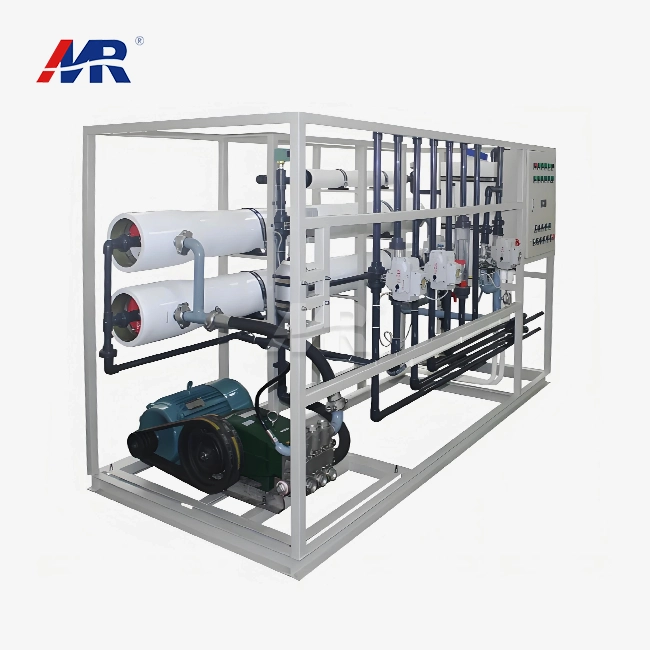 VIEW MOREseawater desalination pre-treatment
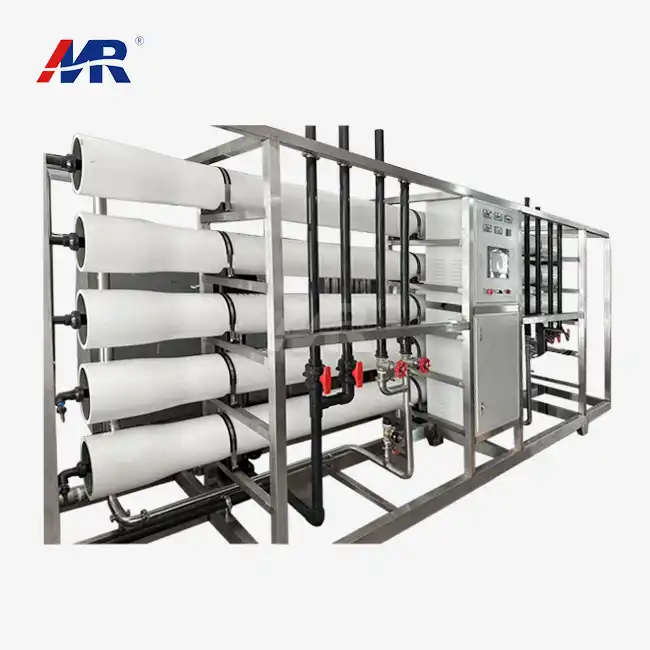 VIEW MORE25m3/hour reverse osmosis equipment
 VIEW MOREro edi system
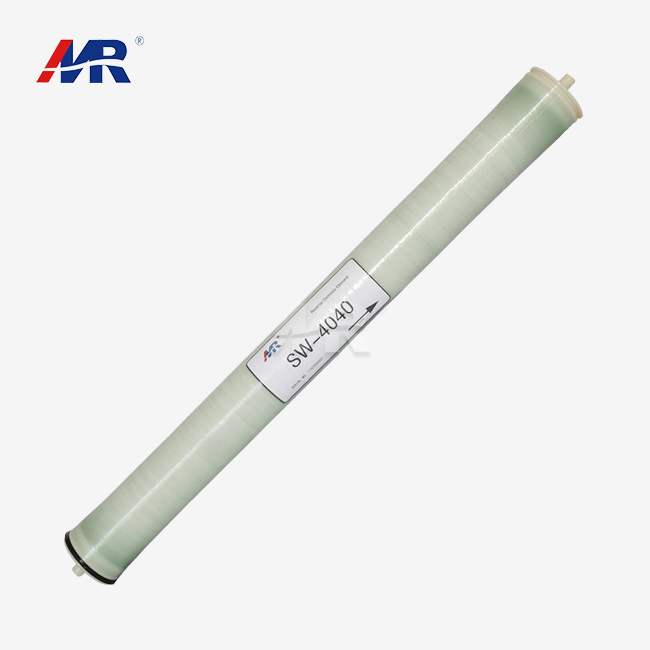 VIEW MORE4040 seawater reverse osmosis membrane
 VIEW MOREmembrane used for reverse osmosis
 VIEW MOREcontainerized desalination plant
 VIEW MOREultra filter membrane
 VIEW MORE2000m3/day ultrafiltration equipment
