Seawater Purification: A Sustainable Solution for Water Supply
Seawater purification gives coastal and remote users a steady water source that does not depend on rainfall. A seawater treatment system removes particles, microbes, and dissolved salt, then adjusts the product water for drinking, industrial, or irrigation use. It works best when intake, pretreatment, reverse osmosis, and brine handling are designed as one package. The WHO and UNICEF reported that 2.2 billion people lacked safely managed drinking water in 2020, so new supply options matter. In this article, I explain how seawater desalination works, how to compare equipment, and where the Morui MR-SWRO-8TH fits.
How Seawater Purification Works
What Is Seawater Desalination?
People who live near the coast or in the middle of nowhere can get clean water from the sea without having to wait for rain. A seawater treatment system gets rid of particles, microbes, and salt that has been dissolved in the water. After that, the water is ready to be used for drinking, farming, or industry. The process works best when the salt is brought in, pretreated, reverse osmosis is applied, and handled in a way that all of these steps work together. WHO and UNICEF said that 2.2 billion people would not have access to safe drinking water in 2020. It is important to find new ways for these people to get this water. How seawater desalination works, how to compare machines, and the Morui MR-SWRO-8TH are all covered in this post.
What Is a Seawater Intake System?
The salts and minerals that are in ocean water are taken out to make fresh water by desalination. The amount of salt that is dissolved in most saltwater is 35,000 mg/L, which is plenty for most people to drink. For the most part, WHO says that water with less than 600 mg/L of total dissolved solids tastes good. The taste gets worse above about 1,000 mg/L. Desalination fills that void. People also depend less on rivers and groundwater, which can run dry during droughts. Jones and his coworkers found that in 2019, there were about 16,000 cement plants running around the world. Each day, these plants made about 95 million cubic meters of cement. The numbers show that a lot of people know about the technology. It's hard to get fresh water on the island, and it costs a lot to bring it there. Hotels, ships, mines, and oil camps use it.
How a Seawater Treatment System Works Step by Step
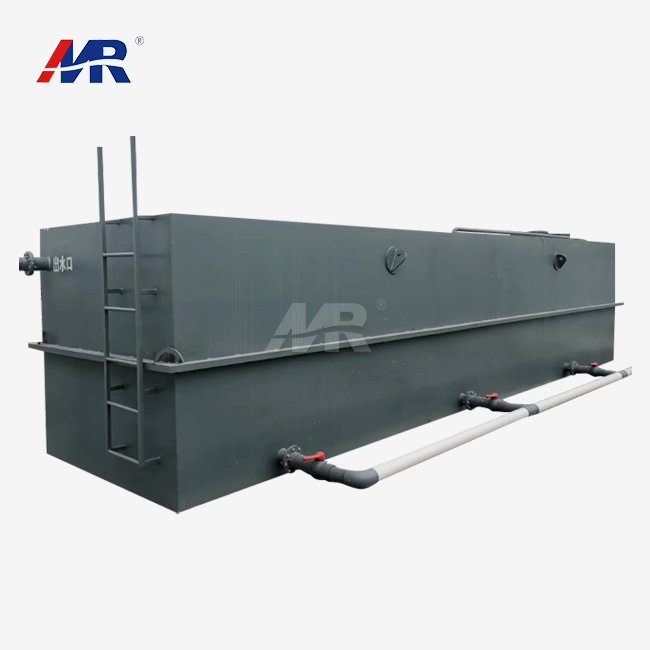
The water from the ocean comes into the plant through a system that takes it in. It is the first piece of equipment that connects the sea to the next stages, so how it is built has an impact on all of them. When water comes in from the open ocean, pipes and screens keep out trash like seaweed, shells, sand, and more. The water comes up from the bottom through deep wells in the beach. A lot of solids are filtered out by the sand along the way. When the openings are good, barnacles, mussels, and other sea life can't get into the pipes. They set the speed of the water to protect fish and other sea life. Things are also important. Saltwater can damage plain steel quickly, so pipes, valves, and pumps must be made so that they don't rust. The entry needs to be good so that more silt and algae can get into the filters. This will make them cost more to clean in the future.
Choosing a Seawater Desalination System: The Morui MR-SWRO-8TH
Key Specifications of the MR-SWRO-8TH
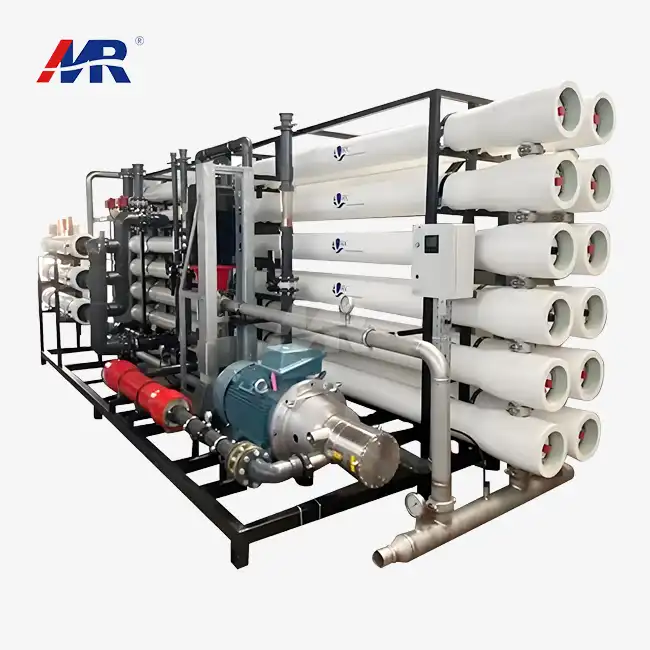
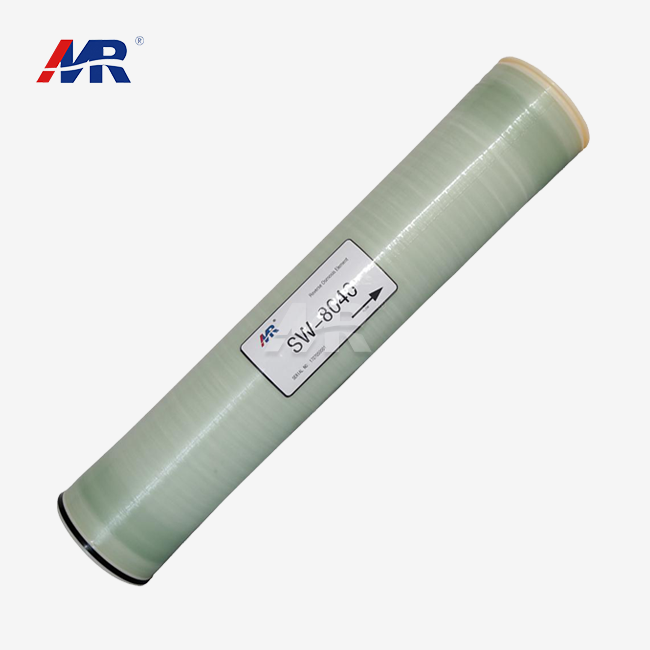
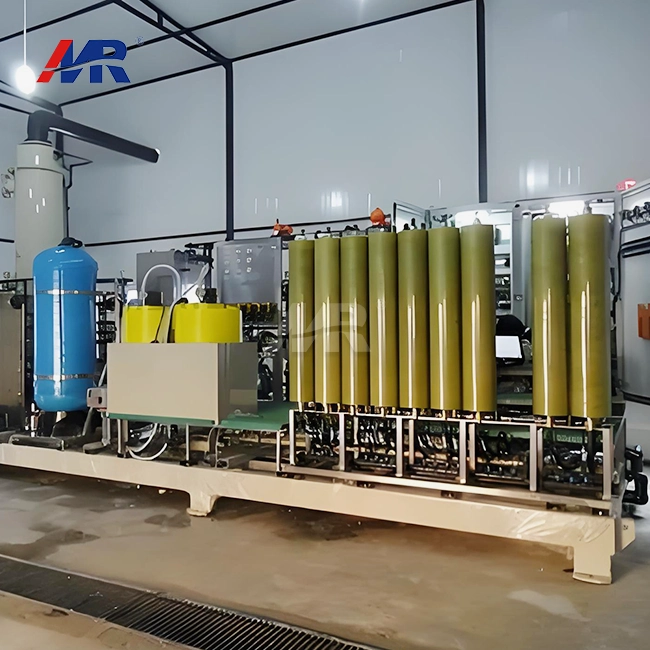
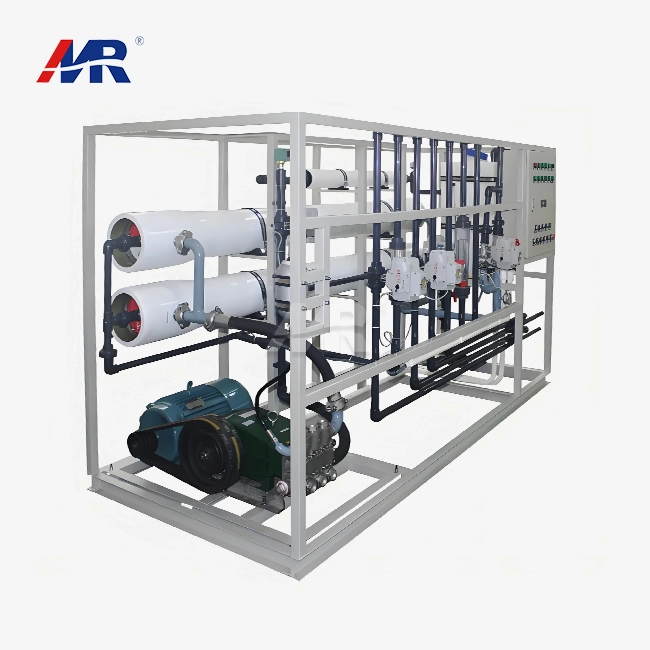
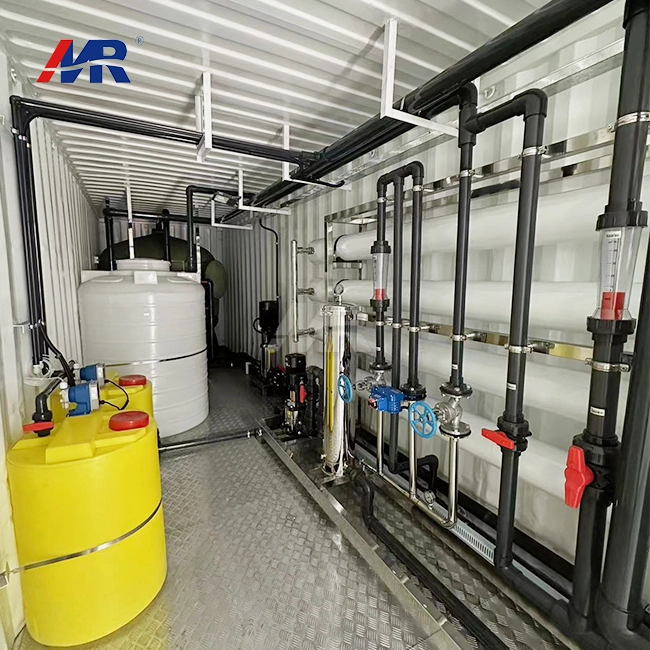
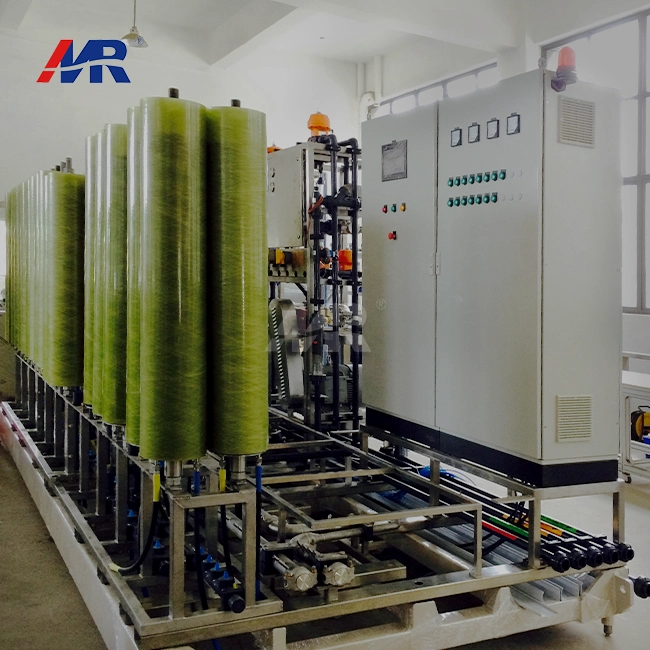
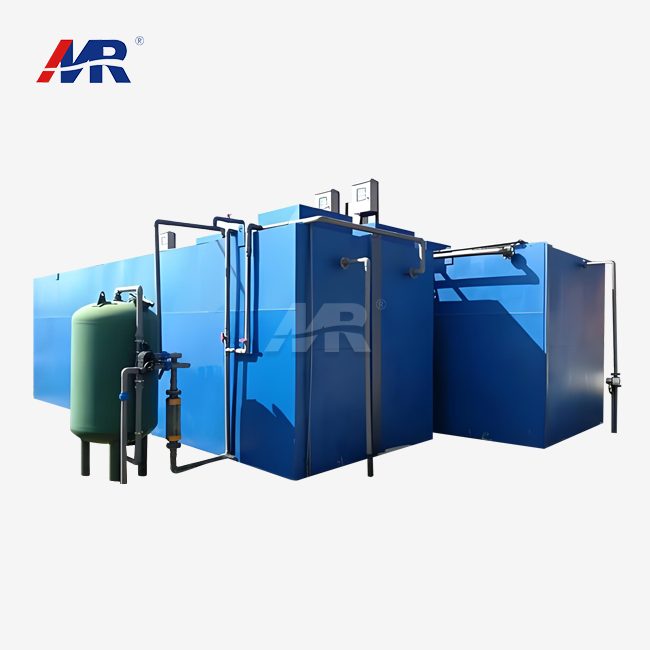
A saltwater reverse osmosis machine like our MR-SWRO-8TH is ready to use. This machine changes salty or brackish water into clean water that can be used for drinking or business. It says that it can be used to remove salt from a seawater treatment system. It needs 38.5 kW of power, gets back 38–45% of that power, and throws away 99% of the salt. There are energy recovery and anti-fouling SWRO screens that make it use less energy per ton of water. These are the membrane plants and tools that our company, Morui, owns. The filters, air tanks, and the whole system can now be put under one roof. You can set up the unit in a container, on a skid, or in the water. As we plan the project, we check its rated capacity, preparation type, and end water goals based on the raw water data you give us. This is the amount of feed water that is turned into product water. When the water level is between 38 and 45%, the MR-SWRO-8TH changes about 38 to 45 liters of every 100 liters of seawater feed into permeate. The rest is used as brine. Most seawater work has a modest recovery rate. This is because as the work goes on, the leftover water gets saltier and the osmotic pressure rises. By pushing healing further, more needs to be done, and more risks are present. You can use the 38.5 kW power number to figure out what size generators, transformers, and power lines you need. Divide the power by the hourly permeate flow to get an idea of the energy per cubic meter. To give you some background, Elimelech and Phillip said that saltwater RO plants currently use around 3 to 4 kWh per cubic meter, while the lowest amount that could be used is 1.06 kWh. Ask all of them to give you the same amount of kWh per cubic meter.
What Recovery Rate and Power Use Mean for Your Budget
For thermal desalination, water is boiled, and the steam is cooled. For reverse osmosis, water is pushed through membranes. Reverse osmosis is good for projects that can change quickly, like hotels, camps, ships, and island services, since you can add more trains. When big power plants can get cheap steam or waste heat, these plants work best. Some of the costs that you might need to think about are the capital, energy, maintenance, water quality, and room for growth. The answer might be different based on the seawater's temperature, salt level, boron limits, and release rules. To be sure, a project study should be done. I believe reverse osmosis is the best choice for small or remote sites.
Reverse Osmosis or Thermal Desalination?
We can't tell a lot about the market from price alone
Buying and Operating a Seawater Treatment System
Cost and Procurement Factors for U.S. Buyers
). Things like energy, chemicals, filters, work, extra parts, membrane repair, and downtime are all part of the total cost of ownership. And the price of shipping, customs, setting up, building work, and getting approval is not the same as the price of the equipment itself. When you ask for quotes, make sure that all of the suppliers give you the same information. This includes the design basis, the guaranteed flow and quality of the water, the recovery rate, the amount of energy used, a list of the equipment, the control scope, the warranty, the delivery terms, and a list of what is not covered. A lot of the time, U.S. projects need NSF/ANSI 61 approval for parts that touch drinking water, water quality test results, and state or federal brine release licenses. Make sure you know which ones work for your site before you buy. Things move quickly at the port and during inspection when the paperwork is clear from the start.
How to Evaluate a Manufacturer or Supplier
Someone who has worked with pretreatment, pumping, controls, and materials that won't rust should be chosen. Ask for the design calculations, the factory's test records, and a way to find the parts. Shows how well a seawater treatment system works in places like yours, like hotels, ships, or camps in the middle of nowhere. For jobs in other countries, you might want to look into export packaging, operator training, setup help, getting extra parts, and getting expert help from far away. Morui is a business that cleans water. It works in more than 14 places and has 500 employees and 20 engineers. Shimge water pumps, Runxin valves, and Createc tools are some of the names we work with. We also make our own tools and coverings. Other countries' projects can get help from our service network. There is less risk of integration with a turnkey scope as long as the contract is clear about what it does and does not cover.
Operation, Maintenance, and Sustainability
Every day checks must be done to make sure everything works right. Write down the differences in pressure, flow, conductivity, turbidity, pH, feed pressure, and seep pressure. Then, compare the trends to the numbers from the start of the process. There's a good chance that the membranes are getting clogged when the pressure drop or permeate flow goes up. Follow the directions on the package to clean the membranes. Every once in a while, check the tools, pumps, valves, filters, and energy return device. Always have extra parts on hand. The way things are built is where sustainability starts. When you use less energy, properly dilute and release brine, are careful with chemicals, and make sure your tools last a long time, you hurt the environment less. Solar or mixed power can help sites that are far away, but spare power and storage need to be planned ahead of time. In this way, teams can keep an eye on many places at once and spot problems early on.
Conclusion
People who live near the coast or in remote areas can get clean water from the sea that doesn't get contaminated by rain. In a seawater treatment system, ocean water goes through several steps that change how much it costs and how good it is. This process has five steps: input, pretreatment, post-treatment with energy recovery, reverse osmosis, and salt control. MR-SWRO-8TH has a power output of 38.5 kW, a recovery rate of 38–45%, and a salt rejection rate of 99%. It shows how these things work in real life. Thermal options are best for places with cheap heat, while reverse osmosis is best for projects that can be moved around and are far away. Buyers should think about how much it will cost them to own the whole thing, get technical information that matches, and make sure they have all the paperwork and discharge permits they need right away. Maintaining it, checking it every day, and being careful with the brine keep it working well and protect the environment.
FAQ
1. Can seawater reverse osmosis produce drinking water?
Yes, when the system includes proper pretreatment, post-treatment, and disinfection. With 99% salt rejection, the MR-SWRO-8TH removes most dissolved salt. Final quality still depends on feed water, temperature, and membrane age, so confirm results with test reports against local drinking-water rules.
2. What affects the cost of a seawater treatment system?
Capacity, feed water quality, pretreatment needs, energy recovery, automation, installation format, and site location all shape the price. Operating costs, including power, chemicals, and membrane replacement, often matter as much as the purchase price.
3. Should I choose a containerized or fixed plant?
Containerized units are factory-assembled, easy to ship, and quick to install, which suits camps, resorts, and emergency supply. Fixed plants fit long-term municipal or industrial service that needs redundancy. Site space, utilities, and expansion plans decide the better fit.
Request a Seawater Treatment System Proposal from Morui
If you give Morui some information about your project, he can help you choose a good seawater treatment system. For the MR-SWRO-8TH, we can talk about container or skid plans, OEM customization, commissioning, and extra parts. This is because we make seawater treatment systems and have our own workshops for equipment and membrane plants. Send an email to benson@guangdongmorui.com with your site details, capacity goal, and a seawater study.
References
1. Progress on Household Drinking Water, Sanitation and Hygiene 2000–2020: Five Years into the SDGs, WHO and UNICEF, 2021
2. The State of Desalination and Brine Production: A Global Outlook, Science of the Total Environment, 2019
3. The Future of Seawater Desalination: Energy, Technology, and the Environment, Science, 2011
4. Guidelines for Drinking-water Quality: Fourth Edition Incorporating the First Addendum, World Health Organization, 2017
5. Seawater Desalination Power Consumption, Water Reuse Association, 2011
6. Desalination: A National Perspective, National Research Council, 2008