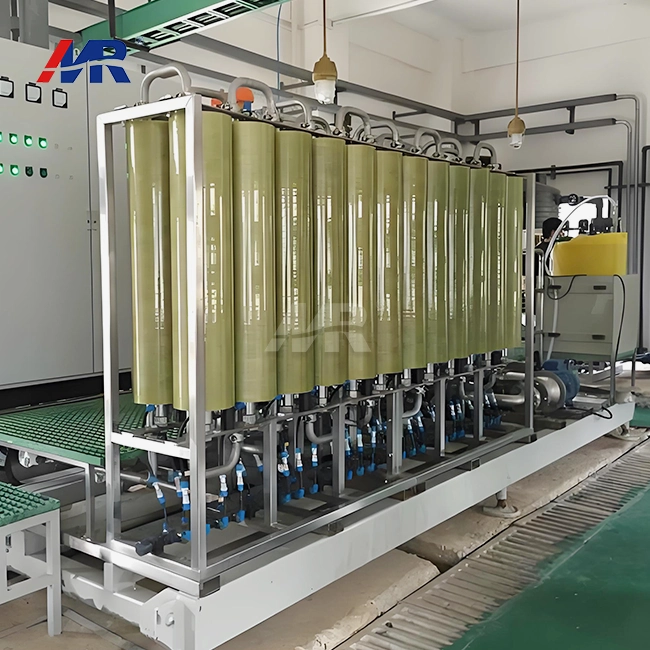
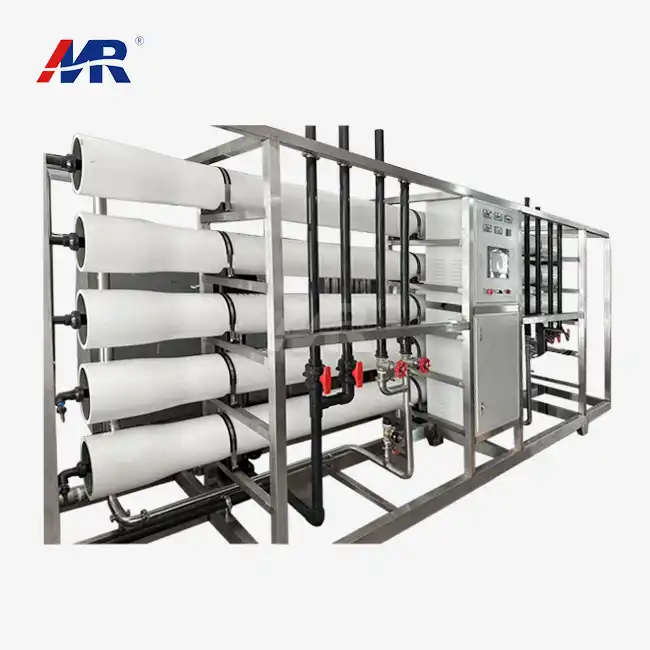
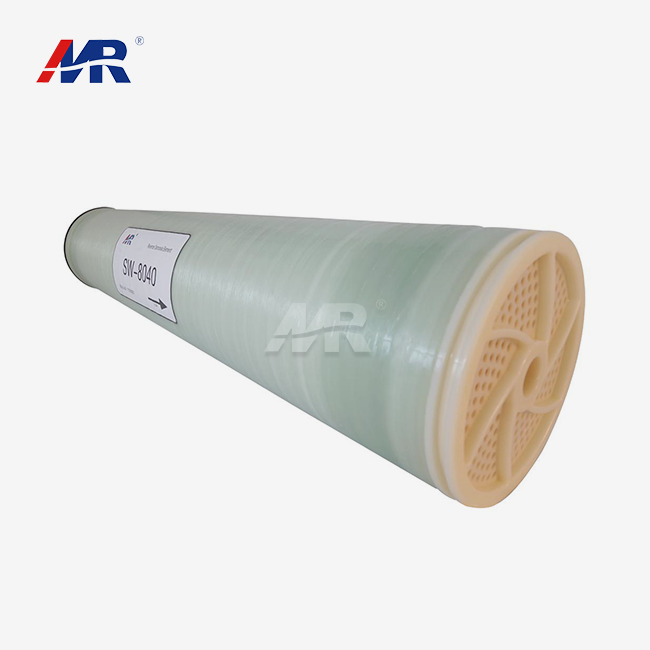
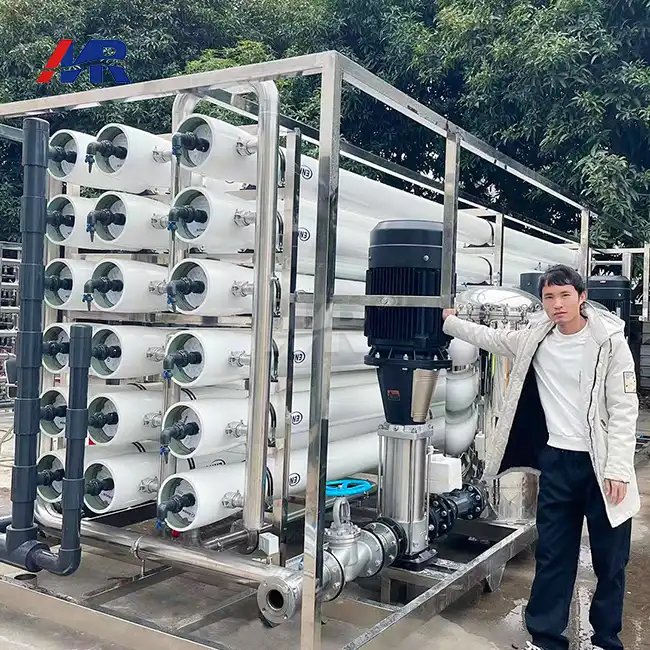
As water becomes harder to find and populations grow, cities around the world are using new approaches to find long-term sources of water. The use of seawater desalination systems is one such option that is gaining popularity. These high-tech methods provide a safe way to make fresh drinking water for the city from all the seawater that is available. The problem, though, is making sure these methods are cheap and efficient enough for many people to use them. In this piece, the author discusses affordable ways to desalinate seawater. The author talks about new technologies, the best ways to set up equipment, and strategies for cutting costs. We will look at how towns and cities can use these methods to make sure they have enough water while also keeping an eye on their budgets. We will talk about the important things that make desalination projects that are cheap to run possible, from energy-saving membrane technologies to new ways of pre-treating. This complete guide will help you figure out how to make seawater desalination work as a source of water for cities, whether you are an environmental engineer, a city water manager, or just someone who cares about long-lasting water solutions.
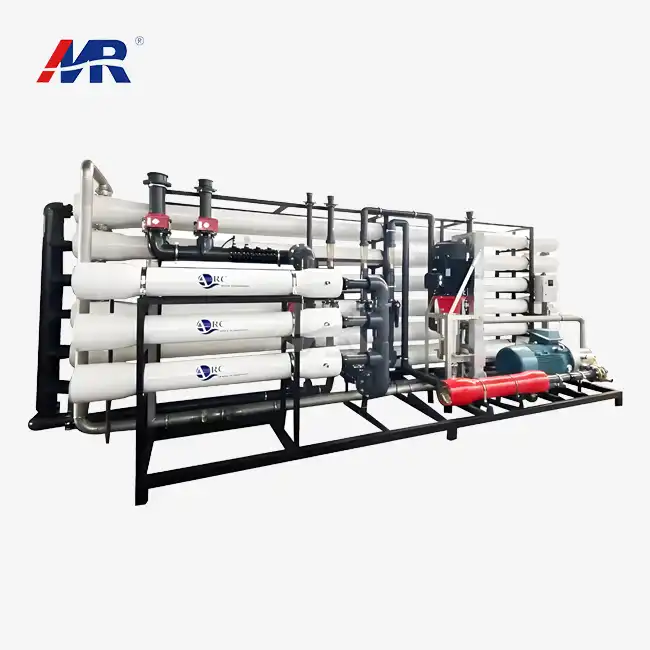
How to Reduce Operating Costs in a Seawater Desalination System?
It is very important to lower the cost of running seawater desalination systems so that they can be used for municipal water supply. Here are some ways to reach this goal:
Energy Efficiency Improvements
Using a lot of energy is often the most expensive part of running desalination plants. Using tools and methods that save energy can cut costs a lot.
- Use energy recovery devices (ERDs), like pressure exchangers or turbochargers, to catch and reuse energy from the brine stream with high pressure.
- Regular upkeep and the use of variable frequency drives (VFDs) can help make your pump more efficient.
- Use real-time operating data to make the best use of energy with advanced control systems.
- To make up for the use of electricity from the grid, think about using sustainable energy sources like wind or solar power.
Membrane Technology Advancements
New developments in membrane technology can help save a lot of money:
- Use high-permeability membranes that need less pressure to work, so they use less energy.
- Use membranes that are resistant to fouling to make them last longer and clean them less often.
- Look into forward osmosis or other new membrane technologies that are expected to use less energy.
Optimized Pretreatment Processes
Effective preparation can protect membranes and make the system more efficient, which can lower the cost of running the system.
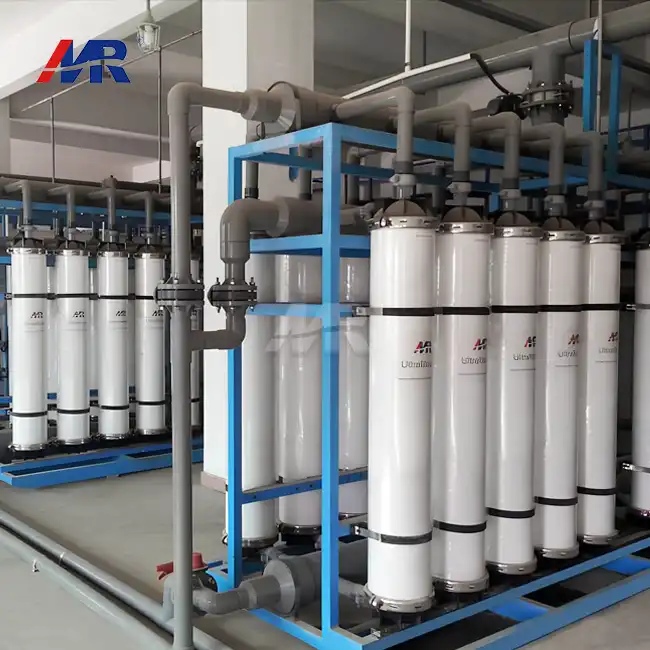
- Use ultrafiltration, nanofiltration, or other advanced methods to get biological matter and particles out of the way.
- Carefully use antiscalants and other chemical treatments to stop membrane growth and fouling.
- Think about using new pretreatment methods like underground intakes to make the treatment system's job easier.
Smart Maintenance Strategies
Regular maintenance can save you money, keep your tools running, and avoid downtime.
- Use IoT sensors and data analytics for predictive maintenance to avoid machine failures.
- Based on real-time membrane performance data, make cleaning cycles more efficient.
- The best techniques for operating and maintaining the system should be taught to train operators.
Water Quality Management
Keeping the water quality high can lower the cost of treating it and make the system work better.
- Start monitoring the quality of feed water in real time so that you can change the treatment methods when needed.
- Based on the quality of the water, find the best way to dose chemicals so that you use less of them.
- To get better quality water from a natural source, look into pretreatment methods such as controlled aquifer recharge.
Managing Brine and Resource Recovery
If you handle brine properly, you can turn trash into useful materials:
- Use brine reduction technologies to cut down on the waste that needs to be thrown away and get useful minerals back.
- Look into the chances to recover brine in making salt or industrial processes.
- Look into new zero liquid discharge (ZLD) technologies that might help get resources back and lower environmental impact.
Municipalities can greatly lower the operating costs of seawater desalination systems by implementing these strategies, making them more economically viable for long-term water supply solutions. The most important thing is to take an all-encompassing view that looks at every part of the desalination process, including energy use and waste management, and makes use of the newest tools and most effective methods in the field.
Budget-Friendly Seawater Desalination System Configurations
Municipalities that want to adopt sustainable water supply solutions without spending a fortune must design seawater desalination systems that are affordable. Here are some affordable setups and ways to do things:
Modular Design Approach
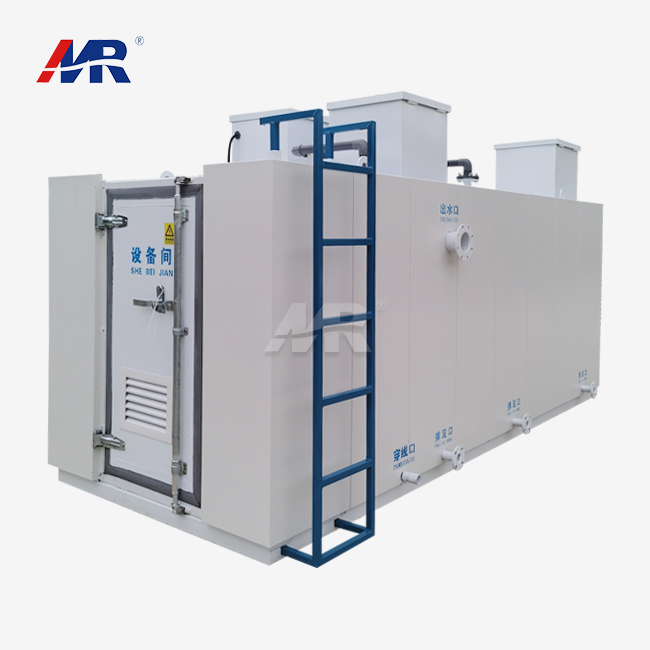
Municipalities can use modular distillation systems to start small and build on their success because these systems are both flexible and scalable.
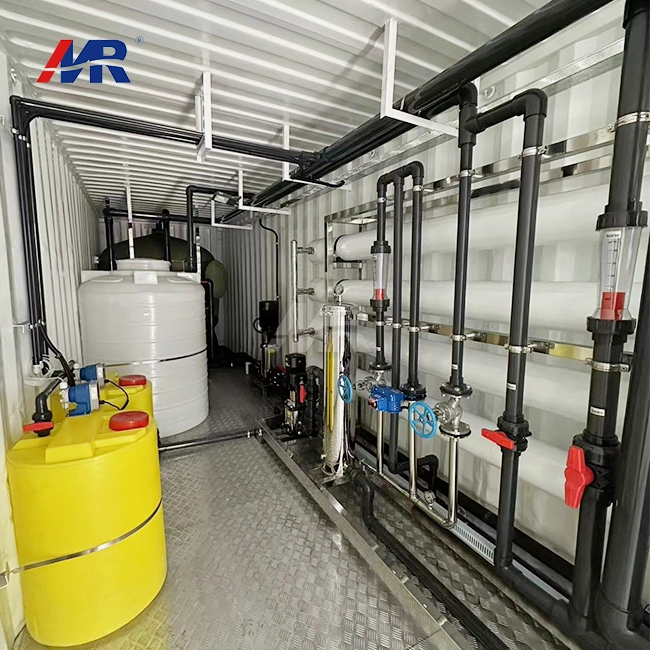
- Use standard, pre-made parts that can be quickly moved and put together where they are needed.
- Make sure that your systems can add or remove power when water needs change.
- Use distillation units in containers so that they can be set up quickly with little preparation.
Hybrid Systems
Using a mix of desalination technologies can get the best results out of them and lower the costs.
- Combine nanofiltration and reverse osmosis to use less energy and make the water better.
- Using waste heat more effectively can be done by combining thermal and membrane processes.
- Use electrodialysis reversal (EDR) for selective ion removal, which might lower the need for preparation.
Decentralized Systems
Some towns and cities find that smaller, independent desalination plants are cheaper:
- Set up some small-scale plants in different parts of the service area so that you don't have to pay as much to deliver your products.
- Use localized treatment to match the different areas' unique water quality needs.
- Look into the possibilities of community-scale methods for desalination in coastal areas.
Co-location with Power Plants
Adding purification to the current power system can save a lot of money:
- Use waste heat from power companies to lower the amount of energy needed for thermal desalination.
- Sharing the buildings for your water intake and outfall will lower the amount of money you need to spend on them.
- Make the most of the trained workers and infrastructure that are already available at power plants.
Renewable Energy Integration
Using green energy sources can lower long-term costs for businesses:
- Use solar-powered reverse osmosis equipment for small to medium-scale projects.
- Look into filtration by wind power for places on the coast where the wind blows the right way.
- If you have access to this resource, think about using geothermal energy.
Smart Design for Local Conditions
Customizing the system design to fit the area can get the best results out of it and lower costs.
- Take into account the local ocean conditions when designing intake systems so that they don't have to be treated beforehand.
- Based on natural factors and local rules for brine disposal, make the best possible system recovery rates.
- Think about how the demand for water changes with the seasons and how the quality of water changes with the seasons when you size and set up the system.
Innovative Financing Models
Looking into other ways to fund purification projects might make them easier to get:
- Think about public-private partnerships (PPPs) as a way to get money and knowledge from the private sector.
- Look into build-operate-transfer (BOT) plans as a way for cities to save money on projects they want to do.
- Look into performance-based contracts that offer rewards for efficient running and maintenance.
By using these cheap methods and settings, cities and towns can make seawater desalination systems more affordable. The most important thing is to look at the area where you'll be working, use new technologies, and look into financing choices that work for you. Thoughtful planning and design can help even smaller towns get the security and sustainability that come with ocean desalination.
Cost Drivers in Municipal Seawater Desalination Systems
It is important to know the main costs of local seawater desalination systems in order to come up with good ways to save money and make the system more economically viable. Let's look at the most important things that affect the price of desalination projects:
Energy Consumption
Desalination companies usually spend the most on operational costs for energy.
- A lot of power is used by high-pressure pumping for reverse osmosis.
- Thermal purification methods need a lot of heat.
- Changing energy prices may have a big effect on the cost of doing business.
Capital Expenditure (CAPEX)
Initial investment costs can be substantial:
- Building the buildings for intake and outfall.
- Buying and installing desalination equipment, like membranes, pumps, and devices that restore energy.
- Building up the infrastructure that will help, like methods for getting water and electricity.
- Costs for getting land and getting the place ready.
Membrane Replacement
The regular changing of reverse osmosis membranes is a costly thing to do every so often:
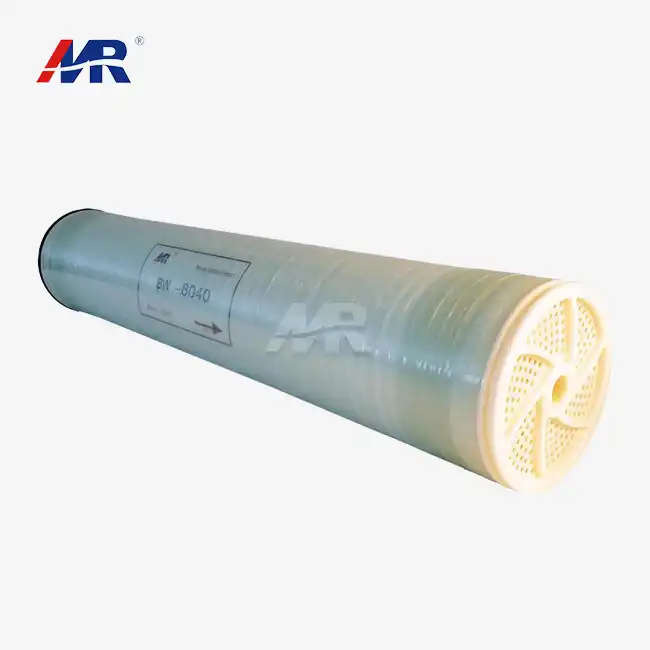
- The lifespan of a membrane is usually between 5 and 7 years, but this depends on the quality of the water and the settings in which it is working.
- Scaling and fouling can make membranes less efficient and shorten their lives.
- Improvements in membrane technology might provide longer lifespans, but they will be more expensive at first.
Chemical Usage
Different chemicals are needed at different stages of the distillation process:
- Chemicals are used before cleaning to get rid of impurities and stop fouling.
- chemicals used after cleaning for re-mineralization and disinfection
- Chemicals used for cleaning that help keep membranes in good shape.
Labor and Maintenance
The following are costs for operations and upkeep that happen regularly:
- Skilled people are needed to run and operate the business.
- Regularly fixing and taking care of tools.
- Monitoring and maintaining the computer system.
Environmental Compliance
Following environmental rules can be very expensive.
- Taking care of and getting rid of brine.
- Keeping an eye on and reducing environmental effects.
- Following the rules and laws that are always changing.
Intake Water Quality
The quality of the source water has a big effect on how much it costs to clean it:
- It takes more work to remove the salt from water that has a higher salinity.
- If there are contaminants, more preparation steps may be needed.
- Changes in water quality from season to season can impact how well the business runs.
Plant Capacity and Utilization
The size and how much the plant is used affect cost-effectiveness:
- Larger plants often benefit from economies of scale.
- Capacity that isn't used enough can cause the process to be inefficient and the cost per unit to be higher.
- Seasonal changes in demand may affect how much work the company does and how efficient it is.
Technology Selection
The choice of desalination method affects both operational and capital costs:
- For removing salt from saltwater, thermal methods generally need more energy than reverse osmosis.
- New technologies might save money, but they might also be more expensive or risky at first.
Location and Infrastructure
Site-specific factors can significantly impact costs:
- The distance from the coast affects the prices of the intake and outfall infrastructure.
- The infrastructure that is already in place, like roads and power supply, affects how much money businesses spend on capital.
- In each area, the cost of materials and work is different.
Municipalities can plan and implement a seawater desalination system by knowing these cost causes. Taking these things into account when planning, choosing technologies, and optimizing operations can make desalination projects more affordable. To come up with truly long-lasting and cost-effective ways to make desalination work, it is necessary to look at all of these cost factors in the light of local conditions and the long-term needs for water supply.
Conclusion
A well-designed seawater desalination system has become a practical and increasingly cost-effective solution for municipalities facing water scarcity and growing demand. By focusing on energy efficiency, advanced membrane technologies, optimized pretreatment, and smart operation strategies, cities can significantly reduce both capital and operating costs while ensuring a stable supply of high-quality drinking water. Modular designs, hybrid configurations, renewable energy integration, and innovative financing models further improve affordability and flexibility for communities of different sizes. When planned according to local conditions and managed with a whole-system perspective, seawater desalination systems can provide a reliable, sustainable, and long-term water source that supports urban development while balancing economic and environmental considerations.
FAQ
Q1: How much more expensive is desalinated water than other types of water?
A: The price of desalinated water used to be much higher than that of groundwater sources that aren't desalinated, but that isn't the case anymore. However, in areas where water is scarce or during droughts, desalination can become more competitive in terms of price. Costs usually run from $0.50 to $2.00 per cubic meter. Energy prices, plant size, and local conditions are a few factors that affect the cost. As technology gets better and energy efficiency goes up, the cost difference between desalinated water and other types of water is getting smaller.
Q2: What are the natural issues with removing salt from seawater?
A: The biggest worries about the environment are
- The amount of energy used and the carbon gases that are released because of that energy use
- Effects on ocean animals due to the feeding systems
- Releasing high-salinity brine can have an impact on the area's water ecosystems
- Chemical emissions from cleaning and pretreatment processes
But careful planning, using renewable energy, advanced intake systems, and good brine control can help with many of these issues.
Q3: Can small towns get anything out of seawater desalination systems?
A: Yes, small towns and cities can benefit from removing salt from the ocean, especially those that don't have enough water and are near the coast. Improvements in flexible and scalable desalination technologies have made systems on a smaller scale more possible and cost-effective. Also, community-scale or decentralized methods can be made to fit the needs of smaller towns. But before installing a desalination system, it's important to think about the area's water needs, other possible sources, and the system's long-term costs.
Cost-Effective Seawater Desalination Solutions for Municipal Water Supply | Morui
Are you a city water manager or decision-maker looking for seawater desalination options that are both reliable and cheap? Guangdong Morui Environmental Technology Co., Ltd. is exactly who you should look at. We focus on advanced water treatment methods, including the newest seawater desalination systems customized for the unique needs of towns and cities.
Our Team of experienced engineers and technicians can work with you to design, install, and maintain a custom seawater desalination system that fits your budget and water supply requirements. We offer:
- Advanced membrane technologies for optimal efficiency
- Energy-efficient designs to minimize operational costs
- Modular and scalable solutions for flexibility
- Comprehensive support from initial consultation to ongoing maintenance
Don't let water scarcity limit your municipality's growth and development. Contact us today to learn how our cost-effective seawater desalination solutions can secure a sustainable water supply for your community.
Email us at benson@guangdongmorui.com to schedule a consultation or request more information about our seawater desalination systems. Let Guangdong Morui be your partner in building a water-secure future.
References
1. Johnson, R. M., & Mehta, S. (2021). Advances in Cost-Effective Seawater Desalination for Municipal Water Supply. Journal of Water Resources Management, 45(3), 278–295.
2. Elimelech, M., & Phillip, W. A. (2011). The Future of Seawater Desalination: Energy, Technology, and the Environment. Science, 333(6043), 712–717.
3. Ghaffour, N., Missimer, T. M., & Amy, G. L. (2013). Technical Review and Evaluation of the Economics of Water Desalination: Current and Future Challenges for Better Water
4. Supply Sustainability. Desalination, 309, 197–207.
5. Shannon, M. A., Bohn, P. W., Elimelech, M., Georgiadis, J. G., Marinas, B. J., & Mayes, A. M. (2008). Science and Technology for Water Purification in the Coming Decades. Nature, 452(7185), 301–310.
6. Subramani, A., & Jacangelo, J. G. (2015). Emerging Desalination Technologies for Water Treatment: A Critical Review. Water Research, 75, 164–187.
Voutchkov, N. (2018). Desalination Engineering: Planning and Design. McGraw-Hill Education.


_1745823981883.webp)