Removing salt from seawater has become an important way to help seaside areas around the world that don't have enough water. Seawater desalination systems are becoming more and more important for supplying towns and businesses with drinkable water as the need for fresh water keeps growing. These systems do make a lot of brine, though. This is a very strong salt solution that can be bad for the environment if you don't deal with it correctly. This article talks about good ways to get rid of salt, new technologies that help reduce waste, and long-lasting treatment options for new desalination plants. These ideas help people who run these plants and make decisions understand the difficult waste management issues that come up in this very important industry.
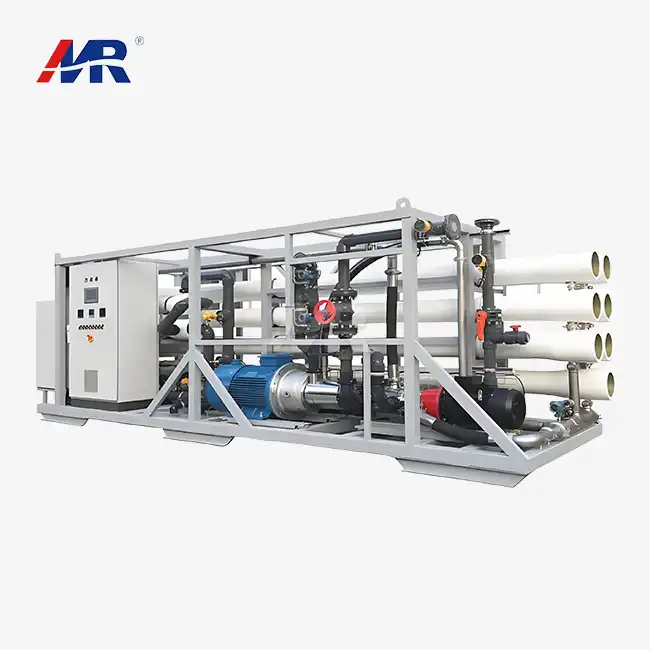
What Are the Best Brine Management Methods in Seawater Desalination Systems?
Good brine control is important for the long-term use of seawater desalination plants. The desalination process takes salt and other things out of seawater, creating a concentrated brine solution that is not safe to touch or throw away without taking care. Let's look at some of the best ways to deal with brine in a seawater desalination system:
Surface Water Discharge
Surface water discharge, which is when the ocean water that is mixed with concentrated brine is released back into the ocean, is one of the most popular ways to get rid of brine. This method needs a lot of thought about external factors and following the rules. Important parts of surface water flow are:
- Dilution: Before brine is discharged, it is often mixed with seawater to lower its saltiness and lessen its effect on the environment.
- Diffuser systems: Newer, more advanced diffuser designs help spread brine over a bigger area so that it can mix with the seawater around it more quickly.
- Environmental monitoring: Checking ocean environments close to the discharge point regularly is important to understand and reduce possible effects.
Deep Well Injection
Deep well injection means pumping brine into layers of rock or soil that are usually below freshwater reservoirs. People often use this method in places where surface runoff can't be done or isn't good for the environment. Things that need to be thought about for deep well injection are:
- Geological suitability: The rock deep in the ground has to be able to hold the injected brine without letting any of it get into nearby sources of freshwater.
- Regulatory compliance: These are strict rules for deep well pumping that are meant to protect groundwater.
- Long-term monitoring: Injection wells need to be monitored all the time so that the system stays in good shape and no leaks happen.
Evaporation Ponds
Evaporation ponds are big, small pools in which brine can evaporate on its own. The salt left behind is solid. This approach works best in dry areas where water evaporates quickly. Evaporation ponds are a type of water body that have the following important features:
- Land requirements: Because they need a lot of land, evaporation ponds may not be possible in some places.
- Salt harvesting: The salt that builds up can be collected and used for business purposes, making a very useful extra product.
- Environmental concerns: Making sure that evaporation ponds are properly lined and taken care of is important to keep the ground and water supply clean.
Zero Liquid Discharge (ZLD) Systems
Zero Liquid Discharge systems get rid of liquid waste by getting water from brine and making dry salt leftovers. Zero liquid discharge systems use a lot of energy, but they are good for the earth. ZLD systems have the following important features:
- Water recovery: ZLD systems can get as much as 99% of the water in brine, which makes water production more efficient.
- Handling solid waste: The dry salt left over needs to be thrown away the right way or possibly reused in the industry.
- Using energy: ZLD systems usually need more energy than other ways of managing salt.
Choosing the best brine management method relies on many things, such as the desalination plant's unique features, the rules where you live, the impact on the environment, the amount of land you have, and energy costs. A lot of places use a mix of these methods to improve their brine management plan and have less of an effect on the environment.
Innovative Brine Reduction Technologies for Seawater Desalination Systems
New technologies are being created to deal with the problems of brine management as the desalination business changes and grows. These new ideas are meant to make less brine, get more useful resources, and be better for the earth. Let's look at some of the best new ideas for reducing brine in seawater desalination systems.
Membrane Distillation
Thermal-driven membrane distillation uses the temperature difference between the feed solution and permeate to move water vapour through a hydrophobic membrane. This technology looks like it could be useful for brine concentration and zero liquid discharge uses. The most important things are:
- Using low-grade heat: membrane distillation can be powered by solar thermal energy or waste heat, which makes the system more efficient.
- High rejection rates: The method can raise the salt level in brine to very high levels.
- Modular design: You can easily change the size of membrane distillation systems to meet different needs.
Forward Osmosis
Forward osmosis uses the osmotic pressure difference between a draw solution and feed water to get new water through a membrane that only allows some things to pass through. This method has shown promise in recovering resources and concentrating brine. The most important parts are:
- Low energy use: When compared to standard reverse osmosis systems, forward osmosis needs less energy.
- Less fouling: The process membrane fouls less, which might mean it doesn't need to be taken care of as much.
- Resource recovery: Forward osmosis can be used to get useful minerals and other chemicals from brine streams.
Electrodialysis and Electrodialysis Reversal (ED/EDR)
Electrodialysis reversal is a type of electrodialysis. Both use an electric field and ion-selective membranes to remove ions from water. These technologies work especially well on water that is saltier than freshwater but not quite seawater and on brine streams. The most important things are:
- Selective ion removal: It is possible for ED/EDR devices to remove certain ions while leaving others alone. This makes it possible to treat brine streams more directly.
- Energy efficiency: The process uses an amount of energy that is equal to the amount of salt that is taken away, so it works well for feeds with lower salinity.
- Scalability: You can easily change the size of an ED/EDR system to fit your needs.
Brine Crystallizers
Brine crystallizers are high-tech devices that can boil brine down to its saturation point, making solid crystals of salt. People often use this technology in devices that have zero liquid discharge. The most important parts are:
- High water recovery: Brine streams can be almost completely dehydrated by crystallizers.
- Making solid salt: The process makes dry salt crystals that could be sold or used in industry.
- Energy intensity: Brine crystallizers usually need a lot of energy, which should be taken into account when designing the overall system.
Osmotically Assisted Reverse Osmosis (OARO)
An emerging technology called osmotically assisted reverse osmosis combines ideas from both forward and reverse osmosis to get better recovery rates while using less energy. The most important things are:
- Better recovery: OARO systems can get more water back than regular reverse osmosis.
- Lower energy use: The process needs less energy to make each unit of water, especially when using high-salinity feeds.
- Membrane fouling mitigation: The osmotic dilution step helps lower the chances of scaling and fouling on membranes used in reverse osmosis.
In terms of brine reduction and management for seawater desalination systems, these novel technologies represent significant advances. As study and development go on, we can expect more gains in the efficiency, cost-effectiveness, and environmental performance of brine treatment processes.
Sustainable Brine Treatment Solutions for Modern Systems
As the desalination business becomes more environmentally friendly, new ways of dealing with brine are being created and used in modern seawater desalination systems. These choices are meant to protect the earth, get useful materials back, and make the system run better. Let's look at some of the best long-term brine cleaning methods.
Mineral Extraction and Recovery
Brine, which is the concentrated saltwater that comes from desalination, has a lot of minerals and chemicals that are useful in industry. Mineral recycling processes that are environmentally friendly include
- Selective salt precipitation: This is the controlled formation of certain salts, like calcium carbonate or magnesium hydroxide. These salts are then used to make building materials or in processes that treat water.
- Lithium extraction: getting lithium from brine so it can be used to make batteries and meet the needs of green energy storage.
- Rare earth element recovery: getting the valuable rare earth elements that are only found in small amounts in seawater brine.
Salinity Gradient Power Generation
The difference in saltiness between brine and seawater can be used to make clean energy through processes like
- Pressure Retarded Osmosis (PRO): Using the osmotic pressure difference between saltwater and brine to make electricity by turning turbines.
- Reverse Electrodialysis (RED): making power by mixing saltwater and seawater in a controlled way through membranes that are sensitive to ions.
Integrated Multi-Effect Distillation (MED) Systems
Advanced thermal desalination methods, like Multi-Effect Distillation, can be used together with brine treatment steps to make the system more efficient overall:
- Brine recirculation: using the heat in brine streams to warm up entering seawater, which uses less energy overall.
- Salt production: using steps of salt crystallisation to make high-quality salt products from concentrated brine.
- Cogeneration: Using waste heat from power plants to make MED systems more energy-efficient in the total process of desalination.
Biological Brine Treatment
New biological cleaning methods provide long-lasting ways to deal with brine:
- Halophilic algae farming: growing salt-tolerant algae species to clean brine and make useful biomass for biofuel or nutrient production.
- Constructed wetlands: making specific wetland systems that can clean up brine streams before they are discharged.
- Microbial desalination cells: using microbial processes to clean brine and make power at the same time.
Solar-Powered Brine Concentration
Using solar power to treat brine can greatly lower the carbon impact of desalination plants:
- Sun thermal evaporation: using focused sun energy to power multi-effect distillation or brine crystallisation.
- Photovoltaic-powered electrodialysis: using solar panels with electrodialysis units to treat brine when you don't have access to the power grid or want to stay energy neutral.
- Solar membrane distillation: using solar thermal collectors to drive membrane distillation processes to make brine thicker.
Circular Economy Approaches
Using ideas from the circular economy in brine control can make waste streams useful by:
- Brine for aquaculture: Using streams of diluted brine to grow organisms that can live in salty water, like when you farm artemia or spirulina.
- Industrial symbiosis: finding local businesses that can use brine or substances made from brine in their work to form industrial ecosystems.
- Salt road de-icing: turning brine into road salt for de-icing. This is mostly useful for evaporation plants that are in cold areas.
These long-lasting brine treatment methods show that it's possible to turn brine management from a problem with getting rid of trash into a chance to get resources back and make money. As technology and rules change, modern seawater desalination systems will use more of these new methods.
Conclusion
The long-term sustainability of seawater desalination systems depends on effective brine control. Ocean release and deep well injection are traditional ways of getting rid of waste, but they are facing more environmental and legal restrictions. Newly emerging technologies for brine reduction and treatment improve water recovery, lower waste volumes, and make it possible to restore resources and energy. Mineral extraction, renewable energy integration, and circular economy tactics are all ways that can turn brine from an environmental problem into a useful resource. As a result, a site-specific, combined brine management strategy is very important for modern desalination plants to protect the environment, do things quickly, and stay within budget.
FAQ
Q1: What is the main problem with handling brine that comes from plants that use saltwater desalination?
A: The high saltiness of brine and its possible negative effects on the environment make it hard to manage when it comes from saltwater desalination plants. Brine is usually twice as salty as seawater and may have chemicals in it that are used to remove the salt from water. It is very important to either properly get rid of or treat this stream of concentrated trash. This will protect ocean ecosystems from damage and make sure that desalination operations can continue.
Q2: What are the advantages of Zero Liquid Discharge (ZLD) technology for seawater desalination systems?
A: Seawater desalination systems can benefit from ZLD (Zero Liquid Discharge) technology in a number of ways. It gets back the most water possible, usually 99%, and cuts down on the amount of trash made. Zero Liquid Discharge systems also get rid of liquid discharge. This lowers the system's effect on the environment and helps facilities meet strict rules. Also, ZLD can help get useful minerals and salts from brine, which could give desalination plants new ways to make money.
Q3: Is there any new way to use salt productively instead of just throwing it away?
A: Yes, there are a lot of creative ways to use salt. Some examples are mining minerals for valuable elements like lithium, using brine in salinity gradient power generation, growing halophilic algae to make energy, and using brine in aquaculture operations. Treated brine is also used as a raw material in some other businesses. In line with the cycle economy, these methods turn brine from useless junk into a useful resource.
Advanced Seawater Desalination Systems for Sustainable Water Production | Morui
Are you looking for the newest ways to treat your water? Guangdong Morui Environmental Technology Co., Ltd. is exactly who you should look at. Our cutting-edge seawater desalination systems are made to meet the needs of a wide range of businesses, from manufacturing to the treatment of municipal water. We can meet all of your water cleaning needs with our cutting-edge technology and dedication to quality. Our solutions are dependable, quick, and flexible.
The best seawater desalination system for your particular purpose can be chosen with the help of our knowledgeable team. No matter if you're in charge of a beach vacation spot, an offshore platform, or a city-run water project, we have the knowledge and tools to make sure you succeed.
Don't let water scarcity limit your operations. Contact us today at benson@guangdongmorui.com to learn more about our innovative seawater desalination systems and how we can help you achieve sustainable water production. Let Guangdong Morui be your partner in creating a water-secure future.
References
1. Giwa, A., et al. (2017). Brine management methods: Recent innovations and current status. Desalination, 407, 1-23.
2. Panagopoulos, A., Haralambous, K. J., & Loizidou, M. (2019). Desalination brine disposal methods and treatment technologies - A review. Science of The Total Environment, 693, 133545.
3. Morillo, J., et al. (2014). Comparative study of brine management technologies for desalination plants. Desalination, 336, 32-49.
4. Sola, I., et al. (2019). Sustainable brine management from the discharge of desalination plants: A review. Clean Technologies


_1745823981883.webp)