_1745823981883.webp)

Sea Water Desalination Plant Intake Design: Open vs Beach Wells
One of the most important decisions in any sea water desalination plant project is whether to use an open intake or a beach well design. There is a direct link between the intake system and the water quality, the costs of running the plant, protecting the environment, and its long-term dependability. Open intakes get seawater straight from distant sites using underwater pipes, while beach wells use the geology of the coast to filter saltwater through layers of sand and sediment. Each method has its own pros and cons that can have a big effect on how well your plant works, how much maintenance it needs, and its overall cost of ownership. By knowing these differences, professional and financial decision-makers can make sure that the pick of new applicants fits with the needs of the project, the rules that apply, and the goals for sustainability.
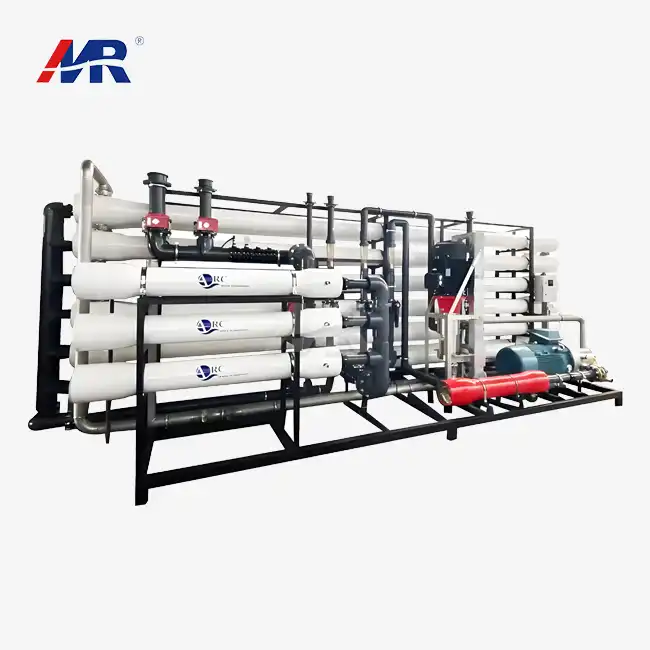
Understanding Sea Water Desalination Plant Intake Systems
The first part of any seawater reverse osmosis (SWRO) facility is the intake system. It controls the quality of the feedwater that gets to the membranes and other equipment further down the line. Everything from how hard the pre-treatment is to how much energy you use and how long your membranes last is affected by how well your intake design works.
The Critical Role of Intake Design
Your intake system needs to provide regular feedwater quality while causing as little damage to the environment and operating risks as possible. When the intake isn't designed well, the membrane often gets clogged, which increases energy costs and shortens the life of the equipment. We've seen that intake choice often determines whether a plant meets its recovery rates and salinity removal goals in our work with pharmaceutical companies, power plants, and coastal cities and towns across the United States. High-value parts like ro membranes are kept safe from sediment, organic matter, and biological contaminants that hurt performance by a well-designed intake system.
Open Intake Systems Explained
Open intake designs put the intake pipes or channels right in the water near the coast, about 300 to 1,000 meters out to sea, at depths of 8 to 20 meters. Large objects and sea life can't get into these systems because they have velocity caps, screens, and trash racks. Water is constantly pushed through moving screens before it gets to pre-treatment facilities on land. Open intakes work well for large sites where coastal bedrock doesn't allow for underground extraction. They send a lot of material quickly, but plants are vulnerable to changes in the quality of the ocean, yearly algal blooms, and the possibility of marine life getting stuck.
Beach Well Systems Explained
Beach wells use vertical or horizontal extraction wells that are set up 30 to 100 meters from the shore, below the sand and gravel layers that make up the beach. Before the water gets to the collection galleries, it slowly seeps through natural rock formations that act as passive filters, getting rid of suspended solids and organic matter and lowering the turbidity by 80–95%. This natural pre-filtration cuts down on the need for further cleaning by a large amount. Beach wells work best in coastal places with aquifers that let a lot of water through, the right hydraulic slopes, and enough groundwater recharge from the tides.
Comparing Open Intake and Beach Well Designs
For a sea water desalination plant, both ways of getting raw seawater to your desalination equipment are very different in how they work, how they affect the environment, and how much they cost. When procurement officers and engineering managers know these differences, they can choose systems that work with the site, meet regulations, and help the business reach its long-term goals.
Operational Mechanisms and Water Quality
Open intakes let seawater right in, but they need a lot of mechanical pre-treatment, like multi-media filtration, ultrafiltration membranes, and chemical dosing, to get the turbidity levels (usually less than 1 NTU) that protect RO membranes. Seasonal changes in temperature, salinity, and biological activity cause feedwater variability that needs treatment protocols that can adapt.
Beach wells provide naturally pre-filtered water that usually has a turbidity level below 0.5 NTU and a lot less organic matter in it. This natural filter gets rid of or greatly lowers the need for clarification upstream and uses the fewest chemicals possible. The underground path also keeps temperature changes from getting too big or too small, which makes the feedwater conditions more stable. However, beach wells can cause brackish groundwater to seep in or aquifers to become contaminated if they are not built and watched carefully.
Environmental Impacts and Regulatory Compliance
Concerns have been raised about sea organisms getting stuck or sucked into open openings, especially fish larvae and plankton. The Clean Water Act Section 316(b) and other US environmental laws set strict limits on intake speeds (usually less than 0.5 feet per second) and screening technologies to keep aquatic life from dying. These rules make it more expensive to buy and run systems that keep an eye on things all the time, like moving screens, fish-friendly speed caps, and continuous monitoring systems.
Beach wells have less of an impact on the environment because they don't take water directly from the sea, which protects marine life. This passive extraction method often speeds up the permit process and meets the sustainability standards that city water departments, coastal resorts, and companies' ESG frameworks are putting more weight on. Beach wells also eliminate the release of fumes that come from screen backwashing, which makes the environment less disturbed in certain areas.
Energy Consumption and Cost Implications
Most of the time, open intakes need more pumping power to make up for the head losses that happen in the screening and pre-treatment systems. Total energy use varies from 4 to 5 kWh/m³, based on how far offshore the well is, how deep the intake is, and how complicated the pre-treatment is. Beach wells use less energy for pre-treatment, but they may raise pumping costs if the depth of the drawdown is more than 10 meters or the wells are too far apart. Overall energy profiles for beach well systems are usually between 3.5 and 4.5 kWh/m³. This is similar to how well Morui's small 8m³/hour desalination system works, which gets 3.5 to 4.0 kWh/m³ through improved membrane technology and energy recovery devices.
Capital costs for open intakes range from $800 to $1,500 per added m³/day capability. These costs depend on the ocean infrastructure, the difficulty of the marine building, and the steps taken to protect the environment. Geological surveys, drilling, and building a well are all needed for beach wells. The cost of each installed m³/day capacity ranges from $600 to $1,200, depending on the well's configuration and the characteristics of the aquifer. For open intakes, maintenance costs include cleaning the screen, controlling marine growth, and regular dredging. On the other hand, beach wells need well rehabilitation, groundwater tracking, and regular rebuilding to maintain the permeability.
Selecting the Right Intake Design for Your Desalination Project
There are a lot of practical and site-specific factors that affect how well a plant works, how much it costs, and how much money it makes back. The engineering and procurement teams should use these factors to make sure that the pick of new employees fits with the project's goals.
Site Hydrogeology and Water Quality Assessment
Coastal bedrock is very important for beach wells to work. Formations with a high permeability, like coarse sand, gravel, or broken limestone, allow enough flow rates without too much drawdown. Aquifer transmissivity, hydraulic conductivity (ideally >10 m/day), and tidal recharge capacity should all be checked during hydrogeological surveys. Open intake designs are often needed in places where the sediments are mostly clay, the water doesn't move easily, or the aquifer isn't very thick.
Turbidity, total suspended solids, organic carbon, chlorophyll a, and seasonal changes should all be measured in a baseline water quality analysis. When open water has a lot of turbidity or algal blooms, beach wells work really well. Open intakes can still be used when the ground isn't right for wells or when very large volumes (more than 50,000 m³/day) require direct offshore extraction.
Plant Capacity and Scalability Requirements
From 500 to 20,000 m³/day, beach wells are perfect for small to medium-sized installations. This makes them perfect for offshore platforms, seaside resorts, island communities, and disaster aid efforts. Our 8m³/hour system, which delivers 192 m³/day, works perfectly within this range, and it can be set up in a way that allows for future growth as demand rises.
Large municipal and industrial projects that use more than 50,000 m³/day would not be possible with beach well arrays because of limited land, large well fields, and cumulative environmental impacts. When thinking about scalability, you should think about things like future capacity increases, the availability of land for more wells, and the rules that limit how much groundwater can be taken out.
Technology Supplier Expertise and Compliance
When choosing intake systems, you need to work with experienced suppliers who can show you their track records, certified parts, and compliance with international standards like ASME, ASTM, and ISO. Morui Environmental Technology has 14 offices and more than 10 years of experience. They have 20 specialised engineers who can provide complete solutions, from figuring out if the project is even possible to putting it into action.
Marine-grade materials that don't rust, like Duplex 2205 and Super Duplex 2507 stainless steel, are used in our systems. This makes sure that they last in harsh chloride environments. Advanced membrane technology removes more than 99.5% of the salt and recovers up to 45% of it, which meets strict potable water standards for medicinal, food and beverage, and public uses. Automated SCADA monitoring keeps an eye on turbidity, TDS, pH, and pressure levels in real time, which lets maintenance teams be proactive and report on compliance as a reliable company that makes sea water desalination plants.
Addressing Challenges and Optimizing Intake Performance
Even intake systems that are well thought out can have operational problems that can hurt plant performance if they are not handled properly. Long-term, reliable operation depends on knowing how to avoid common problems and following best practices.
Common Design and Operational Pitfalls
Both types of entry have to deal with sediment clogging all the time. Marine growth, garbage, and yearly silt buildup in open intakes mean the screens need to be cleaned regularly and sometimes dredged. Fine particle migration, iron precipitation, and biological fouling in the aquifer matrix all make it harder for water to flow through beach wells. If you don't space your wells far enough apart or take out too much water, saltwater can get in and lower the quality of the water you use, which can threaten the long-term health of an aquifer.
Biofouling happens when microbial communities take over intake structures, screens, and pipes, making them less hydraulically efficient and needing more maintenance. Because they are directly exposed to nutrient-rich seawater, open intakes get biofouling that is worse, so they need to be chlorinated, coated with antifouling materials, and cleaned by hand every so often. Even though beach wells have less biological load, they can still be damaged by iron and manganese bacteria that build up in the screens of the wells.
Proven Maintenance Best Practices
Scheduled inspections and preventative maintenance make intake systems last a lot longer and cut down on unplanned downtime. Underwater checks of open intakes should be done every three months, screen cleaning should happen once a month, and structural studies should be done once a year. Antifouling coatings and cathodic protection systems help keep marine environments from rusting.
Video logging should be done every six months to check the condition of the screen, hydraulic testing should be done once a year to see how much water is being drawn down, and the wells should be redeveloped every so often using surging, jetting, or chemical treatments to make them permeable again. By keeping an eye on extraction rates, water levels, and salinity gradients all the time, changes in the aquifer or intrusion risks can be found early.
Our modular equipment design makes upkeep easier by using easy-to-reach part layouts, quick-disconnect fittings, and standard substitute parts. Low upkeep needs cut down on labour costs and downtime, which are very important for offshore platforms that are far away and emergency rescue operations.
Emerging Trends in Intake Technology
As new ideas come up, they keep improving intake design to make it more energy efficient, sensitive to the environment, and smart in how it works. For example, wedge-wire screens with 1-2 mm slot openings are fish-friendly passive intake structures that maintain hydraulic performance while reducing impingement by a large amount. More and more, these technologies meet the strict environmental laws and corporate sustainability commitments in the United States.
Smart monitoring systems that use IoT sensors, machine learning algorithms, and predictive analytics can improve performance in real time and find problems early on. Automatic backwashing sequences, variable-frequency pumps, and adaptive chemical dosing can adapt to changing conditions in the feedwater, which lowers the amount of energy and chemicals needed.
For medium to large sea water desalination plant projects in difficult geological settings, hybrid input designs that combine shallow offshore wells with underground collection are becoming more popular. These setups take advantage of natural pre-filtration while meeting capacity needs that go beyond what a pure beach well can do. They provide a balanced solution for these installations.
Conclusion
Choosing between open intake and beach well styles has a big impact on how well your sea water desalination plant works, how well it protects the environment, and how much money it makes. Open intakes provide direct access to large amounts of seawater, making them ideal for large municipal projects. However, they need a lot of pre-treatment and environmental protection. Beach wells are great for small to medium-sized projects like offshore platforms, coastal hospitality, and remote communities because they provide naturally pre-filtered feedwater with less damage to the environment and simpler treatment processes. To choose the right input, the site must be carefully studied, the ground must be analysed hydrogeologically, and the project must work with knowledgeable technology providers who can provide approved, long-lasting systems that meet government standards and long-term project goals.
FAQ
Q1: What are the main differences between open intakes and beach wells?
Open intakes use submerged pipes and mechanical screens to pull seawater directly from offshore locations. The water needs to go through a lot of pre-treatment to get rid of biological and suspended solids. Beach wells get seawater from the ground through layers of sand and gravel that naturally filter out particles and lower turbidity. This means that less treatment is needed further down the line. The effects on the environment are very different. Open intakes are much worse for marine life, while beach wells keep aquatic organisms from getting caught and squished.
Q2: How does intake design affect overall desalination plant costs?
The shape of the intake affects both the initial costs and the ongoing costs. There are higher pre-treatment costs for filtering and chemical dosing at open intakes. There are also environmental compliance costs for screening and tracking. Beach wells make treatment easier, but they need geological surveys, drilling, and management of the aquifer. Energy use varies; beach wells usually get 3.5 to 4.5 kWh/m³, while open intakes get 4.0 to 5.5 kWh/m³. This has a direct effect on long-term operational budgets.
Q3: Are beach wells suitable for all coastal locations?
For beach wells to work, the ground needs to have certain hydrogeological conditions. These include aquifers with high permeability, enough tidal recharge, and enough aquifer thickness. Beach well setups might not work in places where the sediments are mostly clay, the hydraulic conductivity is low, or there isn't a lot of coastal rock. Before committing to beach well designs, it is important to do full site assessments that include testing of aquifers and modelling of groundwater to make sure the area is suitable.
Partner with Morui for Optimized Seawater Desalination Solutions
Guangdong Morui Environmental Technology is ready to help you with your sea water desalination plant project by providing you with expert engineering advice, certified equipment, and full installation services. As a reliable company that makes sea water desalination plants, we've helped people in the medicine, food and beverage, power generation, and local sectors in the US and around the world. Our 8m³/hour system is made with advanced membrane technology, an energy-efficient design, and marine-grade materials that won't rust. This makes sure that it works well in harsh offshore and coastal environments. With more than 500 employees, 20 specialised engineers, our own membrane production, and partnerships with top component brands like Shimge Water Pumps and Runxin Valves, we can handle any project from figuring out if it's possible to starting up the system. Email Our Team at benson@guangdongmorui.com to talk about your unique intake needs and get a plan that is tailored to your needs and maximises efficiency, compliance, and return on investment.
References
1. Voutchkov, Nikolay. "Desalination Intake and Outfall Structures: Design, Construction, and Environmental Aspects." Journal of Water Supply: Research and Technology—AQUA, Vol. 62, No. 5, 2013, pp. 271-287.
2. Missimer, Thomas M., and Robert G. Maliva. "Environmental Issues in Seawater Reverse Osmosis Desalination: Intakes and Outfalls." Desalination, Vol. 434, 2018, pp. 198-215.
3. Pankratz, Tom. "Beach Well Intakes for Seawater Desalination: Current Status and Future Prospects." Desalination and Water Treatment, Vol. 51, No. 10-12, 2013, pp. 2155-2165.
4. Lattemann, Sabine, and Thomas Höpner. "Environmental Impact and Impact Assessment of Seawater Desalination." Desalination, Vol. 220, No. 1-3, 2008, pp. 1-15.
5. Miller, James E. "Review of Water Resources and Desalination Technologies." Sandia National Laboratories Report SAND-2003-0800, United States Department of Energy, 2003.
6. American Water Works Association. "Desalination of Seawater: AWWA Manual M61." American Water Works Association, Second Edition, Denver, Colorado, 2011.