



Saltwater Desalination Plant RFQ Checklist for EPC Contractors
A saltwater desalination plant RFQ checklist for EPC contractors should list the water source, feedwater analysis, daily capacity, product-water quality, recovery rate, energy use, site conditions, scope boundaries, performance guarantees, and service terms. When you document these items before bidding, suppliers can price the same job and propose equipment that fits it. At Morui, we use this list to review projects. I share it here so yOur Team can cut revision rounds, avoid unclear battery limits, and compare quotations fairly.
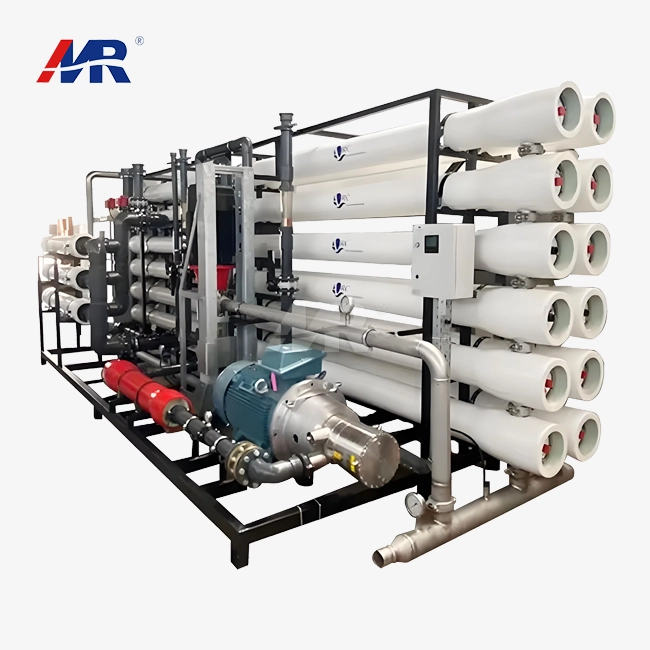
Start Your Saltwater Desalination Plant RFQ with Clear Project and Water Data
The first part of a good RFQ is the water. These are the first three things I ask buyers to agree on.
Define the Project and Application
First, talk about what you will do with the water. If you need drinking water for a coastal town, boiler feed water for an industrial site, irrigation water, or hotel supply water, you need to clean them in different ways and set different quality goals. On this page, write down the boron, TDS, conductivity, hardness, pH, microbes, and cleaning levels that you will not allow. The WHO recommended amount of boron is 2.4 mg/L, and the US EPA recommended amount for TDS is 500 mg/L. Tell people who want to bid what rules you follow. Also, say what kind of source it is: just tools, a modular package, or a fully set-up saltwater desalination plant. It is easy to see who is responsible for the construction work, installation, approval, and training.
Provide Complete Feedwater Data
It is the feedwater that tells us how to treat the water before it goes through the barrier, which pump to use, and what kind of material to use. About 35,000 mg/L of salt is usually dissolved in water from the open ocean. Because your input could be different, please send a lab result. You should write down a lot of information, like the pH level, turbidity, SDI, suspended solids, hardness, alkalinity, silica, iron, manganese, organics, oil, and the risk of algae.
Most of the time, membrane makers want an SDI15 number below 5 for the RO intake. This means that a high-SDI input needs stronger pretreatment, such as ultrafiltration or multi-media filtration. You should add the input distance, the yearly and storm values, and the available room for pretreatment. When suppliers do a representative analysis, they can give reasonable guarantees, and redesigning stops once the contract has been given.
Set Capacity, Recovery, and Operating Profile
For each number, write down whether it means provided water, flood flow, or feed flow. The average, peak, and guaranteed outputs should also be kept separate. Our systems can handle 1,000 to 100,000 m³ per day, so let us know how much space you need for storage, how many backup trains you need, and how much space you need each day and hour. Please let us know if the plant is always on, only some of the time, or just in case of an emergency. We can get back up to 50% of the water, and the rest of it is taken away as a concentrate. Also, please explain how the brine flows, how salty it is, and how it comes out. Ask for nominal and guaranteed numbers next to each other, as well as the output at the coldest and hottest temperatures of the feedwater.
Match Technology, Equipment, and Energy Needs in the RFQ
You need to tell bidders what technology and hardware you expect once you have the water data.
Compare Process and Technology Options
Ask bidders to describe the whole chain, including the intake, screening, pretreatment, high-pressure pumping, reverse osmosis, energy recovery, post-treatment, storage, and brine discharge. It is possible to use a saltwater desalination plant with reverse osmosis for most projects near the coast. In places with waste heat, steam distillation can be useful. Find out how single-pass and double-pass RO systems measure up to your water quality goal. You should not only look at the price you pay for something, but also how much it will cost over time, how big it is, how fast it can be set up, and whether you can add on to it. Once the water is received and pre-treated, it goes through reverse osmosis, remineralization, and pH adjustment before being sent to the people who will use it.
Build the Equipment and Materials Schedule
You can see what the price covers if you look at the full equipment set. The list should be entry pumps, screens, pretreatment, cartridge filters, high-pressure pumps, pressure vessels, membranes, energy recovery, chemical doses, cleaning systems, tanks, tools, and energy recovery. Pick materials that can handle being exposed to chloride. People often choose 316L stainless steel, FRP, duplex stainless steel, and finishes that protect. Describe what a PLC, an HMI, an alarm, data logging, and monitoring from afar are. Our units are made of materials that do not rust, have high-efficiency membranes that reject salt above 99.7%, run themselves with online tracking, and are small to save space. If the job is in the US, please let us know if NSF/ANSI 61 or UL requirements apply. We can be sure we have the right papers this way.
Specify Energy Consumption
Electricity costs a lot of money for a business. When the recovery rate is 50%, they found that the thermodynamic minimum for seawater is about 1 kWh/m³. That being said, plants use more than that. We use 3 to 4 kWh/m³ and get some of that energy back. Ask bidders to break down how much energy is used for controls, input pumping, high-pressure pumping, pretreatment, and post-treatment. Get numbers for different temperatures, salt levels, and situations where only part of the tank is full. Then, compare grid, gas, solar, and combination power based on the total cost of ownership and the amount of power your site can handle.
Cover Site, Cost, and Supplier Requirements
A site that is not well explained or a price list that is not clear will still fail, even if the hardware is good. If you do these three things, you can stay on price and on time.
Document Site, Civil, and Installation Conditions
Explain the site's climate, size, height, footprint, soil and base details, entry issues, lifting ability, distance for intake, and routes for both goods and concentrates. Keep an eye on the risk of earthquakes, storms, flooding, and salt exposure; these things can affect the coatings, cages, and grounding. Then give everyone a job to do, such as pouring concrete, letting water in and out, installing mechanical and electrical parts, putting together controls, testing, training, and starting up the system. A simple responsibility matrix saves time because disagreements about scope tend to happen when there are gaps between contracts. Our small size is useful in places with limited room, and Morui can help with installation and start-up.
Request Transparent Commercial Terms
Get several quotes for things like planning, tools, membranes, pretreatment, automation, shipping, insurance, building or container delivery, training, spare parts, taxes, and anything else you can think of. Ask for both the CAPEX and OPEX costs. The OPEX costs should include things like getting rid of the brine, work, chemicals, energy, and changing the membrane. Each price should have a list of things that affect it, like feedwater, energy rate, working hours, recovery, replacement intervals, currency, length of time, items provided by the owner, and things that are not covered. Usually, the lowest starting price does not show the best value for a saltwater desalination plant. Instead, a lifecycle cost and payback study does. The system has to pay for energy and new membranes every year, so this is why it costs so much.
Evaluate the Manufacturer and EPC Partner
Look at more than just brochures. Check out what other businesses have done when they had the same number of SWROs, engineers, factories, quality systems, export paperwork, and spare parts. Find out about the company's history, ask for references, look at sample manuals, get certificates, and learn how to file a warranty claim. For sites that are far away or abroad, customer service after the sale is very important. It has more than 14 branches, more than 500 employees, 20 engineers, its own membrane factory, and a number of factories that make processing equipment. Shimge water pumps, Runxin valves, and Createc tools are also brands that we sell. For the same job, this lets us get pumps, valves, and tools.
Set Guarantees, Avoid Mistakes, and Finalize Your Checklist
The last part of the RFQ tells you how to choose a winner and figure out how well things went.
Define Guarantees, Testing, and Acceptance
You need to be able to measure guarantees and link them to test conditions that everyone agrees on. Flow and quality of the product, rejection of salt, recovery, energy use, availability, and the design life of the membrane are some of the most common parameters. During factory acceptance testing, the alarms, interlocks, documents, PLC and HMI functions, and electrical panels should all be checked to make sure they work properly. The site acceptance testing should decide on the start date, length of the test, conditions of the feedwater, sample plan, lab methods, and rules for the second test. Make sure that response times and warranty repairs are written on the same piece of paper. That way, everyone will know what to do if speed is not met.
Avoid Common RFQ Mistakes
When you buy something for a saltwater desalination plant, most problems begin with the RFQ, not the furniture. It is a design mistake to use a volume number without thinking about the feedwater or the quality of the result. When you compare prices, it is not always accurate because batteries have different limits. You do not see the costs of energy, chemicals, membranes, and downtime when you only look at CAPEX.
Before you choose the technology, you should think about how to get rid of the brine and make sure you have all the environmental permits you need. These things might change the plan. Do not just say that something will be delivered; instead, give dates that can be measured for engineering goals, manufacturing dates, commissioning tasks, and service response times. It does not cost much for each fix during the RFQ phase, but it does cost a lot once the contract is given.
Use a Standard Response Format and Final Checklist
Ask all bidders to answer the same questions in the same order: what the project is about, how it will be done, what equipment is being used, what the electrical load is, what the control philosophy is, what the guarantees are, what the commercial terms are, and what the execution plan is. To give bids a score, things like technical compliance, energy use, lifetime cost, delivery time, suggestions, guarantee, and service close by are taken into account. Before you send the RFQ, make sure you have written down the purpose, the goals for water quality, the seasonal feedwater data, the recovery, how the concentrate will be disposed of, the scope limits, the assumptions for CAPEX and OPEX, and the duties for spare parts.
Conclusion
It is best for a saltwater desalination plant RFQ to be clear about the use, product-water goals, and feedwater analysis before going out to bid. The plant's capacity, recovery, and operating profile then tell us how big it needs to be. The method, Products, and energy used all affect the long-term cost. There are rules on the site and the work that can be done, so there cannot be disagreements between contracts. You can also compare prices fairly by breaking down the CAPEX and OPEX numbers. When you look at a provider, you should check out their experience, factory skills, customer service, and recommendations. To finish off the document, there are guarantees that can be checked, clear factory and site tests, and a standard way to respond. For the most part, remember that full data and consistent evaluation standards lead to similar bids and less confusion when the work is done.
FAQ
Q1: What information do suppliers need to quote a saltwater desalination plant?
A: The suppliers need to know about the analysis of the feedwater, the daily capacity, the quality of the product water, the goal for recovery, the conditions of the site, the power source, the delivery schedule, and the work that can be done. A lab report with monthly values is the most important thing for a saltwater desalination plant because it tells you which pretreatment and membrane to use.
Q2: What affects saltwater desalination plant cost?
A: A lot of things affect the cost, like the amount of water that needs to be treated, the quality of the water that comes in, the need for pretreatment, the materials that need to be used, the need for energy recovery, automation, freight, installation, and the price of power in the area. Over the life of the plant, the costs change because of things like acidic water, electricity, and membrane replacement.
Q3: When should I choose reverse osmosis over thermal desalination?
A: It is important to make the most of the energy you have because RO works best when it is on. 3–4 kWh/m³ is how much power our systems need. Look at how much each method costs over its whole life to see which one works best in places with steam or waste heat.
Q4: How do I choose between containerized and permanent plants?
A: It is easy to move containerized units, and they can be used in rural or short-term places. Cities with a lot of room to grow do well with permanent builds. Check out the repair timetable, footprint, and how to get to it.
Request a Project-Specific Saltwater Desalination Plant Proposal
Send Morui your RFQ to benson@guangdongmorui.com along with details about your job, the amount of power you need, your capacity, and an analysis of your feedwater. They will then look it over. We have 20 engineers, our own membrane factory, and the ability to install and commission a saltwater desalination plant. This means we can help you find the best one for your site.
References
1. Elimelech, M., & Phillip, W. A. The Future of Seawater Desalination: Energy, Technology, and the Environment. Science, 2011.
2. World Health Organization. Guidelines for Drinking-water Quality, Fourth Edition Incorporating the First and Second Addenda, 2022.
3. American Water Works Association. M46: Reverse Osmosis and Nanofiltration, 2007.
4. Jones, E., Qadir, M., van Vliet, M. T. H., Smakhtin, V., & Kang, S. The State of Desalination and Brine Production: A Global Outlook. Science of the Total Environment, 2019.
5. NSF International. NSF/ANSI/CAN 61: Drinking Water System Components – Health Effects, 2023.
6. Voutchkov, N. Desalination Engineering: Planning and Design. McGraw-Hill, 2013.
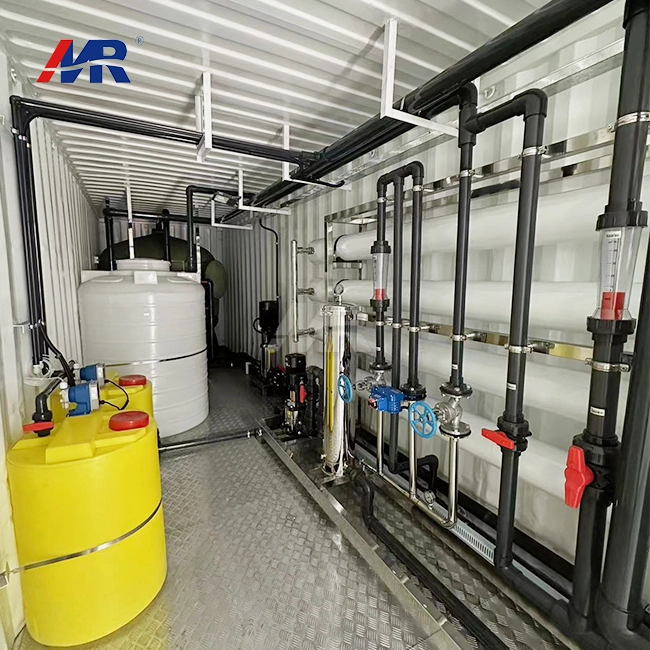 VIEW MOREcontainerized desalination plant
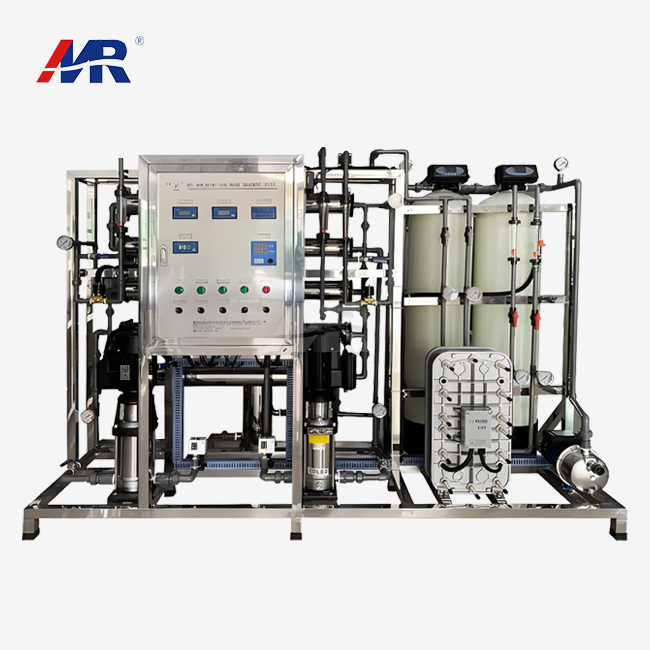 VIEW MORE500LPH EDI equipment
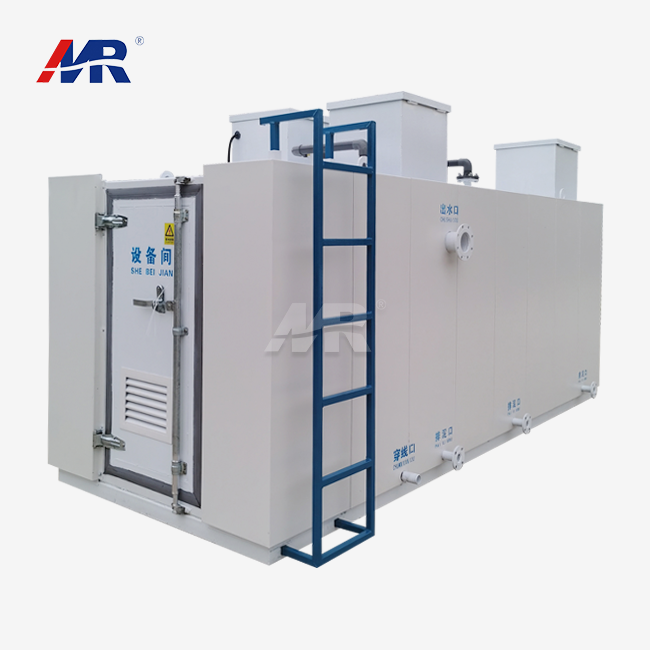 VIEW MOREwastewater treatment plant
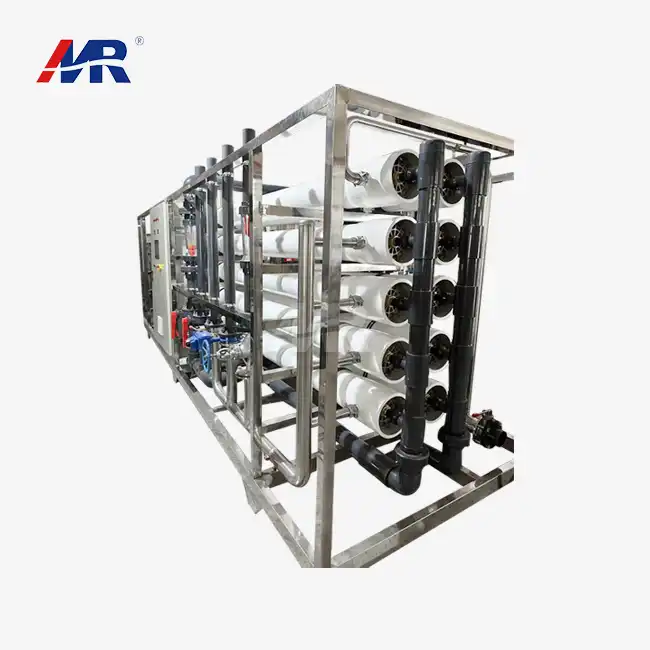 VIEW MORE50m3/hour reverse osmosis equipment
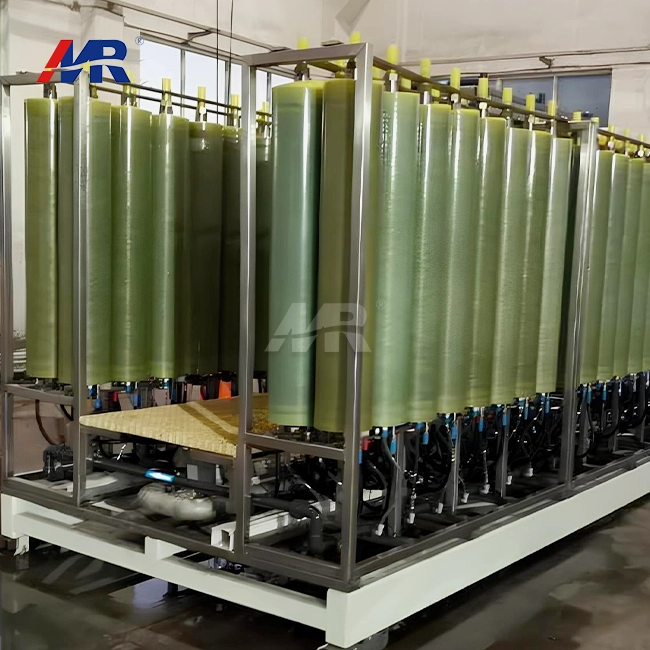 VIEW MOREDTRO for Wastewater Treatment
 VIEW MOREro edi system
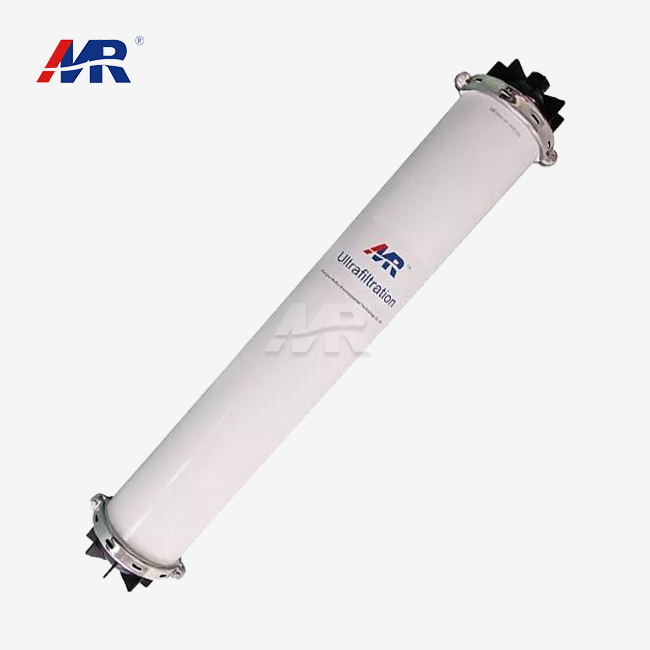 VIEW MOREultrafiltration membranes for water treatment
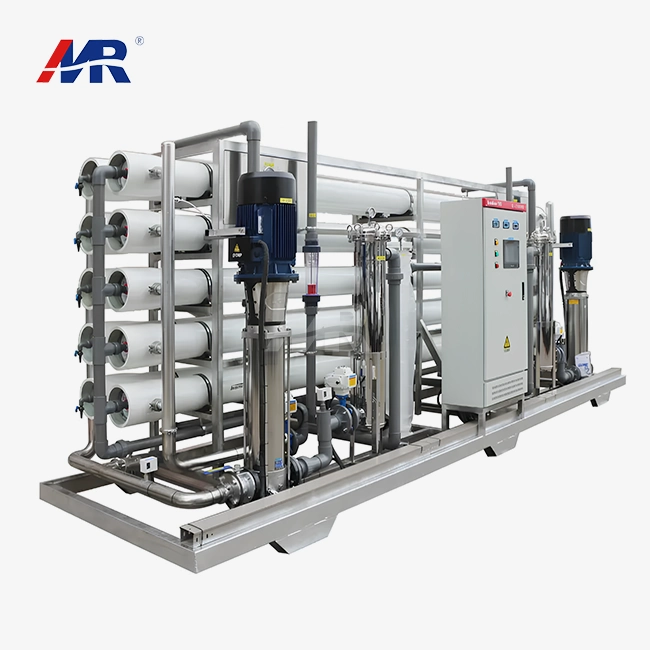 VIEW MOREreverse osmosis water purification plant