

_1745823981883.webp)

Large RO System vs Modular Units: Which Scales Better?
When businesses have to choose between buying a Large RO system or modular units, the answer depends on their operational goals and their growth trajectory. When processing large, steady volumes—often more than 50,000 gallons per day—a centralised Large RO system typically offers better economies of scale. This makes it the best option for pharmaceutical manufacturing, power generation, and municipal water plants where continuous high-capacity output is essential. On the other hand, modular units are very flexible and can be used to gradually increase capacity without having to spend a lot of money or time on repairs. The best solution depends on how predictable your facility's water needs are, how much floor space you have, and how you plan to grow in the future.
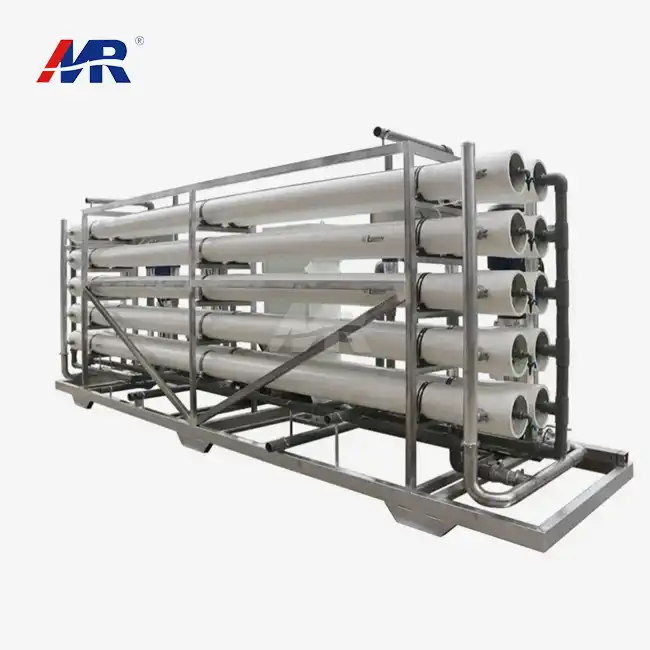
Understanding the Basics: Large RO Systems and Modular Units
What Defines a Large RO System?
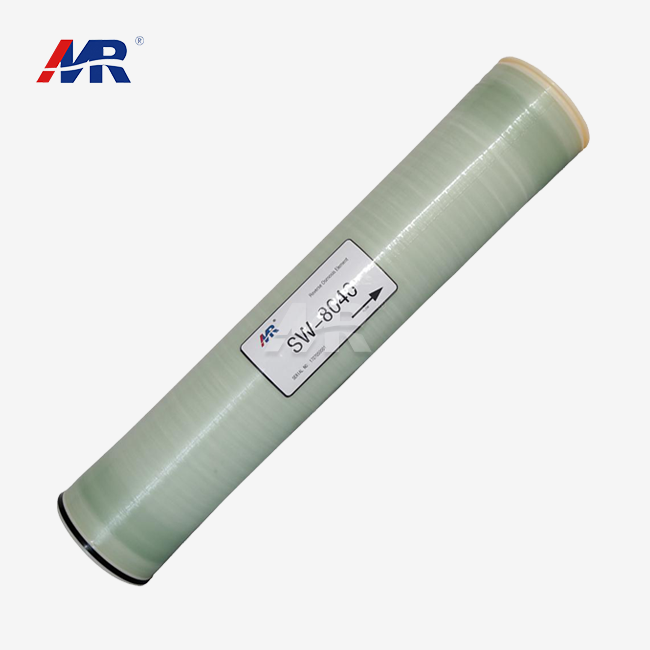
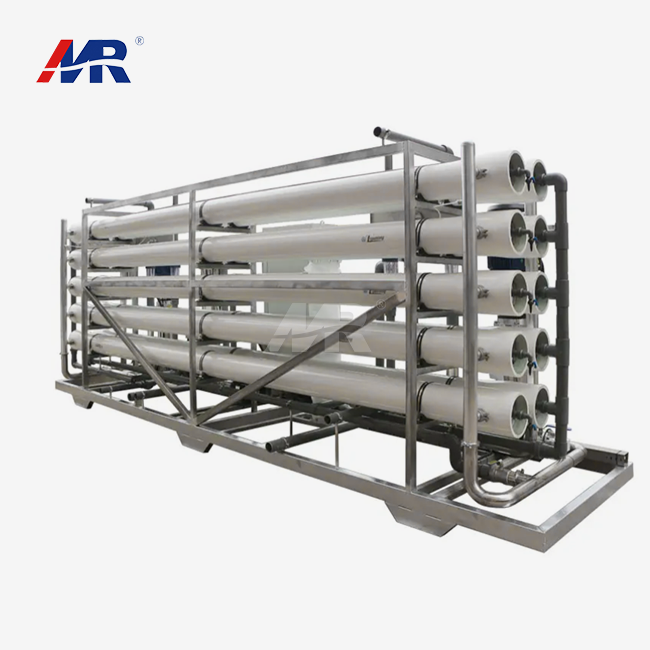
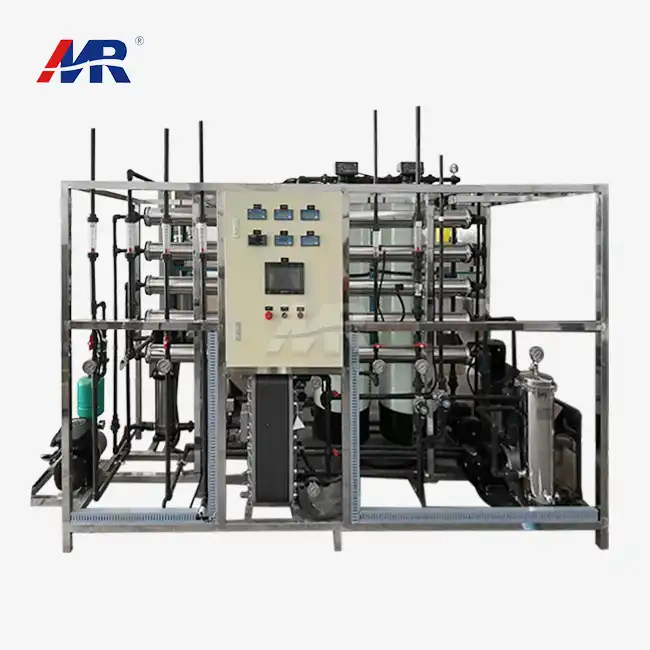
A Large RO system is a centralised water purification system that uses high-flux aromatic polyamide membranes to remove up to 99% of all dissolved solids. These systems are designed to work continuously and with a lot of water. They usually have advanced pretreatment trains, centralised pump stations, and full automated monitoring. Flow rates of 50,000 to 500,000 gallons per day are usual in industrial-grade setups that use 8-inch diameter membrane vessels set up in parallel rows. The design focuses on operational stability, process redundancy, and energy efficiency at scale. This makes these systems essential for industries that need consistent water quality over long production cycles.
Core Features of Modular RO Units
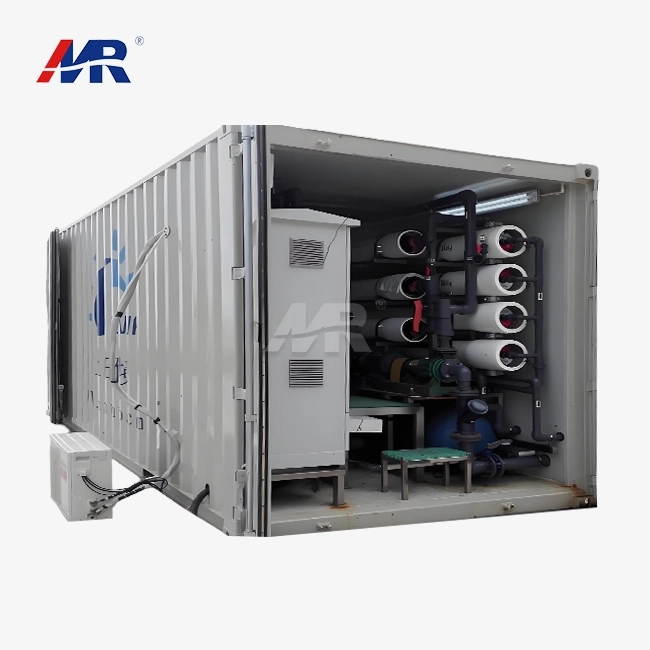
Modular reverse osmosis machines use pre-engineered skid-mounted parts that may be assembled individually or together. Decentralised design is their approach. Each module has a control panel, pumps, and membrane housings to function as a purifying cell. This architecture provides gradual capacity development, so businesses can add modules as demand rises without redesigning the water treatment infrastructure. For sites with fluctuating demand or limited space, most devices can handle 5,000 to 25,000 gallons of water per day. Plug-and-play simplifies installation and allows for particular maintenance without shutting down the cleaning chain.
Key Architectural Differences
Integration and flexibility differ most. One process line handles all filtration processes in centralised systems. This centralises monitoring and reduces the footprint, but substantial maintenance requires shutting down the system. Modular systems distribute filtration capacity. Although less energy-efficient, this makes the system easier to operate and maintain. Different membrane configurations exist. Large installations often utilise spiral-wound elements with longer service intervals, while modular systems may use shorter elements to standardise sizes. Understanding these architectural concepts helps procurement teams choose the best method for the location and operations.
Comparing Scalability: Efficiency, Capacity, and Cost
Capacity Expansion Capabilities
Large RO system installations work great when they can grow within the limits of their design, but they have a hard time when they need to increase their capacity beyond what was originally planned. In order to add to a centralised system, pump stations often need to be rearranged, membrane vessels need to be added, and electrical infrastructure needs to be upgraded. These projects can take months and stop production. By adding small amounts of power at a time, modular units get around these problems. Facilities just add more modules and connect them to the existing distribution network. This means that expansions are often finished in days instead of quarters. This flexibility is very helpful for businesses that are growing quickly or whose demand changes with the seasons. This is especially true in the food and beverage processing industry, where production rates can change a lot.
Energy Consumption and Operational Efficiency
An important part of reverse osmosis operating costs is energy, which usually makes up 40 to 60 percent of all operating costs. Centralised systems use much less energy because they share pump infrastructure and have better hydraulic design. They usually only use 3–5 kWh per thousand gallons of permeate. Multiple separate pump systems running in modular configurations usually use 4 to 6 kWh per thousand gallons. But more and more modern modular designs include energy recovery devices and variable frequency drives, which close the gap in efficiency. When you figure out how much energy you use overall, you should take into account changes in load. For example, modular systems can turn off modules that aren't being used when demand is low, which could make up for their higher per-gallon energy use through dynamic capacity management.
Total Cost of Ownership Analysis
The initial cost of a Large RO system is usually between $500,000.00 and $5,000,000.00, depending on the system's capacity and the quality of the water it must treat. Modular systems are easier to set up and have lower start-up costs ($100,000 to $800,000 for the same starting capability). Lifecycle cost analysis, on the other hand, shows that there are some differences. For example, centralised systems can buy membranes in bulk at lower unit costs, which is called economies of scale. The costs of maintenance are also different. For example, modular configurations need pump servicing more often across multiple units, while large systems focus maintenance tasks but need specialised technicians. To find out what the real economic benefit is, a 10-year cost projection should include how often the membrane needs to be replaced, how much energy costs at local utility rates, and how much capacity is expected to grow.
Technical and Operational Advantages: Which System Aligns with Your Business Needs?
Durability and Throughput Management
Continuous use of large, centralised setups can last 15–20 years if properly maintained. Industrial equipment like stainless steel pressure containers, commercial-duty pumps, and sturdy automation systems can withstand high-volume processing and mechanical stress. These systems can handle high demand because they include extra-large pumps and holding tanks that stabilise output during production spikes. Pharmaceutical and power plants need this reliability most since process water disruptions cause costly production halts. Backup pumps, duplicate pretreatment trains, and controlled failover are engineering redundancies in large systems. These give operating security that justifies the huge initial outlay.
Flexibility and Adaptation Advantages
Modular units excel in uncertain or changing situations. Electronics businesses are building cleanrooms, boosting purification capacity as production floors grow. Thus, they avoid wasting money on unused infrastructure. Construction is simple—just connecting water and power—so temporary sites or prototype production lines can use it fast. Modular systems allow technology advances without system upgrades when water quality standards change, such as when a city's water treatment plant transitions from brackish to seawater. Geographically distributed enterprises can use the same modules, making training and stocking spare parts easier for the complete company.
Operational Complexity and Maintenance Requirements
A centralised Large RO system needs skilled technical staff who can figure out how different stages of an integrated process interact with one another to function. For membrane cleaning methods to work, a lot of capacity has to be shut down. However, systems that are handled well only need to be cleaned every three to six months. With modular configurations, repair work is split up among separate parts, so techs can work on one module while others keep running. This makes it easier for people without a lot of technical knowledge to do regular repairs, so facilities don't have to hire specialised contractors. However, using more pump seals, control valves, and monitoring sensors in more modules means that more of them need to be replaced more often. This makes it more difficult to keep track of maintenance schedules and spare parts.
Procurement Considerations: Sourcing, Installation, and After-Sales Support
Selecting Reliable Membrane Suppliers
Since the reverse osmosis membrane is the most important part of any purification system, choosing the right supplier is very important for its long-term performance. Leading membrane manufacturers like Hydranautics, Dow Filmtec, and Toray have decades of experience in industrial applications, making membranes that are specifically engineered for tough conditions like high temperatures, chemical resistance, and preventing fouling. Look closely at a supplier's membrane rejection rates (they should be higher than 98%), how stable the flux is over time, and how well it cleans with chemicals when evaluating them. Make sure that suppliers keep enough inventory in the region to support quick membrane replacement—long lead times can stop operations during emergency failures. Established sellers usually give detailed technical data sheets that show how the product works in different feedwater conditions. This lets you confidently specify the product for your unique water chemistry.
Installation Logistics and Timeline Expectations
Big building jobs like large RO system installations take 6–18 months from order to use. Multiple contractors must coordinate site preparation, including installing a concrete pad, updating electrical service, and connecting the new and old buildings. Set aside 15–25% of tool costs for installation and site prep. Modules can be installed in 4–8 weeks, drastically reducing these times. The skid-mounted design is factory-tested and requires little field setup. This reduces labour expenditures to 8–15% of equipment costs. Facilities with tight deadlines or those that wish to maintain operations will like this speedy deployment. To achieve these shorter timelines, you must plan ahead for utility hookups and government permits, which might delay the job regardless of the tools you choose.
After-Sales Support and Spare Parts Availability
How well an investment in reverse osmosis is supported after sale determines its value or practicality. Ask providers about their service network density in your area. Can they deploy emergency technicians within 24–48 hours? Do they keep control valve and high-pressure pump spares locally? After-sales service is strong at Guangdong Morui Environmental Technology Co., Ltd. They have around 14 regional branches with 20 specialised experts who can give fast technical help for many industrial applications. Pharmaceutical production lines and saltwater desalination plants receive fast assistance from these distributed service capabilities. Check the warranty terms: full warranties should cover membrane performance loss, pump mechanical failures, and control system malfunctions for two years, with options for longer coverage.
Decision-Making Framework: How to Choose Between Large RO Systems and Modular Units
Defining Your Operational Parameters
To make good decisions, you must first accurately measure how much water needs to be cleaned. Write down how much water is used every day now and guess how much it will grow over the next 5 to 10 years, taking into account any possible facility additions or product lines. Be clear about the water quality standards you need, like TDS levels, specific ion removal needs, and microbiological standards. These will affect the choice of membrane and the level of difficulty of the pretreatment. Look closely at the properties of the feedwater: the TDS level, the hardness, the silica content, and the amount of organic matter all have a big effect on how the system is designed. Facilities that treat municipal water have different problems to solve than those that treat brackish groundwater or seawater. There are limits on what can be done on the site, including the amount of floor space that is available, the ceiling height for installing a vertical pressure vessel, and the amount of electricity that can be used. Large centralised systems can work in petrochemical plants with large industrial parks, but hospitals in cities that have limited mechanical rooms may need small portable solutions.
Matching Technology to Industry Requirements
In different industries, speed is valued differently, which favours certain system designs. Pharmaceutical and biotechnology manufacturing requires validated, GMP-compliant purification systems with thorough documentation and low risk of contamination—criteria that Large RO system installations successfully meet through integrated sanitisation features and centralised monitoring. Food and drink processors put a high value on operational flexibility because they often have multiple product lines with different water quality needs. Modular configurations let different production lines have their own dedicated purification chains. Electronics companies need very pure water with a resistivity higher than 18 megohm-cm. To get this, they have to use reverse osmosis along with electrodeionization. Modular staging helps them manage this complicated multi-stage purification sequence. When municipal water utilities have to meet regulatory deadlines while also limited in capital, they are more and more likely to use modular approaches. These allow them to use initial capacity to meet immediate needs while still leaving budget room for future growth.
Evaluating Long-Term ROI and Sustainability
Complex financial analysis goes beyond comparing original price tags. Total career value is considered. Calculate the net present value of both options by adding the equipment's cost, installation time, energy use, estimated utility rate increase, membrane replacement cost, regular upkeep cost, and expected capacity growth. Discount these future cash flows using your company's weighted average cost of capital for an economic comparison. Businesses with corporate water stewardship pledges are prioritising environmental sustainability in purchasing decisions. Modern reverse osmosis systems recover 75–85% of brackish water. Because they concentrate brine, modular designs may be superior for waste stream management. The carbon footprint is closely tied to energy utilisation. Renewable energy buildings may prioritise operational flexibility over energy efficiency. Perform a sensitivity analysis to see how changes in key assumptions like energy cost, water demand growth, and membrane replacement frequency affect each option's economic viability.
Conclusion
In the end, the question of scalability comes down to whether your operations value capacity efficiency more than flexibility. Large RO systems have the best performance for stable, high-volume tasks where economies of scale justify a big initial investment and a lot of work to be done. When growth paths are uncertain, space is limited, or operational adaptability is more important than energy efficiency, modular units are the best choice. Both technologies have come a long way. Newer designs include energy recovery, automated monitoring, and advanced membrane formulations that make the water quality great for a wide range of uses. Instead of assuming that one method is better than the other, you need to carefully look at your facility's specific needs, such as the type of feedwater, the amount of water that is needed, plans for growth, and your budget.
FAQ
Q1: How do maintenance schedules differ between large RO systems and modular units?
Centralised systems usually need to have their membranes cleaned every three months and their whole systems inspected once a year. During maintenance, the system has to be shut down, which reduces its total capacity. With modular configurations, maintenance is spread out among separate units. This lets rolling maintenance schedules keep some capacity while service activities are going on. However, modular systems need to replace more parts overall because they have more pump assemblies and control valves, which means that maintenance events happen more often but aren't as big of a deal.
Q2: What lifespan can I expect from each system type?
Large RO systems can operate for 15 to 20 years if they are properly kept, with membrane changes every 5 to 7 years and major component overhauls every 10 years. The membranes in modular units last about as long, but the pumps and valves may not last as long because they are made of smaller parts that are cycled more often. Overall system lifespan stays about the same as long as proper preventive maintenance is done. Usually, it takes 12 to 18 years before major repairs are needed.
Q3: Can modular systems truly match large system capacity?
By connecting several units in parallel, modern modular designs can reach levels that are on par with centralised systems as a whole. Facilities have successfully put in place modular arrays that produce more than 200,000 gallons of water every day. To reach these capacities, however, a lot of floor space is needed for equipment to be spread out, and hydraulic balancing across modules is more complicated. When getting the most capacity is the main goal, big systems still have benefits in terms of footprint economy and centralised control.
Partner with Morui for Your Industrial Water Treatment Needs
Guangdong Morui Environmental Technology Co., Ltd. has extensive experience developing, making, and installing both Large RO systems and flexible purification solutions that are specifically made for your business needs. Our engineering team has decades of experience in pharmaceutical, electronics, municipal, and industrial settings. They can suggest the best setups that balance speed, scalability, and cost. We keep a large stock of the best membranes and parts in the business. Our network of 14 regional branches and 20 specialised engineers ensures quick deployment and ongoing operational support. Our all-in-one service includes providing equipment, setting it up, starting it up, and providing long-term expert support. This is true whether you need a full ocean desalination plant, GMP-compliant pharmaceutical purification, or flexible industrial water solutions. We offer personalised quotes based on your feedwater analysis and capacity needs as a reputable Large RO system manufacturer and supplier. Email benson@guangdongmorui.com to set up a meeting with Our Team and learn how our tried-and-true water cleaning solutions can help you reach your business excellence and growth goals.
References
1. Greenlee, L.F., Lawler, D.F., Freeman, B.D., Marrot, B., & Moulin, P. (2009). Reverse osmosis desalination: Water sources, technology, and today's challenges. Water Research, 43(9), 2317-2348.
2. Wilf, M., & Bartels, C. (2005). Optimization of seawater RO systems design. Desalination, 173(1), 1-12.
3. Fritzmann, C., Löwenberg, J., Wintgens, T., & Melin, T. (2007). State-of-the-art of reverse osmosis desalination. Desalination, 216(1-3), 1-76.
4. American Water Works Association. (2017). Reverse Osmosis and Nanofiltration: Manual of Water Supply Practices M46. Denver: AWWA.
5. Voutchkov, N. (2018). Energy Use for Membrane Seawater Desalination – Current Status and Trends. Desalination, 431, 2-14.
6. National Research Council. (2008). Desalination: A National Perspective. Washington, DC: The National Academies Press.
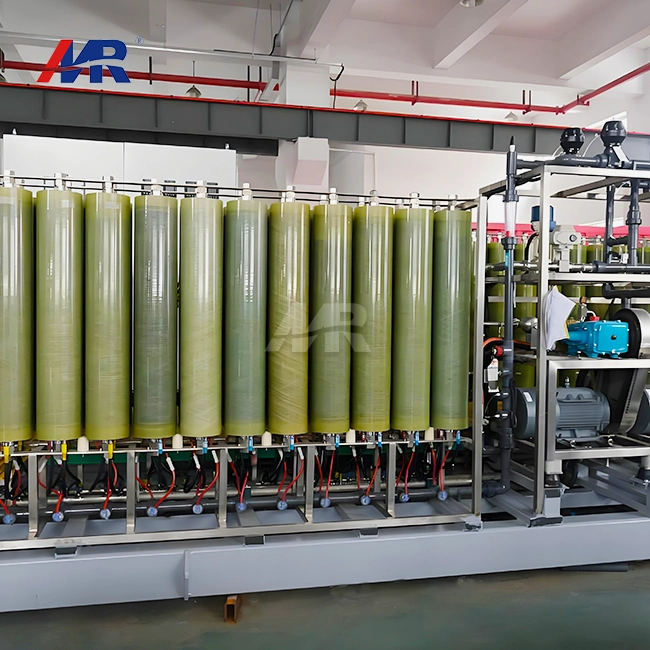 VIEW MOREDTRO Technology
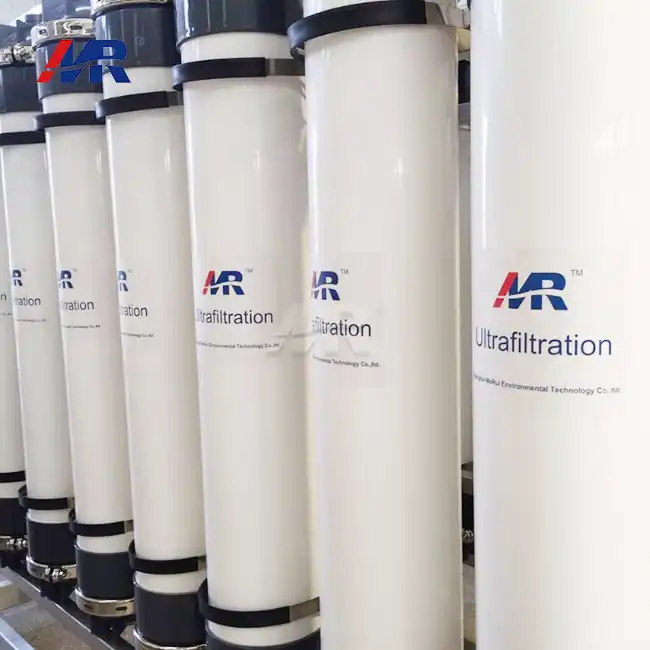 VIEW MORE90T/H ultrafiltration equipment
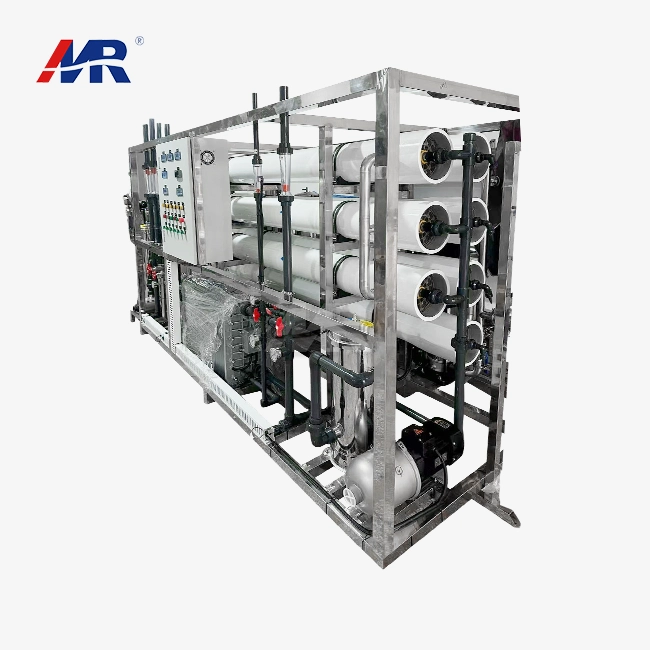 VIEW MOREedi module water treatment
 VIEW MORE8040 seawater reverse osmosis membrane
 VIEW MOREbrackish water reverse osmosis systems
 VIEW MOREcontainerized ro systems
 VIEW MOREultrafiltration water system
 VIEW MOREedi water purification system
