Reverse Osmosis Water Filter Sizing by TDS, SDI and Recovery Targets
To size a reverse osmosis water filter, start with the permeate flow you need. Then adjust for feed TDS, SDI, temperature, and your recovery target. TDS sets the operating pressure because more dissolved solids raise osmotic pressure. SDI shows fouling risk and decides how much pretreatment and membrane area you need. Recovery sets how much feed becomes product water. For example, 10 gpm of permeate at 60% recovery needs about 16.7 gpm of feed. Check every result with membrane projection software before you buy. Below, I walk through each step and show where our MR-BWRO-10TH fits.
Start With the Water and the Demand
Write Down Your Real Flow Demand
The first thing I always ask buyers is for two numbers: the top permeate demand and the usual permeate demand. To find the hourly flow, divide the daily volume by the work hours. For a place that needs 10,000 gallons per day over 10 hours, that's about 1,000 gallons per hour, or 16.7 gpm. With a holding tank, this number can go down because the unit fills the tank when it's not busy. Then, peak draw comes from storage, not the membranes. Write down how much power you have, how much floor space you have, and the quality level of water you want to make. All of these things affect the choice of tools.
Test the Feed Water Fully
One TDS reading doesn't always tell the whole story. Send a sample to a lab to find out the TDS, as well as the amounts of silica, iron, manganese, chlorine, and bacteria. In portable meters, conductivity is used to figure out TDS. However, the conversion factor changes based on the water's chemistry, so data from a lab is more accurate. Do the test again in a different season if your source changes. Wells, city lines, and public water all do different things. This is the most important thing to know about a reverse osmosis water filter that cleans well water. Iron and roughness often make things worse before salt does.
Design for the Coldest Water
Lots of the time, people who buy things don't know how much temperature can change the output. It is normal for the flow of membrane permeate to drop by about 3% for every Celsius that the temperature drops. If you build your system for water in the summer, it might not be able to reach its goal in January. To size the unit, don't use the monthly average. Instead, use the lowest temperature you expect the feed to reach. After that, you should add a safety cushion for membrane age, since over time, pressure demand goes up and flux goes down slowly. These two habits stop most of the comments I hear about low output after starting.
How TDS, SDI, and Recovery Shape RO Membrane Sizing?
TDS and Osmotic Pressure
Salts that are mixed with water push water back across the membrane in a reverse osmosis water filter. This osmotic pressure goes up when there is more TDS. For every 100 mg/L of TDS, about 1 psi is usually added. The pump has to get past that pressure before any permeate can form. It needs more pressure, a bigger barrier area, or a slower return than tap water with a low salt level because of this. When the TDS is high, more salt is moving into the membrane. When you match the pump head to the membrane extension, make sure you get the right feed. Leave some space for age.
SDI and Fouling Risk
The SDI15 gives an idea of how fast colloids and suspended particles can block a 0.45-micron filter, and the ASTM D4189 describes the test. Many people who make membranes say that SDI15 should be less than 5 at the opening of the membrane because it is safer that way. Sometimes when SDI is high, feed spacers get clogged up. This causes differential pressure to rise and flow to stop. The design flux also needs to be less extreme, which means the membrane needs to be bigger to get the same output. You don't have to test for bacteria, iron, or organics with SDI, so I only use it as one of several signs. A smaller system might cost less on the first day, but it needs to be cleaned more often.
Recovery and Scaling
Return is 100 times the difference between the flow of permeate and the flow of feed. It takes about 16.7 gpm of feed to move 10 gpm of permeate, and that flow sends about 6.7 gpm to the concentrate. Increasing recovery cuts down on water use, but it makes the stream that is rejected saltier. Calcium carbonate, sulfate, and silica can then build up on the skin and make it rough. Antiscalant doses or easing can make the RO system heal faster, but only up to the point where the feed chemistry doesn't allow it. Your water study, not the biggest number on a poster, should be your goal.
Pretreatment, Configuration and Verification
Match Pretreatment to the Risk
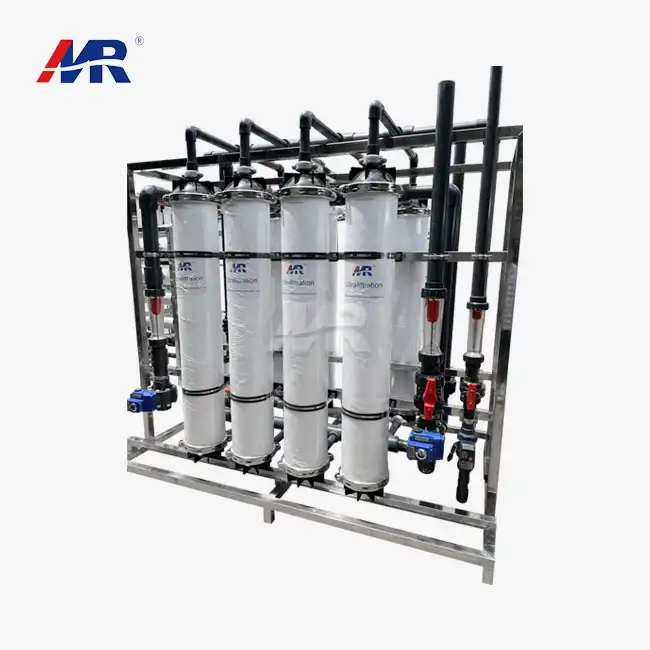
Pretreatment keeps the membrane safe in a reverse osmosis water filter. Raw water is stored in a tank, and the train has a multimedia filter, activated carbon, a cartridge filter, and either a softener or an antiscalant dosing system. Some sites don't need every stage. Carbon can get rid of chlorine, which is bad for polyamide membranes. When you use a multimedia filter or ultrafiltration, SDI gets smaller. Softening or antiscalant can be used to fix the hardness. Small bits are all that a 5-micron cartridge filter can get rid of. It can't fix unstable chemistry or high SDI by itself. It costs less to run a business in the long run because the soil heals faster and needs less cleaning after a good pretreatment.
Compare Configurations
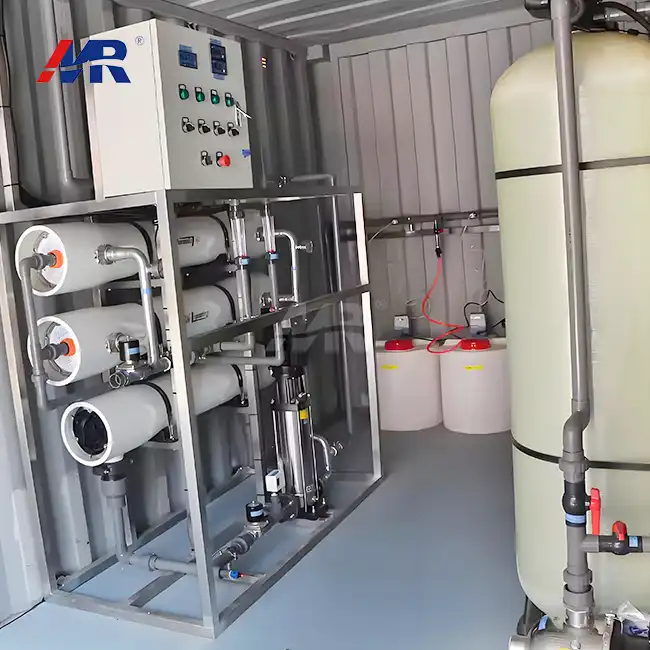
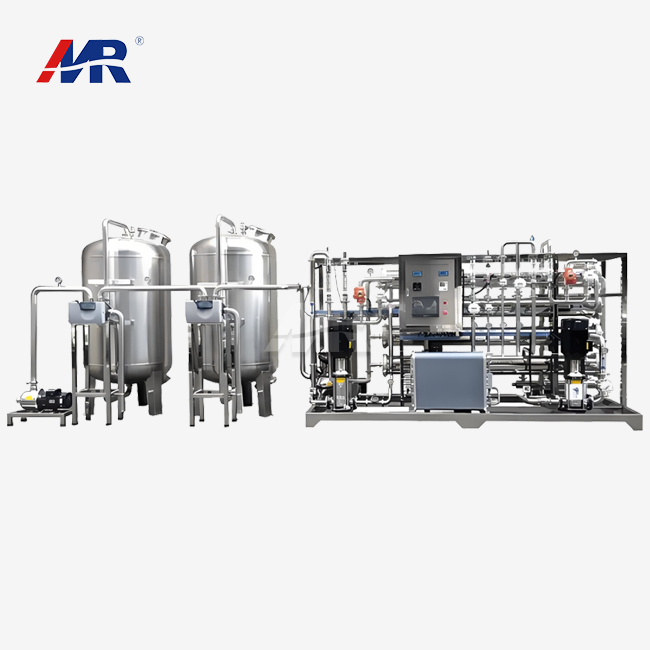
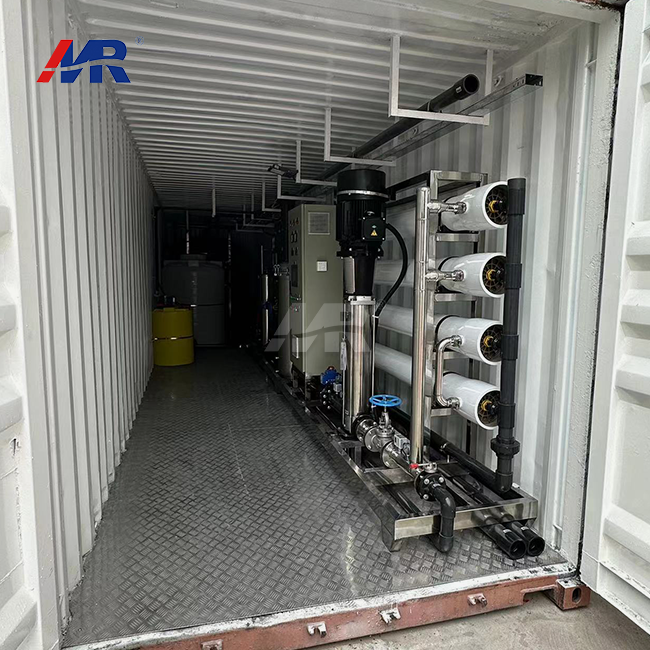
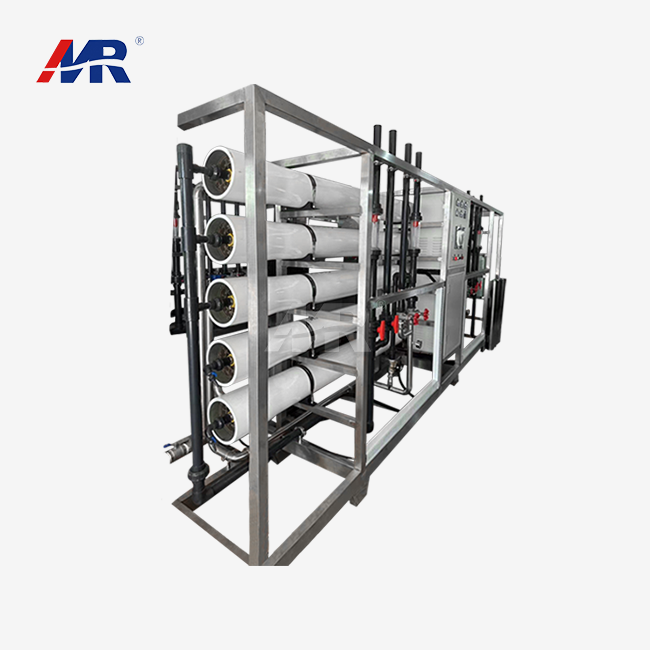
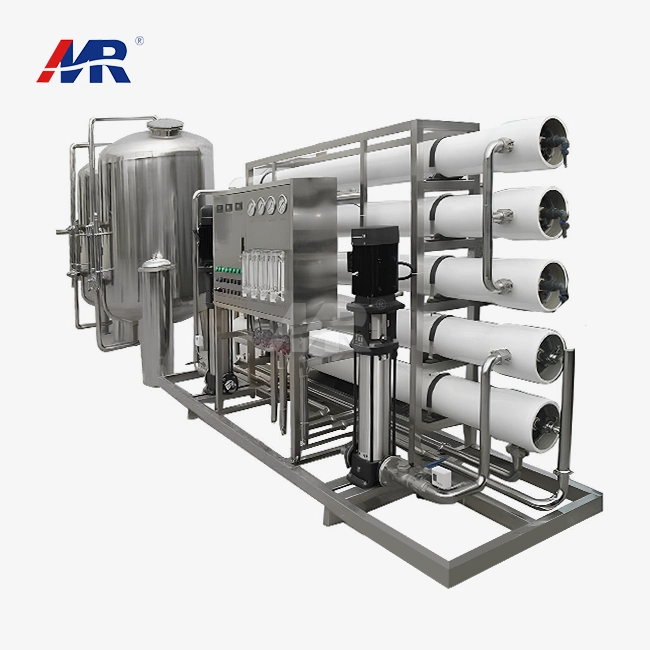
For point-of-use needs, low-flow units that fit under the sink or on the table work well. A commercial reverse osmosis water filter system has extra parts like a control panel, a booster pump, pressure vessels, and a flushing system that runs itself. A single-pass RO can clean most drinking and process water. Two-pass RO or RO followed by EDI or ion exchange works well when more purity is needed. It's not enough to just compare the stated capacity; you should also look at the footprint, controls, reject ratio, ease of upkeep, and room for growth. A normal test gives you a score, but your site doesn't really meet the requirements.
Verify With Performance Data
You should decide on the acceptable standards before delivery. These should include the flow of the permeate, the rejection of salt, the conductivity, the recovery, the feed pressure, and the flow of the concentrate. Note down the temperature, pressure, differential pressure, and the conductivity of the feed and permeate while the system is at work. If you want to use the raw readings, you need to normalize them because they change with temperature and feed TDS. It means that the fouling, scaling, damage, or recovery set point is too high if the flow slows down, the rejection weakens, or the difference pressure rises. Cleaning based on trends is better than cleaning based on the date. The same trends early on show if the first size was right.
Where the MR-BWRO-10TH Fits
Model Specifications
The MR-BWRO-10TH is used to make water that can be drunk with a reverse osmosis water filter. The recovery rate is between 55% and 65%, and 98% of the salt is thrown away. 15 kW of power is used every hour. For every 10 gpm of permeate, 15.4 to 18.2 gpm of feed is needed. This helps you figure out how to get raw water and deal with concentrates. I think you should share your water report before you confirm a setup because the end result depends on the TDS, SDI, and temperature of your feed.
Matching the Model to Your Feed Water
You can handle higher risk on harder feeds if you have a small recovery window. You can tell if the unit is right for you by looking at the hardness, silica, and SDI of the water after it has been pretreated. When chlorine is present, I would use a carbon filter along with it. When it's very hard, I would use an antiscalant or softener with it. They will look over your analysis and let you know right away if a different setup would work better. People who buy from that company don't have to deal with dirty membranes or unplanned downtime because of that honest check.
Factory and Component Support
Guizhou Morui Environmental Technology Co., Ltd. has its own plant that makes membranes and sells Createc instruments, Runxin valves, and Shimge water pumps. We can now use a single hose to connect the pump, valve, and membrane of a system. More than 500 people work for our company, and there are more than 20 engineers. We sell tools and then set them up and turn them on. Private-label packages and custom settings can be asked for by people who buy OEM goods. People who buy from wholesalers can find out what parts are in stock and how to get more of them.
Conclusion
To find out what size reverse osmosis water filter is needed, you need to do a full water study, not just a single TDS reading. The osmotic pressure and pump needs are based on TDS. The chance of fouling is shown by SDI, which also affects the design flow. Finally, the recovery goal weighs the risk of scaling against the benefit of saving water. Output is lower when cold water is fed in and the membrane ages, so the design needs to allow for some mistakes. A tube filter can't fix high SDI, so the contaminants must be cleaned up first. After that, projection software and performance data show that the system works as it should. The MR-BWRO-10TH numbers are used to make these calculations. They show that 98% of the salt is thrown away and 55% to 65% is recovered.
FAQ
Q1: What SDI is acceptable for RO feed water?
A: There are many membrane makers who say that SDI15 should be less than 5 where the membrane starts. When the numbers are smaller, there is less need for cleaning and fouling.
Q2: Does higher TDS mean a larger system?
A: Yes, most of the time. When the TDS is high, you might need a bigger membrane, a stronger pump, or less recovery to keep the same flow of permeate.
Q3: Can I raise recovery to save water?
A: Only up to the most that the feed's chemistry will allow. Scaling is more likely to happen when there is more calcium, sulfate, and silica in the reject stream because of more recovery. To make sure of any changes, use projector software.
Q4: Is a higher-priced system always better?
A: Not at all. You should look at service, energy use, replacement parts, design flux, and pretreatment all at the same time. The total cost of ownership is more important than the price of the item itself.
Q5: What are the MR-BWRO-10TH specifications?
A: For making drinking water, it removes 98% of the salt and recovers 55% to 65% of it. It needs 15 kW of power per hour.
Request a Reverse Osmosis Water Filter Sizing Review From Morui
If you give Morui your feed-water analysis, TDS, SDI, necessary flow, and recovery goal, they can come up with a setup that will work. If you need to make a reverse osmosis water filter for private label or OEM, or if you have extra parts to sell, Our Team can help. To find out more about the MR-BWRO-10TH and how we can help you with your membrane, pump, and valve needs, send your details to benson@guangdongmorui.com.
References
1. ASTM International, Standard Test Method for Silt Density Index (SDI) of Water (ASTM D4189), 2014
2. Dow Water & Process Solutions, FilmTec Reverse Osmosis Membranes Technical Manual, 2016
3. American Water Works Association, Reverse Osmosis and Nanofiltration: Manual of Water Supply Practices M46, 2007
4. Wilf, M., The Guidebook to Membrane Desalination Technology, Balaban Desalination Publications, 2007
5. Baker, R. W., Membrane Technology and Applications, Wiley, 2012
6. Ghaffour, N., Missimer, T. M., Amy, G. L., Desalination, 2013