_1745823981883.webp)

Electrodeionization Benefits for Continuous Ultrapure Water
Continuous electrodeionization is one of the most effective methods now available to produce ultrapure water at an industrial scale. The procedure uses ion-exchange resins, ion-selective membranes, and a direct current electrical field to extract dissolved ions from water without the need for chemical regeneration. This results in a consistent water output of 18.2 MΩ·cm class that satisfies ASTM D5127 and USP/EP criteria. This implies fewer outages, reduced operational costs, and water quality that batch deionization cannot reliably provide for semiconductor companies, pharmaceutical facilities, and power production sites.

Understanding Continuous Electrodeionization Technology
How the Process Works
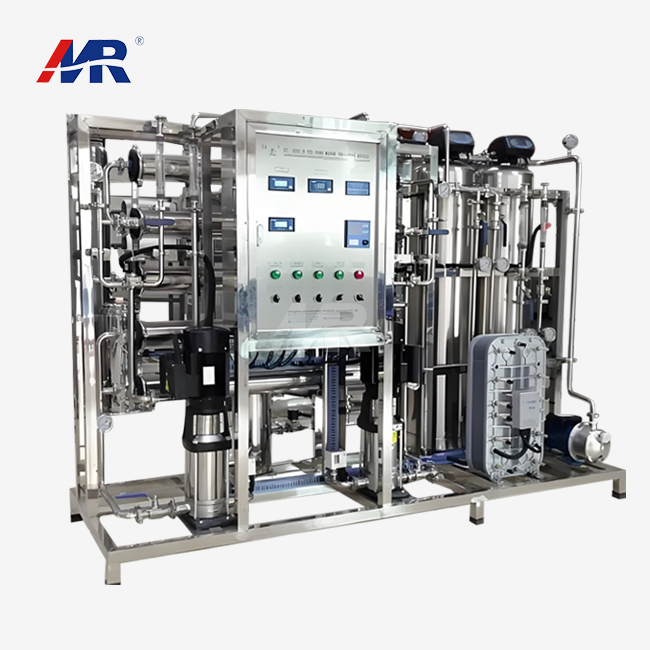
A CEDI module is composed of dilute and concentrate compartments separated by cation- and anion-selective membranes. The dilute compartment is filled with an ion-exchange resin that captures dissolved ions from the supply water. When a DC voltage is supplied to the stack, the ions collected move through the membranes into the concentrate stream and are flushed away. Water splitting at the resin-membrane interface creates H⁺ and OH⁻ ions that constantly replenish the resin bed – no acid, no caustic, no planned downtime.
Feed Water Requirements
CEDI works best when supplied with good-grade reverse osmosis permeate. The feed water TDS must be less than 40 ppm and the hardness shall be less than 1.0 ppm as CaCO3. If dissolved CO2 is in excess of 10-15 ppm, a membrane degassing contactor upstream inhibits CO2 loading on the resin and reduces product resistivity. Meeting these inlet conditions is the single most significant aspect in consistently producing product water over 10 MΩ·cm.
Where It Fits in a Treatment Train
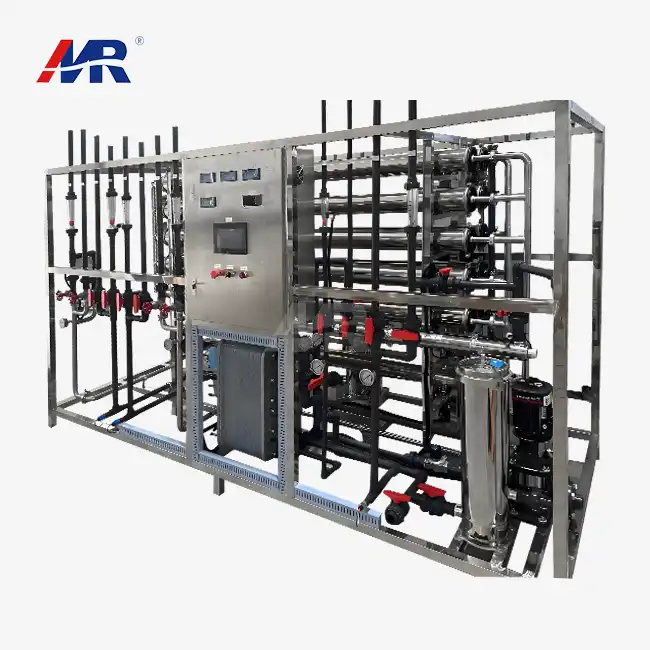
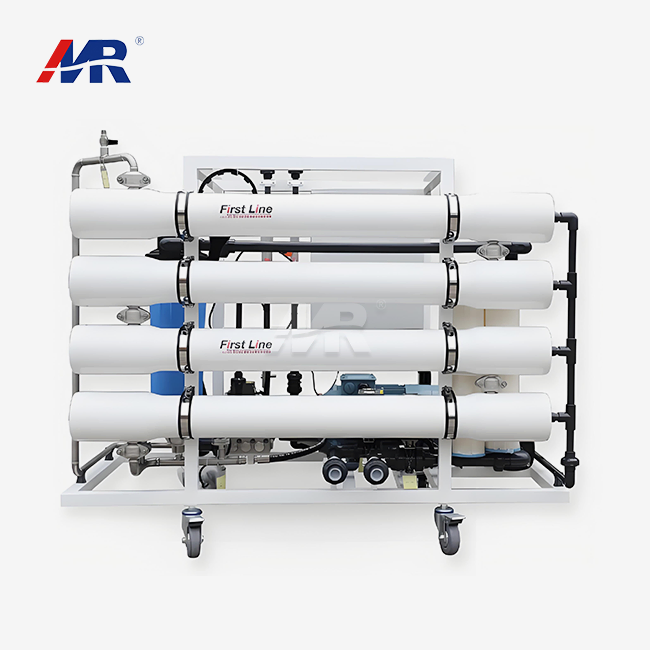
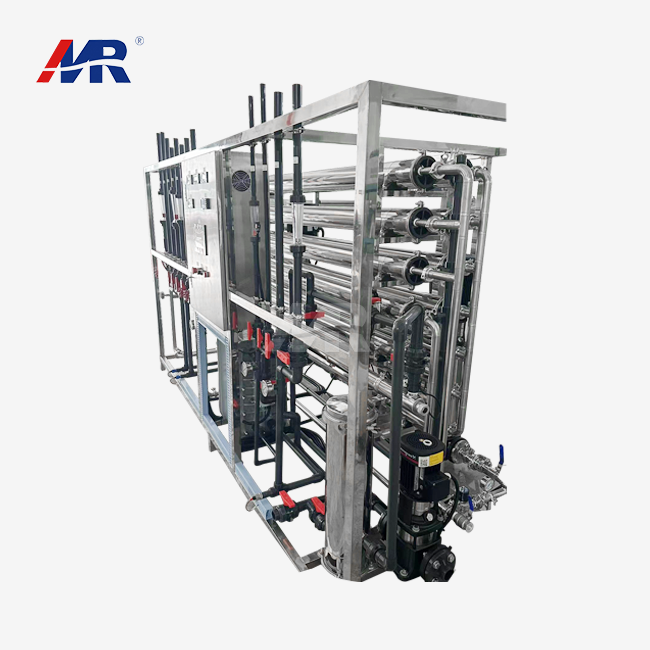
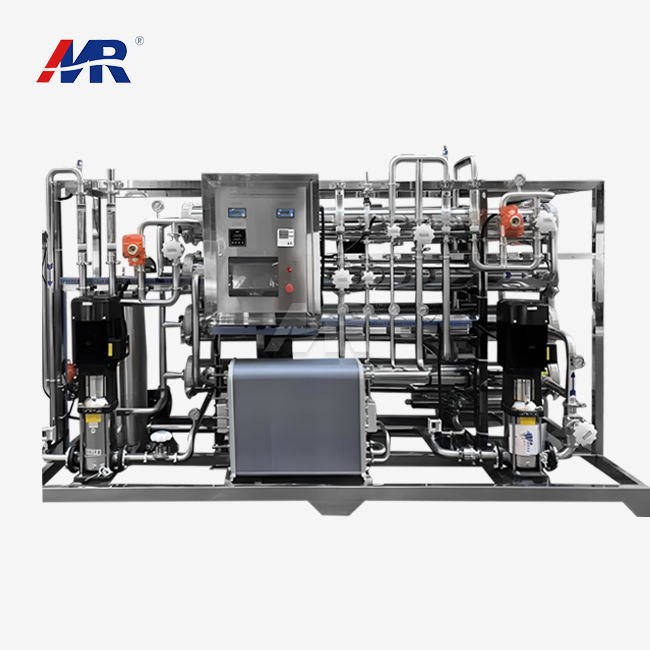
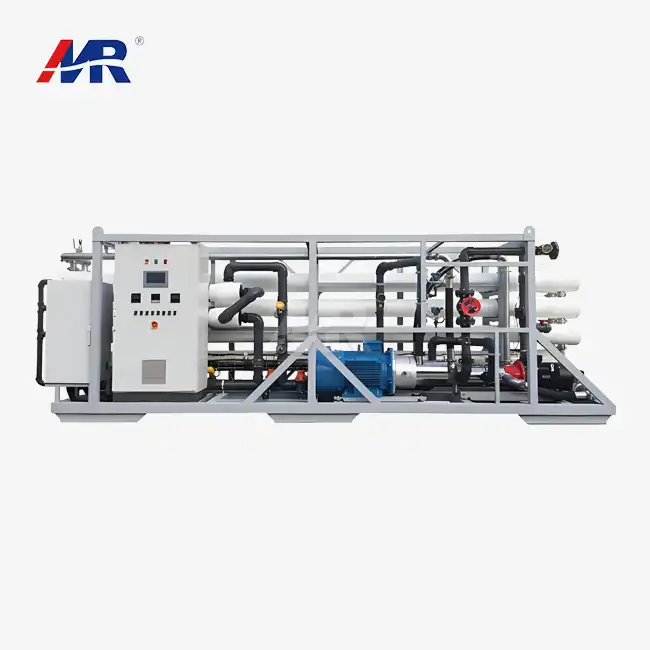
CEDI is generally always the last polishing step in a RO+EDI train. Reverse osmosis is used to remove most of the dissolved solids, turbidity, and organics, and the EDI module provides the last ionic removal required for electronic- or pharmaceutical-grade water. If TOC reduction or particle control is also needed, a post-treatment step might follow ultrafiltration or UV sterilization.
Key Benefits of Continuous Electrodeionization for Ultrapure Water
Clearly, the continuous electrodeionization (CEDI) technique is superior to ordinary mixed-bed deionization and even RO working on its own. When procurement teams see these advantages, they can build a great business case before spending money.
Here are the major reasons why CEDI is the best approach to produce high-quality water:
- Self-regeneration without chemicals. As the resin is used, the electrical field regenerates it, eliminating the need to acquire, store, handle, and neutralize sulfuric acid and sodium hydroxide. This immediately lowers regulatory burden and hazardous waste disposal expenses.
- Stable water quality: the product resistivity remains above 10 MΩ·cm throughout the whole operation. No post-regeneration quality excursions that need a stop in production while a mixed-bed bed recovers, a typical concern in batch systems.
- Low energy draw: Morui's EDI systems use less than 0.1 kWh per cubic meter of product water, which is much more energy efficient than thermal distillation and competitive with traditional ion exchange during their lifespan.
- High water recovery: Recovery is over 90%, therefore lowering consumption of raw water and reducing the amount of wastewater discharge, both critical sustainability reporting indicators in US facilities regulated under EPA or state environmental licenses.
- Long Service Life: Proper pretreatment with RO and annual inspection will extend the life of EDI modules typically to 7 to 10 years, reducing the total cost of ownership over frequent resin replacement in traditional systems.
These advantages directly address the stresses of production that power plant workers, semiconductor manufacturing, and medication QC laboratories face on a daily basis. “Just taking out chemical regeneration can make things a lot easier for the operations team at a building, safety-wise and logistics-wise.
Continuous Electrodeionization System Selection and Procurement Guide
Key Technical Parameters to Evaluate
Choose an edi system that has a flow range that matches your peak demand. The flow rates that Morui's systems can handle range from 0.5 to 50 m³/h, and the temperatures can be anywhere from 5 to 45°C. Make sure the supplier can give you certified water quality test reports that show the product's resistivity, silica removal (usually >95%), and TOC levels. This is information that US buyers in semiconductors and pharmaceuticals need before they approve a vendor.
Comparing EDI Against Alternative Technologies
The resistivity is about the same as mixed-bed deionization, but it needs to be regenerated offline every so often with dangerous chemicals, which leaves gaps in quality and safety. Distillation makes very clean water, but it uses 10–15 times more energy per cubic meter than CEDI. When RO is used by itself, it usually stops working at 0.5 to 1 M··cm without a cleaning step. CEDI combined with RO is the best technical and financial choice for sites that need steady 10–18.2 M·cm output with little help.
What to Look for in a Supplier
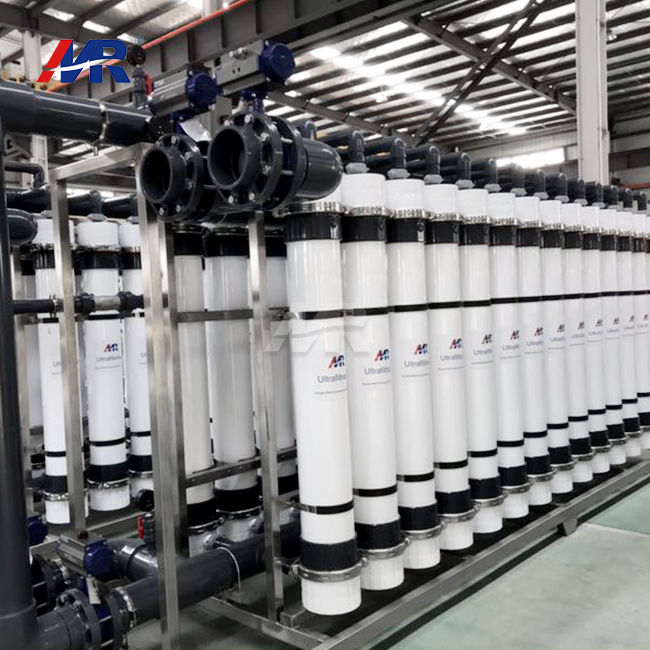
A good company that sells continuous electrodeionization should have more than just a generator. Look for a company that makes RO, EDI, and UF systems that can all work together. This way, you can choose the membranes, build the stacks, and connect the systems all in one place. Buyers of pharmaceuticals and semiconductors care a lot about validation documentation like IQ/OQ protocols, material certificates, and data from pilot runs. More and more systems can be monitored remotely, which cuts down on the cost of on-site service calls.
Real-World Applications and Case Studies
Semiconductor and Electronics Fabrication
Ionic contamination at parts-per-trillion levels causes yield reductions in wafer production. The major polishing step in UPW loops is CEDI, and it maintains resistivity at 18.2 M. ·cm or close to it. One yield loss due to filthy rinse water might cost much more than the upfront cost of a well-set-up EDI system. Thus, leading fab operators make UPW quality a non-negotiable process condition.
Pharmaceutical Purified Water and WFI Pretreatment
Purified water, according to USP and EP standards, should have a resistivity of not less than 1.1 MΩ·cm at 20°C; however, many sites strive for greater values. CEDI systems may be designed with clean pipes, electropolished surfaces, and ozone-compatible materials that can be integrated directly into validated pharmaceutical water loops. By eliminating chemical regeneration, agencies also eliminate a huge contamination risk that agencies look for during inspections.
Power Generation Boiler Feed Water
To avoid turbine blade deposition and corrosion, high-pressure boilers require feed water with silica levels below 20 ppb and sodium levels in the single-digit ppb range. CEDI can manage varying qualities of RO permeate without the need to add extra resin by hand. This maintains the boiler chemistry within the desired range even if the quality of the supply water varies from season to season. A number of US power facilities report reduced boiler chemical excursions after converting from mixed-bed polishers to continuous electrodeionization-based systems.
Troubleshooting and Optimizing EDI Systems
Preventing Scale and Fouling
The source of scaling inside the dilute section is calcium and magnesium hardness greater than 1.0 ppm as CaCO3, which increases stack resistance and reduces the quality of the product. This danger may be avoided by installing a water filter or by ensuring that the RO waste is high enough to meet the hardness limit. Biological fouling does not happen very frequently, but it may develop if the pipes are not cleaned regularly enough in warm climates. If you clean regularly with hot water or ozone, the biofilm is under control.
Electrical Performance Monitoring
If the resistance of the product drops or the voltage of the stack increases at a constant current, it signifies something has changed. The feed quality has either deteriorated, or fouling has begun. Resistivity and conductivity sensors are inline on both the feed and product lines to provide early warning to operators. Morui’s solutions have remote tracking built in, so engineering teams may watch performance trends and schedule repair before a quality excursion.
When Cleaning-In-Place Is Needed
CEDI is self-healing, but if pretreatment fails and scaling or biological deposits build up, cleaning-in-place (CIP) may be required. Performance is often restored by following the manufacturer’s recommendations for a moderate citric acid or sodium hydroxide CIP cycle. Detailed maintenance records assist in relating frequency of cleaning to variations in feed water and enhance audit trails for regulators in pharmaceutical plants.
Conclusion
The CEDI technology provides a trusted chemical-free means to generate constant ultrapure water for semiconductor, pharmaceutical, power, and laboratory applications. A highly designed RO+EDI train, with product resistivity >10 MΩ·cm, recovery rate >90% and energy usage <0.1 kWh/m3, provides process dependability and long-term cost management. Proper feed water conditioning and proactive monitoring are two of the elements that most affect the performance of the system over its service life. If you are an engineer or a procurement team looking at high-purity water solutions, CEDI is worth a serious look. The continuous electrodeionization technology provides a trusted chemical-free means to generate constant ultrapure water for semiconductor, pharmaceutical, power, and laboratory applications. A highly designed RO+EDI train, with product resistivity >10 MΩ·cm, recovery rate >90% and energy usage
FAQ
1. What feed water quality does an EDI system require?
EDI modules require RO permeate with TDS below 40 ppm and hardness below 1.0 ppm as CaCO₃. Feed conductivity should stay under 40 µS/cm. Meeting these conditions protects the ion-exchange resin from premature scaling and maintains consistent product water quality.
2. How long do EDI modules typically last?
With adequate pretreatment and routine inspection, high-quality EDI modules generally last 7 to 10 years. Module lifespan depends heavily on feed water consistency and whether any fouling events are caught and addressed early.
3. Does CEDI completely replace a mixed-bed polisher?
Yes, in most applications. CEDI consistently produces resistivity above 10 MΩ·cm—sufficient for pharmaceutical purified water and many electronics processes. For applications requiring the full 18.2 MΩ·cm, CEDI can be staged in series or combined with a final polishing step.
4. How does temperature affect EDI performance?
Ion mobility increases with temperature, so system efficiency generally improves up to 35–40°C. Above that range, membrane and resin materials may degrade. Morui's systems are rated for 5 to 45°C, covering most industrial environments in the United States.
5. Is EDI suitable for pharmaceutical validation?
Yes. Morui offers IQ/OQ documentation, material certificates, and sanitary piping configurations that align with USP and EP purified water requirements, making the system audit-ready for FDA-regulated facilities.
Partner with Morui for Your Ultrapure Water Project
Morui is a reliable company that makes continuous electrodeionization. They do RO, EDI, and UF production all in-house, using the same quality system. Not sure if you need a basic EDI module or a fully designed RO+EDI train built to electronic- or pharmaceutical-grade standards? Our Team is ready to help with technical issues, provide paperwork on water quality, and provide service after the sale. Get in touch with us right away to talk about the needs of your project. Email address: benson@guangdongmorui.com
References
1. ASTM International. ASTM D5127: Standard Guide for Ultra-Pure Water Used in the Electronics and Semiconductor Industries. ASTM International, 2022.
2. United States Pharmacopeia. USP <1231> Water for Pharmaceutical Purposes. USP, 2023.
3. Strathmann, H. Ion-Exchange Membrane Separation Processes. Elsevier, 2004.
4. Water Technology. Electrodeionization in Industrial Ultrapure Water Systems. Water Technology Magazine, 2021.
5. Journal of Membrane Science. Performance Evaluation of Continuous Electrodeionization for High-Purity Water Production. Elsevier, 2020.
6. Power Engineering International. Boiler Feed Water Treatment: Advances in Membrane-Based Deionization. PennWell Publishing, 2022.