


New RO System: What Should Buyers Check Before Ordering?
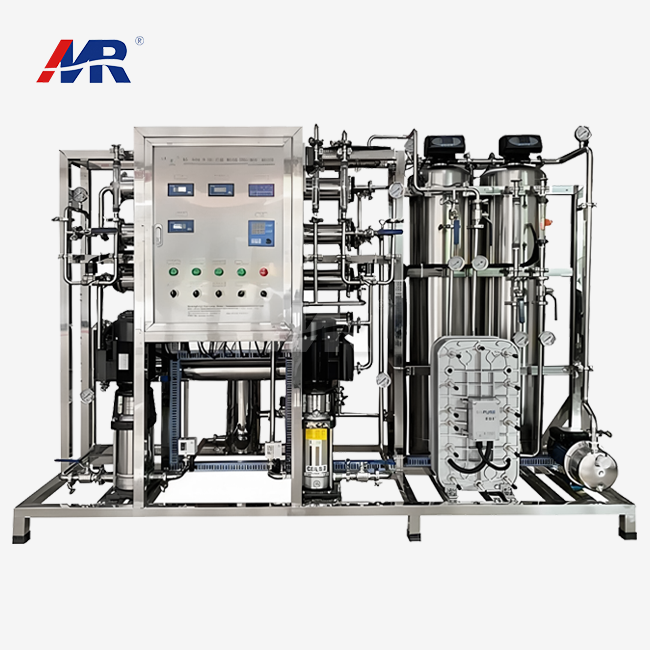
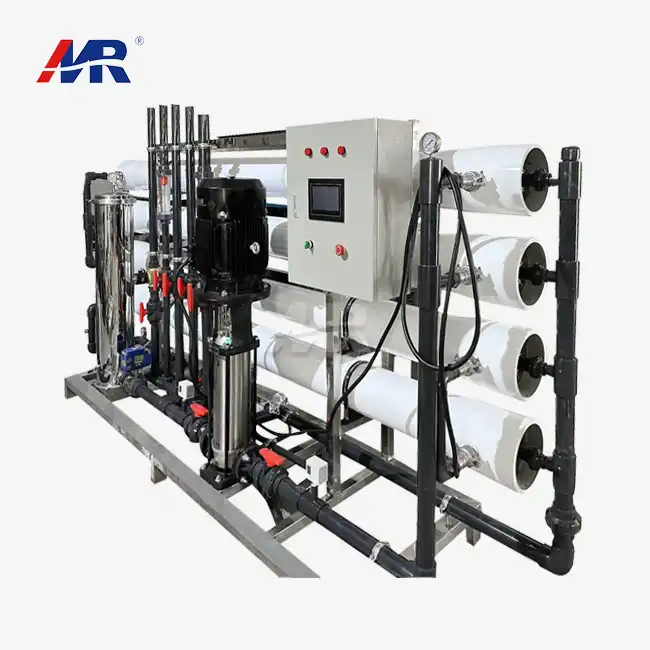
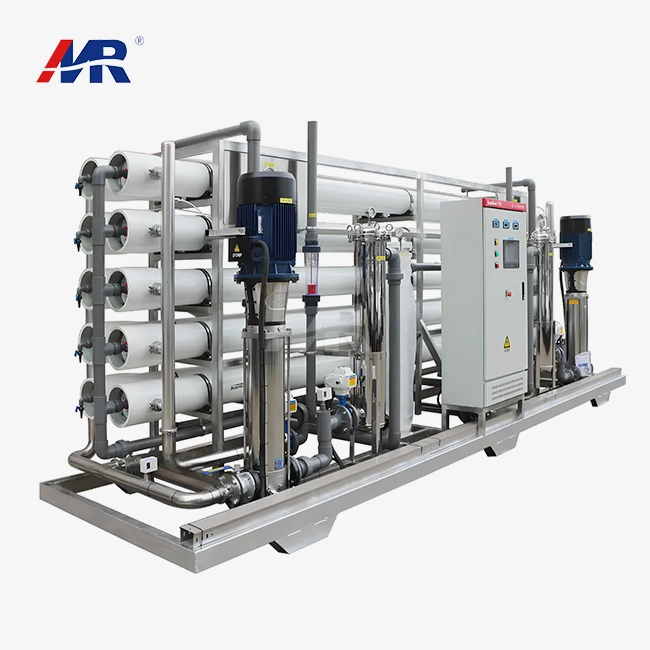
A new ro system should be judged by how well it fits your water, your product, and your documentation needs, not by price alone. Before ordering, I recommend checking four areas: a recent feed-water report, the quality target for your process, the equipment's verified specifications, and the supplier's ability to support you after delivery. For pharmaceutical water production, the Morui MR-BWRO-50TH offers 55–65% recovery, 99% salt rejection, and 55 kW power consumption. Use this guide to compare options on equal terms, avoid costly redesigns, and prepare a clear request for quotation that suppliers can answer accurately.
Define Your Water and Pharmaceutical Requirements
Start With a Recent Feed-Water Report
Everyone who wants to buy something from me has to give me a lab report first. This is because the feed water affects the whole plan. The most important thing to look at with the MR-BWRO-50TH is the total dissolved solids (TDS). This is because it works with bad water. Next, the iron, manganese, chlorine, hardness, turbidity, pH, alkalinity, and microbe levels are important because they affect membrane damage, fouling, scaling, and pH. A lot of the time, treating well water and city water differently is necessary. 500 mg/L is the second level of TDS that the U.S. EPA recommends for drinking water. This means that some sources of groundwater are saltier than this and need to be desalinated. Since one sample can hide changes, send a report that is up-to-date and talks about how the seasons have changed.
Set the Product-Water Target
For making medicines, you need to know what kind of water you need before you go out and buy any tools. Rules for Purified Water are in the US Pharmacopeia. One of them says that stage 1 water must not have a conductivity of more than 1.3 µS/cm at 25°C. A single RO pass at 99% salt rejection cuts down on dissolved salts by a lot, but the end result still depends on the feed TDS, temperature, and membrane condition. You should ask your provider if you can reach your goal with just one pass or if you need a second pass, electrodeionization, or a different step to finish. In order for all testers to use the same number, the goal should be written in the specification. Because conductivity readings change with temperature, you should also check the test methods and sampling points twice.
Size the Flow and Plan for Growth
Stress from daily tasks can lead you astray. Write down your business's hours, the amount of storage space you want to add, the average amount of use, and the peak hourly demand. Sometimes plants have to batch and clean when demand goes up, so a unit that was made for a normal day might not be able to handle peak. Recovery also changes the size. If you collect 60% of the feed, you will get 60 liters of permeate and 40 liters of concentrate. This means that your drain and input must be able to handle both streams. Are you aware that the skid can hold extra membrane vessels or a parallel unit? If you want to add a second production line, you should find out. Ask about this right away.
Review the MR-BWRO-50TH Specifications
Recovery Rate and Wastewater Volume
It takes 55 to 65% of the time for the MR-BWRO-50TH in a new ro system to recover. Find out how much feed water is turned into permeate. This is called recovery. At 55%, 45% of the feed is left over as concentrate. At 65%, 35% of the feed is left over as juice. More water is saved when the recovery is higher, but there is more salt on the membrane surface, which makes scaling more likely when calcium is high. Instead, I picked the first number because the recovery setting is linked to the feed-water report. Talk to any provider and ask what they think the hardness and temperature will be in your area. Also, make sure that their predictions include antiscalant doses. It is possible for concentrate to be used for other purposes, such as cooling or cleaning, if the laws in the area allow it.
Salt Rejection and Permeate Quality
A salt rejection of 99% means that the membrane keeps back about 99% of the dissolved salts in the test conditions. It's clear that the permeate would be close to 10 mg/L if the feed was 1,000 mg/L TDS. Being rejected should only be used as a design guide, not as a promise that it will always work. This is because real results depend on temperature, pressure, membrane age, and fouling. During commissioning, get information on the permeate conductivity and make plans to check it often. When membranes get old, they lose some of their ability to keep things out. The best way to find this early on is to look for changes in conductivity. Make sure that the lines and tanks used for the product water are made of materials that are safe for medicinal use. This is because clean permeate can pick up contamination further down the line.
Power Consumption and Running Cost
It is said that the MR-BWRO-50TH needs 55 kW of power. The high-pressure pump takes up the most power in most RO skids. In other words, the pump you pick and the pressure at which it works have an effect on your electric bill. To get a rough idea, multiply 55 kW by the number of hours a day that your generator runs and the price per kilowatt-hour where you live. Let's say that 55 kW for 10 hours a day equals 550 kWh a day. If the water is cold and salty, the pressure needs to be higher. Ask the supplier how much energy is used per cubic meter of permeate at the conditions you give them. If you need a certain type of service, Our Team can also give you prices on other pump brands that we sell, like Shimge.
Check Configuration, Compliance, and Installation
Pretreatment and Membrane Staging
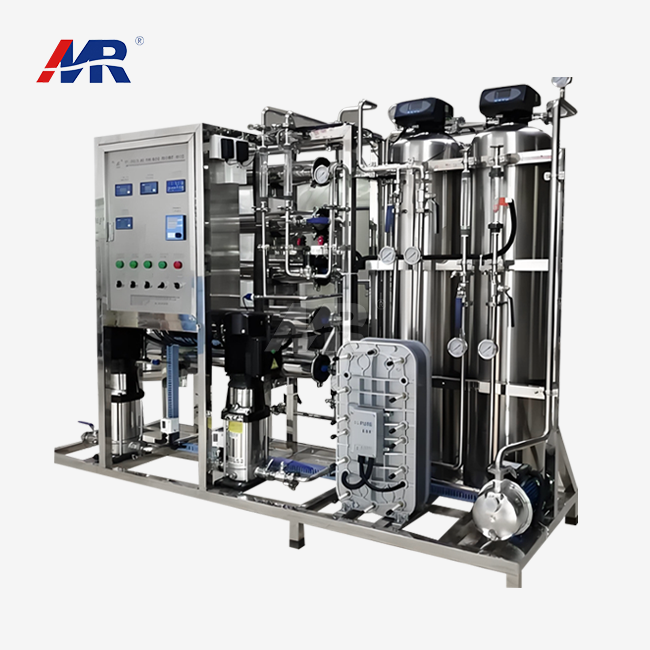
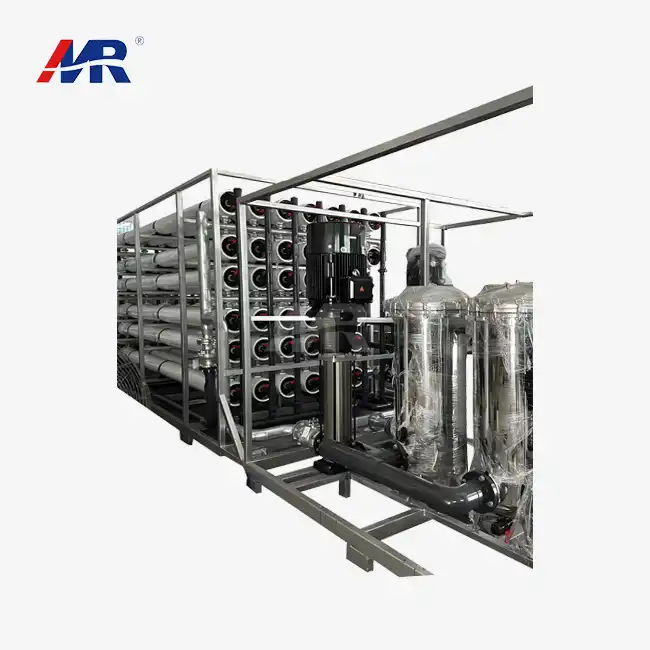
It's easy for membranes to wear out quickly when the pretreatment isn't strong in a new ro system. In order to keep your water safe, you can use multimedia or sand filtration, activated carbon for chlorine, cartridge filters, and antiscalant doses based on your water report. The way membrane vessels are set up in series and parallel determines recovery and flux balance. To choose which process to use, we first look at your analysis. Then, we have to change the staging and pretreatment to make it work. Ask each buyer to list the steps they will take to get ready and explain why they are there. The price given is not a full price if it does not include preparation. You will have to pay more for cleanings and new membranes in the future. People who use drugs should also find out how they can clean up.
Controls, Instruments, and Documentation
People who buy medicines need more than just water. They need information. The FDA's guide to checking high-purity water systems stresses how important it is to keep records, monitor, and clean the systems all the time. As part of its advice on water for medicinal use, the WHO also calls for control and approval. Ask for a PLC that has flow, pressure, and conductivity meters and alarms placed in key areas. We can add or remove pumps, instruments, piping materials, and online tracking with Createc instruments based on your needs. You should ask for a P&ID, a manual, plumbing and material specs, as well as a test report from the factory. These kinds of papers help with your proof work, and if you don't have them, it could take longer for you to get your license. Make sure you write down everything.
Site Conditions Before Delivery
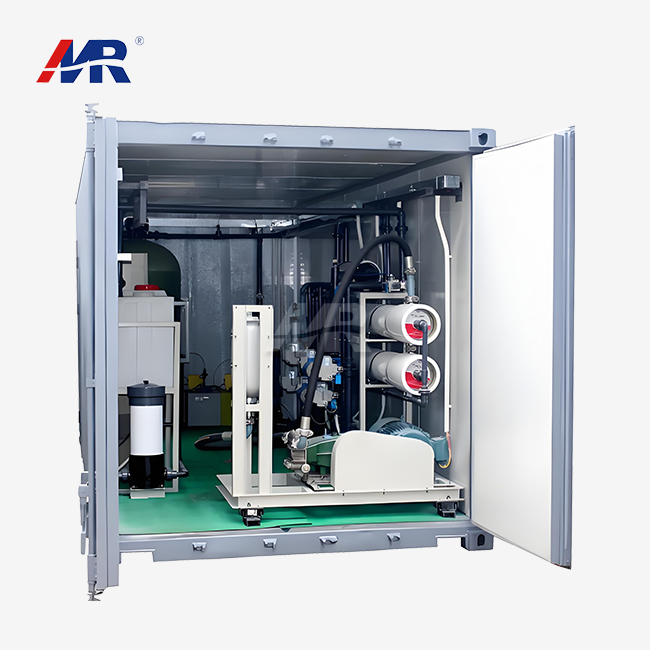
Check the spot before the skid leaves. Make sure there is enough room on the floor, at the ceiling, and for service tools and pumps. Compare the power source's voltage, frequency, and wire size to the 55 kW load. When you plan the drain, the permeate route, the feed line, and any storage tanks, think about how much water can flow through it. It can hit 35–45% of the feed, which is why this is the case. It's also important that there is draining and airflow near the pump. Adding a skid or container can cut down on the time needed in the field because the pipes and wiring are already done in the plant. Pick out who will be in charge of unloading, setting up, and starting up, and write that down in the contract.
Screen the Supplier and Compare Total Cost
Manufacturing Capability
Find out what company makes the gear for a new ro system. Morui, Guangdong Morui Environmental Technology, is a privately owned business that has its own membrane production plant and a number of companies that process equipment. Five hundred people work for the group, twenty of whom are engineers, and there are fourteen branch companies. When membranes and skids are made in-house, one party is in charge of selection, fabrication, and fit, which cuts down on the time needed for technical clarification.
Any supplier you look at should give you information about their factory, quality control steps, test methods, and examples of projects they've done in more than one country. Before you sign for OEM or private label sales, make sure you agree to the samples, the branding, who owns the intellectual property, and the time you have to wait. This is also something you should ask about if the feed water is hard.
Service, Spare Parts, and Warranty
A skid is only useful if it has something to hold it up. Read the warranty terms one by one. Find out what parts are covered, for how long, and who pays for the work and shipping. You can get extra parts like membranes, cartridge filters, seals, gauges, and pump parts. Find out how long it will take to get these parts. Discover how long it takes to get technical help, and make sure that the package includes setup and training for operators. We are their agents, so we can also sell Wear Parts, Shimge Pumps, Runxin Valves, and Createc Instruments. Before you sign, write down all of the terms of service.
Total Cost of Ownership and Quotation
The price of an item is shown on one line in a longer budget. Cleaning before the process, membranes, pumps, controls, setup, start-up, shipping, taxes, fees, and training are all things that need to be thought about. Next, find out how much it will cost for energy (55 kW), filters, chemicals, work, spare parts, downtime, and service for the membrane. The AWWA M46 manual and other sources say that the two most expensive parts of running a RO plant are the energy and the membranes.
In the long run, this means that cheap gear might cost more. Everyone who bids should get the same information, such as the flow goal, working hours, voltage, destination, and paperwork that needs to be done. Then, give each answer a score based on how well it meets your needs, costs, delivery, and customer service for the papers you send. It is possible to compare quotes when the inputs are the same.
Conclusion
Read up on the water, the product, the tools, and the company that sells them before you buy a new RO system. Based on the feed-water report and the product-water goal, the plan was made. The size is based on how much people want it every day and at peak times. It can take 55 kW of power and recover 55–65% of it. It can also get rid of 99% of the salt. You should check these specs against your own feed conditions, though, since hardness, temperature, and membrane age can change the outcomes. The unit's pretreatment, controls, documentation, and how ready the site is for use all affect how well it works and meets the requirements. Lastly, price alone is not the best way to compare. You should also look at the guarantee, extra parts, and the total cost of ownership.
FAQ
Q1: What is a new RO system?
A: Water is pushed through semipermeable membranes under pressure by this machine. This gets rid of most of the salts that are in the water. The preparation, pumps, and controls are all on one skid with the MR-BWRO-50TH, which is an industrial model.
Q2: Can the MR-BWRO-50TH support pharmaceutical water production?
A: It's made to make pharmaceutical water, and 99% of the salt is thrown away. Sometimes, one pass isn't enough to get the grade you need because of the feed water or your needs. You might need to do a second pass or polish a second time. We'd like to see your water report.
Q3: How much water goes to drain?
A: With a recovery rate of 55–65%, 35–45% of the feed is left over as concentrate. This number is based on how hot and hard the rock is.
Q4: When should membranes be replaced?
A: Choose based on how flow, pressure, and permeate conductivity change over time instead of a set date. The quality of the feed and the pretreatment can change the membrane's life.
Request a New RO System Quotation From Morui
Morui builds new RO systems and has its own membrane plant. It also offers an OEM/ODM skid service. We will help you find the right MR-BWRO-50TH configuration if you email benson@guangdongmorui.com with your water report, flow goal, and location. As soon as you can tell us what paperwork you need, we'll make a clear technical proposal for your project involving pharmaceutical water.
References
1. United States Pharmacopeia, USP–NF General Chapters <645> Water Conductivity and <1231> Water for Pharmaceutical Purposes, 2023.
2. U.S. Food and Drug Administration, Guide to Inspections of High Purity Water Systems, 1993.
3. World Health Organization, WHO Technical Report Series No. 970, Annex 2: Good Manufacturing Practices: Water for Pharmaceutical Use, 2012.
4. American Water Works Association, Reverse Osmosis and Nanofiltration (M46), 2007.
5. U.S. Environmental Protection Agency, National Secondary Drinking Water Regulations (40 CFR Part 143), 1979.
6. International Society for Pharmaceutical Engineering, ISPE Baseline Guide Volume 4: Water and Steam Systems, 2019.