


How Does an Ultrafiltration Skid Reduce RO Membrane Fouling?
An ultrafiltration skid reduces RO membrane fouling by removing suspended solids, colloids, bacteria, and macromolecules before the water reaches the RO elements. Hollow-fiber uf membranes have pores of roughly 0.01 to 0.1 microns and act as a physical barrier. This lowers turbidity and the Silt Density Index (SDI). Cleaner feedwater means less cake-layer buildup, fewer blocked flow channels, and a lower risk of biofouling on the RO surface. Automatic backwash keeps this protection steady when raw water quality changes. I will explain how it works, how to verify it, and how to choose a system.
Why RO Fouling Matters and How an Ultrafiltration Skid Helps
What Fouling Costs an RO System and Where UF Fits
When particles, colloids, and bacteria stick to an ro membrane, the differential pressure goes up, and the flow rate of the permeate goes down. Then, the feed pressure is raised to keep the output steady. This makes the membrane wear out faster and uses more power. The cost of chemicals goes up every time they need to be cleaned. A lot of RO manufacturers set limits on the feedwater's SDI and turbidity. ASTM D4189 talks about the normal SDI test.
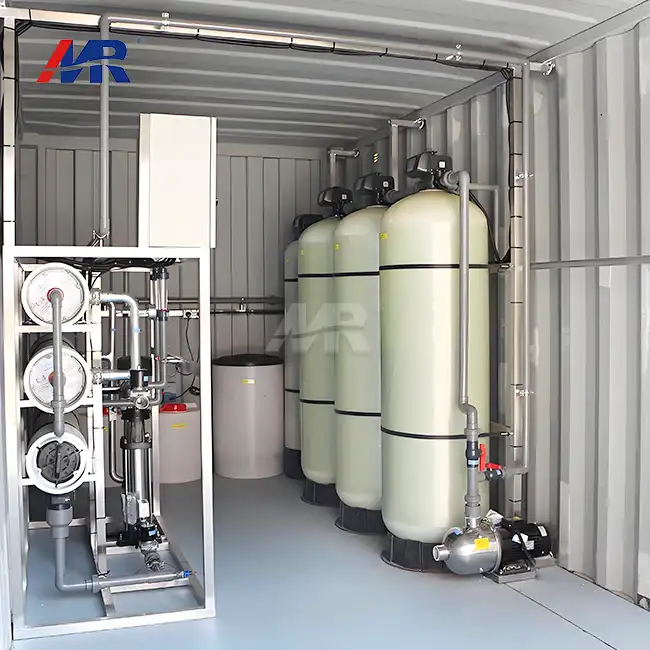
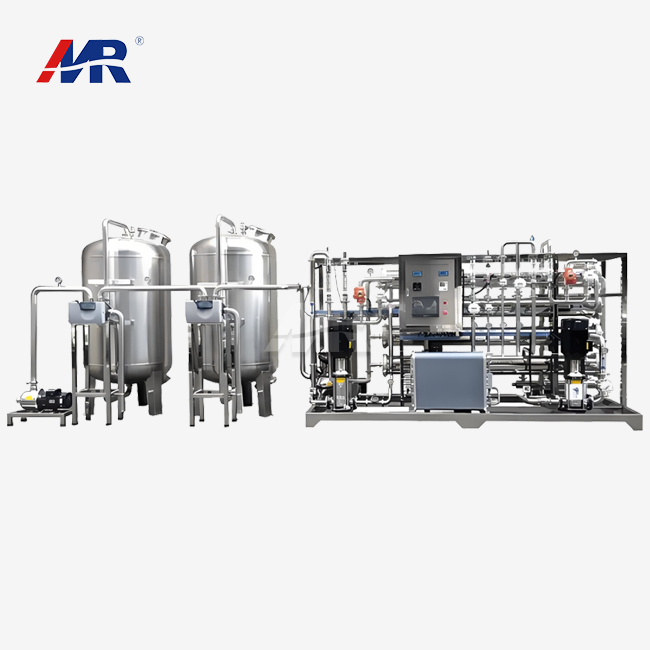
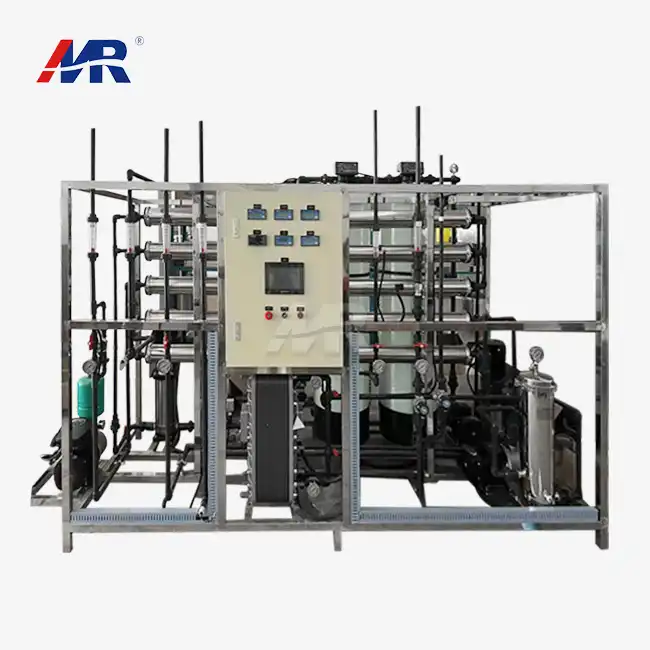
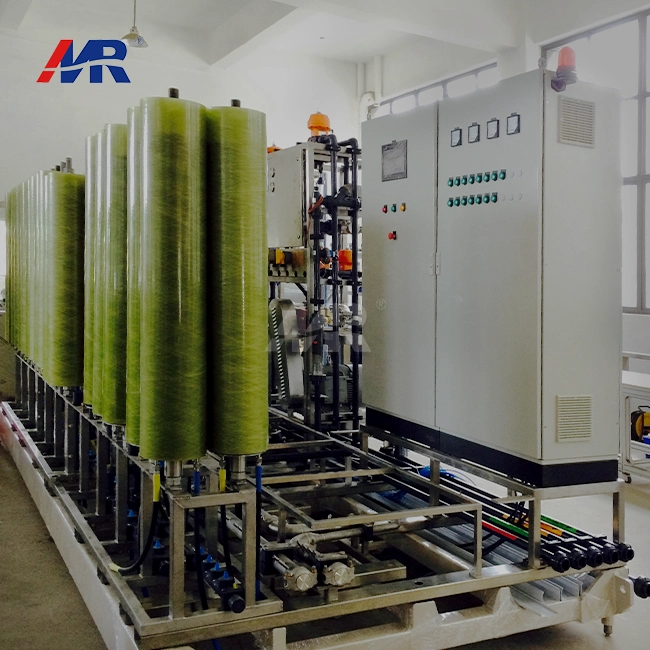
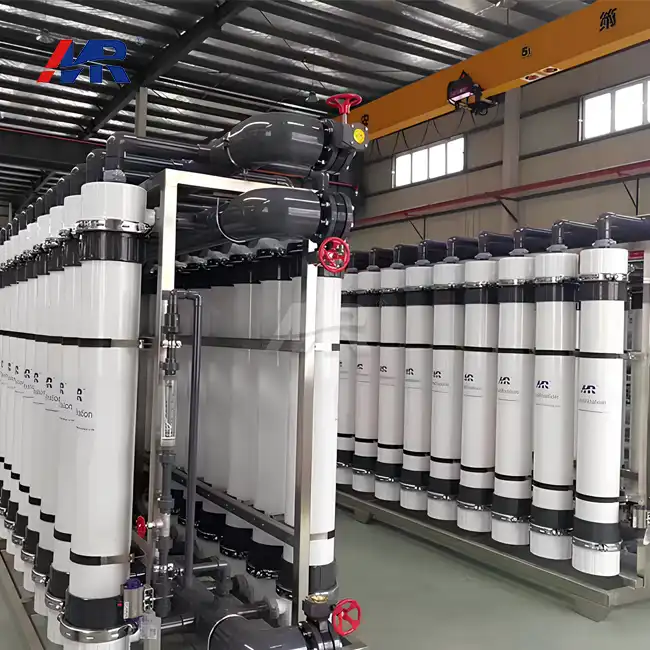
With an ultrafiltration skid, this problem is solved where it starts. It holds UF units, pumps, valves, instruments, pipes, controls, and cleaning equipment on one frame. It cleans water from the surface, process water, or waterways that were used before RO. The barrier is right where fouling starts, which makes it easy to work on the site.
How a UF Skid Reduces Particulate and Biological Fouling
When there is pressure on the UF holes, water moves through them, but particles, bacteria, and big molecules stay behind. The SDI, turbidity, and particle load all go down because of this. After this, less stuff either stops the feed gap channels or forms a cake layer on top of the RO. Even though UF cuts down on the germs that can make a biofilm, it is still important to clean and make sure everything is tight.
A cartridge filter can't do this because UF moves apart all the time and cleans itself by backwashing. It takes longer to clean when permeate is stable because it helps keep RO flow going and slows down the rise in pressure. Salts that have been dissolved and most small molecules that have been dissolved are still there after UF. RO and scale control are still taking care of those.
The Process Flow and Critical Components
Pretreatment and screening, such as coagulation, strainers, or multimedia filtration, are the first steps in a full process. After that, the water goes into the UF units. The PLC monitors the flow, pressure, TMP, and turbidity. Solids that have built up are washed away by backwashing. Chlorine-based backwash or CIP can get rid of tough organic, bacterial, or inorganic buildup. After quality checks, it flows to a tank and through a cartridge filter. Only then does it go to RO.
There are several things that affect how well this works:
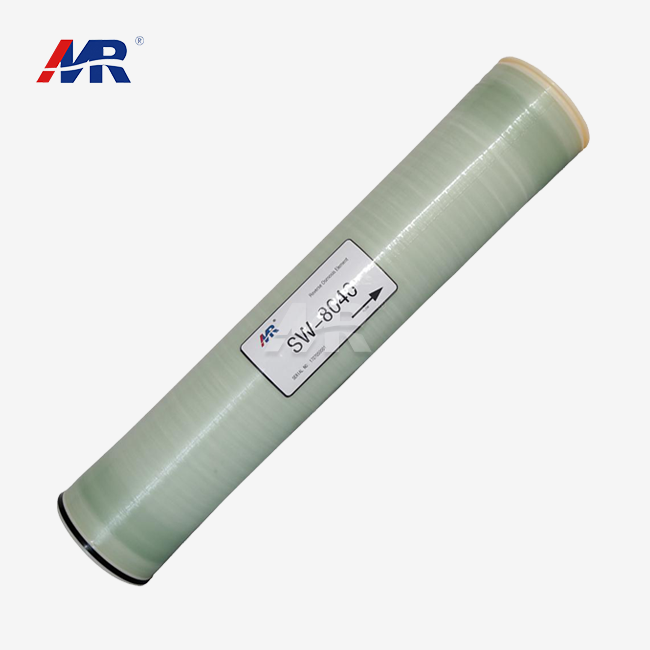
- PVDF or PES hollow-fiber membranes that are made to match the chemistry of the water
- Pumps that help keep the pressure steady
- Valves that each turn open and close on their own
- Instruments you can use to measure pressure, flow, turbidity, and conductivity
Any of them could have a weak link that lets the risk of fouling move down the line.
MR-UF-30TH, Performance Verification, and Pretreatment Comparison
MR-UF-30TH Key Specifications
Morui makes the MR-UF-30TH, a hollow-fiber ultrafiltration skid that is used to make RO water. At a working pressure of 0.2 to 0.3 MPa and 5.5 kW of power, an 80% to 90% recovery rate is reached. The low operating pressure keeps the pumping load low. Most of the feedwater is turned into UF permeate instead of trash because of the recovery range.
If you give Morui raw water, we can change the material (like PVDF or PES) and the size of the holes to fit your needs. Of course, we can change the system's appearance, features, and how it works with other things on your site as well. Before we give you a quote, we compare the final recovery to your water analysis. This is because it depends on the quality of the washing water and the settings used.
How to Verify UF Performance Before and After the RO System
This is where you should start before installing. Keep an eye on the SDI, standardized flow, TMP, recovery, backwash frequency, and chemical cleaning frequency, as well as the amount of turbidity that gets through the UF side. Keep an eye on the feed pressure, difference pressure, adjusted permeate flow, salt rejection, energy use, and washing times on the RO side.
When you compare the numbers from the old and new situations, you should keep in mind that the raw water levels change with the seasons. Be wary of a supplier who says they can give you fixed results even if they don't have any data. Choose the right membrane, change the flux, recover the water, and clean it. The results will depend on these factors. If you get a sample test that comes with written acceptance standards, you can be sure about your own water. It's also simple to explain to yOur Team why you chose to buy.
UF Skid vs. Other RO Pretreatment Options
Stable water that doesn't have a lot of dirt in it can be cleaned for less money by media filtration. There are some things it doesn't get rid of, though. Microfiltration is better than small colloids at getting rid of big solids that are mixed in. As a last resort, cartridge filters work well, but they get clogged up quickly with dirty water and need to be replaced often.
Because UF filters run themselves and have smaller pores, they need less work than filters that you have to handle by hand. UF and RO also do different things. UF stops pollution from living things and things that are made of matter, and RO gets rid of dissolved salts and many dissolved toxins. After the UF, most projects still use a cartridge filter as a last line of defense.
Selection, Design, and Maintenance
How to Choose an Ultrafiltration Skid and Compare Cost
Figure out what you need to know about the feedwater's turbidity, TSS, SDI, TOC, oil, hardness, iron, manganese, silica, temperature, and microbiology. Then, write down the peak and average flow rates, how often backwashing is needed, how long it takes to clean, any backups, and your plans for future growth. Check the electrical standards, the site's climate, the footprint, the control protocols, and any Certifications your project needs, such as UL or NSF/ANSI 61 paperwork for US sites.
The price depends on the rated flow, membrane area, automation, ultrafiltration skid material, pumps, valves, instruments, tests in the plant, shipping, and start-up. Don't just compare the price to buy; also compare the total cost of ownership. We do this because barrier life, energy, chemicals, and work all add up over time. Since Morui also sells Shimge pumps, Runxin valves, and Createc tools, you can get all the things you need from one place.
Design Mistakes to Avoid and an Example Integration
The risk of fouling can be moved to the RO instead of being taken away by bad design. It's a typical mistake to only size for average flow, not think about backwash and CIP capacity, run faster than the suggested flux, and use UF instead of all pretreatment. Oil, roughness, scaling ions, dissolved organics, iron, and manganese are some of the things that might need their own treatment.
This process usually includes an input screen, coagulation or clearing, a UF skid, a UF permeate tank, a cartridge filter, RO, and the last treatment. Activated carbon can be added, the water can be smoothed, antiscalants can be added, chlorine can be removed, or the pH can be changed. Some of the things that should be checked as part of the acceptance tests are the UF turbidity, SDI, TMP, RO differential pressure, and normalized RO flow.
Maintenance That Protects Both UF and RO
The TMP, chemical levels, pressure, flow, turbidity, pump status, valve action, and PLC alarms should all be checked every day by the operators. Do not just use the date to begin cleaning. Instead, use TMP, standardized flux, or permeate quality. If you put off cleaning, fouling can happen that can't be fixed, and the membrane may need to be replaced too soon.
Make sure you only touch things for short periods of time, rinse well, and throw away trash the right way. As part of routine maintenance, pumps, seals, motors, lines, electrical panels, and sensor calibration are all checked. Do not stop the line if a valve or monitor breaks. Instead, keep spare parts that are important on hand. Morui also offers installation and commissioning services that help new operators get everything set up right.
Conclusion
There are colloids, bacteria, proteins, and dissolved solids that are removed before they reach the RO elements. This stops the RO membranes from getting stuck. We can see that the turbidity and SDI go down, and the biological matter and cake layers form faster. The ultrafiltration skid works best when it is part of a full treatment train that also includes a cartridge filter, chemical pretreatment, scaling control, and screening. What happens is based on how well the raw water, membrane material, parts, flux, and cleaning are matched. For proof, look at the basic data, keep an eye on TMP and SDI, and do some pilot tests. UF is better at keeping water safe from changes than multimedia, microfiltration, or cartridge filtration on their own. A steady permeate quality helps keep RO flow steady, lets you clean more often, and lowers the risk of operation.
FAQ
1. Can a UF skid eliminate all RO fouling?
Not at all. UF is supposed to kill particles, colloids, and germs. Scaling, dissolved organics, iron, and manganese may need extra care, such as adding antiscalant or making the water softer.
2. How should I define UF permeate quality?
What the RO maker says about the feedwater should be used to set the rules for turbidity and SDI. Then check them again during acceptance or pilot testing to make sure they are right.
3. When is UF better than multimedia filtration?
If the turbidity changes a lot, fine colloids pass through multimedia filters, or you want RO feedwater that is more stable and works on its own, UF is the way to go.
4. How often should I clean a UF system?
Don't stick to a set plan when you clean. Instead, use TMP, standardized flux, and good permeate quality. The operating flux and the raw water determine the frequency.
5. What information does Morui need for a quotation?
Send us a copy of your raw water analysis, the flow rate you need, the RO specs, as well as information about the site's utilities, control needs, and license requirements.
Request an Ultrafiltration Skid Quotation from Morui
In order to get an ultrafiltration skid that can handle membranes, machines, and startup all in one place, you should talk to Morui. The layout, controls, and integration of the MR-UF-30TH can be changed to fit your water and site. We also make our own membranes. You can email benson@guangdongmorui.com with your raw water data and flow goal to find out more. We'll look over your job and make it clear what we think you should do.
References
1. Water Treatment: Principles and Design (MWH), 2012
2. ASTM D4189 Standard Test Method for Silt Density Index (SDI) of Water, 2014
3. Guidelines for Drinking-water Quality, World Health Organization, 2022
4. Membrane Filtration Guidance Manual, U.S. Environmental Protection Agency, 2005
5. The Guidebook to Membrane Desalination Technology, Balaban Desalination Publications, 2007
6. A Mini-Review on Membrane Fouling, Bioresource Technology, 2012