_1745823981883.webp)

When looking for a Reverse Osmosis System to treat water, it's important to know the main differences between systems for brackish water and systems for seawater. This can help you choose better things to buy. Water systems that deal with brackish water usually have to deal with TDS levels of 1,000 to 10,000 ppm. Water systems that deal with seawater have to deal with TDS levels of about 35,000 ppm. These different levels of saltiness directly change how the system is built, how much power it needs, and how much it costs to run. Industrial leaders can get the most out of their water treatment investments thanks to our in-depth study of the main pros and cons of each technology. This review looks at some of the most important aspects of the application, such as how well it works in different businesses and how much energy it uses.
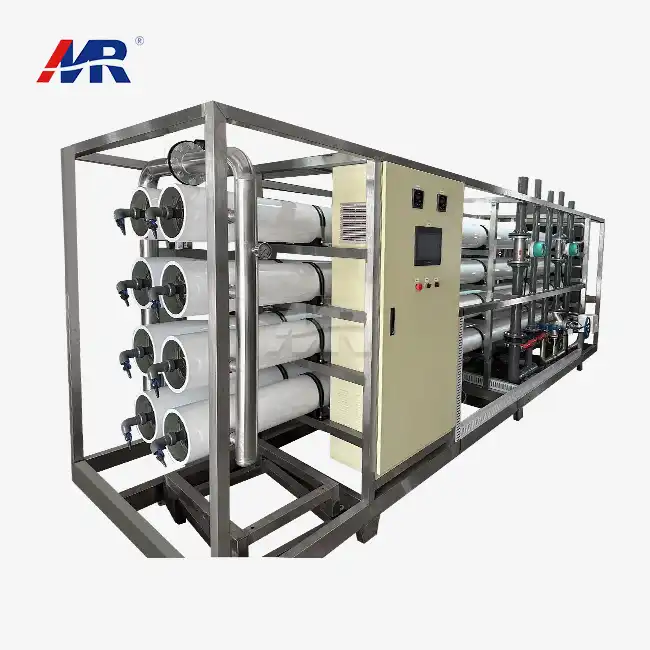
Understanding Brackish Water and Seawater Reverse Osmosis Systems
Technical Specifications and Design Differences
Brackish water reverse osmosis systems work at far lower pressures than saltwater systems. For example, brackish water systems work at 10 to 25 bar, while seawater systems work at 55 to 80 bar. This difference in pressure has a direct effect on how much energy is used and what equipment is needed. Our brackish water systems use thin-film composite membranes that are specifically designed for moderate salinity levels and have a high rejection rate and low fouling rate. They can recover up to 85% of the water they take in and use between 2.5 and 3.5 kWh/m³ of energy.
Seawater desalination systems need stronger building materials to handle higher pressures and corrosive conditions. To make up for higher energy needs, these systems usually have energy recovery equipment like turbines or pressure exchangers. The membrane technology is very different. Seawater membranes, for example, are better at rejecting salt and are less likely to break down when exposed to chloride.
Membrane Technology and Performance Characteristics
The method of choosing a membrane is very different for brackish and seawater applications. Standard polyamide membranes with low salt rejection rates can be used in brackish water systems. Seawater systems, on the other hand, need specific membranes that are more permeable and better at resisting fouling. Our systems are built in modules, which makes it possible to change their capacity from 100 m³/day to 10,000 m³/day to meet the needs of different industries.
Performance and Efficiency Comparison: Pros and Cons
Energy Consumption Analysis
Energy efficiency represents a critical differentiator between these two technologies. Brackish water systems demonstrate superior energy performance due to lower osmotic pressure requirements. The energy consumption of our brackish water systems ranges from 2.5-3.5 kWh/m³, significantly lower than seawater systems which typically consume 3.5-6.0 kWh/m³ depending on configuration and recovery rates.
Seawater systems compensate for higher energy demands through advanced energy recovery technologies. Modern pressure exchangers can recover up to 95% of the high-pressure energy from the concentrate stream, substantially reducing overall power consumption. However, the initial capital investment for these energy recovery systems adds complexity and cost to the installation.
Water Quality and Recovery Rates
Both system types deliver excellent water quality, though operational parameters differ considerably. Brackish water systems achieve higher recovery rates due to lower osmotic pressure constraints, typically reaching 75-85% recovery compared to 35-50% for seawater systems. This higher recovery translates to reduced waste generation and improved water resource utilization.
Membrane fouling patterns also vary between applications. Seawater systems experience more aggressive fouling from organic compounds, bacteria, and scaling minerals, necessitating more frequent cleaning cycles and potentially shorter membrane lifespans. Brackish water applications generally exhibit more predictable fouling patterns, enabling optimized maintenance scheduling.
Application Scenarios and Suitability for B2B Procurement
Industry-Specific Applications
Manufacturing industries benefit significantly from brackish water systems when treating groundwater or recycling process water. Food and beverage operations utilize these systems for production water preparation, while pharmaceutical companies rely on them as pretreatment for ultrapure water generation. The pharmaceutical industry particularly values the consistent water quality and lower operational complexity of brackish water systems.
Seawater systems serve specialized applications including coastal industrial facilities, offshore platforms, and large-scale municipal desalination projects. Mining operations in arid regions frequently deploy seawater systems when brackish groundwater sources prove inadequate. Power generation facilities, particularly those in coastal locations, utilize seawater systems for cooling water makeup and boiler feedwater preparation.
Geographic and Resource Considerations
Location significantly influences system selection decisions. Inland facilities typically access brackish groundwater sources, making brackish water systems the logical choice. Coastal operations may consider seawater systems despite higher costs when freshwater sources are limited or expensive. Agricultural applications in arid regions often favor brackish water treatment for irrigation water production, balancing water quality requirements with operational economics.
Key Decision-Making Factors for Purchasing Reverse Osmosis Systems
Economic Evaluation Framework
Total cost of ownership analysis reveals significant differences between system types. Brackish water systems typically require 40-60% less capital investment compared to equivalent capacity seawater systems. Operating expenses also favor brackish water systems due to lower energy consumption, reduced membrane replacement frequency, and simplified maintenance requirements.
The following factors demonstrate the economic advantages of our brackish water systems:
- Lower initial capital expenditure because they don't need as much pressure and have simpler equipment standards. This makes them appealing for budget-conscious purchasing selections.
- Lower operating pressures and higher recovery rates lead to lower energy expenditures, which in turn lead to higher operational profitability during the system's lifetime.
- Longer membrane life because of less wear and tear and gentler operating conditions. This lowers replacement costs and maintenance downtime.
- Simplified automation systems that use PLC-based control and remote monitoring, which makes training operators and keeping the system running easier.
These economic benefits make brackish water systems especially appealing to medium-sized businesses and regional enterprises that need reliable water treatment solutions but don't want to spend too much money.
Supplier Selection Criteria
When looking at how well a system works over time, the reliability of the supplier is quite important. Well-known manufacturers offer full warranties, Technical support, and the opportunity to get replacement parts. Guangdong Morui Environmental Technology Co., Ltd. has 14 branches and 500 staff who can help you with any problems you have after you buy something. We have 20 specialist engineers who work on system optimization and debugging.
Practical Guide to Installation and Maintenance
Installation Best Practices
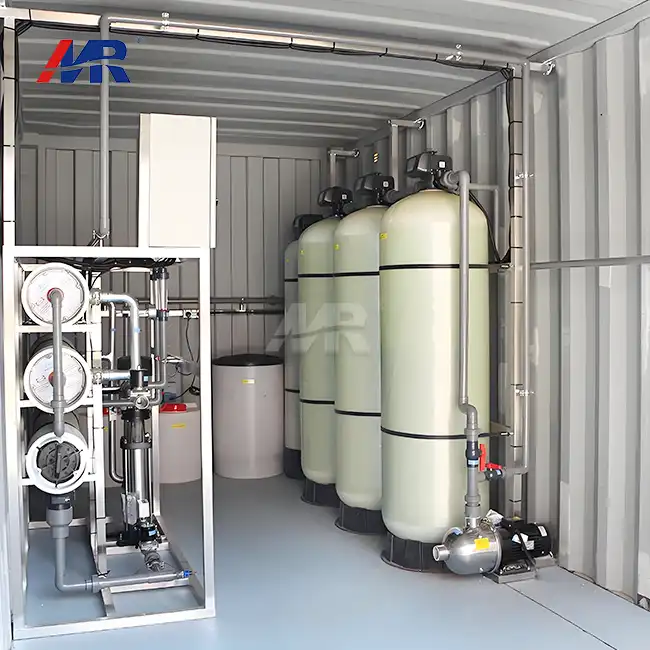
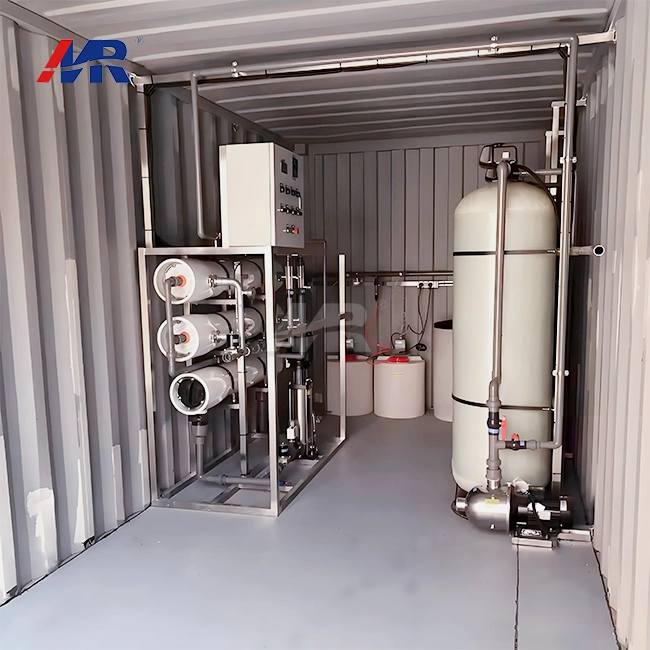
For brackish water applications, where the potential for scaling changes a lot with the chemistry of the source water, careful attention to pre-treatment design is very important for successful system deployment. Our installation method is organized into steps: input and pre-treatment, high-pressure pumping, membrane filtering, post-treatment and remineralization, and ultimately storage and distribution.
Seawater systems need stricter pre-treatment steps, such as multimedia filtration, activated carbon treatment, and anti-scalant dosage. Because of the higher level of complexity, installation teams need to be more experienced and commissioning procedures need to be more thorough. Our full range of installation services make sure that the system starts up correctly and works as it should.
Maintenance Protocols and Optimization
Preventive maintenance strategies range greatly between system types. Brackish water systems are easier to take care of when maintenance tasks are limited to changing filters, cleaning membranes, and keeping an eye on performance. Our tiny footprint design makes it easier to get to for maintenance and takes up less room in industrial settings.
Our PLC-based control systems let us keep an eye on performance on a regular basis, which lets us spot trends of diminishing performance early on. With remote monitoring, our technical staff can offer proactive support, which cuts down on downtime and makes the system run more efficiently throughout its operating lifecycle.
Conclusion
Which reverse osmosis device to use for brackish water or seawater depends on the source water's properties, the amount of water that needs to be processed, and the cost. For projects in the middle of the country that need to save money, brackish water systems work best. It costs less to set them up and they are easier to use. Even though they are more difficult to set up and cost more, seawater systems are needed for businesses along the coast and in places where water supply is limited. If procurement professionals know these basic differences, they can pick the best solutions for their wants and budget. You can use both technologies more in industry because they are getting better all the time with new materials and better automation.
Frequently Asked Questions
Q1: What are the main differences between RO systems for seawater and brackish water?
A: These devices clean water that has 1,000 to 10,000 ppm TDS at lower pressures (10 to 25 bar) and with 2.5 to 3.5 kWh/m³ of power use. High-pressure systems (55 to 80 bar) and 3.5 to 6 kWh/m³ are used to clean water that has 35,000 ppm TDS. Recovery rates are higher in brackish systems (up to 85%) than in seawater systems (35% to 50%).
Q2: How often do these systems need new membranes?
If you use a membrane for different things, it will last for different amounts of time. When used normally, brackish water membranes last 5 to 7 years. But seawater membranes may need to be changed every 3 to 5 years because they are used in harsher conditions and get dirty more often.
Q3: Can one system work with both ocean and brackish water?
A: Standard methods are only good in certain salinity ranges, so they can't be used for both purposes without a lot of changes. In terms of pressure, membrane specs, and building materials, the two uses are very different from one another.
Partner with Morui for Your Water Treatment Needs
When picking a Reverse Osmosis System provider, you should think carefully about how technical they are, how good their customer service is, and how reliable they will be in the long run. To clean water, Guangdong Morui Environmental Technology Co., Ltd has been in business for over ten years. We can make a lot of different things and have a big service network to back us up. Twenty of our engineers are always ready to help with technical problems, and our 14 branches across the country make sure that service is quick and easy to get. No matter if you need brackish water systems for industrial processes or custom solutions for unique needs, our customized approach will give you the best performance and value. Are you ready to talk about what you need? Email us at benson@guangdongmorui.com to find out more about how our high-tech water cleaning services can help your business.
References
1. Greenlee, L.F., Lawler, D.F., Freeman, B.D., Marrot, B., and Moulin, P. "Reverse osmosis desalination: Water sources, technology, and today's challenges." Water Research, Vol. 43, No. 9, 2009, pp. 2317-2348.
2. Fritzmann, C., Löwenberg, J., Wintgens, T., and Melin, T. "State-of-the-art of reverse osmosis desalination." Desalination, Vol. 216, No. 1-3, 2007, pp. 1-76.
3. Al-Bastaki, N. and Abbas, A. "Predicting the performance of ro membranes." Desalination, Vol. 132, No. 1-3, 2000, pp. 181-187.
4. Wilf, M. and Bartels, C. "Optimization of seawater RO systems design." Desalination, Vol. 173, No. 1, 2005, pp. 1-12.
5. Macedonio, F., Drioli, E., Gusev, A.A., Bardow, A., Semiat, R., and Kurihara, M. "Efficient technologies for worldwide clean water supply." Chemical Engineering and Processing: Process Intensification, Vol. 51, 2012, pp. 2-17.
6. Park, H.B., Kamcev, J., Robeson, L.M., Elimelech, M., and Freeman, B.D. "Maximizing the right stuff: The trade-off between membrane permeability and selectivity." Science, Vol. 356, No. 6343, 2017, pp. 1138-1148.