How Does an RO UF Filter Improve Industrial Water Treatment?
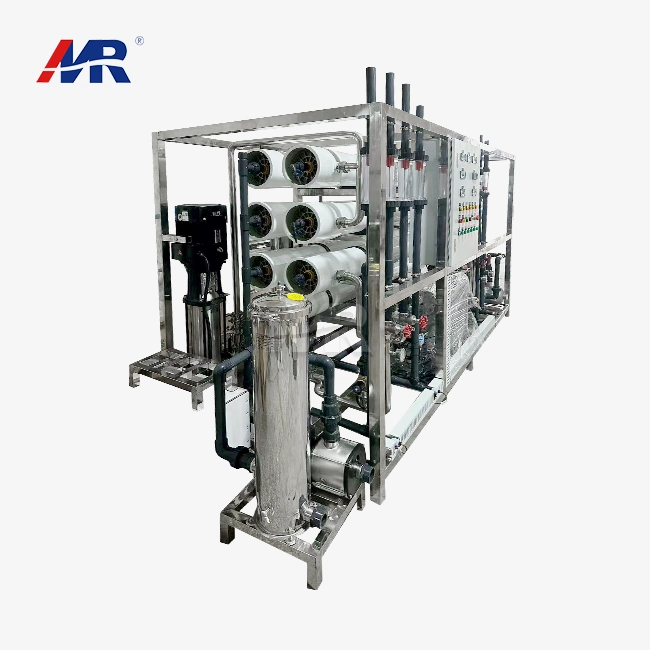
An ro uf filterimproves industrial water treatment by splitting the work between two membranes. Ultrafiltration (UF) removes suspended solids, colloids, and bacteria, which lowers the fouling load on the next stage. Reverse osmosis (RO) then reduces dissolved salts and total dissolved solids (TDS). Together, the two stages deliver steadier permeate quality, protect the ro membrane, and cut downtime for cleaning and cartridge changes. In this guide, I explain how the process works, where it fits, and how to select and verify a system. I also cover the specifications of our MR-UF-80TH wastewater unit.
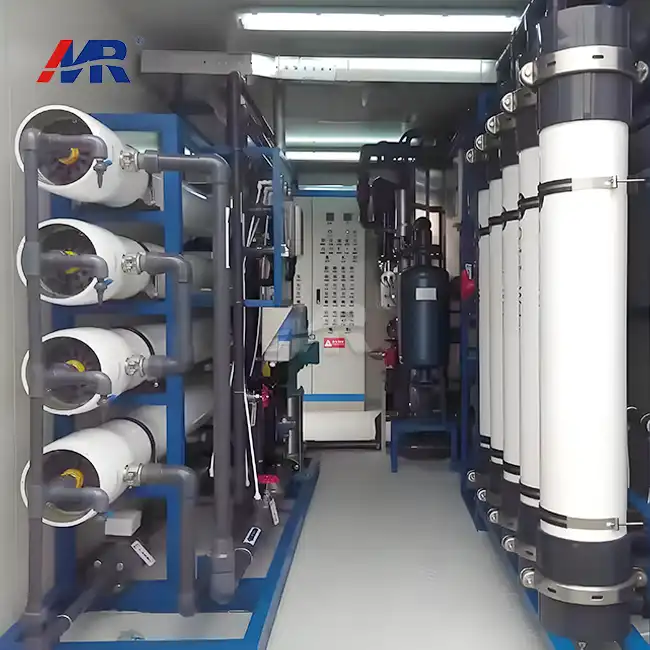
How an RO UF Filter Works in Industrial Water Treatment
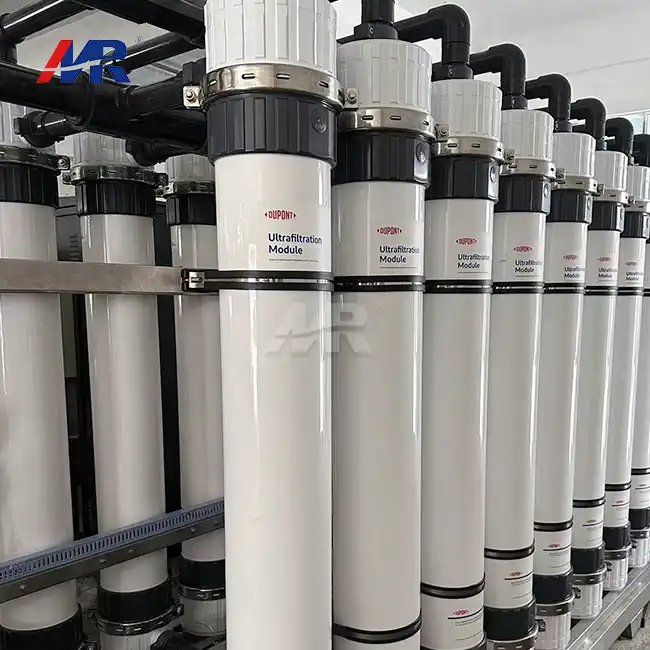
What the Ultrafiltration Stage Does
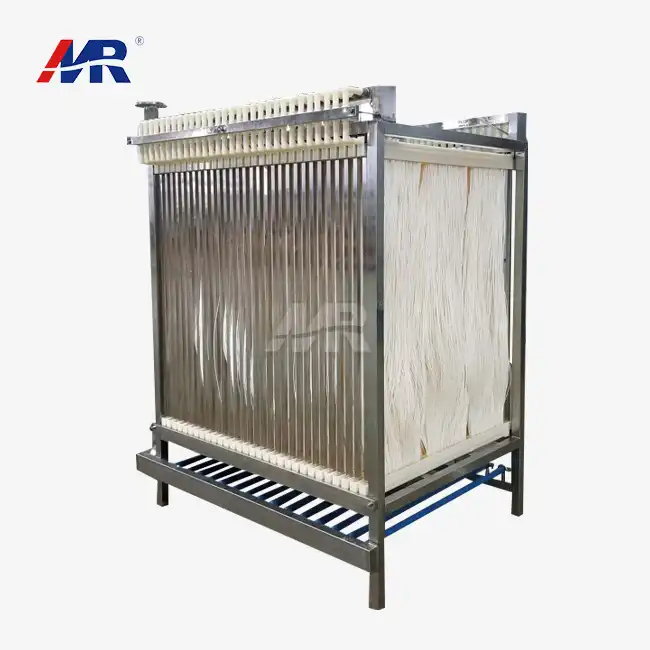
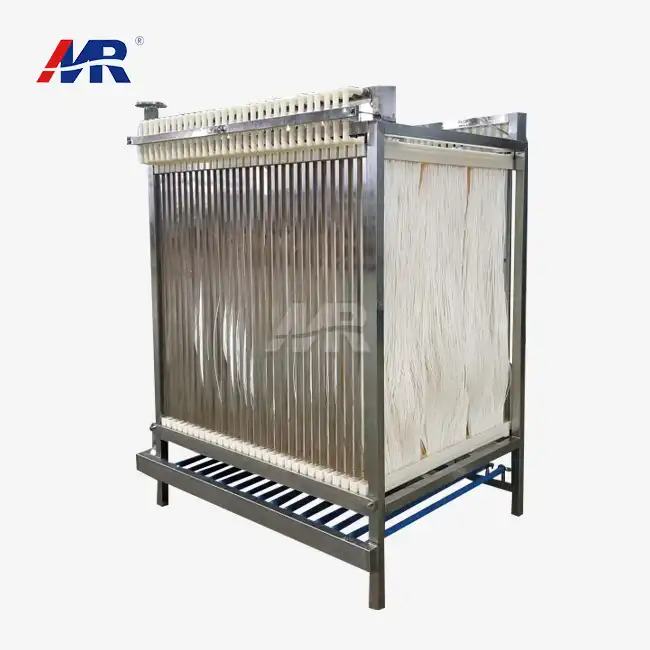
Hollow fiber filters with holes that are between 0.01 and 0.1 microns wide are used for ultrafiltration. These holes can only hold water and salts that have been broken down. It's not possible for large organic molecules, colloids, or bacteria to get through. It doesn't need as much power because the process is done at low pressure. For our projects, UF is the safety stage. The water is less cloudy and has a lower Silt Density Index (SDI) before the RO membrane. Because the RO membrane's pores are so small, they are more likely to get clogged. It's not very different because UF doesn't get rid of the salts that are dissolved. When people buy UF and then find out that it doesn't lower TDS, they are often let down. That needs to be made clear right away.
What the Reverse Osmosis Stage Does
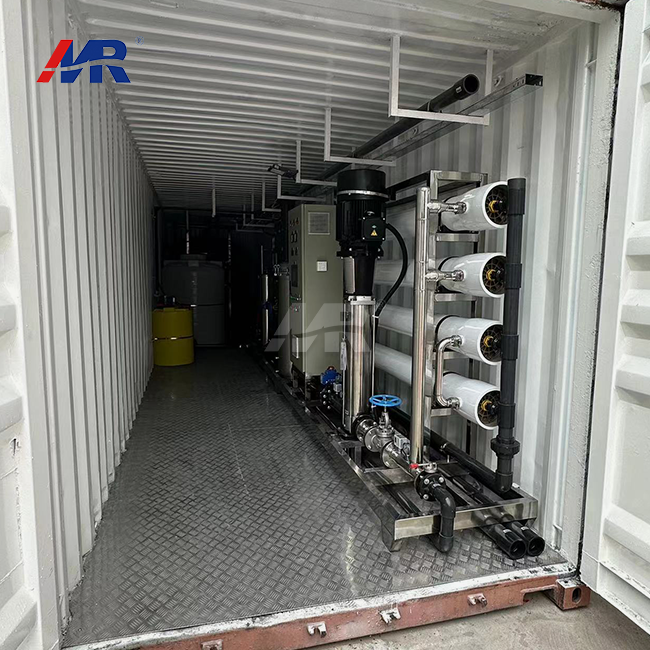
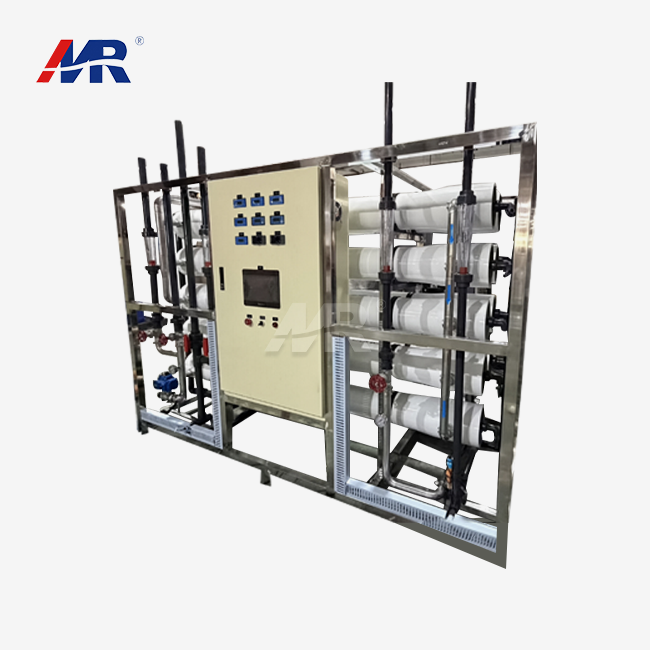
There is a screen used for reverse osmosis. There are holes in this membrane that are about 0.0001 microns wide, and only part of it is clear. Broken-down salts, a lot of heavy metals, and small organic molecules stay in the concentrate stream. Water, on the other hand, moves through the barrier because of the pressure. What kind of ro uf filter it has, how hot the feed water is, and how well it is run all have an impact on how many dissolved salts it can remove. The exact number is set by the system. There is a lot more power going to the RO stage than to the UF stage because it needs it. The clean feed water is important here. Things like particles and bacteria that stick to the membrane's surface slow it down and raise the cost of energy. This is why UF comes first.
A Typical Treatment Train
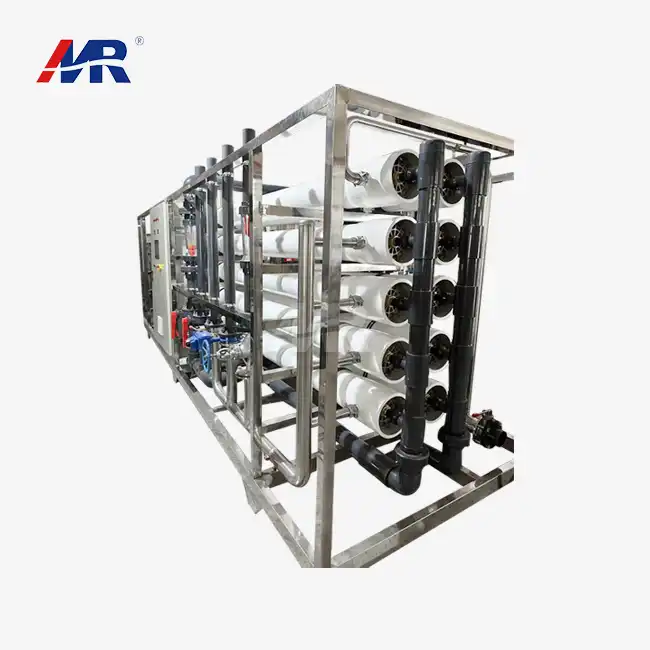
UF, chemical treatment, RO, UV, or cleaning, if that's what the customer wants, are the steps that are always taken in most industrial trains. It's easy to see what each step does. When antiscalant is dosed, it keeps the scale in check, and RO gets rid of the solids that are mixed with the water. Activated carbon gets rid of bleach in the feed because bleach is bad for polyamide RO membranes. UV light can kill germs, but it can't get rid of solids that have been broken down. This means membranes don't have to be changed every time they get dirty. The pressure, the temperature, the recovery, and the state of the membrane are some of the things that change how well it works. That's why I always check the water first before I offer a setup.
How RO UF Filtration Improves Performance and Cuts Operating Costs
Fewer Fouling Events and Longer RO Membrane Life
The feed water's SDI value should be less than 5, and many systems try to get it below 3. A UF stage can help you reach that goal by getting rid of the colloids and particles that make the SDI go up. You don't have to clean the RO element with chemicals as often if the feed water is clean. The flow also stays steady. If UF is present, microbes are less likely to be there. This slows the growth of biofilm on the RO surface. But these gains depend on how well they do their job. How it turns out depends on what you do, how often you clean, and how much chemical you use. People who work for me should see UF and RO as one process, not two different tools.
Monitoring and Maintenance That Keep Costs Down
To find out how much something costs to run, you can look at its flow rate, conductivity, temperature, recovery, and differential pressure. You can see scaling or fouling early on, before the output goes down, when you make these numbers equal. Things like RO cleaning, UF backwashing, ro uf filterchanges, sensors, valves, and extra parts should all be on a written repair plan. Keep an eye on the pumps and valves as well as the membrane. It might look like membrane trouble if the pump is worn out or the valve won't open. Morui also offers Createc tools, Runxin valves, and Shimge pumps. The same company sells both main parts and spare parts. Getting better also needs to be just right. The concentrate is more likely to grow when there is more recovery. This is because it saves water.
The MR-UF-80TH for Wastewater Treatment
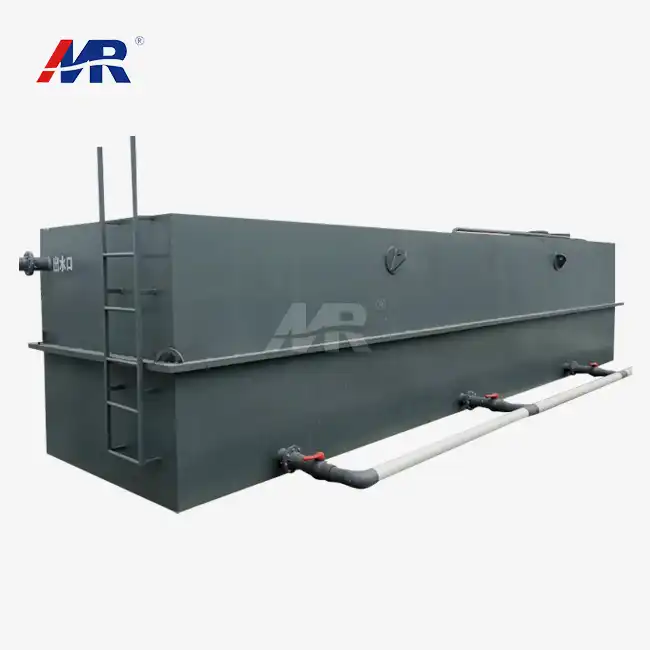
The MR-UF-80TH is a UF unit that breaks down wastewater. A 15 kW power use, an 80% to 90% recovery rate, and a working pressure of 0.2 to 0.3 MPa are some of the things that have been written about it. That range of pressure is in the area of low pressure that UF is known for. To put it another way, it needs less power than an RO step. Because the rate of return is high, less water is wasted. Before RO, the unit can be used to clear the water so that it can be used again. This is done to get rid of any salt that has dissolved. To figure out the right size for each system, we look at your water study. This is because the results depend on how good the feed is.
Selecting and Verifying an Industrial RO UF System
RO vs. UF: Key Differences for Buyers
UF and RO are not the same thing. There is less pressure with UF, and it can handle germs, colloids, and solids that are mixed in with liquids. RO has more pressure and gets rid of many ionic pollutants, dissolved salts, and TDS. It gets chlorine, smells, and some chemicals out of the water. UV light can kill germs, but it can't get rid of everything. If you look at the feed water, the goal of the permeate, how much it costs to run, and the recovery, you can pick one. For use in food, drinks, or labs, boiler feed water, rinse water, and process water often need both stages. UF might be enough for jobs that just need to clean up, like getting wastewater ready to be treated. By giving each step a different job, this helps keep the cost low.
Common Selection Mistakes to Avoid
Many times, people choose based only on the advertised flow rate, thinking that UF gets rid of TDS, using UV instead of membranes, and not thinking about preparation or getting rid of concentrates. Something might work fine in the lab, but it might not work as well when the water is cold, the recovery rate is high, or the feed rate changes. Make a note of what the service providers say about the conditions of the design, the power used, the pressure, and the possible feed water. This is something that people in the US often ask for, so make sure the seller can give it to you. Before you sign the order, make sure you know where to get replacement parts, what the warranty covers, and how to get help setting up the gear.
Verifying Performance After Installation
As soon as the device is turned on, it is checked out. Check that the electricity is safe, that the tools are calibrated, that the membrane is flushed, that the connections don't leak, and that the flow is going in the right direction. After that, keep an eye on the flow, recovery, pressure, temperature, turbidity, UF permeability, RO salt rejection, energy use, and flow of the standard feed and permeate. Don't read one thing at a time; read what's important. Change the feed water, foul, scale, or block cartridges, damage the membrane, or the flow may slow down. The conductivity may also rise, the differential pressure may also rise, or the amount of energy used may also rise. Instead of changing the membranes at a certain date, do it based on how well they work. There are engineers here who help set up these baselines and get the project going.
Conclusion
An ro uf filter is better for treating industrial water because it gives each membrane a clear job to do. SDI goes down, and the RO stage is saved because UF gets rid of germs, colloids, and dissolved solids. On the other hand, TDS and dissolved salts go down when RO is used. People who work on the mix should stick to a written maintenance plan and keep an eye on pressure, flow, conductivity, and recovery. This will ensure more stable permeate quality, less cleaning, and less downtime. The MR-UF-80TH is the UF side that handles wastewater. It can recover 80 to 90% of the water at 0.2 to 0.3 MPa. To get good results, you need to analyze the water, set a clear permeate target, use useful design conditions, and check how well the system works after it's been set up. Don't forget that these two steps are connected.
FAQ
1. Can UF alone remove TDS?
Not at all. It doesn't change much because the pores in UF are too big to block dissolved salts. RO takes care of toxins and TDS. The UF makes things clearer, and the RO keeps things safe.
2. Does an RO UF system work with well water?
Yes, but iron, manganese, silica, and hardness may need extra work first. I can't tell what size machine I need just by looking at TDS. The water test tells me what I need to do.
3. When should I replace membranes?
It's time for new ones if cleaning them doesn't make them work better, like if the adjusted flow is lower, more salt is coming through, or the differential pressure is going up. The most important thing is how your feed water works, not what day it is.
4. What documents should I request from a supplier?
Find out about the warranty and how to get spare parts, as well as getting a copy of the water analysis, a process diagram, and the calculations for the capacity and permeate goals.
Contact Morui to Discuss Your Industrial RO UF Filter Project
Want to find a company that sells, installs, and has extra ro uf filter parts? More than 14 offices and 20 engineers work for Morui. The company also has its own plant that makes membranes. We help with projects that range from putting water to use to checking it. Our Team will help you set up the MR-UF-80TH in the best way possible if you email benson@guangdongmorui.com with your raw water analysis, flow goal, and permeate needs.
References
1. Water Treatment: Principles and Design, 2012
2. Guidelines for Water Reuse, U.S. Environmental Protection Agency, 2012
3. Membrane Technology and Applications, 2012
4. Reverse Osmosis: Industrial Processes and Applications, 2015
5. Ultrafiltration and Microfiltration Handbook, 1998
6. Membrane Technology for Water: Microfiltration, Ultrafiltration, Nanofiltration, and Reverse Osmosis, Treatise on Water Science, 2016.