



Which RO Filter System Configuration Fits a 5 T/H Bottling Line?
A 5 T/H bottling line fits a single-pass ro filter system when the feed water is stable, such as treated municipal supply. The train would include multimedia and carbon pretreatment, antiscalant dosing, cartridge filtration, a high-pressure pump, and a membrane array sized for at least 5 T/H of permeate at your coldest feed temperature. Difficult well or surface water calls for stronger pretreatment, such as ultrafiltration. Strict conductivity targets call for a second pass or a polishing step. Before choosing, I always separate bottling output from permeate demand, because rinsing, CIP, and flushing add water that the nameplate figure often hides.
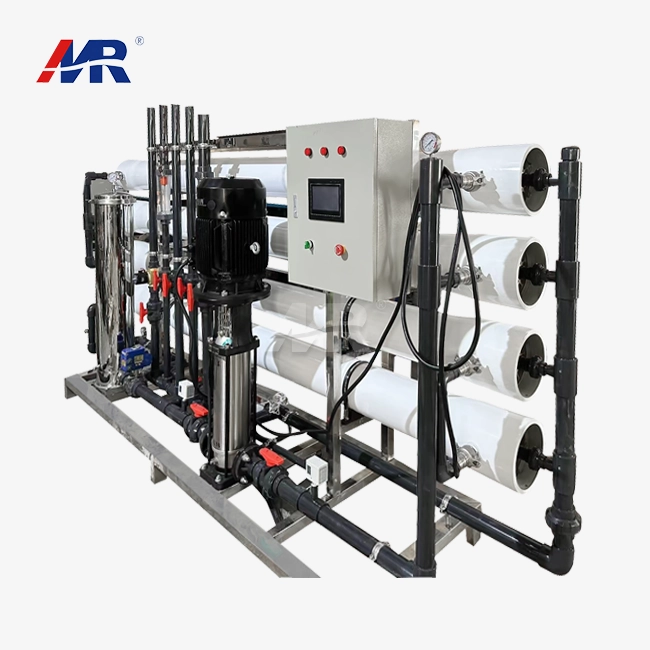
Define Water Demand and Raw-Water Quality for a 5 T/H Bottling Line
Calculate Actual RO Permeate Demand
First, look at your plant to learn what "5 T/H" means. Each number means a different thing, like bottled output, permeate flow, or total treatment capacity. Add the water that was used to clean the filters, rinse the containers, do CIP, take lab samples, and start up and stop the process. If the average flow rate for washing and cleaning is 0.5 T/H, then a line that fills with 5 T/H of product needs about 5.5 T/H of permeate. I believe you should record one full work shift with a flowmeter before you ask for quotes. It's not worth the money to have a unit that is too small and doesn't feed the filler enough or a unit that is too big and turns on and off too often, wasting power.
Account for Recovery Rate and Feed-Water Requirements
If you divide the permeate flow by the recovery rate, you get the feed flow. It takes about 6.7 T/H of feed water for 5 T/H of permeate to get back 75% of its weight. For the Morui MR-BWRO-10TH to work, it needs about 55–65% recovery. This means that 5 T/H of permeate would need about 7.7 to 9.1 T/H of feed. The reject stream would then go from 2.7 to 4.1 T/H. When recovery is low, the scaling pressure on the membranes usually goes down. This is good for harder water, but it also makes more raw water and drain needed. To finish the plan, make sure that your supply line and permit to let water out can handle that much water.
Test Raw Water Before Choosing an RO Filter System
A good RO filter system doesn't start with a volume goal; instead, it starts with getting a full report on the water. To find out the temperature, microbe counts, iron, manganese, silica, chlorine, nitrate, turbidity, hardness, alkalinity, pH, and conductivity, you should ask. There is no way for polyamide membranes to reject water when they are exposed to free chlorine. This is why the water from cities usually needs to be dechlorinated and kept free of particles.
People often have to change the amount of iron, manganese, or hardness in well water. On the other hand, surface water needs to be made clearer, and biological control needs to be put in place. The people who make membranes also need a Silt Density Index. ASTM D4189 talks about the test. Most feeds have a maximum of less than 5, and smaller numbers are better. A rough filter step can scale down when the source is cloudy. SDI.
Recommended RO Filter System Configurations for 5 T/H
Configuration A: Standard Single-Pass RO System
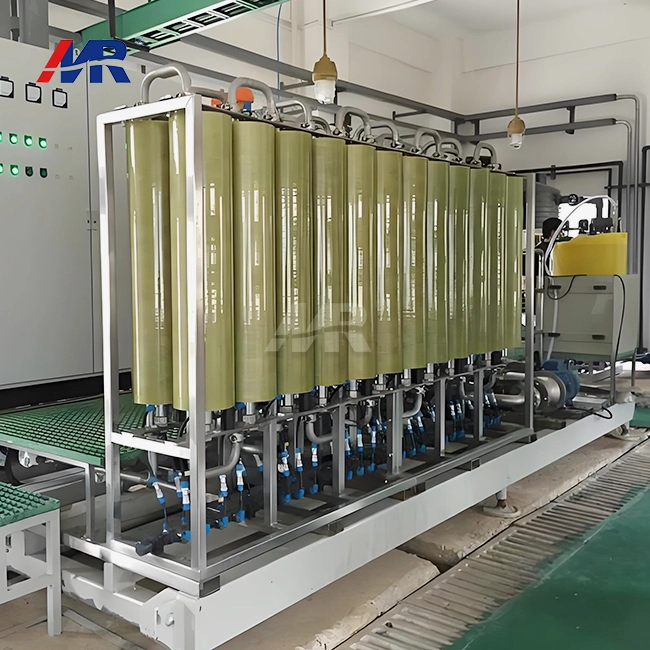
This is what most people do when they want to use stable city water or water with a moderate TDS in an ro filter system. One part of the train is the raw water tank. Other parts are the feed pump, multimedia filter, activated carbon filter, softener or antiscalant dose, cartridge filter, high-pressure pump, ro membrane unit, permeate tank, and final treatment. You don't have to fix as many parts, and it costs less to buy and run than choices with more than one stage. It can get rid of 98% of salt in water, which is why they made the MR-BWRO-10TH. That's why most of the salts that have been dissolved stay on the reject side. It's still possible for the temperature and TDS of the feed to change the final conductivity.
Configuration B: Enhanced Pretreatment for Difficult Feed Water
It is important to protect sources that are hard, iron-rich, or cloudy more before putting them in membranes. We can use iron and manganese catalytic media, softening, ultrafiltration, coagulation and purification, and more. The holes in UF hollow-fiber membranes are about 0.01 microns wide. They get rid of bacteria, colloids, and solids in suspension, which makes it less likely that the RO elements will get clogged. This set of two types of filters costs more at first, but it saves membranes when the raw water quality changes after it rains a lot. When turbidity or SDI changes from week to week, this is the best way to handle it.
Configuration C: Two-Pass RO or RO Plus Polishing
Some drink recipes need less conductivity than what one pass gives them. A second RO pass, EDI, or mixed-bed deionization can make the permeate even easier. To keep in mind, RO gets rid of dissolved contaminants but doesn't guarantee microbial safety by itself. This is why UV, ozone, or sterile filtration is often used next. People who bottle drinking water in the U.S. must also follow FDA 21 CFR Part 129 when they do so. Don't add the extra steps just because they're there; instead, make sure they fit what you wrote down about the goods. Each extra stage wears out faster and costs more to fix.
Size the Pump, Membranes, and Controls
It depends on the TDS, the temperature, the working pressure, and the design flux to decide how many membranes to use and how they are laid out. It is important to keep an eye on the temperature because membrane makers say that the output of permeate drops by about 3% for every degree Celsius that the feed water gets cooler. So, a well that freezes over in the winter can lose a lot of water. There needs to be a match between the high-pressure pump and the membrane array.
A VFD makes it easier to change the plans. It says on the MR-BWRO-10TH that it needs 15 kW of power per hour. You should compare this number to the power source you use. You should make a list of the features you want, like level controls, alarms, pressure gauges, flowmeters, and automatic flushing. Morui can put these parts together because it has its own membrane factory and is an authorized dealer for Shimge pumps and Runxin valves.
Verify, Compare, and Buy with Confidence
Verify Water Quality and Bottling-Line Compatibility
Limits for conductivity, TDS, hardness, turbidity, pH, temperature, and bacterial quality should be written in the shopping list for an ro filter price. It is important to check the flow, pressure, recovery, conductivity, alarms, interlocks, leaks, and cleaning steps both in the factory and at the site. Then, make sure that the volume of the buffer tank, the need for CIP, the need for a filler, the power supply, the drainage, and the PLC signals are all working together. When RO production and canning intake happen at different rates, the holding tank's size becomes very important. This is because the sludge tank makes up the difference. I need to know how long the tank has to meet the filler demand during a membrane flush for a 5 T/H line.
Compare Proposals Beyond the Stated Flow Rate
Usually, a single-pass RO costs less to buy, run, and keep up than a two-pass RO. When the specification calls for it, though, a two-pass RO gives less conductivity. At first, it's cheaper to buy a fixed-speed pump, but VFD pumps are better at adapting to different plans. They work well with hard water, but through ion exchange, they add salt, brine waste, and sodium. There is an antiscalant dose that stops that brine from happening, but it takes people who are trained to handle poisons. Another way to tell the difference between food-grade and industrial building is to look at the paperwork, the materials, and how well they drain and clean. Quotes that just say "5 T/H" don't show these differences, so make sure you ask each one what the flow rate is when the feed is at its coldest.
Avoid Common Purchasing Mistakes
It does this four times over and over. People buy capacity without checking the water quality, don't think about how cold the feed is in the winter, don't know how much it costs to clean and fill out the papers, and so on. As part of the total cost of ownership, you should pay for things like media, cartridges, antiscalant, salt, membranes, cleaning chemicals, energy, and drain volume. You should request P&IDs, electrical drawings, pump curves, membrane data, manuals, lists of spare parts, test procedures, warranty terms, and information about the commissioning. Fifteen parts of our group work together with 500 people and 20 engineers. OEMs, repair shops, and dealers all buy standard-interface replacement parts from us, so once you get your quote, you can start planning for spares.
Conclusion
If there is already a 5 T/H canning line, there is no need for a RO filter system. The right size is shown by the logged demand, which includes washing, rinsing, and CIP. The recovery rate then tells us how much to feed and how much to throw away. Raw water tests are used to decide how to clean it. Using a single-pass train to clean stable city water is possible. Ultrafiltration is a stronger way to clean water that is cloudy or contains iron. Water that needs to meet strict conductivity goals needs a second pass or polishing. The output is lower in the winter because of the lower feed temperature, so the highest flow should be checked when it is at its highest. There are limits on who can accept the plan, checks for integration, full documents, and the total cost of ownership that set a reliable plan apart from a generic package.
FAQ
Q1: Is a 5 T/H RO System Enough for a 5 T/H Bottling Line?
A: Is it always possible for a 5 T/H RO system to work with a 5 T/H tank line? It doesn't always, though. The demand shown on the nameplate goes up because of RINSE, CIP, flushing, and start-up. Next, I add a buffer tank and a small gap to check the age of the membrane. Then I look at the size of the permeate flow and compare it to the data that was collected at the plant.
Q2: What Pretreatment Is Usually Required?
A: We'll find out from the water report. A lot of the time, public water needs to be carbon filtered and have particles taken out. A lot of the time, water from wells needs to be smoothed or ironed out. Water from cloudy sources may also need ultrafiltration. A lot of the time, antiscalant doses and cartridge filtration keep the membranes safe.
Q3: How Much Water Does the System Reject?
A: The reject amount comes after the recovery rate. Based on its recovery rate of 55–65%, the MR-BWRO-10TH wastes 35–45% of the feed. At 75% recovery, the number drops to 25%.
Q4: Should Buyers Choose Single-Pass or Two-Pass RO?
A: If your conductivity goal is met by one pass, choose that because it costs less to run. If the product specs say that the conductivity should be lower, pick two-pass or polishing.
Request a Configuration Review for Your 5 T/H Bottling Line with Morui
Are you going to build a 5 T/H line for bottling? When you email benson@guangdongmorui.com, tell Morui about your working plan, the amount of permeate flow you need, and the analysis of your raw water. To make RO filter systems, our company has its own membrane plant and is an approved supplier of Shimge pumps and Runxin valves. This means that we can offer a custom setup based on the MR-BWRO-10TH or another model.
References
1. U.S. Food and Drug Administration, Title 21 CFR Part 129: Processing and Bottling of Bottled Drinking Water, 2023
2. American Water Works Association, Reverse Osmosis and Nanofiltration (Manual M46), 2007
3. Dow Water & Process Solutions, FILMTEC Reverse Osmosis Membranes Technical Manual, 2005
4. ASTM International, ASTM D4189: Standard Test Method for Silt Density Index (SDI) of Water, 2014
5. MWH, Water Treatment: Principles and Design, 2012
6. Mulder, M., Basic Principles of Membrane Technology, 1996
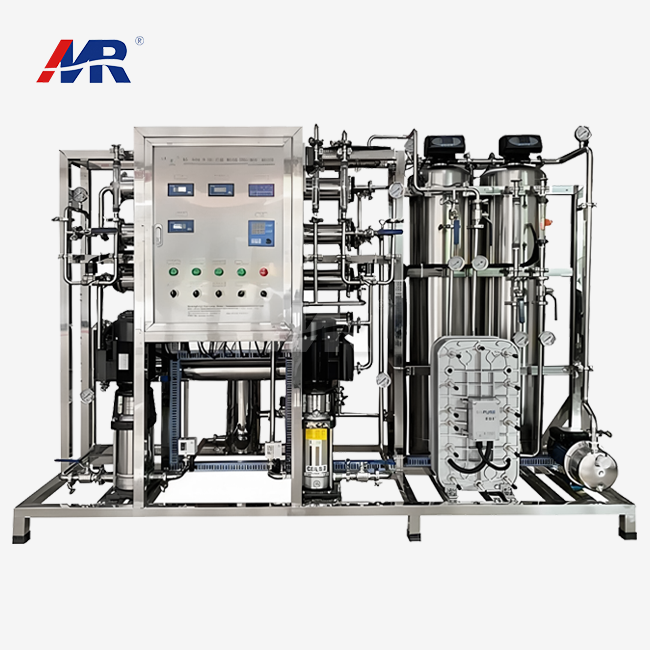 VIEW MOREElectrodeionization system
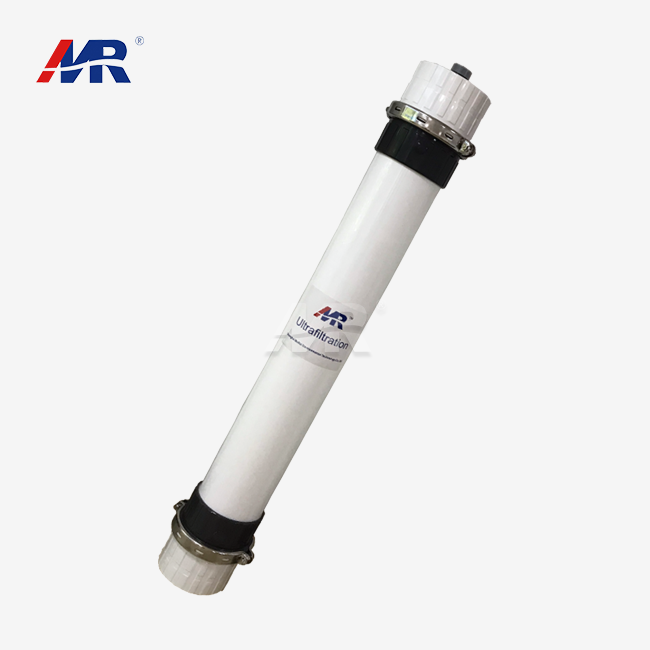 VIEW MOREultrafiltration membrane system
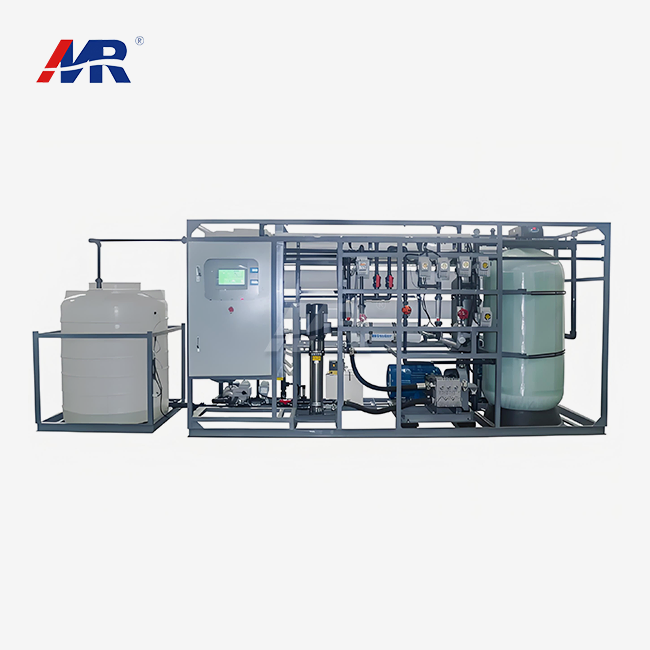 VIEW MOREseawater treatment system
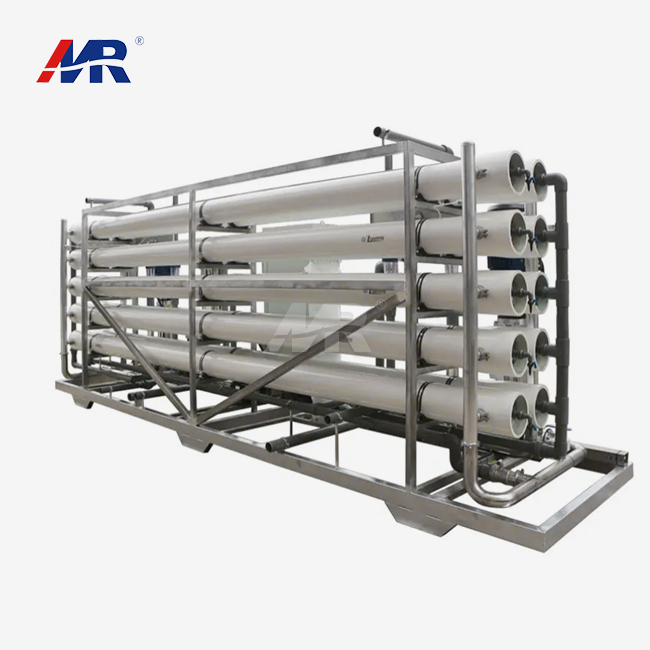 VIEW MOREbrackish water reverse osmosis systems
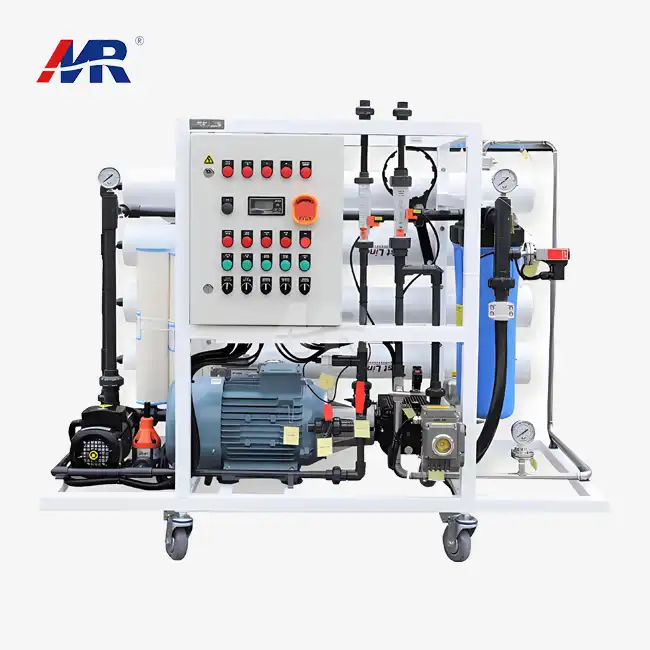 VIEW MORE2m3/hour seawater desalination equipment
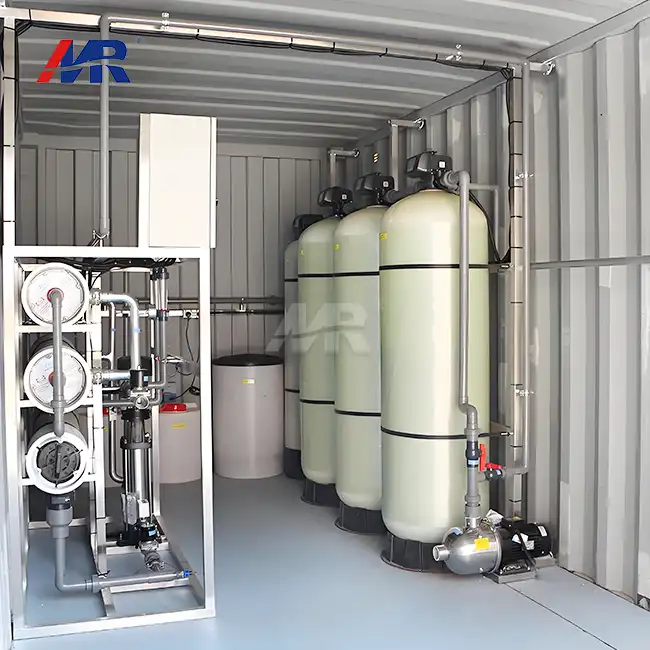 VIEW MOREcontainer type 3m3/hour RO equipment
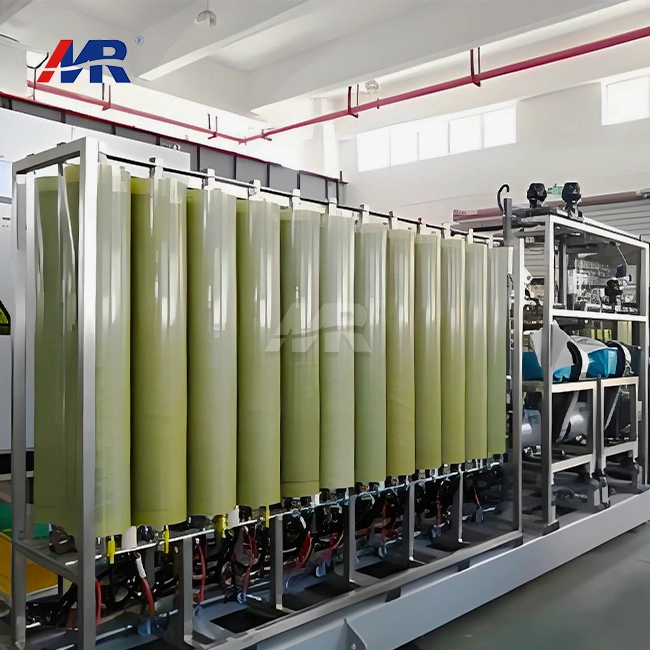 VIEW MOREDTRO plant
 VIEW MOREDisc Tube Reverse Osmosis