_1745823981883.webp)

Modular RO Systems: Revolutionizing Industrial Water Purification
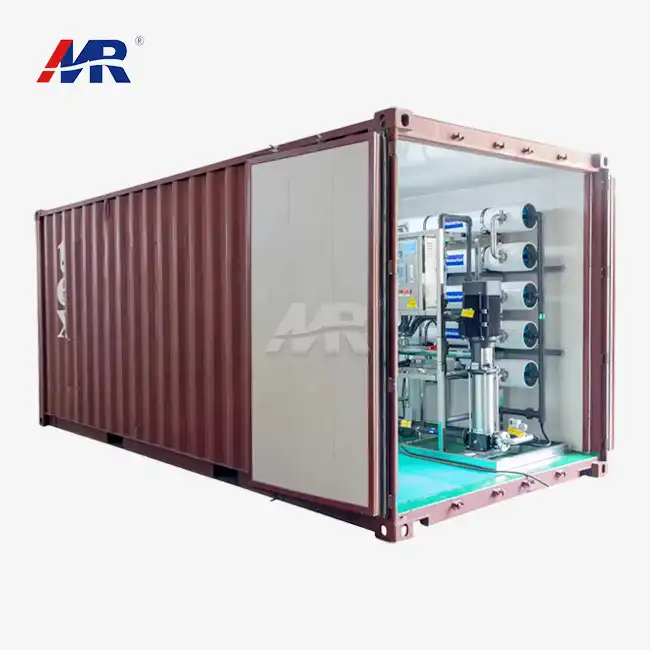
Modular reverse osmosis (RO) systems are changing how businesses deal with the problem of cleaning water. The containerised reverse osmosis plant is very flexible and scalable because it uses advanced water treatment technology inside normal shipping containers. These turnkey solutions include membranes, pre-treatment units, pumps, and smart controls in small, movable packages that get rid of the need for long building times and provide water quality that is good enough for pharmaceuticals. Whether your pharmaceutical facility needs pure water that meets GMP standards or your remote mining operation needs drinking water in case of an emergency, containerised systems can be set up quickly and work reliably in the harshest conditions.
Understanding Containerised Reverse Osmosis Plants
Core Architecture and Integration
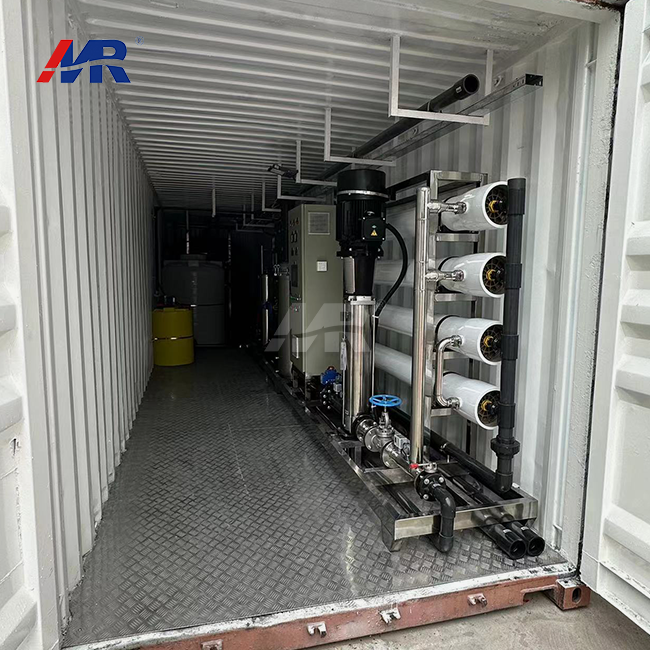
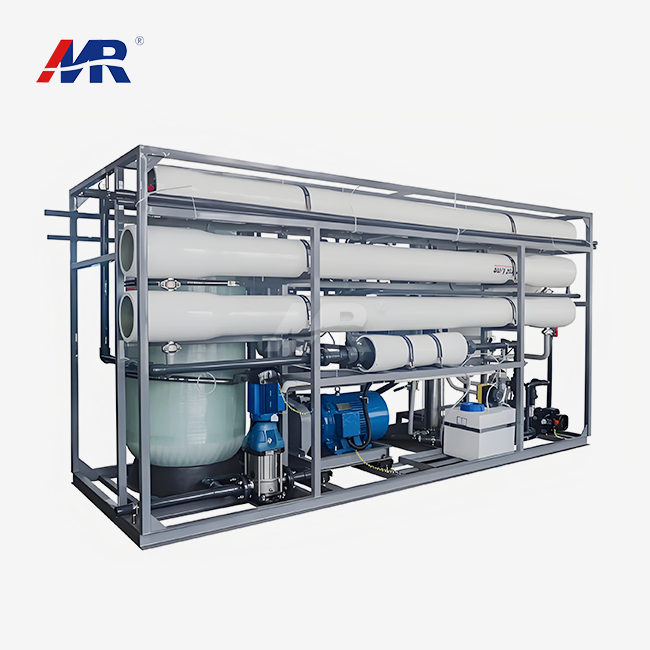
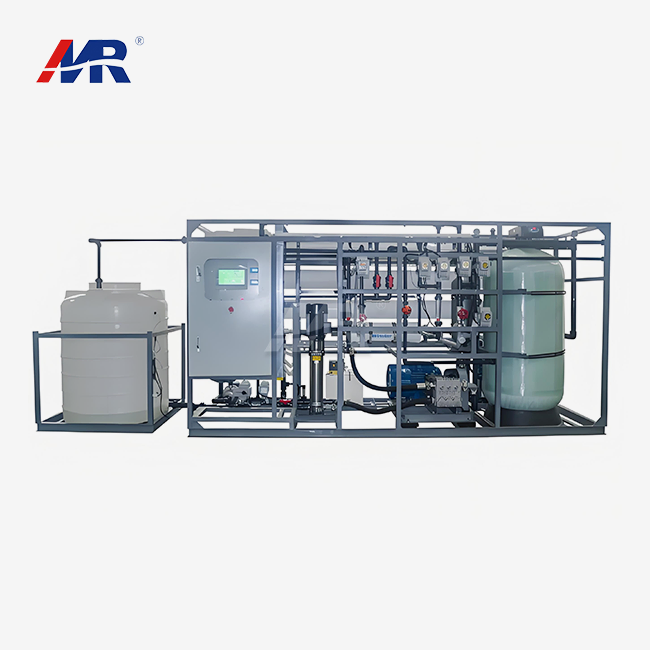
Containerised reverse osmosis facilities use ISO-standard 10ft, 20ft, or 40ft containers to purify water. Mobility and industrial strength allow these self-contained modules to overcome civil engineering limits. UV rays, sandstorms, and hazardous atmospheres are blocked by the container's exterior. Built-in HVAC systems maintain interior temperature.
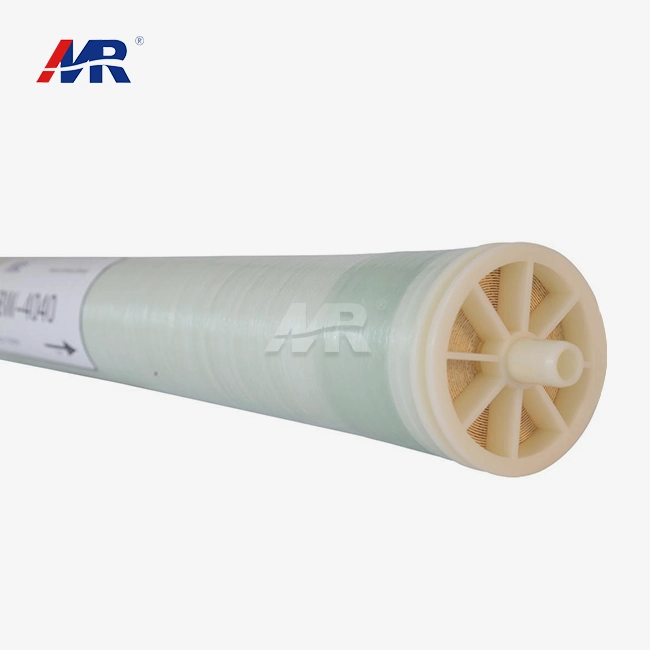
An organised set of pieces is within. Pre-treatment systems remove suspended particles and organic waste using multimedia filters and activated carbon beds. SS316L stainless steel or Super Duplex alloy high-pressure pumps draw water through Thin-Film Composite (TFC) filters that remove 99.5% of salts, metals, and other pollutants. PLCs monitor pressure differential, conductivity, and flow rates. Pushing these settings too far activates safety shutoffs. Energy recovery mechanisms in newer units use concentrate stream pressure. This improves efficiency and cuts expenses by 40% over earlier technology.
Operational Capabilities and Performance Range
These adaptable systems can manage feed water from brackish sources with 10,000 ppm TDS to turbulent seas with 45,000 ppm. Recovery rates may approach 75% for salty water, saving volume. A 40-foot containerised device can produce a million gallons of water per day, providing big commercial demands in a small location.
The plug-and-play configuration speeds implementation. Construction and startup of a typical water treatment facility take 12–18 months. Factory-tested containerised membranes perform as anticipated. They can connect to power and feed sources in 24–48 hours. This speed helps when work plans are tight or water is required immediately.
Comparing Modular Containerised RO Systems with Traditional Solutions
Structural Advantages and Installation Efficiency
Traditional skid-mounted RO systems are exposed to the elements unless located in shielded buildings, which increases construction costs and delays. Containerised reverse osmosis units have built-in weatherproof coverings. C5-M marine-grade anticorrosion coatings can withstand coastal salt spray and factory pollution. The container structure satisfies ASTM-mandated structural stability criteria. Equipment is insulated to prevent overheating and dampness.
The installation of a containerised reverse osmosis plant becomes easier. Traditional systems need massive pipe networks, power equipment, and specifically constructed mounting pads poured weeks in advance. Modular units just need power, feed water, and output connections. Because just one crane is required to carry the full containerised reverse osmosis plant to a ready-made pad, no queue of workers is needed to assemble it on-site, saving money.
Lifecycle Economics and Maintenance Profiles
When considering the total cost of ownership, containerised systems win. Starting prices are similar or somewhat more than simple skid-mounted solutions, but construction costs, product production time, and effort saved modify the maths. Advanced membrane technology and variable frequency drive pumps reduce energy use and expenses by 20–35%.
Well-planned storage arrangements simplify upkeep. Technicians access filter components, membranes, and equipment via flexible routes in climate-controlled rooms with LED illumination. This is unlike outside skid systems, where repair workers must operate in all conditions. Controlled climate extends part life. Membranes that aren't exposed to temperature or UV damage survive 7–10 years, whereas exposed ones last 5–7.
Vibrational analysis of high-pressure pump assemblies during plant acceptance testing detects mechanical fatigue issues before shipping. Field failures and unexpected breakdowns are crucial in businesses where water interrupts production; proactive quality management reduces them.
Applications and Performance of Containerised Reverse Osmosis Plants
Industrial and Commercial Deployment Scenarios
Food and beverage, pharmaceutical, and electronics firms use containerised reverse osmosis facilities for process water that fulfils specifications. Water for bottled drinks must always be clean and below 10 ppm TDS. Pharmaceutical companies demand formulation water to fulfil US Pharmacopoeia standards. Ultrapure water with a resistance over 18 megohm-cm is needed to clean chips in semiconductor plants. Containerised systems fulfil these high requirements and are scalable, so you may add portions as your company grows without halting.
Remote and difficult areas benefit from modular RO. Mining operations in deserts use salty groundwater to make drinking water for workers and reduce dust. Offshore or arctic oil and gas operations convert saltwater into fresh water, eliminating the need for costly water shipment. Military deployments and disaster relief operations benefit from rapid setup, which provides water security within hours.
As coastal towns desalinate saltwater to reduce water shortages, municipal uses are growing. Islanders get their drinking water from containerised plants. The flexibility of these plants permits infrastructural investments to match population expansion. Short-term activities like sports matches and construction projects employ portable rental units.
Environmental Compliance and Sustainability Measures
Energy utilisation is reverse osmosis's biggest environmental problem. Modern containerised plants use variable frequency drives to adjust pump speed dependent on feed water conditions. The plants don't have to operate at full power all the time. Alternative power sources like solar panels and batteries reduce fossil fuel consumption in distant areas. Correctly constructed systems desalinate brackish water with less than 3 kWh per cubic metre and saltwater with less than 4 kWh.
The company's managers observe rigorous environmental laws. Membrane filters in closed-loop water recovery reduce freshwater withdrawal and wastewater dumping for industrial users. For reuse, electroplating shops, chemical manufacturers, and power plants clean process lines. Trash becomes usable resources. This circular strategy fulfils higher standards and improves the company's environmental measures.
Maintenance Best Practices for Maximum Uptime
Routine maintenance schedules keep containerised reverse osmosis plants operating at peak efficiency. Based on different pressure readings, pre-treatment screens need to be cleaned or replaced every 3 to 6 months, but this can change depending on the quality of the feed water. When performance goes below 85% of baseline, cleaning processes for the membranes using approved chemical mixtures bring back flux rates. Automated clean-in-place (CIP) systems make this process easier by moving cleaning liquids around without having to take off the membrane of the containerised reverse osmosis plant.
As part of the annual preventive maintenance, the high-pressure seals are checked, the orientation of the pump is confirmed, and the conductivity probes and pressure sensors are calibrated. More and more, predictive maintenance tools are being used to add to planned tasks. On rotating machines, vibration monitors find worn bearings before they break. Flow pattern analysis finds patterns of fouling that help determine the best time to clean. These methods, which are based on data, make tools last longer and stop expensive fixes from happening in emergencies.
Procurement Guide for Containerised Reverse Osmosis Plants
Evaluating Manufacturers and Quality Standards
Business-to-business customers should thoroughly vet vendors. ISO 9001 verifies production quality control. The CE symbol indicates that European electrical safety criteria are satisfied. ASME-certified pressure tanks and pipelines fulfil rigorous technical criteria. Demand confirmation that all high-pressure connections are leak-free following atmospheric pressure testing at 1.5 times maximum operating pressure.
Performance assurances for membranes are crucial for security. Reputable manufacturers guarantee that their membranes will reject more than 99.5% of salt during factory acceptance testing and endure a specified period of time when utilised in particular ways. Safeguards like high-pressure cutoffs, low-pressure alerts, and emergency stop procedures must always operate. PLC logic simulation testing ensures this.
Ask for framework assistance after the sale. Does the manufacturer supply local repair facilities with extra parts? Answering technical help queries takes how long? Knowing what membranes are available is crucial since systems that utilise standard components like Dow, Toray, or Hydranautics may be safer for the supply chain than those that employ proprietary membrane designs.
Cost Components and Investment Options
The proposed investment goes beyond the containerised reverse osmosis facility. Size, membrane design, automation, and material requirements determine equipment pricing. A 100,000-gallon-per-day brackish water plant usually costs $150,000–$250,000. Seawater systems with energy return devices cost $400,000–$800,000 for the same area.
The destination and difficulty of travel determine shipping costs. 40-foot barrels delivered overland cost $3–8 per mile to reachable locations. International exports involve ocean freight, customs clearance, and domestic delivery, which may add 15–25% to equipment costs. Installing and finishing costs $15,000 to $50,000, depending on how difficult the utility connections are and how well the site is prepared.
Rentals are ideal for short-term tasks or tool testing before purchase. Rental durations might range from six months to many years, and monthly costs are normally 3–5% of the system's purchase price. Rent payments go toward a house down payment in lease-to-own arrangements. Used containerised RO plants are cheaper, but purchasers should acquire health assessments and know they will last less.
Customisation and Turnkey Solutions
Standardised containerised setups work well for many uses, but some problems can only be solved by customising them. If the feed water has odd toxins, it might need extra pre-treatment like organic scavenger resins, antiscalant dosing systems, or iron/manganese removal. For integration with current plant services, specific electrical voltage settings, control system communication methods, or product water storage tank connections need to be made.
Turnkey options make buying easier by including installation, operator training, and help with getting up and running all in one contract. This method gives the project's risk to experienced integrators who plan the civil works, power links, and government permits. There is a higher price for turnkey projects at first, but there are no budget shocks due to scope creep or planning problems.
Future Trends and Innovations in Modular RO Systems
Smart Monitoring and Predictive Technologies
When connected to the Internet of Things (IoT), containerised reverse osmosis plants become data-generating assets. Cloud-based monitoring tools gather operating parameters in real time, letting anyone with internet access see how well a system is running from afar. When strange things happen, facility managers are notified right away. This cuts down on response times and keeps small problems from turning into big fails.
Artificial intelligence programs look at past performance data to figure out what repairs will need to be done. Machine learning models find fouling patterns weeks before standard alarms go off. This helps clean the membranes more efficiently and makes them last longer. Digital twin simulations lower the risk of experimentation by letting operators try operational changes online before putting them into action.
Advanced Membrane Materials and Energy Recovery
Next-generation thin-film nanocomposite membranes have channels made from aquaporins and graphene oxide that let more water through while keeping rejection rates the same. These materials offer 30–50% more output from the same membrane area, while also reducing the size of the system's footprint or increasing the amount of space it can take up. Better chlorine tolerance makes pre-treatment easier by letting the sanitiser stay in the feed water longer. This lowers chemical costs and biological spoilage.
Energy recycling technology keeps getting better. It is now possible for pressure exchanges to move hydraulic energy from concentrate to new feed water at over 96% efficiency. New electrochemical systems combine desalination with energy storage, turning extra electricity from green sources into saved hydraulic potential that is used when demand is high.
Market Growth Drivers and Strategic Positioning
Regulatory demands on water usage and garbage release are getting stronger in many places. As rules get tighter, more and more facilities are using closed-loop water management. This is increasing the need for small RO systems that can be easily added to current operations without having to build huge new infrastructure. Companies that want to be more environmentally friendly promise to use less water per unit of production, which also helps modular cleaning technology spread.
The effects of climate change on water supply make producing water on your own more appealing. Industries can't afford to have their work stop because of changes in quality or a lack of supplies from the city. You can be sure that there is always water on-site with containerised systems, and they can be switched from surface water to groundwater or emergency truck supplies if things change.
Conclusion
The use of containerised reverse osmosis plants is a big change in how industrial water is cleaned. Rapid deployment, proven performance, and operating freedom all work together to solve major problems in industry, government, energy, and remote operations. As rules about the environment get stricter and water shortages get worse, flexible systems give organisations that are thinking ahead the tools they need to face obstacles with confidence. The direction of technology clearly goes toward better, more efficient systems that make things more reliable while also cutting down on costs and damage to the environment.
FAQ
1. What is the typical lifespan of a containerised reverse osmosis plant?
The structure, container, and important equipment parts like frames and vessels last 20 to 25 years if they are well taken care of. Depending on the quality of the feed water and how they are used, membranes need to be replaced every 7 to 10 years. Most high-pressure pumps last between 10 and 15 years before they need to be rebuilt or replaced. Preventive maintenance done once a year and following the cleaning instructions greatly affects the real service life.
2. How do energy costs compare between containerised and traditional RO systems?
Newer containerised reverse osmosis plants use 20 to 35 per cent less energy than older standard systems because they have variable frequency drives and energy recovery devices. Specific energy use ranges from 2.5 to 3.5 kWh per cubic meter for brackish water and from 3.5 to 4.5 kWh per cubic meter for saltwater. The controlled environment inside containers keeps the right temperatures all year long, so equipment doesn't lose performance when it's too hot or too cold.
3. Can containerised RO plants be customised for unique industrial requirements?
Customisation options are extensive. Engineers can modify pre-treatment configurations to address specific contaminants like iron, manganese, or chemical compounds. Membrane choices depend on the nature of the feed water and the quality of the extract that is wanted. Different communication methods are used to connect control systems to current SCADA networks. Solar panels or backup engines for remote areas are part of hybrid power sources. Working with makers who have a lot of experience ensures that changes made meet practical goals and keep the purity of the system.
Partner with Morui for Your Water Purification Solutions
Through carefully designed containerised reverse osmosis plant systems, Guangdong Morui Environmental Technology turns problems with water treatment into practical benefits. Our integrated method blends production knowledge with full service, from the first meeting to installation, commissioning, and ongoing Technical support. We offer unique solutions that are made to fit your exact needs, thanks to our over 500 dedicated professionals, 20 specialised engineers, multiple equipment processing facilities, and our own membrane production plant.
No matter if you're a pharmaceutical business that needs GMP-compliant water, a food maker that needs water that is always pure, or a remote operation that needs to set up quickly, our modular RO systems can be customised to fit your needs. As approved distributors for top component names like Shimge Water Pumps, Runxin Valves, and Createc Instruments, we make sure that every part of the system works well. Our 14 area branches offer quick, local help that is backed up by resources from around the world.
Find out how Morui's containerised reverse osmosis plant options can help you cut costs while improving water quality and following environmental rules. Email our expert team at benson@guangdongmorui.com to talk about your unique needs. We will look at the properties of your feed water, your output needs, and the conditions of the spot to come up with the best configurations. Request a full plan today to find out why Morui is trusted by top makers in a wide range of fields to provide them with water purification technology.
References
1. American Water Works Association. (2021). Reverse Osmosis and Nanofiltration: Manual of Water Supply Practices M46, 3rd Edition. Denver: AWWA Press.
2. Greenlee, L.F., Lawler, D.F., Freeman, B.D., Marrot, B., & Moulin, P. (2009). Reverse osmosis desalination: Water sources, technology, and today's challenges. Water Research, 43(9), 2317-2348.
3. International Desalination Association. (2020). IDA Water Security Handbook 2019-2020. Topsfield: International Desalination Association.
4. Fritzmann, C., Löwenberg, J., Wintgens, T., & Melin, T. (2007). State-of-the-art of reverse osmosis desalination. Desalination, 216(1-3), 1-76.
5. National Research Council. (2008). Desalination: A National Perspective. Washington, DC: The National Academies Press.
6. Wilf, M. (2019). The Guidebook to Membrane Desalination Technology: Reverse Osmosis, Nanofiltration, and Hybrid Systems. Hopkinton: Balaban Desalination Publications.