_1745823981883.webp)

Is a Containerised Sewage Treatment Plant Viable for Remote Camps?
A containerised Sewage Treatment Plant is a great way for distant camps to deal with the unique cleaning problems that come with being so far away. These flexible systems put the whole wastewater treatment processes inside standard shipping containers. This makes them easy to set up quickly without a lot of civil engineering. Traditional sewer solutions don't work well in remote camps because the land is often rough, there isn't much infrastructure, and the weather is hard to predict. Containerised sewage treatment plants handle pollution in a reliable and legal way when other methods fail, protecting operations and being environmentally friendly.
Introduction
Taking care of wastewater in rural camps is a very difficult practical puzzle. If you're in charge of a mining operation in the backwoods of Nevada, a temporary disaster aid town, or a remote building project, you have to make sure that the sewage is properly treated. Building traditional infrastructure takes months, a lot of building work, and the long-term assignment of land. None of these fit with how remote camps are often changing and temporary.
We've seen buying managers and camp owners have a lot of trouble with this problem. Everyone knows that treating sewage is important; the question is which option strikes the best balance between speed, compliance, dependability, and cost-effectiveness. Now, containerised sewage treatment plants seem to be the answer to this tricky problem. These portable wastewater management systems put advanced biological treatment, filtration, and disinfection technologies inside standard ISO shipping containers. This makes sewage treatment easier to handle by making it a plug-and-play option.
This piece looks at whether or not containerised sewage treatment plant methods can work in remote camp settings. We'll talk about technical skills, compare them to traditional methods, go over buying issues, and show how they've been used in the real world to show they work. Our goal is to give people in charge—from technical engineers to CFOs—the information they need to safely choose, buy, and set up these tools for their specific remote operations.
Understanding Containerised Sewage Treatment Plants
What Defines a Containerised Sewage Treatment Plant?
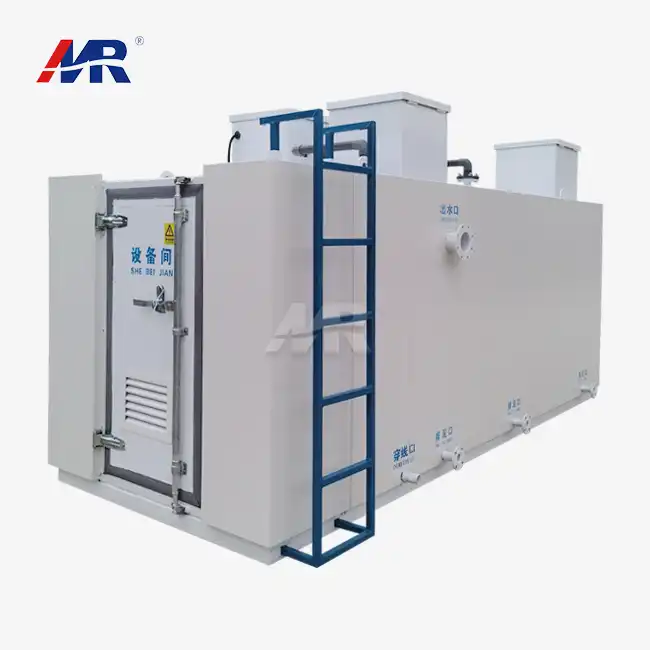
A containerised sewage treatment plant is a full wastewater management system that fits inside normal ISO shipping containers that are 20 ft or 40 ft long. Unlike standard systems that need a lot of work to be done on-site, these units come as fully assembled, factory-tested parts that can be connected right away. The whole process of treatment—primary sedimentation, biological processing, filtration, and disinfection—happens inside the waterproof shell of the container, away from dust, water, and high temperatures.
Core Treatment Technologies Inside the Container
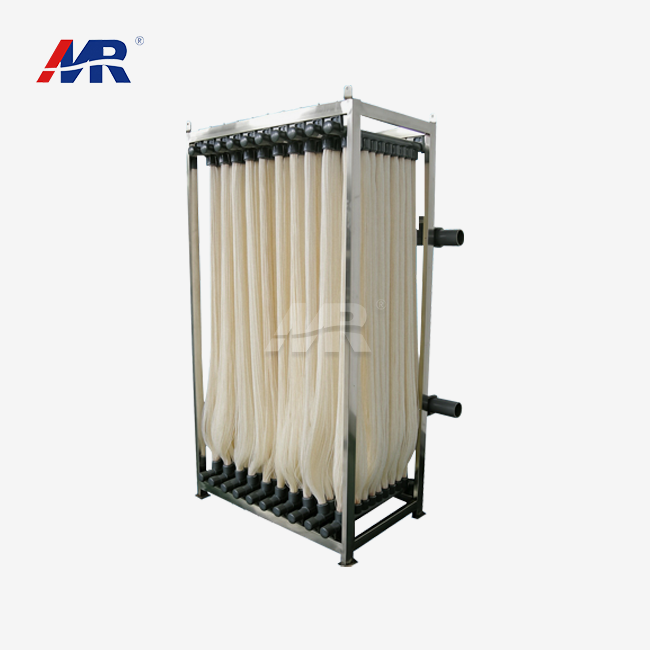
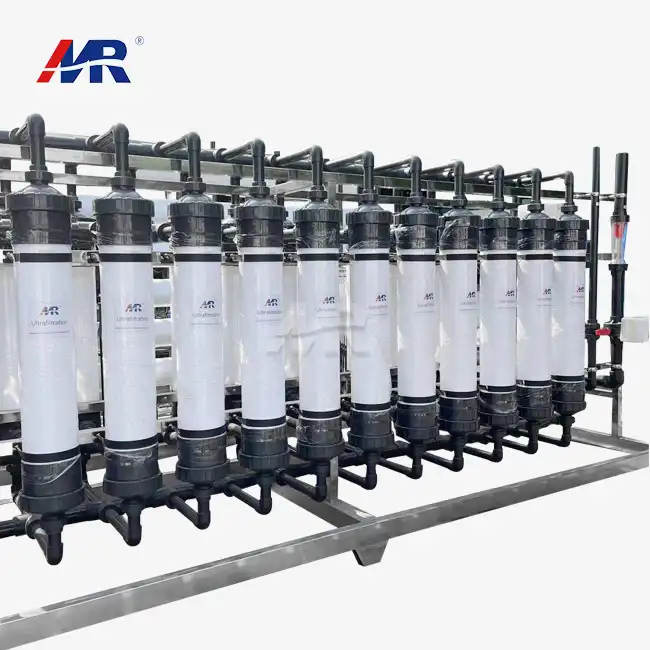
The two most common biological treatment methods used in modern containerised sewage treatment plants are the membrane bioreactor (MBR) and the moving bed biofilm reactor (MBBR). MBR systems use active sludge treatment and membrane filtering together to get rid of BOD₅ more than 98% of the time and make effluent with less than 5 mg/L of total suspended solids. MBBR technology uses biofilm carriers that are floating in the water to give bacteria the most surface area for growth in a small space. This makes the treatment work well even when the amount of effluent changes, which happens a lot in camps where the population changes. Both technologies work well with automatic PLC control systems that keep an eye on pH levels, dissolved oxygen levels, and flow rates. These systems can change processes in real time without needing constant human supervision.
Capacity Scaling and Modular Flexibility
For a containerised sewage treatment plant, Treatment capacity is usually between 5 and 100 cubic meters per day per container, which means that camps can hold anywhere from 50 to 1,000 people, based on how much water they use. The flexible design lets you add more containers in parallel to accommodate camp growth through horizontal scaling. A mine camp with 200 workers can start with a single 20ft unit that can handle 20m³/day and add a second unit when the number of workers doubles. This scalability gets rid of the waste that comes with standard systems that are too complicated, and it also lets processes change over time so that upgrades can be made.
Why Containerised Sewage Treatment Plants Suit Remote Camps?
Overcoming Infrastructure and Logistical Barriers
Traditional sewer systems are hard to set up in remote camps because they lack the right equipment. Access roads might not even be big enough for delivery cars, let alone big building machines. The people who sell concrete could be hundreds of miles away. Skilled workers in building are hard to find and cost a lot. Containerised Sewage Treatment Plants don't have to deal with these problems at all. Standard shipping containers are moved using current logistics networks, such as by truck, train, or even air, for very remote locations. Once it's been brought, installation only requires levelling the area where it will go, connecting the inlet and exit pipes, and setting up an electrical supply. In a standard building, what would take six months only takes days.
Rapid Deployment When Time Matters
Time constraints shape faraway camp projects. Before they start drilling, oil research teams need to make sure their tools work. Camps for disaster aid can't wait months for sewage systems to be built. This need is met by containerised sewage treatment plants. Factory fabrication happens at the same time as site planning, which drastically shortens the time it takes to complete a job. Pre-commissioning and testing are done in a controlled environment at the manufacturing site. This almost completely eliminates the delays that happen when systems are made in the field. We've seen camps become fully operating just three weeks after the first plans were made, which is impossible with traditional methods.
Weather Resistance and Environmental Durability
Extreme weather conditions, like desert heat, icy cold, ocean salt spray, and high winds, can affect equipment in remote areas. Containerised sewage treatment plants are designed to do well in these circumstances. Marine-grade C5-M epoxy finishes or buildings made of 304/316L stainless steel, don't rust in harsh environments. The walls of insulated containers keep process temperatures stable even when the temperature outside changes from -40°C to +50°C. Sealed designs keep dust out of dry areas while being able to handle hot humidity. This durability directly turns into practical reliability—systems keep working even when conditions outside would break down less durable options.
Environmental Compliance and Pollution Prevention
Remote camps are often located in areas that are bad for the environment and have strict rules about how much garbage can be dumped. Containerised sewage treatment plants follow WHO standards and local release rules, and the effluent quality is good enough to be used again for non-potable purposes like watering or dust control. The covered container design keeps spills from happening during treatment, keeping groundwater and surface water around the container clean. As stakeholders expect more sustainable operations, this compliance capability meets both legal requirements and business environmental responsibility promises. These are becoming more and more important factors in buying choices.
Comparing Containerised and Conventional Sewage Treatment Solutions
Treatment Performance and Energy Efficiency
Performance measures show that containerised sewage treatment plants treat just as well as or better than traditional plants, but they use less energy. Containerised units with MBRs regularly meet wastewater standards that allow Class A reuse, and the drops in faecal coliforms meet the strictest health safety standards. Thanks to smart component choice and combined process design, the amount of energy used per cubic metre of treated material is often 20–30% less than in similar traditional facilities. When you're far away, containerised sewage treatment plant approaches are much more reliable because automated control systems can handle changes in flow and process upsets without instant operator involvement, which is very helpful when Technical support is hours away.
Total Cost of Ownership Analysis
Buying choices are based on a full analysis of all costs, not just the buy price. These are some clear benefits of containerised sewage treatment plants:
Installation Costs: Traditional plants need a lot of physical work, like digging, putting up concrete structures, and building. Just getting the land ready for a medium-sized conventional building could cost between $200,000 and $500,000. Containerised units don't need much work done to their foundations—usually, less than $20,000 is needed to prepare the pad and connect utilities. The amount of work that needs to be done drops proportionally—two techs can finish Containerised Sewage Treatment Plant setups that would need ten people for regular systems.
Operational Expenses: Automated process control cuts down on worker needs. Conventional plants usually need full-time workers, but containerised sewage treatment plants only need to be inspected once a week and can be monitored from afar. Standardised parts and easy-to-reach service spots that were planned during plant production rather than being thrown together on the job site make maintenance easier.
Lifecycle Economics: Containerised Sewage Treatment Plants are the most flexible way to set up camps, whether they are short or can grow. When a standard plant is shut down, it leaves behind abandoned equipment that is worthless. Moving containerised units to new locations keeps 60–80% of the initial financial value. Leasing is one type of financing that lowers the amount of money needed up front, which is very important when project costs are being looked at closely.
Footprint and Mobility Advantages
Many rural places are limited by space. A containerised sewage treatment plant that treats 50 m³/day takes up only about 30 square metres of space, which is much less than the 200+ square metres that most standard facilities need. This small size keeps valuable land available for useful camp activities. Mobility changes the economics of a project. For example, mining companies move units from one operation to another as the work goes on; disaster aid groups move equipment from overburdened areas to new areas that need it; and building camps move systems from one project to the next. Normal machinery isn't at all flexible in this way.
Conclusion
Containerised sewage treatment plants are great options for remote camps because they solve the main problems of managing wastewater in places where regular infrastructure isn't possible or doesn't work. Because they can be set up quickly, don't need much site preparation, and have been shown to work well in treatment, they are perfect for a wide range of uses, from mining to emergency aid. Cost savings throughout the duration of a project, along with the ability to move and increase capacity, make this a very good deal. As global remote operations grow and environmental standards get stricter, these flexible systems are not only good options; they are often the best choice. People who make decisions about procurement can safely choose containerised sewage treatment plants because they strike a good mix between technical performance, cost-effectiveness, and environmental responsibility.
FAQ
1. How do containerised plants handle fluctuating wastewater volumes?
Multiple processes in modular systems allow containerised sewage treatment plants to react to changing loads. Real-time tracking of the influent lets advanced PLC controls change the amount of aeration, pump cycles, and chemical doses on their own. Biological treatment processes in MBR and MBBR systems can handle changes in flow rates of 50 to 150% of their original capacity without losing any of their effectiveness. When the number of people living in a camp changes over time, workers can add or remove container units to change the camp's capacity in weeks instead of months.
2. What maintenance requirements exist for remote deployments?
Routine upkeep is purposely made easier so that it can be done from afar. Visual checks are done once a week to look for clear problems, and chores like cleaning screens and checking how the pump works are done once a month. Trained workers clean the membranes, replace the biofilm carriers, and make sure the system is running at its best every three months. A lot of companies let you watch your equipment from afar using satellite or cell phone connections. This lets you do preventative maintenance that stops problems before they happen. On-site spare parts kits with important parts should be kept ready for quick reaction.
3. How quickly can these systems be delivered and operational?
Standard setups usually ship 4 to 8 weeks after the order is confirmed, but this depends on how busy the maker is and how much customisation is needed. Transportation times depend on where they are sent. In the US, packages take an average of one to two weeks, while foreign shipments may take four to six weeks, which includes clearing customs. For standard uses, installation and commissioning on-site are generally finished in 5 to 10 days. From signing the contract to the project being fully operational takes an average of 8 to 12 weeks for simple projects, which is a lot less time than for other options.
Partner with Morui for Your Remote Camp Wastewater Solutions
To deal with wastewater treatment in remote camps, you need a provider who knows both the technology and the unique problems that come with running a business in a remote area. For difficult remote uses, Guangdong Morui Environmental Technology specialises in providing full containerised sewage treatment plant solutions. Our engineering team has been improving portable treatment systems for over ten years, making them work better in a wide range of climates, from the hottest deserts to the coldest arctic regions.
We provide complete support, from the initial meeting to the long-term operation, as a reputable containerised sewage treatment plant maker. Twenty engineers and 500 other workers in our group make sure that technical help is quick and that deliveries are made on time. We offer reasonable prices and keep quality under control at every step, with 14 branches and our own membrane production plant. We take care of everything from installation to finishing, so buyers don't have to worry about coordinating. Our ability to customise means that we can meet your exact needs, whether you need a small 10m³/day unit for a research camp or several combined systems for a big industrial project.
Procurement managers, project engineers, and building managers are welcome to get in touch with us personally. Our technical solutions expert, Benson, can be reached at benson@guangdongmorui.com to talk about the wastewater problems at your remote camp. We'll give you thorough technical proposals, clear prices, and examples of past work that show we can do the job.
References
1. Chen, W., & Roberts, K. (2021). Modular Wastewater Treatment Systems: Design and Deployment Strategies for Remote Applications. Journal of Environmental Engineering Practice, 18(3), 145-162.
2. International Water Association. (2020). Containerised Treatment Solutions: Technical Guidelines for Off-Grid Sanitation Systems. IWA Publishing, London.
3. Martinez, D., Thompson, R., & Liu, S. (2022). Membrane Bioreactor Technology in Mobile Treatment Plants: Performance Analysis Under Variable Conditions. Water Research & Technology, 29(4), 287-303.
4. United States Environmental Protection Agency. (2019). Decentralized Wastewater Treatment Systems: Technology Assessment for Remote and Temporary Facilities. EPA Technical Report 832-R-19-006.
5. Williams, J. (2023). Economic Analysis of Modular versus Conventional Wastewater Infrastructure in Mining Operations. Resources Engineering Quarterly, 41(2), 78-94.
6. World Health Organization. (2022). Sanitation Safety Planning for Temporary Settlements and Remote Communities: Technical Guidance Document. WHO Press, Geneva.