_1745823981883.webp)

Ultrafiltration water system for industrial wastewater reuse
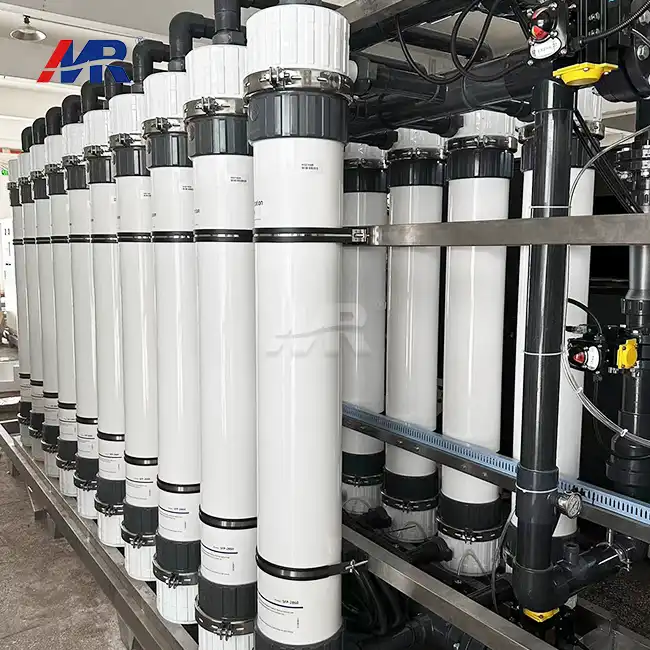
Industrial water scarcity and rising operational costs have pushed manufacturers toward smarter resource management. An ultrafiltration water system addresses these challenges by leveraging advanced membrane technology to purify wastewater for reuse across production cycles. Operating with precision at 0.01-0.1 micron pore sizes, these systems remove bacteria, viruses, suspended solids, and colloids while retaining beneficial minerals, delivering consistent water quality that meets stringent industrial and environmental standards without excessive energy consumption.
Understanding Ultrafiltration Water Systems in Industrial Wastewater Reuse
Core Principles of Ultrafiltration Membrane Technology
Size-exclusion separation is how ultrafiltration works. Pressurized water runs through semi-permeable hollow fibre membranes. With pores that are between 0.01 and 0.1 microns wide, these membranes successfully stop contaminants while letting dissolved salts and low-molecular-weight compounds pass through. UF does not use any chemicals for treatment; instead, it only uses physical obstacles. This means that disinfectants are not needed, and germs and particulates are removed with over 99.9% efficiency.
Essential System Components for Industrial Applications
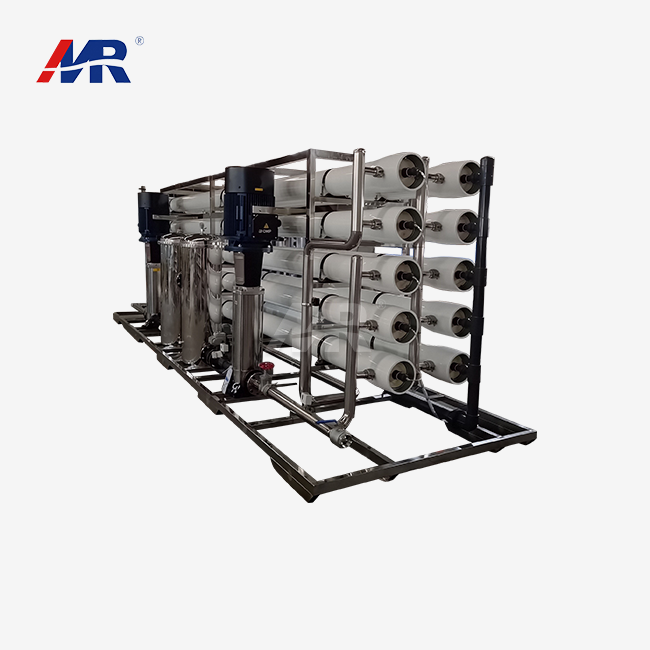
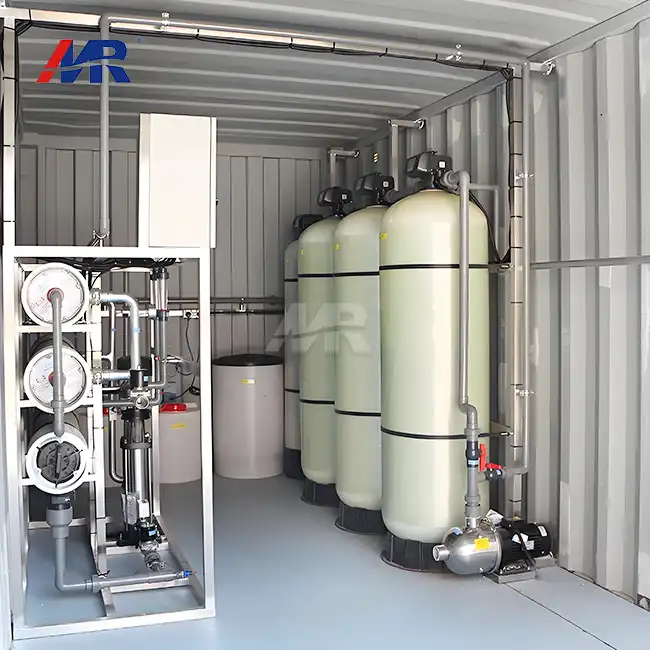
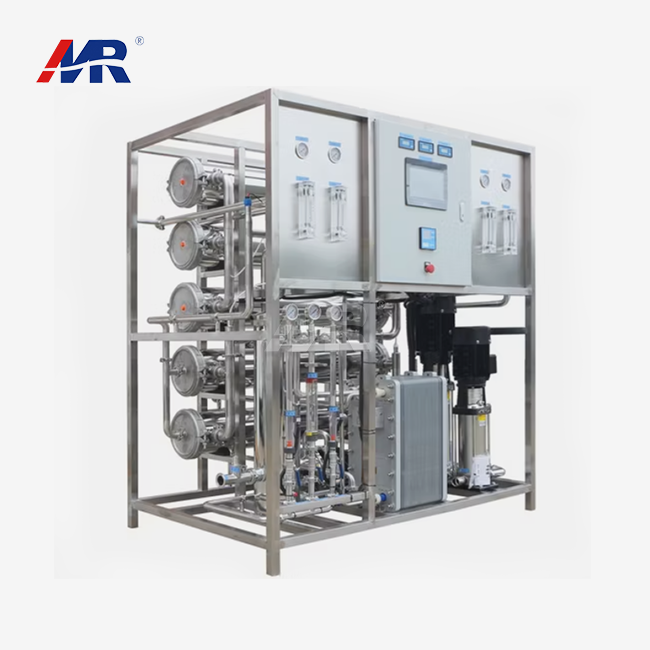
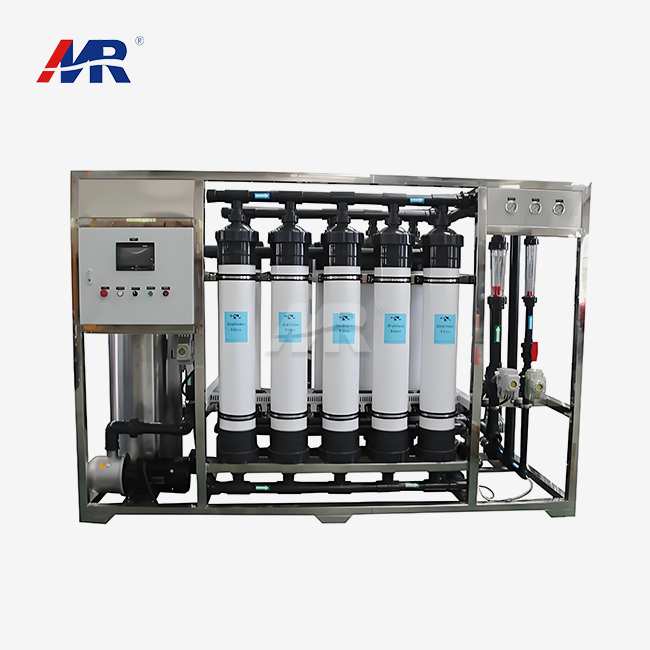
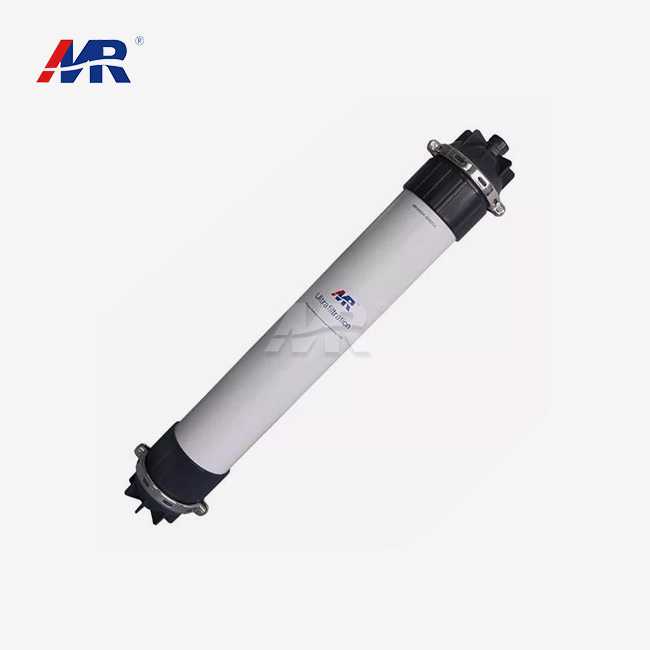
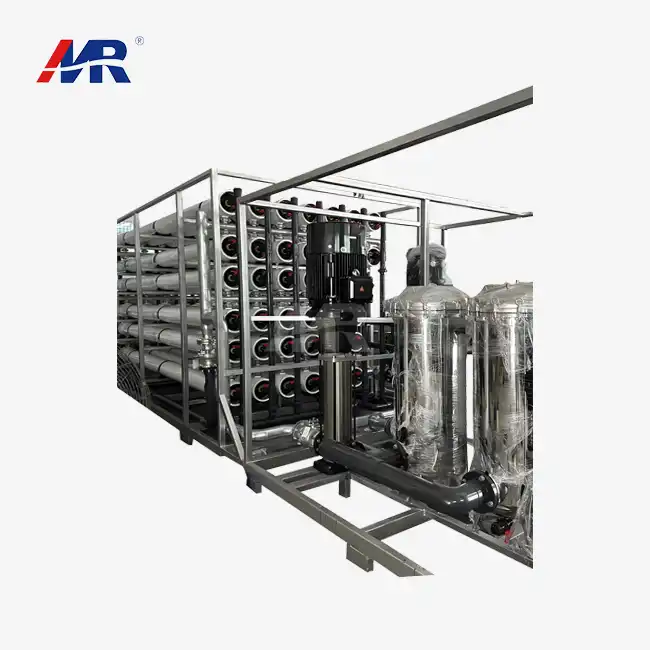
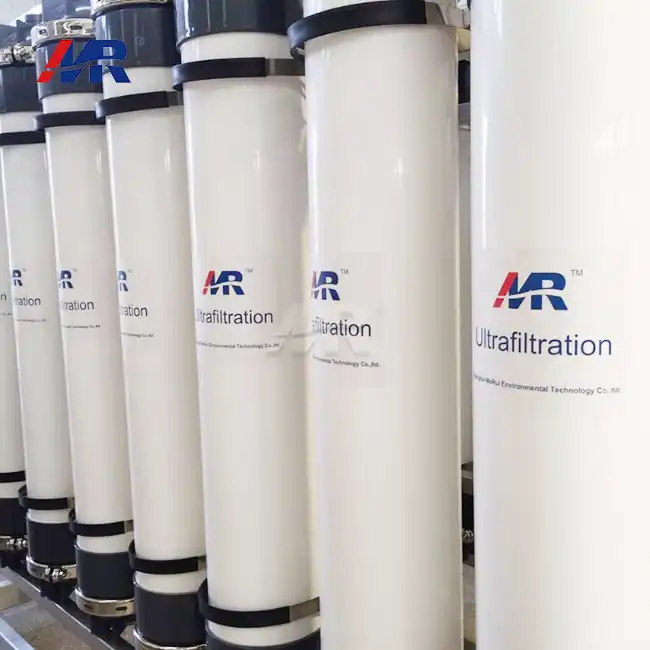
Modern industrial UF setups have a number of important parts that work together in sync. The best working pressure for feed pumps is between 0.1 and 0.3 MPa. This keeps the transmembrane pressure the same across all membrane modules. The membrane structures are usually made up of bundled hollow fibres that are held in pressure vessels that are designed to be easy to change and expand. Automated control screens keep an eye on cleaning cycles, transmembrane pressure differences, and flux rates. Backwash systems change the direction of flow every so often to remove fouling materials that have built up on membrane surfaces.
Enhancing Water Quality Consistency for Downstream Processes
Ultrafiltration is an important step that must be taken before reverse osmosis or ion exchange systems. It lowers the Silt Density Index below 3 and keeps sensitive equipment further down the line from getting clogged up too soon. When used to clean up wastewater, UF regularly makes effluent with turbidity levels below 0.2 NTU. This effluent can be used for process cooling, boiler feed preparation, or even making drinkable water with the help of extra polishing steps. This stability gets rid of the performance variations that come with regular media filtration, especially when dealing with feed water features that change often, which is common in industrial effluents.
Ultrafiltration vs. Other Filtration Technologies: Making the Right Choice
Comparing Filtration Precision and Removal Capabilities
Many membrane and conventional filters clean industrial water, but each works better for distinct contaminant types. High-pressure reverse osmosis systems remove dissolved ions and floating particles (10–80 bar). They are ideal for desalination but energy-intensive for usage without dissolved salts. Pathogens may not be eliminated by microfiltration, which uses less energy to handle 0.1 to 10 micron particles. An ultrafiltration water system offers the best of both worlds since it successfully kills microorganisms at one-fifth the pressure of RO systems and requires 0.1 to 0.3 kWh per cubic metre.
Energy Efficiency and Lifecycle Cost Analysis
Ultrafiltration provides economic advantages when considering the total cost of ownership. Pump energy is reduced by low operating pressure compared to nanofiltration and RO. This is crucial for large commercial systems that treat thousands of cubic meters of water daily. Membranes may last three to five years with good maintenance, and not having chemical dosing systems reduces operational complexity and chemical expenses. Modular UF designs allow you to add modules in parallel to enhance capacity without rethinking the basic infrastructure. System flexibility should be considered while calculating capital costs.
Selecting Configuration Based on Wastewater Characteristics
The ideal device setup depends on the feed water. Cross-flow filter modes prevent cake layers in high-turbidity streams with suspended particles exceeding 50 mg/L by causing continuous tangential motion across membrane surfaces. Dead-end arrangements maximize flux rates and simplify hydraulic design for low-turbidity applications like wastewater cleansing. High-organic matter food manufacturing or pharmaceutical wastewaters may need dissolved air flotation or biological oxidation to reduce cleaning time and membrane clogging.
Maintenance and Operational Tips for Maximizing Ultrafiltration System Performance
Chemical Cleaning Protocols and Backwashing Strategies
The biggest issue with UF is membrane fouling. It causes sluggish flow loss and greater transmembrane pressure. Controlled backwash cycles every 30–60 minutes eliminate reversible fouling before it solidifies into deposits. Backwashing permeates via membranes, swiftly pushing particles back into the concentrate stream. Along with manual cleaning, chemically upgraded backwash systems target organic foulants and biofilms using oxidizing agents such as sodium hypochlorite or caustic solutions.
Periodic clean-in-place removes fouling that backwashing can't. CIP usually alternates alkaline and acidic cleaning to remove organic compounds and biological waste. Cleaning with acid dissolves mineral scales. Effective CIP procedures maintain membrane permeability near plan and normalize flux return over 95% after cleaning. Recording water cleaning frequency and chemical consumption allows you to know immediately if feed water parameters change and pretreatment has to be modified.
Troubleshooting Common Performance Issues
Monitoring changes in transmembrane pressure shows the state of the membrane before it fails in a catastrophic way. Gradual pressure rises mean that fouling is building up, while quick pressure spikes could mean that a membrane fibre has broken or that the feed pump isn't working right. Declining permeate quality despite stable pressure points to mechanical membrane damage that lets contaminants through. This means that the integrity of the system needs to be tested and the module needs to be replaced. Scheduling proactive repair based on performance data instead of random time intervals improves system uptime and keeps costs down.
Importance of Supplier Support and OEM Parts Availability
Long-term system success depends a lot on how quickly suppliers are and how easy it is to get real replacement parts. Membrane modules in an ultrafiltration water system are unique parts that need to be replaced with ones that are approved by the manufacturer to keep the warranty coverage and performance guarantees. Comprehensive service agreements from suppliers that include preventative maintenance visits, emergency Technical support, and performance optimization talks are very valuable after the initial buy of equipment. The closeness of regional service centers cuts down on downtime when parts fail. This is especially important for businesses that have to stop production lines when water treatment stops working.
Industrial Applications and Case Studies of Ultrafiltration Wastewater Reuse
Manufacturing and Heavy Industry Applications
Much of the rinse water is polluted by metal hydroxides and oils after the metal is completed. UF systems recover 85–90% of rinse water, reducing freshwater usage and discharge. A Midwest auto parts manufacturer reduced their yearly water bills by almost $180,000 after implementing a 5,000 m³/day ultrafiltration system to handle electroplating effluent. For plating rinses, recycled water passes quality criteria. This closed-loop technology reduced environmental release permit expenses.
Tissue colouring plants must discharge colour and suspended solids within limits. UF cleansing before biological treatment removes fibre and dye particles that prevent microorganisms from functioning. Thus, biological therapy is 40% more successful. Purified wastewater from biological and UF treatment may be utilized for boiler make-up water or non-contact cooling.
Food and Beverage Processing Scenarios
Protein-rich effluent from dairy processing can't be discharged directly, but includes nutrients that can be retrieved. Ultrafiltration concentrates cheese wastewater whey proteins into sellable protein concentrations. Clear permeate may be used for irrigation or RO cleaning. An integrated UF system helped a Pacific Northwest dairy firm that processes 200,000 litres of milk per day reduce effluent by 70% and recover proteins worth $50,000.
Drinking water bottling factories employ UF-treated municipal water. This keeps the water microbiologically safe and prevents chlorine from altering drink's flavour. Two chlorine-resistant bacteria, Cryptosporidium and Giardia, are entirely blocked by the membrane barrier. FDA drinking water criteria are met.
Pharmaceutical and Chemical Industry Implementations
USP-filtered water is needed by the pharmaceutical industries to clean instruments and make medications. These methods produce wastewater containing cleaning chemicals and modest quantities of active therapeutic compounds, but little in solids. UF systems that purify medical wastewater remove 4 logs of viruses and 6 logs of bacteria, leaving effluent that may be reused in initial cleaning or building HVAC systems. This circular technique reduced freshwater consumption by 60% at a New Jersey biopharmaceutical firm while fulfilling GMP requirements.
Chemical processing operations that employ organic solvents and reactants produce effluent with many compounds. UF is powerful enough to prevent particles from passing onto activated carbon or advanced oxidation systems, where they would soon exhaust their treatment capacity. The use of UF prefiltration reduced downstream treatment costs by 35% in a Texas petrochemical company that processes 15,000 m³/day of mixed process effluent.
Procurement Considerations for Ultrafiltration Water Systems
Evaluating Suppliers and Certification Standards
To choose the right ultrafiltration water system provider, you need to do a lot more research than just compare prices. If a manufacturer has both ISO 9001 quality management certification and NSF/ANSI Standard 61 drinking water component approval, you can be sure that their manufacturing practices are uniform and that their materials are safe. Regional production skills and well-established transport networks show that suppliers will be stable and parts will be available for long-term system support.
Technical knowledge is what sets competent sellers apart from equipment traders who don't know enough about specific applications. Qualified providers do a thorough study of the feed water, suggest pilot tests, and create a custom system design that takes into account site-specific factors such as limited space or current utility powers. Guangdong Morui Environmental Technology has a wide range of skills because it is vertically integrated. They make membranes, build tools, and provide installation services in the field, with help from over 500 technical staff spread across 14 regional offices.
Understanding Total Cost of Ownership
The initial cost of cash is only one part of the total cost of the system over its lifetime. For a full financial study, installation costs must be included. These include civil works, electricity connections, and integrating the process with current treatment equipment. The cost of the membrane modules makes up 30 to 40 percent of the total value of the equipment. They need to be replaced every three to five years, based on the quality of the feed water and how well the cleaning routine works. At 0.1 to 0.3 kWh/m³, the amount of energy used is still small compared to RO systems, but it adds up over decades of continued use.
Strategic Purchasing and Scalability Planning
Work plans and growth rate determine how much water firms require. Modular system designs allow initial installations to be sized for current demands while allowing future parallel train extensions. This technology needs less initial capital yet allows for output expansion. Multi-site framework agreements or phased purchase plans may improve volume, price, and equipment specifications across all firm locations. This simplifies operator training and spare part tracking.
Reading the warranty conditions, particularly membrane performance assurances with minimum flux rates and rejection efficiency over time, is crucial. Comprehensive warranties cover manufacturing faults and system wear and tear, providing greater risk protection than limited component guarantees. Setting explicit rules that the supplier is responsible for startup commissioning, user training, and technical assistance for the first year reduces post-installation disputes.
Conclusion
Ultrafiltration technology has been shown to work well for reusing industrial wastewater in a wide range of fields that are having trouble getting enough water and meeting environmental standards. UF systems are smart investments for supporting sustainable production practices because they are very good at getting rid of contaminants, use little energy, and can be expanded in a flexible way. For implementations to go well, the right technology must be chosen based on the specifics of the wastewater, there must be clear upkeep instructions, and there must be partnerships with sellers who can provide long-term technical support. Businesses that use advanced membrane filters now will be better prepared for stricter water rules and higher freshwater costs in the future.
FAQ
1. Does ultrafiltration remove dissolved minerals from wastewater?
Because their molecular size is smaller than the 0.01-0.1 micron hole measurements, ultrafiltration membranes keep the salts and minerals that have been dissolved. This selective permeability keeps the good minerals in the soil while getting rid of the bad ones, like bugs and viruses. For uses that need to remove minerals, RO or ion exchange treatment is needed after demineralization.
2. What factors influence membrane lifespan?
uf membranes usually work well for three to five years if they are properly kept. Lifespan is very much affected by the quality of the pretreatment of the feed water, how well the cleaning routine is followed, and the working conditions. Too much fouling from bad pretreatment or cleaning that is put off speeds up degradation, while the best chemical cleaning and backwash intervals make membranes last longer.
3. How do automated cleaning systems prevent fouling?
These days, UF systems use programmable logic controls that start backwash cycles based on differences in transmembrane pressure or the amount of time that has passed since the last filter. During reverse flow cycles, cleaning solutions are automatically injected that are chemically improved. This breaks up organic layers and biofilms before they harden. This proactive method keeps flux rates fixed between manual CIP processes, so operators don't have to do as much work, and cleaning chemicals work better.
4. Can ultrafiltration handle high-solids industrial wastewater?
Cross-flow filter designs can handle feed streams with high concentrations of suspended solids by keeping the tangential velocity across membrane surfaces constant. This shear force keeps moving particles that have gathered away from the membrane face, which stops cake layers from forming quickly. When there are more than 500 mg/L of suspended solids, upstream clarifying or dissolved air flotation can help lower the rate of membrane clogging and make cleaning intervals longer.
Partner with a Trusted Ultrafiltration Water System Manufacturer
Guangdong Morui Environmental Technology offers designed ultrafiltration solutions backed by 20 years of experience treating water and the ability to manufacture these solutions in-house. Our facilities for making membranes and tools make sure that quality is controlled throughout the entire supply chain. Additionally, our national service network of 20 experts provides quick technical support. We offer a full lifetime partnership, from the initial feasibility studies to installation commissioning and ongoing upkeep. You can email our technical team at benson@guangdongmorui.com to talk about the problems you're having with your commercial wastewater and to look into custom ultrafiltration water system setups. Find out how our flexible designs, which include Shimge pumps and Runxin valves, work reliably for sites that can handle up to 100,000 m³ per day.
References
1. Membrane Filtration Guidance Manual, United States Environmental Protection Agency, Office of Water, 2005.
2. Ultrafiltration Membrane Technology for Municipal Water Treatment: Recent Advances and Performance Benchmarks, Journal of Water Process Engineering, Volume 28, 2019.
3. Industrial Water Reuse and Wastewater Minimization: Best Practices and Technologies, American Water Works Association Research Foundation, 2012.
4. Economic Analysis of Membrane Systems for Industrial Water Treatment Applications, Desalination and Water Treatment Journal, Volume 51, 2013.
5. Membrane Bioreactor and Ultrafiltration Hybrid Systems for Industrial Effluent Treatment: Design Considerations and Case Studies, Water Science and Technology, Volume 77, Issue 6, 2018.
6. Fouling Control Strategies in Ultrafiltration Systems for Wastewater Reclamation: Comparative Performance Assessment, Separation and Purification Technology, Volume 189, 2017.