_1745823981883.webp)

Reverse Osmosis Water Treatment Machine for High TDS Water Sources
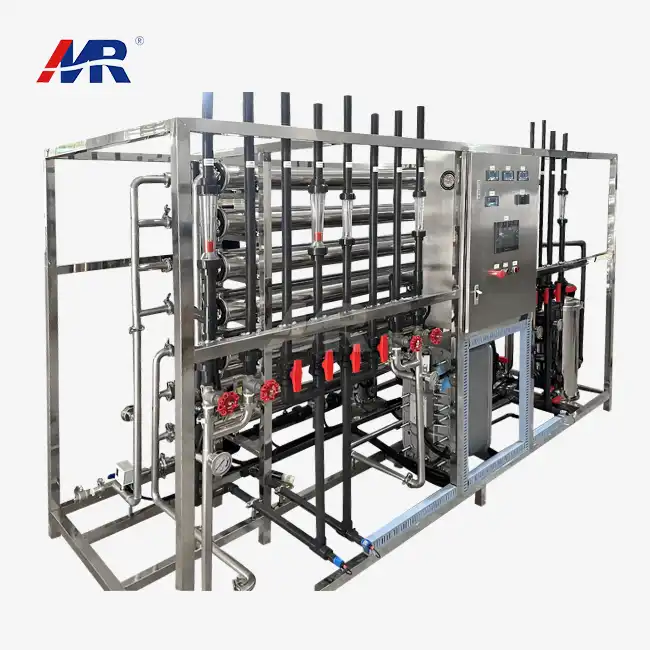
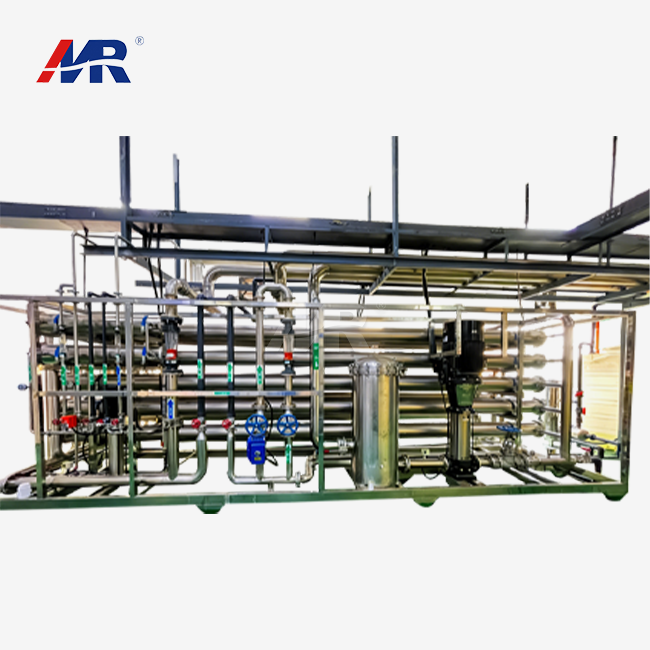
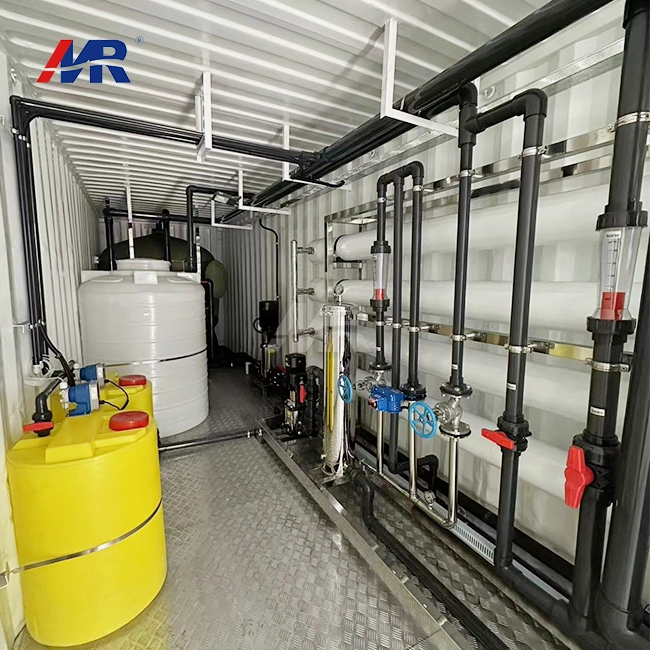
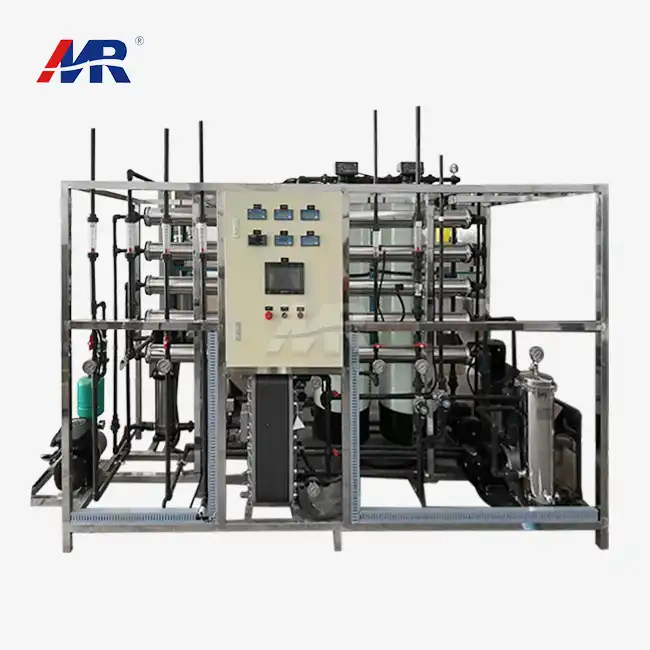
Reverse osmosis water treatment machine have changed the way we clean water that has a lot of dissolved solids (TDS). These high-tech devices use semi-permeable membranes to get rid of pollutants and make clean, safe water from difficult source waters. For cities and companies, reverse osmosis water treatment equipment is an easy and quick way to deal with salty groundwater, seawater, or industrial waste water that has a lot of TDS. The high-pressure water that goes through these systems can get rid of up to 99% of salts, particles, germs, and other contaminants that are dissolved in water. The end result is clean, good water that can be drunk, used to make things, and other things. As the world becomes more worried about water shortages and pollution, reverse osmosis technology becomes more and more important for making more water available and allowing water to be reused. This article will look at how reverse osmosis systems function to clean high TDS water, important design factors, and the many industrial and municipal uses that benefit from this strong water purification technology.
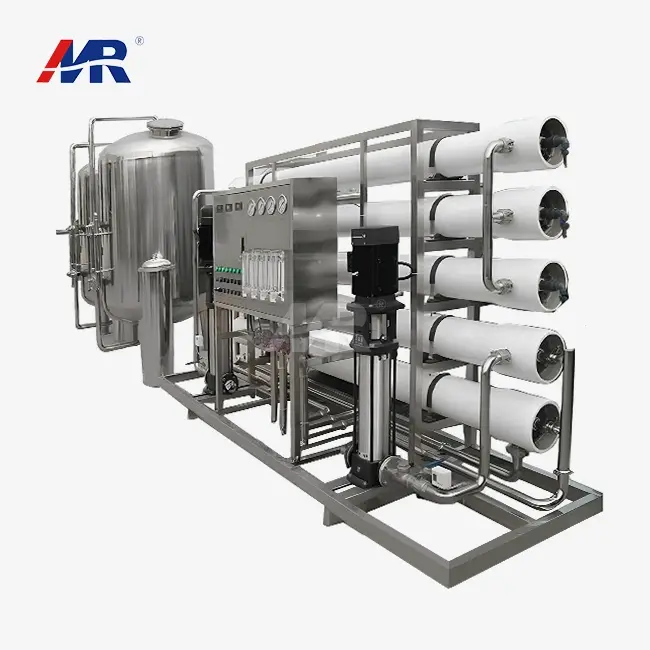
How Reverse Osmosis Water Treatment Machines Work for High TDS Sources
Reverse osmosis (RO) is a way to clean water that uses a semi-permeable membrane to get rid of ions, molecules, and bigger particles. In reverse osmosis, an external pressure is utilized to counteract osmotic pressure, which is a colligative quality that comes from changes in the chemical potential of the solvent, a thermodynamic feature.
When using reverse osmosis on water with high TDS, there are several important steps:
Before treatment
The feed water goes through pretreatment to get rid of bigger particles, change the pH, and add anti-scalants before it flows into the ro membrane. This keeps the membrane from getting damaged or dirty. Some things that might happen before treatment are:
- Filtering media to get rid of suspended solids
- Adding chemicals to change the pH
- Adding scale inhibitors
- Microfiltration or ultrafiltration to get rid of more particles
Pumping at High Pressure
Then, the pretreated water is pushed at a high pressure (usually 200–1000 psi) to get rid of osmotic pressure. As the TDS level goes up, the pressure that is needed goes up as well.
Separation via Reverse Osmosis Membrane
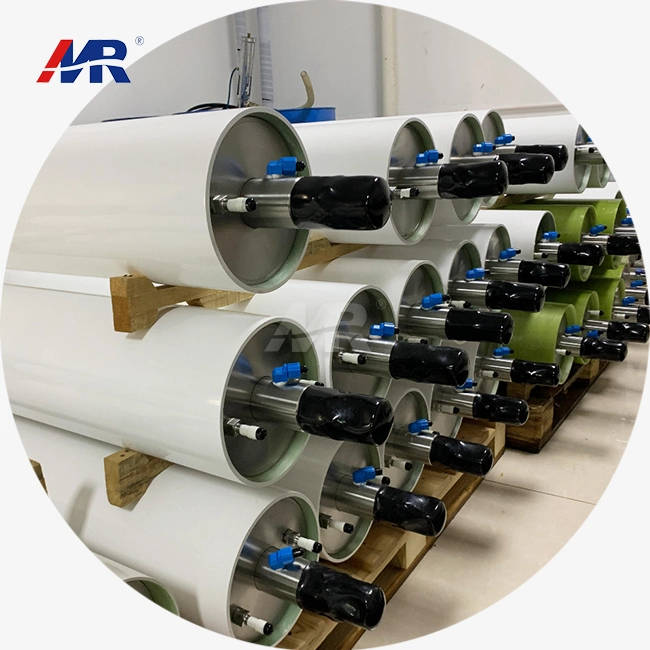
When water is pushed through the semi-permeable RO membrane, it leaves behind dissolved solids and other pollutants. RO membranes have very small pores, usually 0.0001 micron, which only let water molecules through.
Collection of permeate
People collect the filtered water, which is termed permeate, that goes through the membrane for use or more treatment.
Discharge of Concentrate
The concentrated waste stream, also known as brine or concentrate, is delivered for further processing or thrown away.
Multi-stage RO systems are commonly utilized for high TDS applications because they can get greater recovery rates and purity levels overall. The concentrate from the first stage is used as food for the next stages.
Key Design Considerations for High TDS Reverse Osmosis Systems
When designing a reverse osmosis water treatment machine for high TDS water sources, several important factors must be considered:
Feed Water Analysis
A comprehensive analysis of the feed water chemistry is critical. This should include:
- TDS levels
- Specific ion concentrations (e.g. calcium, magnesium, sulfate)
- pH
- Temperature
- Presence of organic matter
- Levels of potential foulants like iron and silica
This data informs membrane selection, pretreatment requirements, and overall system design.
Membrane Selection
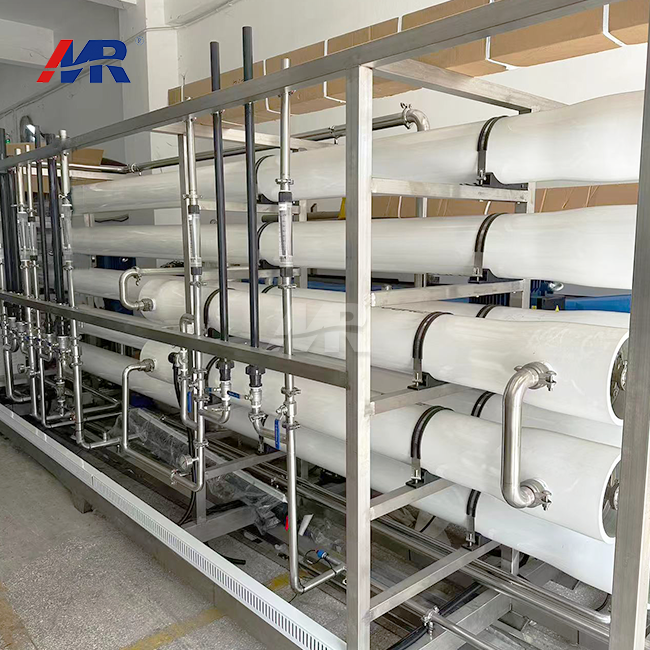
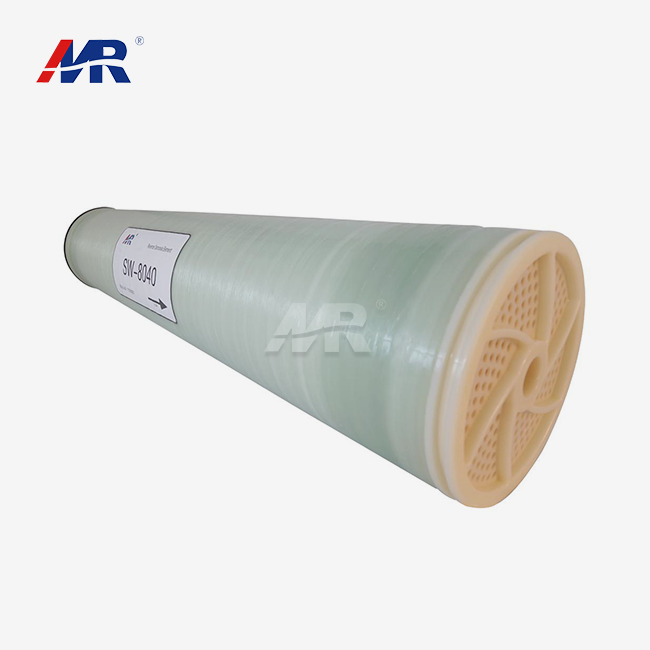
For high TDS applications, specialized high-rejection membranes are typically used. These may include:
- Seawater RO (SWRO) membranes for very high salinity
- Brackish water RO (BWRO) membranes for moderately high TDS
- High-rejection low-energy membranes for improved efficiency
Membrane materials like polyamide thin-film composite offer excellent salt rejection and durability for challenging water sources.
System Configuration
The overall system design must account for:
- Required permeate flow rate and quality
- Target recovery rate
- Energy efficiency goals
- Concentrate management
Multi-stage systems, energy recovery devices, and concentrate recycling are common features in high TDS applications.
Pretreatment Design
Proper pretreatment is crucial for membrane longevity and system performance. This may involve:
- Multi-media filtration
- Cartridge filters
- Chemical dosing systems
- Ultrafiltration or microfiltration
Post-Treatment
Depending on the intended use of the permeate, post-treatment may be necessary. This could include:
- pH adjustment
- Remineralization
- Disinfection
Monitoring and Control Systems
Advanced monitoring and control systems are essential for optimizing performance and detecting issues early. Key parameters to monitor include:
- Feed, permeate, and concentrate conductivity
- Flow rates and pressures
- pH
- Temperature
- Specific ion concentrations
By carefully considering these design factors, engineers can create highly effective and efficient reverse osmosis systems capable of treating even the most challenging high TDS water sources.
Industrial and Municipal Applications of High TDS Reverse Osmosis Systems
Reverse osmosis water treatment machines designed for high TDS sources find applications across a wide range of industries and municipal settings. Some key applications include:
Seawater Desalination
Reverse osmosis is the leading technology for large-scale seawater desalination, providing fresh water for coastal communities and industries. Modern SWRO plants can achieve:
- Salt rejection rates over 99.8%
- Recovery rates of 40-50%
- Energy consumption as low as 3 kWh/m³
Innovations like energy recovery devices and high-permeability membranes continue to improve efficiency.
Brackish Water Treatment
RO systems effectively treat brackish groundwater and surface water for:
- Municipal drinking water supply
- Agricultural irrigation
- Industrial process water
These systems typically achieve 75-85% recovery rates, significantly expanding usable water resources in water-scarce regions.
Industrial Wastewater Reclamation
Many industries use RO to treat and reuse process wastewater, including:
- Power plants (cooling tower blowdown treatment)
- Oil and gas (produced water treatment)
- Mining (acid mine drainage treatment)
- Food and beverage manufacturing
RO enables water reuse, reducing freshwater consumption and wastewater discharge.
Pharmaceutical and Biotechnology
High-purity water is critical in these industries. RO systems, often combined with other technologies like EDI (electrodeionization), produce water meeting stringent quality standards for:
- Drug manufacturing
- Laboratory use
- Bioprocessing
Electronics Manufacturing
Ultrapure water is essential in semiconductor and electronics manufacturing. Multi-stage RO systems, combined with polishing technologies, produce water with resistivity approaching the theoretical limit of 18.2 MΩ·cm.
Municipal Wastewater Reuse
As water scarcity increases, more municipalities are turning to advanced treatment of wastewater for indirect or direct potable reuse. RO is a key technology in these applications, providing a robust barrier against contaminants including:
- Dissolved solids
- Pathogens
- Trace organic compounds
Boiler Feed Water Treatment
Power plants and industrial facilities use RO to produce high-purity boiler feed water, preventing scale formation and corrosion in steam systems.
In each of these applications, reverse osmosis water treatment machines play a crucial role in producing high-quality water from challenging high TDS sources. As technology continues to advance, we can expect to see even greater adoption of RO across industries and municipalities worldwide.
Conclusion
Reverse osmosis water treatment machines are one of the best and most reliable ways to clean water sources with a high TDS. They can be used in both businesses and cities. RO systems can usually get rid of up to 99% of the salts, contaminants, and other bad things that are in hard water, like seawater, salty groundwater, and industrial wastewater. They use cutting edge membrane technology, strong preparation, and careful system design to make this happen. There will always be a steady flow of good water because of this feature. It also helps with water recycling, following the rules, and saving money over time.
Reverse osmosis technology will become even more important as the world's water shortage, stricter environmental rules, and higher standards for water quality get worse. New membrane materials, energy recovery systems, and smart monitoring systems are making current RO water treatment machines more efficient, less expensive to run, and better for the environment than ever before. Reverse osmosis is still one of the most important technologies used to treat high TDS water for businesses that want a reliable, scalable, and future-proof option.
Frequently Asked Questions
Q1: What is the highest amount of TDS that reverse osmosis can handle?
A: Yes, modern reverse osmosis systems can clean water with TDS values of 50,000 mg/L or more. Seawater reverse osmosis (SWRO) membranes are made to work with seawater's high salt level (TDS), which is usually around 35,000 mg/L. For sources with very high TDS (more than 60,000 mg/L), multistage RO systems or hybrid methods that mix RO with other technologies can be used.
Q2:How does the amount of energy that RO systems use change as the TDS goes up?
In RO systems, higher TDS levels mean they use more energy. This is because high TDS water has a higher osmotic pressure that needs more pressure to overcome it. When desalinating seawater (35,000 mg/L TDS), the specific energy consumption (SEC) is about 3–4 kWh/m³. When desalinating brackish water (1,000–10,000 mg/L TDS), it can be as low as 0.5–2 kWh/m³. But progress in energy recovery devices and high-permeability membranes keeps making uses that use a lot of energy more energy-efficient.
Q3:How hard is it to use reverse osmosis to treat water with a high TDS?
A: These are the main problems: 1. More energy needs to be used because of higher osmotic pressure. 2. Membranes are more likely to scale and foul up. 3. Lower rates of water return 4. The chance of concentration polarization 5. How to handle and get rid of high-salinity solution 6. Need for special high-pressure pumps and pipes 7. Needs for more thorough preparation To deal with these problems, you need to carefully plan the system, choose the right membranes, and set up strong pretreatment and tracking systems.
High TDS Reverse Osmosis Water Treatment Solutions | Morui
We at Guangdong Morui Environmental Technology Co., Ltd. are experts at providing the best reverse osmosis solutions for water sources with high TDS. Our Team of skilled engineers can create and install custom RO systems that are perfect for your unique water quality issues and treatment goals. We have the knowledge and tools to provide dependable, effective, and affordable solutions for both small-scale industrial process water systems and large-scale municipal desalination plants.
To get the best performance and lowest running costs, our reverse osmosis water treatment machine use the most up-to-date membrane technology, energy recovery, and system design. We provide a full range of services, such as:
- Analysis of water quality and design of systems
- Making and putting together equipment
- Installation and commissioning on site
- Training for operators and continuing technical support
- Services for replacing membranes and doing maintenance
We guarantee the best quality and performance in every system we supply because we have a cutting-edge membrane production facility and work with the best component suppliers. Because we care about innovation and making our customers happy, businesses and cities all throughout Asia, South America, and Africa trust us.
Are you ready to deal with your high TDS water treatment problems? Get in touch with our team of specialists immediately to talk about your project and see how our advanced RO solutions can help you. To get started, send us an email at benson@guangdongmorui.com.
References
1. Greenlee, L. F., Lawler, D. F., Freeman, B. D., Marrot, B., & Moulin, P. (2009). Reverse osmosis desalination: water sources, technology, and today's challenges. Water research, 43(9), 2317-2348.
2. Fritzmann, C., Löwenberg, J., Wintgens, T., & Melin, T. (2007). State-of-the-art of reverse osmosis desalination. Desalination, 216(1-3), 1-76.
3. Lattemann, S., & Höpner, T. (2008). Environmental impact and impact assessment of seawater desalination. Desalination, 220(1-3), 1-15.
4. Gude, V. G. (2016). Desalination and sustainability–An appraisal and current perspective. Water research, 89, 87-106.
5. Subramani, A., & Jacangelo, J. G. (2015). Emerging desalination technologies for water treatment: A critical review. Water research, 75, 164-187.
6. Elimelech, M., & Phillip, W. A. (2011). The future of seawater desalination: energy, technology, and the environment. science, 333(6043), 712-717.