



How to Size an RO EDI Water System From Feed TDS to 2-50 T/H Output
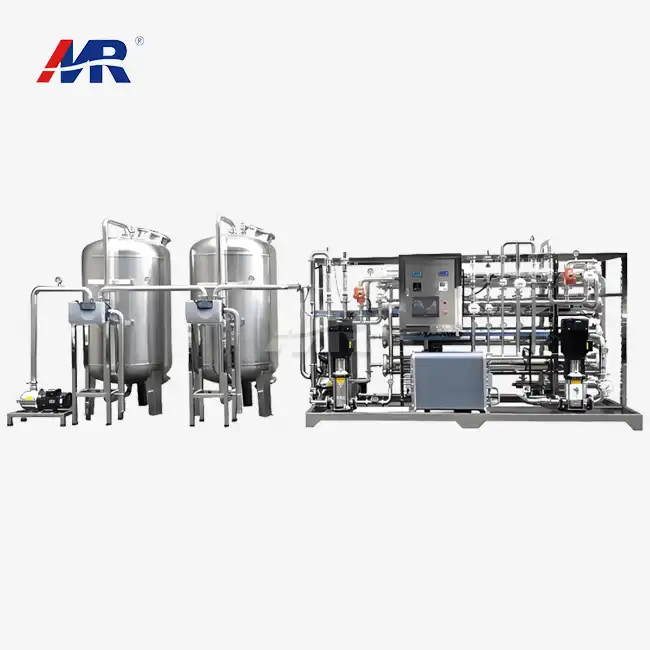
To size an ro edi water system, start with the final product flow you need, then work backward. Divide the RO permeate requirement by the RO recovery rate to find feed flow. Check that feed TDS, hardness, silica, CO₂, and temperature fit the membrane design. Confirm that RO permeate typically stays below 40 µS/cm before it enters the EDI stage. Then add allowances for fouling, cleaning losses, and peak demand. This guide applies that method to 2–50 T/H outputs, so buyers, engineers, distributors, and OEM teams can gather accurate data before requesting a quotation.
Set the Design Basis and Convert Feed TDS Into Capacity
Define What Capacity Means
Before I choose the tools, I ask what the cap number on the order means. What does it mean? It could mean a steady run of Products, high demand during peak hours, daily use, RO permeate, or end EDI product water. The last EDI result is what I use to figure out the size. Then I make changes to the business's hours, storage space, maintenance breaks, and plans for future growth. A plant that needs 10 T/H for 16 hours a day is not the same as one that needs a small tank and is always on. After writing down these ideas at the start, you won't have to use quotes that don't go together.
Build the Feed-Water and Product-Quality Profile
Feed TDS alone can't tell you how big someone is. I'd like a recent lab report with information on TDS, hardness, chlorine, SDI, TOC, silica, CO₂, and seasonal temperature. These numbers show the amount of ionic load that gets to the EDI modules. A scale risk and a fouling risk are also shown. It does not matter what the item is for. Our EDI plant has a resistivity of over 18 M·cm. It's possible for people who work with pharmaceuticals to set limits for these as well. Quartz is something that people who work with electronics keep an eye on. As the temperature changes, so a plan that worked in the summer might not work in the winter.
Convert Feed TDS and Recovery Into Flow
It's easy to understand the formula: If you divide the RO permeate flow by the recovery, you get the RO feed flow. To get 75% of its feed back, a 10 T/H machine needs about 13.3 T/H of feed, and the extra 3.3 T/H is used as concentrate. 50 T/H needs between 66.7 and 71.4 T/H of feed, 25 T/H needs between 33.3 and 35.7 T/H, and 2 T/H needs between 2.7 and 2.9 T/H. These are just rough numbers. It takes more feed because high TDS, hardness, or silica can slow down the recovery. When you're done sizing, you leave some space for the membrane to age and for the temperature to be fixed.
Design the Treatment Train and Match It to the Application
Build the Complete Treatment Train
A dependable ro edi water system is not a collection of separate steps, but a single process. To begin, we treat the material before it goes through reverse osmosis, electrodeionization, final polishing, storage, and distribution. Some of the things that can be done before treatment are dechlorination, softening or antiscalant dosing, security filtration, and filtration. Hardness ions, such as calcium, can hurt ro membranes and EDI concentrate channels, so this step protects both of them. The end resistance goes down when there is a lot of CO₂ in the RO filtrate. A degasser is often put in front of the EDI for this reason. To get the conductivity up to the EDI range, you may need a double-pass RO design if the feed has a lot of salt.
Match Capacity Bands to Operating Needs
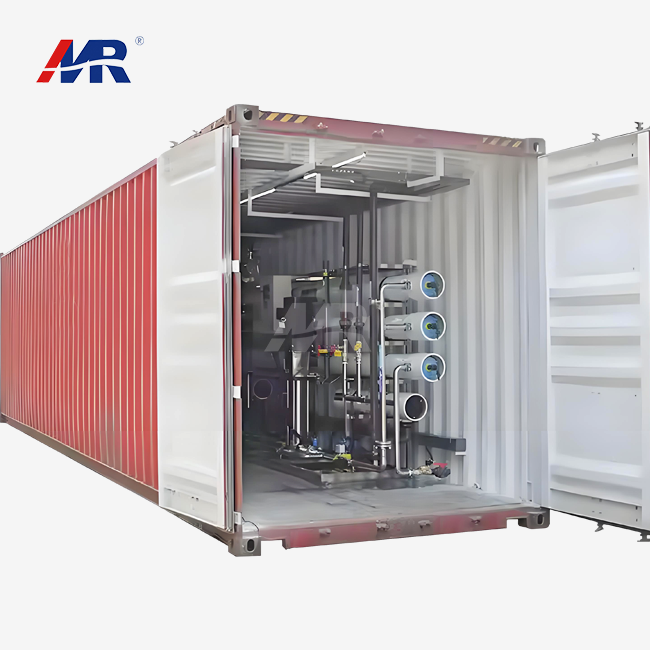
As the output goes up, the layout of the system changes. Small skids, easy operation, and modular expansion are often what plants that make between 2 and 5 T/H want. Around 5 to 25 T/H is what most buyers need. They also need automatic cleaning, backup pumps, and better tracking. Many designs for 25 to 50 T/H use more than one RO train, EDI banks that can be changed, N+1 key equipment, and controls that are centralized. From 1 to 100 m³/h, our edi systems can handle it. Their sizes are based on how much they can handle. The way it is used also changes the shape. Uptime, recovery, and maintenance access are important for power and industrial plants. Clean pipes and validation documents are important for pharmaceutical projects.
Compare RO EDI With Mixed-Bed and Distillation
Check out how much a technology costs to run as well as how much it costs to buy. They use ion exchange membranes, resin, and electric current to get rid of ions in EDI, so it doesn't need to be cleaned with acid or caustic. We use 0.1 kWh/m³ of energy for our processes. Deionization with a mixed bed can still work for small or weird amounts. There may be rules that let distillation happen in the lab or pharmaceutical industry, but it usually takes more energy. Things like electricity, chemicals, membranes, resin or module repair, labor, trash, validation, and downtime need to be compared fairly. I think you should ask each of the suppliers you've chosen how much it will cost over time.
Verify Performance and Avoid Costly Mistakes
Verify Guarantees Under Defined Conditions
If there are no conditions given, a claim of performance doesn't mean much for a ro edi water system. You should ask every provider to give you a list of the EDI product flow, RO permeate quality, resistance, recovery, and salt rejection guarantees for a set of feeds. You should ask for capacity at low, medium, and high amounts because the membrane's output changes with temperature. The control package should keep an eye on the temperature, the level of the tank, the flow, the conductivity, the voltage and current in the EDI, and any alarms. At the factory and site acceptance tests, you should check the flow, the quality of the water, the interlocks, and the training. Our EDI units can fix up to 95% of the damage at 2 to 6 bar. Make sure you know what each number means.
Avoid Common Sizing Mistakes
People keep making the same mistakes in purchase reports. Some people only get their size from TDS. Some people think that the theoretical capacity is the guaranteed output, or they make the EDI too big instead of making the RO percolate better. A lot of the time, people forget to take care of things like power, drainage, floor space, and repair clearance. Sometimes the lowest price doesn't mean it's the best. You may end up spending more on parts, service calls, and downtime. The base on both sides is strong, with a full water analysis and a written operating range. If you want to be sure of the performance, energy use, and documentation, I think you should read the warranty terms carefully.
Check Supplier Capability and Quotation Scope
A good supplier plans the whole RO, EDI, and pretreatment process and can back it up with numbers. Find out about hydraulic formulas, P&IDs, testing, operator training, and the merging of controls. Also, ask about feedwater analysis. The Guangdong Morui Environmental Technology Co., Ltd. has a factory that makes filters and several companies that work on equipment. We offer change pumps, running valves, and Createc tools for sale. There are 20 engineers on Our Team. OEM buyers should look at spare-parts kits, private labeling, and wiring guidelines in their area. Capacity, water quality, recovery, power, scope, guarantee, wait time, and what it doesn't cover are all listed in a full quote.
Plan Installation, Maintenance, and Final Checks
Prepare the Site and Operating Procedure
You won't have to wait for delivery day if you plan your ro edi water system installation well. Look at the floor space, how easy it is to move things around, the drains, the electricity, the airflow, the temperature, and the service clearance. Labs and drug stores should also check their cleanliness standards. It should be written down how to start the pretreatment, the RO system, the permeate checks, the EDI system, the product water release, the normal shutdown, and the emergency shutdown. The conductivity, pressure, flow, recovery, temperature, filter state, and chemical dose should all be written down by the workers at the start of each shift. These records show early trends and give care teams the data they need.
Plan Maintenance and Troubleshooting
Maintenance is affected by how well the pretreatment was done. Ion-exchange resin doesn't last as long as an EDI module. With the right RO cleaning, an EDI module can last three to five years. Even though the EDI can fix itself, the RO membranes still need to be cleaned regularly to get rid of waste fouling and bio-growth. If the flux drops by 10 to 15 percent, it's likely time to clean. I look at the operating data and water quality before I replace parts when the flow slows down or the product conductivity rises. There is a lot of damage that can be caused by scaling, high CO₂, or moving RO trickle.
Use a Final Sizing Checklist
Before I place an order, I look over both business and technical things. The length of time the plant is open, the average and peak demand, the flow of the finished product, the quality of the feed water, recovery, RO feed flow, EDI input quality, storage, temperature range, and growth plans are all on this detailed list. Promised performance, power use, installation scope, insurance, spare parts, acceptance tests, training, and a process flow map and P&ID are all on the business list. To compare suppliers, it is fair for teams that are buying to use a written list. It also finds hidden prices and efficiency problems before any money is spent.
Conclusion
Before you can correctly size a ro edi water system, you need to know what its capacity is, which is usually the end EDI output. You should also do a full feed-water analysis, not just a TDS analysis. The starting feed flow is found by dividing the flow of RO permeate by the flow of recovery. This gives you 13.3 T/H for 10 T/H at 75%. The edges then go over fouling, temperature, and getting old. The EDI modules are kept safe by pretreatment and stable RO permeate. As production gets closer to 50 T/H, plans change from small skids to plants with more than one train. That way, you can get the right size. To do this, you should compare technologies by how much they cost to run overall, look at warranties across a range of temperatures, avoid common mistakes, and plan maintenance and site needs together.
FAQ
Q1: How do I figure out the 10 T/H system's feed flow?
A: Divide the RO recovery rate by 10 T/H. At 75%, the feed flow is about 13.3 T/H. Add extra room for losses due to temperature, fouling, and cleaning.
Q2: If the TDS is higher, does that always mean the system is bigger?
A: No, a higher TDS level makes the ionic load higher, which could slow down RO recovery. Temp, silica, CO₂, hardness, and the quality of the product that needs to be made can also change the final design.
Q3: What kind of RO permeate does EDI need?
A: EDI usually needs RO filtrate conductivity to be less than 40 µS/cm. If the CO₂ level is high, a degasser is often suggested before the EDI stage.
Q4: How do I get a price quote? What do you need?
A: We need to know how much water is needed, what it will be used for, the quality standard, the working hours, the high demand, the site utilities, and how much space is needed.
Request a Custom RO EDI Water System Sizing Proposal From Morui
Getting ready for a project that will use 2–50 T/H? What you tell Morui about the feed water can help them make a process plan, capacity estimate, flow diagram, and price. We are a ro edi water system supplier with 20 experts and our own membrane plant. We develop, build, install, and start up the systems. Send an email to benson@guangdongmorui.com to share your output goal, water analysis, and quality standard.
References
1. United States Pharmacopeia, General Chapter <1231> Water for Pharmaceutical Purposes, 2023
2. ASTM International, D5127 Standard Guide for Ultra-Pure Water Used in the Electronics and Semiconductor Industries, 2013
3. ASTM International, D1193 Standard Specification for Reagent Water, 2006
4. Wood, J., Gifford, J., Arba, J., and Shaw, M., Production of Ultrapure Water by Continuous Electrodeionization, Desalination, 2010
5. Strathmann, H., Electrodialysis, a Mature Technology with a Multitude of New Applications, Desalination, 2010
6. Baker, R., Membrane Technology and Applications, 2012
 VIEW MOREswro desalination plant
 VIEW MOREcontainer reverse osmosis equipment
 VIEW MOREindustrial reverse osmosis membrane
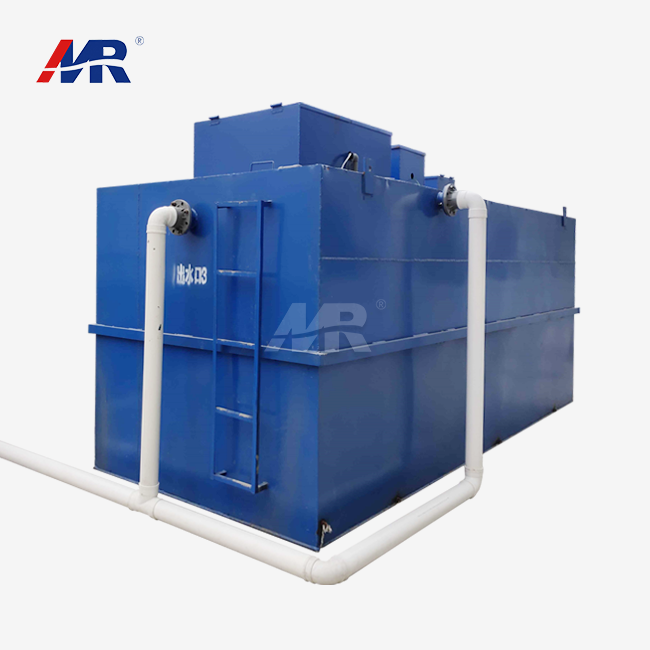 VIEW MOREMBR wastewater treatment plant
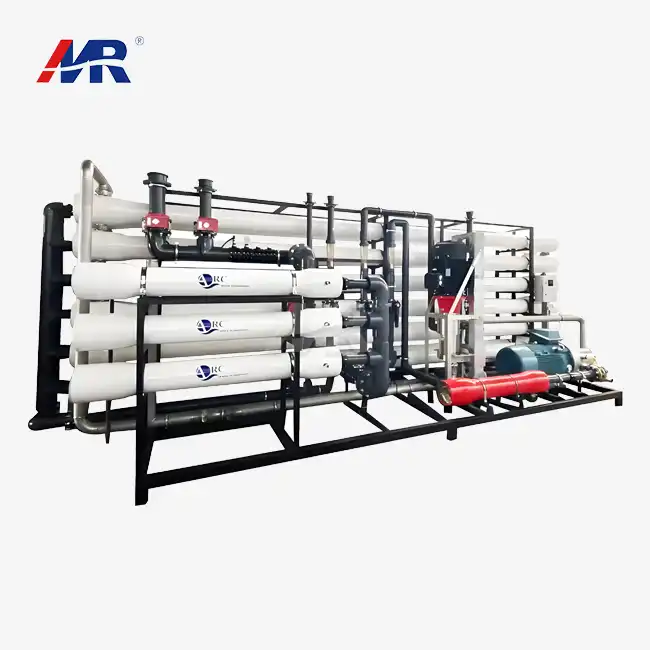 VIEW MORE25m3/hour seawater desalination plant
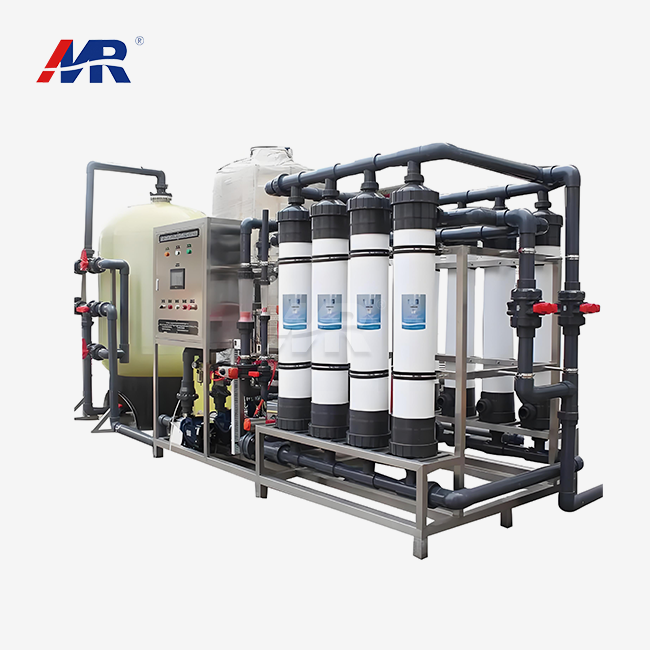 VIEW MOREuf ultrafiltration
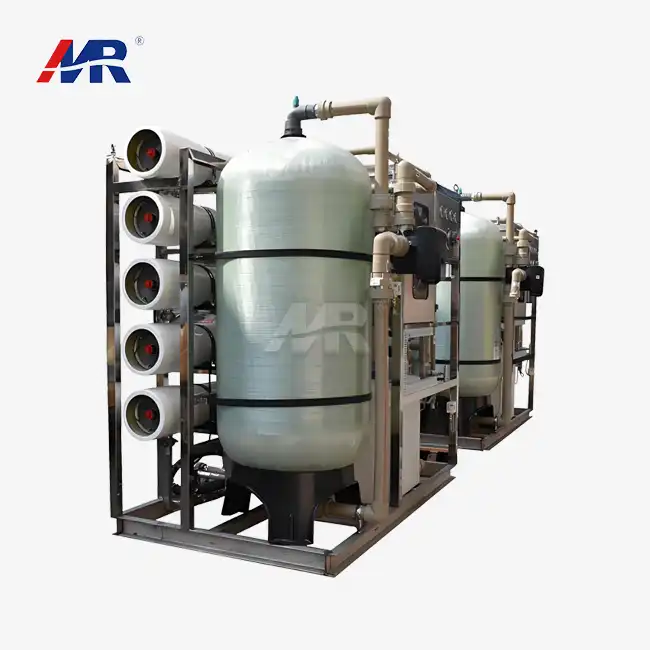 VIEW MORE8m3/hour seawater desalination equipment
 VIEW MOREContainerized Reverse Osmosis Systems