Why Is My Osmosis Drinking Water System Not Producing Water?
Silence at the faucet is the most common complaint I hear. The cause is usually mechanical, not a failed membrane. Work from the supply line toward the tap, because the simplest checks sit at the start of the path.
What Is an Osmosis Drinking Water System?
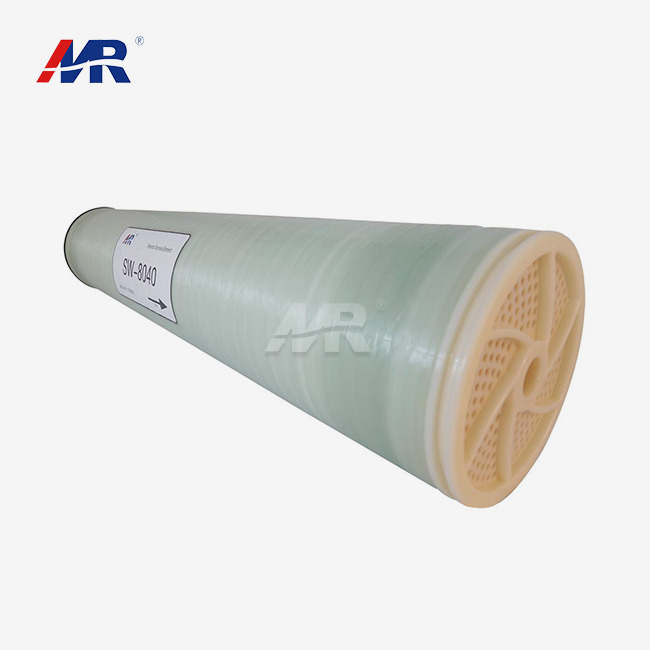
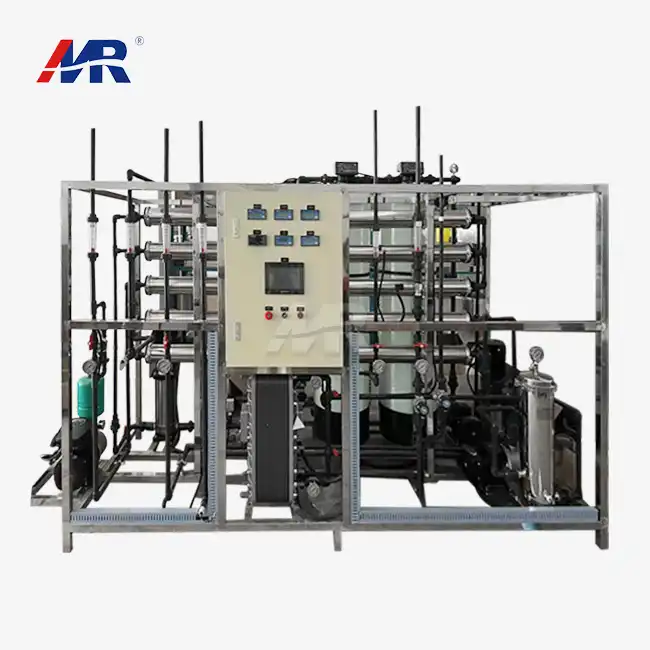
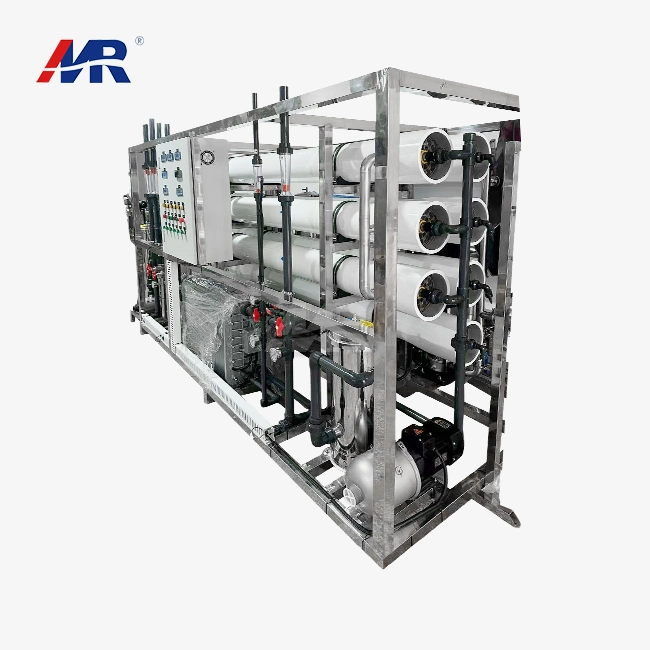
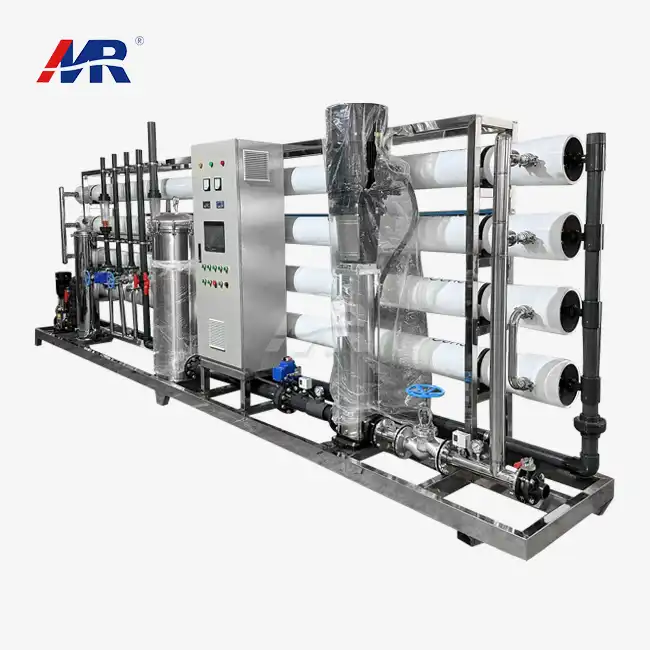
An osmosis drinking water system is a point-of-use treatment system that pushes tap water through a semi-permeable membrane to remove dissolved solids. The essential pieces, according to a Michigan State University Extension Handbook, are a prefilter, ro membrane module, carbon post-filter, storage tank, and valves. Morui’s units come with optional UV sterilization. Our advertised specs are 40,000 GPD and 99% TDS rejection.
Which Fix Matches Your Symptom?
Use the table below to match your symptom to a fix before you open any housing. Start with the cheapest check and move down only when it fails.
| Fix | Symptom | Likely cause | Action |
|---|---|---|---|
| 1 | No water or a trickle | Closed feed or tank valve | Open every valve fully |
| 2 | Slow flow | Clogged pre-filters or post-filter | Replace filters |
| 3 | Slow flow after new filters | Fouled or worn membrane | Replace the membrane |
| 4 | Weak output, low pressure | Feed pressure below 40 PSI | Measure pressure, add a booster pump |
| 5 | Drain runs after the tank is full | Stuck check valve or faulty auto shut-off valve | Free or replace the valve parts |
| 6 | Gurgling or noisy drain | Sagging line or blocked air gap | Reroute the drain line, clear the air gap |
| 7 | Chlorine taste or odor | Spent carbon or dirty tank | Replace carbon filters, sanitize |
| 8 | High TDS in product water | Worn membrane, bad seal, reversed lines | Test TDS, check seating and tubing |
| 9 | Tank fills but delivers little | Low tank air pressure | Recharge to 5-7 PSI |
| 10 | Drips at fittings or housings | Dry or pinched O-rings, loose tubing | Reseat O-rings, re-cut tubing |
Fix 1: Open Every Valve Between the Pipe and the Faucet
Turn on the cold-water supply valve for your osmosis drinking water system. A valve partially closed starves the membrane of pressure and inhibits the osmosis drinking water system from generating water. The troubleshooting method for low output in the Microline T.F.C.-335 service handbook (2007) cites a blocked or closed feed valve as the first item. Then check the shutoff valve on the tank. Open it with the handle parallel to the valve body. Make sure the feed line is cold water only. The same documentation cautions that water above 100°F may permanently harm the membrane. This repair takes 2 minutes and solves more problems than any other.
Why Is the RO System Water Flow Too Slow?
Some delay is to be expected. The Microline handbook (2007) states that it may take five hours or more to fill the tank of an under-sink device. If the level falls suddenly, this indicates a valve or a clogged filter. If you see a steady drop, it means you have fouling or an old membrane.
Fix 2: Replace Clogged Pre-Filters and the Post-Filter
The sediment filter that captures silt, rust, and scale becomes clogged early. The Microline handbook ranks its prefilter at 5 microns and suggests a replacement every six months. Suggests more regular replacements when supply water exceeds 1 ppm chlorine. Most recommendations say six to twelve months, and your water quality dictates where you fall. Change the carbon post-filter during the same visit, since the complete osmosis drinking water system relies on it. A clogged post-filter decreases pressure at the faucet even with a healthy membrane.
Fix 3: Replace a Fouled or Worn Membrane
Didn’t help new filters? Think membranes in your drinking water osmosis system. In the DuPont technical document on FilmTec (2026), the membrane concerns are listed as colloidal fouling, biofouling, organic fouling, and scaling. Each one slows the flow. Home membranes usually endure one to three years, according to Michigan State University Extension. According to the Microline handbook, production might drop by 10% per year or more when the supply water scales or fouls. Measure TDS before you purchase a new membrane, since Fix 8 explains how to validate the diagnosis.
What Causes Low Water Pressure in an Osmosis System?
Weak feed pressure decreases output & weak tank air cuts delivery. DuPont’s handbook states that increasing effective pressure will increase permeate flow and decrease permeate TDS. Michigan State University Extension notes that increasing net pressure will more than quadruple your production. Pressure is a key factor in the performance of an osmosis drinking water system.
Fix 4: Measure Feed Pressure and Add a Booster Pump if Needed
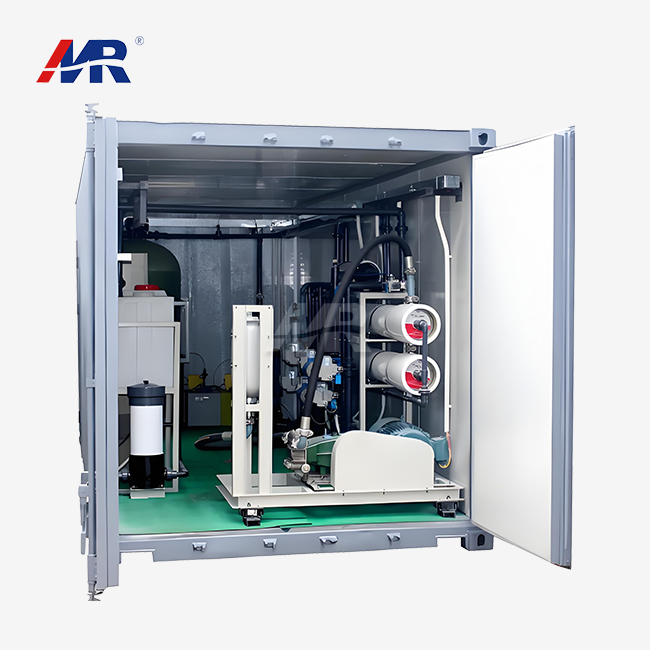
Screw a pressure gauge onto a hose bib or washing machine tap and read the static pressure. The Microline documentation specifies a minimum of 40 PSI with a suggested range of 40-100 PSI. Below 40 PSI, use a booster pump. If you have a pressure above 100 PSI, ask your installer about a pressure regulator. Morui is rated for a working pressure of 150-220psi. That range requires a high-pressure pump; thus, pump health is added to the checklist on our bigger systems. The limitations are compared in Table 2.
| Parameter | Typical home unit limit (Microline, 2007) | Morui system or note |
|---|---|---|
| Feed pressure | 40-100 PSI | 150-220 PSI operating pressure, with a high-pressure pump |
| Feed temperature | 40°F-100°F | 40°F-100°F (4°C-38°C) |
| Free chlorine | Damages the membrane; carbon prefilter removes it | Carbon filtration stage protects the membrane; DuPont lists membrane tolerance below 0.1 ppm |
Why Does Cold Weather Cut Output?
Water viscosity rises as temperature falls, so the membrane passes less water. Michigan State University Extension reports that a drop from 75°F to 45°F nearly halves production. Winter slowness is physics, not a fault. Keep the unit away from freezing walls and direct sunlight.
Why Does an Osmosis System Keep Draining Water?
An osmosis drinking water system generates water. Drain flow is regular. According to the Microline handbook, the drain flow is three to five times the product flow. Michigan State University Extension says 50-90% of entering water is wastewater. The warning indicator is a trickle once the tank of your osmosis drinking water system is filled.
Fix 5: Test the Check Valve and the Auto Shut-Off Valve
The auto shut-off valve recognizes a full tank and stops the supply. A stuck check valve or worn shut-off diaphragm will allow water flow to drain. Close the feed valve, release the pressure, and remove the valve parts from the osmosis drinking water system. Free a frozen check valve. Replace a broken diaphragm or piston ring. Both portions are in the guide to the Microline handbook. A failed shutoff valve also boosts product TDS, so you kill two birds with one stone.
Fix 6: Quiet a Gurgling Drain Line
An air or sagging line is gurgling. The Microline handbook states that the drain tubing should be without sag, with the lowest point at the drain clamp. Place the clamp over the P-trap. Never install the line near a dishwasher or trash disposal, as back-pressure may cause the air gap to overflow. If water spills from the faucet, clear the air gap and clean it with vinegar to eliminate the calcium build-up. After the repair is done, run the faucet for 1-2 minutes.
What Causes Bad Taste or Odor in RO Drinking Water?
There are four main causes of bad taste in an osmotic water drinking system. Dissolved gases. Reversed product and drain lines. Exhausted carbon. Foreign substance in tank. The rotten-egg smell means that there’s sulfur gas that has to be pretreated before the membrane.
Fix 7: Replace Carbon Filters and Sanitize the System
Change the carbon pre-filter and post-filter. Sanitize the osmosis drinking water system. The Microline documentation suggests using unscented 5.25% household bleach, with 1 capful (approximately 10 milliliters) in each empty housing. Let it stand for 15 minutes with the feed open. Empty the tank, put in new filters, and discard the first three tanks of water. The new post-filter will have air and fine carbon powder coming out. Only sanitize before installing the filters and membrane. Do not use bleach to treat microbiologically hazardous water without sufficient disinfection.
Fix 8: Test TDS and Check Membrane Seating
Check your osmosis drinking water system's membrane using a TDS meter to see whether it is still working. TDS reduction is also a needed performance test for household RO systems, as included in the NSF/ANSI 58 summary from NSF International. Measure feed and product water and compute rejection as 1 minus product TDS divided by feed TDS times 100. 95% produces a feed of 400 ppm and a product of 20 ppm. Morui has a published 99% rejection. If your score is much lower, examine these 3 things. Ensure the membrane O-rings are pointing up toward the manifold. Check that product and drain lines are not crossed. Check the brine seal.
Is Milky or Cloudy Water Dangerous?
Not usually. Fresh RO water appears milky because of tiny air bubbles. Pour a glass and wait 1 minute. If the cloudiness clears from the bottom upward, it was air. If it remains foggy, test the water.
Why Is the Osmosis Storage Tank Not Filling Properly?
Michigan State University Extension notes that production and rejection fall as the tank fills, because stored water pushes back on the membrane. Empty the tank daily and size it to your real water use.
Fix 9: Recharge the Tank Air Pressure
Shut the feed valve and open the faucet to drain your osmosis drinking water system tank. Check the air valve with a low-range gauge. The Microline instructions instruct you to precharge an empty tank to 5 to 7 PSI. Use a bicycle pump to pump air in until you are in that range. A burst bladder is probably the cause of a tank that feels heavy when empty. Switch it. Before you blame the pressure, make sure the tank shut-off valve is completely open.
How Do You Fix an Osmosis System That Is Leaking?
Most leaks come from loose fittings, pinched tubing, and dry O-rings. Turn off the feed valve and relieve pressure before you touch any tubing, as the Microline manual directs.
Fix 10: Reseat O-Rings and Re-Cut Tubing
Remove the housing of the osmosis drinking water system that is leaking and examine its O-ring. Fully seat it in the groove. Add food-grade silicone lube and tighten the housing by hand only. If the tube fitting is leaking, cut the tube square and push it in beyond the O-ring. This process is suggested in the Microline instructions prior to changing any fitting. If pipe threads leak, disassemble and retape using Teflon tape. Cracked housings need to be replaced.
When Should You Call a Professional?
For manifold leaks, damaged housings, and any pump or high-pressure line on your osmosis drinking water system,call a specialist. Morui provides a single point of contact for installation and commissioning, and our professionals can detect most errors with a picture and a TDS measurement.
When Should You Replace RO Filters and Membranes?
Replace parts of your osmosis drinking water system by schedule, not by guesswork. Michigan State University Extension calls the difficulty of knowing when to replace parts a major disadvantage of home treatment. A written schedule and a monthly TDS reading solve most of that problem. Table 3 shows common intervals.
| Component | Typical interval | Replace sooner when |
|---|---|---|
| Sediment and carbon prefilters | 6 to 12 months | Feed water holds over 1 ppm chlorine, or silt is heavy |
| Carbon post-filter | 6 to 12 months | Taste or odor returns |
| RO membrane | 1 to 3 years (Michigan State University Extension); about 3 years (Microline) | Rejection drops, or flow falls even with fresh filters |
| Housing O-rings | Inspect at every filter change | Rings look dry, flat, or pinched |
| Storage tank | Sanitize at every filter change | Odor persists after sanitizing |
What Should You Test After Every Repair?
Test product water after any repairs. Residents who are still worried may pursue in-home treatment approved for the toxin, according to the EPA’s 2024 PFAS information page. The WHO Guidelines for Drinking-water Quality (2022) are based on regular monitoring, and the same practice is followed at home. DuPont’s handbook (2026) likewise focuses on record-keeping, because patterns show issues before breakdowns. Use replacement components that are of the original specification to maintain the validity of NSF/ANSI 58 claims.
Conclusion
Most difficulties with an osmosis drinking water system are from valves, filters, pressure, or air. The 10 remedies mentioned will solve the great majority of situations at home. Open valves, replace filters on time, measure pressure, recharge the tank to 5- 7 PSI, test TDS monthly, and monitor rejection. Change membrane as rejection lowers.
Pump failures, manifold leaks, and inexplicably high TDS need a pro. Morui constructs and maintains each reverse osmosis drinking water system from membrane to commissioning.
FAQ
1. How long should an osmosis drinking water system take to fill its tank?
Under-sink units are slow by design. The Microline manual says filling can take five hours or more. If fill time keeps growing, check pressure, filters, and the membrane in that order.
2. Can I fix a leaking RO system myself?
Often yes. Recut tubing, reseat O-rings, and retape threaded joints. Always close the feed valve and relieve pressure before you disconnect anything. Cracked housings, manifold leaks, and high-pressure pump leaks need a professional. Contact Morui at benson@guangdongmorui.com with photos if you are unsure.
3. Why is my TDS reading high right after a filter change?
The Microline manual says TDS runs higher during the initial five gallons because of sanitizing solution and the new post-filter. Flush and retest. If TDS stays high, check membrane seating, O-rings, and the brine seal.
4. How much wastewater is normal?
It varies by design and pressure. Michigan State University Extension reports 50 to 90 percent of incoming water for typical home systems. NSF/ANSI 58 tests efficiency and recovery ratings, so ask your supplier for those figures in writing.
Need Help Diagnosing Your Osmosis Drinking Water System? Talk to Morui's Engineers
Send us your symptoms, TDS readings, and system photos, and we will point you to the right fix. Guangdong Morui Environmental Technology Co., Ltd. supplies each osmosis drinking water system with installation support. We also act as an agent for Shimge pumps, Runxin valves, and Createc instruments. Email benson@guangdongmorui.com. Morui is an osmosis drinking water system manufacturer with 14+ branches and 20 engineers. We can also quote replacements.
References
1. Microline (2007). R.O. Drinking Water System, Model T.F.C.-335: Installation, Operation and Service Manual. Used in: Fixes 1, 2, 3, 4, 5, 6, 7, 8, 9, and 10, and the symptom table, tank, and drain sections. https://cdn.shopify.com/s/files/1/0483/0812/5863/files/TFC335MAN.pdf
2. Michigan State University Extension, Center for Environmental Toxicology (undated, USDA-supported). Reverse Osmosis for Home Treatment of Drinking Water. Used in: the definition, pressure, temperature, wastewater, tank, and replacement sections. https://baycountymi.gov/Docs/CitizenCorps/ReverseOsmosisForHomeTreatmentOfDrinkingWater.pdf
3. DuPont Water Solutions (2026). FilmTec Reverse Osmosis Membranes Technical Manual, Version 20. Used in: Fix 3, the pressure section, Table 2, and the record-keeping advice in the testing section. https://www.dupont.com/content/dam/water/amer/us/en/water/public/documents/en/RO-NF-FilmTec-Manual-45-D01504-en.pdf
4. NSF International (current edition). NSF/ANSI 58: Reverse Osmosis Drinking Water Treatment Systems. Used in: Fix 8, the testing section, and the FAQ on wastewater. https://www.nsf.org/ca/en/knowledge-library/nsf-ansi-58-reverse-osmosis-drinking-water-treatment-systems
5. US Environmental Protection Agency (2024). PFAS National Primary Drinking Water Regulation: Fact Sheet. Used in: the section on testing after repairs. https://www.epa.gov/system/files/documents/2024-04/pfas-npdwr_fact-sheet_general_4.9.24v1.pdf
6. World Health Organization (2022). Guidelines for Drinking-water Quality: Fourth Edition Incorporating Addenda. Used in: the section on testing after repairs. https://www.who.int/publications/i/item/9789240045064
About the author: Shihai Su is a Senior Water Treatment Process Engineer at Guangdong Morui Environmental Technology Co., Ltd. He designs and troubleshoots reverse osmosis systems, from kitchen units to large-capacity plants. His work covers pretreatment design, pressure and recovery tuning, membrane diagnosis, and maintenance planning. He follows NSF/ANSI 58 and manufacturer technical manuals. He advises owners to back every repair decision with a TDS reading and a written service log.