8 Stage Reverse Osmosis System: What Does Each Stage Do?
An 8 stage reverse osmosis system treats water in a set order, and each stage has one job. In a typical layout, the first three stages remove particles, chlorine, and scale-forming minerals so the membrane stays protected. A cartridge filter and a high-pressure pump then prepare the feed. The membrane separates dissolved salts, and the last two stages adjust pH and disinfect the product water. No industry standard defines eight stages, so the exact order depends on your raw water. Below, I explain each stage and show how it applies to the Morui MR-BWRO-10TH.

The Eight Stages, Step by Step
Stages 1–3: Protecting the Membrane
It's the membrane that costs the most and doesn't like dirt, so I start by getting it ready. Most of the time, a sand or multimedia filter is used first to get rid of any solids in the fluid. The second step is to use a filter with activated carbon. It gets rid of chlorine, which is bad for polyamide membranes, as well as some chemical molecules and smells. If you want to know more about antiscalant doses, the third step is softening. Salty groundwater often has calcium, magnesium, and sand in it. They form scale when the water inside the barrier gets more concentrated. The answer you choose will depend on your lab report. The barrier will last less long if you don't follow these steps.
Stages 4–6: Cartridge Filter, Pump, and Membrane
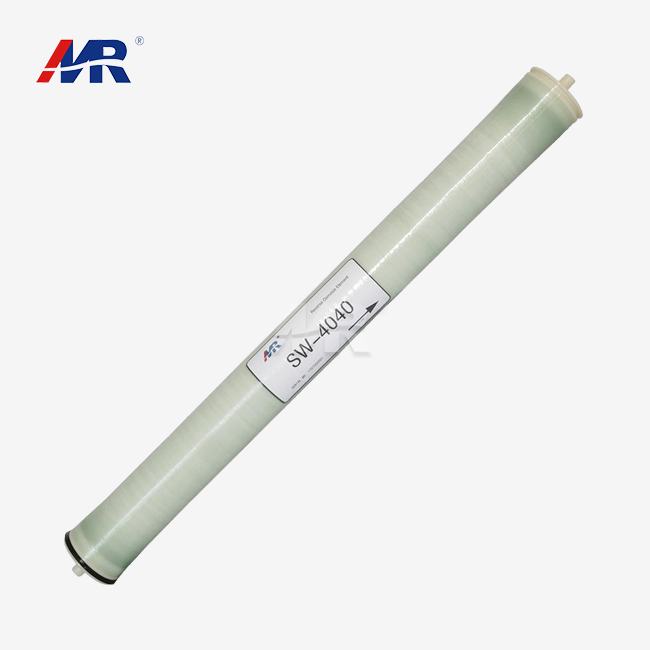
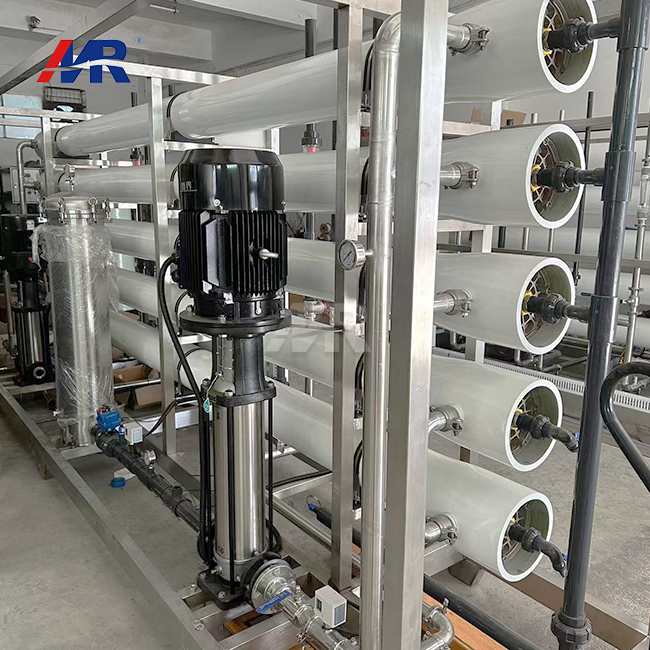
Part 4 is a security capsule filter, which generally has a size range of 1 to 5 microns. Anyone who gets through gets sent to this last line of defense before the pump. The fifth stage is the high-pressure pump. A lot of force needs to be put on brackish water to get it through the membrane against the pull of osmosis. A lot of the plant's power goes to the pump. The MR-BWRO-10TH says it needs 15 kW of power. The sixth step is the ro membrane. Water moves through it, but most of the salts that have been broken down stay behind. It is said that this type can get rid of 98% of salt and keep 55% to 65% of it.
Stages 7–8: Post-Treatment and Disinfection
Because carbon dioxide is broken down and passed through the membrane, RO water may be slightly acidic and not have many minerals. The pH is adjusted, and minerals are added back if needed in the seventh stage. The water tastes better, and the pipes are safer this way. The eighth step is to clean, which is usually done with chlorine or ultraviolet light. This keeps the water from running out while it's being moved and stored. Usually, this last barrier is needed to make water safe to drink. Since UV lights lose their power over time, you need to get new ones every few hours of use. When my clients hire me to clean, I always ask what kind of cleaning the tester wants.
What Your System Removes and What It Does Not
Dissolved Salts and Common Contaminants
It mostly works on salts that have been dissolved. A feed of 2,000 mg/L TDS would make about 40 mg/L in the product water if it was rejected 98% of the time. That being said, the real results depend on the feed's chemistry, temperature, and pressure. As background, 500 mg/L is the second level of TDS set by the U.S. EPA. I'm only suggesting this because I like the way the water looks and tastes. It has nothing to do with health. A lot of heavy metals and ions are also lowered by RO. These include sodium, chloride, sulfate, nitrate, and fluoride. An 8 stage reverse osmosis system can help reduce these contaminants, but the only way to be sure of the results is to test the product water in a lab. This is because rejection rates depend on the type of contamination.
Limits That Need Extra Treatment
Every RO plant can't do everything. Some gases that are dissolved, like hydrogen sulfide, get through the barrier and make the water smell bad. In order to get rid of them, they must first be oxygenated. Manganese and iron are bad for membranes, so they need to be reduced and removed before they reach the membranes. It's time to soften or lower things that are too hard. Radon needs to be dealt with in a certain way, and some small organic molecules and volatile compounds can get through. That's why I need a full study of the raw water before I give a stage order. Not the number of stages, but data from the lab should be used to prove removal.
How It Compares With 5-, 6-, and 7-Stage Systems
Most of the time, the stage count tells you how much medicine is around the membrane. Filtration, carbon, and the barrier are the five simple steps in the system. When the water is steady and low in salt, this can work well. Changes are made to the pH or minerals are added in six- and seven-stage designs. An 8-stage reverse osmosis system cleans or disinfects the water on top of that. Adding another stage won't help if your water or regulator already needs it. Each one needs more care, costs more, and takes up more room. Also, getting better is important. To get rid of 35–45% of the feed as concentrate, a plant needs to collect 55–65% of it. Find out how to do it at your place.
Choosing, Installing, and Maintaining Your RO Plant
Match the Design to Your Water Source
Start with the water report. Most of the time, TDS needs to be lowered, and chlorine needs to be taken out of municipal feed. When well water is salty, its hardness, iron, or silica may need to be controlled. List the daily demand, the high flow, and the end use, such as whether the water will be drunk or put in bottles. The MR-BWRO-10TH is ready to make drinking water because it rejects 98% of the water and recovers 55–65% of it. When you compare quotes, don't just look at price. Also look at pump data, recovery, power use, extra parts, and the guarantee. Filters, pills, energy, service, and getting rid of the concentrate are also part of the total price.
Installation Basics for Skid-Mounted Systems
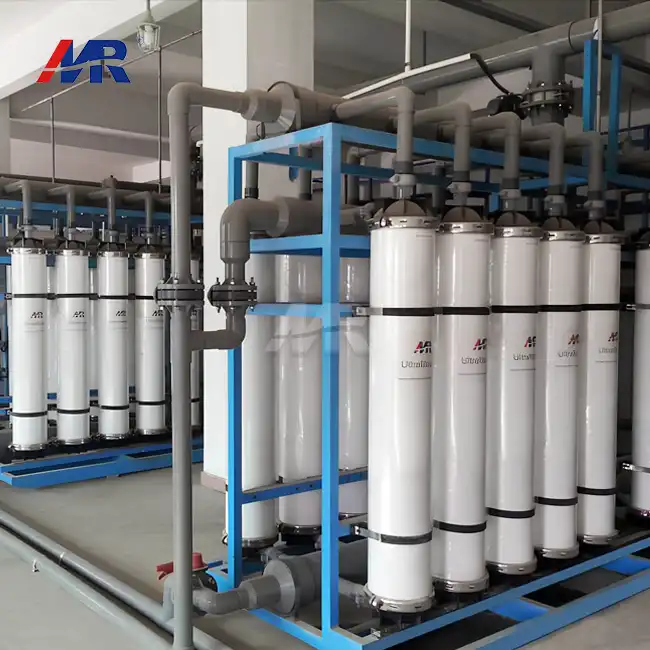
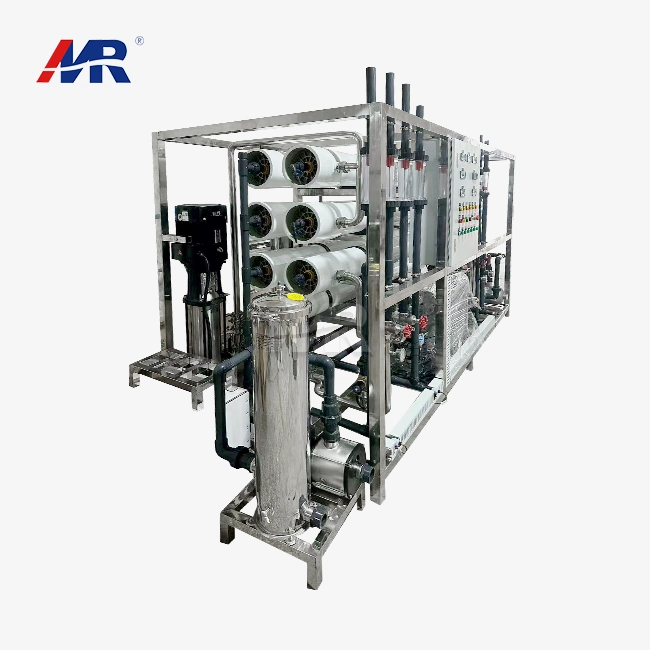
Setting up a skid-mounted 8 stage reverse osmosis system is faster because the main pipes and frame are already put together when it gets there. You still need a steady feed, a way for the concentrate to drain, a power connection that can handle the 15 kW load, and room to change cartridges and pull membranes in order to keep the machine running. Usually, the steps are to put the skid down, connect the feed, product, and drain lines, check the electrical work, flush the new cartridges, and slowly raise the pressure while starting at low pressure. Check the product's flow, pressure, and TDS at the end. Morui can help with setting up and starting up.
Maintenance and Troubleshooting
Trouble can be found early if you keep good records. Write down the feed pressure, flow rate, and TDS every day. Most of the time, a drop in flow or a rise in TDS means that the membrane is scaling, fouling, or old. Cartridge filters need to be changed most of the time when the flow rate slows down. When output goes down, membranes are cleaned. If washing doesn't make them work again, they are replaced. UV lights change after a certain amount of time, even if they still glow. For low pressure, it's most likely a worn pump or a cartridge that's clogged. If the TDS level is high, it could mean that the seals are broken. If you can't figure out what's wrong with your checks, call your supplier's tech support.
Sourcing Plants for Wholesale, OEM, and Project Work
Standard Units or Custom Design
Most of the time, agencies and wholesale buyers want a fixed design with clear limits, wait time, stock status, and guarantee terms. With 15 kW of power, the MR-BWRO-10TH is a good place to start. It can use potable water, recover 55–65% of it, and reject 98%. A water report is usually brought by people who want to buy a project. They need a different pretreatment, recovery goal, or membrane stage. A plant can change the shape to fit if it makes its own walls and works on its own tools. This is important because "eight stages" can mean different things to different suppliers. Make sure you get the exact stage list and bill of materials from each one.
What Morui Can Adjust for OEM and ODM
Along with its own membrane factory and equipment processing plants, Morui has had 500 employees over the past 25 years, 20 of whom are engineers. It also has 14 branch companies. We tell you what parts and steps to take for OEM and ODM work to do based on the quality of your raw water. We can also finish a unit based on a plan you give us. Pumps, controls, instruments, pipe materials, and online tracking can be added or taken away at any time. We also sell CNC tools, Shimge pumps, and Runxin valves. Private-label logos and connections with boxes or containers are possible if asked for.
Documents US Buyers Should Request
Forms are often more important than price when people in the US buy something. Ask for a written technical plan, reports on tests done on goods and water, details on how much energy is used, and a list of Products that have been wet. In the US, many projects also need approvals for power (like UL for control screens) and water (like NSF/ANSI 61 for system parts). Find out the rules in your area before you place your order. Rules vary by state and project. First, Morui can talk about regional papers, samples, pilot tests, and NDAs, which stand for "non-disclosure agreements." If you send us your water report early, we'll get back to you faster.
Conclusion
An 8 stage reverse osmosis system works because each stage protects or completes the membrane. Filtration, carbon, and scale control keep it free of particles, chlorine, and hardness. The pump and membrane remove a lot of the salts that have been dissolved. The MR-BWRO-10TH is said to reject 98% of salts and recover 55–65% of them. The last steps clean the water and change the pH. Another study in the lab showed that RO doesn't always solve issues. Because of this, gases, iron, and very high hardness need to be handled before they reach the RO. The number of stages doesn't tell you much by itself. How well it fits with the water source, how it recovers water, how much energy it uses, how it is maintained, and how well it is written down are more important. Every step in a sound design has a clear goal.
FAQ
1. Is there a standard list of eight stages?
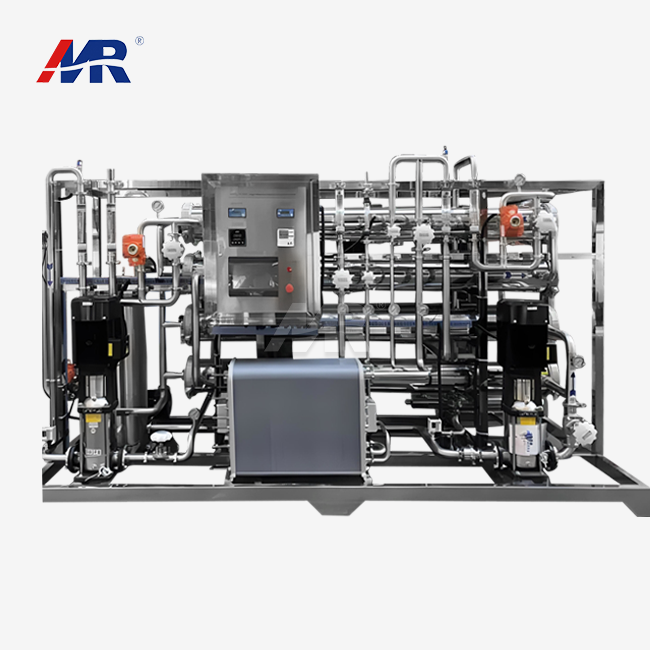
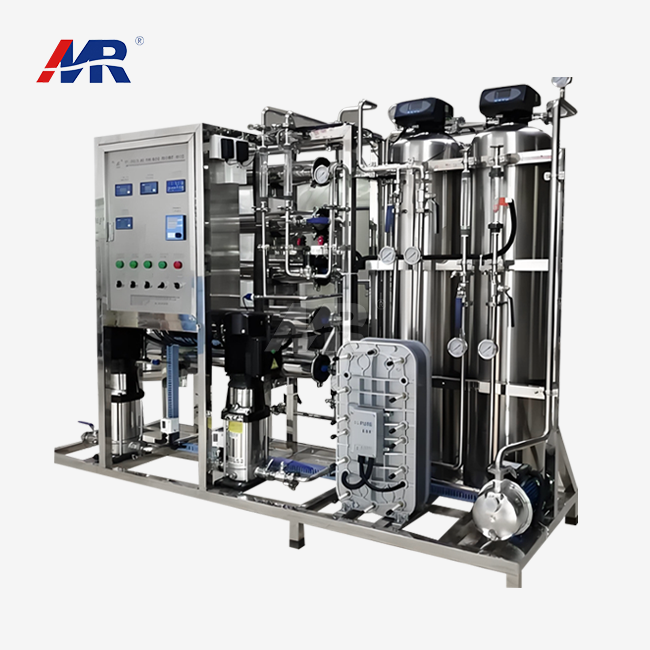
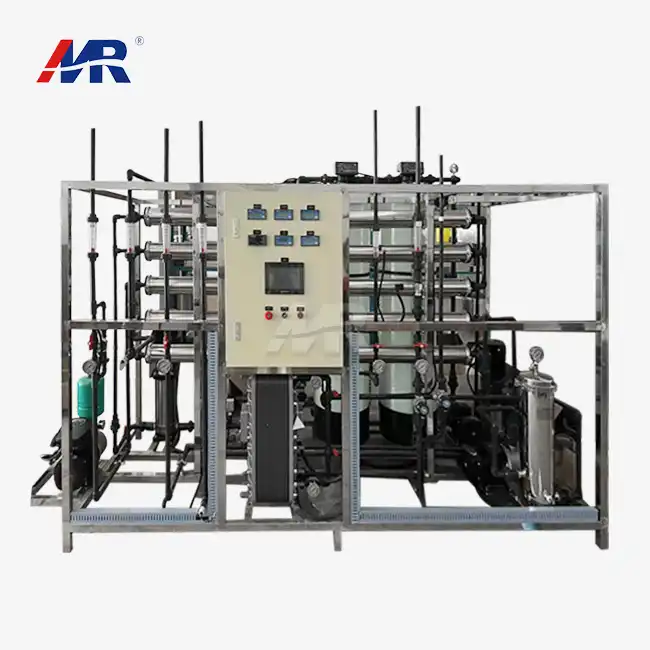
Not at all. The order changes based on the water brand and source. The building shown above is just an example; the exact MR-BWRO-10TH design will depend on the report of your raw water.
2. Does an 8-stage system waste more water than a simpler one?
Not by itself. Once the membrane heals, water starts to leak out. It is said that the 8-stage reverse osmosis system can collect 55–65% of the feed, which means that 35–45% of it goes to the concentrate.
3. How often should I change parts?
This depends on how good, fast, and strong the feed is. The UV lamps have set hours, and the cartridges need to be changed most often. The membranes, on the other hand, last longer. Do what the maker tells you to do and keep an eye on the TDS and pressure drop.
4. Can it treat any well water?
First, you have to try. Iron, manganese, hydrogen sulfide, and very high hardness all need to be treated upstream. Once you send us a lab report, our engineers will help you pick the best pretreatment.
Request Your 8 Stage Reverse Osmosis System Quote From Morui
Are you looking for a manufacturer of an 8 stage reverse osmosis system who can handle the design, manufacturing, and installation? If you need help with your water report, flow goal, or safety needs, Morui can make its own RO skids. A plan and price quote for the MR-BWRO-10TH can be sent to benson@guangdongmorui.com by email.
References
1. Water Treatment Plant Design, American Water Works Association and American Society of Civil Engineers, 2012
2. Membrane Technology and Applications, Richard W. Baker, 2012
3. MWH's Water Treatment: Principles and Design, John C. Crittenden et al., 2012
4. Desalination: Water from Water, Jane Kucera, 2014
5. Basic Ground-Water Hydrology, U.S. Geological Survey, 1983
6. Membrane Filtration Guidance Manual, U.S. Environmental Protection Agency, 2005