How to Select a 50m3/hour Ultrafiltration Plant for Water Reuse Projects?
Managing a water reuse project? Buy the correct 50m3/hour ultrafiltration plant system, and your pre-treatment will operate quietly for a decade or become a continual maintenance expense. This article details feed-water testing, recovery objectives, pretreatment design, automation options, and supplier inspections that are critical before you sign a purchase order. You will also see genuine project data from installations in Asia and Africa so you can evaluate claims against actual field performance, not just brochure figures.
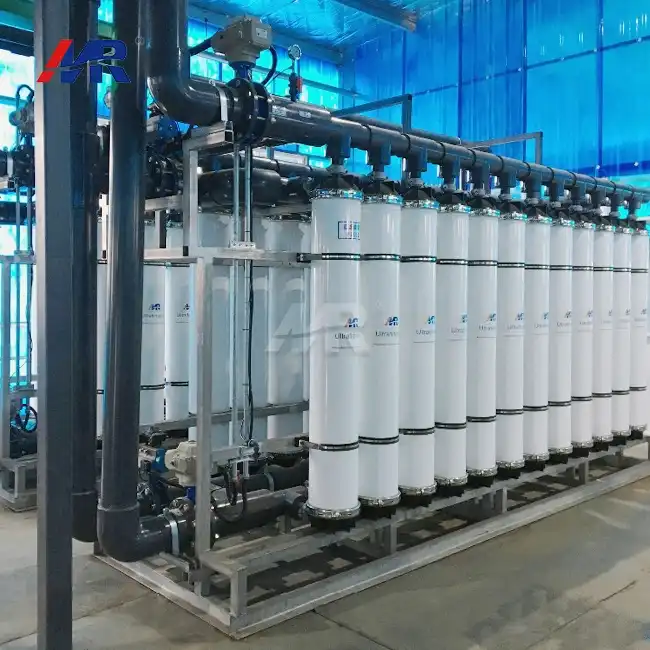
What Is a 50m3/hour Ultrafiltration Plant and Which Water Sources Fit It?
The membranes in a 50m3/hour ultrafiltration plant can clean up to 50 cubic meters of water every hour if it is set up to do its job. That number changes all the time. It changes based on the temperature of the feed, the dirt, and how often it is cleaned. A lot of the time, buyers get the base number and the guaranteed daily output mixed up. This is where most disagreements happen after installation.
Defining Capacity: Nominal Flow vs Peak vs Daily Output
The nominal flow is the permeate rate that is anticipated at a reference temperature, which is typically 20 °C to 25 °C. For instance, in a community, when the water system is heavily utilized in the morning, demand is above the norm for a brief period of time. This is known as peak flow. The average daily capacity takes into consideration the time for cleaning, the time for backwashing, and the variation in turbidity across the seasons. If the UF plant does not have a flux adjustment built in, it may only be able to handle 40 to 43 m3/h of cold surface water. It has a 50 m³/h capacity at 25°C.
Suitable Water Sources for This Capacity
It can handle a lot of different types of feed at this flow rate. These are the sources we see most often when we work in the field:
- Secondary municipal wastewater after biological treatment, used for landscape irrigation or industrial reuse once clarified.
- Surface water and reservoir intake for village or small-town drinking water upgrades, common across Southeast Asia and parts of Africa.
- Industrial process wastewater after settling or flotation, feeding into a cooling tower or process line.
- Food and beverage rinse water needing turbidity and bacteria removal before reuse or discharge.
- Seawater intake as a pretreatment stage ahead of reverse osmosis desalination trains.
—treated biological wastewater from towns that is used to water gardens or companies after it has been cleaned up.
—Taking water from the surface and from reservoirs to make drinking water better in small towns and villages. Southeast Asia and some parts of Africa do this all the time.
When UF Alone Is Not Enough
Ultrafiltration is not a way to remove salt from water; it is a barrier. We often need reverse osmosis or ion exchange after the UF stage because the water has a lot of hardness, conductivity, or nitrate. Solvents, free oil, or pH levels that are too high or too low can damage hollow-fiber membranes in a way that can't be fixed. Most of the time, chemicals or living things are used to treat raw sewage or highly mixed industrial wastewater before it gets to the UF skid.
What Feed Water Quality Does a 50m3/hour Ultrafiltration Plant Need?
The first thing that a good quote always has is a feed-water data sheet, not a price list. If you don't do this step, suppliers will guess how often you foul.
Feed-Water Data Sheet and Key Parameters
| Parameter | Why It Matters | Required Project Action |
|---|---|---|
| Turbidity and TSS | Drives fouling rate and pretreatment load | Confirm normal and peak values from lab tests |
| SDI (silt density index) | Predicts membrane fouling tendency | Test before finalizing membrane area |
| pH and temperature | Affects membrane integrity and flux output | Specify the design range in writing |
| Oil and grease | Causes irreversible fouling on PVDF fibers | Add flotation or oil separation upstream |
| Iron and manganese | Oxidizes and deposits inside membrane pores | Add oxidation or removal step |
| Microbiology | Set disinfection and cleaning schedule | Define the reuse water-quality target |
| Conductivity and TDS | UF does not remove dissolved salts | Add RO if salt removal is required |
| Free chlorine or oxidants | Compatibility depends on membrane material | Confirm the supplier's chemical tolerance limit |
Setting Design Margins and Temperature Basis
Talk to your provider about the minimum, average, maximum, and yearly feed amounts. Temperature changes membrane flow in a direct way. Since colder water is denser, the same pressure makes less permeate. The reference temperature should be written on the paper, not in a footnote, as long as the 50m3/hour ultrafiltration plant is built correctly.
Required Feed-Water Testing Before Quotation
Not after a deposit is made, but before a quote is given, lab tests should be done. Jar testing is needed when coagulant dosing is being considered. Pilot testing is also recommended for wastewater streams that are unstable or hard to handle. Not only should the terms of acceptance for sediment, SDI, flow, and recovery be talked over, but they should also be written down in the contract.
How Does a 50m3/hour Ultrafiltration Plant Compare With Conventional Filtration?
Engineers often ask if multimedia filters or container filters can be used instead of membrane treatment. No, but every technology has its place.
UF vs Multimedia and Cartridge Filters
| Criterion | UF Plant | Multimedia Filter | Cartridge Filter |
|---|---|---|---|
| Separation method | Membrane pore exclusion | Depth filtration through media | Surface or depth filtration |
| Suspended-solids removal | High and consistent | Moderate, depends on loading | High for rated particle size |
| Microbial barrier | Strong, physical exclusion | Limited | Limited to rated size only |
| Dissolved-salt removal | Minimal | Minimal | Minimal |
| Automation potential | High | Medium to high | Medium |
| Typical role | RO pretreatment, final clarification | Bulk solids reduction | Protective final filtration |
UF vs Reverse Osmosis
50m3/hour ultrafiltration plant removes colloids, bacteria, many viruses, and surface-floating particles, since the pores are very tiny. This approach employs a thick membrane layer to remove dissolved salts and a wider variety of dissolved pollutants. In most commercial and city reuse trains, UF is used before RO as it keeps the ro membranes clean, extending the time between cleanings. Based on the service records of municipal and corporate customers, operating RO on unclean feed water without UF pretreatment generally reduces the RO membrane's life in half within two years.
Choosing Membrane Material and Configuration
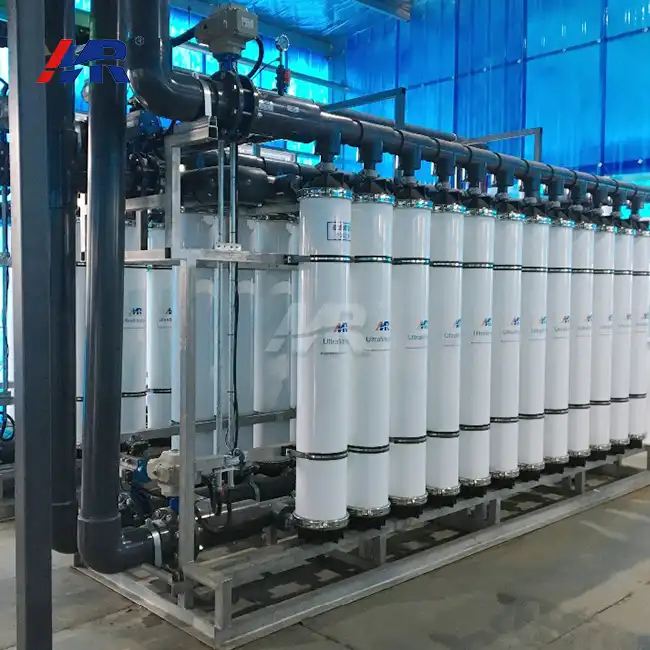
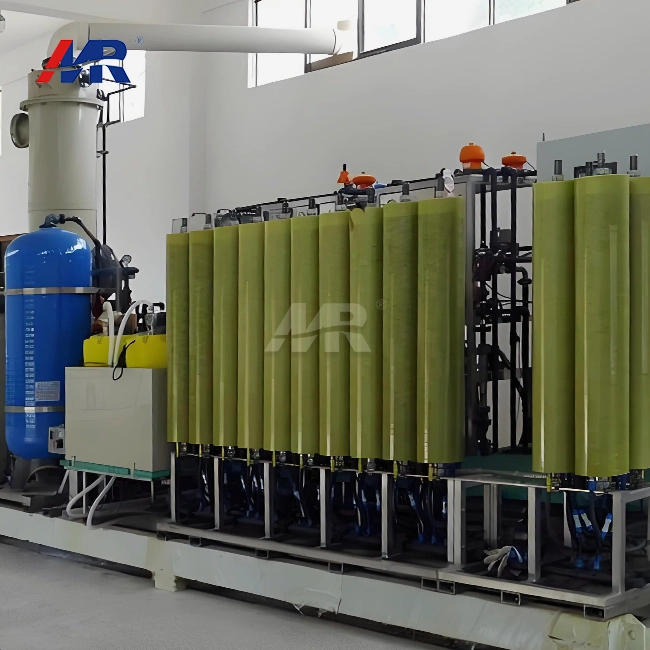
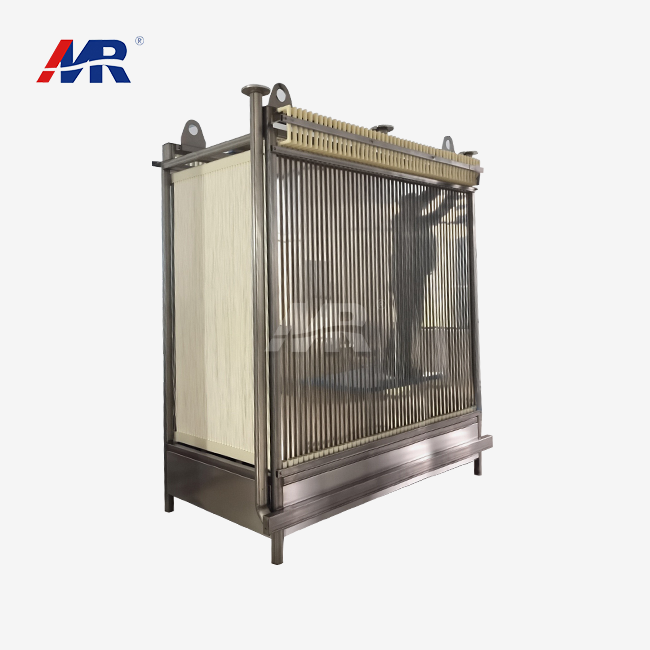
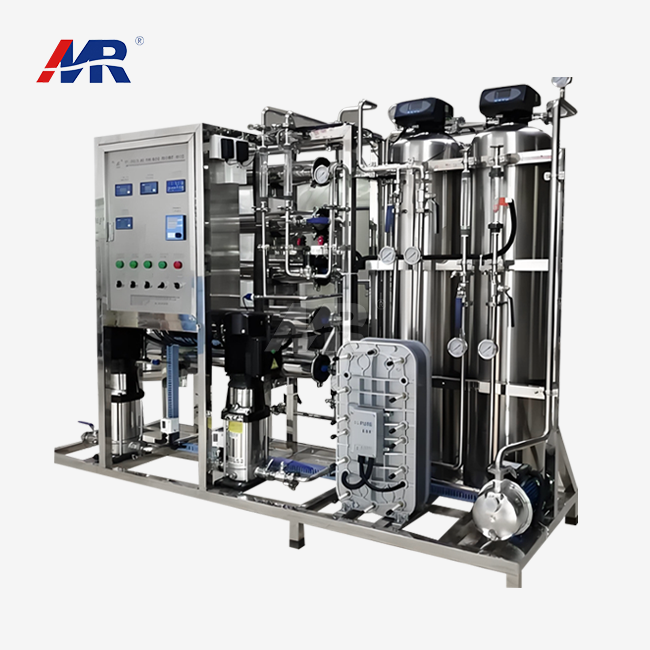
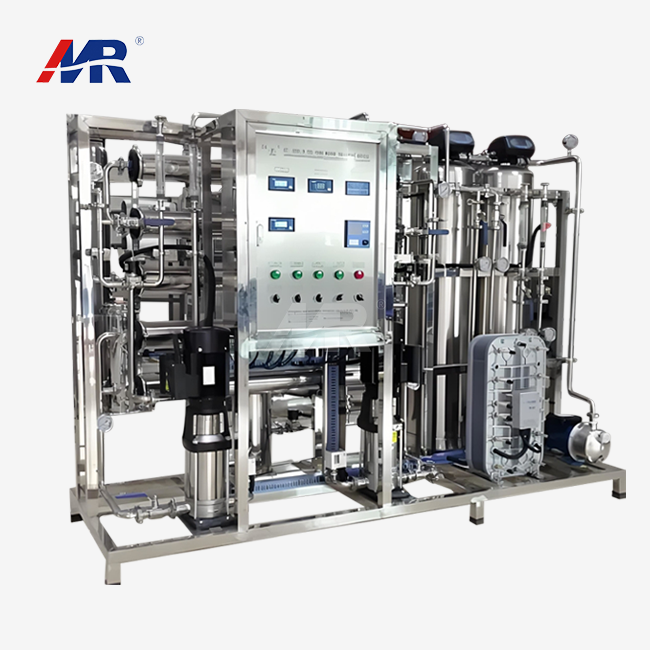
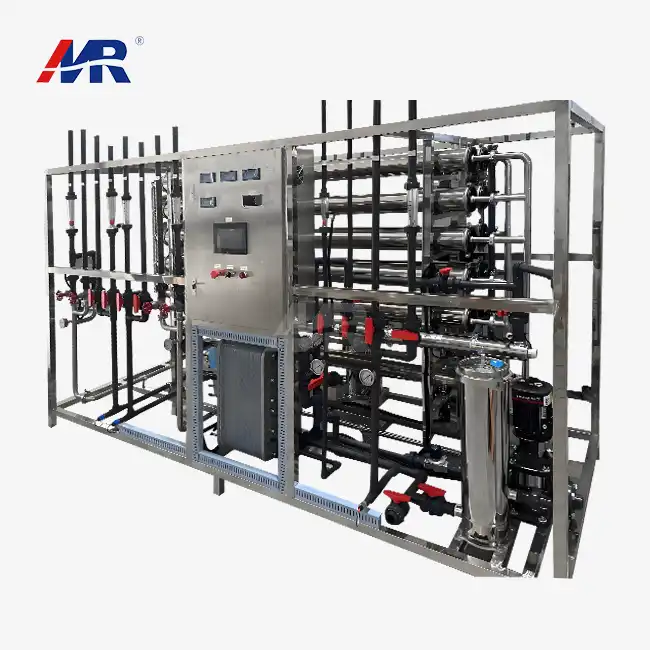
The hollow fiber arrangement is the most frequent one in 50 m³/hour systems since it occupies minimal space and packs a lot of fibers in a compact area. PVDF (Polyvinylidene fluoride) membranes are often more resistant to acid cleaning and oxidant exposure than PES (Polyethersulfone) membranes. PES provides a little more flux for less money and cleaner feed water. Most of the time, inside-out designs can manage water with fewer solids and less requirement for air-scour, but outside-in designs are appropriate for feeds that have higher turbidity. Unlike the other manufacturers, Morui has its own PVDF and PES hollow-fiber modules, so we can match the pore size to the raw water report, normally in the range of 0.01 to 0.1 microns, instead of a standard catalog number.
What Recovery Rate Should a 50m3/hour Ultrafiltration Plant Achieve?
That number tells you how much raw water you need to pump, and it also changes how much it costs to build and run the system.
Recovery Rate Formula and Real-World Numbers
Easy to determine. Return (%) = Permeate flow / Feed flow / 100. If the surface water is reasonably clean and the 50m3/hour ultrafiltration plant is correctly built, you can often get more than 95% recovery. This would be the feed flow slightly over 50 m3/h before losses from backwashing occur. If you don't enhance the preparation of industrial wastewater, which is quite murky, the recovery might decrease into the upper 80s. There are other factors like the number of backwash cycles, the chemically enhanced backwash (CEB) cycles, and the flow limitations that all impede recovery below the theoretical peak.
Water Balance Table for a 50 m³/hour System
| Flow Item | Design Question to Answer |
|---|---|
| Permeate | Is 50 m³/hour a continuous rate or a peak figure? |
| Backwash water | How often does backwash run, and what volume does it use? |
| CIP waste | Where does cleaning wastewater get discharged? |
| Reject or drain flow | Is a permitted discharge route already available on site? |
| Net usable water | What volume remains after all operational losses? |
On the first sales call, guaranteed recovery numbers shouldn't be given out. Instead, they should wait until the feed water has been analyzed.
How Does Capacity Planning Affect Water Reuse Performance?
There is a gap between what it says on paper and what it really does every day. When they hear that something isn't working right, this difference is what most field engineers worry about.
Continuous, Peak and Daily Capacity Math
If you operate a 50 m3/hour ultrafiltration plant for 20 hours a day, you will get roughly 1,000 m3 per day, before cleaning and backwashing losses. Running the same unit for 22 hours instead of 20 allows treating 100 m³/day more. This is done without any increase in the area of the membrane. People often fail to consider this when they are deciding on the amount of storage tank to use. When a membrane is installed, there must be area for it to mature. Typically, the flow will decline 10 to 15 percent every three to five years, at which time it is no longer economical to replace the membrane.
Case Study: Village Drinking-Water Upgrade in Southeast Asia
Morui delivered the 50m3/hour ultrafiltration plant to replace an aged sand-filtration line as part of a rural drinking water project in a Southeast Asian village system supplied by a river in 2024. During the rainy season, it rained, and the NTU was 15-180. Most sand screens couldn’t take that much. Adding PVDF hollow-fiber modules and backwashing them every 30 minutes kept the turbidity in the output below 0.1 NTU year-round, rain or shine. The facility operated for eleven months before it required its first thorough chemical cleaning. On average, 96 percent of the damage was corrected. The local operator claimed the water utility’s own maintenance record shows complaints concerning leaking filters reduced 60% in the first year.
"The biggest change was that operators no longer had to guess when turbidity would rise because the automated backwash sequence took care of the variable raw water without any human input," said Shihai Su, who was in charge of the project's technology.
Capacity-Matching Checklist
Before you decide on the final flow rate, make sure of the following with your supplier or engineering team:
- Current and projected reuse demand over the next five to ten years, since undersized 50m3/hour ultrafiltration plants are expensive to retrofit later.
- Daily operating hours and whether the facility runs continuous shifts or limited daytime hours only.
- Standby or N+1 capacity requirements if downtime during cleaning cannot interrupt supply.
- Seasonal feed-water variation, particularly for surface water and monsoon-affected sources.
- Downstream RO or disinfection capacity, which must match UF permeate output to avoid bottlenecks.
This is the demand for reuse now and over the next five to ten years; plants that are too small cost a lot to fix up later.
—What time the building is open every day and whether it works continuous shifts or just during the day.
What Pretreatment Does a 50m3/hour Ultrafiltration Plant Require?
Picks for preparation have the most impact on how often the surfaces are cleaned than almost any other design choice.
Standard Process Flow
For this size of tank, the process usually goes like this: raw water; screening; coagulation or clarification as needed; multimedia or disk filtration; cartridge filtration; UF feed pump; uf membrane modules; permeate tank; and finally RO or disinfection. This water is used again and again and is sent to a waste tank or a recovery loop. The wastewater from the CIP is neutralized or thrown away in a safe way.
Common Pretreatment Equipment
Before the barrier stage, a project may need some or all of the following tools, depending on the quality of the raw water:
- A coarse screen or strainer to remove large debris before it reaches pumps and valves.
- An equalization tank to smooth out flow and turbidity spikes from variable sources.
- Coagulation and flocculation dosing for high-turbidity surface water or industrial effluent.
- Multimedia or disc filtration as a bulk solids-reduction step before cartridge filters.
- Cartridge filtration rated to protect the membrane fibers from fine abrasive particles.
—a rough screen or sieve that keeps big pieces of dirt from getting to the pumps and valves.
—A tank for adjusting the flow and material that changes from different sources.
– Coagulation and flocculation dosing for dirty surface water or garbage from factories.
Before cartridge filters, multimedia or disk filtration is used to get rid of a lot of solids.
Pretreatment Risks and Mitigation
| Risk | Likely Effect | Mitigation |
|---|---|---|
| High turbidity spikes | Rapid membrane fouling | Equalization tank plus clarification |
| Oil contamination | Irreversible fouling on fiber surface | Oil separation with continuous monitoring |
| Poor coagulation | Higher solids loading on membranes | Jar testing with controlled dosing |
| Weak cartridge filtration | Fiber abrasion or module damage | Correct micron rating with pressure alarms |
| Incompatible chemicals | Membrane material degradation | Written confirmation of chemical limits |
How Do I Match UF Capacity With My Water Reuse Demand?
To make sure the flow rate matches the real need, you need to look at more than just the number on the plate. You also need to see how the system works every day.
Automatic vs Manual Control
| Feature | Automatic System | Manual or Semi-Automatic System |
|---|---|---|
| Labor requirement | Lower, fewer operator hours needed | Higher, requires constant supervision |
| Process consistency | Higher, backwash timing is fixed | Depends heavily on operator habit |
| Capital cost | Usually higher upfront | Usually lower upfront |
| Remote monitoring | Commonly available through PLC/HMI | Often limited or unavailable |
| Best fit | Continuous industrial or municipal use | Smaller plants with close supervision |
Containerized vs Fixed Installation
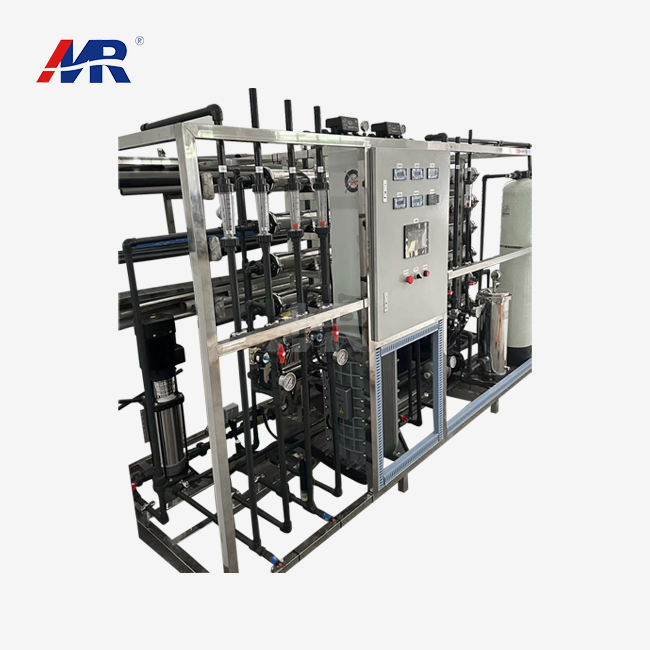
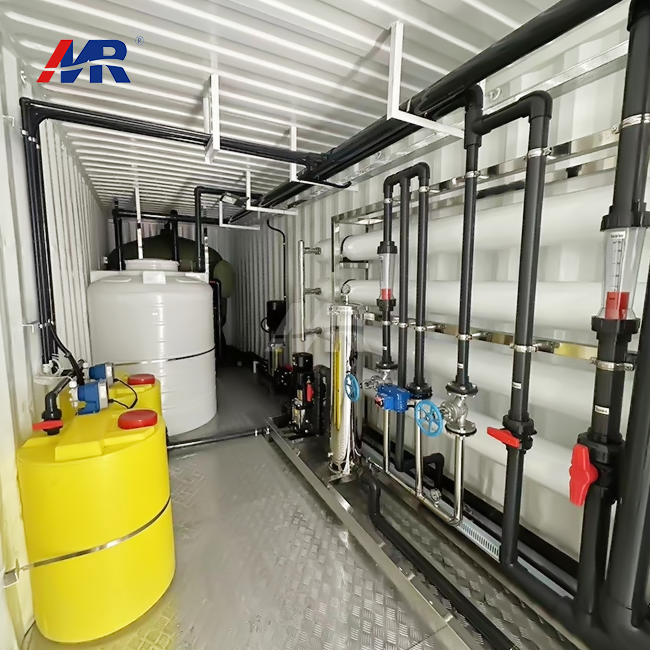
Containerized 50m3/h UF plant units are easier to set up because most of the pipes and wires are already in place. This works great for Middle Eastern and African projects with faraway sites and short deadlines. Because the building or skid is set in place, it is easier to fix problems over time and add on later. However, the foundations must be ready, and the plant room must be ready before the building or skid is delivered. Cost shouldn't be the only thing that guides your choice. The shipping distance, the weather, and how easy it is to get a crane to the site should also play a role.
What Technical Features Matter Most When Choosing a 50m3/hour Ultrafiltration Plant?
Spec sheets might look the same on paper, but they might not work the same way in real life.
Membrane, Automation and Instrumentation
50m3/hour ultrafiltration plant that you can trust should make it clear what kind of membrane it uses, how much flow it can handle, and the highest pressure that can go through it. Filter, backwash, and chemically enhanced backwash processes that are automated make cleaning go more quickly and smoothly, even when workers switch shifts. Instruments that measure turbidity, pressure, flow, pH, and differential pressure should ideally be linked to a PLC that has a history of alarms and logs data. Remote monitoring should be possible at places that don't have a technician on staff full-time.
Backwash System Essentials
Automatic backwash is almost a must for industrial operations that run all the time. Check the backwash pump's size, air-scour capacity, backwash tank volume, and valve quality before you buy. Check to see if the backwash water is recycled, used again, or thrown away. This will have a direct effect on your net water balance and the rules that your release permit needs to follow.
Factory Acceptance Testing Checklist
Before shipping, the following checks should be made and written down:
- Review of process calculations and piping and instrumentation diagrams against the agreed design basis.
- Verification of membrane certificates and traceable component sourcing for warranty purposes.
- Electrical inspection and control-panel functional testing under simulated load conditions.
- PLC sequence testing covering normal operation, backwash, alarm response, and shutdown logic.
- Flow, turbidity, and leakage checks with a signed Factory Acceptance Test report.
— Comparing the agreed-upon design basis to the flow charts, pipe diagrams, and instrumentation layouts.
What Does a 50m3/hour Ultrafiltration Plant Cost?
It only makes sense to compare prices between sellers if the things they offer are the same.
Main Price Drivers
The type of membrane, its surface area, and the number of units used affect the base equipment prices. This amount of flow means that a membrane can filter 200 to 250 m². Because of the level of automation, the choice of material (coated carbon steel vs. stainless steel), and how bad the raw water is, the cost goes up even more depending on how bad it is. With the delivered price, you get freight, setup, commissioning, training, and the first set of spare parts. Early budget estimates often don't include these costs.
Capital Cost vs Operating Cost
If the system is well-made, it should use less than 0.1 kWh/m³ of power when it's on. This is more important than the price alone over ten years. How often the membrane needs to be changed, how much backwash water and chemicals are used, and how many hours of work are needed are all part of the lifecycle cost. It's more likely that a lower price that needs to be changed more often or uses a lot of power will cost more over five years than a slightly higher price at the start.
What a Complete Quotation Should Include
| Quotation Item | Required Detail |
|---|---|
| Capacity | Permeate flow, feed flow, and stated temperature basis |
| Water quality | Guaranteed outlet parameters under defined test conditions |
| Scope | Included and excluded equipment, clearly separated |
| Utilities | Power, water, air, chemical, and drainage requirements |
| Delivery | Manufacturing lead time and shipping terms |
| Warranty | Duration, exclusions, and response process for claims |
| Documentation | Drawings, manuals, certificates, and FAT records |
How Do I Evaluate a 50m3/hour Ultrafiltration Plant Supplier?
It doesn't matter what company makes the tools as long as the 50m3/hour ultrafiltration plant is running.
Supplier Capability Checklist
Before you place an order, compare the supplier's past work to these things:
- Relevant completed projects at or near 50 m³/hour capacity, with contactable references where possible.
- Membrane sourcing — whether they manufacture their own membranes or resell a third-party brand.
- Pilot-testing capability for difficult or unusual raw-water sources before full-scale design.
- Fabrication, electrical, and automation resources in-house versus subcontracted work.
- Spare-parts availability and documented response time for warranty or urgent repair requests.
Morui's Approach to OEM and ODM Projects
The filters and tools produced by Guangdong Morui Environmental Technology Co., Ltd. are produced on their own line. This implies that you are not bound to a standard model for the size of the hole, the substance of the membrane, and the architecture of the system. They may all be tailored to your water quality report. Our firm has around 500 individuals working for it. 20 of them are engineers. We have 14 branches. We also offer some famous brands like Createc tools, Runxin valves, and Shimge water pumps. This membrane-to-machine configuration allows OEM and private-label customers to do customisation, pilot testing, and skid or container integration all under one roof. This way they don’t have to deal with many suppliers.
Procurement and Documentation Checklist
To avoid problems later, get these things ready before you make the last payment:
- Technical datasheet with guaranteed performance figures and the stated test conditions.
- General arrangement drawing, piping and instrumentation diagram, and electrical single-line diagram.
- Material and membrane certificates along with instrument calibration records.
- Operation and maintenance manual, spare-parts list, and recommended inventory for the first year.
- Applicable certifications such as ISO 9001, CE marking for machinery, and RoHS documentation where relevant to supplied components.
Conclusion
Which 50m3/hour ultrafiltration plant to buy depends on the feed water quality, the daily demand, the recovery goals, the design of the pretreatment, the compatibility of the membranes, the level of automation, and the total cost over the whole life of the plant. Don't just compare the price of the equipment; compare the whole process. Make sure that before you give your money to a seller, they offer written tests, performance guarantees, and things that can be traced back to where they came from.
FAQ
1. What is a 50m3/hour ultrafiltration plant?
A membrane system called a 50m3/hour ultrafiltration plant cleans water and can make about 50 cubic meters of permeate per hour at certain times. The real output is determined by the temperature, the quality of the feed water, the rate of recovery, and the number of times the cleaning procedure takes place.
2. What does a 50m3/hour UF plant remove from water?
As UF blocks membrane holes, it gets rid of colloids, floating solids, bacteria, and many viruses. Most of the time, it doesn't get rid of dissolved salts or conductivity. That job is done by reverse osmosis, which is further downstream.
3. What pretreatment does a 50m3/hour ultrafiltration plant require?
In pretreatment, steps like screening, equalization, clarification, coagulation, multimedia filtration, and cartridge filtration are often used. Based on the lab tests that were done on the feed water, the exact mix will depend on its turbidity, oil level, SDI value, and other characteristics.
4. Is ultrafiltration better than reverse osmosis for water reuse?
Due to the fact that they do different things, UF and RO are not in direct competition with each other. To get rid of particles and salts that are floating in the water, UF uses less energy than RO. RO also gets rid of a wider range of dissolved contaminants.
5. How much does a 50m3/hour ultrafiltration plant cost?
The cost depends on the membrane type, the amount of technology, the materials used, and the installation's size. You can get a better idea of how much something costs by breaking it down into parts like freight, installation, extra parts, and how much it's likely to cost to replace the membrane.
6. Should a 50m3/hour ultrafiltration plant include automatic backwash?
Automatic backwash is best for long-term use in cities or factories because it keeps membrane performance stable and doesn't depend on when a person operates it. It should also say how to set the air scour, how to handle waste, and how often to backwash.
Request a Feed-Water Review Before You Commit to a Supplier
Picking a 50m3/hour ultrafiltration plant without checking the feed-water data in a lab is one of the most common and costly mistakes people make when they try to recover water. Morui lets people in Asia, Africa, and South America buy things. When it comes to hole size, barrier material, and skid or container integration, they offer free feed-water studies and help with trial tests. They also do OEM and ODM work. The water analysis can be sent to benson@guangdongmorui.com if you need help with a specification or want to compare 50m3/hour ultrafiltration plant manufacturers for a new project. The engineers on Our Team will review the design and get back to you.
References
1. U.S. Environmental Protection Agency, "Water Reuse Action Plan" (2023) — cited for reuse application standards. https://www.epa.gov/waterreuse/water-reuse-action-plan
2. International Organization for Standardization, "ISO 24512:2007 — Activities relating to drinking water and wastewater services" (2007) — cited for municipal treatment management reference. https://www.iso.org/standard/41222.html
3. International Water Association, "Water Reuse and Membrane Technology Resources" (2024) — cited for membrane pretreatment practice. https://iwa-network.org
4. European Union, "Regulation (EU) 2020/741 on minimum requirements for water reuse" (2020) — cited for reuse water-quality benchmarks. https://eur-lex.europa.eu/legal-content/EN/TXT/?uri=CELEX:32020R0741
5. ASTM International, "ASTM D6908 — Standard Practice for Integrity Testing of Water Filtration Membrane Systems" (2019) — cited for SDI and membrane integrity testing methods. https://www.astm.org/d6908-19.html
6. World Health Organization, "Guidelines for the Safe Use of Wastewater, Excreta and Greywater" (2006, reaffirmed guidance referenced 2024) — cited for reuse safety thresholds. https://www.who.int/publications/i/item/9241546832
About the Author
Shihai Su is Senior Overseas Water Treatment Technical Manager at Guangdong Morui Environmental Technology Co., Ltd. He has worked on municipal, industrial, and desalination pretreatment projects across Asia, Africa, and South America, specializing in ultrafiltration system design, pilot testing, and membrane process troubleshooting for OEM and turnkey clients.