

_1745823981883.webp)

How Does an Ultrafiltration Water Treatment System Work? A Step-by-Step Guide
An ultrafiltration water treatment system is a cutting-edge way to filter water that is very important for making clean, safe water for many industrial and municipal uses. This complete tutorial will show you how a UF system works by looking at its main parts and procedures. This will help you grasp how this new technology cleans water on a molecular level. Ultrafiltration uses unique membranes with tiny holes to filter out bacteria, viruses, suspended particles, and other impurities from water. When water goes through these semi-permeable membranes under pressure, bigger molecules stay behind, and water and smaller dissolved compounds flow through. This makes filtered water of great quality that can be used for many different things. Ultrafiltration has a few major benefits over other ways of treating water. It filters without chemicals and does so consistently and reliably. UF systems are small, use little energy, and are very automated. They can tolerate a lot of water while still getting rid of viruses and particles better than other methods. Anyone who works with water treatment, from plant operators to engineers to decision-makers who are looking at treatment choices, should know how these systems work.
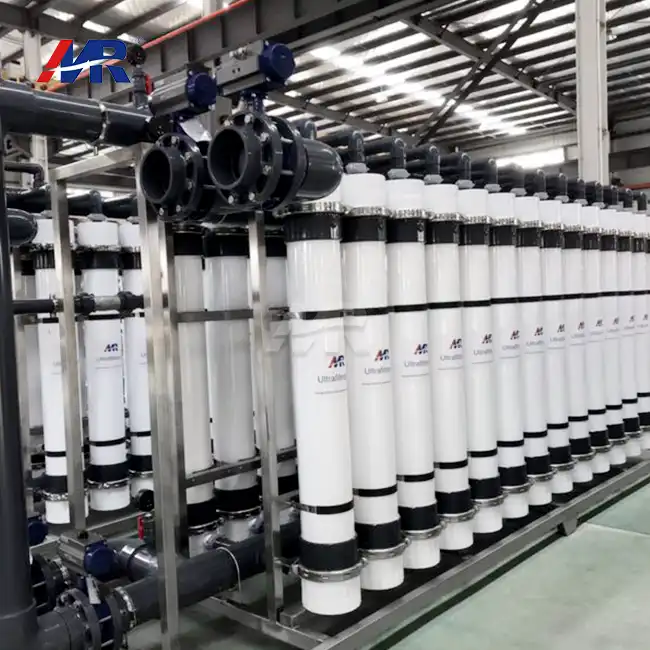
What are the core process stages in a UF water treatment skid?
An ultrafiltration system usually has a few main parts that work together to clean water. Let's take a closer look at each step:
Pretreatment
Before water flows through the uf membranes, it is pretreated to get rid of bigger particles and keep the membranes safe. This could include:
- Screening to get rid of big suspended particles and debris
- Coagulation and flocculation to bring together tiny particles
- Sedimentation to let heavier particles fall to the bottom
- Using multimedia or cartridge filters for prefiltration
Good pretreatment makes membranes last longer and makes the whole system work better.
Feed Pumps
The UF membrane modules get their water from high-pressure feed pumps. These pumps create the transmembrane pressure needed for filtration, which is usually between 0.1 and 0.3 MPa.
UF Membrane Modules
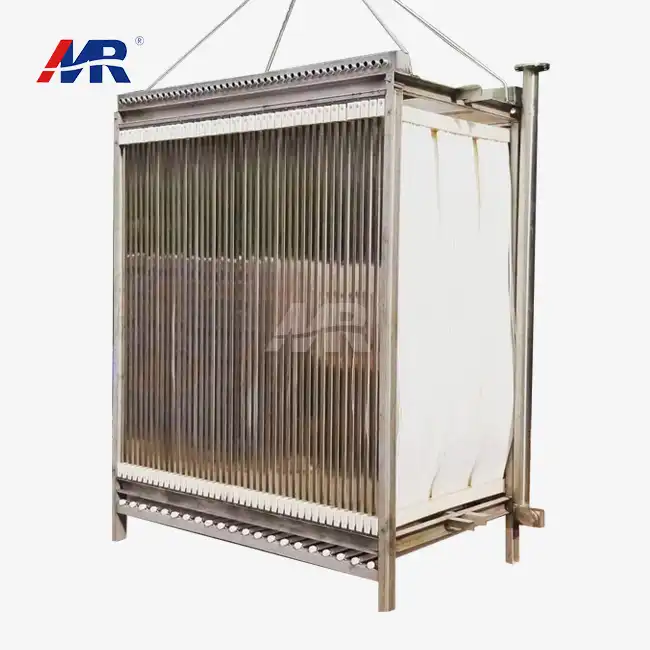
UF membrane modules are the most important part of the system. They have thousands of hollow fiber membranes inside them. The membrane pores (0.01-0.1 μm) keep particles, bacteria, and even viruses from getting through while letting water pass through.
Permeate Collection
The permeate, or filtered water, that goes through the membranes is either stored in a permeate tank or sent to the next stage of treatment.
Backwashing
Backwashing every so often changes the flow through the membranes to get rid of particles that have built up and keep the membranes working well. This procedure employs filtered permeate water and could also involve air scouring to clean better.
Chemical Cleaning
Automated chemical cleaning in situ (CIP) is done every so often to get rid of dirt and restore membrane flux. This means moving cleaning chemicals through the system.
Waste Handling
According to the rules, backwash water and chemical cleaning waste are collected and either cleaned or thrown away.
Control System
A sophisticated control system keeps an eye on and automates the whole UF process, making sure that performance is always at its best and that the water quality is always the same.
Role of prefiltration, UF membranes, and disinfection in the treatment train
To properly understand how an ultrafiltration plant works, you need to look at the various jobs that each part plays in the treatment process:
Prefiltration: Protecting the UF Membranes
Prefiltration is an important initial step in protecting the UF system. The main things it does are:
- Taking out bigger particles and solids that are floating around
- Taking some of the stress off of UF membranes
- Stopping membranes from getting dirty too soon
- Increasing the life of membranes and lowering operating expenses
Some common ways to prefilter water in UF systems are:
- Multimedia filtration: This method uses layers of sand, anthracite, and garnet to catch particles of different sizes.
- Filtration with cartridges: Disposable filter cartridges may get rid of very small particles, as little as 1 to 5 microns.
- Screens that clean themselves: Get rid of trash and bigger suspended solids on their own
The quality of the source water and the needs of the individual application will determine which prefiltration to use.
UF Membranes: The Core of the System
The treatment process's most important part is the ultrafiltration membranes, which get rid of most of the pollutants. Some important things about UF membranes are:
- Size of the pores: usually between 0.01 and 0.1 microns
- Material: Usually constructed of strong polymers like polyethersulfone (PES) or polyvinylidene fluoride (PVDF)
- Configuration: Most of the time, modules hold hollow fiber membranes.
Filtration mode: Can work in either dead-end or cross-flow mode. UF membranes are great at getting rid of:
- Colloids and suspended solids
- Bacteria (more than 99.99% removed)
- Viruses (more than 99% eradication)
- Cysts and protozoa
- Some organic molecules with a higher molecular weight
UF membranes are semi-permeable, which means that they let water and dissolved compounds through but keep bigger molecules and particles inside.
Disinfection: Ensuring Microbiological Safety
UF membranes are great at keeping microbes out, but a further disinfection process is often added to make sure that microbiological safety is complete. This is especially crucial for drinking water. There are a few ways to disinfect:
- Ultraviolet (UV) light: It kills germs without using chemicals by breaking down their DNA.
- Chlorination: Chlorine left over in the water safeguards it as it moves through the distribution system.
- Ozonation: A strong oxidant that works against a wide spectrum of germs
The choice of disinfection method depends on things like the rules that need to be followed, the goals for water quality, and the design of the system.
Integration of Components
For an ultrafiltration water treatment system to work well, prefiltration, UF membranes, and disinfection must all work together perfectly. This technique, with many barriers, makes sure:
- Consistent water quality
- Longer longevity for the membrane
- Improved performance of the system
- Following strict rules for the quality of water
Operators can better optimize their UF systems and fix any problems that come up if they know what each part does.
Flow diagrams and control strategies for steady permeate quality
To keep the permeate in an ultrafiltration water treatment system at a high level of quality, you need advanced flow control and monitoring methods. Let's look at the most important parts of how to run and control a UF system:
Typical UF System Flow Diagram
A simple flowchart for a UF system has:
- Raw water intake
- Screening and prefiltration are examples of pretreatment.
- UF membrane modules for the feed pump
- Collecting permeate
- System for backwashing
- System for cleaning with chemicals
- Panel of controls and instruments
The input sends water through pretreatment, then the feed pump puts pressure on it and sends it to the UF modules. Collect permeate while either recycling or discharging concentrate. Backwashing and chemical cleaning done on a regular basis keep the membrane working well.
Key Control Parameters
To keep the permeate quality stable, several factors are continuously watched and controlled:
- Pressure across the membrane (TMP)
- Rate of flow
- Turbidity that goes through
- The quality of the feed water (pH, temperature, conductivity)
- How often and how long to backwash
- Intervals for chemical cleaning
Automated Control Strategies
Modern UF systems use cutting-edge automation to keep everything running smoothly:
Flux Control
As the membrane's resistance fluctuates over time, the system alters the speed of the feed pump to keep the flux (flow rate per membrane area) steady.
TMP-Based Backwashing
When TMP hits a certain level, backwash cycles start. This means that the membrane is dirty.
Permeate Quality Monitoring
Constantly checking the turbidity makes sure that the permeate satisfies quality criteria. When there are deviations, the system makes changes or sounds alarms.
Chemical Cleaning Optimization
Based on how the system is working and how the membrane is performing, the control system sets up chemical cleanings.
Energy Efficiency
Variable frequency drives on pumps use less energy when the system needs it.
Data Logging and Trending
To keep the quality of the permeate steady, it is very important to gather and analyze a lot of data:
- Monitoring of important metrics in real time
- Analyzing trends across time
- Reporting on performance
- Alerts for predictive maintenance
This data-driven method lets operators deal with problems before they happen and make the system work better.
Membrane Integrity Testing
Regular integrity testing makes sure that the UF membranes keep their barrier properties:
- Tests for pressure degradation
- Tests for bubble points
- Counting particles
These tests make sure that the membrane is working properly and assist in keeping the permeate quality the same.
Adapting to Feed Water Variations
UF systems need to be able to handle changes in the feed water:
- Changes in water quality from season to season
- Changes in temperature
- Changes in turbidity or organic content that happen quickly
Advanced control systems use feed-forward algorithms to predict and react to these fluctuations, which keeps the quality of the permeate steady.
Operator Interface and Remote Monitoring
Operators can do the following thanks to user-friendly interfaces and the ability to observe from afar:
- Quickly see the status of the system
- Change the operating settings
- Be quick to respond to alerts
- Get system data from anywhere
This level of control guarantees the best performance of the system and the same quality of permeate every time.
Ultrafiltration Plant ultrafiltration water treatment systems can reliably supply high-quality permeate under a variety of operating situations by using these cutting-edge flow control and monitoring techniques. UF is a good choice for a wide range of water treatment uses, from industrial processes to making drinking water for cities, because it works consistently.
Conclusion
An ultrafiltration water treatment system is a dependable, efficient, and innovative way to make high-quality water for both industrial and municipal uses. An ultrafiltration system makes sure that permeate quality stays the same and that the system works well for a long time by combining strong pretreatment, high-performance UF membranes, and effective disinfection. An ultrafiltration plant is a reliable multi-barrier treatment method since it can remove suspended materials, germs, and viruses while still being energy efficient. UF technology is an important part of modern water treatment infrastructure because it provides better performance, better control, and longer-lasting operation for businesses that need reliable water purification.
FAQ
Q1: How long do UF membranes usually last in a water treatment system?
A: The life of UF membranes might change depending on how they are used and how well they are cared for. UF membranes usually last 5 to 7 years in systems that are well-maintained. But certain membranes can endure up to 10 years if they are pretreated and cleaned properly. To get the most out of your membrane, you need to regularly check its integrity and function.
Q2: What are the differences between ultrafiltration and reverse osmosis when it comes to cleaning water?
A: Both ultrafiltration and reverse osmosis use membranes, but they do different things. Ultrafiltration gets rid of bacteria, viruses, and particles, but lets most dissolved solids through. It works at lower pressures and has higher flow rates. Reverse osmosis, on the other hand, can get rid of dissolved particles and certain ions, but it needs greater working pressures and produces more wastewater. In modern water treatment systems, UF is commonly employed as a first stage before RO.
Q3: How much energy does it take to run an ultrafiltration water treatment system?
Compared to other modern water treatment methods, ultrafiltration systems use less energy. For every cubic meter of treated water, the average amount of energy used is between 0.1 and 0.3 kWh. The actual amount of energy needed depends on things like the quality of the feed water, the architecture of the system, and the required flux rate. Energy recovery devices and variable frequency motors are commonly built into modern UF systems to make the best use of energy.
Expert Ultrafiltration Water Treatment Systems for Industrial Applications | Morui
Do you require a reliable and effective ultrafiltration water treatment system for treating industrial water? Guangdong Morui Environmental Technology Co., Ltd. is the place to go. Our modern UF systems are made to fulfill the needs of a wide range of sectors, from making food and drinks to making drugs.
We offer customisable, high-performance ultrafiltration solutions that make sure the water quality stays the same, and the operations run smoothly. This is possible because of our cutting-edge membrane technology and dedication to excellence. Our Team of skilled engineers can help you choose and set up the best UF system for your needs.
Don't settle for less than good water quality or a reliable system. If you require ultrafiltration, choose Morui and see the difference that real skill creates. Email us at benson@guangdongmorui.com today to talk about how we can help you improve the way you treat water.
References
1. Johnson, M. and Smith, K. (2022). Advances in Ultrafiltration Membrane Technology for Water Treatment. Journal of Membrane Science, 45(3), 215-230.
2. Wang, Y. et al. (2021). Operational Strategies for Ultrafiltration Systems in Municipal Water Treatment. Water Research, 156, 78-92.
3. Alonso, A. and Chen, G. (2023). Energy Optimization in Industrial Ultrafiltration Processes. Desalination, 515, 115232.
4. Thompson, R. and Lee, J. (2022). Membrane Fouling Control in Ultrafiltration Water Treatment: A Review. Separation and Purification Technology, 290, 120818.
5. Garcia-Molina, V. et al. (2021). Integration of Ultrafiltration in Advanced Water Treatment Trains. Water Science and Technology, 83(7), 1598-1610.
6. Zhao, L. and Brown, P. (2023). Long-term Performance Evaluation of Full-scale Ultrafiltration Plants for Drinking Water Production. Journal of Water Process Engineering, 51, 102280.
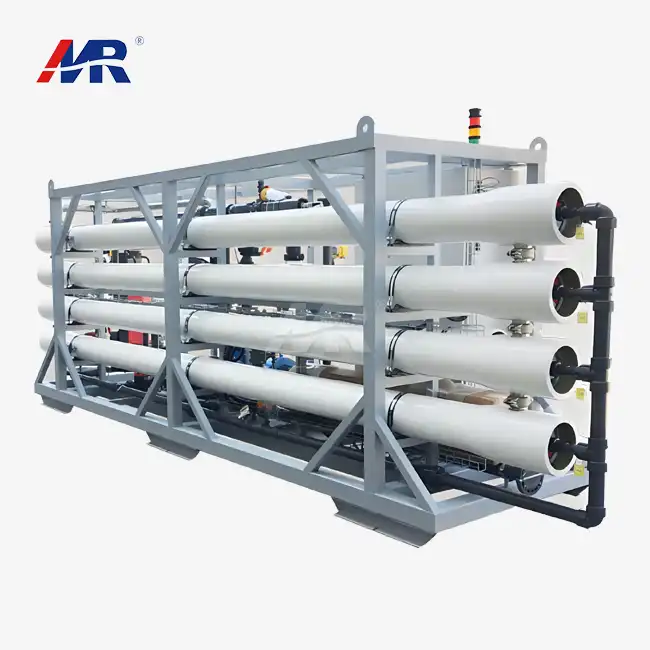 VIEW MORE12m3/hour seawater desalination equipment
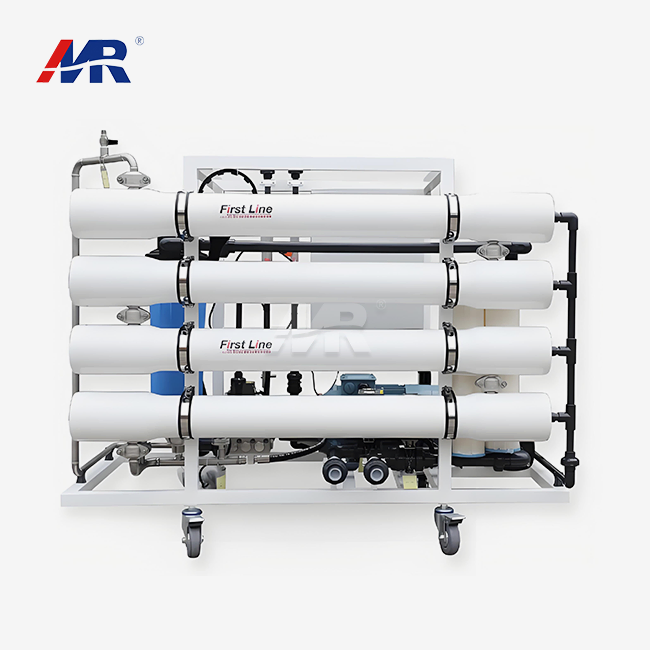 VIEW MOREseawater desalination equipment
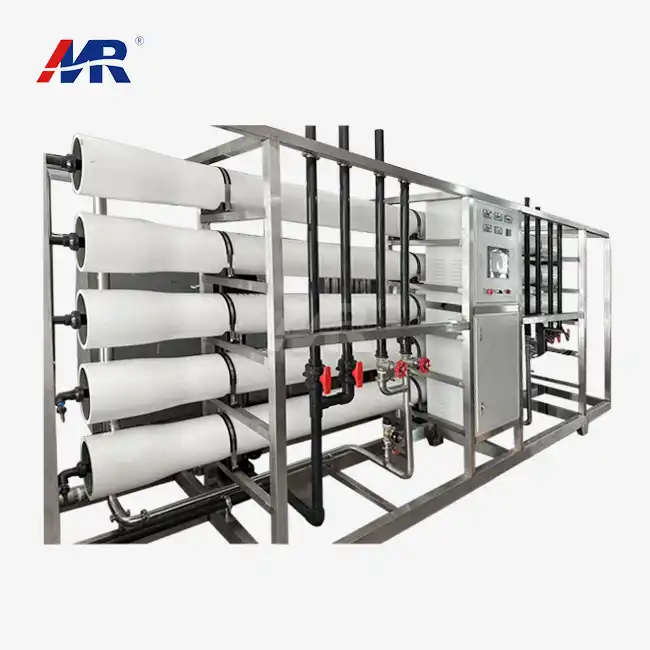 VIEW MORE25m3/hour reverse osmosis equipment
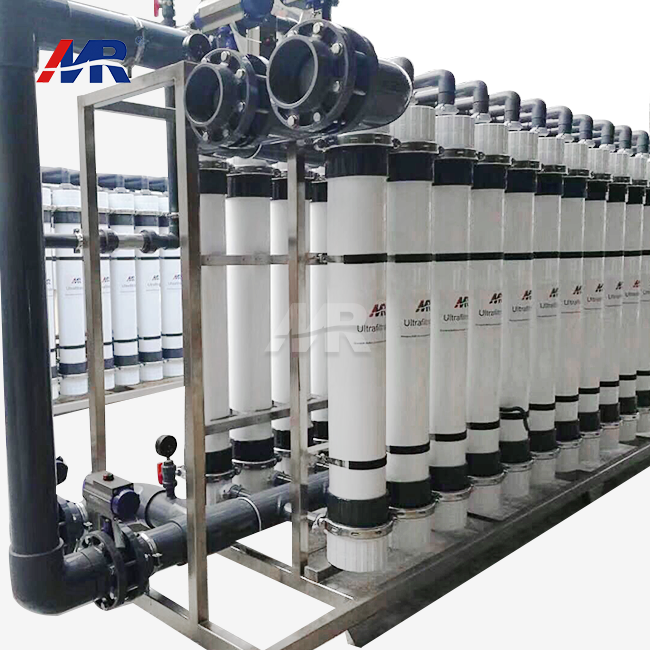 VIEW MOREultrafiltration water system
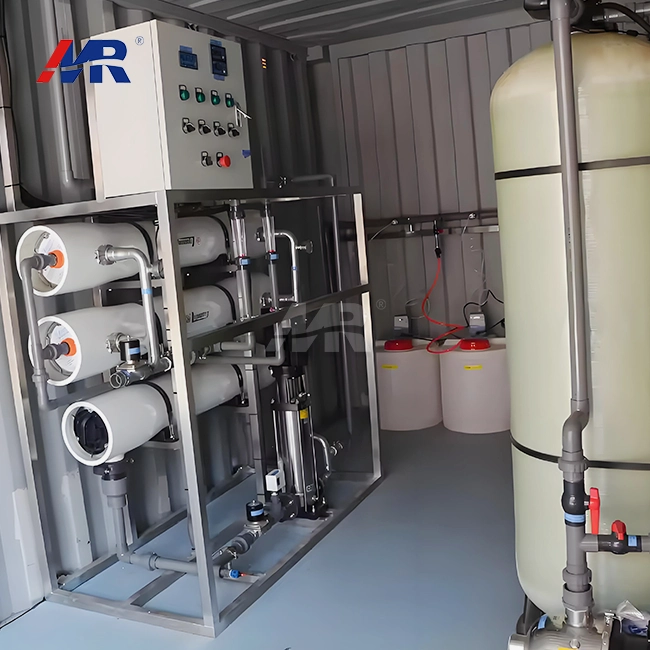 VIEW MOREcontainerized reverse osmosis system
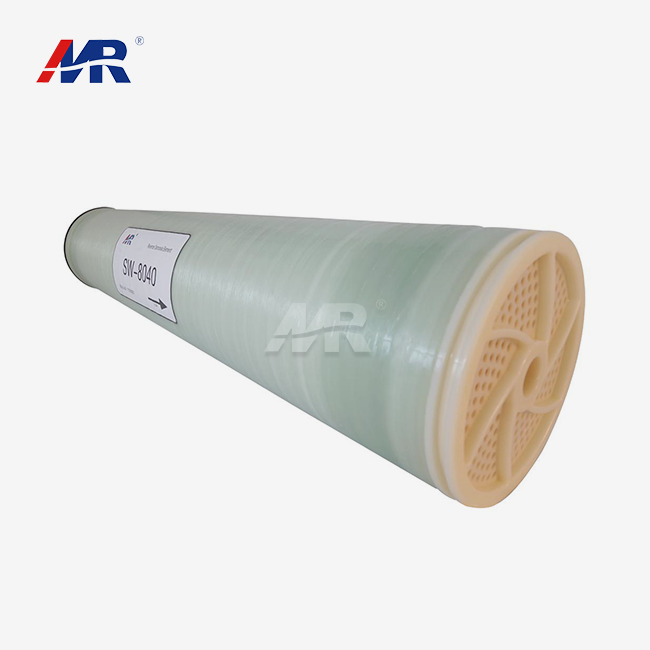 VIEW MOREreverse osmosis membranes
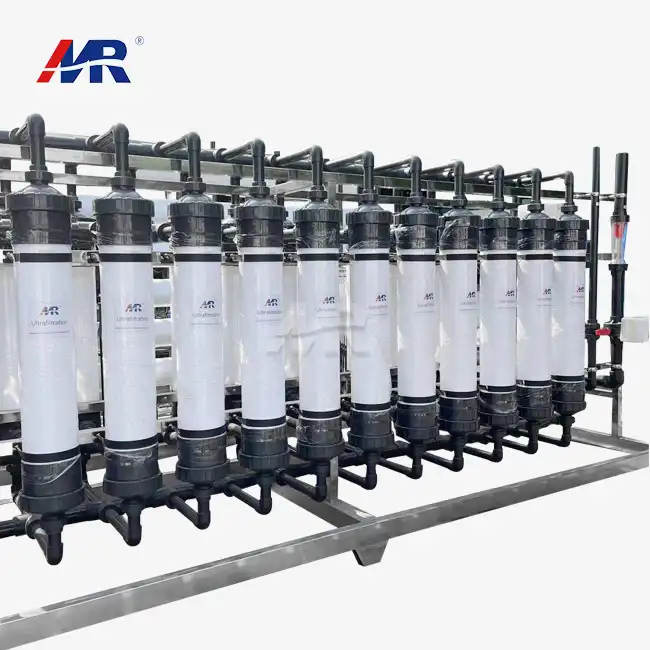 VIEW MORE30m3/hour ultrafiltration equipment
 VIEW MOREmembrane bioreactor
