_1745823981883.webp)

Brackish water reverse osmosis is a process that forces polluted water containing dissolved salts and other substances through a semi-permeable membrane at high pressure, enough to overcome the osmotic pressure of the water. It is used to treat salty groundwater or surface water. The process has four interrelated steps – pretreatment, high-pressure pumping, membrane separation and post-treatment – with each step protecting the next from damage or loss of performance. This tutorial describes what happens at each phase, what the membrane truly removes, and how plant design may alter the water quality and cost outcome for industrial, agricultural, and municipal users.
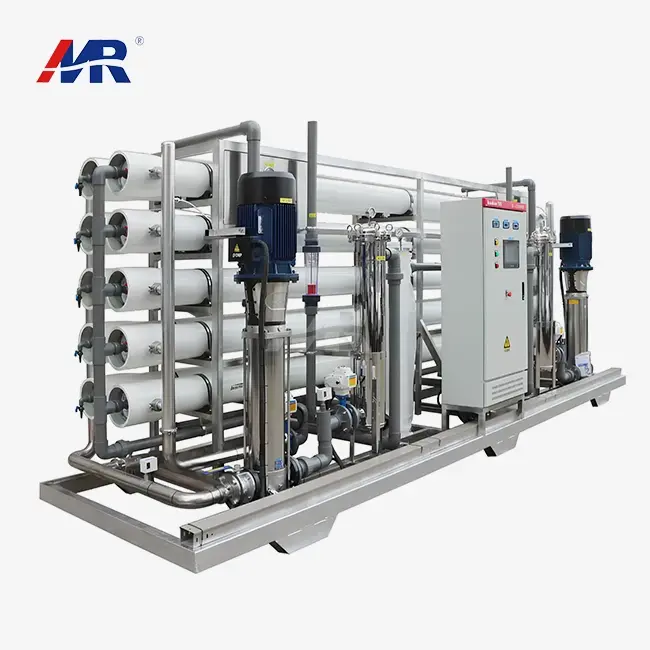
In Asia, South America, and Africa, plant engineers and procurement managers can sanction a reverse osmosis purchase without truly understanding what goes on inside the pressure vessel, making it hard to assess whether a quoted system will really operate. Guangdong Morui Environmental Technology manufactures brackish water reverse osmosis systems and explains how they work effectively, since a client who understands the process asks better questions and avoids costly mismatches. Send your feed water analysis to benson@guangdongmorui.com, and our engineering experts will explain exactly how each stage of the procedure will work for your specific water source.
What Makes Brackish Water Suitable for RO Treatment?
Water treatment professionals categorise feed sources by salinity -- that one number drives most of the design decisions that follow. Brackish water reverse osmosis is a particular case. It is a compromise between the two above. Too salty to filter normally, but not as harsh as reverse osmosis of seawater.
Brackish water is halfway between fresh water and salt water on the salinity scale, having dissolved solids between 1,000 and 10,000 milligrams per litre. Brackish water reverse osmosis is commonly used to treat this type of water by reducing dissolved salts and other contaminants. The U.S. Geological Survey uses this similar terminology to describe brackish groundwater in its national assessment, which projected that the volume of brackish groundwater in the United States is more than 800 times the country’s current annual water demand (USGS, 2017).
A Resource Larger Than Most Buyers Realise
And that scale is crucial well beyond the United States since identical brackish aquifers lie beneath large areas of Asia, South America, and Africa and have often been left untouched simply because remediation looked too difficult or costly. Brackish water reverse osmosis makes that resource feasible, converting water that was previously useless for drinking, agriculture, or industrial process needs into a reliable source of supplies.
Why Salinity Range Matters for Treatment Design?
The precise salinity of the brackish feed—whether it is closer to 1,500 ppm or closer to 9,000 ppm—impacts the pressure required by the system and the way the membrane array is configured. Without a proper water study in hand before buying equipment, a buyer runs the risk of purchasing pumps or membranes that are too small for the actual feedwater conditions. Brackish water reverse osmosis pricing based on expected water chemistry rather than a sample tested in the lab almost always has to be modified when the actual feed water arrives at the plant, at the cost of both time and money compared to getting the analysis correct the first time.
Which Contaminants Does Brackish Water RO Remove?
Brackish water reverse osmosis membranes exclude much more than just salt. This physical barrier to the flow of salt and chloride ions also inhibits a wide range of other dissolved and suspended contaminants from moving that impact water quality.
| Contaminant Type | Removal Mechanism | Typical Rejection Rate |
|---|---|---|
| Dissolved salts (sodium, chloride) | Size and charge exclusion at the membrane surface | 96% to 99% |
| Hardness minerals (calcium, magnesium) | Size exclusion | Greater than 98% |
| Heavy metals (arsenic, lead) | Size and charge exclusion | 95% to 99% |
| Bacteria and viruses | Physical size exclusion | Greater than 99% |
| Nitrates and fluoride | Size and charge exclusion | 85% to 95% |
Our MR series systems are certified to remove more than 99% of salt, as confirmed by factory testing before each unit is sent. This figure is consistent with published research that shows reverse osmosis membranes are reliable in removing 96 to 99% of dissolved salts and minerals from brackish feed water under typical operating conditions. That is why brackish water reverse osmosis is still the standard treatment choice when complete removal of dissolved solids is important.
How Does Pressure Drive Water Through an RO Membrane?
Osmosis is the natural process of water being pulled toward the side of a membrane with a greater salt content (as the term "reverse osmosis" suggests). Brackish water reverse osmosis reverses the natural flow by using enough mechanical pressure on the feed side to force water molecules through the membrane, overcoming their inherent osmotic attraction.
Overcoming Natural Osmotic Pressure
Each salinity has a natural osmotic pressure, the pressure that the water would have to exert to dilute the more concentrated side of the membrane. Brackish water reverse osmosis systems usually run at feed pressures of 30 to 250 psi, much more than the natural osmotic pressure of the 1,000 to 10,000 ppm feed source, forcing clean water through, leaving dissolved salts on the feed side.
Why do pressure requirements scale with salinity
As the salinity of the feed water increases toward the top end of the brackish range, so does the natural osmotic pressure, which means the pump has to work harder. This is why a system intended for 2,000 ppm feed water cannot merely be put into a 9,000 ppm application without enlarging the pump and changing the membrane array.
What Role Does Pretreatment Play in Brackish Water RO?
Pretreatment protects the ro membrane from damage by untreated feed water. Failure to provide pretreatment or undersized pretreatment is one of the most prevalent reasons for premature membrane failure in the field.
Sediment and Particle Removal
Water in a brackish water reverse osmosis system passes through sand, multimedia, or cartridge filters to remove dirt, silt, and larger suspended particles before reaching the membrane. Without this procedure, suspended particulates would physically block the membrane surface and lower flow in a matter of days, not years.
Chemical Dosing for Scale Prevention
In an effort to prevent crystallization of dissolved minerals such as calcium and magnesium on the membrane surface when the water is concentrated during treatment, antiscalant chemicals are injected into the feed stream. Often, pH correction is combined with the addition of antiscalant since the danger of scaling is strongly influenced by the balance of pH, alkalinity, and hardness in the individual feed water.
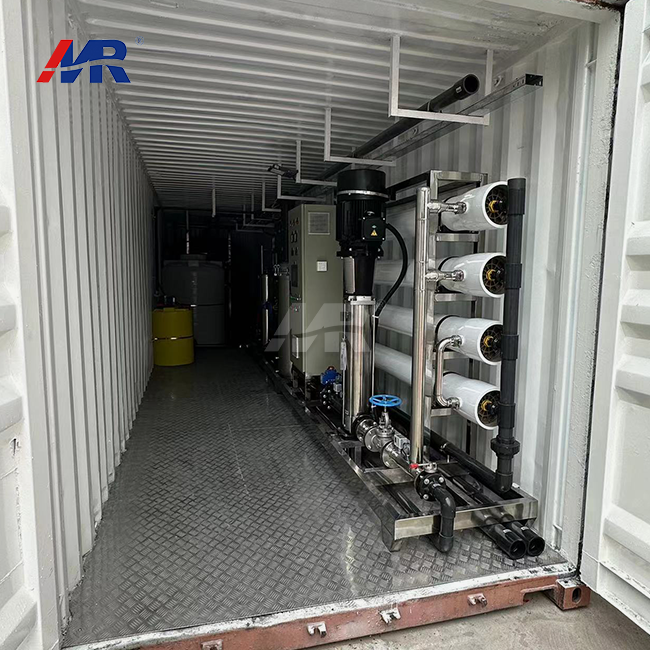
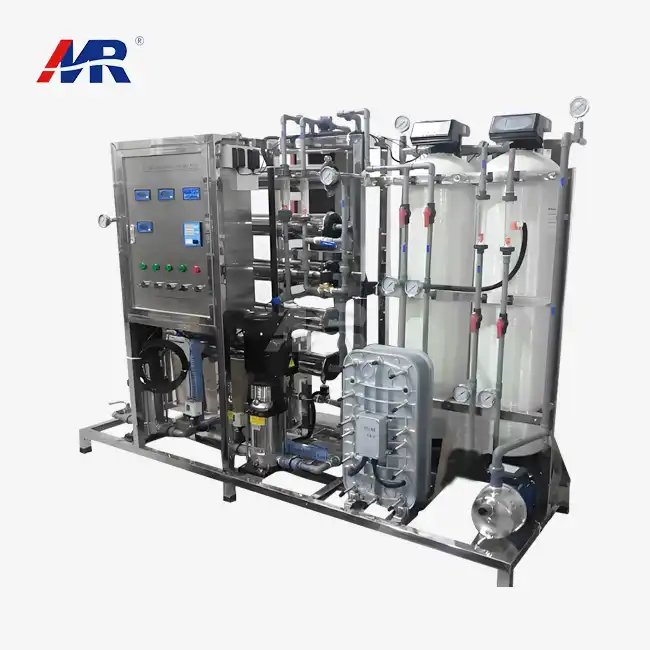
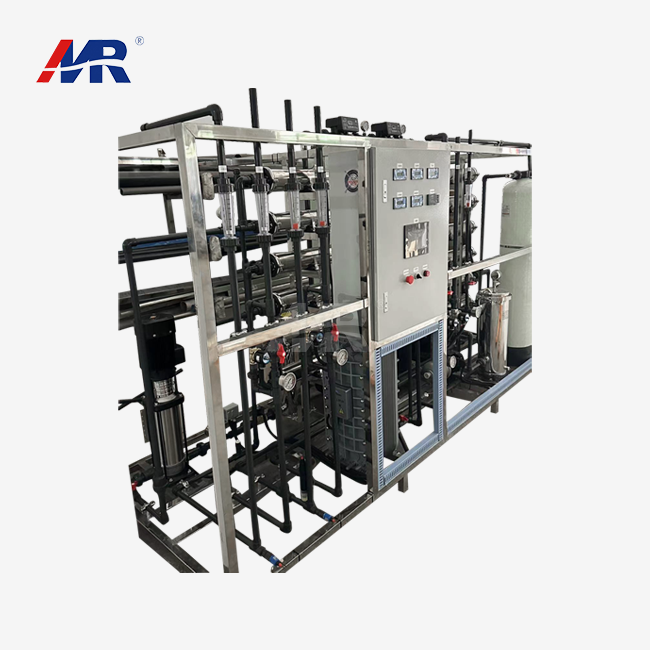
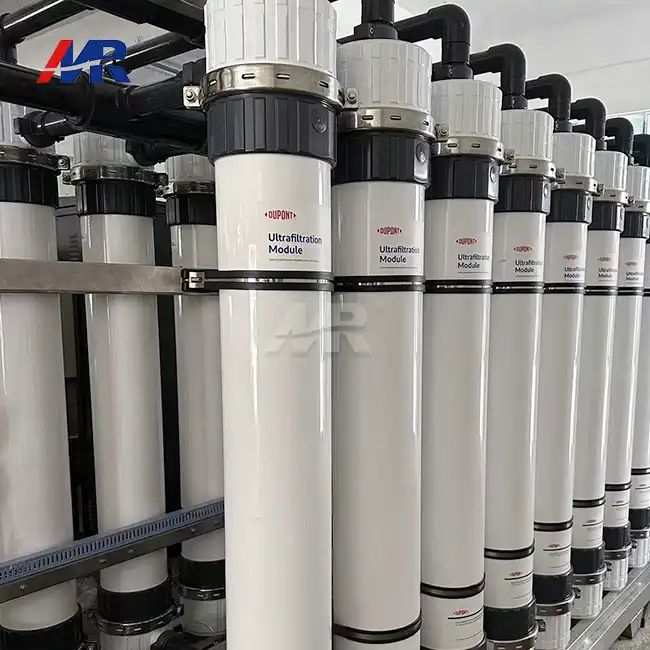
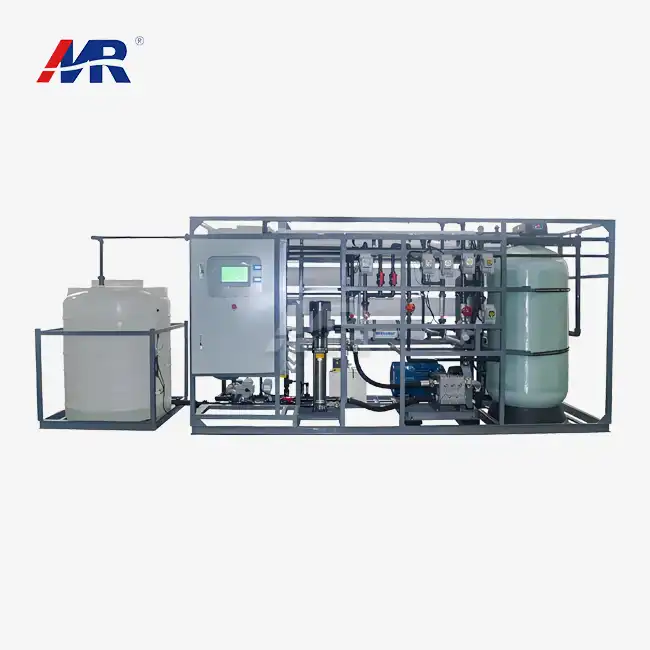
A brief overview of the pretreatment components that a well-designed brackish water RO system generally has in place before water even reaches the membrane array. Multimedia filtering eliminates bigger suspended particles and turbidity and protects downstream cartridge filters from premature clogging. Cartridge filtration removes smaller particles down to 1 to 5 microns in size, providing the last layer of physical protection against fouling for the membrane. Antiscalant dosing systems provide chemicals according to the feed flow rate and the particular water chemistry to avoid scale development as the recovery increases and the reject stream becomes more concentrated.
Omitting any of these pretreatment procedures to save money in the first phase always results in a higher long-term operating cost for brackish water reverse osmosis, with decreased membrane life and more cleaning cycles. The expenses associated with replacement and downtime that result from insufficient pretreatment are greater throughout the life of a membrane than the cost of a suitably sized pretreatment train.
Building a Complete Treatment Train
None of these pretreatment steps function in isolation, and a brackish water reverse osmosis system works best when every stage is scaled against the same water analysis instead of being put together from generic component defaults. Our technical team will analyze turbidity, iron content, hardness, and scaling indices together and then provide a recommendation for a pretreatment design. If you tackle these factors individually, you frequently wind up with a system that solves one issue but leaves another untreated.
How Does Salt Rejection Occur Across the RO Membrane?
The real separation is carried out by the membrane itself, which has a molecular-level structure that allows water to pass through but blocks almost everything else dissolved in it.
Membrane Pore Structure
The pores of reverse osmosis membranes are so narrow that only water molecules and a few extremely low-molecular-weight substances may flow through them under pressure. In brackish water reverse osmosis, dissolved salt ions are hydrated in solution and bigger than the free ions and cannot fit through this structure and are rejected at the membrane surface.
Two Separate Water Streams Result
Each reverse osmosis membrane generates two streams: a permeate stream, which is the clean treated water that went through the membrane, and a concentrate stream, often termed "reject" or "brine," which carries the rejected salts and pollutants at a greater concentration than the initial input. The dual-stream separation mechanism is the core working basis for almost all commercial reverse osmosis membranes being used today, as shown by research on thin-film composite polyamide membrane technology (Membranes Journal, 2022).
Post-Treatment Finishes the Process
For brackish water reverse osmosis membranes, the permeate exiting the membrane typically requires a final adjustment before it is sent to storage or distribution, since the treatment process itself might leave water somewhat acidified or missing the mineral flavor that consumers expect from drinking water. Post-treatment usually involves pH adjustment, remineralization, and then disinfection with chlorine or UV radiation to provide water quality throughout storage. There’s no loss of the core purification already provided by the membrane. But skipping post-treatment can leave water tasting flat or a little corrosive to downstream piping. Most municipal and food-grade applications incorporate this finishing stage as standard practice, not as an optional add-on.
What Determines Recovery Rates in Brackish Water RO?
The recovery rate in brackish water reverse osmosis is the proportion of feed water that becomes usable permeate instead of concentrate. It is determined by the feed water chemistry, membrane array design, and operating pressure.
Feed Water Chemistry Sets the Ceiling
In general, the greater the hardness and the higher the scaling potential of the feed water, the lower the maximum allowable recovery rate that may be safely sustained without scale development. In a study on the performance of antiscalants on anaerobic groundwater, it was shown that even well-chosen antiscalants could not prevent calcium phosphate scaling when the recovery was pushed to 85%. The same system performed scale-free at 80% recovery even without any antiscalant at all (NCBI, 2022). That discovery suggests that the recovery rate is not just a dial that can be turned up without consequences, but the chemistry of the feed water has an actual physical limit.
Array Design and Staging
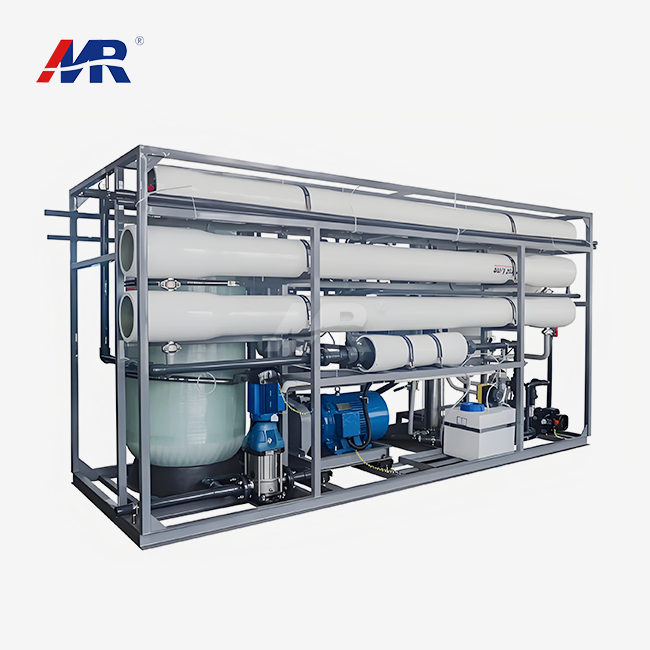
Proper sizing of stages by the number of membrane elements so that fewer pressure vessels are present in later stages than in earlier ones provides acceptable cross-flow velocity as the feed gets more concentrated as it moves through the system. Under good feedwater conditions, our MR series systems have a recovery rate of up to 85%. The actual recovery achieved always relies on the water chemistry at the location.
How Does Brackish Water RO Differ From Seawater RO?
Both systems are based on the same membrane separation concept, but the variation in salinity between the two feed water types affects practically every design parameter of a BWRO plant.
| Parameter | Brackish Water RO | Seawater RO |
|---|---|---|
| Feed salinity | 1,000 to 10,000 ppm TDS | ~35,000 ppm TDS |
| Operating pressure | 30 to 250 psi | 800 to 1,200 psi |
| Typical recovery rate | Up to 85% | 40% to 50% |
| Energy consumption | 2.5 to 3.5 kWh/m³ | 3 to 4+ kWh/m³ |
| Membrane construction | Standard thin-film composite | Reinforced for higher pressure tolerance |
A brackish water reverse osmosis system has lower feed salinity, which means that the pump has to overcome a lot less pressure of osmotic resistance, which immediately reduces energy consumption and stress on equipment compared to saltwater desalination. This difference also explains why brackish systems may get much larger recoveries than saltwater plants. The feed water is less concentrated and can thus be converted to permeate at a higher percentage before the danger of scaling becomes limiting.
Which Membranes Are Used for Brackish Water Treatment?
The selection of the membrane is perhaps the most important design choice to be made in any RO project, as it directly impacts the flux, rejection rate, and fouling resistance of a brackish water reverse osmosis system during its operating life.
Thin-Film Composite Construction
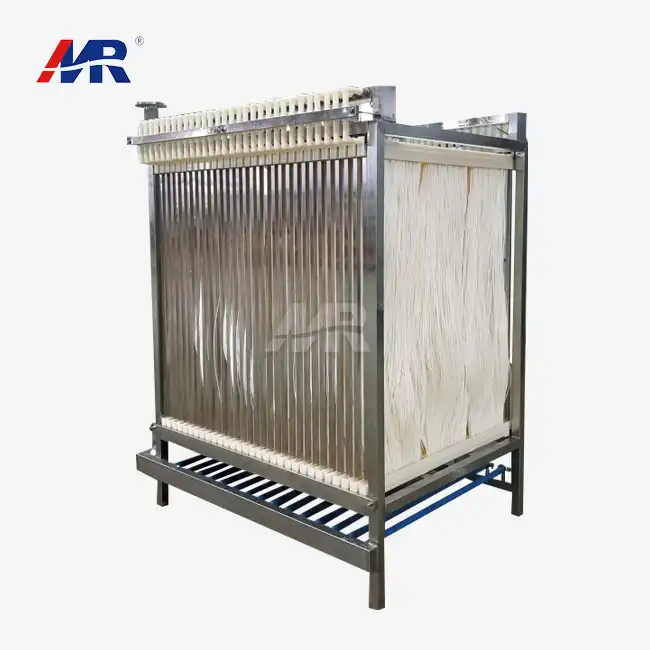
Thin-film composite membranes are the membranes of choice for modern brackish water RO systems, including a BWRO plant. Thin film composite membranes consist of a thin polyamide barrier laminated onto a stronger porous support. This construction results in high rejection with good water flux. A review of the technology in relation to the circular economy confirmed that adequate feed pretreatment, early detection of fouling, and scheduled cleaning are still the main levers to extend the service life of membranes over a plant's operating years (Membranes Journal, 2022).
Fouling Resistance and Chemical Tolerance
The rate at which organic debris and bacteria attach to the membrane surface, and hence the frequency of chemical cleaning cycles, is affected by membrane coatings and surface chemistry. Our MR series membranes have a high-performance, low-fouling thin-film composite composition designed to optimize the interval between cleanings on common industrial and municipal feedwater sources.
How Can Scaling Reduce Brackish Water RO Performance?
Scaling is one of the most typical operational problems in brackish water RO systems. Concentrating dissolved minerals in the reject stream will obviously increase the tendency of these minerals to crystallize on the membrane surface.
How does the Langelier Saturation Index guide operation
The Langelier Saturation Index, a calculation based on pH, temperature, total dissolved solids, calcium hardness, and alkalinity, tells operators of an Industrial RO plant how close the reject stream is to the point where calcium carbonate will start precipitating out of solution. Research applying acid treatment to control this index found that correcting an abnormal saturation index restored product flow and reduced rejection stream pressure within two months of implementation, extending both cleaning intervals and membrane life (International Journal of Environmental Science and Technology, 2020).
Recognizing Scaling Before It Damages Membranes
An increasing differential pressure across the membrane array and a slight decrease in permeate flow at constant feed pressure are often an indication of scale formation before it is detectable by any other means. If the operator is able to detect the scaling early by regular monitoring, he/she may plan a cleaning cycle before the scaling creates a permanent, non-reversible harm to the membrane.
What Operating Conditions Optimize Brackish Water RO?
Getting consistent performance from an industrial RO plant for brackish water depends on matching operating parameters to the specific feedwater rather than running every system at identical default settings.
Case Study: A Mineral Processing Plant in Peru
A mineral processing operation in northern Peru approached Guangdong Morui in 2025, needing process water treated from a brackish well source running roughly 6,800 ppm TDS, well above what their existing single-stage system could handle reliably. Frequent membrane fouling had cut their effective recovery to just 42%, forcing the plant to source supplemental water by truck during peak production periods. Our engineering team specified a properly sized multimedia and cartridge pretreatment train, paired with antiscalant dosing calibrated to the site's specific calcium and sulfate levels, along with a membrane array resized for the actual feed salinity rather than the generic specification the plant had originally installed.
After commissioning, the plant's recovery rate rose to 74%, and differential pressure readings across the membrane array stabilized within the normal operating range, a milestone the plant had not reached since its original installation. The plant's operations manager confirmed the redesigned pretreatment and dosing system cut chemical cleaning frequency by roughly half, while daily process water output increased enough to eliminate the trucked-in supplemental supply entirely within the opening month of operation.
Temperature and Flow Management
Feed water temperature affects membrane flux directly, with colder water producing lower permeate output at the same applied pressure. An RO water purification system running variable frequency drives on its feed pumps can compensate for this seasonal or daily temperature swing automatically, holding production output steady without requiring constant manual pressure adjustments from plant operators.
Monitoring and Documentation
Consistent performance from a brackish water reverse osmosis system depends on tracking a handful of key readings over time rather than checking equipment only when something visibly goes wrong. Operators who log feed pressure, permeate flow, conductivity, and differential pressure on a regular schedule can spot a gradual trend toward fouling or scaling weeks before it would otherwise become obvious through declining water quality or unexpected downtime. Our commissioning process for every MR series installation includes setting up this baseline monitoring routine, since a system without documented performance history gives an operator no way to tell whether a reading is normal or an early warning sign.
Conclusion
Brackish water reverse osmosis works through a straightforward physical principle: applied pressure overcoming natural osmotic pressure, but getting consistent, reliable performance from that principle depends entirely on matching pretreatment, membrane selection, and operating parameters to the specific feed water involved. Buyers who understand each stage of the process, from sediment removal through post-treatment, are far better equipped to evaluate whether a proposed system will actually deliver its quoted recovery rate and water quality once installed. Feed water analysis, not a generic spec sheet, should always drive the final system design.
FAQ
1. What pressure does brackish water reverse osmosis typically require?
Most brackish water RO systems operate between 30 and 250 psi, with the exact pressure depending on the specific salinity of the feed water source.
2. How long do brackish water RO membranes typically last?
Properly maintained membranes typically last 3 to 5 years, though membrane life depends heavily on pretreatment quality, scaling control, and cleaning frequency.
3. Can brackish water RO systems handle water with fluctuating salinity?
Yes, systems equipped with automated control and variable frequency drives can adjust operating parameters to maintain consistent output as feedwater salinity shifts throughout the year.
4. Does brackish water RO remove bacteria and viruses?
Yes, the membrane's physical pore structure rejects bacteria and viruses at rates typically exceeding 99%, alongside dissolved salts and minerals.
5. How often should a brackish water RO system be cleaned?
Cleaning frequency depends on feedwater quality, pretreatment performance, and operating conditions. Most systems require chemical cleaning when normalized permeate flow drops, differential pressure rises, or salt passage increases noticeably, rather than following a fixed cleaning schedule.
Talk to Our Engineers About Your Water Source
Matching pretreatment, membrane selection, and operating pressure to your actual feed water is what separates a system that performs from one that disappoints. Guangdong Morui Environmental Technology, a brackish water reverse osmosis manufacturer with its own membrane production facility and 20 in-house engineers, designs every system around documented water chemistry rather than a generic template. Email benson@guangdongmorui.com with your water analysis.
References
1. U.S. Geological Survey (USGS). (2017). New USGS assessment provides fresh insights into nation's brackish groundwater inventory. Referenced for the definition and scale of brackish groundwater resources. https://www.usgs.gov/news/national-news-release/usgs-assessment-brackish-water-could-help-nation-stretch-limited
2. Membranes journal, National Center for Biotechnology Information (NCBI). (2022). Thin Film Composite Polyamide Reverse Osmosis Membrane Technology towards a Circular Economy. Referenced for membrane construction and service-life extension practices. https://www.ncbi.nlm.nih.gov/pmc/articles/PMC9502371/
3. Pearson, J. L., Michael, P. R., Ghaffour, N., & Missimer, T. M. (2021). Economics and Energy Consumption of Brackish Water Reverse Osmosis Desalination: Innovations and Impacts of Feedwater Quality. Membranes, 11(8), 616. Referenced for BWRO energy and pressure requirements versus seawater RO. https://www.ncbi.nlm.nih.gov/pmc/articles/PMC8399043/
4. National Center for Biotechnology Information (NCBI). (2022). Foulant Identification and Performance Evaluation of Antiscalants in Increasing the Recovery of a Reverse Osmosis System Treating Anaerobic Groundwater. Referenced for scaling limits on recovery rate. https://www.ncbi.nlm.nih.gov/pmc/articles/PMC8950045/
5. International Journal of Environmental Science and Technology. (2020). Study on Langelier Saturation Index control and operational parameters in reverse osmosis membranes. Referenced for scaling detection and correction through acid treatment. https://link.springer.com/article/10.1007/s13762-020-03015-1
6. U.S. Environmental Protection Agency (EPA). (2024). WaterSense Specification for Point-of-Use Reverse Osmosis Systems, Version 1.0. Referenced for salt rejection and recovery rate testing standards. Products-watersense-ro-systems-specification.pdf">https://www.epa.gov/system/files/documents/2024-11/ws-products-watersense-ro-systems-specification.pdf
About the Author
Bin Liu is a Process Engineering Manager at Guangdong Morui Environmental Technology Co., Ltd, where he designs and commissions brackish water reverse osmosis systems for municipal, agricultural, and industrial clients across Asia, South America, and Africa. He works directly with plant operators to diagnose fouling and scaling issues, size pretreatment trains correctly, and match membrane arrays to real feed water chemistry, and he has supported system design and troubleshooting on projects spanning mineral processing, food and beverage, and municipal water supply.