_1745823981883.webp)

How Does 3T/H Reverse Osmosis Equipment Work? A Complete Buyer Guide
A production manager who wants to know how their water gets clean seldom wants a lesson on chemistry. They want to know whether the machine will continue to operate at 2 a.m. with no one standing over it. The 3T/H reverse osmosis equipment forces raw water through a semi-permeable membrane under pressure, removing salts, bacteria, and dissolved solids at a constant 3,000 litres an hour. In this tutorial, we will go over the details of how this process works, what water quality you can anticipate, which industries depend on this capability, and how to find a provider that continues to support the equipment after the invoice.
What Is 3T/H Reverse Osmosis Equipment?
Reverse osmosis is the process of forcing water through a membrane the other way. Instead of water flowing naturally towards a saltier solution, a high-pressure pump pushes it the opposite way, leaving pollutants behind on one side. This is done on a continuous basis using a 3T/H reverse osmosis equipment unit that produces three cubic metres of filtered water per hour, or around 13 gallons per minute for readers familiar with imperial measurements.
Where Does This Capacity Fit?
The mid-small industrial tier is three tonnes an hour. It is suited for workshops, experimental production lines, laboratory support facilities and smaller industrial units that need reliable filtered water without the footprint or expense of a big municipal-scale system. When buyers are scaling up from a benchtop unit, the obvious next step is frequently 3T/H reverse osmosis equipment, as daily water consumption exceeds what a small polishing loop can provide.
Core Physical Components
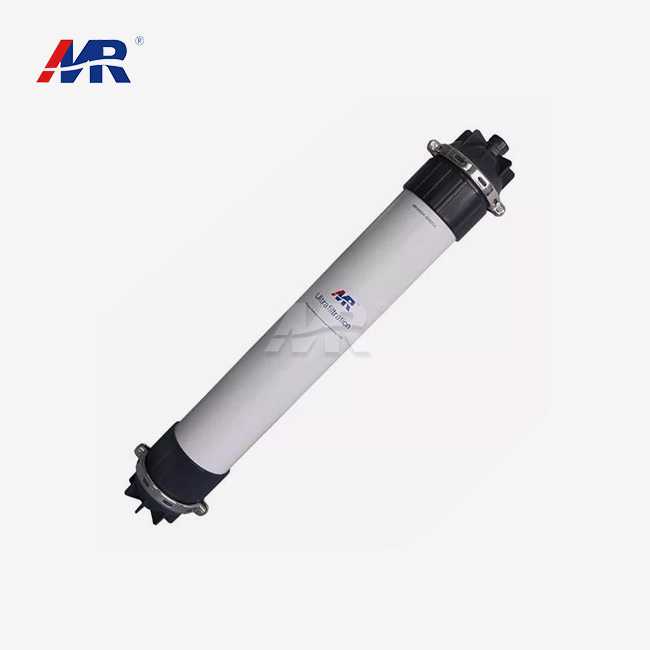
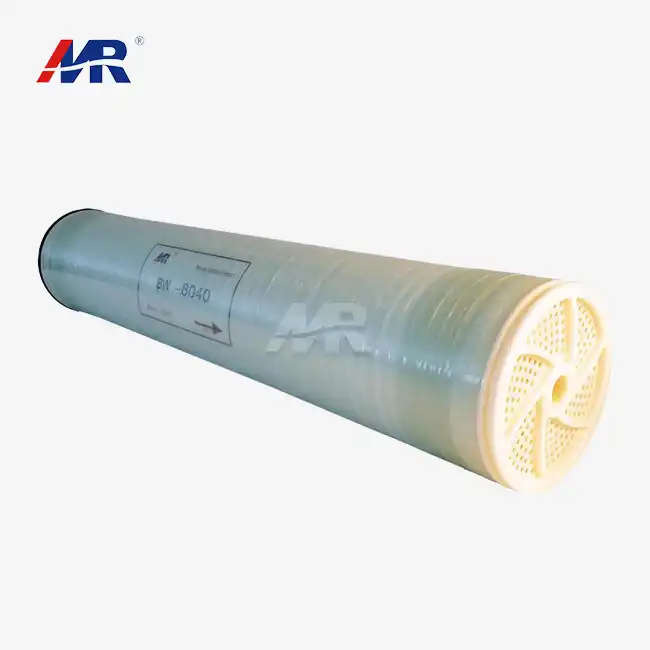
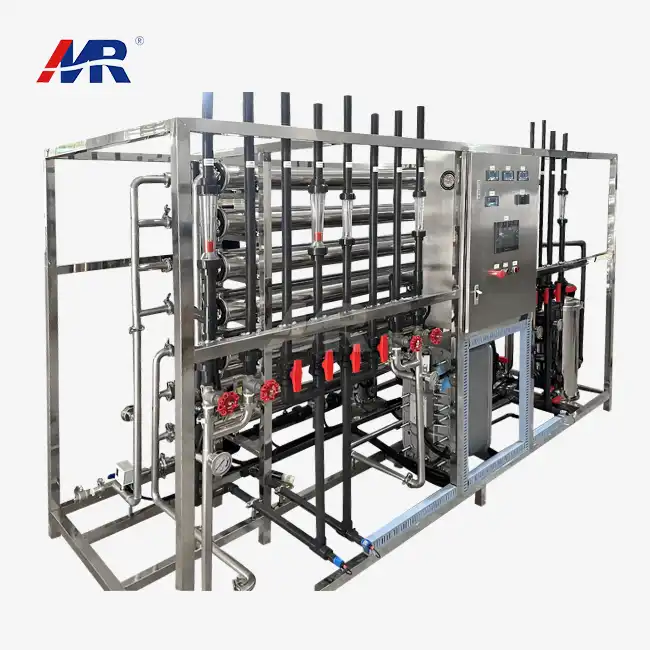
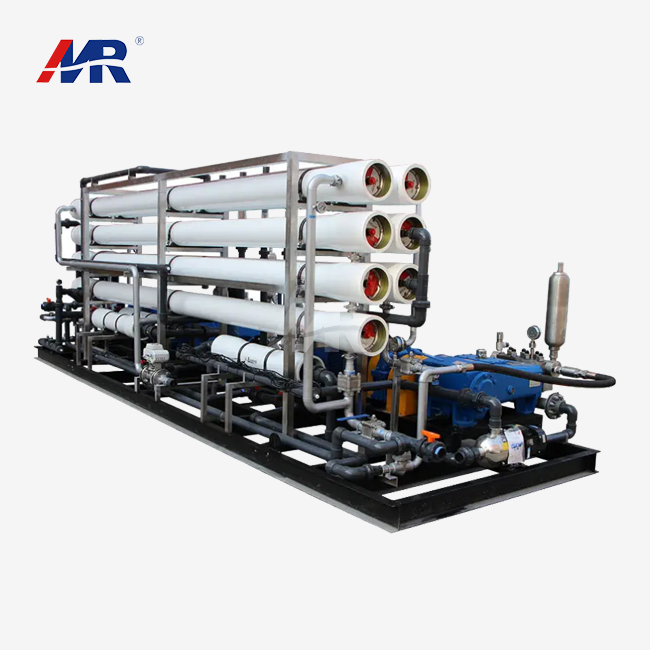
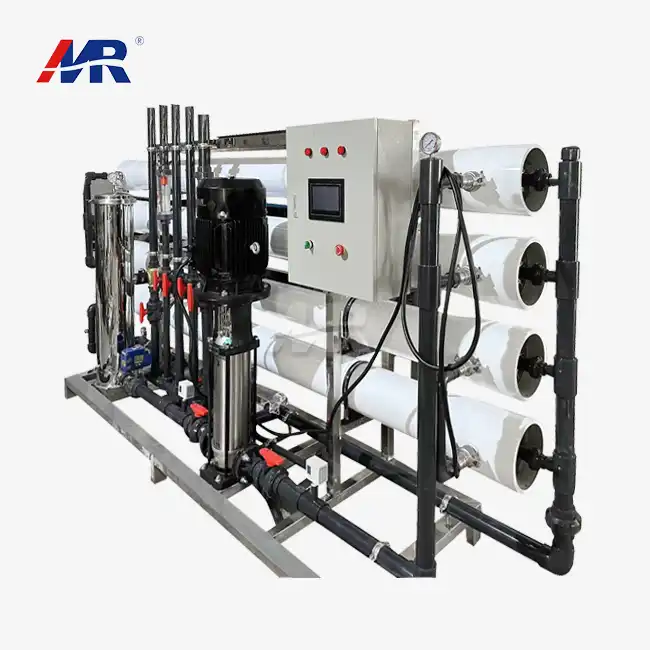
A full system consists of a raw water feed pump, pretreatment filtration, a high-pressure pump, spiral-wound membrane housings filled with thin-film composite materials, and a control cabinet. The 3T/H reverse osmosis equipment made by Guangdong Morui uses stainless steel throughout, since corrosion resistance is critical in the humid tropical climes all around Southeast Asia and coastal West Africa, where most of this equipment is sent.
Compact Design Without Compromise
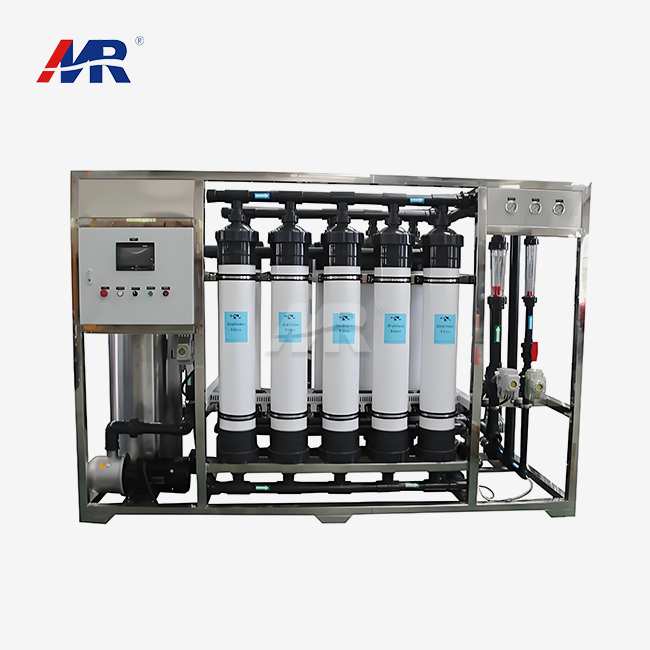
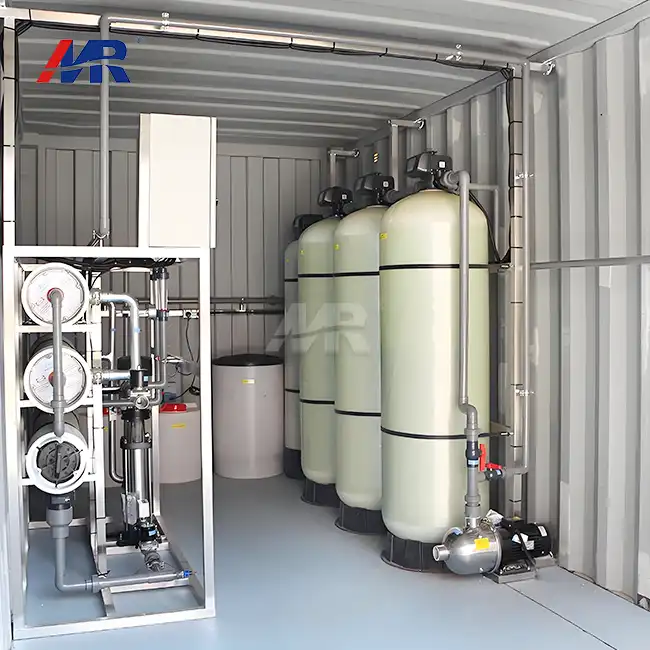
Factory floors are already crammed with production lines, so space is often at a premium. That’s why a 3T/H reverse osmosis equipment package is developed with a small footprint that fits into an existing utility corner rather than requiring yet another building. The skid design integrates pretreatment, pumping, and membrane housings into one unit, instead of separate cabinets; thus, visitors viewing a plant for the first time frequently anticipate a system with such capability to take up a lot more space.
How Does a 3T/H RO System Work?
Water is pumped into a storage tank and goes through five separate phases before it is ready for use. If you omit any of these, the membrane life and output quality are reduced.
Stage One: Raw Water Intake and Pretreatment
Feed water is filtered using sediment filters and activated carbon medium to remove suspended particles, chlorine, and organic compounds that would otherwise destroy the membrane surface in weeks rather than years.
Stage Two: High-Pressure Pumping
A pump boosts the water pressure above the natural osmotic pressure (normally 10 to 16 bar for brackish or municipal supply water) in a 3T/H reverse osmosis equipment system. This is where the bulk of the system’s energy demand occurs.
Stage Three: Membrane Separation and Post-Treatment
The membrane surface is washed by water under pressure. One side lets out the purified permeate, and the concentrated reject water carrying the salts and impurities flushes down the drain. Following treatment, polishing is carried out, often a minor ion exchange or UV step, to further polish the permeate for delicate uses such as pharmaceutical or electronics manufacture.
Automated Monitoring Throughout the Process
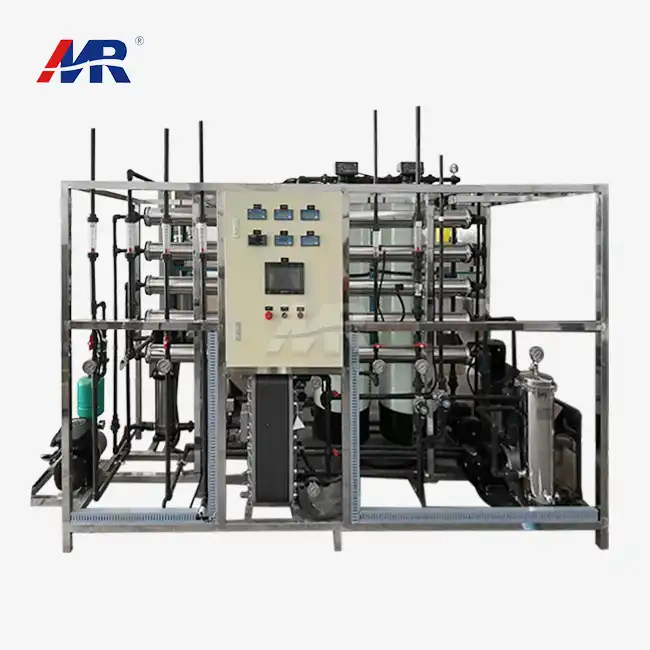
A PLC-based control system with a touch screen interface monitors flow rate, pressure, and conductivity at each step, eliminating the need for an operator to manually report values every hour. This level of automation is especially valuable for industries with unsupervised overnight shifts when a 3T/H reverse osmosis equipment unit has to alert a growing issue independently, instead of waiting until a morning inspection to detect a failure that has caused hours of off-spec water.
What Water Quality Can a 3T/H RO System Produce?
Two figures matter more than anything else to buyers: how much of the feed water becomes useful output and how clean that output is going to be. Properly constructed 3T/H reverse osmosis equipment unit addresses both questions with verifiable, reproducible data instead of hazy marketing promises.
Recovery Rate Explained
Recovery rate is the proportion of feed water converted to permeate. In a conventional setup, Morui may recover up to 75 per cent, or three-quarters, of the raw water that enters the system as usable filtered water, rather than as concentrate outflow.
Rejection Rate and Contaminant Removal
High-flux, low-fouling membranes provide superior filtration, removing up to 99 per cent of dissolved solids and pollutants, including hardness minerals, heavy metals and microbiological contamination. That threshold remains constant for most brackish and municipal feed sources, while badly polluted well water may need an extra pretreatment step to achieve the same level.
| Parameter | Typical Output | Why It Matters |
|---|---|---|
| Recovery Rate | Up to 75% | Determines raw water consumption and wastewater volume |
| Contaminant Rejection | Up to 99% | Sets baseline purity before any polishing stage |
| Membrane Type | High-flux, low-fouling TFC | Balances output flow against long-term fouling resistance |
| Automation Level | Fully automated PLC control | Reduces operator error and staffing needs |
Which Industries Need 3T/H RO Equipment?
This capacity draws inquiries from a wide spread of sectors, and the reasons rarely overlap much between them. What unites every buyer is a production process that cannot tolerate inconsistent water quality.
Electronics and Semiconductor Manufacturing
Chip cleaning and precision component rinsing need water with extremely low ionic content. A 3T/H reverse osmosis equipment line typically feeds a downstream EDI or ion exchange polishing stage to reach the ultrapure water specifications defined under SEMI F63 guidelines for semiconductor processing.
Pharmaceutical and Laboratory Applications
Purified water for GMP-regulated production, along with laboratory-grade water for research institutions, commonly starts with RO before further polishing. United States Pharmacopeia General Chapter 1231 specifies that source water for pharmaceutical purified water and water for injection must meet drinking water quality at a minimum before treatment begins, which is exactly the baseline this equipment class is built to clear.
Electroplating and Chemical Processing
Facilities running electroplating or metal finishing operations use deionized and RO-treated water both for process baths and for treating wastewater ahead of discharge. Regulatory limits on metals like copper, nickel, chromium, and zinc in wastewater discharged to public treatment works make documented water treatment a compliance necessity rather than an optional upgrade.
Municipal and Small Utility Applications
Regional water plants upgrading a drinking water purification process, and smaller municipal or island utilities without the demand to justify a large desalination plant, frequently specify this capacity as a right-sized starting point. A 3T/H reverse osmosis equipment installation can also serve ships and offshore platforms needing a compact freshwater supply during long voyages, where floor space and power draw both carry a premium.
The table below summarizes where this capacity typically slots into each sector's process line, alongside the water quality target each application demands.
| Industry | Typical Use | Water Quality Target |
|---|---|---|
| Electronics/Semiconductor | Chip rinsing, precision cleaning | Ultrapure, paired with EDI polishing |
| Pharmaceutical/Lab | Purified water, research use | Meets USP Purified Water baseline |
| Food & Beverage | Mixing, bottling, CIP rinse | Low TDS, consistent taste profile |
| Electroplating/Chemical | Process baths, wastewater treatment | Reduced metals and TDS |
| Municipal/Small Utility | Drinking water upgrade | Meets national potable standards |
Ready to See 3T/H RO Equipment Running in Your Facility?
Water quality inconsistency stalls production lines faster than almost any other utility failure. Morui manufactures 3T/H reverse osmosis equipment as a complete package, not a reseller assembling parts from three different vendors. Contact benson@guangdongmorui.com with your raw water analysis to receive a configured quote from a manufacturer and supplier that also runs its own membrane production factory.
How Does 3T/H RO Compare With Smaller Systems?
Buyers weighing 3T/H reverse osmosis equipment against a smaller 1T/H unit or a larger 5T/H system need a clear picture of where each option actually fits, not just a price comparison.
When a Smaller System Falls Short?
A 1T/H unit struggles the moment production scales past a single shift or a pilot line. Operators end up running the system continuously at maximum capacity with no buffer for peak demand, which accelerates membrane wear and leaves zero margin for maintenance downtime.
When is a Larger System Is Overkill?
A 5T/H or larger system costs more upfront, needs more floor space, and often runs well below its rated capacity for facilities that genuinely only need 3,000 liters an hour. Oversizing wastes capital that could go toward better pretreatment or a service contract instead.
| Metric | 1T/H System | 3T/H System | 5T/H System |
|---|---|---|---|
| Best Fit | Lab, pilot line | Workshop, small-to-mid factory | Continuous multi-line plant |
| Footprint | Very compact | Compact single skid | Larger skid, more piping |
| Redundancy | None typically | Optional dual-train | Standard dual-train |
| Daily Output | ~24 m³ | ~72 m³ | ~120 m³ |
What Pretreatment Does a 3T/H RO System Need?
Membrane failure in 3T/H reverse osmosis equipment traces back to poor pretreatment far more often than to a manufacturing defect. Skipping this step to save money upfront is the most expensive mistake a buyer can make.
Standard Pretreatment Stages
Water passes through sediment filters to remove suspended solids, then through carbon filters to strip chlorine and organic matter that would otherwise foul the membrane surface within a short operating window.
Matching Pretreatment to Feed Water Chemistry
Well water with elevated iron, manganese, or hardness needs softening or oxidation steps that municipal feed water rarely requires. A 2025 study published in Water Science and Technology on industrial water reclamation found that feed water characteristics and recovery rate together determine both fouling behaviour and specific energy consumption, reinforcing why pretreatment design should match the actual source rather than a generic template.
Getting this stage right protects the equipment investment across the full service life of an industrial RO plant. Underinvesting here routinely costs more in early membrane replacement than the pretreatment upgrade would have cost at commissioning.
What Factors Affect 3T/H RO System Performance?
Two identical machines installed at different sites can perform very differently once real-world conditions enter the picture. Buyers should understand what actually moves the needle on output and longevity.
Feed Water Temperature and Chemistry
Colder feed water reduces membrane permeability, which lowers output unless the system is sized with that variation in mind. Seasonal chemistry swings, especially in regions with monsoon-driven turbidity spikes, also shift performance if pretreatment was not designed for the worst-case scenario.
Operator Discipline and Automation
A fully automated operation with an intelligent control system reduces the performance gap between a well-run site and a poorly monitored one. Manual systems depend heavily on operators catching pressure drift or conductivity spikes before they cause downstream damage, while automated dosing and monitoring catch these issues immediately.
Here is what tends to separate a system running at rated performance for a decade from one that underperforms within its opening two years:
- Consistent feed water testing. Facilities that test raw water quarterly, not just at commissioning, catch chemistry drift before it fouls a membrane, since seasonal changes in turbidity or hardness routinely shift enough to require a pretreatment adjustment that a one-time test would never reveal.
- Proper storage tank sizing. An undersized permeate storage tank forces the RO system to cycle on and off constantly, which stresses the high-pressure pump and shortens its service life compared with a system that runs at a steady, continuous rate matched to actual demand.
These practices explain why an industrial RO plant can report a very different membrane replacement schedule even when running identical equipment within the same operating region.
How Much Energy Does a 3T/H RO System Use?
Energy consumption is optimized for efficiency in a well-designed system, but the actual figure still depends heavily on feed water salinity and pump selection.
Where Does Energy Come From?
The high-pressure pump accounts for most of the electricity that a 3T/H reverse osmosis equipment unit consumes, since it must maintain pressure continuously against osmotic resistance. Variable frequency drives are paired with the pump trim consumption by matching output to real-time demand rather than running at a fixed maximum around the clock.
Industry Benchmarks Worth Knowing
Peer-reviewed research on industrial reverse osmosis performance found specific energy consumption around 0.58 to 0.96 kWh per cubic meter across varying recovery rates and feed sources, figures broadly in line with well-designed brackish water systems at this capacity tier. A separate industrial case study documented a beverage manufacturer raising the recovery rate from 75 to over 85 percent through pretreatment and cleaning improvements, cutting energy costs by 14 percent in the process. Numbers like these show why energy performance deserves the same scrutiny as purchase price when comparing quotes.
Cutting Waste Without Cutting Output
Facilities focused only on purchase price sometimes overlook that a poorly optimized 3T/H RO water purification system wastes both electricity and raw water simultaneously, since a low recovery rate forces the feed pump to process more water than necessary to hit the same permeate target. Reviewing recovery rate alongside kWh-per-cubic-meter figures during procurement catches this issue before it becomes a recurring utility bill problem.
How Do You Choose the Right 3T/H RO System?
Selecting a manufacturer matters as much as selecting the specification sheet. A well-built skid installed without proper commissioning support underperforms no matter how good its membrane rating looks on paper.
Questions to Ask Before You Buy
Ask for documented recovery and rejection data from a site with feed water similar to yours, not just clean factory-condition test results. Ask whether the manufacturer produces its own membranes and components or resells another brand under its own label, since in-house production usually means faster spare parts and more responsive support.
Why Manufacturer Scale and Support Matter?
Guangdong Morui Environmental Technology Co., Ltd. operates more than 14 branches with over 500 employees and roughly 20 in-house engineers, backed by its own membrane production factory and several equipment processing facilities. That structure means a buyer gets equipment supply, installation, and commissioning support from one accountable source rather than juggling separate vendors for pumps, membranes, and controls. Morui also serves as an authorized agent for established component brands, including Shimge water pumps, Runxin valves, and Createc instruments, giving buyers documented component traceability alongside the core 3T/H reverse osmosis equipment package.
Customization for Local Feed Water Conditions
No two raw water sources behave identically, which is why a customizable specification matters more than a fixed catalog listing. A supplier willing to tailor pretreatment intensity, membrane count, and automation depth to a buyer's specific well or municipal source can provide an RO water purification system that delivers better long-term performance than one selling a single standard configuration to every customer regardless of location.
A Real Deployment: Electronics Component Plant in Vietnam
A circuit board component manufacturer outside Ho Chi Minh City approached Morui after its existing filtration setup could not hold consistent conductivity readings during the wet season, when raw water turbidity spiked and rinse water quality drifted enough to affect yield. Morui installed a 3T/H reverse osmosis equipment line with an upgraded multimedia pretreatment stage and a downstream EDI polishing loop sized for the plant's specific feed water profile.
Measured Results After Commissioning
Across the following six months, the plant recorded rejection performance holding above 98 percent on continuous monitoring, with a recovery rate stable near 74 percent even during the seasonal turbidity spike that had previously caused two production holds. Rinse water conductivity failures affecting yield dropped from roughly nine incidents in the prior wet season to zero, based on the plant's own quality control logs shared with Morui's engineering team during a follow-up review.
How Do You Maintain 3T/H RO Equipment?
Routine maintenance keeps rejection rates high and energy draw predictable across years of continuous service. A neglected system drifts toward higher pressure, lower recovery, and eventually premature membrane failure.
Daily and Weekly Checks
Operators should log feed pressure, permeate flow, and conductivity daily to catch drift in the reverse osmosis plant before it becomes a failure. Weekly checks on pretreatment filter pressure differential flag clogging before the high-pressure pump has to work harder than it was designed to.
Membrane Cleaning and Component Lifespan
Chemical cleaning-in-place, generally scheduled quarterly for well-maintained systems, restores membrane performance without full replacement. Membranes typically last three to five years under proper pretreatment conditions, and the durable, corrosion-resistant materials used in Morui's construction extend the working life of the skid itself well past the membrane replacement cycle.
Building a Simple Maintenance Log
A basic maintenance log tracking pressure, flow, and conductivity readings against a normalized baseline gives operators an early warning system that raw numbers alone cannot provide, since water temperature shifts those readings independently of actual membrane fouling. Facilities that skip this step often discover a fouling problem only after output has already dropped enough to affect production, at which point cleaning takes longer and costs more than it would have during a routine check.
Following this discipline, a properly pretreated 3T/H reverse osmosis equipment system can run for well over a decade with routine membrane and component replacement, rather than requiring an early full-system overhaul.
Conclusion
A 3-ton per hour 3T/H reverse osmosis equipment system sits at the capacity most workshops, small factories, and specialized production lines actually need once they move past pilot-scale water treatment. It balances footprint, cost, and output in a way that neither an undersized unit nor an oversized municipal-scale system can match. Getting pretreatment, automation, and supplier support right at the start determines whether the equipment delivers a decade of steady service or a string of avoidable production holds.
FAQ
1. How much water does a 3T/H RO system produce per day?
Running continuously, the system produces roughly 72 cubic meters of purified water over 24 hours, though actual daily output depends on shift patterns and scheduled maintenance windows.
2. What is the recovery rate of a 3T/H reverse osmosis system?
Most well-configured systems at this capacity reach a recovery rate up to 75 percent, meaning about three-quarters of the feed water becomes usable permeate while the rest exits as concentrate.
3. Can a 3T/H RO system meet pharmaceutical or electronics purity standards on its own?
RO alone typically reaches contaminant rejection near 99 percent, which covers bulk purification. Pharmaceutical and semiconductor applications usually pair it with EDI, ion exchange, or ultrafiltration polishing to meet stricter USP or SEMI F63 specifications.
4. How much floor space does a 3T/H system need?
Most skids in this capacity range fit inside a compact utility area, generally under 15 square meters, provided there is drainage for concentrate discharge and clear access for filter and membrane servicing.
5. How often should 3T/H RO equipment be serviced?
A 3T/H RO system should be monitored daily for pressure, flow, and conductivity, while pretreatment filters require regular inspection. Membrane cleaning is typically performed when normalized performance declines rather than strictly by calendar date. Preventive servicing helps maintain stable output, reduce energy consumption, and avoid unexpected production interruptions.
Get a Configured Quote Based on Your Raw Water Data
Generic spec sheets cannot account for your plant's specific turbidity, hardness, or shift schedule. Morui's engineering team reviews your water analysis and proposes a configured 3T/H reverse osmosis equipment solution as a manufacturer and supplier, not a reseller passing along someone else's design. Send your feed water data to benson@guangdongmorui.com to start a formal quote.
References
1. World Health Organization, "Total Dissolved Solids in Drinking-water," Chemical Fact Sheets, Guidelines for Drinking-water Quality, 2022. Referenced for TDS classification and palatability standards. https://cdn.who.int/media/docs/default-source/wash-documents/water-safety-and-quality/chemical-fact-sheets-2022/total-dissolved-solids-fact-sheet-2022.pdf
2. United States Pharmacopeia, General Chapter <1231> "Water for Pharmaceutical Purposes." Referenced for source water and purified water requirements in GMP manufacturing. http://www.uspbpep.com/usp29/v29240/usp29nf24s0_c1231.html
3. SEMI, "F63 - Guide for Ultrapure Water Used in Semiconductor Processing." Referenced for ultrapure water quality expectations in electronics manufacturing. Products/f06300-semi-f63-guide-for-ultrapure-water-used-in-semiconductor-processing">https://store-us.semi.org/products/f06300-semi-f63-guide-for-ultrapure-water-used-in-semiconductor-processing
4. U.S. Environmental Protection Agency, "Electroplating Effluent Guidelines," 40 CFR Part 413. Referenced for regulated metals discharge limits relevant to electroplating water treatment. https://www.epa.gov/eg/electroplating-effluent-guidelines
5. Mordor Intelligence, "Reverse Osmosis Membrane Market - Size, Trends & Manufacturers," 2025. Referenced for membrane market growth and industrial segment trends. https://www.mordorintelligence.com/industry-reports/reverse-osmosis-membrane-market
6. Water Science & Technology, IWA Publishing, "Effects of feed wastewater characteristics and recovery rate on industrial wastewater reuse by reverse osmosis process," 2025. Referenced for recovery rate effects on energy consumption and fouling. https://www.sciencedirect.com/science/article/pii/S2666016426000034
About the Author
Bin Liu, Water Treatment Systems Engineer. Bin has spent over a decade specifying, commissioning, and troubleshooting industrial RO, UF, and edi systems for electronics, pharmaceutical, and food and beverage clients across Asia. His work centers on matching membrane technology and pretreatment design to real feed water conditions rather than generic spec sheets.