

_1745823981883.webp)

How Does Reverse Osmosis Water Treatment Equipment Work for Industry?
Every time feed water wanders out of spec, industrial operations lose productivity hours. Reverse osmosis water treatment equipment deals with this by forcing water through a semi-permeable membrane under pressure, removing dissolved salts, bacteria, and organic pollutants in one continuous pass. This tutorial explains the physics of industrial RO, the water sources it processes, and the operational data that maintain a system functioning at its rated output. You’ll also learn how a Southeast Asian beverage facility decreased unexpected downtime after transitioning to a correctly scaled system, including actual recovery and uptime data from that project.
Guangdong Morui Environmental Technology makes and sells reverse osmosis water treatment equipment for enterprises that can’t afford uneven water quality. Our technical staff designs each system based on your feed water report, not a generic template. This ensures that the membrane array, pump, and pretreatment stage are tailored to your exact site circumstances. “Contact our technical desk for a configuration review before your next procurement cycle at benson@guangdongmorui.com.
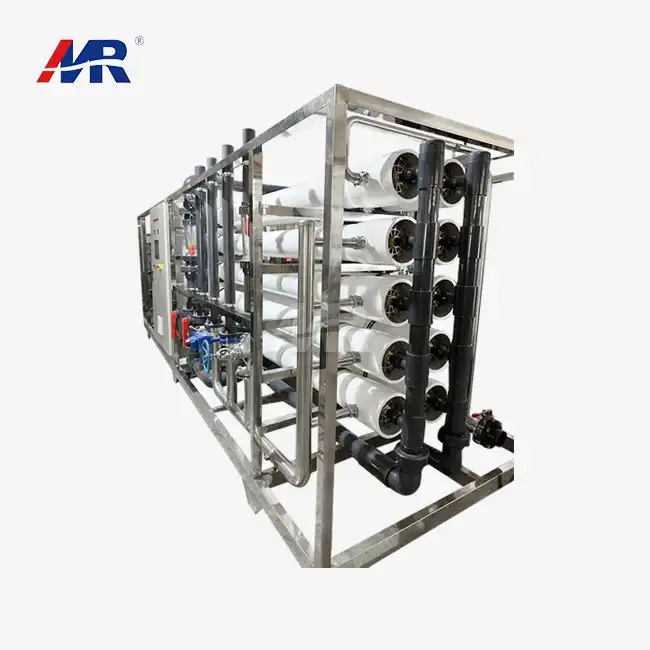
Why Is RO Effective for Industrial Water Purification?
Reverse osmosis works because it is the reversal of a natural process. Osmosis is the movement of fresh water over a membrane into a saltier solution. Applying pressure larger than the natural osmotic pressure forces the flow backwards, pushing clean water through the barrier while salts, bacteria, and most organic molecules remain behind. This process eliminates up to 99.5% of dissolved solids in a single pass, a rejection threshold that the U.S. EPA specifies in its study of membrane separation technologies (EPA, 2026). Rejection rate is important for factories that operate bottling lines, boilers, or cooling towers because it means fewer scale deposits and more predictable output.
The Core Separation Principle Behind RO
A semi-permeable membrane is at the hub of every reverse osmosis water treatment equipment package. Its holes are on the order of 0.0001 microns, tiny enough to stop salts, viruses, and most bacteria but large enough to allow the free passage of water molecules. Feed water is pumped into the membrane housing (10-16 bar for brackish sources is common), and the stream divides in two on the way out.
Permeate, Concentrate, and What Each Stream Delivers
The cleaned stream is called permeate, and the residual stream is called concentrate, frequently referred to as 'reject' or 'brine' by plant engineers. The permeate is sent to the boiler, the bottling head, or the process line. Concentrate, including rejected salts, must be properly discharged or reused, particularly for companies facing stricter wastewater regulations.
Comparing RO to Other Purification Methods
Plant engineers often compare reverse osmosis with ultrafiltration, ion exchange, and thermal distillation when choosing equipment. Each approach eliminates a different spectrum of pollutants and has a different energy cost. The table below compares four typical techniques side-by-side.
| Method | Contaminants Removed | Typical Energy Use | Best Fit |
|---|---|---|---|
| Reverse Osmosis (RO) | Dissolved salts, bacteria, viruses, and most organics | 1.5–2.5 kWh/m³ (brackish) | Process water, boiler feed, bottling, desalination |
| Ultrafiltration (UF) | Suspended solids, colloids, and most bacteria | 0.3–0.8 kWh/m³ | Pretreatment ahead of RO, turbid surface water |
| Ion Exchange (IX) | Specific dissolved ions (hardness, nitrate) | Low, plus resin regeneration cost | Polishing after RO, low-TDS softening |
| Thermal Distillation | Nearly all dissolved and suspended matter | 10–16 kWh/m³ | High-salinity brine, remote sites with waste heat |
Reverse osmosis dominates the energy costs for most brackish and municipal sources, and reverse osmosis water treatment equipment presently supports over 60% of the world’s installed desalination capacity by volume (European Commission Blue Economy Observatory, 2024). Thermal techniques still make sense at locations with inexpensive waste heat, but few companies qualify.
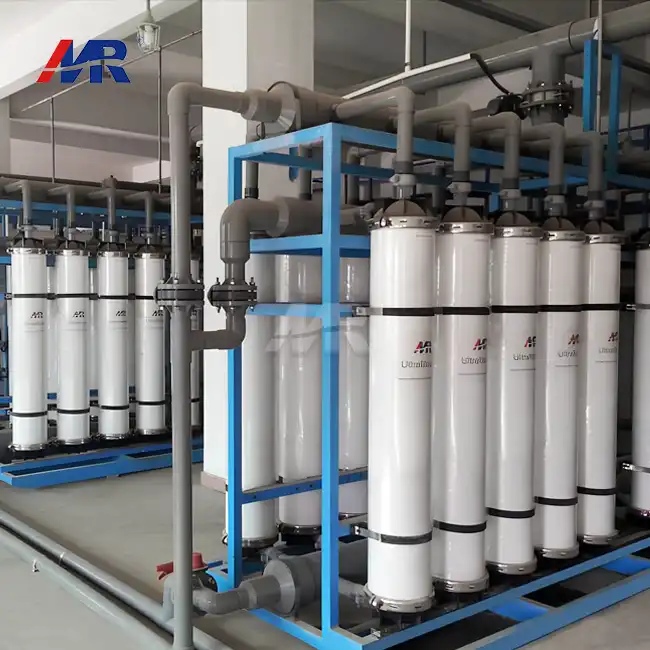
Energy cost should also be compared to footprint and personnel demands, procurement teams said. A skid-mounted reverse osmosis water treatment equipment package often requires less floor area than a comparable ion exchange train with its resin tanks and regeneration chemical storage. Conversely, ultrafiltration units occupy less space than RO. However, ultrafiltration units alone cannot remove dissolved salts. This is also the reason why most industrial facilities operate both UF and RO in series, instead of using one or the other.
What Happens Inside an Industrial RO Membrane?
Spiral-wound membrane elements are coiled around a central collecting tube inside a pressure vessel. Feed water flows between membrane sheets along a mesh spacer, and permeate spirals toward the tube from the inside. The design packs a lot of surface area into a small container, so a single 8-inch element may treat thousands of gallons every day.
Membrane Chemistry and Structure
Most of the industrial aspects are based on a thin film composite of polyamide on a support cloth. The active layer is a fraction of a micron thick, thin enough to allow water to pass rapidly, but dense enough to reject salt chloride at a rate higher than 99%. In reverse osmosis water treatment equipment, manufacturing consistency in this layer dictates how long a membrane can maintain its rated performance under daily pressure cycling.
The Role of the High-Pressure Pump
A high-pressure pump overcomes the osmotic pressure of the feed water and the friction loss across the membrane array. Energy recovery devices are typical on seawater systems, which use the pressure of the concentrate stream and reinject it into the process, greatly reducing the net power consumption of big installations.
Which Water Sources Are Suitable for Industrial RO?
Given appropriate pretreatment for the source, reverse osmosis can treat a far broader spectrum of feed water than most engineers think. The number one reason for premature membrane replacement is selecting the incorrect pretreatment package. It’s also the most frequent error we see our engineers make when doing an audit of a client’s current reverse osmosis water treatment equipment prior to a system update.
Brackish Groundwater and Well Water
Brackish sources generally have total dissolved solids between 1,000 and 10,000 mg/L. Standard low-pressure membranes handle this range well. Recovery rates may frequently be as high as 75%, which is the top limit of many commercial systems on the market today.
Municipal and Surface Water
For city water and river input, reverse osmosis water treatment equipment often requires multimedia filtration or ultrafiltration upstream of the RO array to strip away sediment, algae, and organic materials. Skipping this procedure shortens the life of the membrane and increases the cleaning frequency within months.
Seawater
Desalination of saltwater requires a higher working pressure, often 55 to 80 bar, and specialist membranes that are approved for seawater. Global seawater reverse osmosis capacity exceeded 100 million m³/day in 2024—a fifteen-fold increase since the year 2000 (Grand View Research; IDA data collated 2024-2025).
Reclaimed and Processed Wastewater
More and more factories are recycling treated wastewater using RO to recover process water and reduce discharge volume. This approach saves both intake costs and effluent fees for water-stressed locations but calls for careful management of organic fouling.
Matching Pretreatment Design to Source Water
None of these four sources should feed the same pretreatment train without modifications. A typical wastewater reuse project requires a membrane bioreactor or ultrafiltration step prior to reverse osmosis water treatment equipment to remove the organic load, whereas a brackish well merely needs cartridge filtration and antiscalant dosing. A poor match on this match will increase the expense of chemical cleaning in the first year of operation and reduce the warranty window on the membrane components themselves.
When Should Factories Choose RO Over Other Methods?
RO is justified whenever a process requires consistently low-TDS water, independent of seasonal fluctuations in the feed supply. Ion exchange alone is challenged by that fluctuation, and thermal approaches seldom pencil out below seawater salinity.
Case Study: A Beverage Bottler in Vietnam
A mid-sized beverage bottler in southern Vietnam contacted Guangdong Morui Environmental Technology after several membrane failures were caused by an undersized pretreatment stage provided by the previous vendor. Our experts redesigned the multimedia filter, built a specialized antiscalant dosing skid, and installed a reverse osmosis water treatment equipment line with a capacity of 40 m³/hour at 75% recovery. Operating logs over a year reveal that unexpected downtime was reduced by 42%, and the frequency of membrane cleaning was reduced from every three weeks to every ten weeks. The facility is currently running consistently at 8 ppm product TDS during peak season, well within its bottling specification.
When Alternatives Still Make Sense?
Some small pharma laboratories will only use ion exchange for extremely small volume polishing. For high-salinity brine concentration, facilities close to geothermal or industrial waste heat may still choose thermal distillation. RO remains the default for industrial water treatment in these tight situations.
How Does Feed Water Quality Affect RO Operation?
Feed water chemistry influences almost every operational choice a company makes concerning its RO system, from membrane type to pretreatment budget. The only way to be sure that you don’t have undersized pumps or improper membrane chemistry is to have a complete feed water study completed prior to acquiring any reverse osmosis water treatment equipment.
Total Dissolved Solids and Osmotic Pressure
With increasing TDS, the osmotic pressure increases, which requires more energy to counteract and, therefore, pushes the systems to seawater-grade membranes at about 10,000 mg/L feed TDS and higher.
Turbidity and the Silt Density Index
Turbid feed water causes rapid fouling of membrane surfaces. Most manufacturers stipulate a maximum silt density index before warranty coverage is applicable. This is why pretreatment filtering is never optional on surface water intakes.
pH, Temperature, and Chlorine Exposure
Standard polyamide membranes used in reverse osmosis water treatment equipment typically work within a pH range of around 3 to 11 and may withstand limited free chlorine exposure before the active layer begins to decline. Cold feed water is more viscous and decreases the rate of permeate flow. Winter operation in colder climates therefore typically requires a minor pressure increase to maintain consistent production.
What Role Does Membrane Recovery Play in RO Treatment?
The recovery rate is the ratio of input water to usable permeate, and it affects both operating cost and long-term membrane health.
Recovery Rate Versus Rejection Rate
The recovery and the rejection are two separate things. Water yield is tracked in Recovery. Contaminant removal is tracked in Rejection. A well-tuned system can achieve 75% recovery and yet reject 99.5% of dissolved solids, but driving recovery too high causes scale-forming minerals to concentrate faster than antiscalant chemistry can regulate.
The following are the key criteria that describe a typical commercial-sized system developed for industrial process water:
- Capacity range: From 1,000 to 100,000 gallons per day, the reverse osmosis water treatment equipment is built on modular skids, which means a factory may expand capacity later without having to replace the initial array—an important feature for firms that are anticipating incremental development in output.
- Recovery and rejection: Typical setups achieve as high as 75% recovery and 99.5% rejection of total dissolved solids. Product water quality remains consistent despite seasonal variations in feed water characteristics.
- Power and pressure: The average power consumption is 1.5 to 2.5 kWh per cubic meter with an operating pressure of 10 to 16 bar, statistics that allow plant managers to anticipate utility expenditures with a good degree of precision before installation.
It is easy to see why a factory comparing quotations should always ask for recovery, rejection, and power data combined, not a single headline figure.
Balancing Recovery With Scaling Risk
The antiscalant dose reduces calcium carbonate and sulfate scale as the concentrate gets more concentrated at the rear end of the array. Studies on RO fouling processes suggest that antiscalants control the scale development on the membrane surface by affecting the crystal distortion, dispersion, and threshold inhibition (Heliyon, 2023).
Which RO Configuration Fits Different Industrial Processes?
There isn't one size that fits all for industries. The array design of a reverse osmosis plant is matched to the goal water quality, so you do not pay for purity, a process that is not needed.
Single-Pass Versus Two-Pass RO
Single-pass systems are good for ordinary process water and boiler feed. Two-pass systems transfer permeate from the first array to a second membrane stage, driving product water into the ultrapure range required for electronics and pharmaceutical manufacture. This multi-tiered technique is the industry norm whenever reverse osmosis water treatment equipment feeds a semiconductor rinse line or sterile pharmaceutical loop.
RO Paired With EDI or Ion Exchange
RO units are coupled with electrodeionization (EDI) to remove the final trace ions and provide resistivity in excess of 18 megohm-cm for chip cleaning in semiconductor production operations. For GMP purified water requirements, pharmaceutical companies generally use RO with ultrafiltration and then a final polishing loop.
Modular and Skid-Mounted Systems
Pre-assembled and pre-piped skid-mounted reverse osmosis water treatment equipment reduces installation time on-site from weeks to days. This is critical for companies with tight commissioning timetables or areas where local technical labor is restricted.
How Can Factories Prevent Membrane Fouling and Scaling?
Fouling and scaling account for most unplanned downtime in a reverse osmosis plant, and both are largely preventable with the right pretreatment and monitoring routine.
Common Fouling Types
Biofouling from bacteria, colloidal fouling from fine particles, organic fouling from dissolved organic matter, and inorganic scaling from mineral precipitation each demand a different response. Membrane autopsy studies routinely identify diatoms, biofilm-forming bacteria, and polysaccharides as leading biofouling culprits in industrial systems.
Pretreatment Strategies That Actually Work
Coagulation, multimedia filtration, and ultrafiltration ahead of the RO array remove colloidal and organic material before it ever reaches the membrane surface. Antiscalant dosing tuned to feed water hardness prevents most calcium carbonate and sulfate scale from forming in the first place.
Cleaning-in-Place Protocols
A scheduled cleaning-in-place routine, using alkaline cleaners for organic and biological fouling and acidic cleaners for mineral scale, restores flux without pulling elements from the housing. Plants that clean on a calendar schedule rather than waiting for a pressure alarm typically extend membrane life by one to two years.
Field teams servicing reverse osmosis water treatment equipment across multiple sites often standardize on a shared cleaning log format, since a technician moving between plants needs to compare reverse osmosis system differential pressure trends against a consistent baseline. Skipping that documentation step makes it far harder to catch a slow fouling trend before it turns into an emergency shutdown.
What Operating Data Should Industrial RO Systems Track?
Consistent monitoring turns a reactive maintenance routine into a predictive one, catching fouling trends weeks before output drops.
Key Performance Indicators to Log Daily
Operators should watch differential pressure, normalized permeate flow, salt passage, and recovery rate as a set, since a shift in any one number without the others often points to a specific root cause.
| Parameter | What It Signals | Warning Trend |
|---|---|---|
| Differential pressure | Fouling or scaling buildup across the array | Rise of 10–15% from baseline |
| Normalized permeate flow | Membrane surface condition and flux decline | Drop of 10% or more from startup value |
| Salt passage | Membrane integrity and rejection performance | Increase of 5–10% from baseline |
| Recovery rate | Water yield efficiency and concentrate risk | Unplanned drift outside the design set point |
Automated Monitoring and Control
Automated control panels in a reverse osmosis system log these parameters continuously and flag deviations before they become failures. Plants running unattended shifts rely on this data stream to catch a scaling event overnight rather than discovering it during the next morning's quality check.
How Can RO Treatment Support Consistent Process Water Quality?
Every sector on a factory floor defines water quality differently, and RO adapts to each definition through configuration rather than a different core technology.
Sector-Specific Water Quality Targets
Soft drink production commonly targets under 10 ppm TDS, brewing under 50 ppm, dairy processing under 200 ppm, and pharmaceutical-grade water under 1 ppm, according to guidance built around FDA water processing rules for food and beverage manufacturing. Meeting each target reliably is exactly what a correctly sized RO array delivers.
Three Application Scenarios Worth Comparing
A power plant uses reverse osmosis water treatment equipment ahead of a polishing loop to protect boiler tubes from scale at high steam pressure. A seawater desalination project on an island municipality uses a two-stage seawater RO system, including a BWRO plant, to supply drinking water where no other freshwater source exists. A wastewater treatment plant pairs RO with a membrane bioreactor to reclaim process water and cut discharge volume during dry-season restrictions, drawing on the same reverse osmosis water treatment equipment platform used in the bottling case above.
A fourth scenario worth noting: hospitals running dialysis units need medical-grade purified water that meets strict endotoxin limits, which typically means RO paired with continuous online conductivity monitoring rather than periodic manual sampling. Each of these four scenarios uses the same core membrane technology, configured differently around the target water quality and the acceptable downtime window for that specific process.
Guangdong Morui's Manufacturing and Field Support
Guangdong Morui Environmental Technology Co., Ltd runs its own membrane production factory alongside several equipment processing facilities, backed by more than 14 branches, 500 employees, and 20 engineers across our technical teams. We also serve as an authorised agent for Shimge Water Pumps, Runxin Valves, and Createc Instruments, which lets us source matched components for a single project instead of assembling mismatched parts from separate suppliers. That combination supports full one-stop delivery, from equipment manufacturing through installation and commissioning.
Conclusion
Reliable industrial water purification comes down to matching membrane technology, pretreatment, and monitoring to the actual feed water a plant receives. Reverse osmosis water treatment equipment delivers that match across sectors as different as bottled water, semiconductor cleaning, and municipal desalination, provided the system is sized around real data rather than a generic catalogue spec. The Vietnam bottling case above shows what a properly engineered pretreatment stage does to downtime and cleaning frequency over a single operating year.
FAQ
1. How long does a reverse osmosis membrane typically last in industrial service?
Most industrial elements run three to seven years before replacement, depending on feed water quality, pretreatment effectiveness, and how consistently the plant follows its cleaning schedule.
2. What TDS level requires reverse osmosis instead of simple filtration?
Any process needing product water below roughly 500 ppm TDS generally needs RO or a membrane-based approach, since carbon and sediment filters alone cannot remove dissolved salts.
3. Can reverse osmosis water treatment equipment run on intermittent or seasonal feed water?
Yes, provided the system includes a properly sized pretreatment stage and antiscalant dosing calibrated to the worst-case feed water composition the plant expects during the season.
4. How much floor space does a commercial RO skid need?
A modular skid rated for 40 to 100 m³/hour typically fits in a footprint comparable to a standard shipping container, though exact dimensions depend on recovery rate and pretreatment configuration.
5. How often should industrial RO systems be serviced?
Industrial RO systems should be inspected regularly, with membrane performance, pressure, flow, conductivity, and pretreatment equipment monitored throughout operation. Preventive maintenance schedules should be adjusted according to feed water quality, operating hours, fouling trends, and manufacturer recommendations to identify scaling, fouling, or component wear before they cause unexpected downtime.
Ready to Size a System for Your Actual Feed Water?
Generic specification sheets rarely match real site conditions, and that mismatch is where most membrane failures start. Guangdong Morui Environmental Technology builds reverse osmosis water treatment equipment around your feed water report as a manufacturer and supplier serving food and beverage, pharmaceutical, electronics, and municipal clients across Asia, South America, and Africa. Send your water analysis to benson@guangdongmorui.com, and our engineering team will return a configuration and budget range within a few working days.
References
1. U.S. Environmental Protection Agency, "Overview of Drinking Water Treatment Technologies," 2026. Cited for RO rejection performance and membrane separation mechanics. https://www.epa.gov/sdwa/overview-drinking-water-treatment-technologies
2. U.S. Food and Drug Administration, eCFR Title 21 Part 129, "Processing and Bottling of Bottled Drinking Water." Cited for regulatory treatment of RO in food and beverage water processing. https://www.ecfr.gov/current/title-21/chapter-I/subchapter-B/part-129
3. European Commission, EU Blue Economy Observatory, "Desalination," 2024–2025. Cited for global RO share of installed desalination capacity. https://blue-economy-observatory.ec.europa.eu/eu-blue-economy-sectors/desalination_en
4. Heliyon (Cell Press), "Fouling in Reverse Osmosis Membranes: Monitoring, Characterization, Mitigation Strategies and Future Directions," 2023. Cited for antiscalant mechanisms and fouling control. https://www.cell.com/heliyon/fulltext/S2405-8440(23)02115-1
5. MMR Statistics, "Desalination – Global Statistics & Trends," citing International Desalination Association data, 2025. Cited for global installed seawater desalination capacity figures. https://www.mmrstatistics.com/topics/945/desalination
6. AMPAC USA, "Water Treatment For Food And Beverage Manufacturing: RO," 2026. Cited for sector-specific TDS targets in food and beverage production. https://www.ampac1.com/blog/water-treatment-food-beverage-manufacturing-fda/
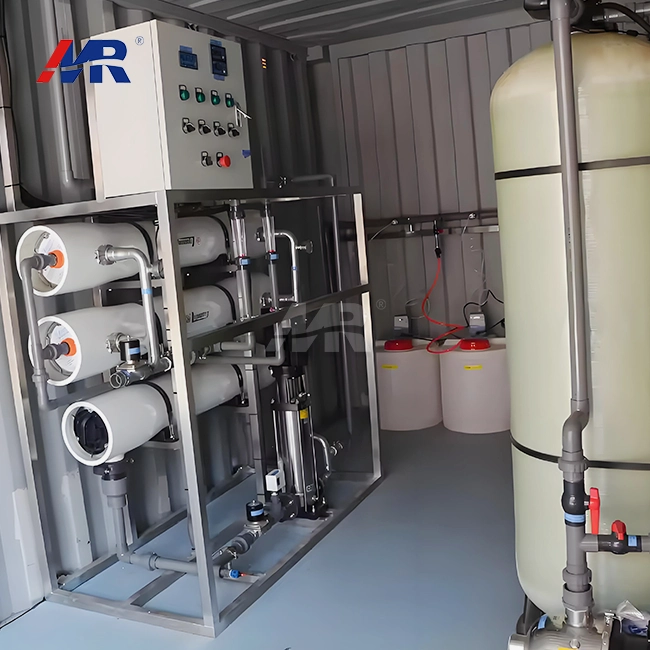 VIEW MOREcontainerized reverse osmosis system
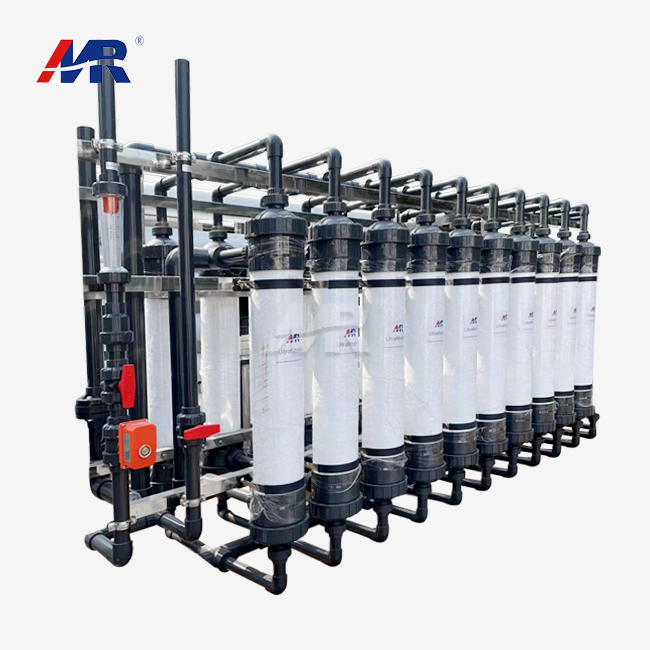 VIEW MOREultrafiltration drinking water system
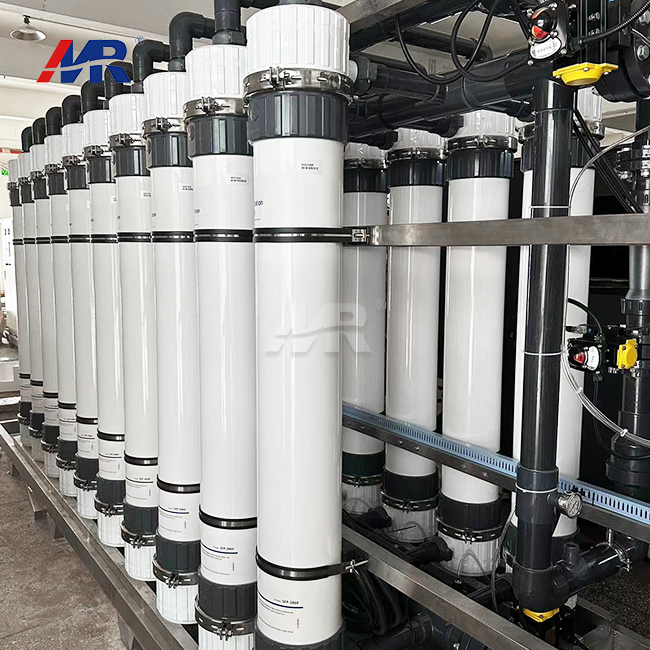 VIEW MOREwater ultrafiltration system
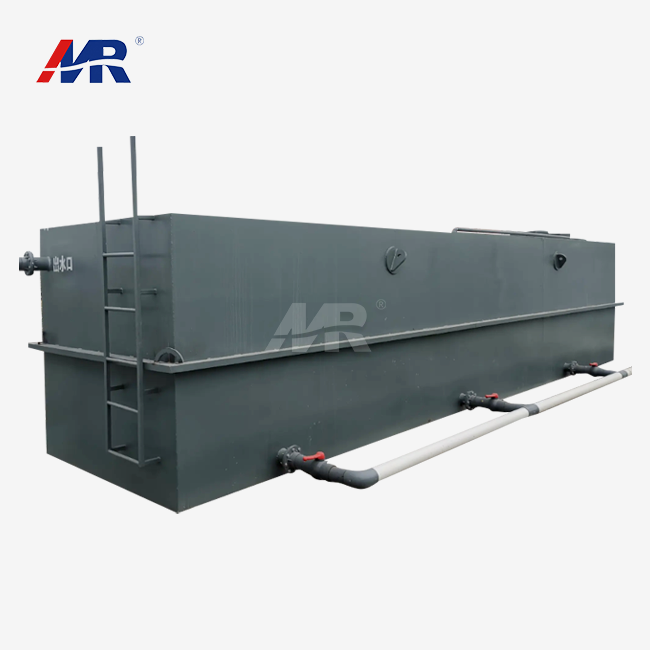 VIEW MOREdomestic wastewater treatment plant
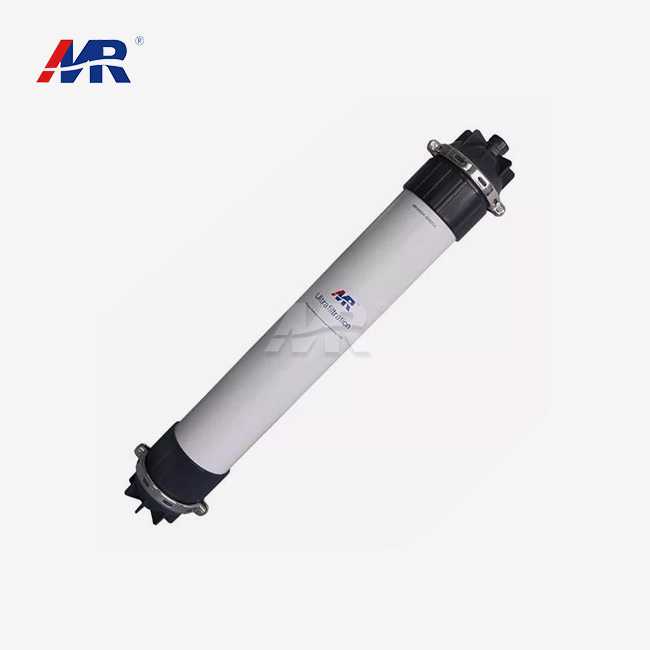 VIEW MOREultra filter membrane
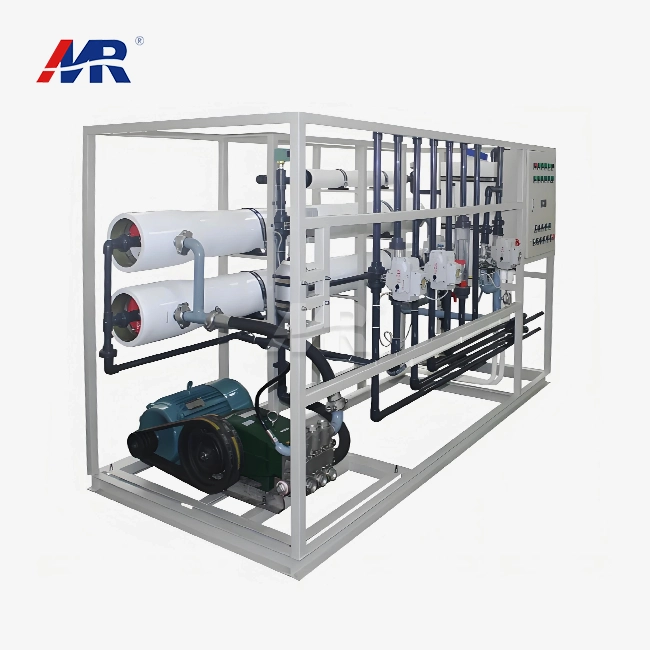 VIEW MOREseawater desalination pre-treatment
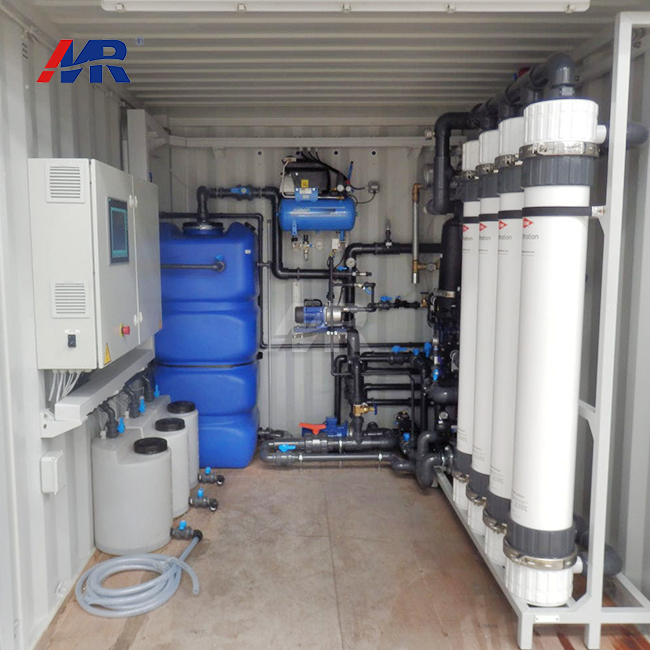 VIEW MOREcontainerized ultrafiltration equipment
 VIEW MORE20m3/hour ultrafiltration equipment
