_1745823981883.webp)

DTRO water treatment successfully extracts high-salt wastewater by forcing water through an open-channel membrane stack at high pressure, capturing salt ions and contaminants in a concentrated brine, while clean permeate flows out the other side. This design disregards clogging difficulties that put ordinary spiral-wound membranes out of service within weeks. Here’s a look at how disc-tube reverse osmosis really works within a wastewater plant, what recovery rates operators may anticipate, and how a real landfill leachate project fared after converting from biological treatment to a two-stage system. You will also get contaminant removal statistics, a spec comparison table and a buyer’s checklist for selecting a system that will not fail on your site.
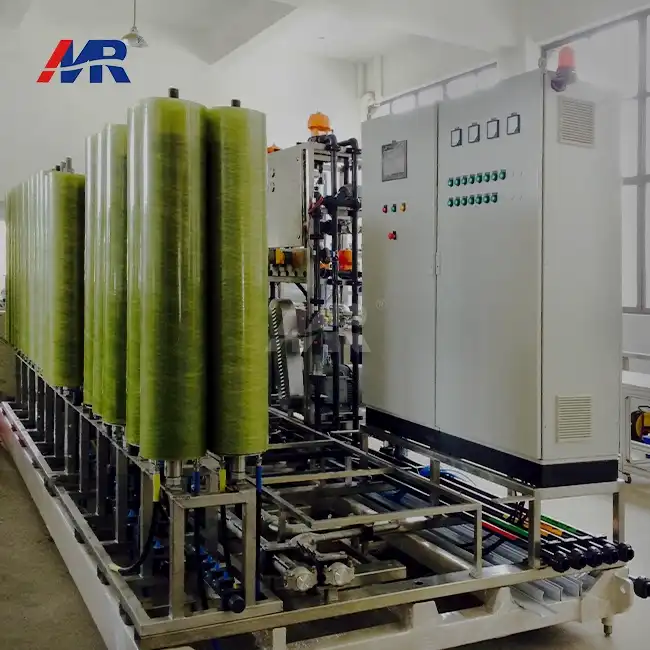
Guangdong Morui Environmental Technology offers design and installation of DTRO Water Treatment systems for facilities treating landfill leachate, electroplating discharge, and petrochemical effluent in Asia, South America, and Africa. We respond to a free water sample request to our engineers within 72 hours so a facility manager may have a personalised process design before committing funds. For a price on a DTRO Water Treatment provider, contact benson@guangdongmorui.com to enquire about recovery-rate guarantees and check delivery times at our fourteen branch sites around China.
What Is DTRO Water Treatment?
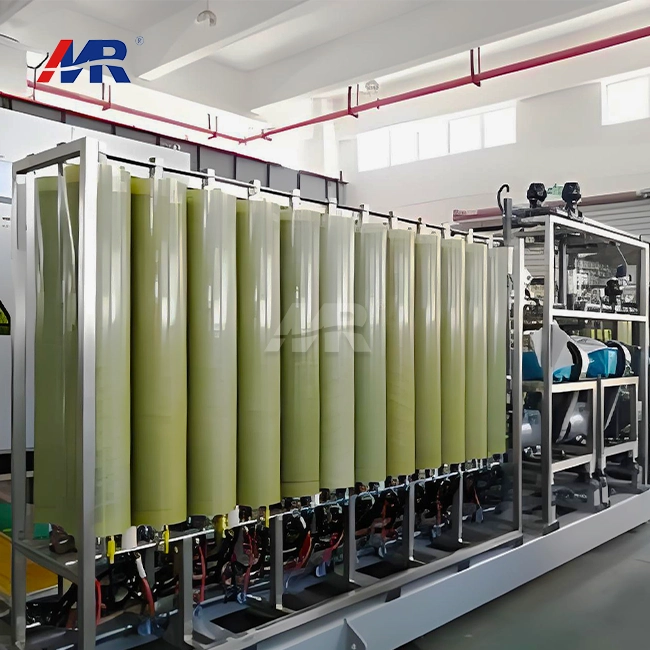
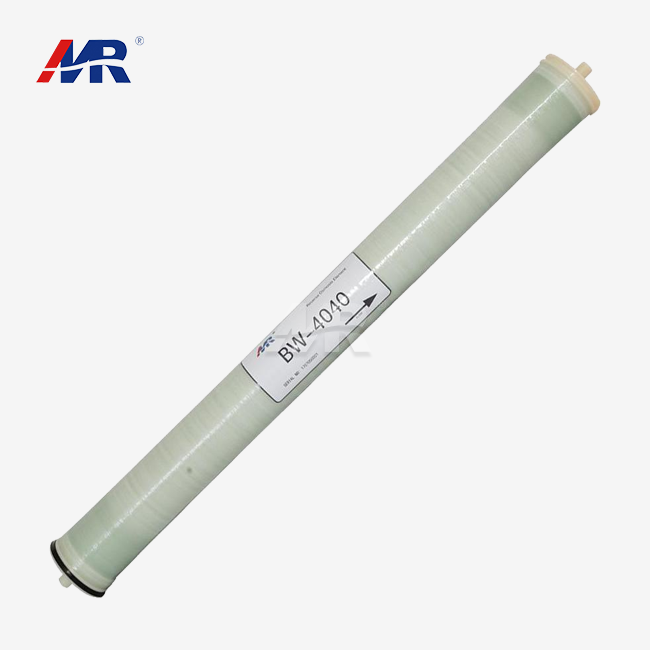
The basic element of disc-tube reverse osmosis is a stack of octagonal filter discs, kept together by a tension rod in a pressure vessel. The initial module was designed by Rochem based on a plate-and-frame design of the research institute GKSS in Germany. The tightly coiled spiral membrane of traditional RO is replaced with open flow channels of 4 to 6 millimetres in width and short flow pathways of roughly 7 centimetres.
The Membrane Structure Behind DTRO
Why the Open-Channel Design Matters
The typical ro membrane utilises a spacer mesh to maintain water flow between the membrane sheets. That mesh captures particles fast once turbidity rises over a few NTU. DTRO completely removes the spacer and, in many situations, allows high-salt, raw streams to flow through without a fine pre-treatment step. Operators operating landfill leachate lines say this is the single largest difference between DTRO and the RO systems they used earlier.
How Does DTRO Handle High-Salt Wastewater?
DTRO combines pressure and mechanical strength to treat high-salinity wastewater. The disc stack can cope with operating pressures ranging from 60 bar to 160 bar, which is well above the long-term survival capacity of a normal thin-film composite RO membrane. Under this pressure, water molecules flow through holes in the membrane that are tiny enough to reject dissolved salts, while chloride, sulphate, and other ions are left behind in a diminishing volume of concentrate.
I asked our senior process engineer, Renjie Kuang, why this mattered to a manufacturing manager and not a chemist. He said it simply: “A plant doesn’t care about membrane chemistry. It matters whether the queue goes Monday morning without an alarm. DTRO water treatment continues to function because it’s not reliant on biology or delicate spacers that can clog when salinity surges.” It’s not only about the membrane science, but it’s also the operational dependability that determines most of the buying choices.
Case Study: Landfill Leachate at a Municipal Site in Central Java
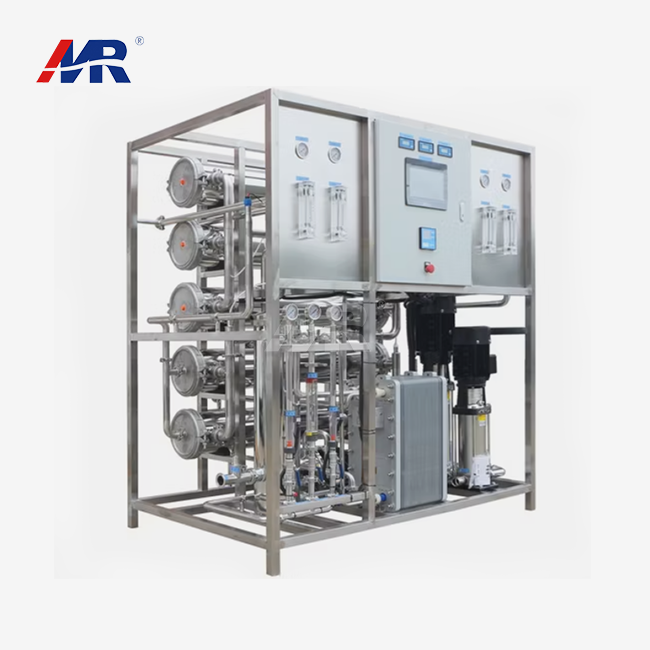
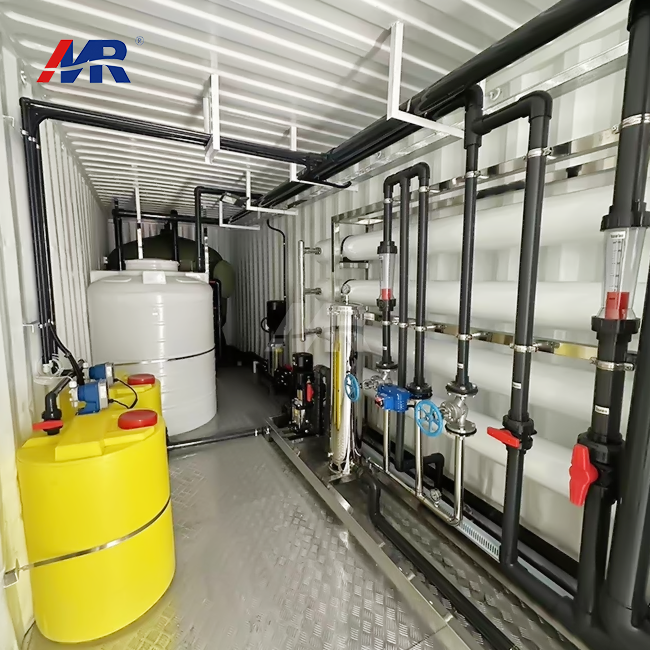
A municipal landfill operator in Central Java approached Morui after a biological pretreatment line could not manage leachate salinity exceeding 18,000 mg/L TDS. The chemical oxygen demand at the intake was 22,000 mg/L, nearing the 25,000 mg/L limit for our MR-DTRO-150TD. A mild pre-treatment screening was placed in parallel with a two-stage DTRO system.
In the 6-month monitoring, the system was able to decrease the COD by more than 97%, lower the electrical conductivity of the effluent to around 0.2 mS/cm, and maintain a constant recovery rate of close to 65%. We reduced unplanned downtime by around 40% compared with the biological system it replaced, since operators no longer had to monitor microbial populations during salinity changes. Now, maintenance professionals perform automatic cleaning cycles twice a month instead of a human disassembly every 10 days.
What Does the Data Tell Facility Managers?
That leachate result is consistent with the pilot data reported. Mature, very salty leachate has been treated by emergency DTRO water treatment with water recovery rates greater than 83% and effluent conductivity lowered to 0.15–0.22 mS/cm in independent studies. Chinese national studies of full-scale DTRO installations revealed COD and ammonia nitrogen removal rates of 98%–99.95% for dozens of locations. The trend is consistent across widely diverse feed chemistry at the sites.
Why Is DTRO Suitable for High-Salinity Wastewater?
Since the performance of DTRO does not rely on live organisms, it is suitable for high-salinity wastewater. Biological therapy becomes problematic when the salt content exceeds a few percent, since the bacteria completing the digestion die off or become inactive from osmotic stress. Thus, a membrane stack is not limited in this way; it continues to reject ions as long as the pressure supplied is greater than the osmotic pressure of the feed.
High salinity, sufficient to kill biological systems, is a common characteristic of flue gas desulfurization wastewater from coal-fired power plants, brine from brine management in saltwater desalination, and reinjection water from oilfields. According to reports on DTRO use in China, the two most prevalent feeds treated by DTRO technology are FGD wastewater and leachate.
Pain Points DTRO Solves for Operators
- Often Membrane Replacement: Spiral-wound RO membranes are commonly subjected to high-salt, high-turbidity feed and so need replacement every 12 to 18 months, increasing the capital cost. Based on field data our engineers monitor at leachate and electroplating sites, DTRO water treatment systems use discs, often manufactured from more durable sheet material, that usually last three to five years before they need to be replaced under identical feed circumstances.
- Unplanned shutdowns from fouling: A plugged spacer requires a complete flush and, in certain cases, a chemical clean-in-place cycle that may stop operations for hours. In DTRO Water Treatment, the open-channel design allows sediments to move through rather than lodge in the flow path, thus reducing unexpected stoppages at the locations we serve.
- Non-compliant effluent quality during salinity swings: Biological systems are behind abrupt salt spikes, discharging non-compliant wastewater downstream before operators can respond. A membrane process has an instantaneous response to a change in feed since rejection is a physical function of pressure and pore size, not a biological population that takes days to respond.
These pain points are why facilities treating landfill leachate, chemical rinse water, or brine concentrate are increasingly specifying DTRO water treatment above both standard RO and stand-alone biological treatment.
DTRO vs RO: Which Handles Salt Better?
Conventional spiral-wound reverse osmosis remains a good option for many applications, including bottled water manufacturing and boiler feedwater cleaning, where feed quality isn’t variable. The contrast is different when the total dissolved solids, suspended solids, or COD reach levels typical of industrial concentrations.
| Parameter | Conventional Spiral-Wound RO | DTRO Water Treatment |
|---|---|---|
| Feed channel width | 0.7–1.0 mm with spacer mesh | 4–6 mm open channel |
| Typical max pressure | Up to about 83 bar | Up to 120–160 bar |
| Suspended solids tolerance | Low; needs fine pretreatment | High; tolerates raw leachate in many cases |
| Practical TDS ceiling | Roughly 10,000–15,000 mg/L | Above 70,000 mg/L for concentrate streams |
| Cleaning frequency on high-salt feed | Weekly or more often | Every two to four weeks under normal load |
| COD/TDS removal on leachate | Often unreliable above 20,000 mg/L TDS | 91–97.7% TDS removal reported in pilot studies |
The table shows a clear split. Conventional RO wins on lower capital cost for clean, low-salinity feed. DTRO Water Treatment wins once salinity, turbidity, or COD move outside the comfort zone of a standard membrane, which describes most industrial concentrate and leachate streams.
When Does Conventional RO Still Make Sense?
Food and beverage plants producing bottled water, or electronics manufacturers running ultrapure water loops for chip cleaning, generally work with a consistent, low-fouling feed. Standard RO, sometimes paired with EDI for ultrapure polishing, remains the more economical choice in those settings because the salt and solids load stays predictable, while DTRO water treatment may be considered when feed conditions are more challenging.
What Contaminants Can DTRO Remove?
DTRO Water Treatment removes a wide range of pollutants beyond simple salt ions. The separating pore size sits below 0.1 nanometers, close to the size of many dissolved ions, which makes DTRO one of the tightest membrane separations available for wastewater duty.
| Contaminant | Typical Removal Performance | Notes |
|---|---|---|
Chemical oxygen demand | 95–99.95% | Reported across full-scale Chinese leachate plants |
| Ammonia nitrogen | 98–99.9% | Removal is stable even during salinity spikes |
| Total dissolved solids | 91–97.7% | Across single-stage pilot RO/DTRO trains |
| Chloride and sulfate salts | Near-complete rejection | Concentrated into a smaller brine volume |
| PFAS compounds | High rejection across 11 monitored Chinese sites | Feed concentrations ranged from 938 to 32,491 ng/L |
Heavy metals such as copper, nickel, and zinc from electroplating and PCB rinse lines follow a similar pattern, staying almost entirely in the concentrate stream rather than passing into the treated permeate. That matters for electronics and battery manufacturers trying to recover lithium, cobalt, or copper for resale instead of paying disposal fees for it.
How Does the DTRO Treatment Process Work?
A typical DTRO water treatment line runs through several stages before water leaves the site as clean permeate and concentrated brine.
Step One: Pretreatment Screening
Coarse screening and, in some Cases, basic filtration remove large debris that could damage pumps. Because the disc-tube design tolerates suspended solids well, this stage stays lighter than what a spiral-wound RO line would need.
Step Two: Initial-Stage DTRO
Wastewater enters the disc stack under high pressure. The turbulent, cross-flow pattern created by the hydraulic discs sweeps the membrane surface while permeate exits through the center tube. Roughly half to two-thirds of the feed volume typically becomes usable permeate at this stage, depending on feed chemistry.
Step Three: Additional-Stage Concentration
The concentrate from the earlier stage feeds another DTRO module operating at even higher pressure. This DTRO water treatment step pushes overall recovery higher while shrinking the final brine volume that needs disposal, evaporation, or crystallization. Two-stage DTRO, sometimes paired with upstream biological treatment, ranks among the most reported configurations for leachate treatment in China.
Step Four: Ion Exchange or Polishing
Sites targeting stricter discharge limits, including PFAS-specific standards, sometimes add an ion exchange resin stage after the follow-up DTRO pass to capture trace compounds that survive membrane rejection.
Step Five: PLC-Controlled Monitoring
Automated alerts flag pressure drops, flow deviations, or conductivity spikes before they become full failures. This continuous monitoring lets a two-person crew run a plant that once needed round-the-clock manual oversight under biological treatment.
What Recovery Rate Can DTRO Achieve?
Recovery rate is an important performance metric in DTRO water treatment, describing the share of incoming wastewater converted into usable permeate rather than sent on as concentrate. Field results vary with feed salinity, COD, and system staging, but the published range runs wide.
| Parameter | MR-DTRO-150TD Specification |
|---|---|
| Application | Landfill leachate treatment |
| Power consumption | 96 kW/hour |
| Recovery rate | 50–70% |
| Inlet COD tolerance | Below 25,000 mg/L |
| Membrane cleaning cycle | Every two to four weeks under normal load |
Independent pilot work on multi-stage leachate treatment reported COD rejection above 95% alongside TDS removal between 91.1% and 97.7%. Separate emergency treatment research on highly saline mature leachate documented recovery above 83%. Real-world numbers depend heavily on pretreatment quality and how well the system is maintained, which is why a proper site water analysis before purchase matters more than a headline recovery figure.
Getting a Higher Recovery Rate in Practice
Two-stage configurations, brine recirculation loops, and antiscalant dosing all push recovery closer to the upper end of the range. Skipping any of these to save upfront cost usually means settling for the lower end, along with a larger, more expensive concentrate stream to manage downstream.
Which Industries Need DTRO for High-Salt Wastewater?
Municipal Waste and Wastewater Management
Landfill sites and municipal wastewater treatment plants dealing with aging, highly saline leachate rank among the most common users of DTRO water treatment in China, where discharge must meet the GB 16889-2008 pollution control standard for municipal solid waste landfills.
Electroplating, Chemical, and Electronics Manufacturing
Electroplating shops and PCB manufacturers generate rinse water loaded with copper, nickel, and acidic salts. Battery and gigafactory operations face a similar challenge with lithium- and cobalt-bearing streams that carry real recovery value once concentrated.
Power Generation and Petrochemical Operations
Flue gas desulfurization wastewater from coal-fired and nuclear power plants, along with oilfield reinjection water and refining wastewater from petrochemical sites, both sit firmly in the high-salinity category that conventional RO struggles to handle long-term.
Seawater Desalination and Coastal Municipal Projects
Coastal cities running large desalination plants generate reject brine that needs further concentration through DTRO water treatment before disposal. Ships and offshore platforms running smaller desalination units for onboard freshwater supply face a scaled-down version of the same salinity challenge.
Pharmaceutical, Laboratory, and Specialized Wastewater
Pharmaceutical manufacturers producing high-concentration, high-salinity wastewater increasingly pair chemical synthesis with membrane concentration ahead of evaporation, cutting the volume that needs thermal processing later in the line.
How Should You Select a DTRO System?
Choosing a system starts with real feed data, not a catalog spec sheet. A facility manager should request a water sample analysis before committing to a model or capacity.
Match Capacity to Actual Flow, Not Peak Estimates
Oversizing wastes capital; undersizing forces bypass or non-compliant discharge during peak flow periods. A proper site survey, ideally reviewed against 12 months of flow records where they exist, sets realistic capacity targets.
Confirm COD, TDS, and Suspended Solids Ranges
The MR-DTRO-150TD, for example, handles inlet COD below 25,000 mg/L. Feeding outside a system's rated envelope shortens membrane life regardless of how well the equipment is maintained.
Ask About Local Service and Spare Parts
A DTRO Water Treatment manufacturer with regional branches and stocked spare parts prevents weeks of downtime waiting on an overseas shipment. Guangdong Morui operates more than 14 branches with localized spare parts delivery in under seven days, backed by 500 employees and 20 in-house engineers.
Request Reference Sites Before You Sign
Ask any DTRO water treatment manufacturer for at least two reference installations treating a similar feed stream. A supplier willing to share real operating data, including actual recovery rate and cleaning frequency from an existing client, is more trustworthy than one offering only a brochure figure. Morui shares performance data from comparable leachate and electroplating sites during the quoting stage so buyers can compare projected numbers against what other plants actually achieve day to day.
Check for Modular Scalability
Production volume changes over time. A modular DTRO Water Treatment for sale option lets a plant add disc stacks as flow grows, instead of replacing an entire undersized system a few years into operation.
How Can DTRO Concentrate Wastewater Safely?
Concentrating high-salt wastewater safely means shrinking the brine volume without triggering scale formation, membrane damage, or an oversized crystallizer downstream. DTRO handles this through staged pressure increases and anti-fouling membrane chemistry that resists mineral scaling even as salt concentration climbs toward saturation in later stages.
Anti-Scalant Dosing and Chemistry Control
Dosing anti-scalant ahead of the follow-up stage keeps calcium, sulfate, and silica from precipitating onto the membrane surface. Operators track the saturation index in real time through the same PLC system that monitors flow and pressure.
Brine Recirculation to Push Concentration Further
Recirculating a portion of concentrate back through the stack, blended with fresh feed, raises overall recovery without adding a full extra module. This approach works particularly well on leachate lines where landfill operators want to minimize the volume trucked off-site for disposal.
Pairing DTRO with Evaporation or Crystallization
Sites pursuing zero liquid discharge often follow DTRO with a mechanical vapor recompression evaporator, letting the membrane stage handle the bulk volume reduction cheaply before the more energy-intensive thermal step processes a much smaller stream. Membrane-based pre-concentration ahead of thermal polishing is becoming a larger share of new zero liquid discharge installations globally.
Conclusion
DTRO water treatment handles high-salt wastewater safely because its open-channel, disc-tube design tolerates suspended solids, extreme pressure, and salinity swings that would stall conventional RO or biological treatment within days. Field data from landfill leachate, electroplating, and power plant applications across China back up the recovery rates and removal percentages this guide walked through. A plant manager evaluating options should request an actual water analysis, compare recovery-rate claims against independent pilot data, and confirm local service support before signing a purchase order.
FAQ
1. What is the difference between DTRO and standard RO membranes?
DTRO uses an open-channel disc stack 4 to 6 millimeters wide instead of the tight spiral-wound spacer mesh found in standard RO. That structure lets DTRO tolerate suspended solids and high salinity that would quickly clog a conventional membrane.
2. How much does a DTRO water treatment system cost?
Cost depends on capacity, staging, and site-specific pretreatment needs. Requesting a free water analysis and process design from a supplier like Morui gives a realistic quote based on actual feed chemistry rather than a generic price list.
3. Can DTRO handle wastewater with over 50,000 mg/L TDS?
Yes. DTRO concentrate streams have been documented to handle TDS well above 70,000 mg/L in multi-stage configurations, though recovery rate drops as salinity rises toward saturation.
4. How long does a DTRO membrane stack last?
Membrane life varies with feed quality and maintenance discipline, but disc-tube membranes generally outlast spiral-wound RO membranes exposed to the same high-salt, high-turbidity feed, often by two to three years.
5. Is DTRO suitable for small and medium wastewater treatment plants?
Modular DTRO Water Treatment systems scale down to smaller flow rates, making them workable for regional wastewater plants and mid-sized manufacturers, not only large municipal or power plant installations.
6. Does DTRO eliminate the need for evaporation and crystallization?
Not entirely. DTRO reduces the volume of concentrate significantly, but sites pursuing full zero liquid discharge typically still need an evaporator or crystallizer to process the final, smaller brine stream.
Stop Trucking Away Water You Could Be Recovering
Guangdong Morui Environmental Technology designs, manufactures, and installs DTRO water treatment systems for landfill leachate, electroplating, and petrochemical wastewater across our 14-plus branch network. Our own membrane production factory and 20 in-house engineers support every DTRO Water Treatment manufacturer quote with a real recovery-rate projection. Email benson@guangdongmorui.com for a free water sample analysis and a process design within 72 hours.
References
1. Zhang, W. et al. "Application of disk tube reverse osmosis in wastewater treatment: A review." Science of the Total Environment, 2021. Cited for DTRO membrane structure, channel width, and operating pressure ranges. https://www.sciencedirect.com/science/article/abs/pii/S0048969721033623
2. Zhang, W. et al. "Application of disk tube reverse osmosis in wastewater treatment: A review." ResearchGate, 2021. Cited for full- and pilot-scale China application data and COD/ammonia removal rates.
3. "Characteristics of organic matter removed from highly saline mature landfill leachate by an emergency disk tube-reverse osmosis treatment system." Science of the Total Environment, 2020. Cited for recovery rate and effluent conductivity data on mature leachate. https://www.sciencedirect.com/science/article/abs/pii/S004565352032542X
4. "Pilot-scale multi-stage reverse osmosis (DT-RO) for water recovery from landfill leachate." Journal of Environmental Management / ScienceDirect, 2018. Cited for COD and TDS removal ranges across pilot RO stages. https://www.sciencedirect.com/science/article/abs/pii/S0956053X18301569
5. "Occurrence and efficient removal of PFAS from landfill leachates using on-site DTRO systems: A comprehensive analysis across 11 Chinese cities." Waste Management / ScienceDirect, 2024. Cited for PFAS concentration ranges and DTRO removal performance. https://www.sciencedirect.com/science/article/abs/pii/S0956053X24005385
6. "Zero Liquid Discharge Market to Reach USD 20.79 Billion by 2035 at 8.5% CAGR." Market Research Future, 2026. Cited for membrane-based pre-concentration trends ahead of thermal ZLD processing. https://www.wboc.com/online_features/press_releases/zero-liquid-discharge-market-to-reach-usd-20-79-billion-by-2035-at-8-5/article_604a6028-ab00-5744-a9fd-8a4cb102d727.html
Author: Renjie Kuang, Senior Water Treatment Process Engineer, Guangdong Morui Environmental Technology Co., Ltd. Renjie has spent over a decade specifying and commissioning membrane systems for landfill leachate, electroplating, and industrial wastewater sites across Asia. He works directly with plant operators on water sample analysis, system sizing, and on-site commissioning, and holds Certifications in industrial wastewater process design.