_1745823981883.webp)

Industrial ro membrane System Design for High-Purity Water
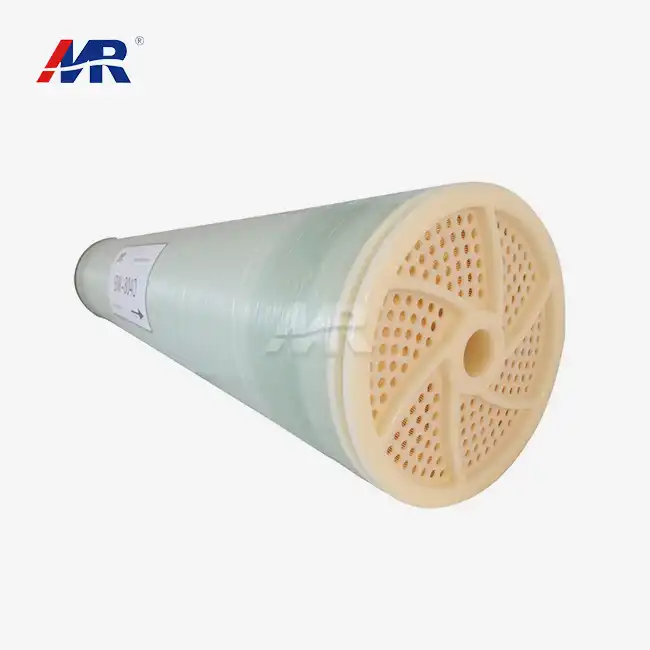
Designing a reliable high-purity water system starts with selecting the right membrane/8040-reverse-osmosis-membrane">industrial ro membrane. These semi-permeable, spiral-wound elements — typically constructed from Thin-Film Composite (TFC) polyamide — remove over 99% of dissolved salts, organics, bacteria, and silica from challenging feedwaters. Whether you operate a pharmaceutical plant, a semiconductor fab, or a municipal water authority, the membrane sits at the heart of your purification process. Getting the system design right from the start directly determines your water quality, energy efficiency, and total cost of ownership.
What Makes Industrial RO Membrane Technology Different?
Industrial RO membrane technology is different in what ways?
The Science Behind Spiral-Wound Polyamide Elements
Standard home screens physically catch particles. A reverse osmosis membrane is different. It uses hydraulic pressure that is higher than osmotic pressure to push water molecules through a barrier that is only partially permeable. The concentrate stream then contains contaminants that have been dissolved. Industrial membranes can work under pressures ranging from 150 psi to over 1,200 psi, can handle harsh chemical cleaning cycles, and can keep the flux stable even when the feedwater conditions change in ways that would break down consumer-grade Products in weeks.
The TFC polyamide layer is very good at blocking ions and is also very strong physically. The choice of material has a direct effect on the rate of salt rejection, the sensitivity to chlorine, and the long-term stability of the dimensions. These are three factors that procurement engineers should carefully look at before making a purchase decision.
RO, Ultrafiltration, and Nanofiltration: Choosing the Right Barrier
These three membrane technologies work with a range of contaminant sizes and shouldn't be used in place of each other:
| Parameter | Reverse Osmosis (RO) | Nanofiltration (NF) | Ultrafiltration (UF) |
|---|---|---|---|
| Pore Size | < 0.001 µm | 0.001–0.01 µm | 0.01–0.1 µm |
| Salt Rejection | > 99% | 40–90% | < 10% |
| Operating Pressure | 150–1,200 psi | 50–150 psi | 15–75 psi |
| Typical Use | Boiler feed, ultrapure water | Softening, partial demineralization | Pretreatment, MBR systems |
For tasks that need conductivity below 1 µS/cm, like cleaning semiconductor chips or making USP-grade water for medicines, RO combined with EDI (electrodeionization) is still the best setup.
How Should You Design an Industrial RO System for High-Purity Output?
How do you plan an industrial RO membrane system that will give you high-purity water?
Core System Components and Layout Priorities
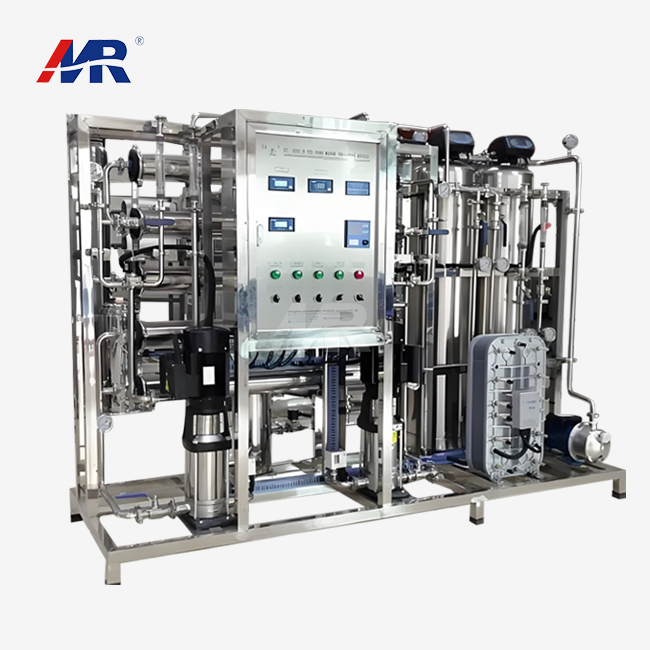
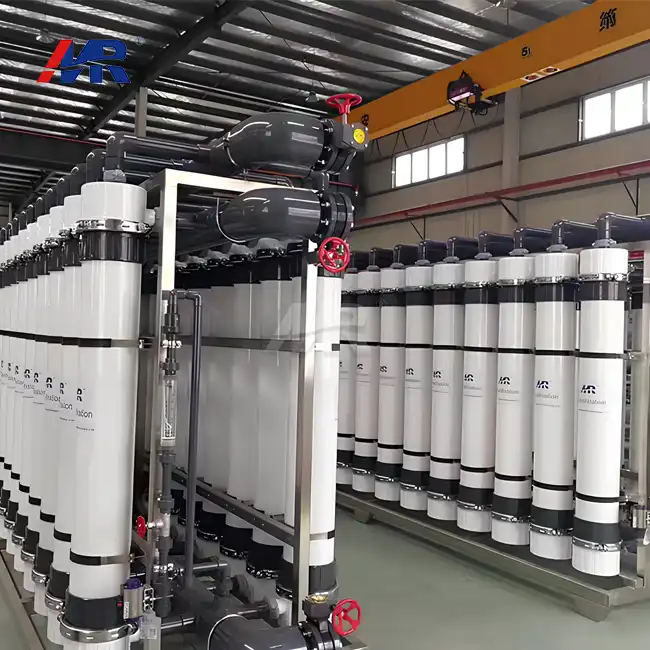
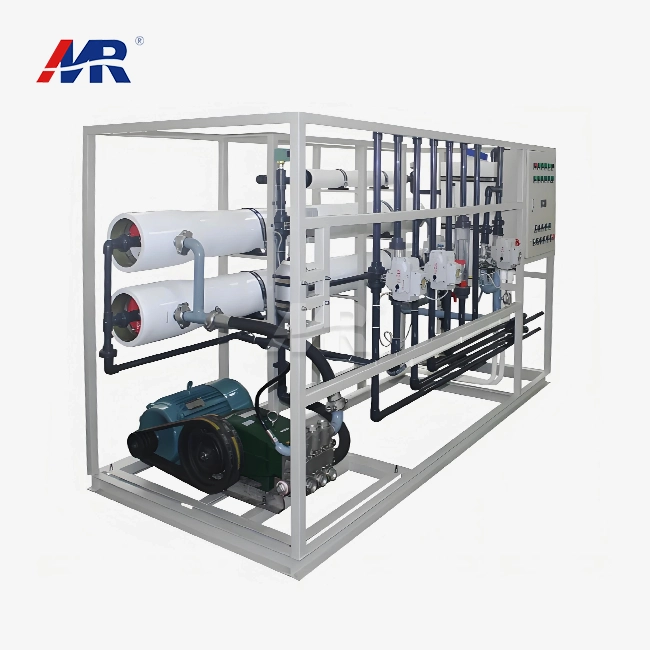
A well-designed RO system is more than just a membrane in a box. The whole train is made up of the high-pressure pump, membrane vessels, a permeate collection manifold, antiscalant dosing, cartridge prefiltration, media filtration, and a control instrumentation panel. Skipping or undersizing any upstream pretreatment stage speeds up fouling and lowers the life of the membrane.
Before any system sizing is done, the quality of the feedwater must be analyzed. This includes checking for turbidity, SDI (Silt Density Index), hardness, total dissolved solids, and pH. To protect the purity of the element, the industry standard is for SDI to be less than 3 at the membrane entrance.
Modular vs. Custom Designs: Which Fits Your Operation?
Modular skid-mounted systems work well for mid-volume makers and regional water companies that need to get the systems up and running quickly and know how much they will cost in capital. Customized arrays are used in places like large power plants, projects that desalinate seawater, and semiconductor factories where recovery rates, pressure staging, and permeate polishing need to be perfectly calibrated.
A medium-sized beverage processing plant in the Midwest of the United States used a brackish municipal supply with TDS levels around 1,200 mg/L. By using a two-stage RO array with interstage booster pumps, the plant was able to achieve a 75% recovery rate and keep the permeate TDS levels below 15 mg/L. Compared to their old single-pass setup, the new configuration used 18% less energy. This was due to careful hydraulic design, not just choosing the right membrane brand.
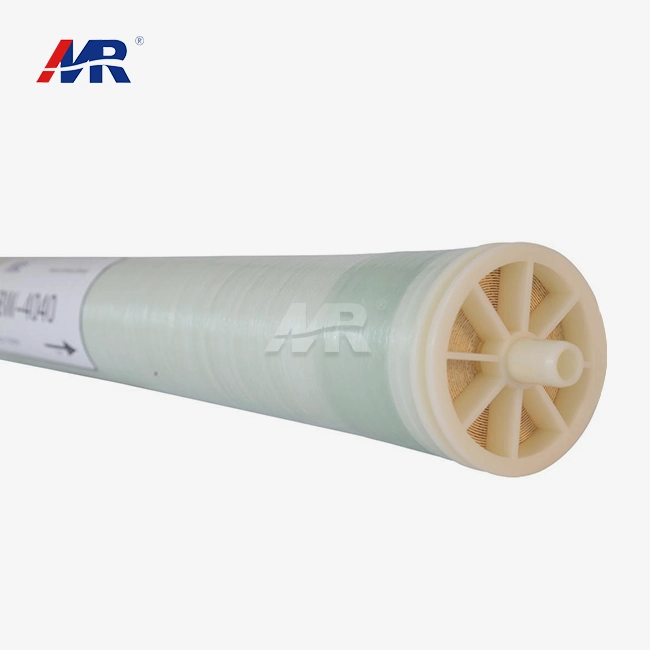
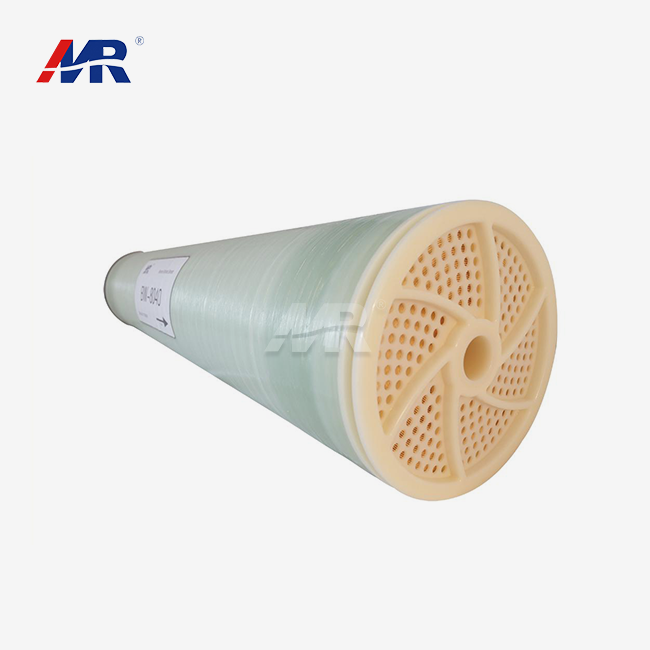
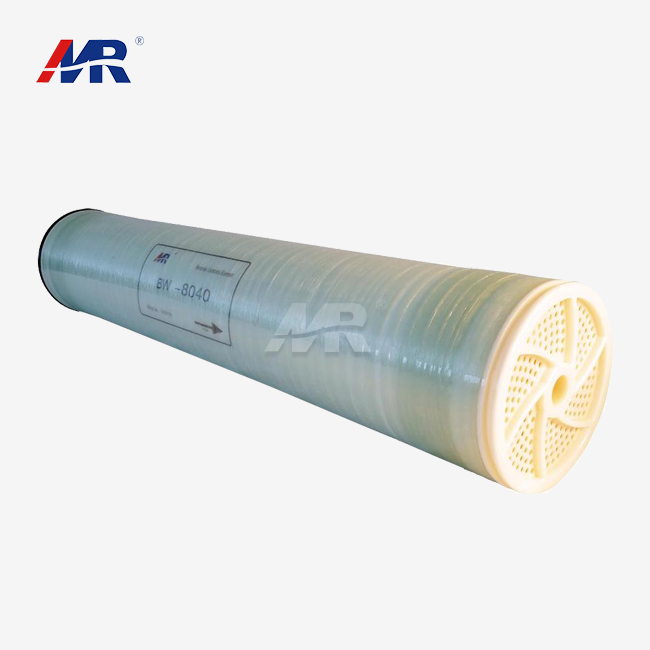
Spotlight: Morui MR-BW-4040 Brackish Water Element
The Morui MR-BW-4040 is a brackish water membrane element with a diameter of 4 inches that was made for large-scale purification tasks. Some important details:
- Model: MR-BW-4040
- Operating Pressure: 1.55 MPa (approximately 225 psi)
- Active Membrane Area: 7.2 m²
- Permeate Flow: 2,500 GPD
- Salt Rejection Rate: 99.5%
The MR-BW-4040 is a good choice for lines that make food and drinks, stages that prepare pharmaceuticals, and getting boiler feed water ready for use when consistent high-purity output is a must.
What Maintenance Practices Protect Your Membrane Investment?
What kinds of maintenance will protect your industrial RO membrane investment?
Recognizing Fouling vs. Scaling Before Damage Occurs
Scaling happens when mineral acids that are only slightly soluble, like calcium carbonate, barium sulfate, and silica, get too saturated in the concentrate stream and stick to the membrane surface. Fouling, on the other hand, happens when organic matter builds up, particle buildup occurs, or biofilm forms. Both lower permeate flow and raise differential pressure, but they need different chemical cleanup methods.
Cleaning-In-Place (CIP) should be started when any of these conditions are met: normalized permeate flow drops 10–15%, normalized salt passage rises 5–10%, or differential pressure across a vessel rises 15% above the set average.
KPIs and Monitoring Protocols That Prevent Costly Downtime
Every day, operators should write down the temperature-adjusted permeate flow, the salt rejection percentage, and the differential pressure. By comparing these values to the baseline value that was recorded during the initial commissioning, performance drift can be seen weeks before it becomes a crisis. Because polyamide membranes are very sensitive to oxidants—even 0.1 ppm of free chlorine can damage them irreversibly—continuous ORP monitoring upstream of the membrane train is a good idea to keep things safe.
How Do Leading RO Membrane Brands Compare for Industrial Applications?
When buying industrial RO membrane elements, procurement teams often look at Dow Filmtec, Toray, Hydranautics, and new manufacturers. For an organized comparison across the factors that really affect sourcing choices, here it is:
| Criteria | Dow Filmtec | Toray | Hydranautics | Morui MR-BW-4040 |
|---|---|---|---|---|
| Salt Rejection | Up to 99.7% | Up to 99.7% | Up to 99.6% | 99.5% |
| Active Area (4040) | 7.6 m² | 7.2 m² | 7.2 m² | 7.2 m² |
| Operating Pressure | Up to 4.1 MPa | Up to 4.1 MPa | Up to 4.1 MPa | 1.55 MPa |
| Lead Time (U.S.) | 2–4 weeks | 3–6 weeks | 2–4 weeks | Flexible via Morui |
| After-Sales Support | Global | Global | Global | Direct engineer support |
The unit price is only one part of the total cost of ownership. For U.S. companies with tight production schedules, membrane elements with shorter lead times, quick Technical support, and easy access to spare parts always mean lower lifecycle costs.
What Should Procurement Teams Know Before Buying RO Membranes?
It takes more than comparing a flow standard to a catalog sheet to find the right industrial RO membrane. Before committing, procurement leads should check four things:
- Feedwater compatibility: Make sure the TDS range, chlorine level, and scaling indices are all within the design limits of the membrane. If you use a brackish water element in seawater-level saltiness, the service life will be shortened to months instead of years.
- Warranty and replacement terms: Reputable industrial RO membrane providers offer written performance guarantees that cover salt rejection and flow decline limits, usually for a period of 12 months after installation.
- Supplier support infrastructure: Access to on-site commissioning engineers, CIP chemical guidance, and spare O-rings and end caps as part of the supplier support infrastructure greatly reduces unplanned downtime, especially in the first year of operation.
- Volume and stocking agreements: Talking about a blanket purchase order with a guaranteed stock distribution can protect you from supply problems and often lead to unit cost cuts of 8–15% compared to spot purchases.
If you take the time to make sure these things are true, you can turn a simple purchase into a strategic supply partnership that pays off over many membrane replacement cycles.
Conclusion
Putting an industrial RO membrane part into a pressure tank is not enough to make high-purity water. It needs a well-thought-out system design, which includes good pretreatment, the right hydraulic sizing, disciplined performance monitoring, and a supply relationship that keeps operations going. The Morui MR-BW-4040 has a 99.5% salt rejection rate and a 2,500 GPD permeate flow at 1.55 MPa standard performance that makes it effective for a wide range of industrial uses. Facilities that consistently meet their water quality goals are different from those that have to deal with membrane failures on the fly. This is because they use the right membrane in conjunction with the right design philosophy.
FAQ
1. How often should industrial RO membranes be chemically cleaned?
It is recommended to start CIP when the standardized permeate flow drops by 10–15%, the salt passage increases by 5–10%, or the differential pressure rises 15% above the baseline for commissioning, whichever comes first. In places with a lot of dirt, like reusing food processing waste, cleaning may only need to be done every 30 to 60 days.
2. What is the difference between RO and ultrafiltration membranes?
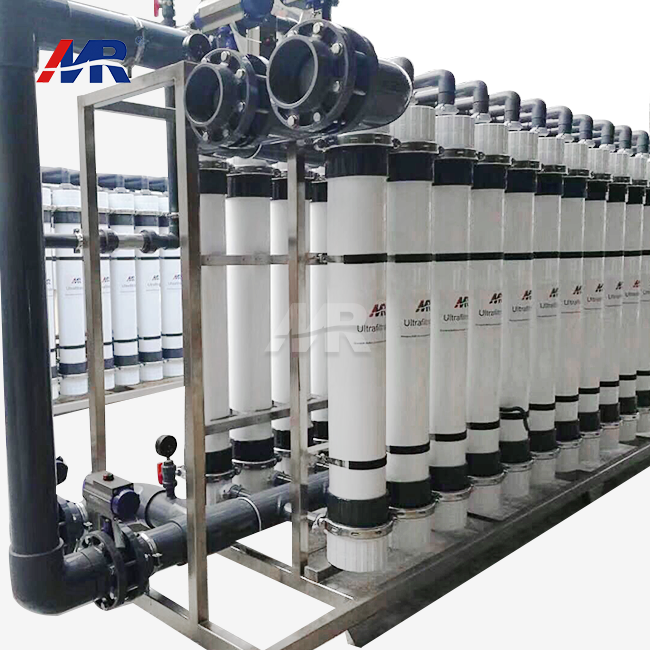
RO membranes can remove dissolved ions and have pores smaller than 0.001 µm, which means they can remove minerals and salt from water. Ultrafiltration membranes work in the 0.01–0.1 µm range and get rid of colloids, proteins, and suspended solids while leaving dissolved salts behind. They each do different things, but they are often used together in a single treatment train.
3. How can system performance be optimized when feedwater salinity is high?
Use the right amount of antiscalant, slow down the recovery rate to avoid concentration polarization, and think about using staged pressure vessels with interstage boosters to keep the driving force the same in all membrane positions. If the salinity is more than 10,000 mg/L TDS, you should decide if a seawater-rated element or a brackish water configuration is better.
4. How long do industrial RO membranes typically last?
With good preparation that keeps SDI below 3 and strict CIP routines, the service life of an industrial RO membrane is between 3 and 7 years in most industrial settings.
Partner with Morui for Your Next RO Membrane System
From system design and equipment supply to on-site testing, Morui experts are ready to support your next industrial RO membrane project. Morui is a manufacturer and seller of industrial RO membrane elements, such as the MR-BW-4040. They have 14 branches and 20 specialized engineers all over China. Please email benson@guangdongmorui.com to get a price or download our list of products.
References
1. Metcalf & Eddy. Wastewater Engineering: Treatment and Resource Recovery. McGraw-Hill Education, 2014.
2. American Water Works Association (AWWA). Reverse Osmosis and Nanofiltration (M46). AWWA, 2007.
3. Mulder, M. Basic Principles of Membrane Technology. Kluwer Academic Publishers, 1996.
4. U.S. Department of Energy. Desalination and Water Purification Technology Roadmap. DOE Office of Water, 2003.
5. Water Quality Association (WQA). Reverse Osmosis Systems: Technical and Policy Guidance. WQA, 2019.
6. Crittenden, J.C., et al. MWH's Water Treatment: Principles and Design, 3rd Edition. John Wiley & Sons, 2012.