_1745823981883.webp)

How Does a Reverse Osmosis Membrane Remove Dissolved Contaminants?
Pressure-driven solution diffusion is how a membrane/8040-reverse-osmosis-membrane">reverse osmosis membrane works. It pushes water molecules through an ultra-thin polyamide barrier layer while refusing dissolved contaminants. When the hydraulic pressure is higher than the feed water's natural osmotic pressure, only clean water passes through the semi-permeable membrane structure, leaving behind salts, heavy metals, organics, and microbes that are not meant to be there. This thin-film composite (TFC) technology can get rid of more than 99% of dissolved solids, which is why it is the main technology used in industrial water cleaning systems.
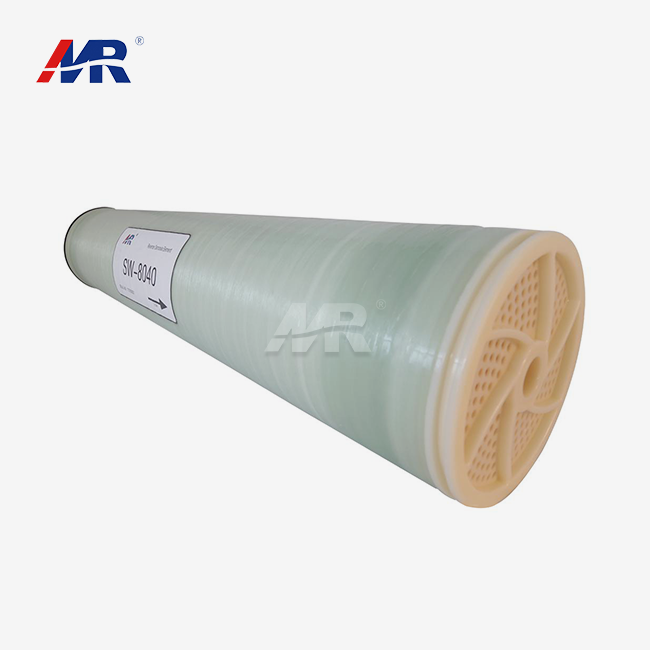
Understanding Reverse Osmosis Membranes and Their Role in Removing Contaminants
The Three-Layer Architecture of Modern RO Membranes
There are three separate layers in modern thin-film hybrid membranes that work together to make them stronger. The polyester nonwoven backing web, which is about 120 micrometres thick, gives the structure strength. On top of this is a 40-micrometre-thick polysulfone intermediate with microporous surfaces that spreads pressure equally and supports the active layer. The very thin polyamide barrier layer, which is only 0.2 micrometres thick and is made through interfacial polymerisation, is still the most important part. Because of how precisely it is built, the membrane can withstand pressures ranging from 150 psi in salty water systems to over 1,000 psi in plants that desalinate seawater.
The polyamide active layer is made up of a thick network of cross-linked polymer chains that have holes on the molecular level. Larger hydrated ions and organic substances can't get through these gaps, but water molecules can. The ability to reject salt, chemical defence, and fouling is all based on the material chemistry of this layer. The accuracy of manufacturing at this tiny level has a direct effect on the uniformity of performance across thousands of membrane elements used in industrial settings.
How Hydraulic Pressure Drives the Separation Process
When feed water comes into the membrane housing under pressure, the separation process starts. The hydraulic pressure that is being used must be higher than the difference in osmotic pressure between the feed and drain sides. For treating brackish water, this usually needs 150 to 400 psi. For treating seawater, however, it needs 800 to 1,000 psi because the salt levels are higher. The difference in pressure makes the water molecules move through the membrane polymer matrix in a way that is different from physical sieving.
Water molecules dissolve in the membrane material and move to the permeate side. Dissolved salts and toxins stay in the feed stream because they have a bigger hydrated radius and interact with the membrane surface through charge interactions. The concentrate stream moves away the rejected contaminants, stopping them from building up and making the barrier less effective. This constant cross-flow arrangement keeps the surface clean and makes the machine last longer.
Critical Operational Factors Affecting Filtration Efficiency
Several factors directly affect how well the membrane works (reverse osmosis membrane) and need to be constantly checked. The temperature of the feed water affects both the viscosity and the rate of diffusion. Most membranes work best at 25°C. If you move by 10 degrees, the flow can change by 30% or more. Most of the time, pH levels between 4 and 11 are fine, but long-term use at these extremes speeds up membrane breakdown. Total dissolved solids content changes the osmotic pressure and the needed hydraulic pressure, which in turn changes how much energy is used and how fast it is recovered.
Pressure control is still very important because too much pressure can make membranes less permeable over time, and not enough pressure makes rejection poor. To keep scaling from happening, the recovery rate (the amount of feed water turned into permeate) needs to be balanced against the saturation limits for the concentrate stream. Depending on the type of feed water and barrier used, most industrial systems reclaim between 50 and 85% of the water.
Critical Operational Factors Affecting Filtration Efficiency
Several parameters directly influence membrane performance and must be monitored continuously. Feed water temperature affects viscosity and diffusion rates, with most membranes optimised for 25°C operation. Deviation by 10 degrees can alter flux by 30% or more. pH levels between 4 and 11 are generally acceptable, though sustained operation at extremes accelerates membrane degradation. Total dissolved solids concentration impacts osmotic pressure and required hydraulic pressure, affecting energy consumption and recovery rates.
Pressure management remains critical because excessive pressure can cause membrane compaction and reduced permeability over time, while insufficient pressure results in poor rejection. Recovery rate—the percentage of feed water converted to permeate—must be balanced against concentrate stream saturation limits to prevent scaling. Most industrial systems operate between 50-85% recovery, depending on feed water chemistry and membrane type.
Key Benefits and Applications of Reverse Osmosis Membranes in Industrial and Residential Settings
Superior Contaminant Rejection Across Multiple Categories
Because they can get rid of different types of contaminants, these membranes are useful in many fields. It usually rejects between 99.5 and 99.8% of sodium chloride and works just as well against calcium, magnesium, and sulphate ions. Lead, arsenic, cadmium, and mercury heavy metals are removed from drinking water at rates higher than 98%. This solves major health problems related to drinking water. Based on their molecular weight, organic chemicals like poisons, medicines, and industrial solvents are thrown out. Most molecules bigger than 200 Daltons are thrown out at rates above 95%.
Because of their size, microbes like bacteria, viruses, and protozoan eggs are literally blocked, creating a total barrier as long as the membrane integrity is kept. This multi-barrier feature gets rid of the need for multiple treatment methods, which makes the system simpler and smaller. Pharmaceutical companies use this complete refusal to make water that meets USP standards, and electronics production plants use it to get the purity levels below ppb that are needed for semiconductor processing.
Energy Efficiency and Economic Advantages
Modern membrane formulas have greatly lowered the amount of energy needed by making them more permeable. Specific energy use in desalination plants has dropped below 3.0 kWh per cubic metre of permeate, which is getting close to the theoretical minimum. This decrease directly leads to lower operations costs, which are especially important in large-scale industry and city sites that are on all the time. Energy recovery devices take pressure from the concentrate stream and use it to make the whole system work better.
In addition to saving energy, membrane systems don't use any chemicals like ion exchange, renewal, or steam distillation do. The small, flexible design cuts down on the cost of civil building and makes it possible to deploy more units as demand rises. Automated operation with little to no human input reduces the need for labour, and repair plans that can be planned ahead of time improve the accuracy of planning. Because of these cost benefits, membrane technology is becoming more and more competitive with other ways of care.
Differentiating Low-Pressure and High-Pressure Membrane Applications
For treating groundwater with TDS levels between 1,000 and 10,000 mg/L, brackish water filters work best because they have lower pressures and faster flow rates. At 150 to 400 psi working pressure, these membranes' polymer layers are more open, which lets more water pass through. It can be used to clean irrigation water for farms, make process water for factories, and supply drinking water to cities in rural areas. Their lower pressure needs mean that pumps use less energy and equipment lasts longer.
Seawater membranes (reverse osmosis membrane) use tighter polymer networks that can survive pressures of up to 1,200 psi and still keep their shape against feeds that have 35,000 to 45,000 mg/L TDS. The longer resilience comes from using special polymer science and making the support layers stronger. These strong barriers are used by coastal purification plants, offshore platforms, and ships to get drinkable water from saltwater sources. The trade-off in terms of efficiency is lower flux rates but better salt refusal in harsh circumstances.
Maintenance Protocols That Extend Membrane Lifespan
Regular care decides whether membranes last the 5–7 years they are supposed to or break down before their time. Monitoring normalised permeate flow, salt passage, and pressure drop on a regular basis lets you know right away if fouling or scaling is happening. Chemical cleaning is needed when performance drops by 10 to 15 per cent from the starting point. Cleaning with alkaline solutions gets rid of biofilms and biological fouling, while cleaning with acids breaks down mineral scale. Cleaning can happen once a month or every three months, based on the feed water.
When pretreatment is done right, membrane damage is avoided and cleaning times are increased. Multimedia filtration gets rid of floating solids, and antiscalant treatment stops minerals from settling to the bottom of the water. To keep polyamide from breaking down, chlorine and oxidisers must be removed before the membrane comes into touch with it. Systems with automatic cleaning routines cut down on dead spots where germs can grow. When you put money into complete cleaning and tracking infrastructure, the cost of replacing membranes goes down, and the quality of the product water stays the same.
Comparing Reverse Osmosis Membranes with Other Filtration Technologies for Optimal Procurement Decisions
Ultrafiltration vs. Reverse Osmosis: Pore Size and Rejection Differences
These membranes are useful in many areas because they can remove different kinds of pollution. Most of the time, it blocks between 99.5 and 99.8% of sodium chloride. It also blocks calcium, magnesium, and sulphate ions just as well. Heavy metals like lead, arsenic, cadmium, and mercury are taken out of drinking water at rates higher than 98%. This takes care of big health issues with drinking water. Animal poisons, drugs, and industrial liquids are thrown away based on their molecular weight. Over 95% of molecules bigger than 200 Daltons are thrown away.
Microbes like bacteria, viruses, and protozoan eggs can't get through because of their size. This makes a complete shield as long as the membrane stays intact. The system is easier to use and takes up less space because it doesn't need more than one treatment method. Companies that make medicines use this total refusal to make water that passes USP standards. Companies that make electronics use them to get the cleanliness levels below ppb that are needed for processing semiconductors.
Energy Efficiency and Economic Advantages
Modern membrane recipes have made them much less energy-intensive by letting more things pass through them. It is now less than 3.0 kWh per cubic metre of permeate that desalination plants use, which is very close to the ideal minimum. Because of this drop, operating costs are also going down, which is very important for big factories and city sites that are always on. There are things that use the pressure in the concentrate stream to make the whole system work better.
Not only do membrane systems save energy, but they also don't use any chemicals like ion exchange, refill, or steam distillation do. Because it is small and adjustable, the design lowers the cost of building and lets more units be used when demand grows. Work is cut down by automating tasks that don't need much or any human input, and fix plans that can be made ahead of time makes planning more accurate. It is getting more and more competitive with other ways of care because it saves money in these ways.
Differentiating Low-Pressure and High-Pressure Membrane Applications
When treating groundwater with TDS levels between 1,000 and 10,000 mg/L, brackish water filters work best because they let less water through and move it faster. Between 150 and 400 psi, the polymer layers of these membranes are more open, letting more water pass through. With its clean water, it can be used to water crops, make process water for companies, and bring drinking water to towns in rural areas. Pumps use less energy and last longer because they don't need as much power.
When it comes to seawater, membranes are made of tighter polymer networks that can handle up to 1,200 psi of pressure and still keep their shape against 35,000 to 45,000 mg/L TDS feeds. To make the durability last longer, special polymer science is used to make the support layers stronger. Coastal treatment plants, offshore platforms, and ships use these strong walls to get clean water from salty sources. You give up lower flow rates in exchange for better salt rejection in hard conditions.
Maintenance Protocols That Extend Membrane Lifespan
Whether membranes last the 5–7 years they are meant to or break down before their time depends on how well they are taken care of. If you keep an eye on the normalised permeate flow, salt passage, and pressure drop, you'll know right away if fouling or scaling is happening. A chemical clean is needed when performance drops by 10 to 15 per cent from where it started. When you clean with acids, you get rid of mineral scale and biofilms, but when you clean with alkaline solutions, you get rid of biological fouling. What the feed water says about how often to clean it—every month or every three months.
If the preparation is done right, the membrane won't get damaged, and it will take longer to clean. The antiscalant treatment keeps minerals from sinking to the bottom of the water, and multimedia filtration gets rid of solids that rise on top of the water. Ozone and chlorine must be taken away before the membrane touches polyamide so that it doesn't break down. Systems that clean themselves get rid of many of the empty spaces where germs can grow. It costs less to replace membranes when you spend money on equipment for full cleaning and tracking. The quality of the water you get stays the same.
Strategic Procurement Insights: How to Buy and Source Reverse Osmosis Membranes Efficiently
Understanding Pricing Structures and Market Dynamics
Membrane prices vary a lot depending on what they are used for, how big they are, and who makes them. A standard 8-inch diameter brackish water element costs $400 to $800 per unit, and a seawater membrane costs $800 to $1,500 per unit. Speciality membranes and those with high rejection cost more, up to $2,000 per element. Buying in bulk usually gets you a 10–20% discount, but the minimum order quantity may be higher than what you need for a single job. Distributors make 15–30% on top of the price, but they add value by managing supplies and providing local expert help.
For big projects, direct ties with manufacturers offer better prices, but you have to handle foreign shipping and wait longer for orders. Licensed sellers make sure that the goods they sell are real and come with legal warranties, and the right way to store them. When comparing prices, you should also look at the total cost of ownership, which takes into account how long the membrane lasts, how often it needs to be cleaned, and how much energy each maker uses. The cheapest buy at the start is often the most expensive in the long run.
Supplier Vetting and Certification Verification
The function of an authentic membrane rests on how it was made and how it was stored. Check the manufacturer's websites to see if the seller is authorised, and ask for proof that the dealer is authorised. There are more and more fake membranes on the market. They have much lower prices but don't work as well as the real thing. Check the package for good writing, holograms, and serial numbers that match up with the manufacturer's records. Ask for test papers that show how much salt the product rejects and how fast it flows under normal conditions.
Suppliers you can trust will give you material safety data sheets, NSF approval for drinking water uses, and, if needed, FDA compliance paperwork. For pharmaceutical and food-grade uses, materials need extra certificates that show they meet government standards. Check the business licenses and quality management Certifications of your suppliers. Long-term providers with physical buildings and expert staff are more reliable than online-only sellers who don't have infrastructure that can be checked.
Logistics Considerations for International Procurement
To keep them from getting damaged or losing their effectiveness, membranes need to be shipped in controlled circumstances. Extreme temperatures during shipping can weaken the membrane, and collisions can damage the support layers. To stop microbes from growing, shipping preservative treatments must stay in contact with barrier surfaces. Standard wait times for Asian makers to North American targets are between 4 and 8 weeks. For an extra fee, you can choose a fast choice that cuts this time down to 2 to 3 weeks.
Duty rates depend on the country of location and the type of material. They are set by how the goods are classified under HS codes. Clearance is faster when you have the right paperwork, like business bills, packing lists, and certificates of origin. To get the best shipping prices, think about freight pooling when you order a lot of system parts. Insurance should cover the value of the goods and the costs of replacing them if they get damaged. Maintaining domestic supplies cuts down on project delays, but it takes time, money, and the right storage space.
Assessing System Compatibility and After-Sales Support
In order to work with current systems (reverse osmosis membrane), membrane parts must fit the size and shape of the vessels they link to. Standard sizes include parts with diameters of 4 inches, 8 inches, and sometimes 16 inches. For 8-inch membranes, the length is 40 inches. Check that the feed gap thickness, seep tube width, and end-cap configurations all meet the needs of the system. Chemical interaction between membrane materials and cleaning Products, or the chemistry of the feed water, keeps them from breaking down too quickly.
Technical support from the manufacturer is very helpful for designing systems, fixing problems, and making them work better. Check how easy it is to get help, such as by calling hotlines, checking email reaction times, and seeing if local field service is available. Comprehensive guarantees that cover production flaws for three to five years lower the risk, but they usually don't cover damage from wrong use or chemical contact. Make sure you understand how to make a guarantee claim and how to get a repair before you buy. Maintaining ties with suppliers makes it easier to add on in the future and keeps system performance stable.
Case Studies and Real-World Applications Demonstrating Membrane Effectiveness
Industrial Wastewater Treatment in Electronics Manufacturing
A semiconductor fabrication facility required ultrapure water with resistivity exceeding 18.2 MΩ·cm and total organic carbon below 1 ppb. The production process generated significant wastewater containing residual acids, bases, and dissolved silica. Implementation of a two-pass RO system with high-rejection membranes achieved 99.8% salt removal in the initial pass, followed by 99.5% polishing in the secondary pass. The installation included electrodeionization modules downstream to achieve final purity specifications.
Membrane selection prioritised low silica leakage and resistance to pH fluctuations between 3-11 experienced during cleaning cycles. Custom pretreatment included multimedia filtration, activated carbon for organics removal, and cartridge filtration to 5 microns. The system achieved 75% recovery in the first pass and 85% in the second pass, with concentrate streams returned to wastewater treatment. After eighteen months of operation, normalised performance remained within 5% of startup values, demonstrating proper design and maintenance protocols. Production capacity of 500 GPM met facility demands while reducing purchased water costs by 60%.
Municipal Drinking Water Purification Success
A coastal community facing groundwater contamination from agricultural runoff and saltwater intrusion installed a brackish water RO plant treating 2 million gallons daily. Feed water contained 3,500 mg/L TDS, nitrates exceeding 15 mg/L, and trace pesticide residues. The plant utilised low-pressure membranes operating at 250 psi, achieving 98.5% salt rejection and producing permeate with TDS below 250 mg/L. Post-treatment remineralisation adjusted pH and added calcium for corrosion control.
Community members reported improved taste compared to previous well water supplies, with elimination of previous odour complaints. Membrane cleaning intervals averaged 90 days using standard alkaline and acid formulations. Operational staff underwent manufacturer training covering routine monitoring, cleaning procedures, and troubleshooting protocols. Energy costs totaled $0.42 per thousand gallons, including pumping and facility operations. The system's modular design enabled future capacity expansion through additional membrane trains, demonstrating scalability advantages. Three years after commissioning, membrane replacement remained unnecessary, validating lifecycle cost projections.
Conclusion
Understanding how reverse osmosis membranes remove dissolved contaminants through pressure-driven solution-diffusion enables informed procurement decisions across diverse water treatment applications. The technology's proven ability to achieve 99%+ rejection of salts, heavy metals, organics, and pathogens makes it indispensable in industries ranging from pharmaceuticals to food processing. Successful implementation requires matching membrane type to application demands, thorough supplier vetting, and commitment to proper operation and maintenance protocols. The case studies demonstrate tangible performance outcomes when these principles are applied systematically.
FAQ
1. What is the typical lifespan of a reverse osmosis membrane?
Standard ro membranes last 5-7 years under proper operating conditions with appropriate pretreatment and regular maintenance. Lifespan varies based on feed water quality, with challenging chemistries causing more rapid fouling. Systems treating well-maintained municipal supplies may exceed 7 years, while those processing difficult industrial wastewater may require replacement after 3-4 years. Monitoring normalised performance parameters identifies when replacement becomes necessary, typically when flux declines by 30% or salt passage increases by 50% from baseline despite cleaning.
2. Can reverse osmosis membranes remove all types of dissolved contaminants?
RO membranes effectively remove most dissolved ionic species, heavy metals, and organic molecules larger than 200 Daltons. Very small uncharged molecules like dissolved gases (carbon dioxide, hydrogen sulfide) may pass through. Certain volatile organic compounds with low molecular weight can partially permeate depending on concentration and membrane type. Proper system design includes post-treatment for specific contaminants not adequately removed by membranes alone.
3. How do I identify reliable reverse osmosis membrane suppliers?
Verify manufacturer authorisation through official channels and request documentation proving authorised distributor status. Examine product packaging quality, serial numbers, and accompanying test certificates. Established suppliers maintain physical facilities, technical support staff, and verifiable business credentials. Request customer references from similar applications and check online reviews across multiple platforms. Unusually low pricing often indicates counterfeit products lacking genuine performance characteristics.
Partner with Morui for High-Performance Membrane Solutions
Guangdong Morui Environmental Technology specialises in providing comprehensive water treatment solutions backed by over 20 experienced engineers and multiple equipment processing facilities. As an established reverse osmosis membrane supplier, we offer authentic products from leading manufacturers, including Dow, Hydranautics, and Toray, ensuring certified performance for your specific application. Our Team provides end-to-end support from system design through installation, commissioning, and ongoing maintenance across industrial wastewater treatment, seawater desalination, and ultrapure water production.
With 14 branches and our own membrane production factory, we maintain inventory availability and competitive pricing structures that reduce procurement lead times. Contact our technical team at benson@guangdongmorui.com to discuss your water treatment requirements. We deliver customised solutions matching your operational specifications, budget parameters, and compliance requirements.
References
1. Baker, R.W. (2012). Membrane Technology and Applications (3rd ed.). Wiley & Sons Publishing.
2. Greenlee, L.F., Lawler, D.F., Freeman, B.D., Marrot, B., & Moulin, P. (2009). Reverse osmosis desalination: Water sources, technology, and today's challenges. Water Research, 43(9), 2317-2348.
3. Elimelech, M., & Phillip, W.A. (2011). The future of seawater desalination: Energy, technology, and the environment. Science, 333(6043), 712-717.
4. Fritzmann, C., Löwenberg, J., Wintgens, T., & Melin, T. (2007). State-of-the-art of reverse osmosis desalination. Desalination, 216(1-3), 1-76.
5. Ghaffour, N., Missimer, T.M., & Amy, G.L. (2013). Technical review and evaluation of the economics of water desalination: Current and future challenges for better water supply sustainability. Desalination, 309, 197-207.
6. Lee, K.P., Arnot, T.C., & Mattia, D. (2011). A review of reverse osmosis membrane materials for desalination: Development to date and future potential. Journal of Membrane Science, 370(1-2), 1-22.