



How Does an Electrodeionization System Remove Dissolved Ions Continuously?
An Electrodeionization system continuously removes dissolved ions from water, using ion exchange resin, selective membranes, and a direct electric current. Unlike mixed-bed deionizers that require acid and caustic regeneration, this process will self-electrically renew as long as water is flowing through it. I have been specifying RO+EDI trains for years for semiconductor fabs, pharma plants, and power stations across Asia, Africa, and Latin America. This book explains exactly how the system works, what it removes, and how to build one efficiently.
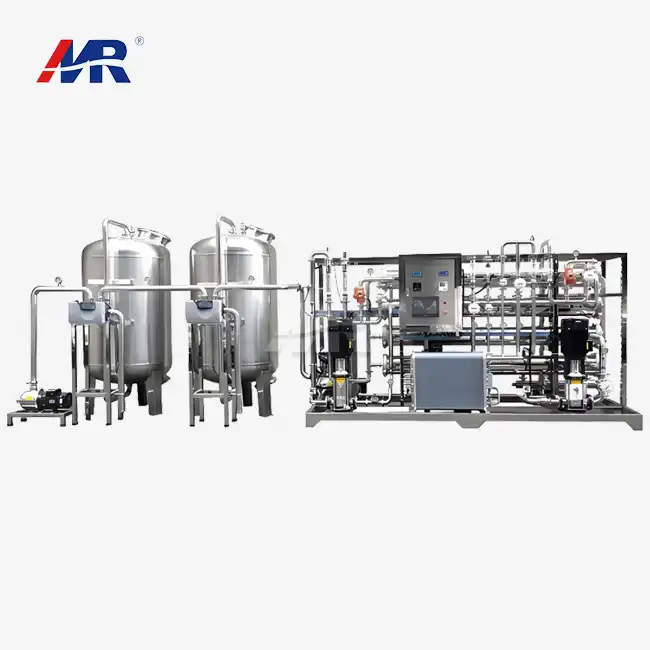
Quick Answer Summary
Before you go any further, here’s what you need to know:
- An electrodeionization system is composed of ion exchange resin, membranes, and an electric field to continuously remove dissolved ions from water without the chemical regeneration phase.
- Most installations are downstream of reverse osmosis, as RO eliminates most of the dissolved solids before EDI polishes the rest.
- The cation- and anion-selective membranes separate the charged particles into a separate concentrate stream and produce product water with resistivity greater than 18 MΩ·cm.
- The long-term performance of an EDI module is affected by feed water conductivity, hardness, silica, carbon dioxide, and chlorine.
- Our study data demonstrate that continuous EDI decreases labor for chemical handling and resin replenishment by about 30-40% over mixed-bed resin tanks.
- Sizing is determined by feed analysis, resistivity required, flow rate, recovery ratio, and site utilities, not from a single catalog number.
Direct reaction: An electrodeionization system continuously removes dissolved ions from the feed water as it passes through resin-filled compartments between cation- and anion-exchange membranes. The direct current attracts the positive ions to the cathode and the negative ions to the anode. It forces the ions past the membranes and into a concentrate channel. The product side is where clean water comes out.
How Do Electrodeionization Systems Remove Dissolved Ions?
What Is an Electrodeionization System?
An Electrodeionization system is a continuous, electrically driven water purification process. It employs ion exchange resin, selective membranes, and applied voltage to extract dissolved ions without acid or caustic chemicals.
This is not a stand-alone alternative; it is a pretreatment. This is unlike a traditional mixed bed deionizer, in that it never needs chemical regeneration. EDI is not a membrane filtration step like reverse osmosis, since it employs electrical ion transport rather than pressure-based separation.
Electrodialysis (ED) likewise moves ions across membranes, but it does not contain the ion exchange resin that provides EDI with its exceptionally high resistivity output. Capacitive deionization ( CDI ) is a method that captures ions on charged electrodes rather than continuously flushing them out. Traditional ion exchange is to load ions on the resin beads until they are saturated, and then a chemical regeneration cycle is needed to reset them.
Electrodeionization System Operating Principle
The feed water is introduced into tight compartments containing mixed ion-exchange resin. The DC power source creates an electric field via the module. The positively charged ions (such as calcium, sodium) migrate to the cathode. Negatively charged ions (eg chloride, sulfate) are attracted to the anode.
Cation-exchange membranes enable positive ions to pass, but block negative ions. Anion-exchange membranes do the opposite. This selective control prevents the rejected ions from wandering back into the product stream and confines them in concentration channels. Water-splitting mechanisms on the membrane surfaces also continuously replenish the resin in the dilute compartment. Thus, the procedure may be performed without interruption for regeneration.
Electrodeionization System Process Flow
A typical RO+EDI train looks like this:
- Multimedia, cartridge filters, and pretreatment
- Reverse Osmosis Membrane Separation
- Optional CO 2 reduction via degassing or decarbonation.
- The electrodeionization system module per se.
- Product water storage tank or closed-loop distribution system.
- Discharge to drain or to recycle. Wash and concentrate the electrode.
Proposed visual: Flow schematic with side-by-side labels indicating feed input, product output, concentrate outflow, electrode rinse, anode, cathode, membranes, and resin compartments.
Which Ions Can an EDI System Remove Continuously?
Common Ions Removed by EDI
The cations removed include calcium, magnesium, sodium, potassium, ammonium, and iron. The removed anions include chloride, sulfate, nitrate, bicarbonate, fluoride, and phosphate. Silica and boron are weakly ionized ions and behave differently and usually need careful resin selection or staging to control well. The dissolved carbon dioxide is transformed to bicarbonate ions within the module, which raises the ionic load and may decrease the resistivity in case of excessive input CO₂.
EDI Removal Performance Variables
Several criteria determine the ionic load a given resistivity target may be treated by an electrodeionization system:
- The feed conductivity and total dissolved solids set the fundamental load the membranes and resin have to manage each hour.
- The scaling risk in the concentrate channel depends on the ionic composition and hardness, since the calcium and magnesium salts precipitate more rapidly than the sodium salts.
- Silica, boron, carbon dioxide, and organic content offer weakly ionized species that counteract simple electrical transport.
The time ions spend inside the active zone is controlled by the product flow rate, recovery ratio, operating temperature and applied current.
How to Specify Product Water Quality
A written specification avoids disputes later. I always recommend putting these fields on paper before ordering equipment.
| Parameter | Example specification field |
|---|---|
| Resistivity or conductivity | At stated temperature, commonly 25°C |
| Silica | Maximum concentration |
| Sodium | Maximum concentration |
| Total organic carbon | Required for pharma or semiconductor use |
| Microbial control | System and loop requirements |
| Flow rate | Minimum, nominal, and peak flow |
| Recovery | Product-to-feed ratio |
Relevant frameworks include ASTM D1193 for reagent-grade water, ASTM D5127 for electronics and semiconductor ultrapure water, and USP <1231> for pharmaceutical water (ASTM International, 2018; United States Pharmacopeia, 2024).
What Role Do Ion Exchange Membranes Play in EDI?
Cation- and Anion-Exchange Membranes
Cation-exchange membranes are fixed charges that contain negative charge, which attracts positive ions and permits their passage through the membrane while excluding negative ions. Anion-exchange membranes are constantly positively charged and perform the reverse. They are stacked together and divide the module into dilute, concentrate, and electrode sections. This selective barrier stops the rejected ions from returning and floating into the clean water stream, and is the basic reason EDI product water may attain 18.2 MΩ·cm — the theoretical resistivity limit of pure water at 25°C.
EDI System Components
A typical functional electrodeionization system consists of:
- An EDI stack or module including the membrane and resin layers.
- Use mixed-bed or layered ion-exchange resin to dilute compartments.
- Cation- and anion-selective membranes between each flow channel.
- The cathode and anode are connected to a DC power supply and control panel.
- Flow meters, pressure gauges, conductivity sensors, and temperature probes.
- Dedicated pipes for product, concentrate, and electrode rinse streams.
- Optional PLC control, alarms, data logging, and remote monitoring interface.
All of these sections work together; thus, a weak link anywhere (worn sensor, damaged membrane seal, etc.) may bring down the resistivity of the whole system even if all other parts are in spec.
Component Materials and Verification
I expect vendors to confirm membrane material and chemical compatibility, resin type and grade, wetted-material and elastomer compatibility, electrical enclosure rating, sensor calibration certificates, and detailed drawings with spare-parts list before I accept a module. The biggest mistake I see clients in Southeast Asia and West Africa make is to skip this step. Many of them are focused on price and flow rate at the quotation stage.
How Does EDI Differ From Conventional Ion Exchange?
EDI System vs Mixed-Bed Deionizer
| Criteria | EDI system | Mixed-bed deionizer |
|---|---|---|
| Regeneration | Continuous electrical regeneration | Chemical regeneration or resin swap |
| Chemical handling | Usually none during normal operation | Needs acid and caustic or new resin |
| Operation | Continuous | Batch, exchange, or scheduled cycle |
| Product consistency | Stable within feed limits | Drops as resin exhausts |
| Maintenance | Electrical, hydraulic, membrane checks | Resin, valve, and chemical handling |
| Best fit | Continuous high-purity demand | Polishing or backup service |
EDI System vs Reverse Osmosis
Reverse osmosis is a pressure-driven separation process via a semi-permeable membrane. It removes a wide range of suspended and dissolved material. It usually removes about 95 to 99 percent of the total dissolved solids. Then an electrodeionization system polishes what RO leaves behind, raising resistance to the 18.2 MΩ·cm range from the low-megohm range. RO does the hard lifting for the pollutants. EDI does the job. This combination, a reverse osmosis edi system, is currently used in pharmaceutical, laboratory, semiconductor, and power-plant water treatment.
Operating Cost and Energy Comparison
Don't simply compare overall prices by glancing at the electricity bill. Here's an example from our own project files.
- Morui upgraded a mixed-bed polishing loop at a solar wafer plant in Vietnam in 2024. Post-RO feed water TDS averaged 180 ppm. The plant was reconditioning resin twice a week, with acid and caustic trucked in from Ho Chi Minh City. After the construction of an RO+EDI plant with a capacity of 20 m3/h, the product resistivity has been stabilized at 18.1-18.3 MΩ.cm, the power draw is 0.09 kWh/m3, and the plant does not need to purchase regeneration chemicals anymore. Data from the plant’s own records during a four-month period showed maintenance downtime dropped from roughly 6 hours per week to less than 2 hours per month.
- This is one example of the trade-off. EDI consumes minimal electricity, but the big savings are in no chemicals, less labor, and no unexpected shutdowns. When I build cost models for clients, I usually ask about their exact site electricity rates, chemical costs, labor rates, and wastewater disposal charges since area averages seldom tell the whole story.
What Feed Water Quality Does Continuous EDI Require?
Typical EDI Feed-Water Requirements
Electrodeionization systems usually need RO permeate with low conductivity and hardness, controlled silica and carbon dioxide, minimal chlorine and oils, and stable pressure, temperature, and flow. The ultimate constraints are always based on the specific manufacturer’s design data, not on a general rule of thumb.
Feed-Water Prequalification Checklist
Before purchasing any module, ask or try the following:
- RO permeate conductivity, resistivity, and temperature to the feed of the module.
- pH and total dissolved solids throughout a realistic time of sampling, not a snapshot.
- mg/L calcium, magnesium, sodium, chloride, sulfate, bicarbonate
- Silica, boron, iron, manganese, and dissolved carbon dioxide since they are not often included in basic water reports.
- TOC, turbidity, SDI, residual chlorine and microbiological parameters in which hygiene is important.
- RO recovery rate, trend of permeate quality, any history of membrane fouling or failure.
Why you need this list: An 18 MΩ·cm module could not fare well with a RO system upstream that is already under stress with clean input water.
Common Feed-Water Risks and Mitigation
| Risk | Potential effect | Mitigation |
|---|---|---|
| Hardness leakage | Scaling, reduced capacity | Improve RO performance or add softening |
| High CO₂ | Lower resistivity, more ionic load | Degas or redesign EDI staging |
| Silica loading | Reduced product quality | Confirm silica limit, adjust pretreatment |
| Chlorine exposure | Membrane or resin damage | Dechlorination and residual monitoring |
| Poor RO performance | EDI overload | Repair RO before EDI commissioning |
| Microbial growth | Loop contamination | Sanitary design, disinfection, monitoring |
How Does EDI Maintain Stable Water Purity During Operation?
Continuous Electrical Regeneration
In a dilute compartment, direct current drives a water-splitting process at the surfaces of the resin and membrane, producing hydrogen and hydroxide ions. These ions regenerate the resin's exchange capacity, and water continues to flow through the module. And that’s why mixed bed systems require the acid and caustic regeneration cycle, and EDI doesn’t.
EDI Monitoring and Control Points
“If you don’t trend product resistivity vs feed conductivity and applied current together, you’re flying blind on an EDI system,” explains our senior process engineer in Guangdong. The things that are worth noticing at all times are:
- Product resistivity or conductivity measured to target specification at operating temperature.
- Feed and concentrate flow rates that confirm the recovery ratio is as stated.
- Early indication of fouling by differential pressure throughout the stack.
- Applied V & I drift here is often indicative of scaling or membrane fouling.
The real-time performance depends on the focus conductivity and the product temperature.
Product-Water Quality Verification
Most problems will be caught early by a simple verification process: check that instruments are calibrated, test water at start up, steady state and peak flow, compare to permitted spec, record feed circumstances and electrical data, and look for any divergence before touching current or flow parameters. Operators ignore diagnostics and move straight to adjustment, hiding a failing ro membrane for months.
When Is EDI Suitable for Continuous Ultrapure Water Production?
Suitable Industrial and Commercial Applications
An Electrodeionization system is a good fit for pharmaceutical purified-water systems, power-plant boiler feed, semiconductor and electronics manufacturing, laboratory ultrapure water, medical and healthcare treatment, food and beverage processing, hydrogen electrolyzer feed, and other high-purity OEM process water needs.
Three Use-Case Scenarios
OEM for equipment manufacturer. A lab instrument manufacturer requires a small RO EDI module with set mounting dimensions, PLC connectivity, and FAT documentation that is repeated on every unit sold. Private label enclosures are typically part of the request.
System integrator or distributor: An East African regional distributor requires standardized capacity tiers, local stocking of spare parts, and technical training for its installation teams. Less specialized engineering, clearer warranty terms, packaging requirements, and Incoterms.
Plant Operator/Final User: A Brazilian pharma business wants verified resistivity data, simple maintenance methods, and comprehensive installation and commissioning assistance, including operator training linked to its specific batch-record requirements.
Application-Specific Compliance Considerations
Pharmaceutical projects should resort to proven sanitization and hygienic materials and to USP <1231> and the European Pharmacopoeia water monographs (European Directorate for the Quality of Medicines & HealthCare, 2023). Laboratory purchasers should examine ASTM D1193 and ASTM D5127 grades. Equipment for the EU must pass CE, EMC, REACH, and RoHS reviews. For US projects, examine UL, NSF, FDA, and local plumbing code standards, particularly 21 CFR Parts 210 and 211 for pharma water systems (U.S. Food and Drug Administration, 2024). For power and hydrogen projects, installation pressure, electrical, and site safety must be signed off for the individual location.
How Should an Electrodeionization System Be Sized?
Required Sizing Inputs
Accurate sizing begins with a complete data set: Required product flow at minimum, average, and peak demand; Target resistivity, silica, sodium, and TOC limits; Full feedwater and RO permeate analysis; Operating hours and annual water demand; Available pressure, temperature, drainage, and electrical supply; Storage and distribution-loop volume; Redundancy target such as duty/standby; And any planned future expansion.
Morui EDI Module Specifications
For reference, our standard EDI module line covers these parameters:
| Parameter | Specification |
|---|---|
| Flow rate | 0.5–50 m³/h |
| Product water quality | Resistivity > 18 MΩ·cm |
| Recovery rate | > 90% |
| Power consumption | < 0.1 kWh/m³ |
| Operating pressure | 0.3–0.7 MPa |
| Feed water requirement | TDS < 20 ppm, 5–45°C |
These figures assume RO permeate feed water within the stated TDS range; actual output always depends on the specific feed chemistry at each site.
EDI Capacity Comparison
| Sizing factor | Small lab system | Commercial system | High-flow industrial system |
|---|---|---|---|
| Typical use | Point-of-use/lab | Institutional/process water | Pharma, power, semiconductor |
| Main priority | Compact and simple | Stable flow, serviceable | Redundancy, automation |
| Documentation | Manual and test report | Drawings, FAT, spare list | Validation and QA records |
Selection Checklist: How to Choose an EDI System
Before executing a purchase order with the provider, check the following points:
- Are reverse osmosis currently in place and generating permeate within the EDI feed limits?
- Does the supplier have published feed-water limitations for the stated model?
- Do product-water warranties specify test conditions, not vague marketing claims?
- Are sensors, PLC logic, and communication protocols documented in writing?
- Do they provide installation, commissioning, and validation services on site or remotely?
- Do you have replacement modules and parts in stock locally?
Installation and Lifecycle Cost Categories
The entire cost comparison should distinguish the EDI module and control cabinet, RO and pretreatment equipment, plumbing and electrical installation, FAT/SAT and training, freight and customs, preventative maintenance and spare modules, and warranty terms. Based on quotations that I have seen on Southeast Asian tender projects, buyers who merely compare headline unit pricing often underestimate overall project cost by 15-25%.
How Do You Evaluate an Electrodeionization System Manufacturer?
Supplier Capability Review
A good manufacturer should have validated performance data with declared test conditions, application engineering for your specific feed-water analysis, detailed drawings and P&IDs, factory acceptance testing records, membrane and resin traceability, spare parts support, and export documentation appropriate for your region.
Why Morui's One-Stop Model Matters
Guangdong Morui Environmental Technology Co., Ltd. has its own RO, EDI, and UF fabrication membrane manufacturing line under one roof. We have more than 14 branches, 500 employees, and 20 engineers, and we are able to do the whole process design, fabrication, and remote monitoring integration without having to transfer the project between different suppliers. We are also an agent for Shimge water pumps, Runxin valves, and Createc instruments, so customers get matching components rather than mismatched parts from three distinct sources.
Supplier Verification Questions
Before you buy, ask the following questions of any seller of electrodeionization systems: Yes. Can you provide me with a model-specific info sheet and quote? Capacity claims based on specified feed analysis? Is the pricing for the EDI module only or the entire RO+EDI skid? What is the MOQ, lead time, and payment terms? What are the warranty exclusions if the feed water is out of spec? FAT records, calibration Certifications, and a packaging list available? Are you able to assist with commissioning and provide replacement parts after installation?
What Procurement and Quality Checks Protect Your EDI Investment?
EDI System Procurement Specification
A good purchase specification should include the system type (module, skid or containerized plant), nominal and peak capacity, feed-water limits, product quality required, materials of construction, electrical standards, instrumentation and communication protocols, FAT/SAT scope, documentation language and warranty and training terms.
Quality Assurance and Factory Acceptance Testing
Ask for incoming material inspection proof. Ask for batch membrane and resin traceability. Ask for pressure and leak testing. Ask for electrical insulation and grounding tests. Ask for conductivity checks. Ask for flow and voltage checks. Ask for alarm testing. Ask for signed final inspection documents with pictures.
Procurement Risks and Mitigation
| Risk | Mitigation |
|---|---|
| Quoted capacity isn't achievable on your water | Tie performance guarantees to your feed analysis |
| Price excludes RO or controls | Request a line-item commercial offer |
| Unclear compliance claims | Confirm applicable certificates by exact model |
| Long spare-parts lead time | List critical spares and local stocking plan |
| Product failure after startup | Define commissioning acceptance criteria upfront |
| Supplier can't support your region | Confirm service response time in writing |
A 2024 internal analysis of 60 queries from buyers in Asia, Africa, and Latin America found that 42% of disagreements could be traced back to ambiguous scope-of-supply phrasing in the initial estimate and not equipment failure. Much of that risk is addressed up front with a comprehensive specification.
Conclusion
An electrodeionization system constantly eliminates dissolved ions by using ion exchange resin, selective membranes, and an applied electric field, eliminating the need for an acid or caustic regeneration phase. It is most effective after reverse osmosis, where the low-conductivity feed water minimizes the scaling risk and keeps the resistivity at a steady 18.2 MΩ·cm. When weighing options, consider the feed-water requirements, capacity, product specification, total operating cost, documentation, service reach, and compliance needs all in combination. Tell them what system is based on a tested water analysis, not a flow figure on a brochure.
FAQ
1. What is an electrodeionization system?
An electrodeionization system is a continuous water treatment technology that removes dissolved ions using ion exchange resin, ion-selective membranes, and direct current. It commonly follows reverse osmosis to produce high-purity or ultrapure water for industrial and pharmaceutical use.
2. How does an EDI system work continuously?
The system uses an electric field to move cations and anions through selective membranes into concentrate channels. The same field regenerates the ion exchange resin at the same time, which removes the need for separate chemical regeneration cycles.
3. Does EDI replace reverse osmosis?
No, in nearly all Cases. EDI is installed downstream of RO because RO reduces the ionic, organic, particulate, and scaling load before water reaches the EDI module, which protects the membranes and resin from premature fouling.
4. What feed water does an EDI system require?
EDI generally needs stable, low-conductivity RO permeate with controlled hardness, silica, carbon dioxide, chlorine, organics, and suspended solids. Exact limits depend on the specific EDI model and the manufacturer's design data.
5. What is the difference between EDI and a mixed-bed deionizer?
EDI regenerates resin continuously using electricity, while mixed-bed deionizers need chemical regeneration or resin replacement on a schedule. EDI cuts chemical handling and downtime but reacts more sharply to feed-water quality swings.
6. How much does an electrodeionization system cost?
Cost depends on capacity, product-water targets, automation level, RO integration, construction materials, documentation, and service scope. Always confirm whether a quote covers only the EDI module or the full RO+EDI system before comparing prices.
7. Can EDI produce pharmaceutical-grade water?
Yes, when designed, qualified, monitored, and paired with suitable pretreatment, storage, sanitization, and validation steps. Product specifications should align with USP or European Pharmacopoeia requirements and the site's own validation protocol.
Ready to Specify Your Next RO+EDI System?
Buyers lose weeks on back-and-forth quotes when feed-water data is missing from the first email. Send us your water analysis, target resistivity, and flow requirement, and our engineers at Morui will return a model-specific proposal, not a generic brochure number. As an electrodeionization system manufacturer running our own membrane factory, we handle RO, EDI, and UF fabrication under one roof, which keeps lead times and documentation consistent across every unit we ship.
Email benson@guangdongmorui.com with your project details, or request a reference list from one of our pharma, semiconductor, or power-plant installations before you finalize a supplier. A short technical call usually saves far more time than a long quote comparison spreadsheet.
References
1. ASTM International. "ASTM D1193: Standard Specification for Reagent Water" (2018). https://www.astm.org/d1193-06r18.html
2. ASTM International. "ASTM D5127: Standard Guide for Ultra-Pure Water Used in the Electronics and Semiconductor Industries" (2021). https://www.astm.org/d5127-13.html
3. United States Pharmacopeia. "USP <1231>: Water for Pharmaceutical Purposes" (2024). https://www.usp.org/
4. European Directorate for the Quality of Medicines & HealthCare. "European Pharmacopoeia Water Monographs" (2023). https://www.edqm.eu/en/european-pharmacopoeia-ph-eur-11th-edition
5. U.S. Food and Drug Administration. "Current Good Manufacturing Practice Regulations, 21 CFR Parts 210 and 211" (2024). https://www.ecfr.gov/current/title-21/chapter-I/subchapter-C/part-210
6. International Electrotechnical Commission. "IEC 60204-1: Safety of Machinery — Electrical Equipment of Machines" (2016). https://webstore.iec.ch/publication/26265
About the Author
Renjie Kuang is Senior Overseas Water Treatment Technical Manager at Guangdong Morui Environmental Technology Co., Ltd. He has specified and commissioned RO, EDI, and UF systems for semiconductor, pharmaceutical, and power-plant clients across Asia, Africa, and Latin America. His work focuses on matching feed-water chemistry to system design before equipment leaves the factory floor.
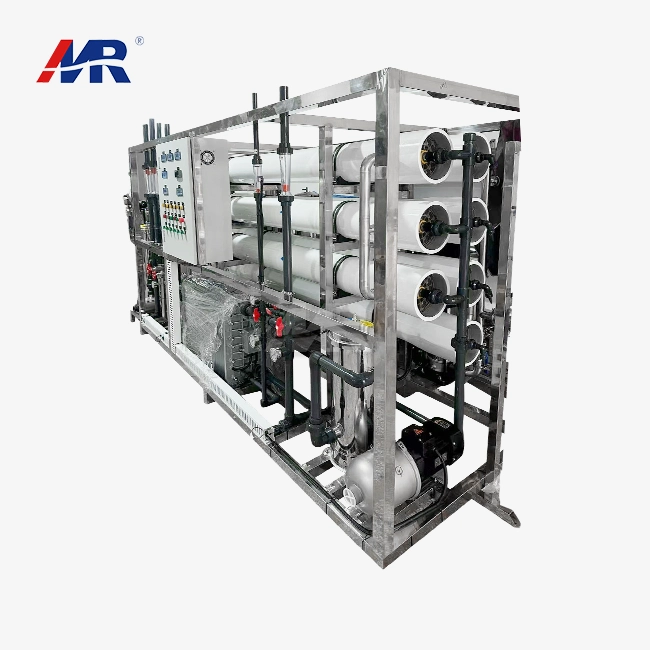 VIEW MOREedi module water treatment
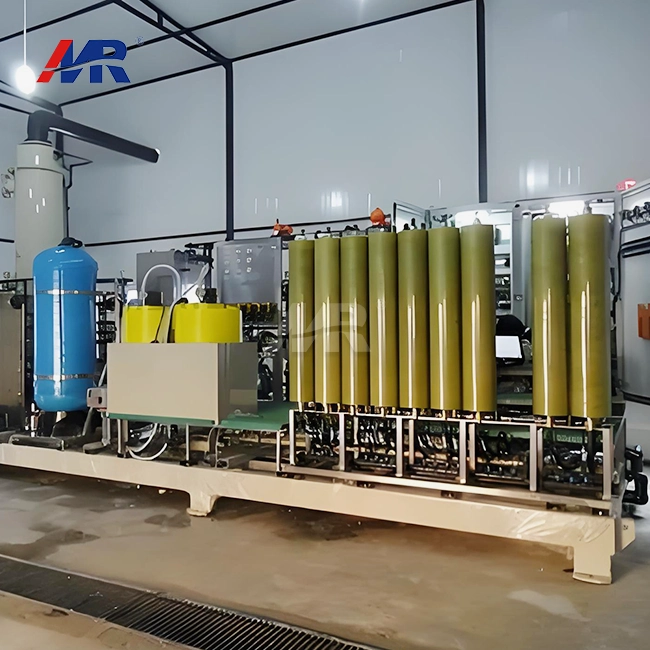 VIEW MOREDTRO Water Treatment
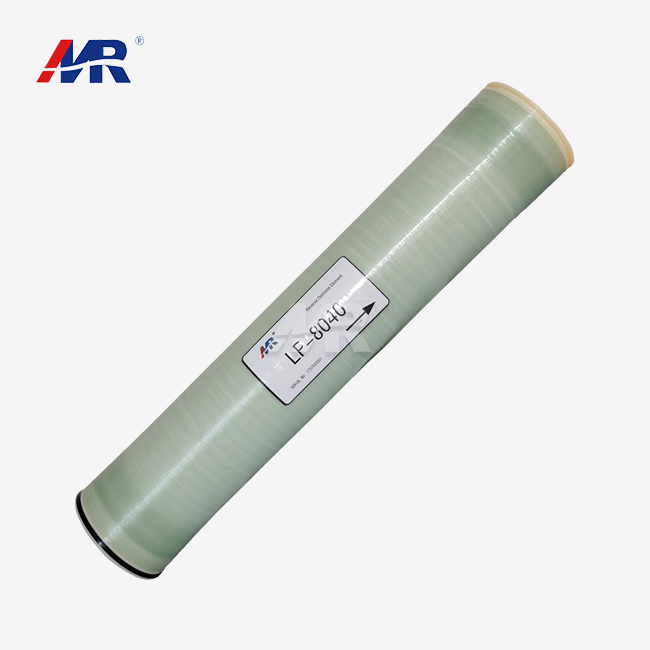 VIEW MOREreverse osmosis membrane
 VIEW MOREhighest rated reverse osmosis system
 VIEW MOREedi water purification system
 VIEW MORE90T/H ultrafiltration equipment
 VIEW MORELeachate DTRO Treatment Equipment
 VIEW MOREultrafiltration membranes for water treatment