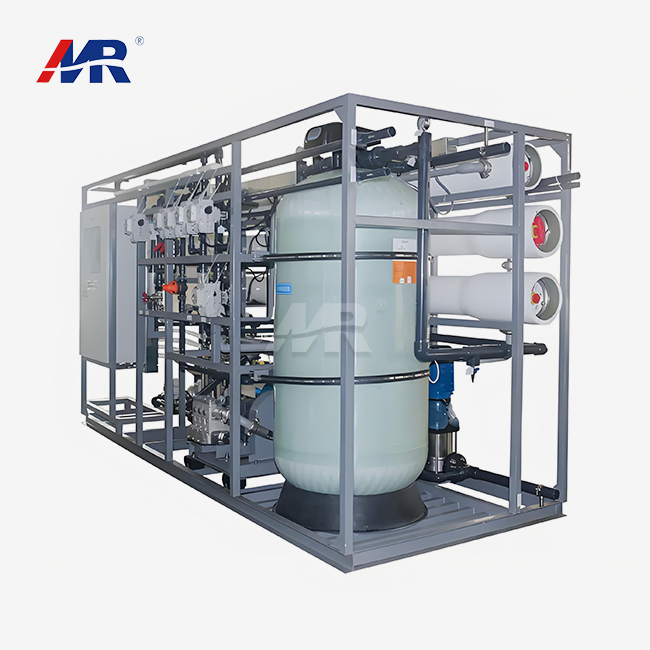
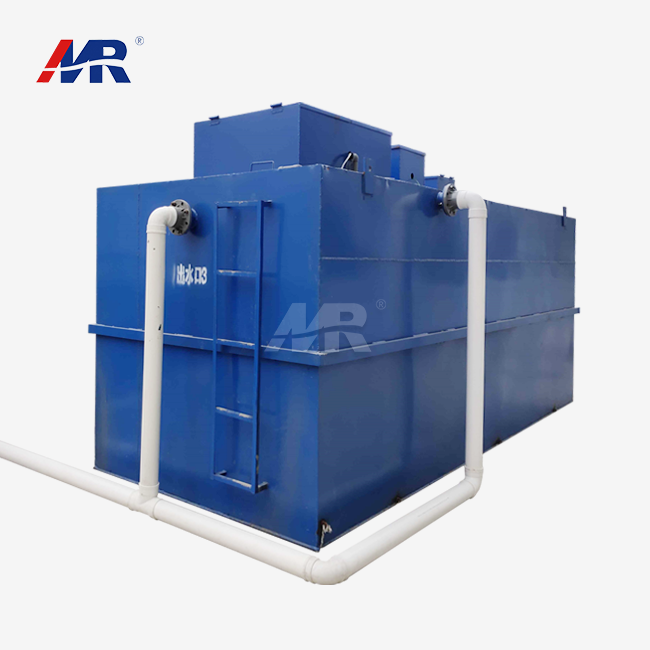
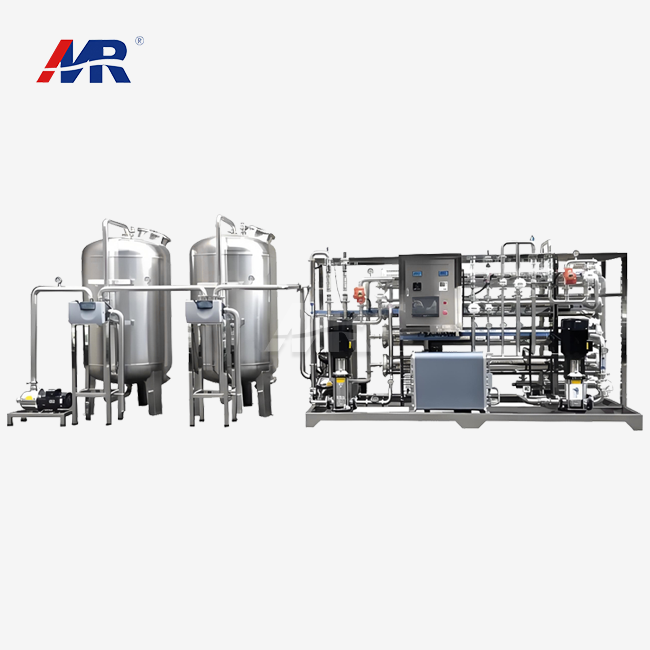
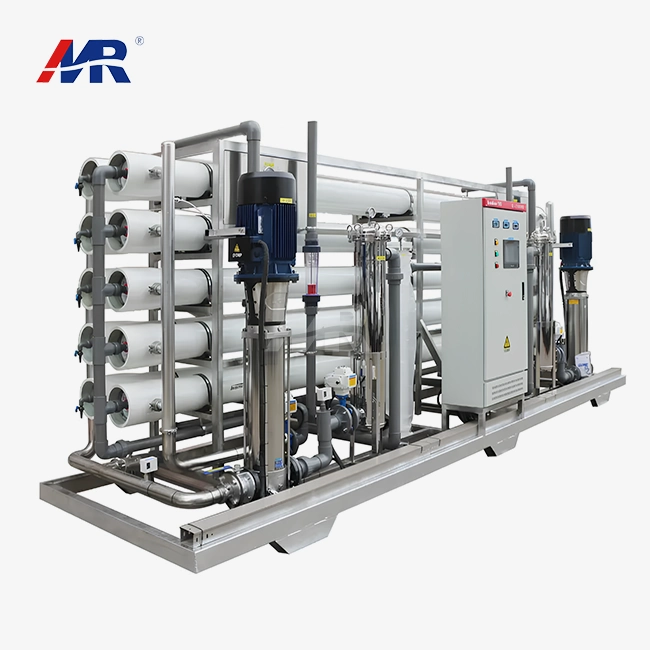
_1745823981883.webp)

Why Use an EDI Water System Instead of Mixed Bed Resin?
If you choose an EDI water system over the old mixed bed resin technology, you can keep making ultra-pure water without having to use dangerous chemicals to regenerate it. This cuts down on downtime by 30 to 40 percent. This new electrodeionization method gets rid of the need to handle acids and caustics, which lowers lifetime costs by a lot while still meeting the strict water quality standards needed in semiconductor, pharmaceutical, and power generation applications. The chemical-free, automatic method makes sure that the product's water resistivity stays between 10 and 18.2 MΩ·cm with little to no work from a person.
Introduction
Water cleaning is very important in labs and factories because good water directly affects the safety of the Products, the speed of the processes, and the ability to follow the rules. Many hours and money are spent by factories that make medicines, gadgets, and power plants to find the best water cleaning technologies that balance performance with ease of use. Choosing between electrodeionization and traditional ion exchange methods affects not only the initial cost of capital, but also the long-term costs of operations, the ability to meet environmental standards, and the dependability of production.
At Guangdong Morui Environmental Technology, we've seen buying leaders look more closely at the total cost of ownership instead of just the price of the tools themselves. People are becoming more aware that standard mixed-bed resin systems have hidden costs like handling chemicals, disposal fees, and upkeep rounds that require a lot of work. This piece puts these two competing technologies side by side, using facts to help technical leaders, finance officers, and building managers decide which method best fits their needs and helps them reach their green goals.
Understanding EDI Water Systems and Mixed Bed Resin
What Is an EDI Water System?
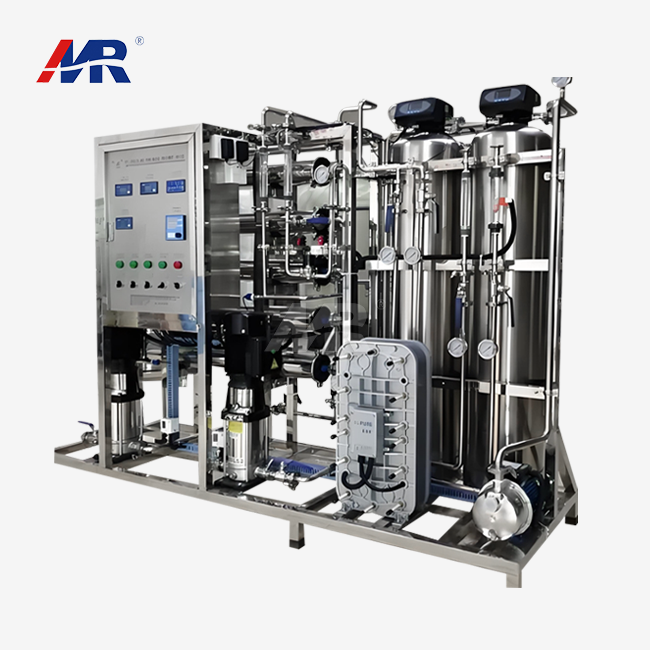
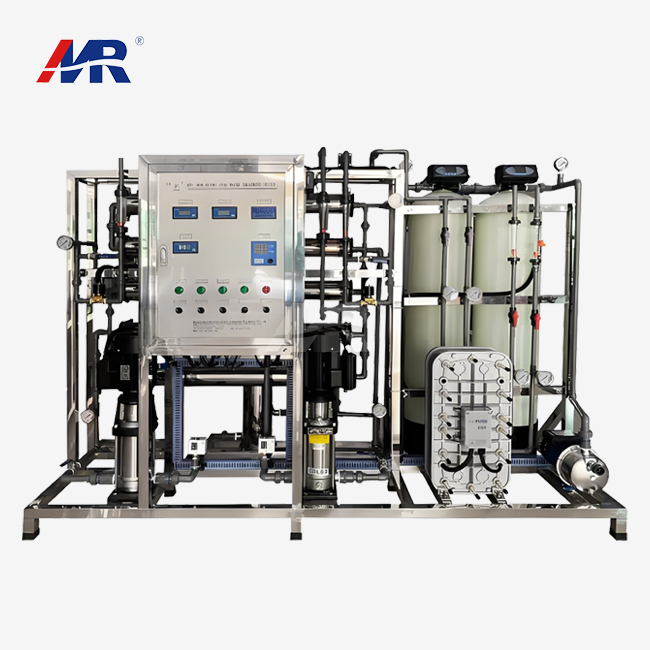
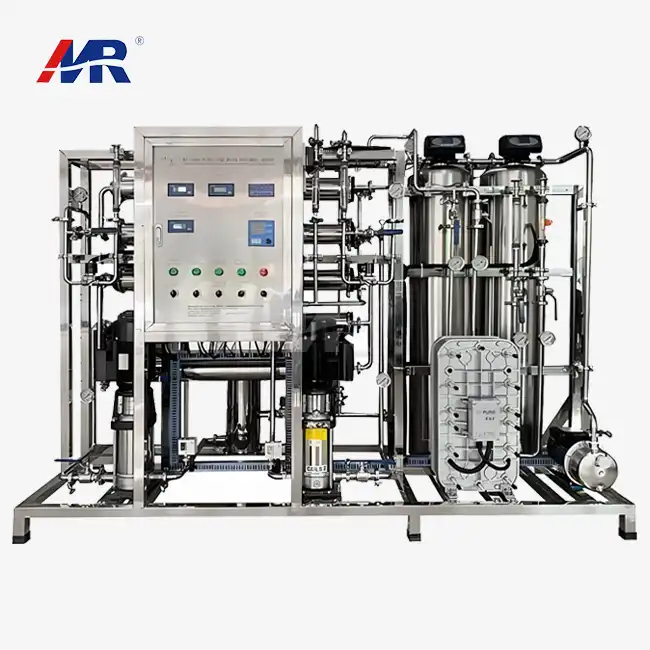
EDI water systems are advanced ways to treat water that use electricity, ion-exchange membranes, and glue to stop ions from mixing with water and continuously separate them. Electrodeionization is different from standard ion exchange because it doesn't use dangerous chemicals like acid and caustic to regenerate the ions. It fixes major problems in the industry, like the high costs of dealing with chemicals, problems with following environmental rules when dumping wastewater, and the downtime that comes with batch regeneration. By adding this technology after reverse osmosis, facilities can regularly get ultra-pure water that meets strict resistivity standards while also lowering the system's physical size and total cost of ownership by a large amount.
Water dissociation is the main process by which the EDI water system works. An electric current splits H2O molecules into hydrogen and hydroxide ions. The plastic beads keep their ion-exchange ability without any extra chemicals because these ions keep them alive. Because it can regenerate itself, this is the main benefit over traditional ways.
Mixed Bed Resin: The Traditional Approach
Mixed bed resin systems use both cationic and anionic resin beads in the same container. When they are fully renewed, the water quality is very good. Since the middle of the 20th century, these systems have been used regularly by businesses. They produce water resistance that is close to 18 MΩ·cm right after regeneration. But as the resin beads are used up by ion exchange, the quality of the water slowly gets worse until it needs to be replaced.
To regenerate something, you have to separate the different types of glue, backwash it, treat it chemically with strong acids and bases, rinse it, and mix it again. This batch process usually takes two to four hours, during which time the machine can't make clean water. Facilities that need to keep making things must keep extra vessels or store space, which increases the amount of money needed and the difficulty of running the business.
Limitations of Mixed Bed Resin and the Rise of EDI Technology
Chemical Handling and Safety Concerns
For mixed bed renewal to work, strong sulfuric acid and sodium hydroxide are needed, which poses major safety concerns. Workers need special training, safety gear, and to follow strict rules for how to handle the material. Local rules about dangerous materials must be followed by storage sites, which usually means having extra containment, ventilation systems, and emergency response gear. The Occupational Safety and Health Administration's report on the safety of pharmaceutical facilities says that handling chemicals is responsible for about 15% of injuries at work in water treatment operations.
Getting rid of chemicals adds another level of difficulty. There are a lot of dissolved ions and extra acid or base in used renewal solutions, so they need to be neutralized and disposed of properly. Environmental rules have become a lot stricter, and release permits now have strict limits on pH and total dissolved solids. Violations can lead to big fines and even the closing of operations.
Operational Downtime and Production Impact
Every renewal cycle causes breaks in output. If a pharmaceutical company makes pure water for injection, they need to either keep backup systems or store enough to cover recovery times. This rule raises the cost of capital and the size of the building. In the process of making semiconductors, where a steady flow of ultrapure water affects yield rates, any delay could lead to contaminated products and big financial losses.
Based on the quality of the feedwater and the amount of output needed, data from our client implementations shows that mixed bed systems usually need to be regenerated every 8 to 24 hours. Each cycle takes two to four hours, so sites have 8 to 12 hours of downtime just because the water system needs to be reset. EDI water system technology gets rid of this problem completely by working all the time.
Core Advantages of EDI Water Systems Over Mixed Bed Resin
Switching from regular ion exchange to electrodeionization has clear advantages in terms of operations, finances, and the environment. Here are some of the main benefits this technology offers:
- Continuous Ultra-Pure Water Production: Electrodeionization keeps the quality of the product water stable, without the changes that happen with batch renewal. Product resistivity stays the same at 15–18 MΩ·cm, so there are no worries about water quality getting worse between regeneration rounds. This uniformity is especially useful in pharmacy settings, where the quality of the water directly affects how well the product meets pharmacopeia standards.
- Chemical-Free Operation: Not using chemicals for renewal cuts down on costs, safety risks, and the work needed to follow rules. Facilities no longer keep records of dangerous materials, teach workers how to handle chemicals, or take care of getting rid of used renewal solutions. This simplification supports environmental goals while lowering organizational complexity and liability exposure.
- Reduced Maintenance Requirements: EDI water systems work with little to no help from a person, usually only needing to be inspected and cleaned in place every so often. EDI stacks can last up to eight years with the right preparation, while mixed bed systems need new resin every two to four years because it breaks down chemically. A lot less work needs to be done, so technical staff can focus on improving production instead of doing regular repairs.
- Lower Energy Consumption: Modern electrodeionization systems use less than 0.5 kWh per cubic meter of water they make, which is a lot less energy than the traditional renewal method, which needs a lot of energy for chemical heating, pumping, and mixing. Over the lifetime of a system, saving energy has a big impact on lowering running costs and reducing the system's carbon footprint.
Because of these benefits, electrodeionization is the best choice in important fields like drugs, electronics, and labs where ultra-pure water standards are strict and keeping operations running is very important.
Comparing Performance and Maintenance Requirements
Water Quality and Purity Metrics
High-performance electrodeionization has technical qualities that let it keep the water resistivity in the output between 10 and 18.2 MΩ·cm and the total organic carbon levels below 5 to 10 ppb. Key factors include the ability to remove silica with an efficiency of over 99% and the ability to remove boron, which is very important for electronics and power uses. Structure-wise, a flexible design lets you change flow rates and make setups that work in two different ways. Because ion-exchange resin beads can regenerate themselves by dissociating water, the quality of the water stays fixed without going through the exhaustion cycles that happen in regular deionized water tanks. Compliance with standards is usually in line with ASTM D1193 Type I, ISO 3696 Grade 1, and USP/EP medicinal water standards.
Mixed bed resin makes the water quality great right after renewal, but it gets worse over time as the resin capacity runs out. To keep water output from going off track, this difference needs to be carefully watched, and conservative regeneration schedules need to be used.
Energy Efficiency and Operating Costs
Electricity, supplies, workers, and getting rid of waste are all part of the total running costs. Electrodeionization has 25–35% lower running costs than mixed bed systems in most situations because it works continuously and doesn't use any chemicals. This benefit is greatly increased by not having to buy chemicals, build holding facilities, or pay dumping fees. Automation also reduces the need for workers, which lowers the cost of hiring people.
Even though it's always running, the amount of electricity it uses stays low. The electrochemical process only needs 200 to 400 watts of electricity per cubic meter of output capacity to move the ions around. This is better than the amount of energy used by extra tools in chemical regeneration methods.
Application of EDI Water Systems Across Industries
Semiconductor and Electronics Manufacturing
Electrodeionization is an important technology for making ultrapure water for cleaning wafers, because small amounts of ionic pollution can lower yields. The steady, constant operation keeps the ionic pollution levels below ppb, which is needed for advanced semiconductor processes. A lot of places that make things use a mix of reverse osmosis, electrodeionization, polishing, and mixed bed as the last safety step to regularly get 18.2 MΩ·cm resistance.
Pharmaceutical and Biotechnology Production
Following strict standards for good industrial practice and pharmacopeia, the EDI water system technology is used as the last step in purifying water and as the water source for injection systems. Pharmaceutical facilities like that they don't have to worry about handling chemicals, and the ongoing processes are easy to validate. The stable water quality helps keep the quality of the products from batch to batch, which is very important in controlled production.
Power Generation Applications
Electrodeionization creates high-pressure burner feed water that keeps turbines from scaling and corroding, working very well in high-pressure, high-temperature settings. Power plants gain from running all the time because they don't have to stop production during times of high demand. Less chemical handling also makes it easier for plants to follow safety rules and protect the environment.
These examples show how electrodeionization provides a steady flow of high-purity water that is necessary to keep complex industrial processes stable in a wide range of settings.
Procurement Considerations for Choosing Between EDI and Mixed Bed Resin
Total Cost of Ownership Analysis
When making purchasing choices, you should think about all of the costs, including capital expenditures, routine costs, and lifecycle costs. Even though electrodeionization usually costs more up front than mixed bed resin systems, it has a good return on investment because it saves money on maintenance costs like chemicals, labor, and waste dumping fees. Depending on how much is made and how much it costs to get rid of chemicals in the area, most sites get their money back within two to four years.
Financial leaders should ask possible providers for thorough lifecycle cost analyses that take into account factors that are unique to their site, such as the quality of the feedwater, the amount of output needed, the cost of chemicals, the rate of pay for workers, and the cost of disposal. This all-around method shows the real economic comparison, which goes beyond the original buy price.
Supplier Selection and Support Requirements
Choosing reliable providers with approved systems, full warranties, and quick local support guarantees smooth integration and ongoing performance. Teams in charge of buying things should look at how experienced the supplier is with the program used in their business, how readily available expert help is, and how easy it is to get replacement parts. At Morui, we have 20 engineers and 14 branch sites in different regions to provide easy-to-reach technical help. We also have our own facilities for making membranes and processing equipment.
Partnering with well-known component makers as a supplier makes things more reliable. Our work with names like Shimge Water Pumps, Runxin Valves, and Createc Instruments makes sure that the whole water treatment system has access to high-quality parts and technical know-how.
Customization and Scalability Options
The flexible and scalable designs of electrodeionization make it possible to adapt to the unique needs of the pharmaceutical, food and beverage, and analytical laboratories industries. Systems can be made exactly the right size for the job and can be added to gradually as demand rises. This is different from mixed bed systems, where adding more capacity usually means adding whole new tanks and facilities for handling chemicals.
In the specification process, procurement teams should talk to possible suppliers about specific application needs, such as the characteristics of the feedwater, the desired water quality, the amount of output needed, and the amount of room available.
Conclusion
The switch from mixed bed resin to electrodeionization is a smart improvement that will help with operations, costs, and the environment. Not having to handle chemicals lowers safety risks and the work needed to follow rules, and running the machine continuously makes production more reliable. The total cost of ownership goes down because upkeep needs go down and parts last longer. These benefits are especially strong in industries like power generation, semiconductors, and pharmaceuticals, where water quality has a direct effect on the quality of the products and how well they work. Environmental rules are getting stricter, and sustainability is becoming more important. Electrodeionization makes it possible for facilities to meet current standards while also planning for future ones.
FAQ
1. Does an EDI Water System Require Reverse Osmosis Pretreatment?
Reverse osmosis must come before electrodeionization to get rid of most of the ions and keep the EDI membranes from getting clogged up or scaling. RO usually gets rid of 95–99% of the total dissolved solids, leaving feedwater with a conductivity below 50 microsiemens per centimeter. This preparation makes EDI stacks last longer and keep working at the same level.
2. How Does CO2 in Feed Water Affect System Performance?
Ionic loads are caused by dissolved carbon dioxide, and high amounts can make product water much less resistant. If CO2 levels are higher than 5 to 10 parts per million, we suggest degasification using membrane contactors. This step of preparation is especially important when the resistance needs to be as high as possible.
3. Can an EDI Water System Be Chemically Cleaned?
Even though it's meant to work without chemicals, it may need to be cleaned in place every so often with special non-oxidizing agents if the quality of the feedwater changes or if organic fouling happens. These steps are very different from mixed bed regeneration because they don't use strong acids and bases but instead use mild cleaning liquids.
Get Expert Guidance on EDI Water System Selection from Morui
We at Guangdong Morui Environmental Technology have been treating water for more than 10 years and have 14 offices with more than 500 professionals who work together to provide full solutions. We can make customized electrodeionization systems that work best for your needs, thanks to our in-house membrane production plant and partnerships with top component makers. Whether you're building new facilities or upgrading mixed-bed infrastructure that's already there, our 20 experts can help you with everything from the initial design to installation, commissioning, and ongoing upkeep. We are a reliable EDI water system provider for pharmaceutical, electronics, and industrial customers who need to make ultrapure water. Email our technical team at benson@guangdongmorui.com to talk about your water quality needs and get thorough plans that are made to fit your business's needs.
References
1. American Society for Testing and Materials. (2018). "Standard Specification for Reagent Water, ASTM D1193-06." ASTM International, West Conshohocken, Pennsylvania.
2. Ganzi, G.C., Wood, J.H., and Griffin, R.L. (1997). "Electrodeionization: Theory and Practice of Continuous Electrodeionization." Ultrapure Water Journal, Volume 14, Issue 4, pp. 64-69.
3. Occupational Safety and Health Administration. (2019). "Chemical Handling Safety in Industrial Water Treatment Facilities." U.S. Department of Labor Technical Report Series.
4. United States Pharmacopeia Convention. (2020). "Purified Water and Water for Injection Standards, USP 43-NF 38." Rockville, Maryland.
5. International Organization for Standardization. (2016). "Water for Analytical Laboratory Use - Specification and Test Methods, ISO 3696:2016." Geneva, Switzerland.
6. Strathmann, H. (2010). "Electrodialysis and Related Processes in Desalination and Water Treatment." Balaban Desalination Publications, Florence, Italy.