

_1745823981883.webp)

Most Common RO Configuration in Large SWRO Plants
The RO configuration SWRO represents the backbone of modern seawater desalination facilities, with two-stage reverse osmosis systems emerging as the predominant choice for large-scale applications. These configurations typically feature a first-stage array operating at 55-65 bar pressure, followed by a second-stage array at 65-75 bar, achieving overall recovery rates of 35-45% while maintaining energy efficiency. The most widely adopted setup includes 6-8 membrane elements per pressure vessel in the first stage and 4-6 elements in the second stage, optimizing both performance and operational costs for facilities producing 10,000+ cubic meters per day.
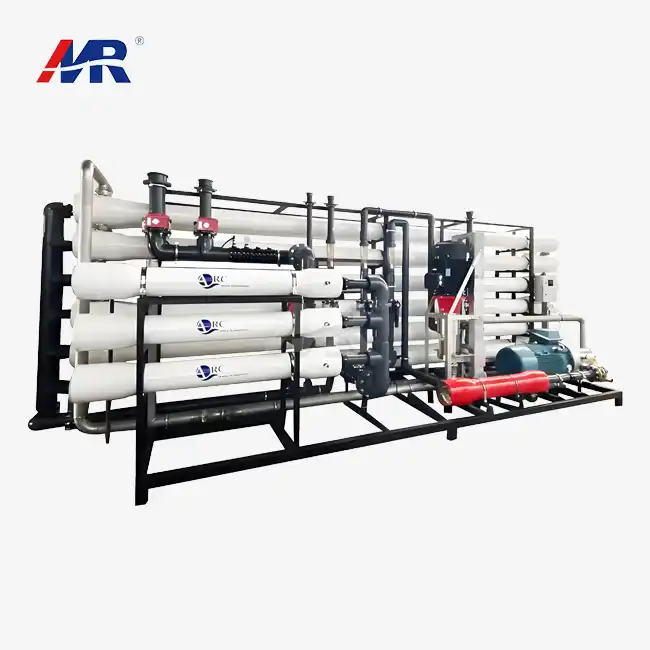
Understanding the Basics of RO Configuration in Large SWRO Plants
Large-scale reverse osmosis plants for saltwater depend on complex membrane arrangements that strike a balance between dependability, efficiency, and cost-effectiveness. Fundamentally, the structure is made up of pressure tanks, high-pressure pumps, and special saltwater membranes that can work in harsh conditions.
Core Components of SWRO Systems
Modern SWRO sites have many modules that all work together. High-pressure pumps make enough force to go through the osmotic pressure of saltwater, which is usually between 800 and 1,200 psi. Pressure vessels hold several membrane elements, normally six to eight units per vessel. This makes the surface area as big as possible while keeping pressure drops doable. Energy recovery devices take in hydraulic energy from concentrate streams, which cuts the amount of power used by 30 to 40 percent.
The membrane technology itself is a huge step forward in the ability to remove salt from water. Advanced thin-film polymer membranes are designed to work with seawater and have better salt rejection rates of 99.4 to 99.7%. These membranes have anti-fouling surface changes and better flux characteristics, which allow them to work for a long time in tough circumstances.
Flow Arrangement Strategies
Even though single-stage designs are easier to use, they usually have lower return rates of 25 to 35 percent. Two-stage systems, which are the standard for big buildings, make recovery and energy use more efficient. Even though they are not used very often, multi-stage setups can be useful in certain situations where maximum water recovery is needed or where the quality of the feed water changes.
The staged method lets the brine stream get more concentrated over time while keeping the best flux rates across barrier surfaces. As the salt concentration grows, each stage works at a slightly higher pressure to make up for the higher osmotic pressure. This method guarantees constant infiltrate quality and makes the system work as efficiently as possible.
Comparative Analysis of RO Configurations in SWRO
Large-scale project decision-making is made easier with knowledge of the performance features of various RO configuration SWRO methods. Each configuration has its own benefits that depend on the needs of the business and the conditions of the place.
Two-Stage vs. Multi-Stage Systems
Two-stage systems are the most popular because they have the best mix of efficiency and complexity. In these setups, recovery rates are usually between 40 and 45 percent, and specific energy use stays below 3.5 kWh/m³. Most of the water production happens in the first stage, and more permeate is taken out of the partly concentrated salt in the second stage.
Multi-stage systems with three or more steps work best when they need to collect as much water as possible. Recovery rates of more than 50% are possible with these setups, which is especially useful in places where water is scarce and every drop counts. More complexity, on the other hand, means higher capital costs and more complex control needs.
The effects on energy are very different depending on the arrangement. Integrating an energy return device into a two-stage system works well, but managing energy in a multi-stage system is more difficult. New technologies have made this gap smaller, which means that multi-stage setups are becoming more useful for some uses.
Technology Comparison with Alternative Desalination Methods
The reverse osmosis method is much better than the steam distillation methods in many ways. Modern SWRO plants use between 2.5 and 4 kWh/m³ of energy, while multi-stage flash distillation uses between 12 and 25 kWh/m³. The world's move toward membrane-based distillation has been driven by this huge increase in efficiency.
Mechanical vapor compression is another option, especially for uses on a smaller scale. Even though these systems use less energy, they usually can't compete with the dependability and ability to grow of big SWRO installations. The membrane method also gives you more freedom to deal with different feed water conditions and operating needs.
Energy return devices have a huge impact on the economy of SWROs. Pressure exchangers and turbochargers restore 25–30% of the energy they take in, which makes desalination on a big scale reasonably possible. These tools are now normal in buildings that can handle more than 10,000 m³ per day.
Selecting the Most Suitable RO Configuration for Large SWRO Plants
A comprehensive study of project-specific factors is necessary for strategic selection of the best RO configuration (SWRO). People who make decisions have to look at a lot of things, like the characteristics of the feed water, the needs for output, and the long-term operating goals.
Project-Specific Parameter Assessment
The main factor that determines size is the plant's capacity, which affects everything from the design of the membrane array to the choice of additional equipment. Facilities that make between 25,000 and 100,000 m³ per day usually use parallel train setups, which give them more operating freedom and allow them to plan repairs around other tasks. Each train has the right amount of membrane stages to reach the desired healing rates while keeping energy use low.
The quality of feed water changes a lot from place to place, so different pretreatment methods are needed. Sources with a lot of turbidity need a lot of filters, and streams that are biologically active need stronger disinfection methods. Changes in temperature affect how well membranes work, so working factors need to be adjusted for each season.
Budget limits affect both choices about capital expenditures and estimates of long-term operating costs. When it comes to dependability and service life, higher-quality membranes and tools are more expensive. It is important for the economic analysis to weigh the original investment against the long-term running costs, such as the amount of energy and chemicals used and the number of replacement parts that will need to be bought.
System Customization and Scalability
Modern SWRO plants are built using flexible design principles, which allow them to grow in the future. Initial setups can handle increases in capacity of 50 to 100 percent by adding more membrane trains or changing the stages, including RO configuration SWRO. This ability to grow is very helpful as demand rises or as practical experience shows ways to make things better.
Integration of control systems is also customizable, letting workers fine-tune performance factors. Advanced tracking tools keep an eye on the water quality, energy use, and membrane function in real time. These methods let you plan maintenance ahead of time and get the best performance in a wide range of working situations.
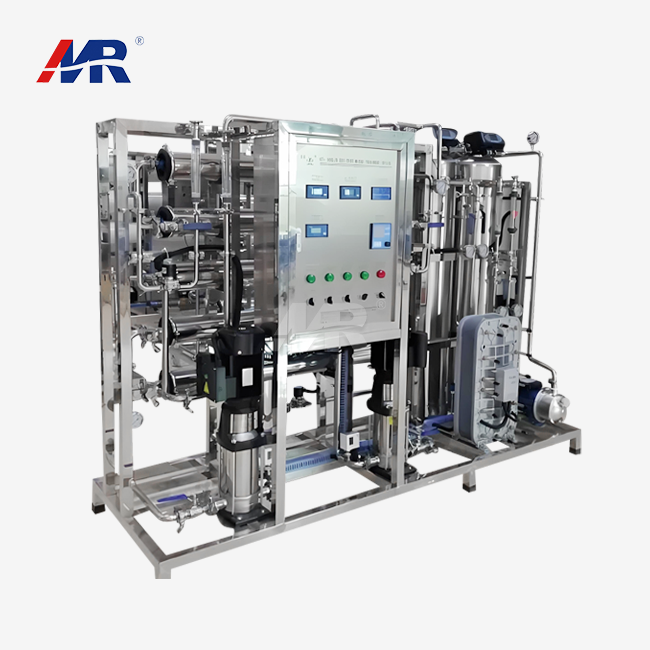
Our 25 m³/hour reverse osmosis equipment at Morui is a good example of this method of modification. With rejection rates of 98.5% to 99.5% and recovery rates of up to 75%, our systems work exceptionally well in a wide range of situations. These units are perfect for places with limited space because they take up little room and use little energy. They also produce constant, high-quality output.
Maintenance and Operational Best Practices for RO Configurations
Maintenance plans that cover both preventative and repair needs are important for the smooth running of big SWRO plants. Because RO configuration SWRO systems are so complicated, they need to be managed in a planned way to get the best performance and the longest life for the equipment.
Preventive Maintenance Protocols
Cleaning the membrane is the most important part of upkeep, and it should be done every three to six months, based on the conditions of the feed water. Using special formulas, chemical cleaning processes get rid of organic fouling, scaling, and biological growth. The cleaning process needs to be carefully managed so that the membrane doesn't get damaged and the contaminants are removed effectively.
Monitoring performance lets you know about problems early on, before they affect work. Normalized flux going down, salt flow going up, and differential pressure going up across membrane layers are all important signs. By keeping an eye on these factors over time, you can take preventative action that stops expensive fixes and lost production.
For mechanical equipment to work reliably, it needs to be inspected and fixed on a regular basis. Instrumentation systems, energy return devices, and high-pressure pumps all need to be checked on a regular basis. Properly lubricating, replacing seals, and calibrating equipment keeps it from breaking down when you least expect it and increases its useful life.
Environmental and Regulatory Compliance
How big SWRO sites handle brine is an important environmental issue to think about. Concentrate streams have a lot of salt in them and may also have chemicals added to them from cleaning processes. Local environmental laws must be followed when getting rid of waste properly, whether it's through ocean outfalls or cooling ponds.
Monitoring how much energy is used helps with both cost control and environmental reporting. Many places require desalination plants to meet strict energy efficiency standards, which means they have to keep detailed records of how much power they use and what they do to make it more efficient. Renewable energy sources, like solar or wind power, are being included in regulations more and more.
Water quality compliance makes sure that the water that is created meets the standards for drinking water or commercial needs. Key factors, such as total dissolved solids, pH, and disinfection results, are constantly monitored to make sure the system is working properly. Internal quality control processes and legal compliance are checked by a third party on a regular basis.
Future Trends and Innovations in RO Configuration for Large SWRO Plants
Due to developments in materials science, robotics, and energy economy, the development of RO configuration SWRO technology is still speeding up. These new ideas look like they will make large-scale desalination even more economically and environmentally viable.
Advanced Membrane Technologies
The next wave of membranes uses biomimetic designs that are based on how nature filters work. These materials can handle higher flow rates while still rejecting salt very well, which could cut energy needs by 15–20%. Better resistance to fouling means that cleaning can be done more often and chemicals can be used less.
Selective barrier materials go after specific toxins instead of just salt. Specialized membrane Products help with boron rejection, which is becoming more important in farming settings. In the same way, better removal of organic compounds allows direct drinkable reuse in areas with limited water.
Applications of nanotechnology offer huge improvements in efficiency. Carbon nanotube barriers are very permeable while still being selective at the molecular level. These materials are still being worked on, but they could change the economy of desalination within the next ten years.
Automation and Process Optimization
Integrating artificial intelligence makes it possible for repairs to be planned ahead of time, which wasn't possible with traditional control systems. Machine learning algorithms look at tens of thousands of practical factors to predict membrane fouling, equipment failures, and chances to make things better. This technology lowers operating costs and makes the system more reliable at the same time.
Digital twin technology makes virtual copies of real SWRO plants, which allows more complex models and optimization to happen. With these systems, workers can try different ways of doing things without having to worry about damaging equipment or stopping production. The technology also allows for expert advice and tracking from afar.
Real-time optimization of working factors by advanced process control cuts down on energy use. Intelligent systems constantly change the chemical dosing rates, pump speeds, and valve settings to keep things running as efficiently as possible. Using complex controls can help you save 5 to 10 percent of your energy.
At Morui, we use these new technologies to improve the way our equipment works. Our systems feature PLC control with touch screen interfaces, providing user-friendly operation while supporting advanced monitoring capabilities. This technology foundation enables seamless integration with emerging automation and optimization tools.
Conclusion
A lot is changing quickly in the field of large-scale saltwater desalination, but two-stage RO configuration SWRO systems are still the standard. These configurations work well for sites all over the world because they match efficiency, reliability, and cost-effectiveness. When you combine modern membrane technologies, energy recovery systems, and smart control tools, you can make things more efficient and have less of an effect on the environment. As problems with water shortage get worse around the world, optimized SWRO designs play a bigger role in finding long-term water solutions for both towns and businesses.
FAQ
1. What are the main advantages of multi-stage RO configurations in large SWRO plants?
Multi-stage systems usually get 50–55 percent of the water back, while two-stage systems only get 40–45 percent. In places with little water, where maximum recovery is important, they work best, but they need more money and more complicated operating control.
2. How often should membranes be replaced in large SWRO facilities?
Depending on the quality of the feed water, how the system is used, and how often it is maintained, membranes should usually be replaced every 5 to 7 years. If you do the right preparation and clean the membrane regularly, it can last a lot longer. If you don't, you may need to change it every 3–4 years.
3. Can RO configurations be customized for varying seawater salinity levels?
Modern SWRO systems can handle changes in salinity by having working settings that can be changed and setups that can be moved. Through pressure adjustment and changes to the membrane array, systems can handle feed water with a TDS range of 32,000 to 45,000 ppm without having to make big equipment changes.
Partner with Morui for Advanced SWRO Solutions
Morui's knowledge of RO configuration swro technology, and our wide range of production skills allow us to create unique osmosis solutions for large-scale uses. Our 20 engineers and 500 workers in 14 branches give us the best technical help and local service in the business. We make high-performance membranes and tools, and also sell well-known names like Shimge Water Pumps and Runxin Valves. Get in touch with benson@guangdongmorui.com to talk about your project needs and find out how our tried-and-true SWRO technology can help you run your water treatment business better.
References
1. Desalination and Water Treatment Journal, "Optimization of Two-Stage Reverse Osmosis Systems for Seawater Desalination," Vol. 185, 2020.
2. International Desalination Association, "Membrane Technology Advances in Large-Scale SWRO Plants," Technical Report Series, 2021.
3. Water Research Foundation, "Energy Recovery Systems in Modern Desalination Facilities," Research Publication, 2022.
4. Journal of Membrane Science, "Performance Comparison of Multi-Stage RO Configurations in Seawater Applications," Vol. 634, 2021.
5. Desalination Engineering Handbook, "Design Principles for Large-Scale Reverse Osmosis Systems," Third Edition, 2023.
6. American Water Works Association, "Best Practices for SWRO Plant Operation and Maintenance," Technical Manual, 2022.
 VIEW MOREultrafiltration machine
 VIEW MOREunder counter reverse osmosis water system
 VIEW MORE50m3/hour ultrafiltration plant
 VIEW MOREDTRO Landfill Leachate Treatment
 VIEW MOREhome sewage treatment plant
 VIEW MORE20m3/hour ultrafiltration equipment
 VIEW MOREelectro deionizer system
 VIEW MORE1000LPH EDI equipment
