_1745823981883.webp)


What performance gains does Membrane Bioreactor (MBR) technology deliver?
MBR technology offers noteworthy execution advancements over routinely enacted sludge frameworks in wastewater treatment. The integration of film filtration with organic forms comes about with a few key advantages:
Enhanced Effluent Quality
MBR systems deliver reliably high-quality effluent, with prevalent evacuation of suspended solids, natural compounds, and pathogens. The ultrafiltration films act as a physical boundary, guaranteeing the maintenance of, for all intents and purposes, all suspended solids and numerous microorganisms. This comes about in gushing turbidity levels regularly below 0.5 NTU, compared to 5-10 NTU in conventional systems.
Increased Treatment Capacity
MBR technology permits higher biomass concentrations in the bioreactor, regularly 8-12 g/L compared to 3-5 g/L in customary enacted slime frameworks. This higher concentration of microorganisms leads to more proficient biodegradation of toxins and permits expanded treatment capacity within a smaller footprint.
Improved Nutrient Removal
The combination of long sludge maintenance times and layer filtration in MBR systems advances the development of slow-growing nitrifying microscopic organisms in a wastewater treatment plant, resulting in upgraded nitrogen removal. Furthermore, the capacity to keep up higher biomass concentrations encourages progressed phosphorus removal through natural uptake and chemical precipitation.
Operational Flexibility
MBR systems can handle fluctuations in influent quality and flow rates more effectively than conventional treatment methods. The membrane separation process ensures consistent effluent quality regardless of variations in the biological treatment stage, providing greater operational stability and reliability.
MBR basics: combined biological treatment and membrane separation
To fully understand how MBR systems improve sewage treatment efficiency, it's essential to delve into the fundamental principles of this technology:
Biological Treatment Process
The natural treatment in an MBR system is comparable to that of an ordinary activated sludge prepare. Microorganisms in the bioreactor break down natural matter and supplements in the wastewater. The key contrast lies in the higher concentration of biomass that can be kept up in the MBR, leading to more effective toxin removal.
Membrane Filtration
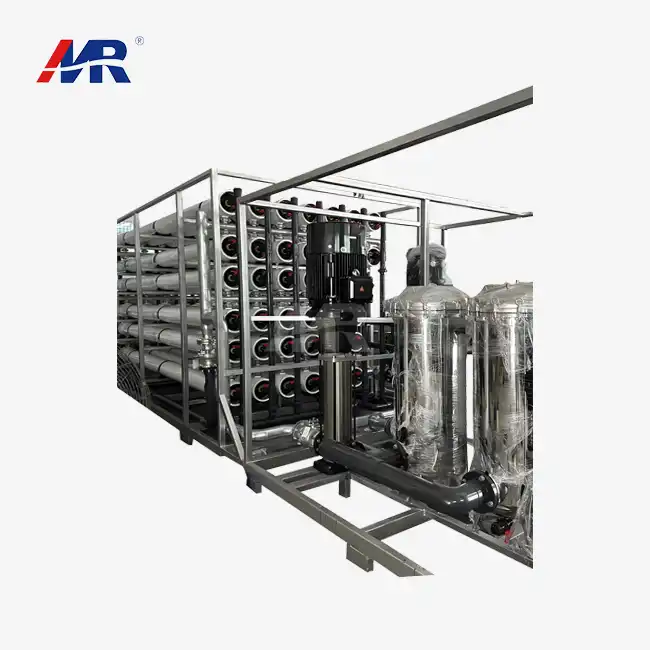
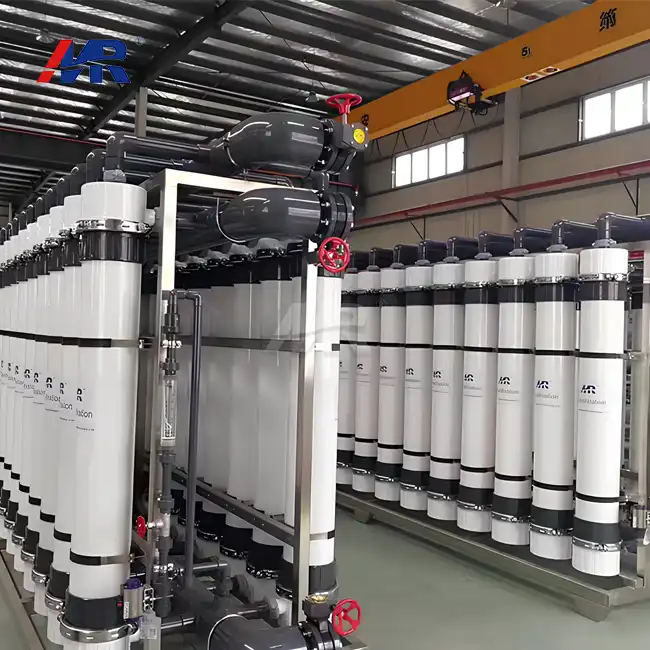
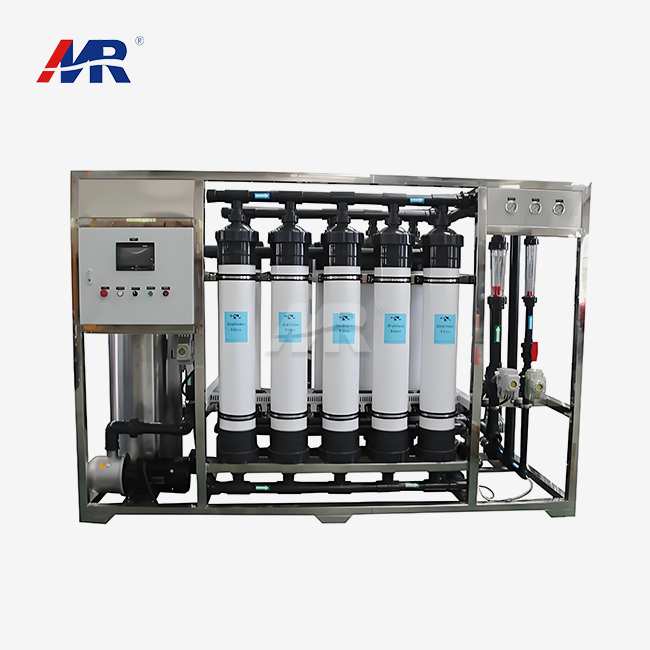
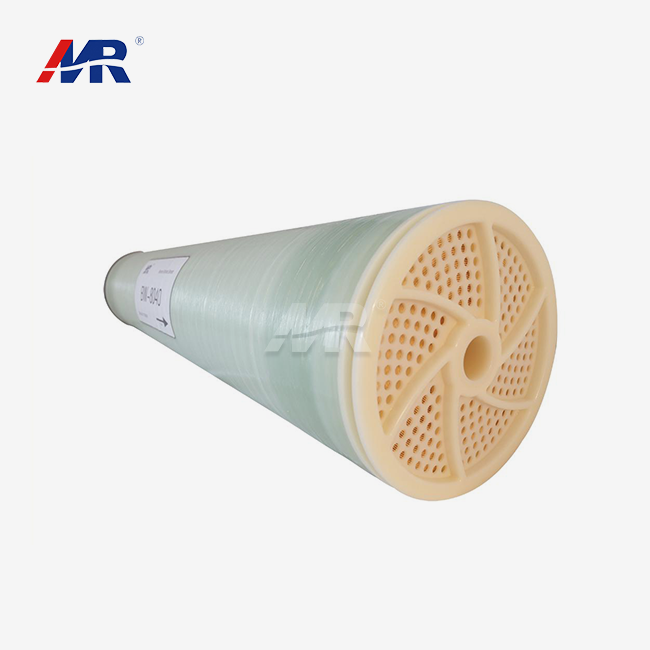
The layer division component of an MBR system regularly employments ultrafiltration or microfiltration films. These layers have pore sizes extending from 0.01 to 0.1 microns, permitting the compelling evacuation of suspended solids, microscopic organisms, and indeed a few infections. The films can be arranged in different ways, including empty fibre, level sheet, or tubular designs.
Integration of Processes
In an MBR system, the film modules are either submerged specifically in the bioreactor or housed in an isolated tank. This integration dispenses with the requirement for auxiliary clarifiers and tertiary filtration steps found in routine wastewater treatment plants. The near coupling of natural treatment and film filtration comes about in a more compact and productive treatment process.
Operational Considerations
MBR systems require careful management of several operational parameters to maintain optimal performance:
- Membrane fouling control through discuss scouring and chemical cleaning
- Maintaining suitable mixed liquor suspended solids (MLSS) concentrations
- Monitoring and altering the broken oxygen levels in the bioreactor
- Managing sludge retention time (SRT) and hydraulic retention time (HRT)
Benefits: footprint reduction, higher effluent quality and reuse suitability
The implementation of MBR technology in sewage treatment plants offers numerous benefits that contribute to improved efficiency and environmental performance:
Reduced Footprint
MBR systems typically require 30-50% less space compared to conventional activated sludge systems with equivalent treatment capacity. This compact design is achieved through:
- Higher biomass concentrations, permitting for littler bioreactor volumes
- Elimination of auxiliary clarifiers and tertiary filtration units
- Integration of natural treatment and solid-liquid division in a single step
The reduced footprint makes MBR technology particularly attractive for upgrading existing treatment plants or for new installations in areas with limited space availability.
Superior Effluent Quality
MBR systems consistently produce high-quality effluent that often exceeds regulatory standards:
- BOD and COD evacuation rates regularly surpass 95% and 90%, respectively
- Total suspended solids (TSS) concentrations in the emanating are frequently below 1 mg/L
- Nutrient expulsion efficiencies for nitrogen and phosphorus can reach 80% and 90%, respectively
- Effective expulsion of pathogens, with up to 6-log decrease of microscopic organisms and 2-3 log decrease of viruses
This exceptional effluent quality not only ensures compliance with stringent discharge regulations but also opens up opportunities for water reuse applications.
Water Reuse Suitability
The high-quality effluent produced by MBR systems is particularly well-suited for water reuse applications, including:
- Industrial process water
- Irrigation for agriculture and landscaping
- Groundwater recharge
- Urban non-potable uses (e.g., toilet flushing, street cleaning)
The ability to produce reusable water contributes to water conservation efforts and helps alleviate water scarcity issues in many regions.
Reduced Chemical Consumption
MBR systems often require fewer chemicals for treatment compared to conventional processes:
- Lower coagulant and flocculant measurements due to the membrane's physical barrier
- Reduced sanitisation chemical utilisation as a result of the membrane's pathogen evacuation capabilities
- Potential end of tertiary treatment chemicals in a few applications
This reduction in chemical usage not only lowers operational costs but also minimises the environmental impact of the treatment process.
Improved Sludge Management
MBR systems offer advantages in sludge management:
- Higher sludge concentrations result in reduced sludge volumes for disposal
- Improved sludge settleability and dewaterability due to longer sludge retention times
- Potential for direct membrane thickening, eliminating the need for separate sludge thickening processes
These benefits can lead to significant cost savings in sludge handling and disposal operations.
Conclusion
MBR technology has made a transformative headway for present-day sewage treatment plants and wastewater treatment plants, conveying higher emanating quality, improved pollutant removal, and a significantly reduced impact compared to conventional frameworks. By coordinating natural treatment with progressive film filtration, MBRs accomplish prevalent evacuation of BOD, COD, suspended solids, and pathogens, making the treated water perfect for reuse applications. The system's operational steadiness, diminished chemical demand, and improved sludge administration advance increment by and large efficiency. As water shortages and natural disasters occur around the world, MBR-equipped wastewater treatment plants offer a solid, future-ready arrangement for maintainable water management.
FAQ
Q1: How does the energy consumption of MBR systems compare to conventional treatment methods?
A: MBR systems ordinarily have higher vitality utilisation compared to ordinary activated sludge systems due to the vitality required for layer air circulation and saturated pumping. Be that as it may, the overall vitality efficiency can be improved through optimised planning and operation, including the utilize of energy-efficient film modules and progressed prepare control techniques. Furthermore, the higher quality effluent created by MBR systems may diminish or kill the requirement for tertiary treatment forms, possibly offsetting some of the increased energy use.
Q2: What are the main challenges associated with MBR technology in sewage treatment plants?
A: The essential challenges of MBR technology incorporate film fouling, which can decrease framework execution and increment operational costs; higher beginning capital costs compared to conventional systems; and the requirement for specialised operator training and maintenance. Be that as it may, progressing progressions in film materials, framework design, and operational methodologies are continually addressing these challenges, making MBR innovation progressively competitive and appealing for wastewater treatment applications.
Q3: Can MBR systems effectively remove emerging contaminants such as pharmaceuticals and personal care products?
A: MBR systems have shown promising results in removing many emerging contaminants, including pharmaceuticals and personal care Products. The combination of longer sludge retention times, higher biomass concentrations, and membrane filtration contributes to improved removal rates compared to conventional treatment processes. However, the effectiveness can vary depending on the specific contaminant and operating conditions. In some Cases, additional advanced treatment steps such as activated carbon adsorption or advanced oxidation processes may be required for complete removal of these challenging pollutants.
Innovative MBR Solutions for Efficient Sewage Treatment | Morui
Are you looking to upgrade your sewage treatment plant with cutting-edge MBR technology? Guangdong Morui Environmental Technology Co., Ltd. offers state-of-the-art MBR systems designed to maximise treatment efficiency and produce high-quality effluent suitable for reuse applications. Our expert team provides comprehensive solutions, from system design and equipment supply to installation, commissioning, and after-sales support. With our advanced membrane production capabilities and partnerships with leading industry brands, we deliver reliable and cost-effective MBR solutions tailored to your specific needs. Don't miss the opportunity to revolutionise your wastewater treatment process – contact us today at benson@guangdongmorui.com to learn how our MBR technology can benefit your facility.
References
1. Judd, S. (2016). The MBR Book: Principles and Applications of Membrane Bioreactors for Water and Wastewater Treatment. Butterworth-Heinemann.
2. Meng, F., Zhang, S., Oh, Y., Zhou, Z., Shin, H. S., & Chae, S. R. (2017). Fouling in membrane bioreactors: An updated review. Water Research, 114, 151-180.
3. Krzeminski, P., Leverette, L., Malamis, S., & Katsou, E. (2017). Membrane bioreactors – A review on recent developments in energy reduction, fouling control, novel configurations, LCA and market prospects. Journal of Membrane Science, 527, 207-227.
4. Hai, F. I., Yamamoto, K., & Lee, C. H. (Eds.). (2018). Membrane Biological Reactors: Theory, Modeling, Design, Management and Applications to Wastewater Reuse. IWA Publishing.
5. Xiao, K., Liang, S., Wang, X., Chen, C., & Huang, X. (2019). Current state and challenges of full-scale membrane bioreactor applications: A critical review. Bioresource Technology, 271, 473-481.
6. Subtil, E. L., Mierzwa, J. C., & Hespanhol, I. (2014). Comparison between a conventional membrane bioreactor (C-MBR) and a biofilm membrane bioreactor (BF-MBR) for domestic wastewater treatment. Brazilian Journal of Chemical Engineering, 31(3), 683-691.