_1745823981883.webp)

How Does a Reverse Osmosis Tank Support Continuous Water Supply?
A reverse osmosis tank is a pressurised hydro-pneumatic storage vessel that is used to contain water that has been filtered via the use of an RO membrane. Due to the fact that the RO filtering process is inherently slow and generates water drop by drop, the tank functions as a buffer, holding treated water under pressure so that it is quickly accessible in the event that there is an increase in demand. Compressed air and the permeate that has been stored are separated on the inside by a bladder or diaphragm that is food-grade. Because this design avoids flow-rate delays and reduces backpressure on the membrane, it provides commercial and industrial enterprises with constant and on-demand access to clean water without requiring them to operate the RO unit continually.
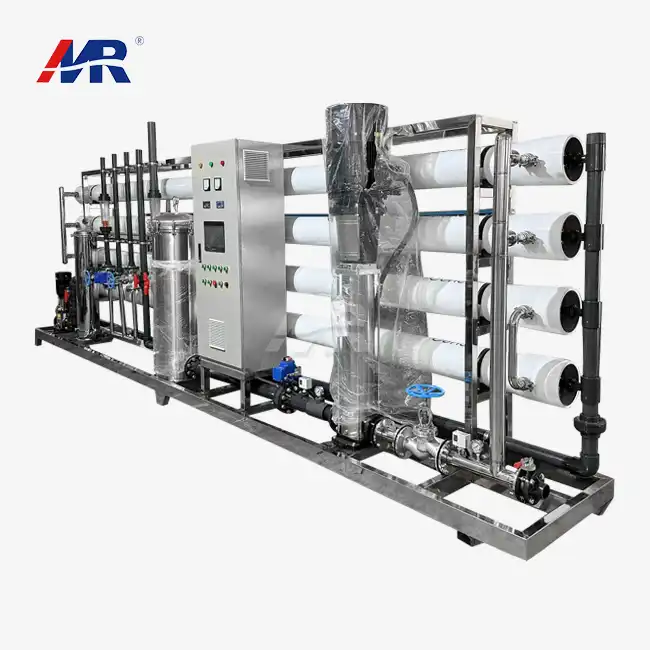
Understanding How a Reverse Osmosis Tank Works to Ensure Continuous Water Supply
The Storage Buffer Principle
A ro membrane can only produce between 50 and 150 gallons of water per day, which is not enough to fulfil the urgent requirements of a facility that is experiencing high levels of activity. Therefore, this is not a problem since the pressurised storage tank is able to take in permeate in a gradual and rapid manner whenever a tap is opened or a process line requires water. It has been stated by the Water Quality Association that pre-charged holding tanks may reduce the number of cycles in a RO system by as much as sixty percent, which immediately results in an improvement in the membrane's lifespan.
How Pre-Charged Air Pressure Works
Every tank is pre-charged with between 5 and 7 pounds per square inch of air pressure on the air side of the diaphragm. During the process of the tank being filled with clean water, the air bag is compressed. When a draw-down occurs, the stored air pressure draws water out at a consistent pace, often up to 100 PSI working pressure. As a result, there is no need for a pump for every little demand event that occurs. Ensuring that this pre-charge is adjusted correctly is the single most critical thing that can be done to maintain a consistent flow.
Recognizing Early Signs of Tank Failure
This might indicate that the bladder has failed or that the air pressure has been lost if the output pressure is low, the draw-down cycles are short, and the tank feels heavy yet just drips water. Additionally, if the draw-down cycles are short, the tank may only drip water. If procurement engineers request a tank with a heavy-duty chlorobutyl or EPDM diaphragm rather than a thin rubber bladder, the failure rates in high-cycle commercial situations will be significantly reduced.
Key Factors in Reverse Osmosis Tank Sizing and Selection for Business Needs
Matching Capacity to Application
Pick a tank that takes into account the peak hourly demand rather than simply the daily quantity. In comparison to a hotel that can accommodate two hundred people, a tiny laboratory does not need nearly as much compressed reserve. The vast majority of industrial systems have the capacity to store anything from 14 gallons for light-duty office work to 80 to 200 gallons for food service or process water systems. It is possible that industrial RO systems may need more than one big vessel or tanks that are constructed to order in order to attain the desired level of system throughput. When the tank is too small, the RO unit is forced to operate virtually continuously, which accelerates the rate at which the membrane wears down.
Material Selection: Stainless Steel vs. Composite
Both the amount of time a reverse osmosis tank will endure and the amount of money it will cost to possess are impacted by the kind of material that you choose. These are the primary options that procurement teams often consider when making decisions:
- Tanks made of stainless steel (grade 304 or 316L) are resistant to corrosion in harsh water conditions, can withstand greater working temperatures, and are compliant with standard requirements for both food-grade and pharmaceutical applications. If they are properly maintained, they normally have a lifespan of 15–20 years.
- With a polypropylene liner, composite and fibreglass tanks provide an option that is lighter and more cost-effective, and they are suitable for use in conventional commercial drinking water systems. Liner systems that have been approved by NSF/ANSI 58 prevent the leaching of chemicals into stored permeate.
- When it comes to food and beverage applications, multi-layer steel tanks with a virgin polypropylene inner liner are a realistic middle ground since they combine structural strength with food-grade compliance.
Tanks made of stainless steel of grades 304 or 316L are able to meet the requirements of both food-grade and pharmaceutical standards. These tanks are resistant to rusting in severe water conditions and can withstand greater temperatures during operation. If they are properly maintained, they should last anywhere from 15 to 20 years.
Connection Size and System Compatibility
When it comes to business-to-business (B2B) purchasing, selecting the incorrect material for the temperature or kind of water is one of the most frequent and costly design blunders that may occur.
Maintenance, Cleaning, and Lifespan: Ensuring Long-Term Performance of RO Tanks
Routine Air Pressure Checks
It is recommended that a standard tyre pressure gauge be used to check the air pre-charge once every six months, when the tank is completely empty. There is a possibility that the bladder will not function as well if the air pressure falls below what it was at the manufacturer. In sectors where there is a high level of demand, inspections must be carried out every three months. Maintaining the appropriate air pressure is a simple and inexpensive method that may be used to prevent the RO membrane and tank from being too saturated and placing unwanted strain on them.
Cleaning and Sanitization Protocols
The accumulation of biofilm and sediment inside a storage tank has the effect of lowering the quality of the permeate, which is unacceptable in contexts such as pharmaceutical operations, food processing facilities, and healthcare facilities. The tanks at commercial establishments must be cleaned on a yearly basis at the very least. There should be a cleaning of the tanks every three to six months in industrial systems that have a high productivity. Following the application of a sodium hypochlorite solution with a low concentration, the system is subsequently thoroughly cleaned. This is the standard approach. You should always make sure that the cleaning chemicals will not cause any damage to the material that makes up the tank cover before you begin their use.
Expected Service Life by Tank Type
If they are properly maintained, composite tanks with PP covers may last anywhere from eight to twelve years. Containers made of stainless steel for a reverse osmosis tank have the potential to survive for more than 15 years if they are appropriately suited to the chemistry of the water. It is easier for facilities managers and procurement teams to plan replacements ahead of time when they use a maintenance log to keep track of the age of tanks and their service history. This helps to reduce the amount of unexpected downtime that occurs, as well as the expenses associated with needing to acquire items rapidly.
Comparison and Decision Support: Choosing the Best RO Storage Solution
Tanks vs. Tankless RO Systems
For setups with limited room or a small amount of water, on-demand portable RO systems are the best choice because they produce water as soon as they are turned on. When there is a lot of demand for their services, though, they can't keep up with the high-flow output of a compressed storage system without being held up. When there are dozens of simultaneous draw-downs in a food and beverage facility, a hospital cleaning room, or a hotel with a tankless setup, it is hard to do your work because the pressure drops, making it harder to do your job. This makes it hard for you to meet your obligations. For most business-to-business uses, especially those where steady flow is key, a pressurised tank with the right amount of space is still the most reliable option.
When to Add a Booster Pump
With a booster pump and a pressurised tank working together, the whole distribution network can keep delivering the same amount of water. This works really well in big systems with low supply pressure or in places where pressures are competing at different ends. This is a chance because these two things are present together. The people who designed the system need to figure out how much dynamic head it needs overall and then pick a pump, like a Sigma variable-frequency pump, that can both meet the system's flow needs and the tank's pressure grade. It is important not to put too much backpressure on the RO membrane when doing this process.
Total Cost of Ownership Considerations
The price of a tank is just one of many things that go into the process. When thinking about buying a tank, people should think about how much it will cost to install, maintain, and fix, as well as the warranty coverage and the cost of downtime if the tank breaks before it's supposed to. It's possible that a composite unit will cost more to buy than a stainless steel tank that will last fifteen years, but it's also possible that the stainless steel tank will be cheaper to run every year. This part is very important, and every purchasing manager and project engineer must finish it before they decide where to get something.
Procurement Insights: Sourcing the Right RO Tank for Your Operation
Evaluating Suppliers and Documentation
The NSF/ANSI 58 certification, material safety data sheets, pressure test results, and dimensional drawings are all things that business-to-business customers need to get from a vendor before making a purchase from them. There is less risk associated with a project when the manufacturer has quality documentation that can be monitored. This is particularly true for original equipment manufacturer (OEM) integrators and EPC contractors, who are accountable for the functioning of the system after it has been installed. It is essential to consider both the manufacturing capacity and the lead time. Check to see if the provider is capable of meeting both the technical criteria you have set for your project as well as the timeframe.
Pricing Variables and MOQ
The quantity of the order, the size of the tank, the sort of material that is utilised, and the manner in which the connections are put up all have a significant role in determining the price. When you make a bulk purchase from a firm that has its own manufacturing facilities, the unit cost is often cheaper, and the lead time is more consistent. The export packing standards and shipping choices should also be checked by distributors and customers who purchase in bulk. This will ensure that the amount of damage that occurs during shipment and the trouble that occurs with customs are kept to a minimum.
Conclusion
A stable water supply system is different from one that breaks down during peak demand because the reverse osmosis tank needs to be properly designed and maintained. Every design choice has an impact on how things work, from choosing the right material and making sure it will last for a long time to protecting membranes and keeping flows stable. The storage tank you pick is just as important as the membrane itself, whether you are planning an industrial RO plant, adding equipment to a food-grade facility, or running a leisure business with multiple buildings. Choosing the right size, material, and upkeep from the start will protect your investment and keep the water moving when it's needed the most.
FAQ
1. How often should I check the air pressure in my RO storage tank?
It is recommended that the air pre-charge be checked every six months in standard commercial systems. A check should be performed every three months in high-cycle industrial systems. In order to get an accurate reading, it is imperative that you constantly check the pressure while the tank is devoid of any water.
2. What is the correct pre-charge pressure for an RO tank?
When the majority of tanks leave the facility, they are already charged to between 5 and 7 PSI. An excellent rule of thumb is to adjust the air pressure such that it is equal to two-thirds of the supply pressure. In order to ensure that you have all of the information you need, check the fundamental information for the tank.
3. Which tank material is best for food and beverage applications?
Food and drink may be kept in tanks that are authorised to NSF/ANSI 58 and have an inner cover made of fresh polypropylene or are constructed of 316L stainless steel. These tanks are also eligible for storage.
4. Can I connect multiple RO tanks to one system?
Indeed. In commercial and industrial environments, when a single tank is not sufficient to manage high flow rates, parallel tank connections are a common practice. You need to make sure that the pressure rating of each of the tanks is the same, and that the manifold is the appropriate size for the overall flow rate.
Partner With Morui for Dependable RO Tank Supply
Morui sells reverse osmosis tanks that are commercial and industrial grade and are made for tough B2B uses. We have been making reverse osmosis tanks for a long time and have our own membrane production facilities as well as multiple equipment processing plants. We back up every product with full technical documentation and engineering support. Get in touch with Our Team right away for details, bulk prices, or a unique setup. You can email us at benson@guangdongmorui.com.
References
1. Water Quality Association. Reverse Osmosis Systems: Performance and Maintenance Standards. WQA, 2021.
2. NSF International. NSF/ANSI 58: Reverse Osmosis Drinking Water Treatment Systems. NSF, 2022.
3. AWWA (American Water Works Association). Manual of Water Supply Practices: M46 — Reverse Osmosis and Nanofiltration. AWWA, 2020.
4. Crittenden, J.C. et al. MWH's Water Treatment: Principles and Design. John Wiley & Sons, 2012.
5. World Health Organization. Guidelines for Drinking-Water Quality, 4th Edition. WHO, 2017.
6. Metcalf & Eddy. Water Reuse: Issues, Technologies, and Applications. McGraw-Hill, 2007.