

_1745823981883.webp)

RO Water Tank Capacity: How Much Storage Does Your System Need?
How big does your storage tank need to be? This is one of the most important questions you will need to answer when planning or buying a water treatment system. If you get the capacity wrong—either too small or too large—it causes real practical and financial problems. This guide talks about the main things that determine the right RO water tank size for business and industrial use, such as figuring out the daily demand and choosing the right materials and suppliers.
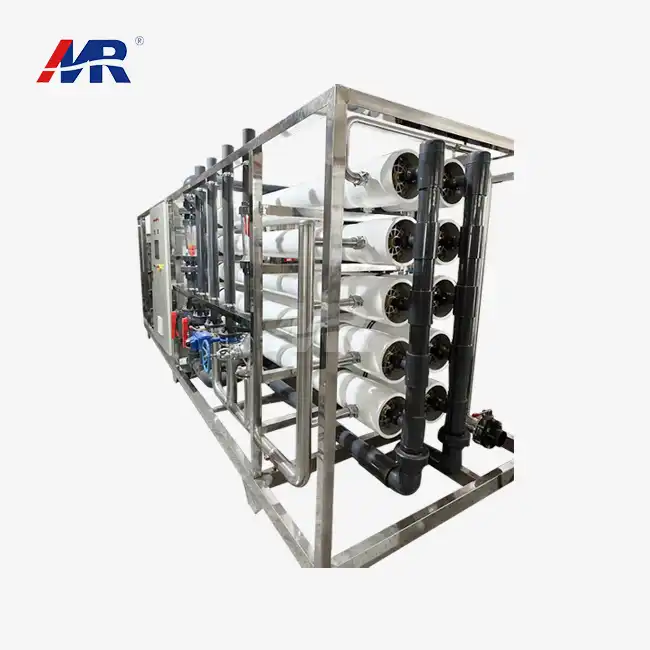
Understanding RO Water Tanks and Their Capacity Basics
What an RO Storage Tank Actually Does
The RO membrane makes clean permeate water, which is kept in a pressure RO water tank and sent out at a realistic flow rate when it's required. Because RO filters only make a few gallons of water an hour, the tank fills the gap between low output and high demand. Most commercial units are hydropneumatic and have a chamber that is already full of air and a lid made of food-grade butyl. Without a second pump, this design moves the water out and keeps the stored water from getting dirty from the outside.
Factors That Influence Required Capacity
How big the volume is depends on how much water is used every day, how fast the RO system is thought to produce water (in gallons or litres per hour), and when it can be refilled. A system that makes 500 liters per day but has 100 liters per hour of high demand needs a lot more backup storage than a system that has steady, spread-out usage. Your cushion needs to be a certain size based on how it will be used during shifts in manufacturing, service times in kitchens, or hospital hours.
Material and Construction Options
The tanks that hold water for RO systems are made from stainless steel (304 or 316L), fiberglass-reinforced plastic (FRP), and food-grade polyethylene (PE). PE tanks can handle low to medium pressure and are good for light business and home uses. When it comes to packaged industrial systems, FRP tanks are often used because they can handle higher working pressures. Food processing, pharmacy, and healthcare areas are all very clean, so stainless steel tanks are the best choice. They don't rust, can be cleaned with hot water and soap, and can handle higher temperatures.
How to Determine the Right RO Water Tank Capacity for Your Business Needs
Sizing by Industry Segment
Each area needs a different set of approaches. Every day, a building with 200 workers might need 1,000 to 2,000 litres of clean water, since each person uses about 20 to 30 litres. If a queue makes drinks, it might need a steady flow of 5,000 litres per day at 5 bar. A hospital needs a steady flow of supplies all the time, plus extras in case of an emergency. By matching the size of the tank to how much each type of building actually uses, supply problems and wasted spending on equipment that is too big are avoided.
The Demand Matching Calculation
Find the peak hourly demand in litres per hour, multiply it by the buffer's length of time (usually two to four hours for commercial systems), and then add 20% to account for changes in peak use. This will help you choose the right size. To give you an idea, a food preparation line that needs to store 80 L/h, a 3-hour spare, and a 20% margin needs about 288 L of room. Need-buffer matching is another name for this method. It gives procurement engineers a number they can use in project paperwork that they can back up.
Common Sizing Reference Points
If you need some ideas for the range, here are some popular size ranges used in different fields:
- Light commercial (like offices and small restaurants): 100–500 L tanks made of standard PE or FRP, with a working pressure of up to 0.6 MPa.
- Medium-sized commercial (hotels, schools, and mid-sized factories): 500–2,000 L, usually made of FRP or stainless steel, and set up with multiple tanks connected to a manifold.
- For industrial and big facilities with 2,000 litres or more, stainless steel is recommended, higher pressure values are possible, and special inlet/outlet configurations can be made.
These lines tell you where to start for an RO water tank. The exact specs depend on how much water the RO system can produce, how much pressure is in the area, how big the pipes are, and how much floor room is available.
Comparison of RO Water Tank Types for Procurement Decisions
Pressurized vs. Atmospheric Tanks
Commercial systems that come in packages or at points of use usually use pressurised bag tanks to deliver water because they don't need an extra transfer pump. There are more likely to be atmospheric tanks on large industrial sites that have a secondary distribution pump built in. Atmospheric tanks are open or ventilated vessels. They are easy to clean, and atmospheric tanks can hold more things, but they can get dirty if they are not properly covered and cared for.
Stainless Steel vs. FRP vs. PE: A Direct Comparison
Picking the right material changes both how much it costs to make and how much it costs to keep up over time. The three main options are similar and different in the following important ways:
- 304/316L stainless steel has the best resistance to corrosion, can be cleaned completely, is food-grade and pharmaceutical-grade, has a longer service life (15–20 years or more), costs more per unit, and is good for high-pressure systems.
- Fiberglass-reinforced plastic, or FRP, can handle high pressures well, is lighter than steel, doesn't cost too much, and is commonly used in packaged industrial RO systems. However, it's not the best material for harsh chemical cleaning.
- Food-grade PE is the cheapest option, works well for low-pressure storage, is easy to move and set up, but it doesn't last as long when exposed to UV light or high temperatures.
FRP, which stands for fiberglass-reinforced plastic, is lighter than steel, doesn't cost too much, and is often used in packaged industrial RO systems. It can handle high pressures well. On the other hand, it's not the best material for cleaning with harsh chemicals.
Pricing Considerations and Feature Evaluation
A tank's price is directly linked to its size, material, pressure rating, and certification needs. If someone is selling a lot of something, they should ask for proof like material test certificates, pressure test reports, and food-grade compliance Certifications (NSF/FDA if needed). Things you should look for are coatings on the outside that are resistant to UV light, the right inlet and outlet sizes (standard 1/4" to 2" BSP or NPT), and guarantee terms that cover bladder replacement. As an example, EPC and OEM buyers often ask if they can change things like where the ports are located, the attaching bolts, or the size of the tank.
Installation and Maintenance Tips to Maximize RO Water Tank Lifespan
Installation Location and Pressure Setup
Store a pressurised RO water tank somewhere safe, close by, and with enough room for repair workers to get to it. Make sure the pre-charge air pressure in the bladder tank is about 70% of the RO system's minimum operating pressure before you connect the water line. Using the wrong pre-charge pressure during startup is one of the most common mistakes that people make. This lowers the storage capacity directly. Anchor fixing and vibration separation should be built into the plans for big stainless steel tanks that will be used in plants.
Maintenance Schedule by Tank Type
How often repairs need to be done varies on the material and how it is used. The pressure in PE and FRP bladder tanks needs to be checked every 6–12 months, and the bladder itself needs to be checked every 2–3 years. Steel air tanks used for food or drugs should be cleaned on the inside and outside at least once every three months. All tanks should have their fittings, links, and pressure release valves checked once a year. To follow the rules in healthcare and food production settings, it's important to keep records of maintenance.
Addressing Incorrect Sizing After Installation
You can add a companion tank to the trunk rather than replacing the whole unit if a tank turns out to be too small after it has been put to use. This way keeps the system from going down and works well for flexible boxed systems. In low-use systems, tanks that are too big can make the water sit still, which lets germs grow. Often, the problem can be fixed without changing any hardware by adding a circulation loop or changing the way the RO system makes water.
Choosing a Trusted RO Water Tank Supplier
What to Look for in a B2B Supplier
There are more things than just price to think about when you buy industrial water storage tools. Buyers always care a lot about the quality of the professional help, how complete the documents are, how easy it is to make changes, and how long they have to wait for production to start. The project is much less likely to fail if the provider can provide material certifications, pressure test results, and technical help that is specific to the use. When you buy a lot of something, it's just as important that the price per unit is the same as the quality of each batch.
Why Morui Is a Practical Choice for Commercial and Industrial Buyers
More than 500 people work for Guangdong Morui Environmental Technology Co., Ltd., and 20 of them are engineers. In addition to its own membrane factory, it also runs a number of other companies that process equipment. More than 14 offices of Morui offer installation and start-up services for full water cleaning systems. Some of these devices are used to clean up pollution from factories, remove salt from the ocean, and make drinking water. If a customer wants to buy a RO water tank as part of a bigger system, Morui's engineering team can help them figure out how big the tank needs to be, pick the right material, and put the system together so it works with the rest of the RO system.
Conclusion
A technical choice with direct effects on system performance, operating continuity, and overall cost is choosing the right RO water tank size. A procurement team can avoid the most common and expensive sizing mistakes by correctly estimating demand, matching material to application, and buying from sellers who offer clear documentation and expert support. The process is the same whether you are choosing a 200-liter tank for a commercial kitchen or a 5,000-liter stainless steel vessel for an industrial plant: start with real consumption data, use a reasonable buffer calculation, and make sure the tank works properly with the output and pressure parameters of your RO system.
Frequently Asked Questions
1. How do I calculate the minimum storage capacity I need?
Multiply your peak hourly demand by your required buffer period (2–4 hours is standard for commercial systems), then add a 20% margin. For example, 60 L/hr × 3 hours × 1.2 = 216 L minimum capacity. Always verify against your RO system's rated daily output to confirm the production rate can replenish the tank within a reasonable timeframe.
2. What maintenance does a large stainless steel RO tank require?
Stainless steel atmospheric tanks in food or healthcare service should be sanitized quarterly using approved CIP procedures. All fittings, valves, and pressure sensors should be inspected annually. Keep maintenance records, especially for regulated industries. For pressurized bladder tanks of any material, check bladder integrity and pre-charge pressure every 6–12 months.
3. Can I add tank capacity without replacing my existing RO system?
Yes. Adding a parallel tank connected to the same manifold is standard practice. Ensure the combined storage volume does not exceed what your RO system can refill within 24 hours, and verify that your distribution pressure remains stable across the expanded storage configuration. Consult with your system engineer before modifying existing piping.
4. What certifications should I request when sourcing tanks for food or pharma applications?
Request NSF/ANSI 61 certification for contact materials, food-grade bladder material documentation, material test certificates (MTC) for stainless steel grades, and pressure test reports. For pharmaceutical applications, ask about FDA-compliant elastomers and surface finish standards (Ra values for internal surfaces).
Get the Right RO Water Tank Specification from Morui
Morui works directly with purchasing managers, water treatment engineers, and EPC contractors to make sure that the size and construction of the RO water tank meet all of your system's needs. Morui is an experienced RO water tank maker and system integrator. For business and industrial projects, they offer full technical documentation, customization options, and solid help after the sale. To get a specification review or project quote, email our engineering team at benson@guangdongmorui.com.
References
1. AWWA (American Water Works Association). Water Treatment Plant Design, 5th Edition. McGraw-Hill, 2012.
2. WQA (Water Quality Association). Reverse Osmosis Systems: Technical Reference Manual. Water Quality Association, 2019.
3. NSF International. NSF/ANSI Standard 61: Drinking Water System Components — Health Effects. NSF International, 2022.
4. Crittenden, J.C., et al. MWH's Water Treatment: Principles and Design, 3rd Edition. Wiley, 2012.
5. Metcalf & Eddy. Water Reuse: Issues, Technologies, and Applications. McGraw-Hill, 2007.
6. American Society of Mechanical Engineers (ASME). Pressure Vessels and Piping: Design and Analysis. ASME, 2021.
 VIEW MOREdomestic wastewater treatment plant
 VIEW MOREElectrodeionization system
 VIEW MORE200m3/hour ultrafiltration equipment
 VIEW MOREDTRO Elements
 VIEW MOREreverse osmosis water treatment equipment
 VIEW MORE3T/H reverse osmosis equipment
 VIEW MORE25m3/hour reverse osmosis equipment
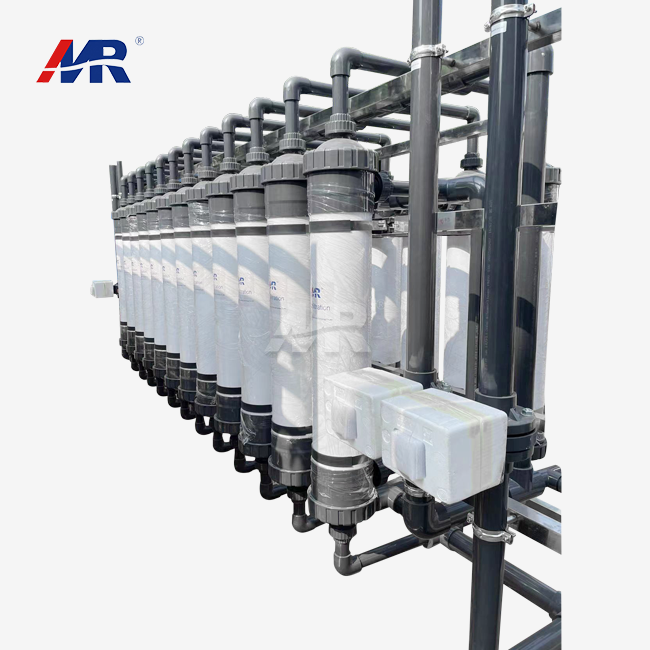 VIEW MOREindustrial ultrafiltration systems
