_1745823981883.webp)

What Affects RO Tank Performance in Different Water Treatment Setups?
Several factors affect how well a RO tank works: the type of material used, the pre-charge pressure, the installation conditions, how well the tank works with other systems, and how often it needs to be maintained. A reverse osmosis storage tank is like a pressurised hydro-pneumatic cylinder that holds clean permeate and sends it to where it's needed. If any of these things aren't working right, the whole system for treating water suffers, from slower flow rates to a higher risk of pollution. Whether you're planning a business RO plant or a drinking water system, the first thing you need to do to make a system that works well and lasts is to understand how tanks work.
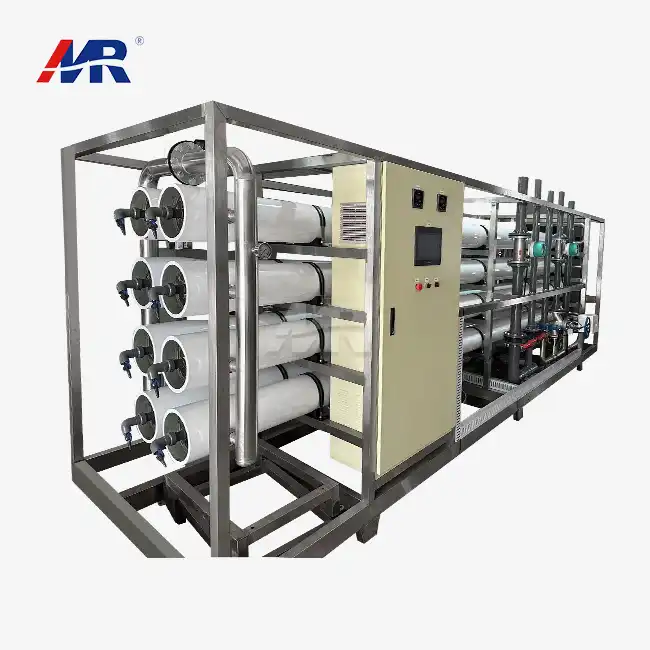
Understanding RO Tank Fundamentals and Their Impact on Performance
How an RO Storage Tank Actually Works
Once the need comes up, an RO holding tank pushes the clean water that the reverse osmosis membrane makes out into the world. Food-grade butyl bladders separate the air-filled chamber inside from the water chamber. Most of the time, the air pressure is set between 5 and 7 psi when the tank is empty. This pressure pulls water out so well that there is no need for a pump at the use site. There would not be a way for most ro membranes to keep giving high flows without this pressurised holding system. This is because they percolate slowly.
Tank Capacity vs. Daily Water Demand
Most buyers don't realise how important it is to match the tank size to how often they will be using it. The pump and barrier have to work harder than they need to when the tanks are too small. This is called short-cycling. Based on the WQA, a pressure tank should have at least two to three times more space than the peak hourly demand. A holding tank that holds 119 gallons is usually the bare minimum for a business that deals with 500 gallons of water every day. Large tanks, on the other hand, hold water for longer, which can make germs grow if the water isn't changed often enough.
Tank Types and Their Operational Trade-offs
However, bladder tanks and diaphragm-style tanks do different jobs and can be fixed in different ways. Also, bladder tanks last longer and work better over time. Stainless steel shell tanks are the best for pharmaceutical, food-grade, and industrial uses because they don't rust and last a long time. It is cheaper and lighter to use composite and carbon steel tanks, but the linings need to be checked often over time. For places of business that get a lot of use, tanks with booster pumps keep the pressure at the exit steady even when the pressure in the bladder drops during draw-down cycles.
Core Factors Affecting RO Tank Performance Across Water Treatment Systems
Material Integrity and Contamination Risk
The quality of the water depends on the material that is used to line the inside of the tank. According to NSF/ANSI Standard 58, tank lids and diaphragms can be used with drinking water without any issues. Butyl bladders that have been cured don't have the "rubber taste" problem that some lower-grade tanks do. Metal doesn't leak into stored water, and threads don't get stuck, because the joints are made of stainless steel. By law, hospitals and companies that make food and drinks must use tanks that have food-grade approval that can be checked.
Installation Quality and Pressure Stability
If the RO tank is installed incorrectly, it won't work well even if it was built according to the instructions. A low-pressure tyre gauge must be used to check the pre-charge pressure while the tank is empty before the first fill. There is waterlogging when the bladder breaks or falls, filling the tank with water and stopping the pressurised supply. This can happen if the pre-charge is off. It is better to place connection joints vertically rather than horizontally so that the internal bladder doesn't have to deal with too much stress over time. Connection joints should be torqued to the right level to avoid micro-leaks.
Maintenance Frequency and Scale Buildup
Maintenance work must be done regularly for long-term results. The flow is slowed down and pressure drops in some places when scale builds up in tanks and on the pipes that connect them. In places where water doesn't move much, biofilm grows faster when it stays still for a long time. When making a repair plan, keep these things in mind:
- Check the bag pressure with the tank empty once a year during the air pre-charge check. If the pressure has dropped, fill it back up to 5–7 psi.
- Every six months, flush the inside of the tank with a weak food-grade sanitiser. This is especially important in medical or food processing settings.
- Inspect the connectors and fittings. At all connecting spots, look for rust, worn-out seals, or mineral buildup.
Doing these things all the time will protect the system's product and make sure the work meets the standards for water safety in your area. Commercial RO systems, on the other hand, usually break down before their given service life because they aren't maintained.
Comparative Analysis: RO Tanks vs. Other Water Storage Solutions
RO Pressure Tanks vs. Standard Atmospheric Tanks
Normal tanks with vents or an open top can hold a lot of liquid, but they can't keep the pressure up long enough to deliver it. They also let dust, germs, and CO2 into the stored water, which makes the water less effective. An RO pressure tank always keeps the clean permeate in a bladder that is safe for food. This makes sure that the water is clean from the time it comes out of the membrane until it hits the tap. For things like making drugs or lab-grade water systems, this sealed, pressurised storage is needed. It's not something that people would want.
RO Tanks vs. UV Disinfection Tanks
There are UV tanks and RO pressure tanks that work together, but they do different things. As water runs through UV tanks, they clean it right away. However, they don't hold water or keep the pressure steady. A UV stage is often added to industrial RO systems after the pressure tank to clean the water one last time. They don't fight with each other; they work together. People who only want one or the other often leave a hole in the system, which leads to either problems with the air flow or a risk of infection that stays.
Impact of Booster Pumps on Tank Responsiveness
If you put a booster pump before the RO membrane, it raises the feed water's pressure. This makes the membrane work better and fills the tank faster. Water treatment equipment tests in the field show that a booster pump can boost system recovery rates by 15–30% in low-feed-pressure settings, which are common in country or multi-story buildings. This makes a pressure tank that fills up faster, keeps the exit pressure steady when demand is high, and lowers membrane stress over time. For business places with a lot of foot traffic, this mix is worth the extra money.
Procurement Insights: Selecting and Sourcing the Right RO Tank
Key Evaluation Criteria for B2B Buyers
When purchasing teams look for a RO tank pressure tank for a RO system, they need to think about more than just the price per unit. Most of the time, the most important technical and business factors are the working pressure rating (no more than 100 psi), the shell material, the bladder certification, the compatibility of connection sizes, and the verified NSF/ANSI or equivalent certification. In project-based buying, it's also important to know how much the seller can produce and how reliable their wait time is. People who want to buy things need suppliers who can give them all the paperwork they need and make sure that each batch is of the same quality.
Capacity Planning for Commercial and Industrial Projects
It saves a lot of money on upgrades later on to make sure the volume is right when the shape is being planned. There should be enough storage for 200 rooms and a central RO system in a hotel. The amount of storage should be based on peak morning demand, not normal daily demand. For industrial process water systems, it's common to need tanks made of stainless steel with unique entrance and exit shapes that fit existing pipes. If the state laws say so, food and drink plants may need ASME-rated pressure vessels. It will save you a lot of time during testing if you talk to your equipment seller about these needs before you place your order.
Supplier Credibility and Documentation
The chance of getting something is smaller when you only buy from authorised dealers and makers whose track records can be checked. Make sure they show you proof that they are NSF-approved, give you material safety data sheets for bladder compounds, and keep track of the results of hydraulic tests for each production batch. If a supplier can't show these papers, they might not be following the rules and could be held accountable. This is especially true for systems used in food-grade, pharmacy, or healthcare settings. When you buy water cleaning equipment from a well-known company with tech support staff, it takes less time to fix problems after the equipment is set up.
Performance Optimization Strategies for RO Tanks
Troubleshooting Pressure Inconsistencies
Most of the time, industrial RO systems have trouble with low output pressure. If you think the membrane is broken, check the air in the bladder before you use it. That's what's wrong most of the time. For the most part, a waterlogged tank (heavy with no water moving) means that the bladder has burst or all the air has been lost. It's not worth the time to try to get a bladder that has burst to work again without replacing it. It's right to change the tank. If your system has more than one exit at the same time, you can keep the supply pressure fixed by putting pressure controls after the tank.
Matching Tank Size to System Output
If you are working on a business project, you might pick a tank based only on the membrane production rate instead of the high draw demand. A pressure tank can only hold about 30–40% of what it says it can hold because air is compressed before it is used. In other words, a RO system can draw 12 to 16 gallons of water from a 40-gallon tank before it needs to be filled up again. When system designers pick the right tank size for high-demand uses, they need to keep this in mind.
Technology Additions That Improve Long-Term Performance
Without having to test the system by hand, site managers can see right away what's going on by putting pressure gauges at the tank exit. When two-thirds of the pressure in the line is reached, the pressure in the tank drops, telling the valves to stop. The membrane doesn't have to cycle too often, so it lasts longer. In factories, repair schedules can be made ahead of time using data about pressure trends instead of set dates on the calendar. This is possible with remote tracking sensors that are linked to building management systems. These features make things last longer and reduce downtime that wasn't planned.
Conclusion
Picking the right RO tank and taking good care of it can have a direct effect on the water quality, the system's uptime, and the total costs of running the business. Your water treatment system will last a long time or a short time depending on the parts you use, how well you place them, how accurate your measurements are, and how often you clean and fix them. Systems that always work in a variety of situations are made by matching tank capacity to actual demand patterns, checking source paperwork, and putting together parts that work well together, like booster pumps and pressure controls.
FAQ
1. Why is my RO pressure tank heavy but producing no water?
This condition — called waterlogging — means the internal bladder has ruptured or lost all pre-charge pressure. The water chamber fills completely with no air cushion left to push water out. Recharging air alone won't fix a ruptured bladder. The tank needs replacement.
2. How often should I inspect the pre-charge pressure?
Check bladder pre-charge pressure at least once every 12 months. Always drain the tank completely before measuring. The correct empty-tank pressure is between 5 and 7 psi for most residential and light commercial models.
3. Does tank size affect water quality?
Larger tanks increase water residence time. In low-turnover installations, this raises biofilm risk. Match tank volume to actual daily usage to keep stored water fresh and minimize stagnation periods.
4. Can I install an RO storage tank horizontally?
Most modern bladder-style tanks tolerate horizontal installation. Vertical is still preferred because it distributes stress on the internal bladder more evenly, which reduces wear over extended service cycles.
Get the Right RO Tank for Your Project — Contact Morui Today
Guangdong Morui Environmental Technology Co., Ltd supplies engineered RO tank solutions for commercial and industrial water treatment projects across the United States. As a water treatment equipment manufacturer with 20+ engineers, our own membrane production factory, and multiple equipment processing facilities, we support complete system specification, equipment supply, and on-site commissioning. Whether you need standard models or project-specific configurations, reach out to discuss your requirements directly. Email: benson@guangdongmorui.com.
References
1. Water Quality Association (WQA). WQA Technical Fact Sheet: Reverse Osmosis Systems. 2021.
2. NSF International. NSF/ANSI Standard 58: Reverse Osmosis Drinking Water Treatment Systems. 2022.
3. American Water Works Association (AWWA). Water Treatment Plant Design, 5th Edition. McGraw-Hill, 2012.
4. Crittenden, J.C., et al. MWH's Water Treatment: Principles and Design, 3rd Edition. Wiley, 2012.
5. US Environmental Protection Agency (EPA). Membrane Filtration Guidance Manual. EPA 815-R-06-009, 2005.
6. Metcalf & Eddy / AECOM. Water Reuse: Issues, Technologies, and Applications. McGraw-Hill, 2007.