_1745823981883.webp)

Does EDI Electrodeionization Meet Pharma Water Standards?
EDI electrodeionization always meets or beats pharmaceutical water standards as long as it is set up, managed, and built correctly. This cutting-edge electrochemical technology uses ion-exchange resins, ion-selective membranes, and a DC electrical field to make ultrapure water that is always available and has a resistance level of 18.2 Mcm. This meets the standards of the USP, EP, and FDA for purified water and water for injection applications. Unlike traditional systems that need chemical renewal, EDI electrodeionization provides stable, compliant water quality without the need to handle dangerous acids or caustics. This makes it the best choice for pharmaceutical manufacturing that needs to follow regulations and keep operations running smoothly.
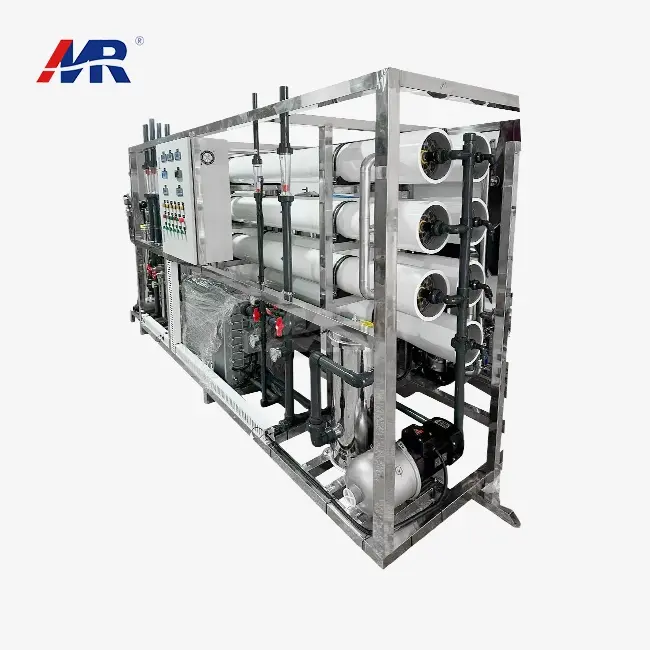
Understanding Electrodeionization and Pharma Water Standards
How Do EDI Systems Operate in Pharmaceutical Environments?
Pharmaceutical companies are now looking for technologies that get rid of chemical footprints while keeping cleanliness at a high level because of the need to clean water. EDI works by running water that has already been cleaned through tubes that have ion exchange resins between anion and cation-selective membranes. Ionized impurities are pushed away from the product stream and into concentrate tubes by a DC voltage. The electrical field then constantly regenerates the resin without using any extra chemicals. Because it regenerates itself all the time, EDI is different from other types of mixed-bed deionizers that have quality changes during exhaustion stages.
Regulatory Framework Governing Pharmaceutical Water
Several governing groups keep a close eye on the making of pharmaceutical water. The US Pharmacopoeia (USP) sets basic standards for purified water. These standards include conductivity limits below 1.3 µS/cm at 25°C and total organic carbon amounts below 500 ppb. The European Pharmacopoeia guidelines are the same as these, but they add limits on how well the drug works against microbes. The FDA also requires validation evidence that shows the product works the same way across certain working areas. These frameworks aren't just ideas; they're the minimum standards that must be met in order to get a production license and stay in compliance during regular checks.
Critical Quality Parameters for Pharma Water
Pharmaceutical water systems that work well must be able to control a lot of different factors at the same time. Ionic purity can be checked in real time with resistivity readings. Pharmaceutical-grade water usually has a value above 10 MΩ·cm. Monitoring TOC makes sure that there isn't too much organic pollution, which keeps bioengineering processes that need to be kept safe from interference. Controlling microbes through sanitization methods stops biofilm development, which could harm both the safety of the product and the longevity of the system. Temperature, pH stability, and the amount of dissolved gases all affect how well the end water works for different pharmacy tasks, from making drugs to cleaning equipment.
Evaluating EDI Compliance with Pharma Water Quality Requirements
Achieving Consistent Resistivity and Ionic Purity
Pharmaceutical companies can't handle the changes in water quality that come with using standard ion exchange devices. This major flaw is fixed by EDI technology, which works continuously and doesn't have the speed drop that comes with resin running out. In the real world, installations show that the resistivity output stays between 15 and 18.2 M·cm for months on end without any human involvement. This stability is especially helpful in areas where Products need to be kept clean, because if the water quality changes, the whole batch has to be thrown away, which costs a lot of money and delays production.
The electricity regeneration process that is built into EDI gives it an extra compliance benefit. When chemical regeneration is used in regular mixed-bed systems, it can cause pollution if it is not rinsed properly or if regenerant is carried over. From working with pharmaceutical systems, we know that when EDI units are set up correctly, they make water that meets the standards of ASTM D5127 Type E-1.2, without the quality problems that come with hand regeneration methods.
Comparing EDI Against Traditional Purification Methods
To choose the right water treatment technology, you need to know how the different methods meet the safety needs of pharmaceuticals. Pharmaceutical water used to be mostly made by distillation because it could get rid of both ionic and organic contaminants and sterilize the water at the same time. However, distillation needs a lot of energy—usually 60 to 80 kWh per cubic meter—which makes the costs of running current plants more and more unsustainable compared with EDI electrodeionization systems.
Reverse osmosis made the process much more efficient by filtering out 95–99% of the dissolved ions through a semipermeable membrane while using only 0.5–3 kWh per cubic meter. On the other hand, RO rarely gets the resistivity levels needed for pharmaceutical uses, especially when making water for injection. Mixed-bed ion exchanges can polish RO permeate to pharmaceutical standards, but they also add the problems we talked about before with handling chemicals and quality changes.
By mixing the effectiveness of RO with the polishing power of ion exchange without using chemical renewal, EDI electrodeionization fills this gap. When RO preparation is combined with EDI, installations usually use between 0.6 and 1.2 kWh per cubic meter while constantly producing pharmaceutical-grade output. For new medicinal water systems put in place in the last ten years, this mix has become the standard.
Addressing Biofilm Control and Operational Stability
Microbial contamination is a constant risk for pharmaceutical water systems, and regulatory bodies look very closely at these systems when they review facilities. As with all water treatment equipment, bacteria can grow on EDI stacks if they aren't designed and maintained properly. The important thing is to know that EDI should never be used as a barrier against microbes. That job should only be done by properly built storage and transport systems that can control temperature and kill germs.
Pharmaceutical edi systems that work well include a number of safety steps. Upstream ultraviolet sterilization lowers the number of microbes that get into the EDI stack. When choosing materials, it's important to look for parts that can withstand being cleaned regularly with hot water (80–85°C) or chemical cleaning. The design of the system gets rid of dead ends and low-flow areas where microbes can grow quickly. Regular confirmation through microbial enumeration testing shows that ongoing control is working, giving regulatory inspectors the proof they need.
Core Factors Affecting EDI Efficiency and Suitability in Pharma Applications
Feedwater Quality and Pretreatment Requirements
The success of EDI is directly related to the usefulness of the pretreatment process upstream. If you try to run EDI units on feedwater that hasn't been properly cleaned, the performance and fouling will get worse quickly, which is bad for the quality of pharmaceutical water. As a minimum, the preparation must include multimodal filtration to get rid of particles bigger than 10 microns and activated carbon adsorption to get rid of chlorine and organic compounds that damage membrane stability.
The important ionic load decrease that makes EDI work well is provided by reverse osmosis. When RO permeate goes into EDI stacks, it should have a conductivity of less than 20 μS/cm, a hardness close to zero (to avoid calcium and magnesium scaling), and a Silt Density Index of less than 3.0. Dissolved carbon dioxide is a problem because it competes with resin capacity and is only slightly ionized. When CO₂ levels go above 5 ppm, degasification equipment is often needed. Our expert team has seen that many problems with the quality of medicinal water are caused by not paying enough attention to these basic pretreatment steps when the system was being designed.
System Design Considerations for Pharmaceutical Applications
Pharmaceutical-grade EDI systems need more careful planning than regular industrial water treatment systems. For materials to work with sanitization practices, it's important to pick gaskets, o-rings, and wet surfaces that can handle being heated or chemically exposed over and over again without breaking down. Instruments must be able to continuously check important factors like the resistivity of the product water, the voltage and current in the stack, the differential pressure, and the flow rates. They must also be able to log data to meet the needs of proof of paperwork.
Redundancy planning takes into account the fact that companies that make medicines can't afford for their water systems to go down without warning. Many setups have parallel EDI electrodeionization trains that keep production going even when repair is being done or when a module fails unexpectedly. An automated valve sequence makes it possible to switch between running trains without having to do anything by hand. When figuring out storage space, you have to take high-demand times into account while keeping the age of the water below levels that could lead to the growth of microbes.
Operational Parameters Influencing Purity Output
The performance of the EDI module is sensitive to a number of working factors that can be changed and that managers of pharmaceutical facilities must optimize. Flow rate through the stack impacts dwell time and current effectiveness. Running below design flow rates often raises unit production costs, lowers product resistivity, and increases capacity. Setting the current intensity determines the electrical force that removes ions. Too much current can split water, which loses energy, while too little current lets ions pass through.
Temperature affects both the movement of ions and the performance of the resin. For EDI to work best, the temperature should be between 15°C and 35°C. The choice of recovery rate strikes a balance between how efficiently water is used and how the concentrate stream is disposed of. Pharmaceutical setups usually run at recovery rates of 90 to 95 percent, while higher recovery rates are fine for some commercial uses. These factors need to be carefully tweaked during startup and then checked again and again as the feedwater changes over the system's lifetime.
Procurement Considerations for Pharma-Grade EDI Systems
Evaluating Suppliers and Technical Capabilities
When managers of pharmaceutical facilities make EDI procurement choices, they need to choose partners that can offer compliant systems with full validation support. When evaluating a supplier, you should look at how much experience they have in the pharmaceutical business, how long they've been in compliance, and how well they understand the standards for regulatory validation. As part of the technical skills assessment, the vendor's ability to provide full system integration, from pretreatment to final polishing, is looked at. This is in contrast to just providing stand-alone EDI modules, which require separate integration knowledge.
The quality control systems that possible suppliers use have a direct effect on how well pharmaceuticals are regulated. ISO 9001 approval is a basic way to make sure of quality, and sellers who work with pharmaceutical companies should show that they know about Good Manufacturing Practices and validation documentation standards. Reference site visits to pharmaceutical installations that are already running with the supplier's equipment are a great way to get a feel for how well it works in real life and how quickly the vendor is during both setup and ongoing use.
Total Cost of Ownership Analysis
Capital spending is only one part of the economy of a pharmacy water system. A full cost analysis must take into account how hard the installation is, the validation paperwork that is needed, how often consumables need to be replaced, how much energy is used, and the ongoing upkeep that is needed. Total cost of ownership analyses that look at EDI systems over 10 to 15 years of use usually show that they are cheaper than other options.
Chemical-free operation gets rid of the costs of buying acid and caustic, building storage facilities, providing safety gear for workers, and getting rid of dangerous trash that comes with mixed-bed ion exchange installations. The benefits of saving energy grow every year, especially in places that use a lot of water. In ideal conditions, a membrane module can last for 5 to 7 years, which is a lot longer than the yearly replacement of resin that is needed in traditional systems. Because automated operation doesn't require human regeneration processes, less work needs to be done. However, this benefit needs to be balanced with the right preventative repair programs.
Installation and Commissioning Support Requirements
Pharmaceutical water systems need to be installed with a level of accuracy that general builders may not have if they haven't worked with water treatment systems before. System commissioning is more than just installing the parts. It also includes checking the system's performance, making sure that the working parameters are set up in the best way possible, and creating validation documents that can be used for regulatory submissions. It should be very clear in the procurement specs what the seller is responsible for when it comes to factory acceptance testing, site acceptance testing, and operational qualification support.
The validation paperwork package needs to show that the system (EDI electrodeionization) that was put in always makes pharmaceutical-grade water within the range that was set. Installation qualification methods make sure that all of the parts are fitted correctly and meet the design requirements. Operational Qualification testing makes sure that the system works as it should in both standard and difficult situations. Performance qualification shows consistent obedience over long lengths of time. Suppliers who offer full launch support, including draft validation protocols, test execution assistance, and final paperwork preparation, make validation much easier for the pharmaceutical facility and speed up the time it takes to start production.
Conclusion
EDI electrodeionization has grown from a new technique to the standard for making ultrapure water in the pharmaceutical business. It meets USP, EP, and FDA standards all the time without the hassle of chemical regeneration. EDI systems always produce water that meets the strictest medicinal quality standards when they are used according to their design guidelines and are paired with the right pretreatment. They are also more environmentally friendly and have lower total ownership costs than traditional options. As the needs for pharmaceutical water treatment get more complicated, the technology will still be useful because it can adapt to new regulatory standards and work with smart manufacturing systems.
FAQ
1. Can EDI electrodeionization systems replace distillation for water for injection production?
When used with the right pre- and post-treatment steps, EDI can make water that meets WFI chemical cleanliness standards. However, legal acceptance varies from place to place. For example, European officials usually need distillation for WFI because it sterilizes at the same time. New changes to European pharmacopoeias allow other technologies, such as properly approved membrane devices for WFI production, which makes EDI more useful.
2. What causes sudden resistivity drops in pharmaceutical EDI systems?
Changes in the quality of the feedwater (like higher CO₂ or harder water), changes in the power source, or internal fouling from poor preparation can all cause the resistivity to drop. Systematic repair checks the performance of the upstream RO, makes sure the electricity system works, and decides if Clean-In-Place methods are needed. Trending data that is looked at on a regular basis often shows small changes that can help spot problems before they get too bad.
3. How frequently do EDI modules require replacement in pharmaceutical applications?
In pharmaceutical setups, high-quality EDI units usually last between 5 and 7 years if they are used properly and in the best circumstances. The actual lifespan depends on how consistent the feedwater quality is, how many hours it is used, how often it is sanitized, and how well it is maintained. Monitoring performance on a regular basis helps figure out the best time to change something before quality compliance is affected.
Partner with Morui for Pharmaceutical-Grade EDI Solutions
Companies that make medicines and need water treatment systems that are approved and follow the rules should work with EDI electrodeionization providers who have a lot of experience and know both the technology and the rules. Morui has been treating water for over ten years in the pharmaceutical, biology, and electronics industries. They have 20 dedicated engineers working for them and an integrated supply chain that includes our own membrane production plant. Our all-inclusive method includes system design that is tailored to the needs of your building, full installation and commissioning services, and full validation paperwork that meets FDA and foreign regulatory standards.
We know that buying a pharmaceutical water system is a big building choice that will have long-lasting effects on product quality and following the rules for years to come. During the specification, installation, and validation process, our expert team works with your engineering and quality staff to make sure that your edi electrodeionization system always produces pharmaceutical-grade water. Send an email to benson@guangdongmorui.com to talk to one of our pharmaceutical water treatment experts about your needs and get a full technical plan that shows how Morui's solutions can help you meet your operational, compliance, and purity goals.
References
1. United States Pharmacopeial Convention. (2021). General Chapter <1231> Water for Pharmaceutical Purposes. USP 44-NF 39.
2. European Directorate for the Quality of Medicines & HealthCare. (2020). Purified Water and Water for Injections Monographs. European Pharmacopoeia 10.0.
3. Ganzi, G. C., & Jha, A. D. (2018). Electrodeionization: Principles and Applications in Ultrapure Water Production. Industrial Water Treatment Journal, 45(3), 112-128.
4. Food and Drug Administration. (2019). Guidance for Industry: Process Validation for Water Systems. Center for Drug Evaluation and Research.
5. Richardson, B. S., & Kimura, S. (2020). Comparative Performance Analysis of Pharmaceutical Water Purification Technologies. Journal of Pharmaceutical Science and Technology, 74(2), 89-104.
6. International Society for Pharmaceutical Engineering. (2022). Baseline Guide: Water and Steam Systems (Second Edition). ISPE Publications.