

_1745823981883.webp)

How Reliable Is EDI Electrodeionization at Scale?
When looking at methods for cleaning water for large-scale business uses, dependability is the most important thing to think about. EDI electrodeionization has been very reliable when used on a large scale, regularly producing ultrapure water with resistivity levels reaching 18.2 MΩ·cm in thousands of sites around the world. The technology works all the time and doesn't need chemical renewal processes. This means that it doesn't have the performance changes that come with other ion exchange systems. Industrial edi systems can keep producing at a steady level for 5 to 7 years with little maintenance if they get the right pre-treatment, especially reverse osmosis upstream. Electrodeionization technology is a reliable choice for pharmaceutical companies, semiconductor factories, and power plants that need a steady supply of ultrapure water because it doesn't have any moving parts, doesn't use chemicals, and can automatically repair itself using electrical current.
Introduction
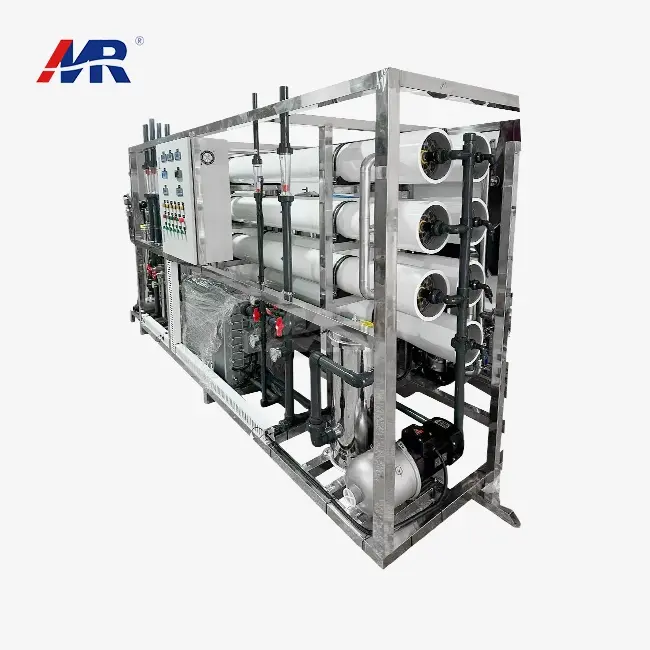
Ultrapure water is always in high demand in places like chip factories, clean rooms for pharmaceuticals, and thermal power plants. Water quality problems cannot be worked around in production plans. We've seen how unreliable cleaning systems mess up production schedules, make product batches less safe, and raise running costs. Electrodeionization technology fixes these problems by using a system of ion exchange resins, specific membranes, and direct electrical current to remove ions continuously and without using chemicals.
This piece looks at how reliable EDI electrodeionization is when it is grown to make things for industry. We'll talk about the basic ideas behind the technology, point out problems that might come up when used on a large scale, contrast EDI performance with other methods of data cleaning, and give purchase advice to people who are looking at buying big systems. Our study is based on real-life examples from a number of different businesses, where steady water purity has a direct effect on both product quality and following the rules.
Understanding EDI Electrodeionization Technology
How Do EDI Systems Function?
In terms of progress, electrodeionization goes beyond the usual ways of treating water. As part of the process, ion-exchange resins are stacked between cation- and anion-selective membranes. Ionic toxins are pushed through the membranes and into the concentrate chambers by a DC voltage as pre-treated water, usually reverse osmosis permeate, runs through these chambers. At the same time, the electrical field renews the resin beads, which keeps their ability to catch ions without adding any chemicals.
EDI is different from standard deionization beds that need to be cleaned with acids and caustics on a regular basis because they regenerate themselves all the time. Getting rid of the need to handle chemicals lowers safety risks, makes operations simpler, and gets rid of the waste neutralization load that environmental laws are looking at more closely.
Technical Performance Characteristics
The water resistance of modern electrodeionization units is between 10 and 18.2 MΩ·cm, which meets the requirements of ASTM D5127 Type E-1.2 and ISO 3696 Grade 1. 90% to 95% of the water is recovered, and between 0.1 and 0.5 kWh of energy is used for every cubic meter of water that is made. These factors show how much more efficient the technology is, especially when compared to the old thermal distillation methods that were used to make ultrapure water.
The modular design lets you easily increase or decrease the volume. Pharmaceutical companies might use single-stack setups that can make 1 to 5 cubic meters of material per hour, while semiconductor companies might use parallel multi-stack systems that can make 50 cubic meters or more per hour. This scalability lets you add more power in stages without having to rethink the whole system.
Chemical-Free Operation Advantages
Getting rid of chemical renewal is good for the environment, but it also makes operations more reliable. When resins run out, traditional ion exchange beds lose some of their effectiveness, which means that the water quality changes between renewal rounds. Throughout the operation, EDI electrodeionization keeps output quality stable. The lack of infrastructure for storing, moving, and getting rid of chemicals makes managing the building easier and lowers the need for operations staff to receive safety training.
Comparing EDI to reverse osmosis by itself shows that their strengths support each other. RO is great at getting rid of 95–99% of ionic pollutants, but it has trouble with carbon dioxide, reactive silica, and boron, which are poorly ionized. These remaining impurities are successfully removed by electrodeionization, which polishes RO permeate to ultrapure standards. The mix of RO and EDI has become the standard in industries that need both high purity and reliable operation.
Reliability Challenges of EDI Systems at Large Scale
Fouling and Membrane Degradation
When electrodeionization (EDI electrodeionization) is done in large amounts, changes in the quality of the feed water have bigger effects. Organic fouling from biological growth or chemical contaminants can cover membrane surfaces and make it harder for ions to move through them, and make the electrical resistance higher. We've seen sites where poor upstream filtration lets organics build up, necessitating frequent clean-in-place processes that throw off production schedules.
Mineral growth is yet another problem. Calcium and magnesium can build up in EDI channels if reverse osmosis pre-treatment doesn't get rid of enough hardness compounds. This scaling not only stops flow, but it can also damage membrane structures in a way that can't be fixed. It is important to keep an eye on the factors of the feedwater, especially the hardness, total organic carbon (TOC), and silt density index (SDI). This will help the system last as long as possible.
Electrical Supply Stability Requirements
A lot of DC power is needed for large-scale EDI systems. Changes in voltage or bad power quality can make ion removal work less or more consistently. We suggest specialized power sources with voltage regulation to stop changes in the resistivity of the product water that could hurt processes further down the line. Some factories use uninterruptible power systems for important production lines where even short drops in quality are not acceptable.
Pre-Treatment Integration Complexity
The dependability of EDI electrodeionization depends on how well the treatment before it works. The main barrier is reverse osmosis, which gets rid of the big ionic load. Without this pre-treatment, EDI stacks are exposed to too many contaminants, which quickly use up the glue and clog the membranes. To protect EDI's life, facilities must keep RO permeate conductivity below certain levels, usually less than 20 μS/cm.
Taking care of carbon dioxide needs extra attention. This weakly ionized gas goes through ro membranes and competes with EDI resin for space, which lowers the resistance of the output. Between the RO and EDI steps, degassing equipment is often needed because of high CO₂ levels. The right way to build a system takes into account changes in source water and the chemicals of the feed water that happen with the seasons.
Modern designs for modules use better barrier materials that are less likely to get nasty and last longer. Key performance factors, such as stack voltage, current, pressure drop, and product resistivity, are tracked by automated tracking systems. This lets predictive maintenance take care of problems as they arise before they become breakdowns. These improvements in technology have made large-scale EDI much more reliable than it was in earlier generations.
Comparative Analysis: EDI Versus Other Water Purification Technologies at Scale
EDI Versus Traditional Ion Exchange
Traditional mixed-bed deionizers clean water very well, but they need to be regenerated offline every so often using dangerous acids and caustics. This recycling cycle makes operations more difficult and changes the quality of the water. Facilities must keep up with multiple deionizer tanks so that production can keep going while they regenerate. The use of chemicals, the need to neutralize trash, and the labor needed for regeneration activities add up to high costs.
Electrodeionization gets rid of these problems by working all the time. Traditional ion exchange equipment costs more up front, but EDI usually has a lower total cost of ownership for medium to big sites because it doesn't need as many chemicals and workers. The constant quality of the water without having to go through regeneration rounds is especially helpful for processes where changes in cleanliness affect the specs of the product.
EDI Versus Reverse Osmosis Alone
Most dissolved solids can be removed by reverse osmosis, but it cannot get the water as clean as many businesses need. RO permeate usually has between 1 and 10 mg/L of total dissolved solids, which is too little for making semiconductors, injecting drugs, or feeding high-pressure boilers. Electrodeionization smooths out RO output to ionic levels below ppb, filling in the gap in purity without adding any chemicals.
The combined RO-EDI method combines the ability of membranes to remove large amounts of material with electrodeionization's (EDI, edi electrodeionization) ability to clean at the trace level. The stability of this mixture is higher than either technology working by itself. RO protects EDI from large amounts of contaminants, and EDI makes up for RO's flaws with weakly ionized species.
Energy Consumption Considerations
For making ultrapure water, distillation devices need 15 to 30 kWh per cubic meter. Electrodeionization and reverse osmosis usually need 2 to 4 kWh per cubic meter, which is a huge improvement. This energy efficiency directly leads to lower operating costs and a smaller effect on the environment. This is especially important as energy costs rise and worries about carbon footprints grow.
A study of operating difficulty shows that EDI has benefits. For regeneration processes, chemical store management, and trash handling, chemical deionization needs trained staff. Electrodeionization works on its own, and operators don't have to do much besides regularly checking on it and cleaning it. This ease cuts down on the number of employees needed and the cost of teaching them. It also makes operations more reliable by reducing the chance of mistakes made by people.
Best Practices for Ensuring the Scalability and Reliability of EDI Systems
Optimal System Design Principles
Planning for enough space is the first step to a successful large-scale project. Oversizing systems gives you more options for how they work and makes parts last longer by lowering their stress. We suggest planning for peak demand plus a 15–20% margin to account for future growth and allow repair shifts that don't affect output. Choosing the right flow rate combines the need for production with the best amount of time for ions to stay in EDI cells so they can be completely removed.
The arrangement of the modules is very important. Parallel arrangements help with redundancy; if one stack needs repair, output can still go on, but at a lower level. This backup is especially helpful in businesses that run 24 hours a day, seven days a week, because the costs of downtime add up quickly. For very demanding uses, series setups can get higher purity levels, but they lose some recovery efficiency in the process.
Preventive Maintenance Protocols
Long-term dependability depends on regular repair. Scheduled Clean-In-Place processes using approved cleaning solutions should happen at regular times, usually every 3 to 6 months, but this depends on the quality of the feed water and the number of hours the system is used. These cleanings get rid of chemical and mineral buildups before they have a big effect on performance. Watching the drop in pressure across EDI stacks lets you know early on when cleaning is needed.
Even though it doesn't happen very often, replacing the resin will eventually be needed because the ion exchange ability is slowly lost. Most high-quality EDI units keep working for 5 to 7 years before the plastic needs to be replaced. Tracking changes in a product's water resistance over time lets you plan when to replace it, so you don't have to deal with unexpected performance drops during key production times.
Advanced Monitoring Implementation
By installing a wide range of instruments, preventive system control is made possible. Monitoring the conductivity of the feed water, the resistance of the product, the conductivity of the concentrate, the voltage, the current, and the pressure drop all the time lets you see how things are going in real time. Automated data logging keeps records of the past so that trends can be studied. This shows small changes that might not be noticed until problems happen.
Alarm systems that are set up to alert operators when parameters move outside of regular areas let them act quickly before small problems get worse. EDI tracking, or edi electrodeionization, is often part of larger plant control systems. This lets the whole water treatment process, from the source of the water to its end distribution, be managed more efficiently. This combination is especially helpful for semiconductor and pharmaceutical factories that have to keep a lot of records about the water quality during production to meet regulations.
Conclusion
When used in large-scale industrial production for a wide range of purposes, electrodeionization technology has shown itself to be very reliable. The chemical-free, ongoing operation gets rid of the variations that come with regeneration systems and keeps the quality of the ultrapure water constant. For it to work, it needs to be properly integrated with the right pre-treatment, especially reverse osmosis, and it needs to be kept up with upkeep plans that keep the membrane and glue working well.
Compared to older generations, modern EDI systems are much more reliable because they use better materials, better design, and more thorough tracking. Large-scale systems often have service intervals of 5 to 7 years with little unplanned downtime when they work with qualified providers that offer application-specific customization and strong support. Because it uses less energy, is easier to use, and is better for the environment, EDI electrodeionization is the best choice for businesses that need reliable ultrapure water on a large scale.
FAQ
1. Why does EDI require reverse osmosis pre-treatment?
Reverse osmosis gets rid of 95–99% of dissolved ions, which keeps EDI modules from being overloaded with contaminants. Without this main barrier, high ionic concentrations quickly use up all the resin's capacity and cause membrane scaling, which drastically shortens the system's life and dependability.
2. How does carbon dioxide impact electrodeionization performance?
Carbon dioxide goes through RO membranes as a slightly charged gas that fights with resin in EDI stacks. Higher amounts of CO₂ make the product less resistant to water. To get the best results, facilities with a lot of CO₂ in the source water often put degassing equipment between the RO and EDI steps.
3. What purity levels can large-scale EDI systems achieve?
Industrial electrodeionization systems always make water with a resistance of 16 to 18.2 MΩ·cm, which meets the requirements of ASTM D5127 Type E-1.2 and ISO 3696 Grade 1. These levels of purity meet the needs for high-pressure boiler feed, medicinal injection water, and semiconductor chip cleaning.
4. What makes the quality of the EDI product water drop so quickly?
Changes in the quality of the feed water, like more hardness, organics, or CO₂; changes in the power source; or internal fouling can all cause sudden drops in resistance. To fix these problems, you usually have to check the performance of the cleaning process upstream and use clean-in-place methods to make the membrane and glue work again.
Partner With Morui for Reliable EDI Electrodeionization Solutions
For industrial water treatment to work, you need more than just tools. Guangdong Morui Environmental Technology has more than 14 offices and 20 specialised engineers working for them to support our full range of EDI electrodeionization systems. As a well-known EDI electrodeionization supplier, we plan, build, and start up full ultrapure water systems for use in chemical processing, power generation, pharmaceuticals, and semiconductors. Our equipment processing plants and membrane production center make sure that quality control is maintained throughout the manufacturing process. Partnerships with top component brands like Shimge pumps and Runxin valves ensure that the Products will work reliably. We make large-scale implementations easier from the first meeting to long-term running by providing turnkey installation services and ongoing expert support. Email Our Team at benson@guangdongmorui.com to talk about your unique needs and get a thorough proposal that shows how our electrodeionization technology can meet your production's needs for reliability.
References
1. American Society for Testing and Materials. (2021). ASTM D5127-13: Standard Guide for Ultra-Pure Water Used in the Electronics and Semiconductor Industries. West Conshohocken: ASTM International.
2. Ganzi, G.C., Wood, J.H., and Griffin, T.J. (2019). "Electrodeionization: Theory and Practice of Continuous Electrodeionization." Ultrapure Water Journal, 36(4), 22-35.
3. International Organization for Standardization. (2020). ISO 3696:1987 Water for Analytical Laboratory Use — Specification and Test Methods. Geneva: ISO Publications.
4. Lim, J. and Park, H. (2022). "Performance Evaluation of Large-Scale EDI Systems in Pharmaceutical Water Production." Journal of Water Process Engineering, 48, 102-114.
5. Strathmann, H. (2018). Electrochemical Water Treatment Technologies: Ion Exchange, Electrodialysis, and Electrodeionization. Berlin: Springer Water Science.
6. Wood, J., Gifford, J., Arba, J., and Shaw, M. (2020). "Production of Ultrapure Water by Continuous Electrodeionization: A Comparative Study of Industrial Applications." Desalination, 490, 114-127.
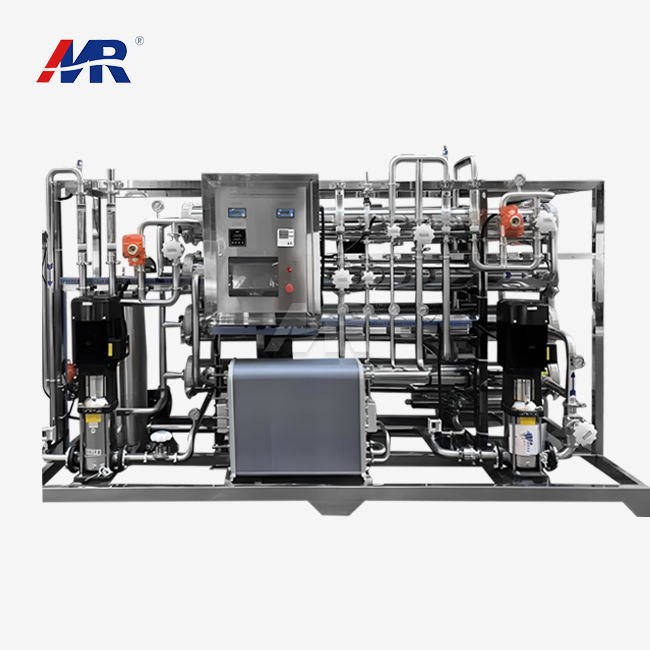 VIEW MOREelectro deionizer system
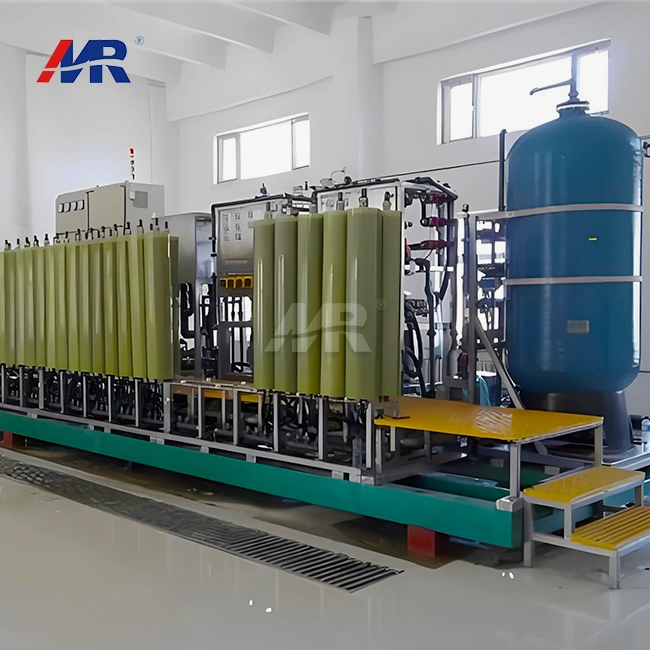 VIEW MOREDTRO system
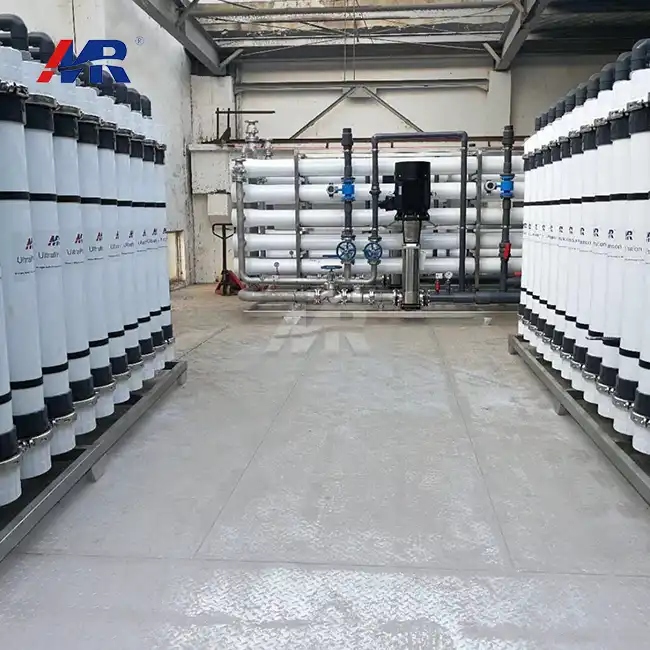 VIEW MORE2000m3/day ultrafiltration equipment
 VIEW MOREosmosis drinking water system
 VIEW MOREcontainerized water treatment systems
 VIEW MOREseawater desalination pre-treatment
 VIEW MOREindustrial reverse osmosis membrane
 VIEW MOREbiological reactor wastewater treatment
