_1745823981883.webp)

What Determines the Performance of a Seawater Reverse Osmosis System?
The performance of a seawater reverse osmosis system depends on multiple interconnected variables that work together to deliver efficient desalination. The primary determinants include membrane quality, feedwater characteristics, operating pressure (typically 55-80 bar), energy recovery device efficiency, and pretreatment effectiveness. System design, particularly the configuration of high-pressure pumps and material selection like Super Duplex stainless steel for corrosion resistance, directly influences salt rejection rates (99.4%-99.8%) and recovery ratios (35%-45%). Temperature fluctuations, fouling management protocols, and component longevity also play critical roles in maintaining consistent output quality.
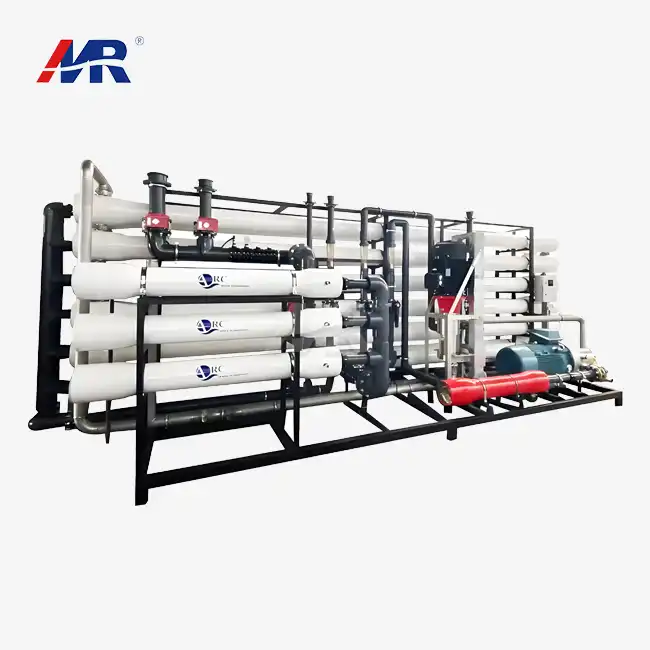
Understanding the Fundamentals of Seawater Reverse Osmosis Systems
Seawater reverse osmosis system purification of seawater has become the best way to deal with the lack of freshwater in coastal areas and islands. The main idea behind the technology is that high-pressure pumps push ocean water through semi-permeable barriers that stop dissolved salts but let water molecules pass through.
Core Operating Principles
The system goes beyond the natural osmotic pressure by applying hydraulic pressures higher than 55 bar. This forces saltwater against Thin-Film Composite membranes that have tiny pores in them. Up to 99.8% of all dissolved solids, minerals, and bacterial contaminants are removed by these special membranes. The end result is drinkable water that meets the WHO Drinking Water Guidelines and ISO 23446:2022 standards and can be used by cities and businesses.
Essential System Components
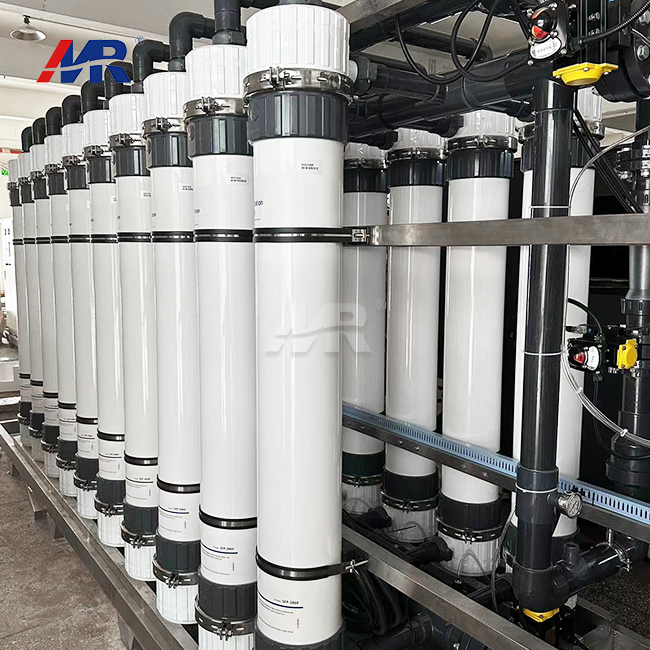
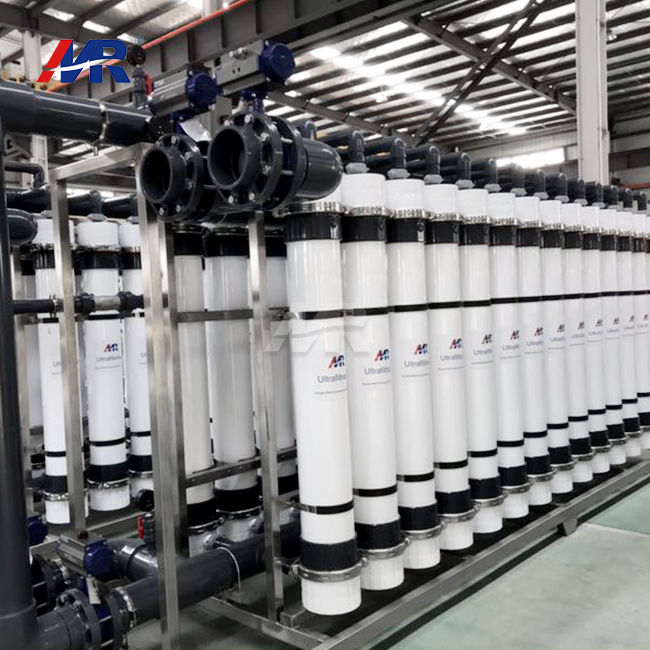
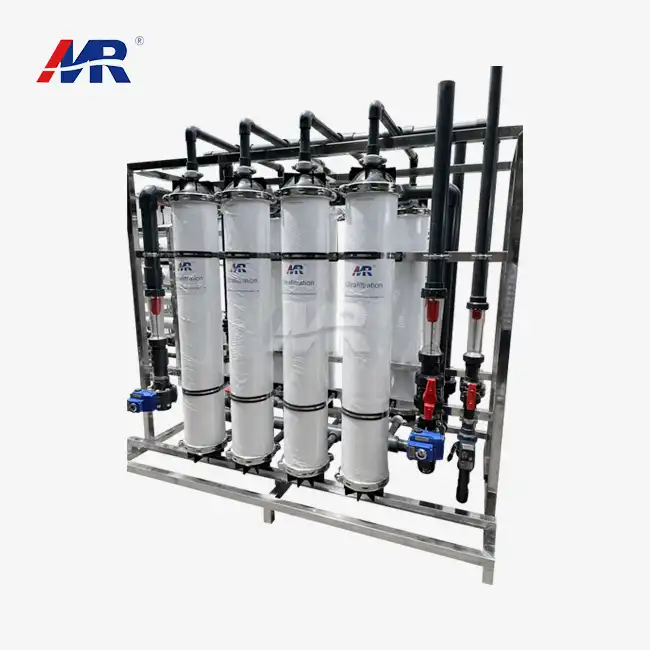
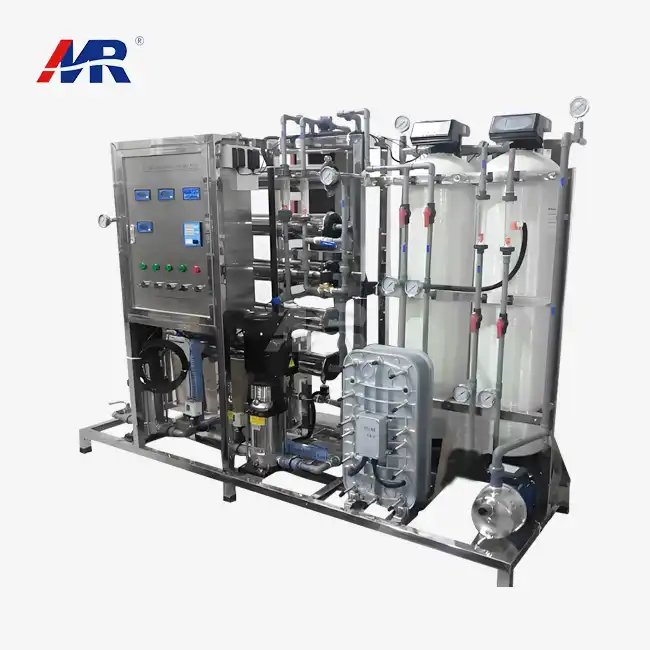
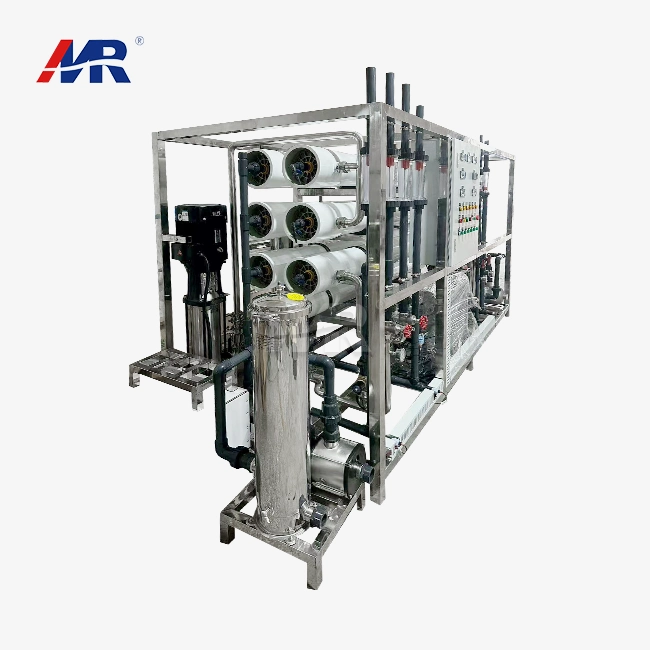
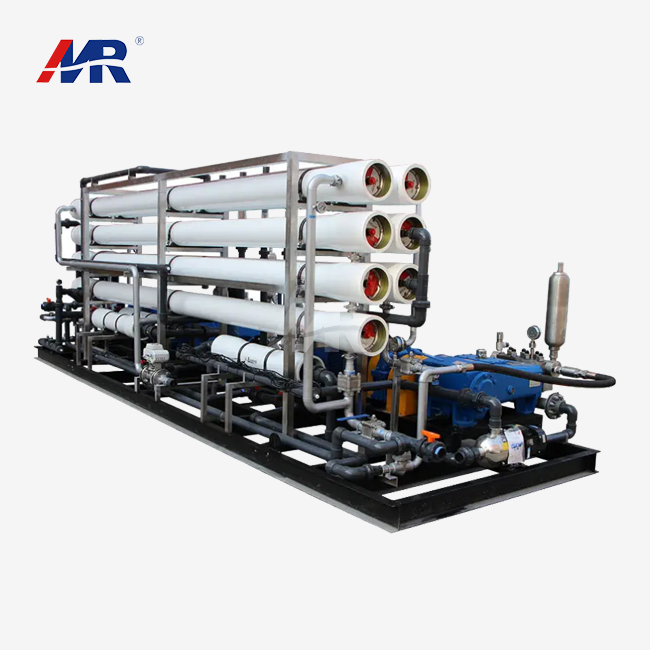
Several parts must work together for distillation to be as effective as possible. The force needed to overcome seawater's natural resistance is provided by high-pressure pumps, which are usually axial piston or centrifugal types. Energy Recovery Devices use up to 60% less power by collecting hydraulic energy from the concentrated brine stream. The membrane parts are kept safe from mechanical stress by pressure channels. Pretreatment units with ultrafiltration or multimedia filters make sure that the feedwater meets the important Silt Density Index standard of less than 3. This keeps membranes from getting clogged up too quickly and extends their useful life to 3–7 years.
These days' systems have automatic sensors that check the conductivity, flow rates, and pressure differences between each membrane step. By collecting data in real time, workers can quickly spot changes in performance and make the necessary changes to cleaning or chemical dosing plans.
Key Factors That Determine SWRO System Performance
How well the seawater reverse osmosis system turns seawater into freshwater depends on a number of scientific and operating factors. When procurement teams know about these things, they can choose solutions that meet their business needs and water quality goals.
Feedwater Quality and Pretreatment Requirements
The makeup of seawater changes a lot depending on where you are, which changes the requirements for system design. Total dissolved solids are usually between 35,000 and 45,000 mg/L, but turbidity, organic material, and changes in temperature throughout the year make things more complicated. When there is a lot of organic waste in the water, it needs more active cleaning methods.
A good coating directly affects how long the membrane lasts and how reliable the system is. Chemical coagulation gets rid of colloidal matter, and ultrafiltration units get rid of suspended particles. During the reduction process, antiscalants stop minerals from settling to the bottom. To stop biofouling from happening quickly, facilities near industrial ports or farming runoff zones often need better biological filtration.
Membrane Technology Advancements
New developments in material science have greatly enhanced the performance properties of membranes. Modern Thin-Film Composite membranes can handle more chlorine and reject more boron, which are important water quality factors for certain end uses. Design flow rates can now reach 8 to 12 liters per square meter per hour, and the structure stays strong even when it's under constant high pressure.
The configuration of the membrane affects how well the room is used and how easy it is to do upkeep. Due to their high packing density and low cost, spiral-wound elements are most often used in industrial settings. In some small locations, where standard vessel arrangements can't fit because of their size, hollow-fiber designs are better.
Energy Efficiency and Recovery Technologies
The amount of power used by desalination plants largely determines their operating costs. Pressure exchanges are the most important step forward in technology for reducing energy use because they move hydraulic pressure straight from the brine stream to the incoming feedwater with very little energy loss. It is possible for these isobaric cells to move energy more efficiently than 95% of the time.
Designers of systems have to find a balance between energy use and healing rates. Higher recovery rates lower the amount of feedwater that needs to be pumped in, but they also concentrate dissolved solids more quickly, which raises the risk of scaling and the working pressures that are needed. Most sites along the coast aim for recovery rates of around 40%, but systems that use brackish water can reach 75–85% because the water is less salty to begin with.
Custom System Design Considerations
To get the best performance, you have to make sure that the equipment fits the conditions at the spot. Changes in temperature have an effect on membrane flow rates and how salt passes through them. When seawater is below 15°C, it makes membranes less permeable. To keep production levels at goal, more pressure or more membrane area is needed. On the other hand, warm seawater above 25°C increases flux but may also speed up cellular growth.
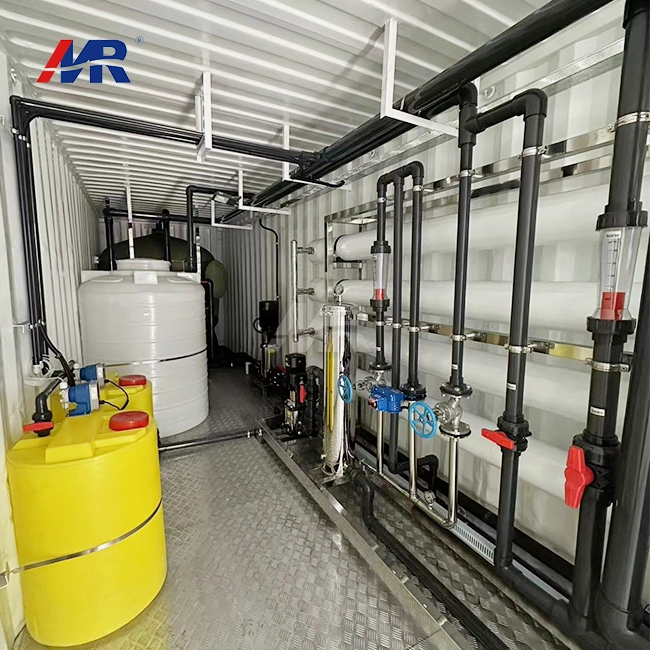
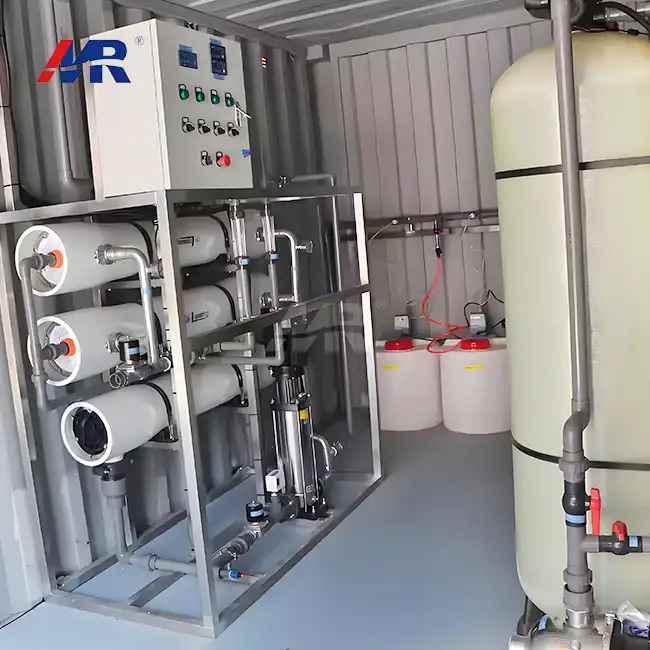
Modular designs allow places that plan to add more space in the future to be able to do so. For faraway sites or short-term projects, containerized systems make it easier to move around. Variable-frequency drives on pump motors help industrial customers whose water needs change over time by letting them change the working settings based on real-time production needs.
Challenges and Maintenance Tips for Optimizing SWRO Performance
For operations to keep running at a high level, problems that come up naturally during the seawater reverse osmosis system desalination processes need to be managed ahead of time. Capital investments are protected, and production uptime is increased by spotting early warning signs and following preventive repair practices.
Common Operational Challenges
Fouling on the membrane is the main way that function drops. Biofouling happens when bacteria stick to membrane surfaces and make biofilm layers that raise the differential pressure and lower the flow of permeate. These effects are made worse by the buildup of organic matter and mineral scales caused by calcium carbonate or calcium sulfate precipitation. Operators keep an eye on standardized specific flux and salt flow trends to find fouling early, before it has a big effect on output.
Equipment wear happens to pumps, seals, and valve systems that are in acidic seawater settings. Damage from cavities in pump impellers, breakdown of elastomers in seals, and stress corrosion cracks in metal parts that weren't designed properly all make upkeep more necessary. Choosing Duplex 2205 or Super Duplex 2507 stainless steel as the material greatly increases the service life of the component.
Proactive Maintenance Strategies
Clean-In-Place methods get rid of built-up foulants by automatically moving special cleaning solutions around the area. Cleaners with a low pH level get rid of mineral scales, while alkaline solutions with detergents get rid of organic and bacterial fouling. Cleaning processes are usually built into maintenance plans every 30 to 90 days based on differential pressure increases of 10 to 15 percent above baseline values.
Planning for membrane repair should take into account that performance will drop over time instead of failing all at once. Facilities usually plan to change parts every three to five years, but real lifespans depend on the quality of the feedwater and how the facility is used. Keeping detailed performance logs lets you make choices based on data about whether to repair only part of the membrane train or the whole thing.
Sensor data and machine learning algorithms are now combined in predictive analytics platforms so that repair needs can be predicted before problems cause production to stop. These systems look for patterns in temperature-corrected flow rates, conductivity trends, and pressure differences to figure out the best time to step in.
Comparative Insights: SWRO System vs. Alternative Solutions
When looking at desalination technologies, business-to-business buying teams should know how the seawater reverse osmosis system stacks up against other methods in terms of performance, cost, and effect on the environment.
Thermal Desalination Technologies
Multi-Stage Flash Distillation and Multi-Effect Distillation are both well-established heating processes that boil seawater and cool the gas that forms. These systems are better at recovering things than membrane processes, but they use a lot more energy. When power plants give off waste heat, thermal plants do very well. This is called cogeneration synergy. Separate thermal desalination, on the other hand, costs 40–60% more per cubic meter than reverse osmosis.
Membrane Technology Alternatives
Ion-exchange membranes and electrical current are used in electrodialysis to remove salts from water. It works well with muddy water, but not so well with seawater that is very salty. Forward osmosis systems show promise in study settings but are not yet ready for use on a large scale. While ultrafiltration is an important step before reverse osmosis, it can't get rid of dissolved salts, so it works best when used with reverse osmosis.
In the competitive environment, there are well-known companies that sell tested spiral-wound membrane elements with a lot of performance data. Newer companies focus on specific uses, such as containerized systems for rural areas or high-boron rejection screens for irrigation water in farms.
Procuring the Right SWRO System: Considerations for B2B Clients
To make smart buying choices for a seawater reverse osmosis system, you need to look at more than just the initial capital costs. The technical requirements must match the goals for water cleanliness, and the long-term profitability of the project will depend on how much it costs to run.
Total Cost of Ownership Analysis
Lifecycle costs include more than just the purchase price. Installation costs change a lot depending on how the site needs to be prepared, how far the pipes need to be run, and what kind of electrical equipment is needed. Facilities in remote areas have longer building times and higher costs to move materials. Costs of running the plant, mostly related to energy use, chemical use, and membrane repair, need to be estimated over 15 to 20 years.
Structures of financing affect cash flows and how possible a project is. Build-Own-Operate-Transfer deals give the responsibility of raising capital to specialized desalination contractors. These contractors get their money back through agreements to buy water. Leasing choices give temporary projects or businesses that don't have a lot of cash the freedom to do what they want. Municipal water security projects may be able to get loans with good rates through government-backed loan schemes.
Scalability and Customization Needs
Phased development is important for businesses that are growing or for cities that are seeing more people move in. Modular designs allow for increases in capacity without stopping production that is already going on. Train layouts let you do repairs on some membrane banks while others keep running, so you can keep some capacity during service breaks.
Customization helps with problems that are unique to a site that standard methods can't fix well. Engineering changes may be needed in places with very high or low temperatures, strange feedwater chemistry profiles, or strict permeate quality requirements. Customized post-treatment setups are helpful for industrial clients whose process water needs are different from drinking water standards.
Supplier Evaluation Criteria
Standards for certification show that a company is committed to quality management systems. ISO 14001 certification shows that you can handle the environment, while ISO 9001 certification shows that you can control quality in a planned way. Product approvals from NSF International or other similar third-party testing groups back up claims of performance against independent standards.
How quickly technical problems are fixed, and spare parts come, depends on the system for after-sales help. Manufacturers who have regional service centers and local supplies have lower failure risks than those who have to ship parts from other countries. Self-sufficiency is improved by training programs that teach operating knowledge to building staff, and warranty coverage keeps parts from breaking down too soon.
Communication response during the planning and buying stages can often tell you a lot about the quality of future help. Spending time to understand what the client wants and then offering well-thought-out solutions shows that the supplier wants a partnership-based relationship instead of a business one.
Conclusion
Seawater reverse osmosis systems perform best when they carefully combine membrane technology, energy-efficient parts, good preparation, and regular repair schedules. The salt rejection efficiency, recovery rates, and output reliability are all affected by the characteristics of the feedwater, the decisions made during system design, and the way the system is operated. Total ownership costs and technical skills should be weighed in procurement choices, and sellers with strong support infrastructure should be given top priority. Desalination technology keeps getting better thanks to new materials and better ways to recover energy. This means that businesses and cities around the world can find more practical answers to water security problems in coastal areas.
FAQ
1. What role do energy recovery devices play in system efficiency?
Energy Recovery Devices take the hydraulic pressure from the stream of concentrated brine outflow and move it to the feedwater that is going in. This method cuts the power needed by high-pressure pumps by as much as 60%, which greatly lowers the costs of running the business. Isobaric pressure exchangers are the most efficient design because they can move energy more than 95% more efficiently than other types of exchangers because they do it directly without any energy conversion steps in between.
2. How does feedwater temperature affect desalination performance?
Temperature has a direct effect on how permeable a barrier is and how thick the water is. When the water is warmer, the membrane flow rates go up, which could mean that less membrane area is needed. But high temperatures also slow down the rate at which salt is rejected and speed up bacterial fouling. If the water temperature is below 15°C, it lowers output, which needs to be fixed by raising the working pressure or adding more membrane elements. When adjusted performance measures are calculated, most systems use temperature correction factors.
3. What maintenance indicators signal the need for membrane cleaning?
Operators keep an eye on three main factors that are adjusted for changes in flow and temperature. Differential pressure rises of 10 to 15 percent above the baseline level show that fouling is building up. Increases in salt flow indicate membrane damage or poor preparation. Normalized permeate flow drops below design specs are a sign of scale or fouling. When a certain measure hits a certain level, Clean-In-Place steps should be taken before performance loss gets too bad.
Partner with Morui for Reliable Seawater Reverse Osmosis System Solutions
Trust Morui to help you with your seawater reverse osmosis system needs. Guangdong Morui Environmental Technology offers complete desalination solutions that are designed to meet the needs of challenging commercial and local uses. Our integrated method combines our own unique production skills for membranes with full installation and commissioning services, which makes sure that the system works at its best from the start. With more than 500 workers, including 20 specialized engineers, spread out across 14 regional branches, we offer quick technical help for the whole lifecycle of your equipment. Our network of seawater reverse osmosis system suppliers includes top names like Shimge Water Pumps and Runxin Valves, which ensures that the systems work well in harsh marine settings. Email our technical team at benson@guangdongmorui.com to talk about making desalination systems that fit your unique needs for output and water quality.
References
1. Voutchkov, N. (2018). Desalination Engineering: Planning and Design. McGraw-Hill Education.
2. Ghaffour, N., Missimer, T. M., & Amy, G. L. (2013). Technical review and evaluation of the economics of water desalination: Current and future challenges for better water supply sustainability. Desalination, 309, 197-207.
3. Greenlee, L. F., Lawler, D. F., Freeman, B. D., Marrot, B., & Moulin, P. (2009). Reverse osmosis desalination: Water sources, technology, and today's challenges. Water Research, 43(9), 2317-2348.
4. Elimelech, M., & Phillip, W. A. (2011). The future of seawater desalination: energy, technology, and the environment. Science, 333(6043), 712-717.
5. Wilf, M., & Bartels, C. (2005). Optimization of seawater RO systems design. Desalination, 173(1), 1-12.
6. Khawaji, A. D., Kutubkhanah, I. K., & Wie, J. M. (2008). Advances in seawater desalination technologies. Desalination, 221(1-3), 47-69.