_1745823981883.webp)

Why ultrafiltration size Matters in Membrane Selection?
Picking the right ultrafiltration size is essential for getting the best results from membranes in a wide range of commercial settings. The molecular weight limit (MWCO) and the size of the pores determine the ultrafiltration size, which in turn determines which contaminants are kept and which components pass through. When the size of the pores in a membrane doesn't match the needs of your process, you lose product, get too much fouling, and the water quality gets worse. When buying teams and expert decision-makers know how ultrafiltration size affects separation efficiency, they can buy membrane systems that work reliably and cost-effectively for making drugs, treating water for cities, processing food, and other uses.
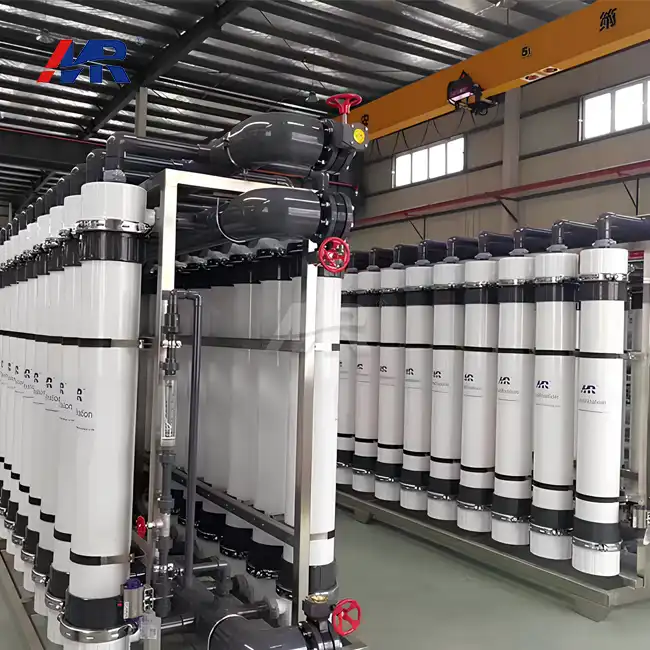
Understanding Ultrafiltration Size and Its Importance
Defining Ultrafiltration Size Parameters
The physical pore width and the MWCO are two parameters that are related to ultrafiltration size. Ultrafiltration is in the middle of microfiltration and nanofiltration technologies, with pores that are usually between 0.001 and 0.1 micrometers (10 to 1,000 angstroms) wide. The molecular weight of the particles that the membrane holds about 90% of the time is shown by MWCO, which is measured in kilodaltons (kDa). A 30 kDa barrier keeps molecules bigger than 30,000 Daltons out while letting smaller species pass through.
How Pore Size Distribution Affects Performance
When making membranes, companies control how the pores are spread out in size to make sure that the rejection properties are always the same. Narrow pore size distributions lead to better molecular separation, which is very important in pharmaceutical protein purification, where losing target molecules is not an option. Wide ranges make it harder to get accurate rejection and let unwanted contaminants into the permeate stream. At Guangdong Morui Environmental Technology, we make membranes with tightly controlled hole structures. This is proven by bacterial retention testing that meets ASTM F838-05 standards. This makes sure that the membranes work the same way every time they are used.
Material Composition and Structural Integrity
Polyethersulfone (PES), polyvinylidene fluoride (PVDF), and polyacrylonitrile (PAN) are membrane materials that affect both the chemical protection and the stability of the pores. PES membranes keep their pores intact in pH ranges from 1 to 14 and can handle multiple cleaning-in-place (CIP) procedures using acids and oxidizing agents. High pore density designs get the most out of flow rates without lowering the performance of rejection. When choosing membranes for ongoing industrial processes where downtime directly means lost income, these structural factors become very important.
Choosing the Right Ultrafiltration Size for Your Industry
Pharmaceutical and Biotechnology Applications
Biopharmaceutical production requires accurate ultrafiltration size MWCO selection for protein concentration and buffer exchange. Tangential flow filtration (TFF) uses membranes between 10 and 100 kDa, depending on the target protein's molecular weight. To purify a monoclonal antibody (IgG molecular weight ~150 kDa), 30 kDa membranes are preferred since they retain the antibody while removing process residues and buffer salts. An MWCO three to six times smaller than your target molecule maximises productivity and prevents product loss. Our engineers have installed ultrafiltration systems for pharmaceutical companies that require GMP-compliant water. Ultrafiltration size affects regulatory compliance.
Municipal Water Treatment and Wastewater Reclamation
Municipal water facilities are increasingly utilising ultrafiltration with holes between 0.01 and 0.05 microns to purify outside water sources with bacteria, protozoan cysts, and particulates. These pore diameters kill Cryptosporidium and Giardia without chemicals. Public health is protected, and operational expenses are reduced. Ultrafiltration precedes RO in wastewater treatment facilities. It decreases the Silt Density Index (SDI) below 3.0 to prevent particle fouling in subsequent ro membranes. When managing complex industrial wastewater from petroleum or textile operations, this step-by-step procedure extends RO membrane life.
Food and Beverage Processing
Dairy makers use different hole sizes to separate lactose and minerals from whey proteins without heating the proteins. It has a 10 kDa layer that traps important whey proteins and lets lactose and salts pass through to the permeate. Ultrafiltration membranes with a thickness of about 0.02 microns are needed by beverage makers to clear up juices and get rid of yeast cells without changing the taste ingredients. These uses show that the size of membrane pores needs to be able to balance retention goals with flux performance in fluids with high viscosity, where fouling risks are higher. When procurement professionals know about these industry-specific needs, they can match membrane specs with practical goals. This makes sure that investments lead to measurable performance gains and regulatory compliance.
Procurement Insights: Sourcing Ultrafiltration Membranes by Size
Standard vs. Custom Membrane Configurations
Standardized MWCO rates from commercial membrane makers cover most industry uses. These ratings are usually 1 kDa, 5 kDa, 10 kDa, 30 kDa, 50 kDa, 100 kDa, and 300 kDa. Because of economies of scale in production, these basic designs offer shorter lead times and lower prices. For certain processes, custom pore size requirements may be needed to separate molecules of similar sizes in the best way. Custom membrane orders take longer to get (8–12 weeks) and cost more per unit, but they work better than standard options, so the extra money is worth it when standard choices can't meet process needs.
Quality Certifications and Supplier Vetting
Suppliers of reliable membranes keep their ISO 9001:2015 quality management Certifications up to date and give full performance data, such as flux curves, rejection coefficients, and chemical compatibility charts. Ask a third party to confirm the membrane's specs through tests in a separate lab. Standard marker molecules like dextran or polyethylene glycol should be used in verification testing to back up the MWCO claim. At Morui, our in-house membrane production plant follows strict quality control procedures. Procurement teams can see documentation of each batch test for verification reasons.
Evaluating Total Cost of Ownership
Membrane price includes more than just the original cost of buying the membrane. It also includes ongoing costs like cleaning chemicals, how often the membrane needs to be replaced, and how much energy it uses. Membranes with narrow ultrafiltration size pore size ranges usually cost more, but they last longer and don't get clogged as often, so the total cost of ownership is cheaper. Instead of just looking at the capital costs, figure out how much it will cost per cubic meter of permeate created over the membrane's estimated lifetime, which is usually 3 to 5 years. This method shows the financial benefits of buying better membranes with the right ultrafiltration size pores for your purpose.
Technical Considerations: Assessing Ultrafiltration Membrane Size Impact on System Performance
Balancing Flux and Rejection Rates
In membrane selection, the main trade-off is finding the right balance between permeate flow and rejection efficiency. Larger pores allow more fluid to flow through, but they are less effective at filtering out smaller contaminants. Smaller holes are better at rejecting things, but they need higher transmembrane pressures and give less flow. Ultrafiltration works at lower pressures (1–10 bar) than RO systems (15–70 bar), so it uses less energy while still getting rid of macromolecules, colloids, and viruses. To get the most cost-effective option, system designers have to choose the right pore size based on the characteristics of the feed water, the contaminants they want to get rid of, and the amount of output that needs to be done.
Fouling Mechanisms and Mitigation Strategies
Particles stick to the membrane's surface or get stuck in its holes, blocking flow over time. This is called membrane fouling. The coating process is affected by the size of the pores; smaller pores get blocked from the inside, while larger pores get cake layers formed. Before ultrafiltration, fouling precursors are removed from the feed water through coagulation, sedimentation, and prefiltration. Using alkaline cleansers and oxidizing agents in regular CIP cycles to get rid of organic and biological foulants restores flow. Watching the rates at which transmembrane pressure and flux drop can help you spot fouling early on, so you can fix the problem before it gets too bad and cannot be fixed. Our technical team creates care plans that are in line with the size of the membrane pores so that the equipment lasts as long as possible.
Integrity Testing and Performance Monitoring
Ensuring uniform product quality and following all regulations means keeping the membrane's integrity throughout its service life. Bubble point and pressure decline tests make sure that the ultrafiltration size remains within specifications after CIP rounds and long-term use. Automated tracking systems keep an eye on normalized flux drop and salt rejection rates. If performance strays from normal levels, these systems send out maintenance alerts. When it comes to pharmaceuticals, where membrane integrity directly affects patient safety and product effectiveness, these tracking methods become even more important.
Future Trends and Innovations in Ultrafiltration Membrane Sizing
Nanotechnology-Enhanced Membrane Fabrication
Nanotechnology is being used in new ways of making things to make screens with carefully controlled pore structures. Using nanoparticles to improve the electrospinning and phase reversal processes makes membranes with even pore patterns and better resistance to fouling. These new membranes have sharper MWCO cutoffs, which makes molecular separations more accurate than was possible with older ways of making membranes. Researchers are mainly working on adding graphene oxide and carbon nanotubes to membrane materials to make them stronger while keeping the flux rates high.
Smart Membranes with Adaptive Properties
Next-generation membranes have stimuli-responsive polymers that change the ultrafiltration size of the pores based on electric fields, temperature, or pH. These flexible membranes could change how well they separate things on the fly as the features of the feed water changed during processing. Even though they are still just ideas in research labs, smart membrane technologies hold a lot of promise for businesses that deal with changing feed streams or need more than one sorting stage in a single membrane module.
Regulatory Landscape and Market Demands
Environmental laws that are getting stricter and worries about running out of water are driving demand for advanced membrane technologies in the farming, industrial, and urban sectors. Pharmaceutical laws require more and more detailed process validation paperwork. This is pushing manufacturers toward membranes that are very consistent from batch to batch and have full performance characterization. To prepare for these changes in regulations, strategic buying planning should work with membrane providers who are dedicated to quality control, Technical support, and constant innovation in membrane sizing technologies.
Conclusion
Choosing the right ultrafiltration size is a big choice that affects how well the system works, how much it costs to run, and the quality of the Products that are made in industries like pharmaceuticals, food processing, and municipalities. When you match the membrane's pore sizes and MWCO scores to your individual separation needs, you can get the best flux rates, reduce fouling, and increase the membrane's service life. Understanding how membrane size affects the total cost of ownership, working with certified providers who provide detailed technical paperwork, and planning for future industry needs through scalable membrane solutions are all things that procurement teams can do to stay ahead of the competition. When membranes are the right size, filter systems go from being practical bottlenecks to reliable, efficient production assets that give clear returns on investment.
FAQ
1. What differentiates nominal from absolute pore size ratings?
The nominal pore size is a performance-based measure that tells you how well the membrane keeps a certain number of test particles, usually between 90 and 95%. Absolute pore size tells you the biggest hole that can be found in a membrane. Absolute rates offer stricter retention promises, which are very important for pharmaceutical and medical uses that need to get rid of all pathogens completely.
2. How does feed water temperature affect membrane performance?
Temperature, not the size of the pores, affects how thick a fluid is. Higher temperatures make water less thick, which lets more water flow through the membrane holes while keeping the pressure the same. Flux usually goes up by 20 to 30 percent for every 10°C rise in temperature. Changes in temperature must be taken into account during the design process so that production capacity stays the same throughout the year.
3. Can ultrafiltration remove virus particles effectively?
Most ultrafiltration membranes with pores smaller than 0.05 microns are able to get rid of germs and viruses. To completely get rid of small viruses (20–30 nanometers), you need special filters that are close to the nanofiltration range. Pharmaceutical applications that need to prove virus clearance should list membranes that have been tested against relevant viral surrogates in line with regulatory standards.
4. What chemical compatibility concerns affect membrane selection?
Different membrane materials are not all resistant to changes in pH, damaging agents, and organic solvents. PES membranes can handle pH levels between 1 and 14 and chlorine, so they can be used in harsh CIP processes. PVDF is better at resisting chemicals for tough industry uses. By matching the chemistry of the membrane to your cleaning process and the properties of the feed water, you can keep the pores intact and keep the membrane from failing too soon.
Partner with Morui for Expert Ultrafiltration Solutions
Guangdong Morui Environmental Technology can help you with your water treatment problems because they have a lot of experience making membranes and are good at engineering. Our fully integrated business includes factories that make our own membranes, factories that make equipment, and partnerships with top component makers like Shimge Water Pumps and Runxin Valves. With more than 500 workers and 20 committed engineers spread across 14 branch sites, we provide turnkey ultrafiltration systems that are tailored to the needs of your business, from purifying water for pharmaceutical use to reusing wastewater from cities. Get in touch with our expert team at benson@guangdongmorui.com to talk about how the right ultrafiltration size can change the way your filtration works and to find a reliable ultrafiltration membrane provider that cares about your business's success.
References
1. Cheryan, M. (1998). Ultrafiltration and Microfiltration Handbook. Lancaster: Technomic Publishing Company.
2. Baker, R.W. (2012). Membrane Technology and Applications (3rd ed.). Chichester: John Wiley & Sons.
3. Zeman, L.J., & Zydney, A.L. (2017). Microfiltration and Ultrafiltration: Principles and Applications. Boca Raton: CRC Press.
4. Van Reis, R., & Zydney, A. (2007). Bioprocess membrane technology. Journal of Membrane Science, 297(1-2), 16-50.
5. Pabby, A.K., Rizvi, S.S.H., & Sastre, A.M. (2015). Handbook of Membrane Separations: Chemical, Pharmaceutical, Food, and Biotechnological Applications (2nd ed.). Boca Raton: CRC Press.
6. Mulder, M. (1996). Basic Principles of Membrane Technology (2nd ed.). Dordrecht: Kluwer Academic Publishers.