

_1745823981883.webp)

Containerized ro system Cost: Key Factors to Consider
When budgeting for a containerized RO system, understanding what drives the price is the first step toward making a smart procurement decision. These mobile reverse osmosis units integrate piping, membranes, pre-treatment, and electrical controls inside a standard ISO container — arriving ready to produce water on-site with minimal setup. Costs vary widely based on system capacity, membrane specification, energy draw, customization level, and logistics. This guide breaks down every major cost driver so you can plan your budget accurately and avoid surprises.
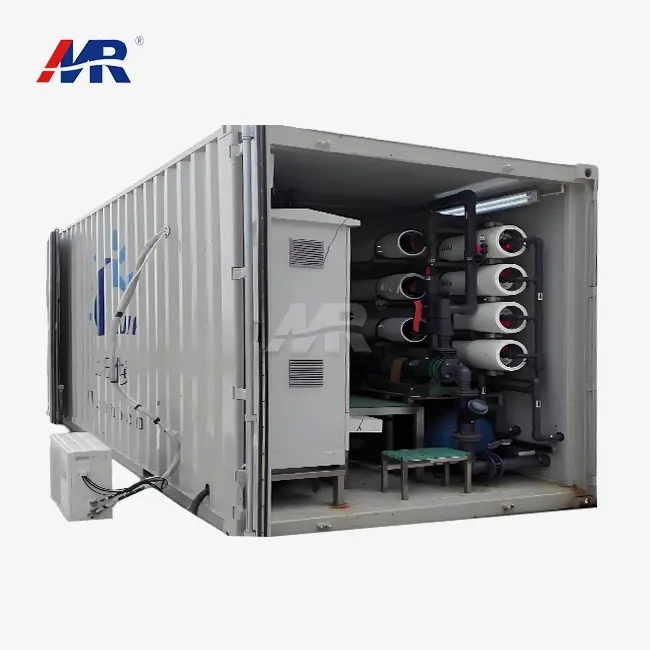
Understanding Containerized RO System Cost Components
Initial Purchase Price
A containerized reverse osmosis unit's main price is based on its output, the number of membranes it has, and the pre-treatment train that comes with it. The MR-CTRO-25TH from Morui, for example, has a media filter stage followed by brackish water RO (BWRO), which gets rid of 98% of the salt and recovers 55–65% of it. The standard 20-foot pieces cost less than the 40-foot ones. Buyers who need proof of NSF or CE certification should expect to pay more for third-party testing and reporting of compliance.
Installation and Commissioning
The MR-CTRO-25TH comes with all of its process pipes and electricals already connected, so the only work that needs to be done on site is to connect a 32-kW/hour power feed and an inlet water line. Professional commissioning by factory-trained experts is still suggested to protect the guarantee and make sure that performance goals for the membrane are met. When this step is skipped, operating problems that could have been avoided happen within the first few months. These problems cost more to fix than the launching fee itself.
Operational and Lifecycle Expenses
Energy costs the most over and over again. At 32 kW/hour, electricity bills add up fast, so it's important to get accurate estimates of local utility rates during the budget phase. Costs that are known every year include replacing membranes, adding antiscalant chemicals, and changing filter media on a regular basis. When buyers buy remote tracking packages, they cut down on unplanned downtime and find membrane fouling early, which lowers lifetime costs.
Key Factors Affecting the Cost of Containerized RO Systems
Modular vs. Fully Containerized Design
Skid-mounted modular systems cost less per unit, but they need separate building, foundation work, and setup in the field. With a fully containerized unit like the MR-CTRO-25TH, those line items are no longer needed at all. For mines that are far away, disaster aid sites, or building camps that don't have access to existing infrastructure, the all-in-one design usually has a lower total fixed cost, even if it costs more to buy.
Membrane Technology and Feed Water Quality
ro membranes for brackish water work with lower feed pressures than membranes for seawater. This means that smaller pumps and lower energy costs are needed. Under normal conditions, the MR-CTRO-25TH rejects 98% of salt from its feed sources, making it ideal for brackish sources. If the groundwater or saltwater is high in TDS, the containerized RO system will need a different membrane, more pre-treatment steps, and pumps with higher pressures. All of these things add to the cost of the system.
Capacity, Output, and Regulatory Compliance
More membrane tanks, more powerful pumps, and bigger containers are needed when daily output needs to be higher. For buyers in the US, following NSF/ANSI 58 or state-level drinking water rules costs more because they need more paperwork and tests. It is much more expensive to build compliance into the original design than to skip the compliance review. If projects don't do it, they risk having to wait for a site permit or having equipment rejected. US procurement officers are asking for energy-efficiency ratings and water-quality test reports more and more.
Comparing Containerized RO Systems with Other Water Treatment Solutions
Traditional Fixed RO Plants vs. Mobile Units
Building permanent RO plants inside a building takes a lot of planning, a long time, and a lot of money up front. All of that isn't needed with a containerized reverse osmosis setup. Putting something in place takes days instead of months. The container is moved instead of being written off as a "sunk cost" when a mine or rescue operation stops. Rental companies and EPCs that offer water-as-a-service can get a much better return on their investment if they can use the asset in more than one project.
Portable and Skid-Mounted Systems
Portable RO units that are mounted on trailers can handle very small output needs, but they don't have the capacity or process depth of a container system. Skid systems are flexible, but they need a building that is sealed, forklift access, and services on the spot already set up. The MR-CTRO-25TH fits inside a standard container, doesn't need a permanent structure, and keeps everything inside safe from weather and theft, which is important for remote or temporary sites with low security.
Supplier Reputation and After-Sales Support
Cost of ownership is more than just the tools. Long-term running costs are affected by the availability of spare parts, the time it takes for remote tests to work, and the number of trained service staff that can be reached. Morui provides documentation in multiple languages, keeps a global inventory of spare parts, and offers remote monitoring as a standard service. Before making a final choice, buyers should ask each possible provider for records of the average time it takes to fix something, the waiting time for parts, and references from similar deployments.
Procurement Considerations: How to Get the Best Value for Your Investment
Benchmarking Price and Sourcing Trusted Suppliers
Beginning containerized RO systems from reputable brands usually cost between $40,000 and over $200,000 USD, depending on the output, process train, and specifications. If a wholesale buyer wants to buy more than one unit, they should talk about group discounts, extra parts packages, and faster sea freight terms. Morui ships units in sea-freight-rated crates with all the necessary export paperwork. This keeps US buyers from having to wait too long at customs. As a normal safety measure, you should ask for factory acceptance test (FAT) records and water quality data sheets before the shipment.
Leasing, Rental, and Financing Options
Rental operators and EPCs can use leasing structures to move capital costs to operating costs, which frees up cash flow for other project costs. For approved buyers, Morui offers payment plans with installments and works with rental companies that buy in bulk. When deciding whether to buy or hire a container unit, you should think about its residual value. This is the asset's value when it is returned or redeployed after a project is over.
Warranty Terms and Negotiating Bulk Orders
Containerized RO systems usually come with different warranties for the membranes, pumps, and control screens. Before you sign, make sure that commissioning by qualified people is a part of the warranty. When you buy two or more units at once, you can usually get discounts on spare parts kits, training, and travel costs for commissioning. When you place your order 10 to 14 weeks before the site is mobilized, you can save money on freight premiums and keep the factory running at normal production rates.
Practical Tips to Optimize Cost Efficiency When Using Containerized RO Systems
Pre-Treatment and Membrane Care
Quality of pre-treatment directly affects how long a membrane lasts. The MR-CTRO-25TH has a media filter stage that gets rid of dissolved solids and keeps the BWRO membranes further down the line from getting too dirty too quickly. If you consistently dose antiscalant, run backwash cycles, and change cartridge filters on time, the membrane will last longer than the usual 3 to 5 years. Every time a membrane repair is avoided, thousands of dollars are saved in materials and downtime.
Early Troubleshooting and Automation Benefits
Every day checking the feed pressure, permeate flow, and conductivity finds performance drift before it turns into an expensive failure. The MR-CTRO-25TH has automated control systems that continuously log operational data. This makes it easy to look for trends without having a dedicated operator on-site. When remote monitoring is turned on, Morui's engineering team can notice strange behavior and suggest ways to fix it before it gets worse. When operations are done by hand alone, they often miss early warning signs, which leads to higher repair costs.
Operational Training and Documentation
When operators get organized training on how to start up, shut down, and flush with CIP (clean-in-place), they make fewer mistakes that hurt pumps or membranes. Morui provides operation instructions in multiple languages and, if needed, offers training on-site during launch. Well-trained site teams improve general recovery rates, keep them within the MR-CTRO-25TH's 55–65% design range, and extend service intervals. This keeps the rate from dropping below the design range because of bad working habits.
Together, these practices help facility managers keep running costs close to the planned levels for the entire unit's useful life. This is very important when trying to explain the need for the capital investment to project partners.
Conclusion
To correctly price a containerized RO system, you need to look at more than just the purchase order. The real cost is based on the quality of the feed water, the specifications of the membrane, the amount of energy used, the safety requirements, the transportation, and the support after the sale. With its built-in media filtration and BWRO process, 98% salt rejection, and plug-and-play electrical design, the Morui MR-CTRO-25TH is designed to lower the total cost of installation and shorten the time it takes to set up in demanding field applications. Your investment will be safe from the start if you work with a supplier who offers full documentation, factory acceptance testing, and support after the product has been put into use.
FAQ
1. How long does a containerized RO system typically last?
The frame of the container and its main mechanical parts should last 10 to 15 years with regular upkeep and the right pre-treatment. Depending on the quality of the feed water and the number of hours they are used, BWRO membranes usually need to be replaced every 3 to 5 years. Recovery rates and salt rejection numbers are good ways to tell if a membrane is healthy, and they should be written down every week.
2. How much does it cost to run a containerized reverse osmosis unit daily?
How much it costs to run depends on how much electricity is used, how many chemicals are used, and the condition of the membrane. It takes 32 kW/hour to power the MR-CTRO-25TH. With an average industrial power rate in the US of $0.08 to $0.12 per kWh, the daily energy costs for a machine that runs 24 hours a day range from about $61 to $92, not counting the cost of chemicals and labor.
3. Is installation cheaper compared to a traditional fixed RO plant?
Most of the time, yes. The MR-CTRO-25TH comes with all of its pipes and electricals already connected, so all that needs to be done on-site is connecting power and water. This gets rid of the need for civil construction, building permits, and long hours of on-site assembly work, all of which can add 30–50% to the total cost of a normally built plant.
4. Do US buyers need special certifications for these systems?
In the US, projects that supply drinkable water usually need to follow NSF/ANSI 58 and get drinking water permits at the state level. Morui can help buyers get local approvals by giving them water quality test reports and other paperwork to back them up.
Get a Direct Quote from Morui — Containerized RO System Manufacturer
Morui plans and builds containerized RO systems that are contained and made to work in real field circumstances. When it ships, the MR-CTRO-25TH is ready to go. There is no prep work or long lead times. Our engineering team will size the right solution and give you full technical documentation, whether you need a single unit for an emergency or a large order for a rental fleet. For prices and details, please email us at benson@guangdongmorui.com.
References
1. Metcalf & Eddy. Water Reuse: Issues, Technologies, and Applications. McGraw-Hill, 2007.
2. American Water Works Association. Reverse Osmosis and Nanofiltration (Manual of Water Supply Practices, M46). AWWA, 2007.
3. Water Research Foundation. Energy Management for Water Utilities. Water Research Foundation, 2015.
4. US Environmental Protection Agency. Membrane Filtration Guidance Manual. EPA, 2005.
5. Judd, S., and Judd, C. The MBR Book: Principles and Applications of Membrane Bioreactors in Water and Wastewater Treatment. Elsevier, 2011.
6. International Desalination Association. IDA Water Security Handbook. IDA, 2020.
 VIEW MOREUltrafiltration Systems
 VIEW MORE2m3/hour seawater desalination equipment
 VIEW MOREMBR wastewater treatment plant
 VIEW MOREcontainerized ultrafiltration equipment
 VIEW MOREedi module water treatment
 VIEW MORE8040 seawater reverse osmosis membrane
 VIEW MOREsewage treatment plant MBR system
 VIEW MORE8m3/hour seawater desalination equipment
