_1745823981883.webp)

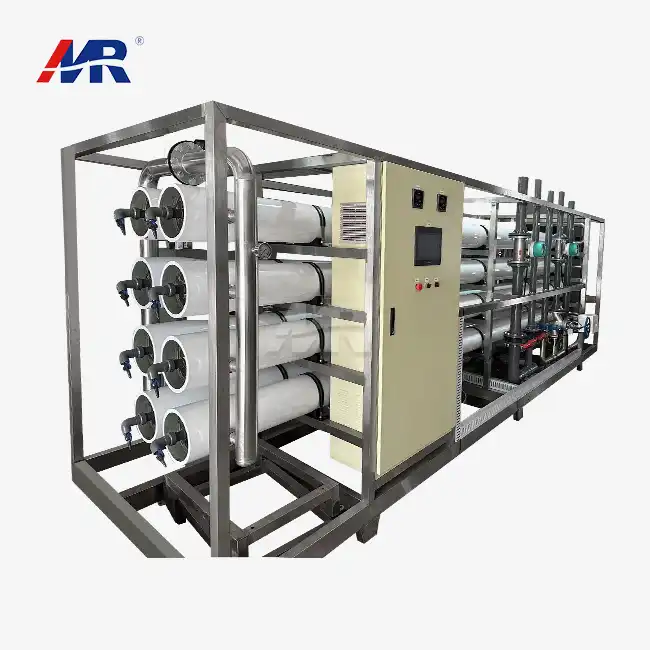
Want these methods applied to your feed water? Morui designs brackish water reverse osmosis systems from 100 to 10,000 m³ per day. Email benson@guangdongmorui.com to reach a brackish water reverse osmosis systems manufacturer with its own membrane production factory. Share your TDS, SDI, and flow target, and our engineers will suggest a pretreatment, membrane, and array plan.
What Makes a BWRO System Effective?
What are brackish water reverse osmosis systems?
Brackish water reverse osmosis systems are membrane plants that force saline water through semi-permeable membranes at high pressure. The supply water generally contains 1,000 to 10,000 ppm total dissolved solids (TDS). The membranes stop salts and other pollutants. Clean permeate is let through, and a concentrate stream takes the salts to drain. Morui’s devices can desalinate this range of salinity at capacities from 100 to 10,000 m3 per day.
Which four factors decide effectiveness?
Efficiency is limited by recovery, salt rejection, energy consumption, and membrane life. All the methods in this tutorial address one of these. Pre-treatment is better for protecting the life of the membrane. Antiscalant dose makes safe recovery possible. Lifts the recovery staging. Efficient pumps use less energy per m3. Morui claims up to 85% recovery and 2.5 to 3.5 kWh/m3 from their systems, and our PLC-based controllers monitor both in real time.
How Should BWRO Membranes Be Selected?
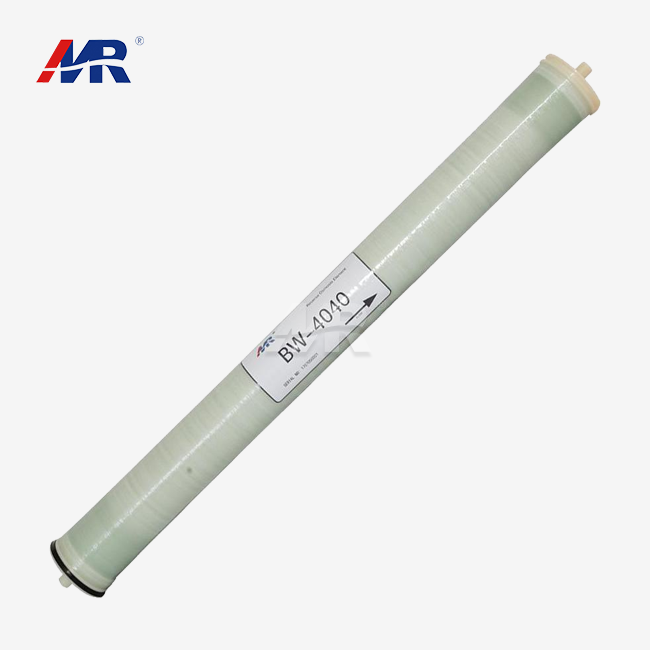
Choose thin film composite polyamide membranes with high rejection and low fouling. Those two elements pull in separate directions, so match your feed to them. Deep well water contains relatively few particles; therefore, a high-rejection element is a safe option. The low-fouling element assists you in maintaining your cleaning schedule since river or reuse water contains more colloids and organics.
What should you request from a membrane supplier?
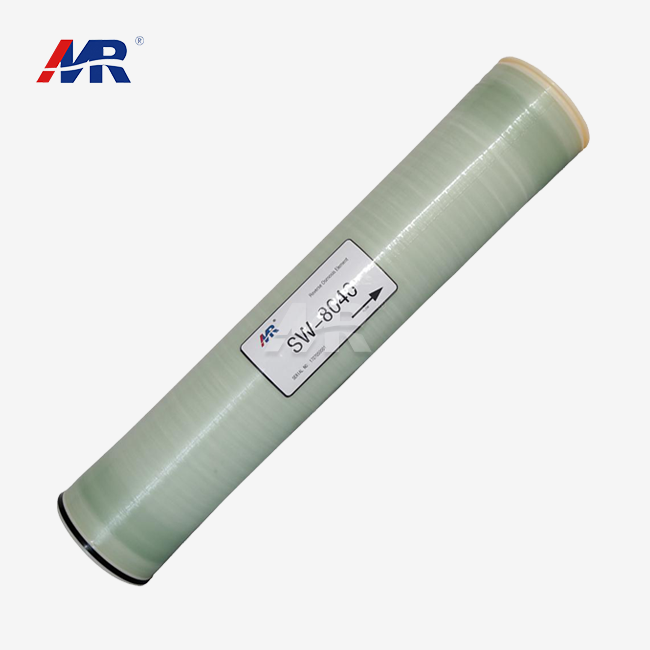
Request a prediction run with all your water analysis. Design techniques based on feed chemistry, pH, temperature, and SDI. The most significant are concentrations of silicon, calcium, barium, and strontium. Morui makes membranes in its own facilities, and we may combine them with Shimge pumps, Runxin valves, and Createc sensors, so that we can test options against your data for brackish water reverse osmosis systems.
Which Pretreatment Methods Improve BWRO Performance?
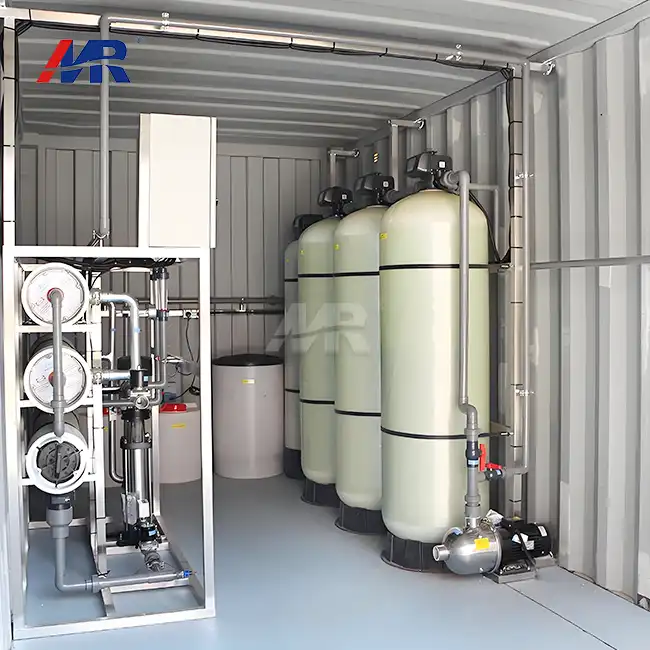
Pretreatment does the most for membrane life. Coarse strainers remove large debris. Multimedia filters remove silt. Cartridge filters polish the water before the pump. Together, they lower the silt density index (SDI), which predicts fouling from fine particles, bacteria, and organics. Membrane makers and designers advise keeping the 15-minute SDI below 4.0. The table below shows what each step does.
| Pretreatment step | Job | Result for the membrane |
|---|---|---|
| Coarse strainer | Stops sand and large debris | Protects pumps and filters |
| Multimedia filter | Removes suspended silt | Lowers SDI |
| Cartridge filter | Final particle barrier | Guards membranes and the high-pressure pump |
| Antiscalant dosing | Blocks mineral crystal growth | Raises safe recovery |
| pH adjustment | Shifts the carbonate balance | Cuts calcium carbonate risk |
What SDI target should you set?
Aim below 4.0 for every feed. Test SDI after all pretreatment, at the pump inlet, because that is the water the membrane sees in brackish water reverse osmosis systems. Raw water tests can mislead you. Deep well water usually arrives cleaner than surface water, so its filtration duty is lighter. We size filters from the tested value, not from a guess.
How Can BWRO Reduce Scaling and Fouling?
Scaling and fouling are different problems. Scaling means mineral crystals: silica, calcium carbonate, calcium sulfate, barium sulfate, strontium sulfate, and calcium fluoride. Fouling means particles, bacteria, and organics building up on the membrane. A sound design sets recovery at the highest level that avoids scaling for each of those compounds.
How does antiscalant dosing work?
A study of 50 small and medium brackish water reverse osmosis (RO plants in the Gaza Strip built a model of antiscalant performance. It predicted up to 98% salt rejection with polyphosphate at 1 ppm and 92% with phosphonate at the same dose. Type and dose clearly matter in brackish water reverse osmosis systems. Test them on your own water instead of copying another plant's recipe.
How do staging and cross-flow protect membranes?
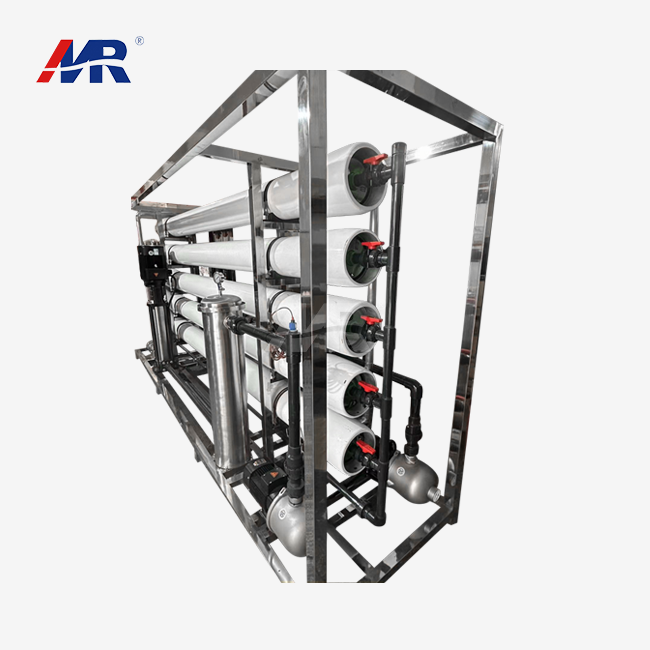
Arrays such as 2:1 use fewer vessels in each later stage. That keeps concentrate moving fast across the membrane surface. Fast cross-flow sweeps away scale seeds and particles. Automatic chemical feed and planned cleaning finish the job.
What Operating Conditions Optimize BWRO Efficiency?
Recovery is the biggest lever. Single-stage designs suit recoveries below about 50%. Two stages handle up to about 75%. Three stages serve higher targets. Morui rates its brackish water reverse osmosis systems at up to 85% recovery, so staged high-recovery layouts are a normal part of our work.
Energy is the second lever. Brackish plants with energy recovery devices typically run at 1.5 to 3 kWh/m³ in steady operation. Our rating of 2.5 to 3.5 kWh/m³ sits near the upper end of that literature range. Good pretreatment and clean membranes keep it from drifting higher.
How much water does higher recovery save?
Take a plant that needs 1,000 m³ of permeate per day. At 75% recovery, it pulls about 1,333 m³ of feed and rejects 333 m³. At 85%, it pulls about 1,176 m³ and rejects 176 m³. That saves about 157 m³ of feed every day, plus the pumping and disposal cost that comes with it.
How Does BWRO Compare With Other RO Methods?
Seawater RO treats feed near 37 g/L. A record-setting 2,500 m³/day plant in the Canary Islands reached 1.794 kWh/m³ at only 40% recovery in February 2025. Brackish feed is far less salty, so brackish water reverse osmosis systems can reach much higher recovery. The table compares the main options.
| Method | Typical feed | Recovery | Best fit |
|---|---|---|---|
| BWRO (Morui range) | 1,000-10,000 ppm TDS | Up to 85% | Wells, reuse water, inland supply |
| Seawater RO | About 37 g/L | About 40% in the record plant | Coastal supply |
| Single-stage layout | Low-recovery duty | Below about 50% | Small, simple units |
| Two-stage layout | Water-scarce sites | Up to about 75% | Costly water, discharge limits |
| Three-stage layout | Highest recovery targets | Above 75% | Strict brine limits |
Which BWRO Configuration Fits Different Water Sources?
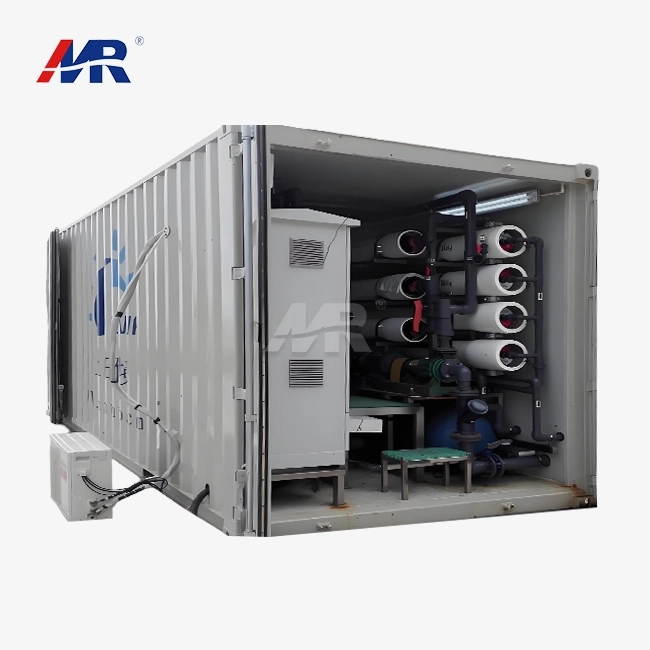
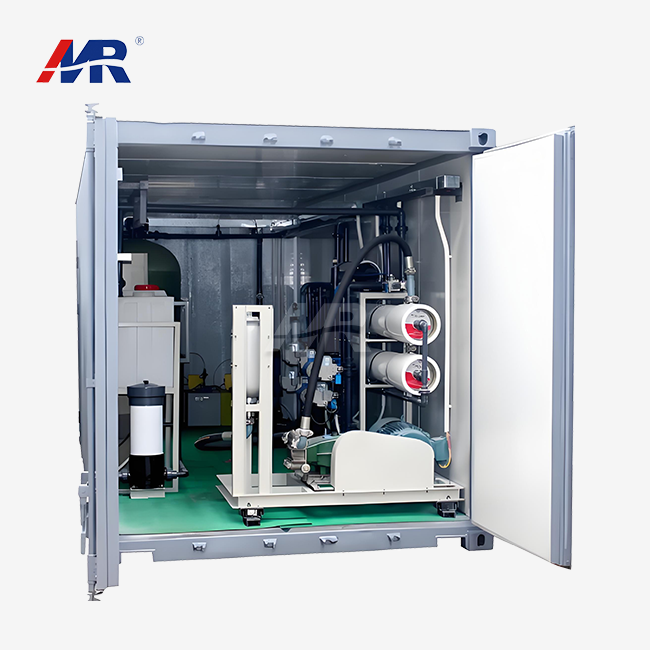
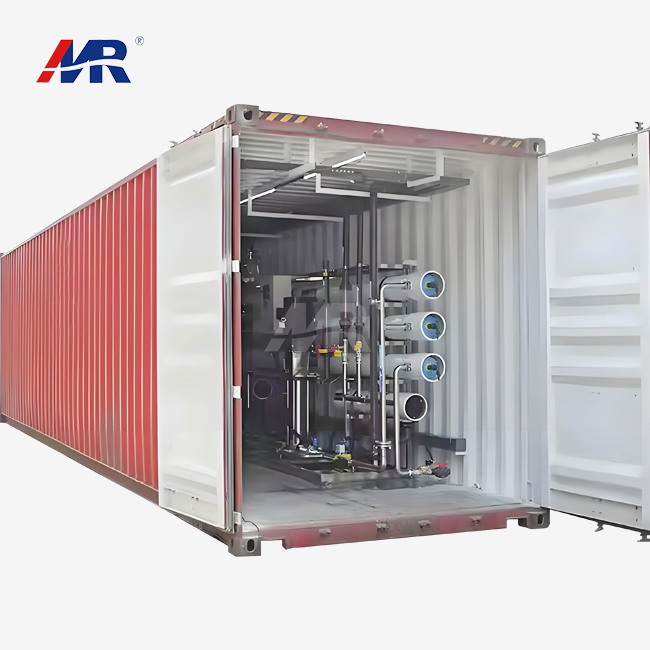
Water source sets the design focus. Deep wells carry scaling risk. Surface water carries fouling risk. Reuse streams carry both. Morui builds modular skids, so you can start small and add capacity later. Table 3 links each source to its main risk and design response.
| Water source | Main risk | Design focus |
|---|---|---|
| Deep brackish well | Mineral scaling | Antiscalant dosing, staged array, recovery set by scaling limits |
| River or lake brackish water | High SDI, organics | Multimedia and cartridge filtration, low-fouling membranes |
| Industrial reuse water | Organic fouling and scaling | Extra pretreatment, tighter cleaning plan |
| Mine or oilfield water | Variable salinity | Modular skids, flexible array, remote monitoring |
Municipal water supply
Towns with brackish water reverse osmosis systems: wells use RO to meet drinking water limits. Post-treatment and remineralization then bring permeate to a stable, drinkable quality before storage and distribution.
Agriculture and irrigation
Growers in dry regions pump brackish water. Higher recovery gives them more usable irrigation water per pumped cubic meter and leaves less brine to handle.
Industrial process water and power plant cooling
Food and beverage plants, mines, oil and gas sites, and power stations need steady water quality. Guangdong Morui Environmental Technology Co., Ltd supplies equipment, installation, and commissioning as one package, which shortens the path to production.
How Can You Maintain Effective BWRO Performance?
Log feed pressure, differential pressure, permeate flow, and conductivity every shift. Small drifts warn you before membranes fail. Morui's PLC-based controls add remote monitoring, so engineers can review trends without a site visit.
When should you clean the membranes?
Clean when normalized permeate flow drops or differential pressure rises across a stage. Early cleaning restores flux. Late cleaning risks permanent fouling. A low SDI and well-dosed antiscalant stretch the time between cleanings.
What support should you expect after purchase?
Ask for installation, commissioning, spare parts, and operator training. Morui works through 14+ branches with 500 employees and 20 engineers. We also act as an agent for Shimge water pumps, Runxin valves, and Createc instruments, so common spares stay within reach.
Conclusion
The most effective methods for brackish water reverse osmosis systems work as a chain. Test your feed water, cut SDI below 4.0, dose the right antiscalant, and choose a staged array that fits your recovery goal. Then track four numbers every shift. Each link protects the next, and together they lower your water waste, energy bill, and membrane replacement cost.
FAQ
1. What TDS range suits brackish water RO?
Morui's brackish water reverse osmosis systems treat 1,000 to 10,000 ppm TDS. Feed below that range may need only simple filtration. Feed above it may call for seawater RO.
2. What recovery rate can I expect?
Morui rates its systems at up to 85% recovery. Array design sets the practical limit: two stages reach about 75%, and three stages go higher. Your feed chemistry decides the final figure.
3. How much energy do BWRO plants use?
Published ranges for brackish RO with energy recovery run from 1.5 to 3 kWh/m³. Morui's systems are rated at 2.5 to 3.5 kWh/m³.
4. Does the permeate need post-treatment?
Often yes. Permeate is very low in minerals. Post-treatment and remineralization adjust pH and mineral balance before storage and distribution, especially for drinking water.
5. Can the system grow with demand?
Yes. Modular construction lets you add skids later. Our capacity range spans 100 to 10,000 m³ per day, and the compact footprint suits tight sites.
Get a Sized Design for Your Brackish Water Reverse Osmosis Project
Ready to lower water waste and energy costs? Morui is a brackish water reverse osmosis systems supplier with modular, PLC-controlled plants for municipal, industrial, and farming sites. Send your water analysis to benson@guangdongmorui.com. Our engineers will propose a pretreatment train, membrane choice, and array layout for your brackish water reverse osmosis systems project, then support installation and commissioning.
References
1. Ruiz Saavedra, E. et al., "A design method of the RO system in reverse osmosis brackish water desalination plants (procedure)," Desalination and Water Treatment, 2013. https://accedacris.ulpgc.es/handle/10553/43838
2. Gharbia, A. S. et al., "Optimization modeling for the use of antiscalants in the brackish RO desalination plants," Desalination Publications, 2021. https://pure.atu.ie/en/publications/optimization-modeling-for-the-use-of-antiscalants-in-the-brackish-3/
3. Graver Technologies, "Silt Density Index" technical brief, accessed 2026. https://gravertech.com/technical-documents/silt-density-index
4. WCP Online, "Reverse osmosis system staging and array design," 2026. https://wcponline.com/?p=52357
5. Computers & Chemical Engineering, "Evaluation of performance and practicality of small- to medium-scale photovoltaic solar-powered reverse osmosis systems for brackish water desalination: A review," 2025. https://www.sciencedirect.com/science/article/abs/pii/S0098135425003230
6. ScienceDirect, "The worldwide lowest specific energy consumption measured in a seawater desalination plant," 2026. https://www.sciencedirect.com/science/article/pii/S2590174526001650