_1745823981883.webp)

What Is the Lifespan of a Brackish Membrane?
A brackish water reverse osmosis (BWRO) membrane typically lasts 3 to 7 years under well-managed operating conditions. The actual lifespan depends heavily on feedwater quality, system pressure, cleaning protocols, and the quality of the membrane itself. A high-grade brackish membrane operating at stable conditions with proper pretreatment can approach or exceed the upper range. Conversely, neglected maintenance or aggressive feedwater chemistry can shorten service life significantly. Understanding what drives membrane longevity helps procurement teams and plant engineers make smarter decisions about replacement cycles, inventory planning, and total cost of ownership.
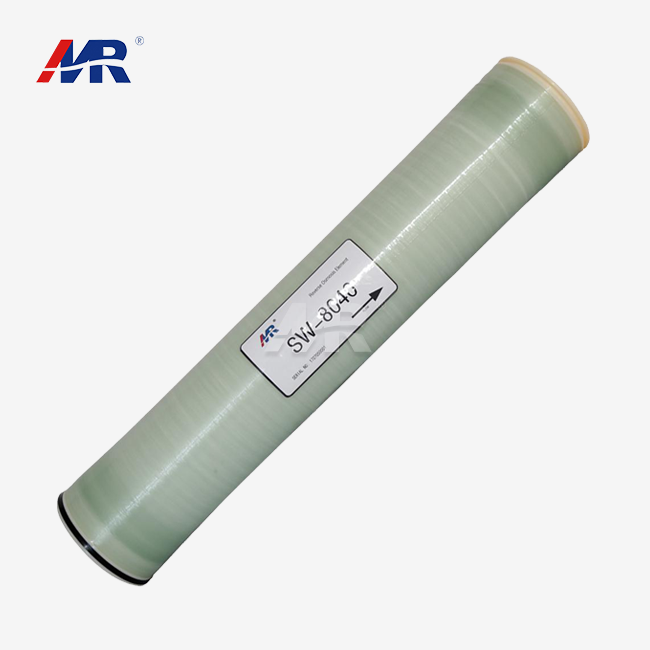
Understanding Brackish Membranes and Their Lifespan
Imagine you had a facility that produces food-quality beverages, and all of a sudden, the membrane just blows, and you are out of production for three days. Or running a pharmaceutical factory with a damaged RO element results in a failure of GMP compliance in the midst of an audit. These are true operational problems, generated by a question that has never been asked: how long does a membrane truly endure, and what is it that determines that?
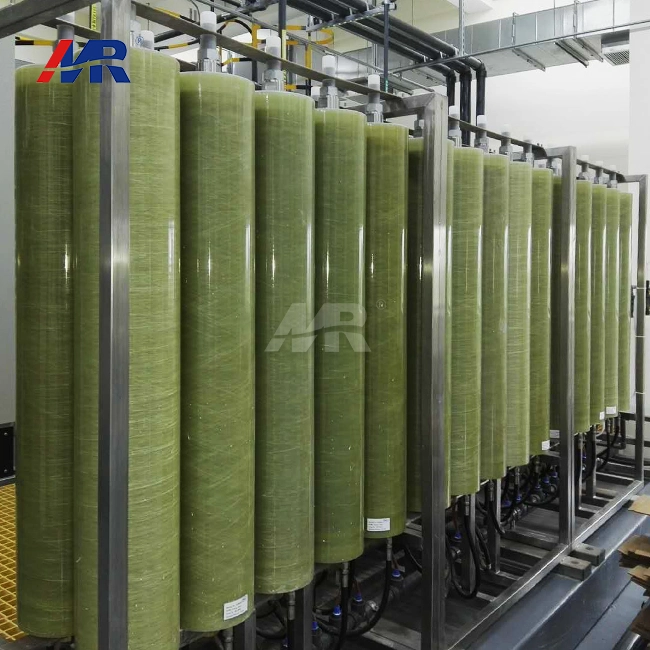
A brackish membrane is a thin-film composite (TFC) semi-permeable element that is manufactured to treat water with Total Dissolved Solids (TDS) values between 1,000 and 10,000 mg/L. This is the TDS level that occurs between fresh groundwater and salt water. It removes dissolved salts, organics, and micropollutants using a cross-linked aromatic polyamide active layer. The operating pressure is normally in the range of 1.03 to 1.55 MPa (150 to 225 psi), much lower than the pressure in saltwater treatment systems.
Why Lifespan Matters for B2B Procurement
Membrane life is not simply a technical characteristic to engineers, purchasing managers, and plant executives; it has a direct impact on how much they spend on capital projects and how long their systems are up and operating. Replacing the membrane a year early means you’re throwing money away. Replacing it a year late means you risk quality concerns and unscheduled downtime. According to Water Research Foundation statistics, BWro membranes have a lifespan of 5 to 7 years in urban and industrial applications, with proper maintenance.
Key Factors Affecting the Lifespan of Brackish Membranes
Different installations age in different ways. Understanding these factors lets workers step in before the degradation becomes irreversible, which affects how long a reverse osmosis element lasts.
The main things that determine how long a brackish membrane will last are:
- Feedwater salinity and fouling potential: High silica, calcium hardness, or living organisms in the water cause scaling and biofouling to develop more quickly on the membrane surface. The Langelier Saturation Index (LSI) has to be controlled to avoid carbonate scaling in brackish groundwater applications, which are widespread in arid regions of the U.S. Operating pressure and recovery: Running a system even a little above design pressure all the time will put extra mechanical stress on the membrane leaf. Similarly, raising the recovery rate above the recommended amount concentrates scaling ions and reduces the integrity of the active layer.
- Chemical cleaning regime: The frequency of cleaning, the kind of chemical used (acid, alkaline, or enzymatic), and the duration the chemicals are in contact with the membrane all influence whether the coating layers are removed or pushed further into the membrane structure. If you don’t clean enough, you get buildup. If you clean too much with strong chemicals, you wear away the polyamide layer.
- Quality pretreatment: Cartridge filtration, antiscalant dosing, and UV disinfection provide the first line of protection for the membrane prior to the RO system. In many industries, poor preparation is a major cause of premature membrane failure.
These elements are interrelated. Membranes may fail prematurely even with excellent feedwater and poor cleaning procedures. The only way to attain the full rated service life is to take care of all of these items at one time.
How Do Brackish Membranes Compare to Other Membrane Types?
Procurement teams often consider BWRO parts, SWRO membranes, and standard microfiltration or ultrafiltration systems. The variations for brackish membranes in lifetime, energy usage, and application fit are large.
| Criteria | Brackish Water RO Membrane | Seawater RO Membrane | Ultrafiltration Membrane |
|---|---|---|---|
| Target TDS Range | 1,000–10,000 mg/L | 30,000–45,000 mg/L | N/A (removes particles, not ions) |
| Operating Pressure | 1.03–1.55 MPa | 5.5–8.3 MPa | 0.1–0.5 MPa |
| Typical Lifespan | 3–7 years | 3–5 years | 5–10 years |
| Salt Rejection Rate | Up to 99.5% | Up to 99.8% | Low (not designed for ion rejection) |
| Energy Efficiency | High | Moderate | Very High |
| Best Application | Industrial, municipal, agricultural | Coastal desalination | Pretreatment, food & pharma |
This table demonstrates an essential fact: For moderate-salinity usage, brackish membranes are an excellent blend of longevity and energy consumption. In many regulated industrial situations, they persist longer than seawater membranes and may remove ions in a manner that ultrafiltration cannot.
Practical Maintenance and Replacement Guidelines to Maximize Lifespan
Most of the time, upkeep is done between 3 and 7 years of brackish membrane life. Operators who keep an eye on performance data and act quickly always get more value from each part.
What Performance Indicators Should You Monitor?
Three metrics that are more reliable than looking at the membrane itself to assess how it is functioning are normalized permeate flow, salt rejection rate (SRR), and differential pressure across the element. In the industry, a cleaning event is often scheduled when normalized flow decreases 10 to 15 percent or when SRR dips below 97 percent. If the pressure drop increases by more than 15% above the average, this indicates internal fouling or channeling.
When Is Chemical Cleaning Necessary?
Cleaning should be driven by performance data, not merely time on the calendar. Generally, however, most industrial BWRO systems need to be chemically cleaned every three to six months under typical feedwater conditions. When you clean with citric acid or HCl at low pH, you remove inorganic scale. Using sodium hydroxide and surfactants, you remove organic fouling and biofilm. If both kinds are employed alternately depending on the diagnosis of the fouling, the polyamide layer is preserved for longer.
Recognizing End-of-Life Signals
Physical symptoms of irreversible membrane deterioration include telescoping of the element, visible damage to the outside wrap, and salt passage that does not cease after cleaning. We can't speak about change just now. Having a backup supply of fresh parts on hand, particularly for essential manufacturing lines, avoids the need for costly emergency sourcing delays for procurement teams.
How to Choose and Procure the Right Brackish Membrane for Your Needs
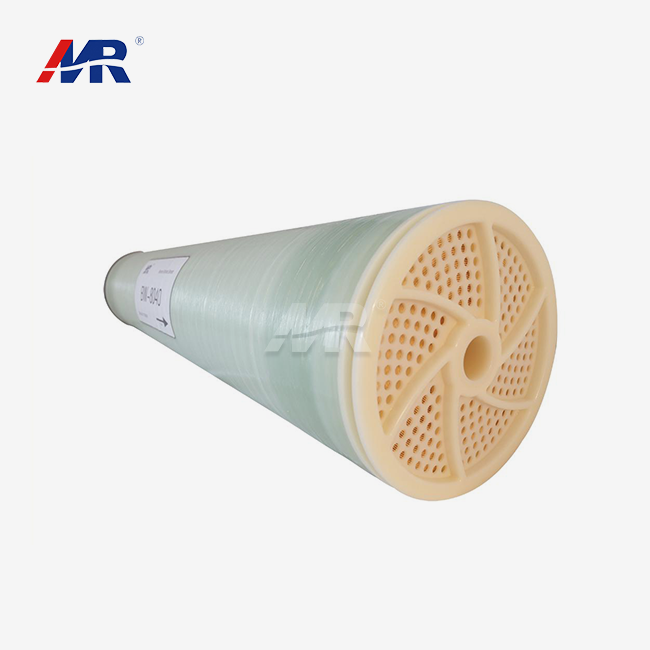
For BWRO element selection, you need to make sure the brackish membrane specs match the actual working envelope of your system. The Morui MR-BW-8040 is an 8040 element designed for use in large-scale industrial applications. Principal specifications include:
- Working Pressure: 1.55 MPa
- Active membrane surface area: 34 or 37 m² (configuration selection)
- Flow rate: 10,500 GPD
- Salt rejection rate: 99.5%
With these features, the MR-BW-8040 is great for difficult applications like preparing food and beverages, dealing with pharmaceutical water systems, supplying boiler feed water for power plants, and enhancing municipal water systems. The 99.5% salt rejection fulfills GMP-grade and drinkable water requirements, and the dual area selection enables system designers to optimize flux for particular recovery objectives.
When selecting a brackish membrane provider, consider the following:
- Demonstrated salt rejection capability under specified test circumstances (ASTM D4194 or ISO 19702 equivalent)
- Material certifications like NSF/ANSI 61 for drinking water contact
- Availability of technical data sheets and after-sales application support
- Reliability of delivery and lead times for bulk buying
Procurement teams working with an experienced brackish membrane manufacturer, as opposed to a distributor-only supplier, get direct access to technical assistance, specific configurations, and constant quality assurance.
Conclusion
The life of a brackish membrane is not set in stone; it is designed to last through smart purchasing, careful maintenance, and accurate performance monitoring. If everything goes well, a decent BWRO element should survive for 5 to 7 years before it has to be replaced. This design philosophy is embodied in Morui’s MR-BW-8040: excellent salt rejection, versatile area configurations, and rugged pressure ratings designed for harsh industrial settings. If you are running a pharmaceutical manufacturing line, a municipal water improvement, or an agricultural irrigation system, an awareness of membrane durability is a direct protection for your operational continuity and total cost of ownership.
FAQ
1. How long does a brackish membrane typically last in industrial use?
When properly treated before installation and cleaned on a frequent basis, a brackish membrane commonly lasts 5 to 7 years. High fouling loads, inadequate pretreatment, or improper chemical cleaning can reduce this to 2 to 3 years. Performance monitoring is the most reliable way to determine actual remaining service life.
2. How often should I clean a brackish water RO membrane?
Cleaning frequency depends on feedwater quality and system loading. A general benchmark is every 3 to 6 months for typical industrial groundwater applications. Always use performance data — normalized flow decline, salt passage increase, or differential pressure rise — to trigger cleaning rather than relying on fixed time intervals alone.
3. Does cleaning frequency affect salt rejection performance?
Yes. Under-cleaning allows fouling layers to consolidate, reducing permeate flow and increasing salt passage over time. Over-cleaning with excessively harsh chemicals, conversely, degrades the polyamide active layer and accelerates rejection decline. Calibrated, data-driven cleaning preserves both flux and rejection at optimal levels throughout the membrane's service life.
4. What causes premature membrane failure?
The most common causes are inadequate pretreatment (allowing particulates or chlorine to contact the membrane), operating above design pressure, and ignoring early performance decline signals. Chlorine exposure is particularly damaging — even brief contact can irreversibly oxidize the polyamide layer.
Partner with Morui for Reliable Brackish Membrane Solutions
Morui's engineering team specializes in industrial water treatment systems backed by in-house membrane manufacturing capability and 20 dedicated engineers. The MR-BW-8040 brackish membrane is available for bulk procurement with full Technical support. Reach Our Team directly at benson@guangdongmorui.com to request specifications, pricing, or application consultation from a trusted brackish membrane manufacturer.
References
1. Water Research Foundation — Membrane Bioreactor Technology: Design and Operation, 2019.
2. AWWA (American Water Works Association) — Reverse Osmosis and Nanofiltration Manual of Water Supply Practices, 2nd Edition, 2007.
3. Dow Water & Process Solutions — FILMTEC™ Reverse Osmosis Membranes Technical Manual, 2018.
4. Hydranautics (Nitto Group) — Technical Service Bulletin: Chemical Cleaning of RO/NF Membranes, 2020.
5. Journal of Membrane Science — Fouling and cleaning of reverse osmosis membranes: A state-of-the-art review, Elsevier, 2021.
6. Desalination — Long-term performance of brackish water reverse osmosis membranes under varying feed water conditions, Elsevier, 2022.