_1745823981883.webp)

Compact Reverse Osmosis System for RV and Marine Use
As space, weight, and power consumption are all important design factors in mobile and maritime applications, a compact reverse osmosis system is a specialized water purification technology. In contrast to large shore-based units, these systems combine pre-filtration, high-flux membrane modules, and pressure control into a single, corrosion-resistant housing that is usually less than 18 inches square. They remove 97–99% of dissolved salts, bacteria, and other contaminants from brackish water or seawater using semi-permeable membrane filtration with a resolution of 0.0001 microns. This makes the water potable for boats, RVs, and remote marine platforms without the need for a lot of infrastructure.
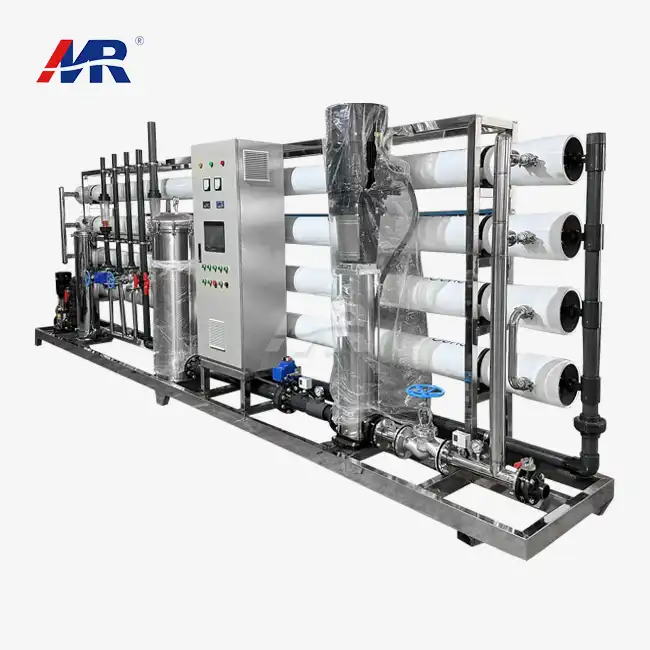
Understanding Compact Reverse Osmosis Systems for RV and Marine Use
Mobile environments have their own problems when it comes to purifying water, so engineers need to come up with solutions that go beyond standard home equipment. RVs and boats are always moving, shaking, and being exposed to different types of water, from dock-supplied city water to seawater in the open ocean. Because of how things work, purification systems need to be made with stronger mounting, materials that don't rust, and flexible pressure control.
Core Engineering Differences from Land-Based Systems
Compact reverse osmosis systems for boats and RVs are very different from fixed setups because they have vibration-dampening mounts, low-power DC electrical systems that can work with onboard batteries, and self-priming feed pumps that can handle different inlet pressures. The membrane housings are made of marine-grade stainless steel or reinforced polymer composites, which don't rust in saltwater and keep their shape even when they're being moved along the highway or rough seas. These design features take into account the hard conditions where the system will be used, where regular systems would break down in months.
Multi-Stage Filtration Architecture
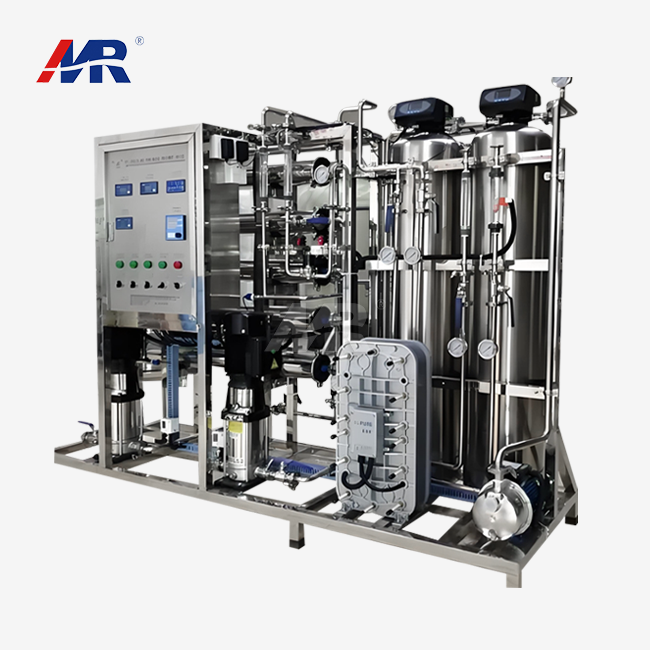
Modern compact reverse osmosis systems use a series of filters to clean the water. The first filters, called sediment pre-filters, catch particles bigger than 5 microns. This keeps the next filters from wearing out too quickly. The next step is carbon block filters, which get rid of chlorine, volatile organic molecules, and chemicals that change the taste of the water and could hurt the ro membrane. A thin-film composite membrane, which is at the center of the system, does the actual reverse osmosis separation. It pushes water molecules through while rejecting dissolved salts and contaminants into a stream of concentrated brine.
Operational Efficiency in Resource-Constrained Environments
When operating from limited battery banks or generator capacity, energy use and water recovery rates become the most important things to think about. Older systems had pure-to-waste ratios of 1:4, but newer compact reverse osmosis systems have them at 1:1.5 or better. This means that a lot less feed water and brine needs to be handled. When every amp-hour counts, energy recovery devices in premium units take pressure from the concentrate stream to raise the feed pressure. This cuts power use by up to 40% compared to standard configurations, which is a huge benefit.
How to Choose the Right Compact Reverse Osmosis System for Your Business Needs?
When purchasing managers look at water treatment options for fleets, boat rental companies, or RV manufacturers, they have to weigh a lot of technical and business factors. The decision framework includes more than just the initial purchase price. It also takes into account the total lifecycle costs, such as labor for installation, replacement of consumables, and possible downtime costs.
Assessing Capacity Requirements and Spatial Constraints
The daily water production capacity, which is measured in gallons per day (GPD), should match how much water is actually used, not how much is needed at peak times. A normal sailing sailboat with two people on board needs 10 to 15 gallons of water every day, so a 25 to 30 GPD system should be fine. 50–100 GPD units may be needed for charter operations or bigger ships. Equally important are the equipment's physical dimensions; it must fit into its designated compartments while still leaving enough room for access to the filter and plumbing connections. Before placing an order, procurement teams should ask for detailed dimensional drawings and weight specifications to make sure the items will fit.
Evaluating Filtration Performance and Water Quality Parameters
The chemistry of the feed water has a direct effect on the choice of system. When it comes to membrane requirements, brackish water sources with 2,000 to 10,000 ppm of total dissolved solids (TDS) need different ones than full seawater at 35,000 ppm or more. Systems made for use with saltwater have high-pressure pumps that can reach 800-1,000 psi and membranes that are specially made to reject salt. Testing samples of feed water gives real-world information about its hardness, iron content, and levels of biological contamination that help determine the need for pre-treatment. Technical leaders should ask for performance curves that show the rejection rates for different expected TDS ranges.
Comparing System Architectures and Component Quality
There are different architectural styles available in the market. Separate pre-filter housings, membrane vessels, and control screens make modular systems easier to maintain, but they need more room to be installed. Integrated units combine all of their parts into a single manifold. This cuts down on leak spots and makes fitting easier, but it could make it harder to repair only certain parts. Premium brands use ceramic valve cores, reinforced quick-connect fittings, and industrial-grade pressure sensors, which make the higher initial costs worth it because they last longer and break down less often.
Analyzing Lifecycle Costs and Return on Investment
When you figure out the total cost of ownership, you need to include the $150–$400 cost of replacing the membrane every 24–36 months, the $30–$80 cost of replacing the pre-filter filters every 6–12 months, and the cost of chemical cleaning solutions every so often. Fleet managers should compare these ongoing costs to the money they could save by not buying bottled water or paying less for potable water. A 50-foot cruising catamaran that spends 200 days at sea every year might buy $2,400 worth of bottled water instead of $800 worth of RO maintenance. This is a strong economic case that goes beyond improving water quality.
Installation, Maintenance, and Troubleshooting of Compact RO Systems on RVs and Marine Vessels
For boat and RV water cleaning equipment to work well, it needs to be installed correctly and maintained regularly. Our engineering team has helped with hundreds of installations and written down common mistakes that hurt system performance.
Pre-Installation Site Assessment and Preparation
Before installing equipment, carefully check the suggested sites for airflow, vibration isolation, and ease of access. Marine installations below the waterline need anti-siphon loops to stop backflow when the vessel heels. When storing an RV in cold weather, the system must include ways to keep the water from freezing. Dedicated 15-amp lines with the right overcurrent safety should be used for all electrical connections. Isolation valves and pressure gauges are needed in the freshwater feed plumbing so that the system can be turned off without affecting other fixtures on board.
Professional Installation Protocols and Common Mistakes
Mounting brackets should be attached to structural members, not just decorative panels. This is a common mistake that leads to equipment breaking down in rough conditions. Before the system's inlets, feed water lines should have strainers that catch debris that gets past municipal filters. To keep airlocks from slowing down flow rates, drain lines must be laid in a way that makes a constant downward drop. Marine-grade heat-shrink connectors and careful attention to polarity are needed for electrical connections. Our field technicians have seen that about 60% of warranty claims are caused by mistakes in installation rather than problems with the product itself.
Preventive Maintenance Schedules and Membrane Care
A compact reverse osmosis system requires regular service intervals to prevent catastrophic failures and extend the life of its parts. Every 500 hours of use or three times a year, whichever comes first, sediment pre-filters need to be inspected. Even if flow rates stay fine, carbon filters should be changed every six months because activated carbon slowly loses its ability to absorb things without showing any obvious signs. When stored for longer than three weeks, RO membranes benefit from preservation steps. For example, flushing with a biocide solution stops bacteria from colonizing and breaking down membrane polymers.
Troubleshooting Flow Rate Reductions and Quality Issues
When permeate output goes down, it's usually because the membrane is getting clogged, the feed pressure is too low, or the temperature is changing. Systematic diagnosis starts with checking the inlet pressure. Readings below the manufacturer's recommendations mean that the feed pump is worn out or the pre-filters are clogged. If the pressure is right, check the flow rates of the concentrate; limiting the flow of brine causes the membrane to scale too soon. High permeate TDS readings show that the membrane is damaged and needs to be replaced. Our Technical support team keeps diagnostic flowcharts up to date so that operators can find problems in a methodical way instead of guessing what parts they need to replace.
Market Overview and Price Analysis for Bulk Procurement of Compact RO Systems
Knowing how markets work and how prices are set helps procurement workers get better deals while making sure the quality of the equipment meets practical needs. Since 2020, the North American market for mobile water purification equipment has grown by 18% each year. This is because more people are using RVs for work-from-home, and more people are enjoying marine recreation.
Price Stratification Across System Categories
Entry-level compact reverse osmosis systems with 15–25 GPD capacities for desalinating seawater usually cost between $2,200 and $3,500 each when bought in bulk. The $4,000 to $6,500 range is for mid-range systems that can produce 35 to 50 GPD and have digital tracking and automatic controls. Prices range from $8,000 to $14,000 for high-end units with 75 to 100 GPD capacities, energy recovery, remote diagnosis, and longer warranties. When you buy 10 or more units at once, you can usually get a 15–22% discount, though this depends on how complicated the configuration is and how much customization is needed.
Value-Added Services and Procurement Considerations
In addition to the price of the equipment, you should also look at how well the supplier can help you with technical issues, get you replacement parts, and honor your warranty. Based on our experience running a fleet, suppliers who offer on-site commissioning, operator training, and preventive maintenance contracts lower risk in a way that is worth 8–12% more in price. Access to parts inventory becomes very important for commercial operators—suppliers with regional distribution centers allow for same-day shipping instead of international freight delays that keep assets that could be used to make money idle for weeks at a time.
Supplier Evaluation Criteria and Due Diligence
Manufacturers with a good reputation keep third-party Certifications like ISO 9001 quality management accreditation, NSF/ANSI 58 validation, and USCG approval for marine applications. Ask for references from current customers who are using similar types of boats or RVs. Product reviews from marine industry sources that are not connected to the company give honest opinions on how well the product works. Long-term supply of parts depends on how stable a company's finances are. Companies that have been in business for 10 years or more offer more continuity guarantees than newcomers to the market.
The Future of Compact Reverse Osmosis Systems in RV and Marine Sectors
New technologies and changing market needs are changing how mobile water treatment equipment is designed and how it is bought. Our engineering team works with companies that make membranes and control systems, giving them information about new Products that are coming out.
Advanced Membrane Materials and Energy Optimization
Next-generation thin-film nanocomposite membranes with graphene oxide layers show 30–40% higher flux rates at the same level of rejection performance. This means that they can take up less space without losing any capacity. Low-pressure RO membranes that are designed for brackish water use 50–70% less energy than standard membranes, which means that batteries can last longer for off-grid operations. These changes are especially good for electric-powered boats and RVs that depend on solar panels because they save energy and make them more autonomous.
Digitalization and Predictive Maintenance Integration
Key performance measures, such as membrane differential pressure, permeate quality, and component running hours, can be monitored from afar with Internet-connected control systems that have sensors built in. Machine learning algorithms are applied to operational data by cloud-based analytics platforms. This lets them predict maintenance needs before they happen. Fleet workers who are in charge of more than one ship can see all of their assets from one place, which helps them plan maintenance better and keep more parts on hand. With these features, water purification goes from fixing problems when they happen to managing assets in a strategic way.
Supply Chain Evolution and Strategic Partnerships
Adopting a compact reverse osmosis system with modular, standardized component interfaces in manufacturing makes multi-source procurement strategies easier and lowers the risk of dependence on a single supplier. When compared to only buying from Asia, regional assembly operations in North America cut down on wait times and freight costs. Professionals in procurement should build relationships with several qualified providers while standardizing the requirements for compatible parts. This way, they can balance price competition with the challenges of serving different types of equipment across fleets.
Conclusion
Mobile water treatment technology has grown into advanced, dependable systems that can handle the tough needs of boat and RV users. To choose the right equipment, you have to weigh technical requirements, space limitations, and the cost of ownership over a long period of time, all while looking at the supplier's abilities beyond the initial price. The performance and return on investment of a system are at their best when it is installed correctly and maintained regularly. As membrane technology improves and digital integration grows, procurement strategies should focus on building partnerships with suppliers that can adapt to changing operational needs as technologies change. By investing in good equipment and following strict operational protocols, businesses can become water independent, which improves safety, lowers costs, and lets them operate for longer periods of time without connecting to the grid.
FAQ
Q1: Can compact reverse osmosis systems process full-strength seawater effectively?
When marine reverse osmosis systems are set up correctly, they can handle seawater with a TDS level of 35,000 to 40,000 ppm and make potable water below 500 ppm using high-pressure membranes and multiple stages of processing. To get around the osmotic pressure that comes with desalting salt water, feed pumps must deliver 800 to 1,000 psi. Systems made just for brackish water don't have enough pressure capacity and use membrane chemistry that isn't right for use with seawater. Before buying a system, you should always make sure that the specifications make it clear that it can handle seawater.
Q2: What replacement intervals should I expect for filters and membranes?
Depending on the quality of the feed water, sediment and carbon pre-filters usually need to be replaced every 500 to 1,500 hours of use. This means that they need to be serviced every three to six months when they are actively being used. RO membranes usually last between 24 and 36 months if they are properly maintained and cleaned with chemicals. The actual length depends a lot on the nature of the water, how often it is used, and how well it is maintained. Systems that deal with highly contaminated or hard water wear out faster and need to be replaced more often.
Q3: How do power requirements compare between AC and DC systems?
DC-powered systems made for 12V or 24V marine electrical systems use 4 to 8 amps when they're working, and they can work with battery banks and solar charging systems that are common on boats and RVs. For AC systems to work, they need 110V power from the shore or generators on board. This makes it harder to operate off the grid. Depending on the system's size and efficiency, it uses anywhere from 50 to 150 watts of power for brackish water systems and 200 to 400 watts for desalinating seawater.
Partner with Morui for Reliable Compact Reverse Osmosis System Solutions
With over 14 branch locations and 500 specialized staff in China and other countries, Guangdong Morui Environmental Technology offers complete water treatment solutions for marine and mobile applications. Our engineering team, which is made up of 20 qualified professionals with a lot of experience in membrane technology, offers full turnkey services, from designing the system to installing it, operating it, and providing ongoing technical support. We are a well-known company that has been selling compact reverse osmosis systems for a long time. We make our own membranes and work with top component brands like Shimge Water Pumps and Runxin Valves to offer competitive bulk purchasing prices, fast delivery, and full warranty coverage. Our solutions combine tried-and-true technology with helpful customer service, no matter if you run business fleets, make leisure vehicles, or sell marine equipment. For your mobile water purification needs, please email our procurement specialists at benson@guangdongmorui.com to talk about your specific needs and get customized technical proposals with clear pricing.
References
1. National Marine Manufacturers Association. "Marine Water Treatment Systems: Technical Standards and Best Practices." Chicago: NMMA Publications, 2021.
2. American Water Works Association. "Reverse Osmosis and Nanofiltration: Second Edition." Denver: AWWA Manual M46, 2020.
3. Richardson, S. D. and Kimura, S. Y. "Water Analysis: Emerging Contaminants and Current Issues." Journal of Analytical Chemistry, vol. 88, no. 1, 2022, pp. 546-582.
4. Greenlee, L. F., Lawler, D. F., Freeman, B. D., Marrot, B., and Moulin, P. "Reverse Osmosis Desalination: Water Sources, Technology, and Today's Challenges." Water Research, vol. 43, no. 9, 2019, pp. 2317-2348.
5. United States Coast Guard. "Standards for Living Organisms in Ballast Water Discharged from Ships." Washington: Department of Homeland Security, 2020.
6. Recreational Vehicle Industry Association. "RV Fresh Water Systems: Installation and Maintenance Guidelines." Reston: RVIA Technical Publications, 2021.