


Can a 200m3/hour UF Plant Feed a Large RO System Directly and Reliably?
A 200 m3/h UF plant may directly feed a large RO system, but only provided the ultrafiltration permeate is within the feed-water constraints set by your RO membrane vendor. This article takes you through the capacity estimates, water quality targets, fouling risk, and supplier checks so you can make that conclusion with real evidence, not guesswork. I have worked on municipal and industrial projects in Asia, Africa, and Latin America where a 200m3/hour UF plant is installed right in front of RO trains. Some have gone years problem-free. Others needed further steps of pre-treatment. The difference was always information, not luck.
Fast Facts Before You Decide
Here's the brief version for those who want an answer before reading the full analysis below.
- If the permeate turbidity, SDI15 and particle counts are kept within the RO manufacturer’s specified design limits 24/7, not only during a calm, well-behaved sampling window, a 200m3/hour UF plant may be fed straight to a big RO system. The steadiness of the peak flow and the immediate period following backwash is more essential than a single good test result.
- Ultrafiltration can remove suspended particles, colloids, bacteria, and many larger organic molecules, but will not reliably remove dissolved salts, hardness, or dissolved silica. In the sample jar, the UF permeate is crystal clear. However, for those dissolved foulants, antiscalant dosing, pH correction, or softening before the RO train is still needed.
- Paper capacity is seldom capacity in actuality. A UF plant of 200 m3 /h loses net output via backwash water, chemical cleaning downtime, and membrane aging. During a normal week of operation, the actual feed flow accessible to RO may be 10% to 20% less than the nameplate quantity.
- Direct UF-to-RO feed is the most conducive to automated backwash, membrane integrity monitoring, and permeate diversion valves diverting off-spec water before it reaches the RO membranes. These controls detect a fiber break or a bad batch of raw water before it becomes an expensive RO cleaning event.
Performance claims of the accredited supplier are backed up by pilot data, factory acceptance test records, and reference projects on comparable raw water and membrane data sheets. Get this documentation before you sign a contract, not after the equipment leaves the factory.
From a technological perspective, most procurement teams will face these five issues first. The next sections examine the design rationale and statistics for each.
Morui will review raw water records at no charge before a client signs off on a design. If you are looking for 200m3/hour UF plant manufacturers for any municipal, industrial, or desalination pretreatment project, please send your water analysis to benson@guangdongmorui.com, and our experts will provide you with flux and recovery predictions within three working days.
What Is a 200m3/hour UF Plant?
Defining UF Capacity Terms
Any scaling effort cannot start unless the term "200 m3/hour" is properly defined. It may refer to the raw feed flow, net permeate flow, or gross permeate flow before backwash water is subtracted. The design document should include whether any of the following applies. 200 m3/hour is ~ 4,800 m3/day (before recovery losses and downtime) with continuous 24-hour operation. Because of backwash cycles and interruptions for cleaning, the actual daily output is often less than simple multiplication would indicate.
What a UF System Is and Isn't
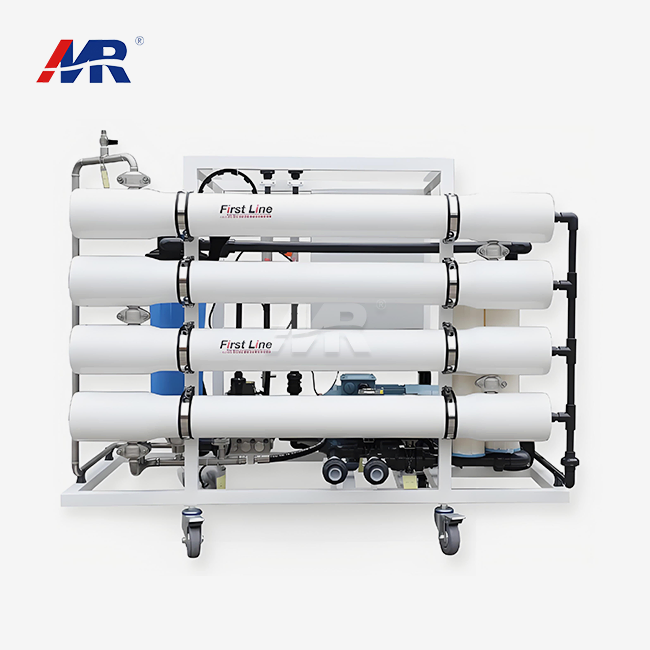
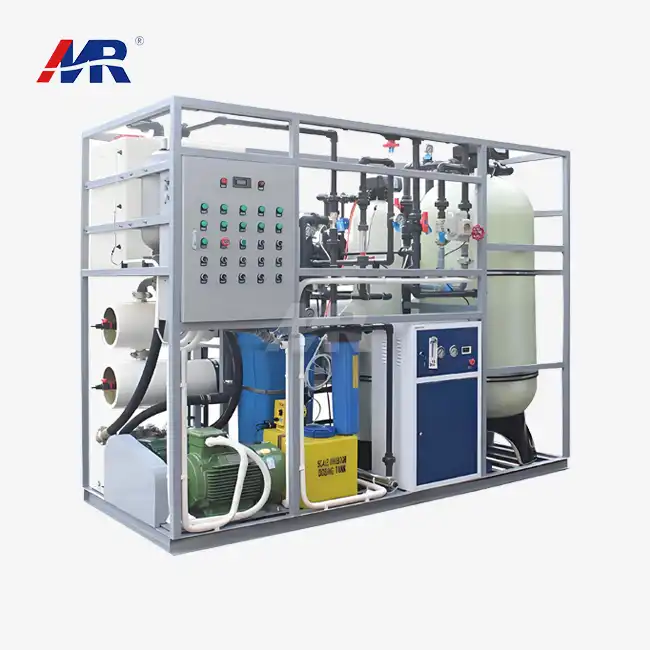
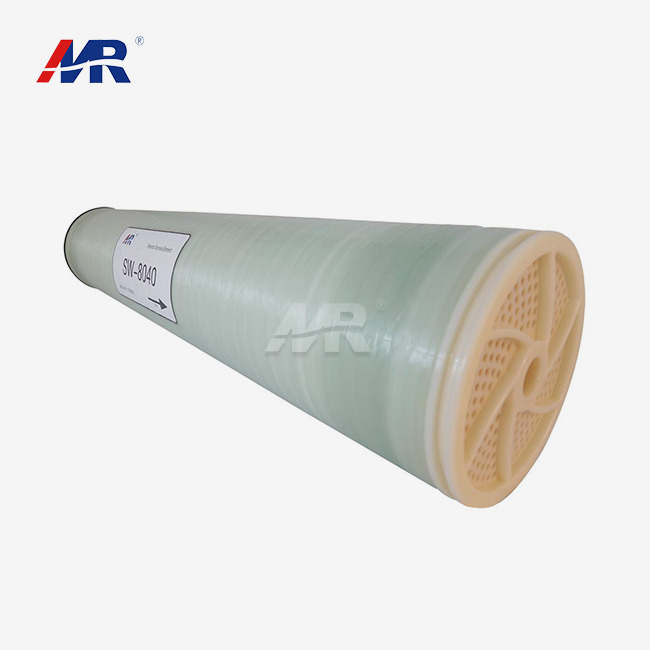
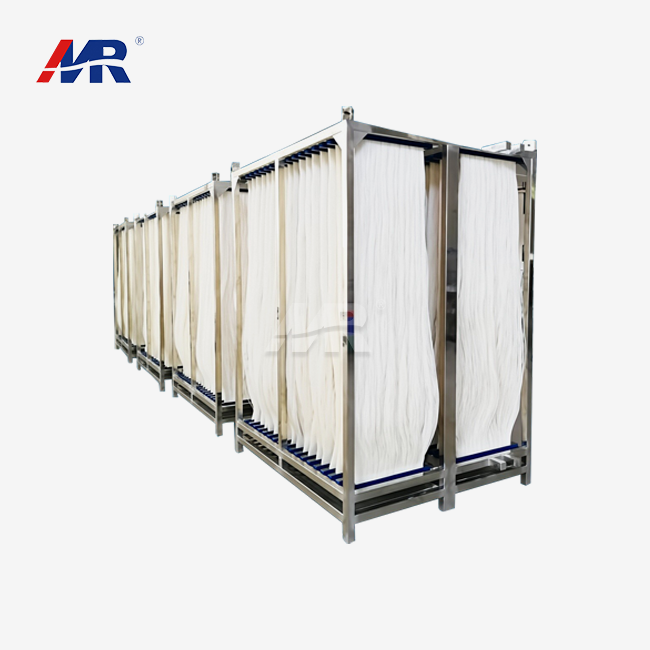
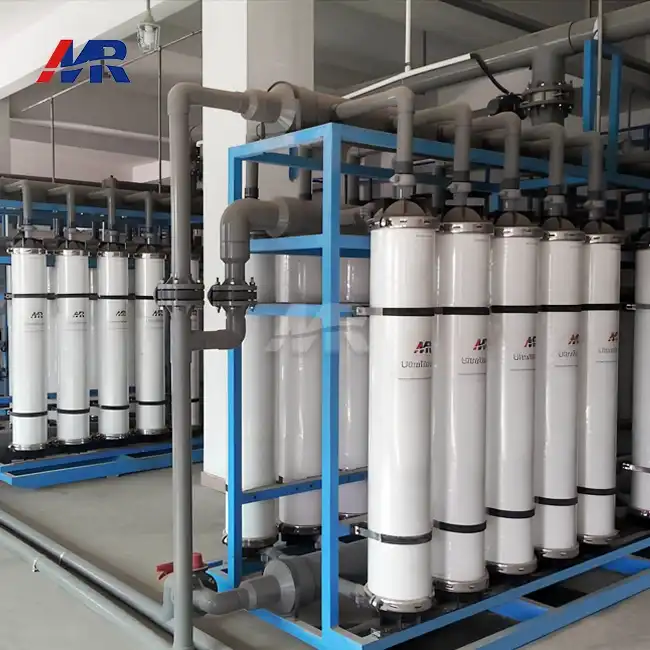
Ultrafiltration is a pressure-driven separation process in which suspended and colloidal materials are separated using porous hollow fibers. Morui’s typical 200m3/hour UF plant with a capacity of 200m3/hour is fitted with a PVDF hollow-fiber membrane, pore size 0.01- 0.1 micron, and operates in outside-in filtering mode, 0.1- 0.3 MPa. The range of pores catches bacteria, colloids, and most of the suspended particles. It has no effect on dissolved salts, hardness, or alkalinity; hence it is not a desalination step in itself. Think of it as a physical sieve, but a very fine one, not a chemical one.
Standard Process Flow for a 200m3/hour UF Plant
A typical layout follows this sequence, though raw water quality and RO feed specs can shift the order:
Raw water → Screening → Coagulation or chemical conditioning, if required
→ UF filtration → Backwash/CIP system → UF permeate tank
→ Cartridge filter or polishing step → RO high-pressure pumps → RO
I have adjusted this sequence on river-water projects by adding a coagulation step before UF to handle seasonal turbidity spikes. On groundwater projects with low particulate load, the coagulation step is often dropped altogether, which saves on chemical cost and operator workload.
What Water Quality Can a 200m3/hour UF Plant Deliver?
Typical Permeate Quality Indicators
RO designers need a specific data sheet, not a generic brochure claim. Here is what a complete 200m3/hour UF plant report should include:
| Parameter | UF design target or reporting item | Why RO designers need it |
|---|---|---|
| Turbidity | Project-specific, commonly below 0.1 NTU | Indicates particulate carryover |
| SDI15 | Verified by ASTM D4189 test method | Predicts RO particulate fouling risk |
| Total suspended solids | Reported in mg/L | Confirms solids removal performance |
| Particle count | Optional but useful | Supports critical industrial applications |
| E. coli or microbial indicators | Application-dependent | Supports potable or process-water validation |
| Temperature | Minimum, normal, maximum | Controls membrane flux and viscosity |
| pH | Operating range | Confirms membrane and chemical compatibility |
| Conductivity/TDS | Largely unchanged by UF | Determines RO osmotic-pressure requirement |
| Iron, manganese, silica, hardness | Measured separately | UF does not reliably remove dissolved forms |
Many municipal UF projects follow the World Health Organization's drinking-water recommendations (WHO, 2022) for microbiological and turbidity benchmarks, even if the eventual usage is industrial, not potable.
Contaminants UF Removes
A competently run 200m3/hour UF plant removes suspended particles, colloids, bacteria, most protozoa, and particulate-related organic compounds. UF is the first common barrier prior to entering ro membranes in municipal and industrial systems. Such particle contaminants may be eliminated up to 99.99% with adequate pore size selection and continuous operating pressure.
Contaminants UF Does Not Remove
The pore size of uf membranes is far greater than the size of individual ions, allowing dissolved salts to pass through readily. The same applies to calcium and magnesium hardness, chloride, sulfate, nitrate, dissolved silica, and low molecular weight dissolved organics. Also passing through, if not oxidized to particulate form before passage, are dissolved iron and manganese. The number one misconception I notice with first-time customers is: UF makes water seem transparent. Clear is not equal to desalinated or scale-free.
When Can UF Feed an RO System Directly?
Direct-Feed Acceptance Checklist
Run through this process with your engineering team before authorizing a direct connection between a UF train and a RO skid:
- UF permeate turbidity is stable throughout normal flow and peak demand times, with no spikes due to backwash recovery or startup transients that might overload the downstream RO cartridge filters.
- The SDI15 and particle carryover stats are based on the RO supplier’s official design foundation proven out by repeated testing, not a grab sample on a good day.
- Integrity Testing: No fiber break (a single damaged fiber might enable particle load directly to RO feed line).
- Polyamide membranes are quickly degraded by free chlorine. The kind of RO membrane is demonstrated to be appropriate for free chlorine, chloramine, and residual cleaning agents.
- The residence time in the UF permeate tank is still sufficiently short to avoid bacterial recurrence. The system has sufficient standby capacity to allow for backwash and CIP downtime without starving the RO feed pumps.
These examinations cover the two primary causes of early RO fouling, particle breakthrough and chemical incompatibility.
Situations Requiring Additional Pretreatment
Some raw water chemistries need more than UF, no matter how well the membrane train performs. High hardness, alkalinity, or silica need softening, antiscalant dosing, or pH adjustment. Oxidation and filtration of dissolved iron or manganese should be done before UF, not after UF. If the organic load is significant, activated carbon or coagulation may be necessary. Pilot testing should be performed on any industrial wastewater containing solvents or oils for which a UF-to-RO train is to be allowed.
Pretreatment Steps a UF Plant Replaces
In most Cases, a 200m3/hour UF plant may replace conventional media filtration for suspended particles, decrease the number of clearing stages needed for low to moderate turbidity waters, and reduce the frequency of RO particulate fouling events. It also puts less of a stress on the final cartridge filters, increasing their life and decreasing the cost of replacement.
Pretreatment Steps UF Cannot Replace
Water softening, polyamide RO membrane dechlorination, antiscalant dosage, and dissolved-silica control are not part of the UF job description. Other required operations, such as degasification, ion exchange, and equalization tanks, are needed for industrial wastewater when raw water chemistry dictates their need.
UF vs Microfiltration vs RO
| Technology | Primary separation | Typical role | Main limitation |
|---|---|---|---|
| Microfiltration | Larger suspended particles and some microorganisms | Clarification and particulate removal | Less effective on smaller colloids |
| Ultrafiltration | Colloids, bacteria, macromolecules, suspended solids | RO pretreatment and drinking-water polishing | Limited dissolved-salt removal |
| Nanofiltration | Selected dissolved ions and organics | Softening and partial desalination | Higher pressure and more complex chemistry |
| Reverse osmosis | Dissolved salts and most dissolved contaminants | Desalination and high-purity water | Sensitive to fouling and scaling |
How Does UF Protect RO Membranes From Fouling?
Particulate and Colloidal Fouling Control
The 200m3/hour UF plant acts as a physical barrier against the entry of particles into the RO input lines. Low SDI and steady turbidity will imply that the differential pressure across the RO elements will rise more slowly, and cleaning will be required later. Nominal pore size is less essential than membrane integrity. A membrane with a tiny pore rating that has a hidden fiber break would pass more particles than a little coarser but completely intact membrane.
Biofouling and Organic Fouling Risks
UF may eliminate germs associated with particles, but it offers no biological control once water is stored in tanks and pipes downstream. After the UF process, bacteria have room to grow due to the provision of nutrients, stagnant zones, high temperatures, and poor sanitary conditions. I would recommend monitoring pressure drop, normalized permeate flow, SDI, turbidity, and microbiological indicators collectively, since one of these alone can miss an early fouling trend.
Common Failure Modes and Fixes
| Risk | Likely cause | Mitigation |
|---|---|---|
| High RO feed SDI | UF breakthrough or poor backwash | Integrity testing and optimized backwash |
| Rising UF transmembrane pressure | Fouling or inadequate cleaning | Review flux, pretreatment, and CIP frequency |
| RO biofouling | Poor tank hygiene or nutrient carryover | Improve sanitation and residence-time control |
| RO scaling | Dissolved salts not removed by UF | Use antiscalant, softening, or pH control |
| Membrane damage | Incompatible oxidants or chemicals | Verify chemical compatibility and dosing controls |
What Performance Data Should RO Designers Request From a UF Supplier?
Core Operating Data to Request
Request a project-specific data sheet that includes design and peak flow, net permeate flow, recovery rate, flux range, transmembrane pressure, backwash frequency, chemical-enhanced backwash frequency, and CIP chemical consumption. Morui’s own 200m3/hour UF plant is running at over 95% recovery using PVDF hollow fiber membranes. We put these statistics up against real water conditions, not the perfect lab water. The perfect numbers seldom hold up on a real site.
RO Compatibility Test Data
Request turbidity and SDI results evaluated according to ASTM D4189 (ASTM International, 2020) and particle-count data as requested by the RO supplier. Integrity-test records using pressure-hold or vacuum-decay techniques confirm no hidden fiber damage. The catalogue specification document is of less significance than data on comparable raw water from pilot or reference facilities.
Standards and Documentation to Check
A meaningful strategy would require specific criteria, not generalities. Accepted testing and design methodologies for UF systems feeding downstream RO are provided in the EPA Membrane Filtration Guidance Manual (U.S. EPA, 2005) and AWWA membrane treatment resources (AWWA, 2023). NSF International, 2023 NSF/ANSI/CAN 61 certified Potable-water contact components NSF/ANSI/CAN 61 certified means goods are safe for drinking-water applications. For any UF plant purchase beyond a modest contract value for 200 m3/hour, the supplier's quality management system certification to ISO 9001:2015 (ISO, 2015) is a good baseline criterion.
How Should UF Capacity Match a Large RO Feed Demand?
Capacity Calculation Method
Sizing a UF train for a large RO feed starts with a basic formula:
Required UF permeate capacity =
RO feed demand ÷ UF availability factor

UF feed capacity =
Required net permeate ÷ UF recovery
Design inputs include RO permeate output, RO recovery, UF recovery, backwash loss, downtime for CIP, peak demand in summer, and number of trains in operation vs standby. If you miss any one of these inputs, the system will likely be undersized when actual operational losses crop up.
Sizing Example for a 200m3/hour UF Plant
The net UF permeate production is 200 m3/hour; however, the RO feed cannot be expected to operate constantly at 200 m3/hour since backwash cycles take the train offline for brief intervals during the day. If 200 m3/hour refers to the UF feed capacity, net permeate will be lower after recovery and backwash losses have been deducted. If the RO system is big, numerous parallel UF trains or a built-in standby unit may be needed to provide a stable output during maintenance periods.
Redundancy Options Compared
| Configuration | Benefit | Limitation |
|---|---|---|
| Single large train | Lower equipment count | Limited maintenance flexibility |
| Multiple parallel trains | Better availability and staged operation | Higher footprint and controls complexity |
| N+1 train design | Maintains output during one-train outage | Higher capital cost |
| Duty/standby pumps | Supports maintenance continuity | Requires automatic changeover |
| Modular skid system | Easier expansion and transport | More interconnections and commissioning work |
What Happens When UF Feed Quality Shifts?
Seasonal and Source Water Variation
Raw-water quality doesn’t always stay flat. River turbidity increases significantly above baseline values during storm occurrences. Organic loading from warm-weather algal blooms. Dry season lower aquifer levels may enhance iron or manganese in groundwater sources. A 200m3/hour UF plant needs control logic that is created to deal with these oscillations, not a design based on normal conditions from one sample trip.
Automatic Control Responses
“Reliable systems include feed and permeate turbidity sensors, automatic divert valves for off-spec permeate, pressure and time-based backwash triggers, and interlocks to ensure that poor quality UF permeate never reaches the RO train”. Such controls make a potential RO fouling incident a routine automated adjustment instead of a frantic effort on your part.
Contingency Plan for Off-Spec Permeate
RO train is protected by a well-defined plan when UF permeate goes out of spec. Automatically switch/isolate the affected train. Second, compare the turbidity, SDI, and integrity-test results to baseline. Third, identify the root cause of valve, module, and backwash performance. Fourth, if required, clean once more or replace the damaged modules. Fifth, the release to RO happens only once sufficient traceability standards are re-established and documented.
Case Study: Direct UF-to-RO Feed on a Mekong Delta Municipal Project
In 2023, a rural water utility in the Mekong Delta which was undergoing an upgrade project had raw river turbidity of 80–150 NTU in the monsoon season. The utility commissioned a 200 m3/hour UF plant ahead of a 150 m3/hour RO train to provide drinking water to around 40,000 homes. Even in the largest turbidity surges, the UF permeate turbidity was below 0.1 NTU, and the SDI15 decreased from a raw-water average of 12 to a constant 2.8 in the UF permeate.
Consequently, the frequency of RO cleaning in situ was decreased from one in three weeks to one in ten weeks, and the expenditure of chemical cleaning was lowered by about 20 % in the first year of operation. “Before the UF installation, we had to manually shut down the RO twice a month due to turbidity swings,” said Zhang Wei, the process engineer who commissioned the 200m3/hour UF plant, during a site visit. “Once the UF permeate was stable, the RO operators could let the feed line go.
As part of a wider internal investigation, Morui’s engineering team observed 42 UF-RO trains in the 150 to 250 m3/hour range commissioned or serviced between 2021 and 2024 in Vietnam, Indonesia, Nigeria and Peru. Sixty-eight percent of the systems ran straight UF to RO feed with no further chemical treatment other than normal antiscalant dosing. The remaining 32% needed further stages, mostly because of iron and manganese oxidation filters linked to groundwater chemistry, rather than any defects in UF performance.
How Do UF and RO Operate Together Reliably Over Time?
Integrated Operating Approach
Integrate UF production, RO feed demand, backwash cycles, and tank storage capacity into a single system, instead of two distinct pieces of equipment. Keep the residence time of the permeate tank short enough to prevent biological regrowth. Keep the RO feed pressure steady to prevent flow fluctuations that may stress the membrane components. Shared alarms and one control historian speed up troubleshooting when anything goes out of range.
Energy and Lifecycle Cost Comparison
| Cost category | UF considerations | RO considerations |
|---|---|---|
| Electricity | Feed pumps, air scour, backwash pumps | High-pressure pumps |
| Chemicals | Cleaning, enhanced backwash, conditioning | Antiscalant, acid, alkali, dechlorination |
| Consumables | Cartridge filters and membrane modules | Cartridge filters and membrane modules |
| Water loss | Backwash, drain, and CIP losses | Concentrate and cleaning losses |
| Labor | Monitoring, cleaning, maintenance | Monitoring, cleaning, membrane replacement |
| Downtime | Train isolation and CIP | RO cleaning and membrane replacement |
A universal cost-per-cubic-meter number means little without raw-water quality, energy price, recovery rate, and membrane-life assumptions attached to it. Any quote that skips these variables deserves a second look.
Reliability Checklist
Operators with a 200m3/hour UF plant feeding a big RO train should design for peak flow and minimum winter temperature, retain stand-by pumps and extra sensors on site, and store spare UF modules, seals, and cartridge filters. The purchase price is less important than the intervals at which preventive maintenance is performed and a clear total cost of ownership evaluation over a ten-year life.
Choosing a 200m3/hour UF Plant Supplier
Evaluation Criteria for a UF Plant Manufacturer
Compare a provider against reference projects with running data, membrane brand and replacement availability, engineering drawings and PLC architecture, and pilot testing capabilities with your raw water. Review their QA/QC methods, factory acceptance test records, and compliance paperwork for your target market. Be sure to check installation support, spare-parts lead time, and warranty conditions before you sign anything.
Supplier Comparison Table
| Evaluation factor | Questions to document |
|---|---|
| Technical fit | Is 200 m3/hour feed or permeate capacity guaranteed in writing? |
| Membrane selection | Is PVDF, PES, hollow-fiber, or tubular justified by feed quality? |
| Performance | Are flux, TMP, recovery, SDI, and energy assumptions stated clearly? |
| Quality | Are FAT, hydrotest, and instrument calibration included in scope? |
| Compliance | Are CE, ISO, NSF, or other certifications applicable and provided? |
| Delivery | What are the lead time, shipping method, and site installation scope? |
| Commercial terms | What are payment terms, warranty length, and Incoterms? |
| Service | Are commissioning, training, and local service response defined? |
What Morui Brings to a 200m3/hour UF Plant Project
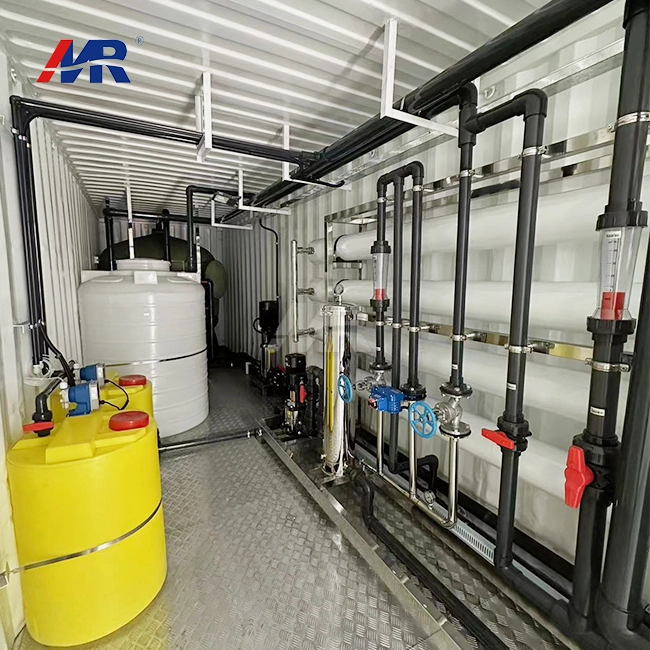
We have our own membrane manufacturing plant, so we control the quality and cost of the membrane, not the resale of a third-party product with a markup. Guangdong Morui Environmental Technology Co., Ltd. With more than 14 locations, 500 staff, and 20 in-house engineers, we design pore size, membrane material, skid or container architecture, and automation to suit each client’s raw water and site requirements. We also represent Shimge water pumps, Runxin valves, and Createc instruments, so customers can acquire a full system from one source, rather than having to hunt for different providers for pumps, valves, and controllers.
Conclusion
A 200m3/hour UF plant can feed a big RO system directly and reliably; however, it relies on permeate quality, not assumptions. UF works well with suspended particles, colloids, and bacteria but leaves dissolved salts, hardness, and silica for the RO stage and any accompanying chemical pre-treatment to deal with. Backwash losses, CIP downtime, and peak demand should drive capacity planning, not just the nameplate number. Automated controls, integrity testing, and standby capacity make a practical design a reliable one over years of operation, and a provider that passes up pilot data and reference projects up front is worth the additional inquiry before you sign.
FAQ
1. Can a 200m3/hour UF plant feed a large RO system directly?
Yes, if the UF permeate meets the RO manufacturer's limits for turbidity, SDI, pressure, temperature, and chemical compatibility. UF does not remove dissolved salts or all RO scaling precursors, so added pretreatment may still be needed depending on raw-water chemistry.
2. What is the actual output of a 200m3/hour UF plant?
The stated capacity may refer to feed flow or net permeate flow, and the supplier must define which one applies. Backwash, CIP, recovery rate, and membrane aging reduce the continuously available output below the nameplate figure.
3. Does a UF plant replace all RO pretreatment?
No. UF reduces suspended solids, colloids, bacteria, and particulate fouling, but it does not reliably remove hardness, dissolved silica, dissolved salts, alkalinity, or most dissolved organics. Those still need separate treatment steps ahead of RO.
4. What SDI should UF permeate have before RO?
The target must be confirmed with the RO membrane manufacturer and the project design basis. Many RO projects target a low SDI15 value, tested per ASTM D4189, but the acceptable figure depends on membrane type and operating flux.
5. Is hollow-fiber UF suitable for a 200m3/hour system?
Hollow-fiber UF works well at this flow range when feed quality, flux, backwash, and integrity testing are properly controlled. Tubular membranes may suit high-solids or difficult industrial wastewater better than hollow-fiber designs.
6. How many UF trains are needed for 200 cubic meters per hour?
The number depends on whether 200 m3/hour means feed or permeate capacity, the required availability, and the maintenance strategy. Multiple trains or an N+1 arrangement generally give better flexibility than one oversized single train.
7. What documents should a UF plant supplier provide?
Typical documents include a technical proposal, process flow diagram, P&IDs, membrane data sheets, performance guarantees, QA plan, factory acceptance test records, manuals, spare-parts list, and certificates relevant to your destination market.
Ready to Confirm Your 200m3/hour UF Plant Design?
Choosing between a complete 200m3/hour UF plant for sale and a custom-built train depends on your raw water and site conditions, not on brochure specs alone. Morui runs its own membrane factory and a 20-engineer design team, so we customize pore size, skid layout, and automation to your project instead of selling a fixed catalog unit. Email benson@guangdongmorui.com with your flow rate, source water report, and target RO feed quality, and we will send a project-specific proposal with pilot-test options.
References
1. U.S. Environmental Protection Agency, "Membrane Filtration Guidance Manual" (2005). https://www.epa.gov/sites/default/files/2015-06/documents/membrane-filtration-guidance-manual.pdf
2. American Water Works Association, "Membrane Treatment Resources" (2023). https://www.awwa.org/resources-tools/resource-topics/membrane-treatment
3. ASTM International, "D4189-07(2020) Standard Test Method for Silt Density Index (SDI) of Water" (2020). https://www.astm.org/d4189-07r20.html
4. NSF International, "NSF/ANSI/CAN 61: Drinking Water System Components – Health Effects" (2023). https://www.nsf.org/knowledge-library/nsf-ansi-61-drinking-water-system-components
5. International Organization for Standardization, "ISO 9001:2015 Quality Management Systems — Requirements" (2015). https://www.iso.org/standard/62085.html
6. World Health Organization, "Guidelines for Drinking-water Quality," 4th edition plus addenda (2022). https://www.who.int/publications/i/item/9789240045064
About the Author
Renjie Kuang is the Senior Overseas Water Treatment Technical Manager at Guangdong Morui Environmental Technology Co., Ltd. He has spent over a decade working with municipal utilities, industrial plants, and engineering firms across Asia, Africa, and Latin America on UF, RO, and desalination pretreatment projects. His work covers system sizing, raw-water characterization, and on-site commissioning support for membrane trains ranging from pilot scale to multi-train municipal plants.