_1745823981883.webp)

Is a Reverse Osmosis Drinking System Worth It?
Deciding whether to invest in a reverse osmosis drinking system involves weighing immediate costs against long-term benefits. The short answer? Absolutely, particularly when your operation depends on water purity for production, regulatory compliance, or employee health. These systems deliver 99.5% contaminant rejection, removing dissolved solids, heavy metals like lead and arsenic, PFAS compounds, and microplastics that conventional filtration misses. With municipal infrastructure aging across the United States and contaminant profiles becoming more complex, RO technology addresses critical water quality challenges while reducing dependence on bottled water suppliers, ultimately lowering operational costs and environmental impact for businesses ranging from pharmaceutical labs to food processing plants.
Understanding Reverse Osmosis Drinking Systems
How the Technology Works
How reverse osmosis drinking systems work: the way the tech works for reverse osmosis to work, water has to be pushed through a membrane that is only partially permeable and has pores that are about 0.0001 microns wide. This membrane is like a molecular wall that lets molecules of pure water pass through but not bigger contaminants. To separate, the process needs hydraulic pressure that is higher than natural osmotic pressure. This pressure is usually between 100 and 300 psi. RO physically removes contaminants at the molecular level, making water that is safe for sensitive uses. This is different from carbon filters that soak up impurities or UV systems that kill germs.
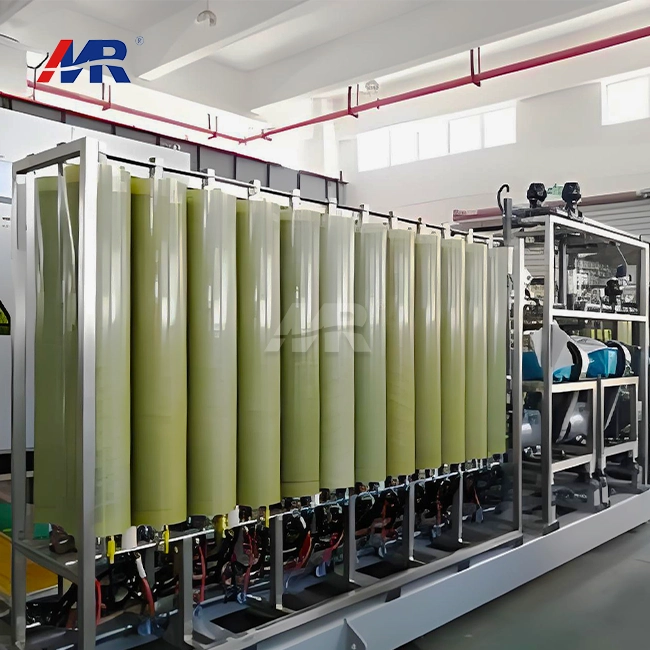
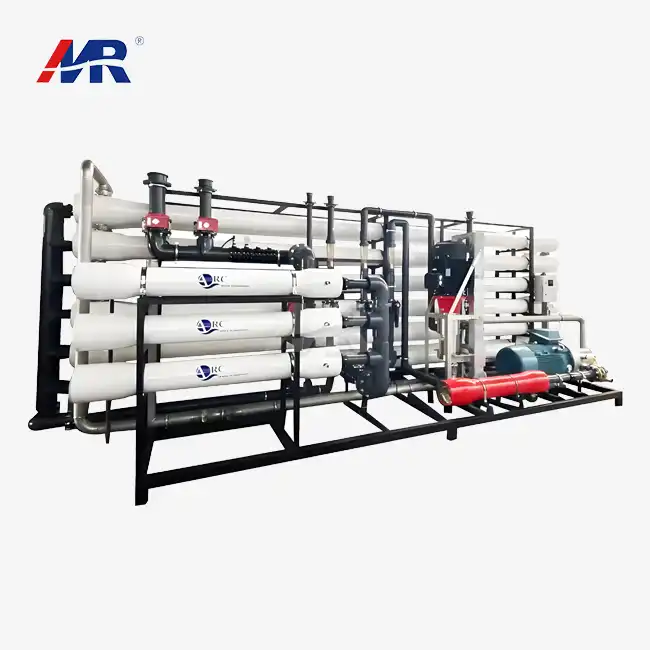
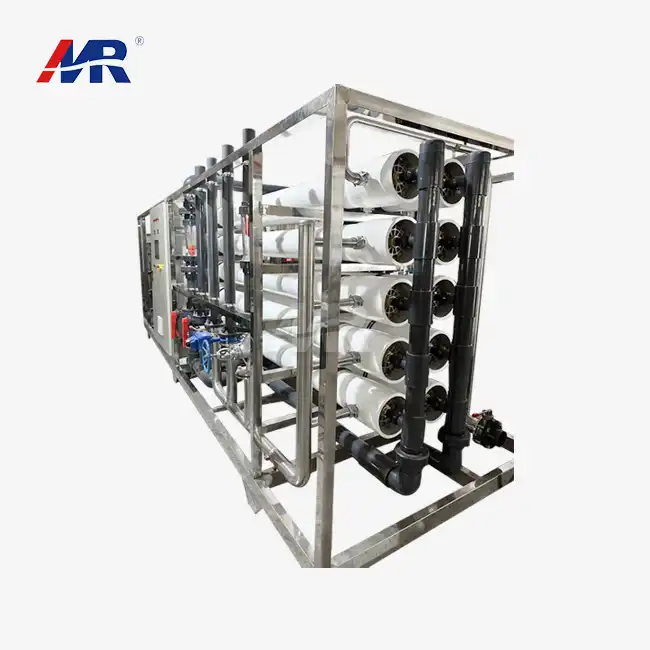
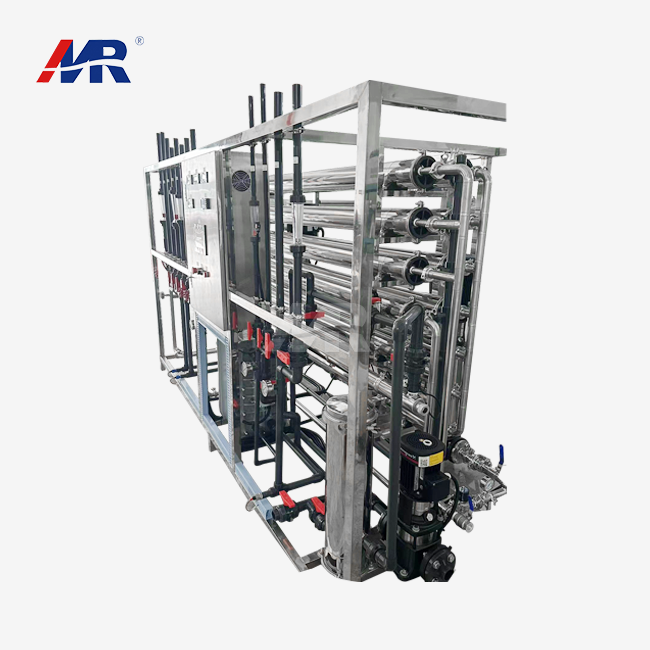
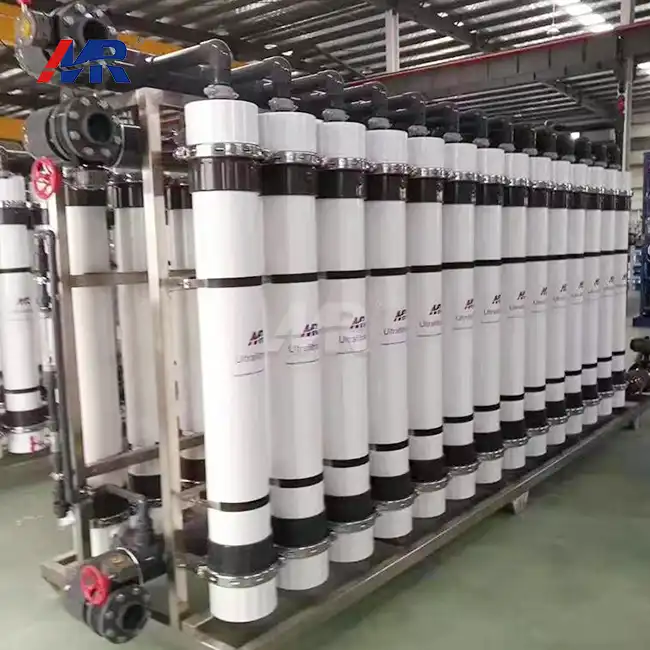
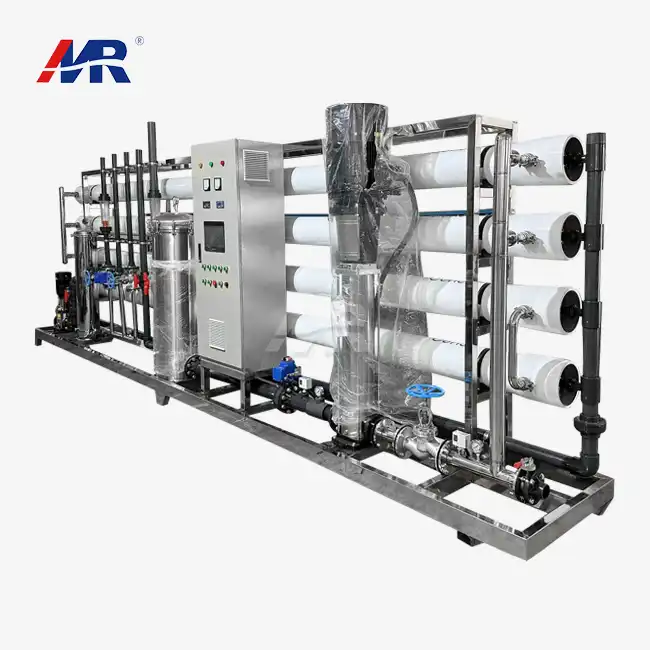
Modern industrial RO systems from companies like Morui have thin-film composite membranes with high flux and low fouling that can handle 1,000 to 100,000 gallons of water per day. These improved membranes keep working well for longer periods of time, so they need to be replaced less often than standard designs.
Core Components and Their Functions
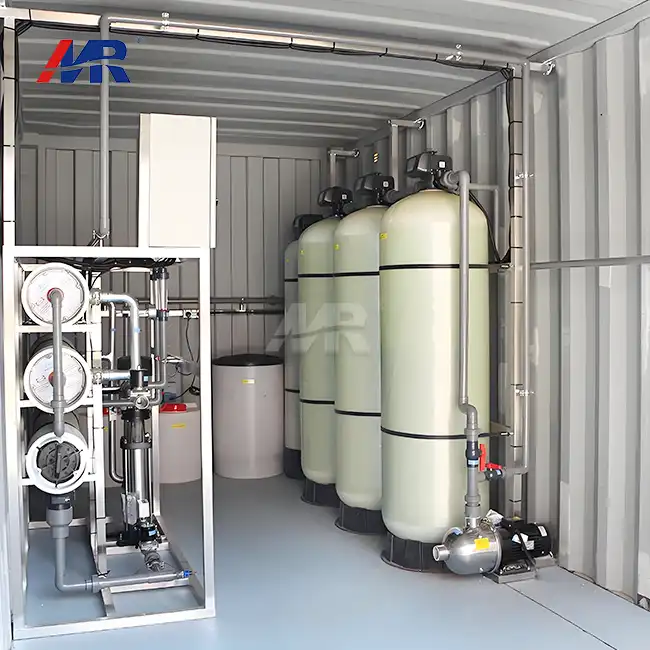
What the core parts do and how they work: the ro membrane is kept safe from damage by sediment and chlorine in the pre-treatment steps. Activated carbon blocks get rid of chlorine, volatile organic compounds, and things that change the taste and smell of water. Sediment filters catch particles as small as 5 microns. The high-pressure pump then moves water that has already been treated through the membrane system, where separation takes place.
After treatment, remineralization cartridges add calcium and magnesium back into the water, which balances the pH levels that pure RO water doesn't have naturally. For steady delivery, storage tanks keep the pressure up, and monitoring systems keep an eye on things like Total Dissolved Solids and flow rate to let operators know when maintenance is needed before efficiency drops.
Comparing RO to Alternative Purification Methods
Putting RO up against other methods of purification: UV cleaning is very good at killing germs and viruses, but it doesn't break down contaminants. Minerals and heavy metals are removed by distillation or evaporation, but it takes a lot of energy and works slowly. Alkaline ionizers change the pH level but don't get rid of contaminants. Each method is good for different things, but RO gets rid of the widest range of contaminants, which is especially important in fields where water quality directly affects the purity of Products or following the rules.
Purity is very important for places that make medicines, semiconductors, or bottled drinks. RO systems can produce pharmaceutical-grade water that meets GMP standards, ultrapure water for making chips, and consistent TDS levels for making drinks. These are features that no other technology can match.
Evaluating Reverse Osmosis Systems: Benefits vs. Limitations
Advantages for Commercial Operations
Energy efficiency is a key quality that stands out in a reverse osmosis drinking system. Modern RO equipment uses 30% less energy than older systems, which means big cost savings for businesses that do a lot of work. A building that processes 50,000 gallons of water every day can meet sustainability goals and save thousands of dollars a year on energy costs.
Superior contaminant removal protects both equipment and people who use it. Pharmaceutical companies need water that doesn't have any endotoxins or pyrogens in it. For making electronics, you need mineral-free water so that there is no residue when you clean the chips. To keep tastes the same and make food last longer, food makers need to make sure that the quality stays the same. RO meets all of these different needs with a 99.5% rejection rate that is backed up by NSF/ANSI 58 certification.
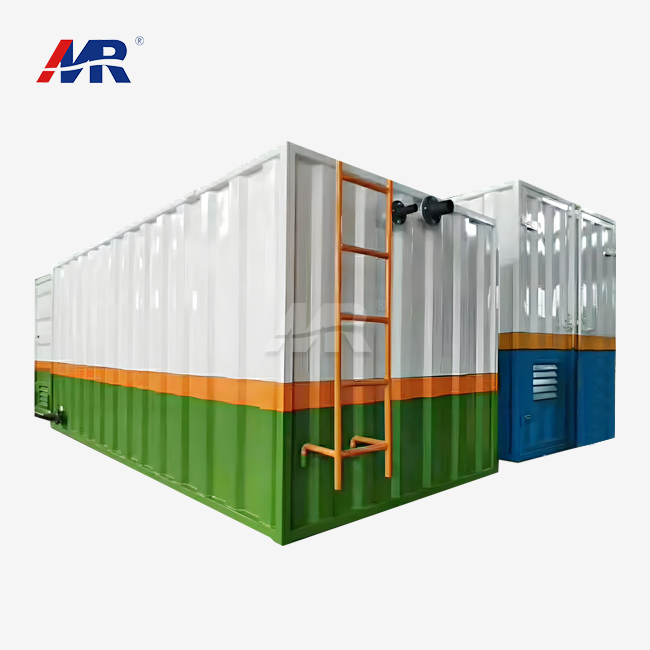
Compact designs accommodate facilities that don't have a lot of room. Instead of being huge like distillation units or UV arrays, portable RO systems can fit into existing spaces. This makes installation easier in retrofit situations or cities where space is valuable.
Maintenance Requirements and Operational Realities
The feed water quality and the way the system is built affect how long the membrane lasts. Pre-filtration makes membranes last a lot longer; in well-kept systems, they can last for 24 to 36 months before they need to be replaced. Depending on the source water and how much they are used, sediment and carbon pre-filters need to be changed every 6 to 12 months.
Recovery rates—the amount of feed water that is turned into clean product—usually hit 75% in industrial installations. The leftover concentrate gets rid of the rejected contaminants, which keeps the barrier from getting clogged. Some operators are worried about this "waste" water, but concentrate streams can be used for less important tasks like watering plants or making up cooling towers, which makes better use of all water.
The rules for maintenance should match the needs of operations. Service contracts that clean the membrane, test its performance, and replace parts on a regular basis are helpful for facilities that handle a lot of work. Regional service networks make sure that responses happen quickly, so there isn't a lot of downtime that throws off production plans.
Total Cost of Ownership Analysis
Initial investment depends on how much space and functions you need. Commercial systems for beginners start at around a few thousand dollars, and setups that serve pharmaceutical or chip plants cost six figures. But when figuring out how much something costs, you have to think about how much money you can save by not having to send bottled water, cleaning tools less often, and preventing product contamination.
Warranty coverage for major parts usually lasts between 3 and 5 years, but longer warranties are available from authorized manufacturers. When comparing systems, people in charge of buying things should look at more than just the price. They should also look at how much the filters will cost, how much energy they use, and how easy it is to get service.
Making the Right Procurement Decision for Your Business
Assessing Your Facility's Water Demands
System choice for a reverse osmosis drinking system is based on capacity needs. A hospital dialysis center that processes 10,000 gallons of blood every day has very different needs than a craft brewery that processes only 2,000 gallons of water every week. Accurately predicting demand keeps installations from being too small and struggling during peak times, or too big and wasting money and energy.
Profiles of contaminants change depending on where they are found and where the water comes from. Nitrate levels may be higher in municipal sources in places where farm runoff is common. Salty water can be a problem for buildings near the coast. Lead and copper are introduced by old structures in cities. Professional testing of the water finds specific contaminants, making sure that your RO system is set up to deal with real threats instead of general worries.
Key Selection Criteria
Certification backs up claims of success. Certification from NSF/ANSI 58 shows that it can reduce contaminants, and standards from the pharmaceutical or laboratory industries, such as USP or ASTM, confirm that it is suitable for those uses. If you buy equipment that isn't approved, you could face fines and product recalls for not following the rules.
Integration compatibility is important for facilities to be able to work with existing water infrastructure. The operating pressure, footprint size, and energy needs of the system must all match the resources that are accessible. When older buildings are retrofitted, they may need pressure booster pumps or electricity changes that need to be budgeted for.
Scalability makes room for growth. Adding more membrane banks instead of rebuilding whole setups is how modular systems can grow their capacity. Companies that expect to make more should focus on flexible architectures that can be scaled up cheaply.
Choosing Verified Manufacturers and Distributors
Picking Manufacturers and Distributors You Can Trust: manufacturers that have been around for a while can be trusted and offer full help. This method is used by Guangdong Morui Environmental Technology Co., Ltd., which has 14 branches and 500 employees, including 20 engineers who provide their knowledge in areas such as municipal water treatment, making pharmaceuticals, food and drinks, hospitals, hotels, semiconductor production, and chemical processing.
Making membranes in-house lets you keep an eye on quality and makes sure the supply chain works well. Some companies, like Morui, make their own products and work with well-known part brands like Shimge Water Pumps, Runxin Valves, and Createc Instruments to offer complete solutions backed by engineering know-how and quick Technical support.
Authorized wholesalers offer original parts, repair by factory-trained technicians, and guarantee fulfillment. If you buy from sources you can't trust, you might get fake parts that break down early or cancel maker warranties, which will cost you more in the long run than the initial savings.
Installation and Maintenance: Ensuring Long-Term Performance
Professional Installation Best Practices
Best Practices for Professional Installation: Before a reverse osmosis drinking system installation starts, site studies check for space limitations, utility access, and legal requirements. Professional workers make sure that any changes to the plumbing, electrical connections, or drainage are done in a way that follows local rules. This keeps you from having to pay a lot of money to fix problems or pass an inspection.
Installation times range from a few days for small units to weeks for large industrial systems that need to integrate a lot of pipes and controls. Realistic scheduling takes into account things that could go wrong, like unexpected infrastructure problems that are found during building. This way, production doesn't stop because of a delayed launch.
Routine Maintenance Protocols
Protocols for routine maintenance: schedules for replacing filters are based on how they are actually being used, not on random intervals. Facilities that keep an eye on pressure differences and TDS breakthrough can figure out the best time to replace parts, so they don't have to make changes too early and waste resources or too late and hurt performance.
When fouling happens after pre-treatment attempts, membrane cleaning procedures bring back flux rates. Chemical cleaning gets rid of organic waste, scale, and bacterial growth, which makes membranes last longer. Automated cleaning-in-place methods make sure that results are always the same and require less work from people.
Technical Support Infrastructure
Infrastructure for technical support: when problems happen quickly, regional service centers can help. Distributed support networks that offer same-day or next-day service are helpful for companies that do business from coast to coast. This is especially true for facilities whose production depends on stable water quality.
Proactive repair is possible with remote tracking. Telemetry-enabled systems send information about their performance to service teams, who then find problems before they happen by scheduling preventative actions for planned downtime instead of emergency outages.
Case Studies and Practical Applications in B2B Settings
Food and Beverage Production
A medium-sized beverage company in California put in a 25,000 GPD reverse osmosis drinking system to replace their unstable public water sources that were changing the taste of their products. Within six months, customer complaints dropped by 40%, and the cost of ingredients dropped by 12% because the taste worked better with the steady base water. Within 18 months, the system paid for itself because people bought less bottled water and the quality of the water was better.
Pharmaceutical Manufacturing Compliance
Compliance with Pharmaceutical Manufacturing: for needle preparations, a contract pharmaceutical maker needed water that was USP-grade. The necessary conductivity of less than 1.3 microsiemens/cm was reached by their custom RO system mixed with electrodeionization. The installation made it possible for the company to bid on more projects that needed sterile water systems. This brought in more money while still meeting all FDA inspection standards.
Electronics Manufacturing Quality Improvement
Improving the Quality of Electronics Manufacturing: A factory that makes semiconductors switched from mixed-bed deionization to a high-flux RO system that treats 75,000 gallons of water every day. Because ultrapure water quality was more stable, the number of mistakes in photolithography processes dropped by 23%. The capital investment will be paid for within three years by the $180,000 in annual operational savings from less chemical regeneration and waste disposal.
Quantifiable ROI Metrics
Metrics for Measuring ROI: implementations that work regularly show returns through a number of different routes. By getting rid of bottled water contracts, limiting equipment scaling that wastes time and money, and preventing product contamination losses, operational costs can be lowered. Some environmental perks are less plastic garbage and a smaller carbon footprint because people don't have to drive as much. When safe, tasty water is easy to get everywhere in a building, employee satisfaction goes up.
Conclusion
Reverse osmosis drinking systems are good investments for businesses that care about clean water, cutting costs, and following the rules. The technology's proven 99.5% pollution rejection, along with its energy-efficient operation and flexible designs, make it useful in a wide range of fields, from making medicines to treating water for cities. Initial costs and upkeep needs should be carefully thought through, but operational savings, equipment security, and reduced risk in the long run make the case for adoption. Companies that work with well-known makers get approved equipment, full support, and solutions that can be changed to fit the needs of the business. This makes RO technology an important part of the infrastructure for companies that care about quality.
FAQ
1. How often should filters be replaced in commercial reverse osmosis systems?
Depending on the quality of the feed water and the amount of water used every day, sediment and carbon pre-filters usually need to be replaced every 6 to 12 months. RO membranes usually last between 24 and 36 months in a reverse osmosis drinking system that is well taken care of and treated properly before use. Instead of just following calendar schedules, high-volume operations should set up monitoring routines that keep an eye on pressure differences and permeate quality. This way, they can figure out the best time to change parts based on when they actually stop working well.
2. What contaminants do reverse osmosis systems effectively remove?
What kinds of contaminants do reverse osmosis systems get rid of well? Up to 99% of dissolved salts and heavy metals like mercury, arsenic, and lead are removed by RO technology. It also gets rid of PFAS chemicals, nitrates, sulfates, fluoride, and most organic molecules bigger than water. Microplastics, bacteria, and viruses are also killed by the process. But volatile organic compounds with molecular sizes about the same as water might need extra activated carbon after treatment to get rid of completely in sensitive situations.
3. How does RO water compare to alkaline water for business applications?
For business use, how does RO water compare to alkaline water? By getting rid of alkaline minerals, RO makes water with a neutral pH (about 6.5–7.0). Alkaline systems, on the other hand, raise pH by adding minerals or electrolysis without getting rid of contaminants. RO offers a clean base that can be remineralized to exact specs in production settings that need consistent water chemistry. Alkaline systems work best in break rooms that care more about employee health than in manufacturing processes that need clean water.
Partner with a Trusted Reverse Osmosis Drinking System Manufacturer
Work with a reputable company that makes reverse osmosis drinking systems. The long-term success and dependability of your water treatment system depend on the partner you choose. Morui is an expert in engineered RO solutions that are used to treat municipal water, make medicines, make food and drinks, and help with industrial tasks all over North America. Our NSF/ANSI 58-certified systems have 99.5% rejection rates and save 30% on energy costs. They come with 20 dedicated engineers and full installation services. Email our technical team at benson@guangdongmorui.com to talk about your unique needs, get full specifications, or set up a meeting.
References
1. World Health Organization. (2017). Guidelines for Drinking-Water Quality: Fourth Edition Incorporating the First Addendum. Geneva: WHO Press.
2. National Sanitation Foundation International. (2019). NSF/ANSI Standard 58: Reverse Osmosis Drinking Water Treatment Systems—Performance Requirements and Test Methods.
3. American Water Works Association. (2020). Reverse Osmosis and Nanofiltration: Manual of Water Supply Practices M46. Denver: AWWA.
4. United States Environmental Protection Agency. (2018). Emerging Contaminants and Federal Facility Contaminants of Concern: Treatment Technologies for Perfluoroalkyl Substances. EPA Publication 505-F-18-001.
5. Pharmaceutical Inspection Convention. (2021). Guide to Good Manufacturing Practice for Medicinal Products: Annex 1 Manufacture of Sterile Medicinal Products. Geneva: PIC/S Secretariat.
6. Semiconductor Equipment and Materials International. (2020). Guide for Ultrapure Water Used in Semiconductor Processing. SEMI C63-0320. Milpitas: SEMI International Standards.